Tag

Delhi University

Browsing

For all those who missed out in August, AIESEC in Delhi University’s February recruitment has kicked off and if you’re someone whose unsure of what the organisation is all about, how you can apply and the kind of work that one is required to do, we provide you a rather candid insight into the functioning of the organisation.

Present in over 110 countries and territories and with over 60,000 members, AIESEC is the world’s largest student-run organisation. AIESEC India currently has 24 local chapters namely Ahmedabad, Bangalore, Baroda, Bhubeneshwar, Chandigarh, Chennai, Deccan, Delhi IIT, Goa, Hyderabad, IIT KGP, Indore, Jaipur, Jalandhar, Kochi, Kolkatta, Lucknow, Manipal University, Mumbai, Navi Mumbai, Pune, Surat, Vidyanagar and Delhi University.

An AIESEC aspirant will have to go through a three round process which will include; a group discussion, team activity and personal interview. Group discussions have officially started today, the team activity will be a simulation of the work that AIESEC does, and the personal interviews will commence at a later stage. AIESEC Delhi University stands out in the national circuit for its innovative thought process and creativity, and so, thinking out of the box and having excellent communication skills will be essential to crack the personal interview.

We at AIESEC engage people from all over the world to achieve meaningful ends. Its all about the experience. If you say you’re with AIESEC, you can be: a) doing an internship in any country of any continent, except Antartica, b) providing international human resource to companies like TCS c) running your own social development project d) doing a lot of cool value adding stuff like sales, marketing, design, communication, public relations e) having fun in life“, says Adhiraj Singh, Local Committee President(E), AIESEC in Delhi University.

He further puts an AIESEC stereotype to rest and states, “The popular belief among DU students is that AIESEC is a party organisation. And I must say that they’re right. We do party. But they miss the complete story, we work and party and thats the cool part about us. We don’t get paid for what we do (don’t frown please, we do get reimbursed) but for us AIESEC moments are worth a life time. So if you’re someone who wants to connect, learn and contribute, or simply want an awesome C.V. Then are three words for you, AIESEC Delhi University

Still not convinced? Megha Dasgupta (Vice President, Talent Management, AIESEC DU) tells us why one should not miss out on this opportunity, “At 20, I managed the human resource of a 200 member Local Chapter, with knowledge of and experience with HR operations ranging from talent planning, induction, training and performance management. I have always been passionate about societal development and got an opportunity to lead a 10 member organizing committee that planned and delivered the social impact event “Udaan”, an initiative of AIESEC in Delhi University to bring out the artist in every child by providing underprivileged children in our city, the opportunity to exhibit their dormant talents by expressing them through cultural workshops and competitions and direct them towards quality educational opportunities, giving me holistic event management experience, with focus areas ranging from logistics, event funding, partnerships, working with NGOs and under privileged schools in Delhi and NCR”

She further adds, “AIESEC life is surreal. The whole journey and experience is inexplicable. Its a revelation every single day; be it the people, the work or the environment”

If you’re the lucky one who gets to call him/herself an AIESECer, you will get to work in one of the following departments of AIESEC in Delhi University.

Corporate Relations
The corporate relations department of AIESEC DU is the best in AIESEC India. It provides international interns to corporate fulfilling their short term HR requirements. Some of the clients are TAJ, TCS, FORTIS.

Development Sector
This department works for the welfare of the society by undertaking various social projects and also by providing interns to the NGO’s. It runs various projects on wide spread issues like Casteism, Environment, Child and Women Empowerment. The local chapter through one of its projects is also sponsoring the education of 30 children in Seemapuri

Educational Sector
It runs various projects in premier institutes and schools across Delhi and NCR, focusing on soft skill development, cultural education and language training.

Outgoing Exchange Sector
This department works in sending Indian students on international exchange programmes. It offers management, technical and social internships to students.

External Relations
This department handles sponsorships and various external partnerships for AIESEC DU.

Communications and Information Management
This departments handles the external branding of AIESEC DU, working with various media houses. Some of the organizations they’ve worked with are MTV, Red FM, NDTV.

Talent Management
This department manages the HR of the organisation handling 200 odd people.

Finance
This department manages the administration and finances of the organization. Also works on preparing and maintaining the budgets hosted by the organization.

So if you’re from North Campus or a student of LSR, Gargi or DCAC, or if you study in Amity University or any other private institution and want to be a part of the world’s largest youth run organization, then register here https://docs.google.com/spreadsheet/viewform?formkey=dEVvU25WTFY4SFJKQW45ckp0dmZBRWc6MQ#gid=0AIESEC in Delhi University- Recruitment Registrations , 2012″

All those who thought nothing more could possibly go wrong with the semester system after the intense furore over the ‘brilliant’ semester results, are in for quite a big shock. It seems as if the semester system’s armour is not as impregnable as believed. To ensure classes began on time following the winter vacations, the Office of the Dean of Colleges had written to all colleges to submit their time table to the office and also to put up the time table on their college website.

However, according to The Daily Pioneer, since extensive construction work and repairs were going on Sri Venkateswara College, classes were put on hold. Moreover, timetables came up on the notice board only by the 9th of January. In fact a complaint had been dispatched to the VC by the student’s union regarding delay in the conduction of classes. The Daily Pioneer also quoted Amit Yadav, President of the college student union as saying that he couldn’t fathom how the vast course under the semester system would be completed with such few days of classes further reduced because of the ongoing construction.

This however is not the end of the story. The Principal of Sri Venkateswara College, Dr. Hemalatha Reddy took umbrage at this report by the Daily Pioneer. She issued a letter to the Editor of the newspaper informing them that the timetables had in fact been put up on the 2nd of January and classes had commenced from that day itself. She also mentioned that the renovation work was happening only in 4 classrooms, alternatives for which had already been provided for. In an extremely surprising turn of events, the letter also contained Amit Yadav’s denial at ever having been questioned by Ms. Rohini Singh; reporter of the Daily Pioneer who authored the aforementioned infamous article. He maintained that he had only received an SMS from her saying she wanted to interview him but never got in touch with him after that communication. View the letter at http://www.svc.ac.in/page282.html

Obviously the Daily Pioneer would not take this lying low. In an article dated January 17, the Daily Pioneer reported that although the Principal said that classes had only been postponed by four days and would be covered up on holidays; many teachers had raised objections to repairs bring carried out now. They thought it wiser to do the same in the summer break. According to the Vice Principal however, it was necessary to start the work in the winter break, since the funds for the OBC expansion given by the University lapse after March.

It seems as if fissures are just continuing to widen and this new controversy shall only serve as an impetus for the same.


After waiting for almost an hour outside that imposing room, and with the already investigated coming out with sunken faces and the words, ‘They screwed me, man’, tumbling out of their slipping tongues, it was finally my turn to step into the battlefield.

‘How bad could it possibly be’, I constantly asked myself. I had to see it to believe it. So in I stepped, believing firmly in myself, and with confidence pouring out on my face. Clad in a simple t-shirt and cargo shorts, I didn’t think my wardrobe would affect my encounter much considering I was told about the sit down an hour back.

This room was situated in the pristine premises of Sri Venkateswara College. The ‘torture’ chair was surrounded by a group of three canescent men, which I later came to know included the vice supremo, some office babu and the history head teacher, with condescending looks on their faces and that know-it-all, somewhat old man-like smile; and of course the supremo, who looked quite clueless, but was clearly happy about something, the reason for which laid beyond the scope of my relatively immature mind.

After all, it was just an interview. A few questions shot towards you. You either shoot back, duck for cover or die a martyr. This interview was supposed to judge whether you are good enough to be a part of a cultural exchange program undertaken by DU, in collaboration with an Aussie university.

So a series of questions were shot at me. They wanted to know what my take on Hinduism was, and what made an increasing amount of foreigners to come to India in search of spiritual guidance. I gave a long drawn answer, trying to explain how every individual would like to explore and try new things.

Apparently, they didn’t really appreciate one of my explanations that included the words, ‘the grass always looks greener on the other side’. I think they took serious offence to that phrase and tried all their might to relate it to the assumption that I look down upon my country (WHAT?!). After all, speaking something that they do not wish to hear (or not speaking something that they wish to hear) doesn’t go down well with quite a lot of people.

Several minutes and several questions later, this one gentleman (in a heavy, somewhat incomprehensible South Indian accent), asks me, “Tell us five Indians who have influenced the world”. At least that is what I could figure out. So just to confirm, I repeated, “You want me to name five Indian people who have influenced the world, right?” Suddenly, the clueless head honcho sprung to life in much the same way as a visibly unconscious man suffering from multiple organ failures in one of our movies, springs right into action on being given the ‘shock therapy’ and goes on to save the love of his life from the Mafia hideout. She loudly said, “NO! Tell us five people from the world who have influenced India.”
(*Facepalm* in my head) I looked towards the gentleman who had posed the question. Looking sorry, he clarified, “No, you have to name five Indians who have influenced the world.” The poor woman reached an all time high in cluelessness.

This seemed like an interesting question. So I began with the obvious name that would come to everybody’s mind, the Father of the Nation, Mahatma Gandhi. The second name that came to my mind was Mr. Narayan Murthy, Co-founder and ex-Chairman of Infosys, and I was quite confident that the gentleman who asked me this question would be extremely delighted on hearing this name. And quite apparently he was. Thinking hard, the next person I named was Mr. Azim Premji, Chairman of Wipro and a well-known philanthropist. These men have made a great name for themselves and their companies internationally, and have helped establish the new wave of Indian MNCs.

But I was now told, that I am only naming people from the IT sector, and chances are that most of the world would not be aware of them, or the work that they have done. Seriously Whattt? This sounded utterly ridiculous to me, so I blasted out, losing a bit of my patience, and telling them, “I am sure that any one who would make the effort of opening the newspaper, would definitely be aware of these people.” They, however, still did not seem to agree with me, so then to give further strength to my argument I added, “If I agree with what you say, in that case we cannot include Sachin Tendulkar in this list either, because only the countries that actually play cricket, which are quite a few, would be aware of his tremendous contribution to the game.”

This was met by a lot of noise, some voices of laughter, some of denial, some blatantly dismissive but there was no concrete statement made by either one of them to counter this argument of mine.

Then suddenly, another gentleman, trying to end the confusion surrounding the previous question and the answers that followed, asked me, “What do you think about dressing?”

“Excuse me? What exactly do you mean by that?” I said, trying to sound as polite as possible, though I knew exactly what he meant.

Trying to clarify, he said, “I mean, should there be dress codes imposed? Do you think that you should be dressed according to the institution or the situation?”
Clearly heating up, I said, “No. I don’t think any kind of a dress code should be imposed upon any individual by any one. We are all old enough to decide for ourselves, and I don’t think such moral policing is required in this modern day world.”

But clearly, he didn’t seem to agree with me. Frankly I would have worn a tuxedo, black tie or even a sherwani if that would have secured me a sane interview. But the babus at the college thought an hour’s notice was good enough for the series of questions. After a long (somewhat heated) argument, everyone in the room thought that they had had enough. And I, honestly, was dying to get out of this room filled with such obnoxious and narrow-minded self proclaimed harbingers of an enlightened generation.

I knew that I had blown any chance of me being a part of the exchange program, but I could proudly step out of the room and fearlessly say, that to an extent, “I screwed them, man!”

Aayush Saxena
Sri Venkateswara College 

Agonized by the conditions imposed by the semester system, a group of third year students of University have initiated an online petition to protest against the system. The campaign was started by two DU students, Ankita Rastogi and Shefail Saini.

The demands written in the petition include: Continue the system of re-evaluation and rechecking of exam papers; Any academic reform should start from evaluation of the existing annual system, its benefits and weaknesses and to devise a system which specifically redresses those weaknesses, Keeping the interest of students and teachers in mind. Whether the solution will emerge from within the annual system or a different one (semester/trimester etc) cannot be pre-decided; Ensure a sustained improvement in infrastructure and share the details with teachers and students and show transparency; Improve infrastructure and student teacher relationships to ensure that dreams of lakhs of students who come to DU every year and create an efficient education system in the varsity.

The petition, compiled and posted on the internet just before the first semester exams kicked off, has received about 107 signatures so far. The number might be small but the students behind it are still hopeful to get more support. Talking about the reason behind such a response of the students, Ankita Rastogi from SRCC, the student who’s leading the campaign, says, “The response from students has been decent considering their brief stay in the University. The petition was uploaded just before the first semester exam due to which students were not quite aware of it, post that there were holidays during which the petition got the bulk of its support. But then the first semester results doused the petition since the students were overwhelmed by their inflated marks. The results made the semesters so attractive to everyone that students under the annual mode regretted not being under the semester system, totally ignoring the cutthroat competition this is going to create amongst students. Besides, such inflation of marks indicates the foul play the university has indulged in to push through the semester system smoothly, how else can you explain 99% marks in Economics and that approximately 20% students in the University have secured above 95%? If we assume the checking has been efficient and correct, then why were the question-papers sub-standard?”

The fact that the petition has been compiled by a group of third year students who do not even have to bear the system sounds surprising. But that’s where they decided to take up the responsibility so that students don’t have to bear the brunt in their fifth semester. She states, “The reason why we consider it our responsibility to oppose a system we are not under is because we’re able to see that the University is getting away with all the illegalities it is involved in due to the fact that the student fraternity is unaware, fragmented and self-involved. The time by when all students will realize the ill effects of the system it might be too late to do anything. Therefore we consider it important to stir students out of their ignorance so as to create solidarity against a system that may not benefit them in their future. But the reason that made me prepare a petition before my exams was that perhaps by the time students begin having problems with this system they will be rendered absolutely helpless.”

“In their fifth semester, when students will be preparing for entrance exams, that will clash with their semester exams. Would they be able to sacrifice an entire semester in a system of such strong meritocracy? What will students do when in subsequent semesters the course load increases and they are not awarded marks generously and they don’t have the option of re-evaluation with them?”, she questions.

Their next step would be to officially submit the petition to the Vice Chancellor of the University, after they have gathered enough support. They also plan to file it in court if the University fails to deliver. “The whole objective of this petition is to roll back the system till the University brings in a well thought out, democratic and transparent semester system,” she adds.


Here’s the link to the online petition:

http://www.change.org/petitions/the-vice-chancellor-university-of-delhi-roll-back-the-semester-system


Post the completion of the first semester in Delhi University, while opinions remain ambiguous regarding its fate as a successful attempt or tepid reform, the unwarranted difficulties spawned by it seem to emerge with discouraging regularity.


The DU time (table) warp. PHOTOGRAPH: Sapna Mathur

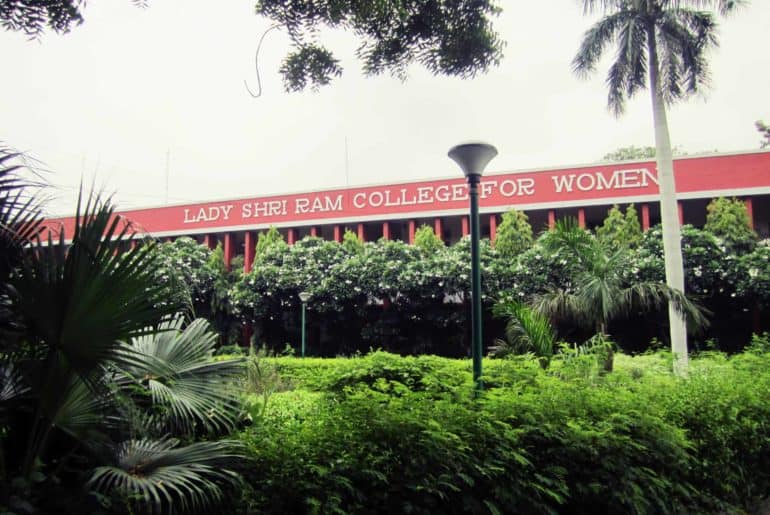
The introduction of new timetables at the beginning of a semester, while an integral feature of the system, however, has been the source of much inconvenience for the large percentage of the student body that still functions according to the annual calendar. Due to the re-structuring of teachers and syllabus according to the University-specified semester modules, annual students in LSR now find themselves flummoxed at having to change their timetables and teachers as an unpleasant side-effect.

“As if it wasn’t bad enough that they compartmentalized texts into capsules to be swallowed, this sudden switching of teachers and schedules is especially jarring as it strips our subject of consistency”, says a second-year English student of Lady Shri Ram College for Women, who wishes to remain anonymous.

Second and third year students of arts and text-intensive courses, including English, History, and Political Science are perhaps not wrong in their resentment at having this arbitrary measure inflicted upon them, especially since the benefits of the semester system (most notably, that of the uncharacteristically high marks) elude them. 

Teachers, too, while sympathetic with the plight of the affected student body and in concurrence with the disjointed quality it imparts to the flow of study, have expressed inability to rectify the situation. Apart from the sudden mid-year changes for the annual students, it has also resulted in further pressure on Heads of academic departments to re-structure the schedules for all three years.

The general outcry appears to be that the official stance of the University may be touting the success of the semester system, but in its zeal to reform and revolutionize the system of education, the DU administration seems to have lost focus on the academic well-being of the annual students.


After the brouhaha over the fairytale Economics result, Delhi University has now declared the first year semester results of three major Science streams. Students have, in general, performed commendably in Physics, Chemistry and Mathematics. However, there is an obvious disappointment on the part of students over no one achieving a 99 as expections had sky-rocketed following the Economics scores.

The Mathematics results were declared on 31st December, while those of Physics and Chemistry were declared on the 2nd day of the new year. The colleges that have performed best overall are Hans Raj, Hindu, Miranda House, St. Stephen’s and Maitreyi.

A student of Hans Raj College has topped Physics honours with a 92%, with the overall result of Hans Raj itself being the best. Close contenders were Hindu College, followed by St. Stephen’s and Miranda House.

For Chemistry, the highest score is again a 92%, obtained by a student of Hindu College. The top colleges for Chemistry are Hindu, Hans Raj and Miranda with only Sri Venkateswara in South Campus that has managed to come close. Mathematics Honours saw a highest score of 98%, a New Year’s Eve delight for the Maths departments across DU that have been struggling to improve results over the past two years. The topper belongs to Lady Sri Ram College, however the best overall result was yet again bagged by Hans Raj College.

The subject saw a remarkably good set of marks being obtained by South Campus students as well, with JMC, Gargi and Sri Venkateswara in the lead. While a considerable number of students have performed exceedingly well in these subjects, there are also substantial number who would be required to take some exams again.

Shreysi Mehndiratta, who has scored 98%, stood second in SRCC. “I was just not expecting these marks. Although the exams went well, no one expects to get in 90s, not in Economic Honours at least.” She added, “I can’t really say if DU is doing this just to prove that the semester system is any good because I’m not sure if the result has been the same for all the courses.” On asking her how she changed her mind from engineering to Economic (Honours) even after having science without Economics in school, she said, “I always had an interest in the subject (Economics) and I got the marks to get into the best college for the course.”   Rachit Dua, one of the students who scored 99%, is studying in SRCC. When asked about the result he said, “I was expecting somewhere around 95%, but definitely not a 99%. The paper’s difficulty level was quite normal. It wasn’t very difficult and it wasn’t even easy.” On asking whether he thinks it has been done to vindicate the efficacy of the semester system, he said, “Well, It can be. You never know.” Gaganpreet Kaur Chadha of SRCC who also scored 99% said, “I was expecting somewhere around 85% as that is the highest anyone expects in Economic Honours, from what I’ve heard. The 99% was quite a surprise really.” When asked further about the unusual result she said, “I think the checking must have been very lenient as there are so many who have scored well. And the papers were also quite easy. So I too feel that this has been done by DU in order to show that changing to the semester system was the right thing to do.” Milan Bindal of Hindu College is the third top scorer. She said, “Was I expecting this result? No! In previous years, the top scores had gone up to 90. I was aiming for a 92. My only objective was to secure first rank in the University. To be honest, the result is a little shocking. Although I do think students have been rewarded this time for their efforts; moderating doesn’t mean you deduct marks that students deserve in the first place. There was tremendous pressure on us from day 1 and I think that has helped our result. I couldn’t get through SRCC by one mark and I’m glad I joined Hindu College. The faculty has done a great job in giving us a lot of extra time apart from the college hours. The exams were easy and I don’t think we’’ll have such scores in the coming semesters. Also social networks like Facebook don’t fascinate me and I guess that helps me remain focussed. I want to do my majors from London School of Economics.”  ]]>

This brings us back to the University. The University obviously has the capacity to induce such a jump and the motive too. It needed something to redeem itself and support its decision to implement the semester system. Thus many people are of the opinion that the University itself has engineered the fiasco. If such is the case, the University must surely be cursing itself. Is it totally oblivious to the first and the most important law followed by all cheaters the world over, to wit, ‘never get a ninety’?

It is very clear why the University cannot make a habit of playing a Santa for its students. Colleges the world over follow a certain calibration of marks and if all of a sudden students start scoring 99 per cent regularly; that calibration may not apply to DU. LSE for example admits students scoring above 70 per cent. I cannot see the college continuing to do the same for DU unless the current crop of first years proves to be full of raving geniuses, our University scores might lose all their credibility.  ]]>