Tag

elections

Browsing

Every political process comes with a set of questions. On the 7th of April, the country went on for what is being labeled as the biggest general elections in Indian history. While on one hand, experienced players such as Bhartiya Janata Party (BJP) and Indian National Congress (INC) are battling at the forefront, a newly formed Aam Aadmi Party is also claiming to bring in notions of change. In the previous general elections, the total voter turn out was 57 percent and only 12 percent of the youth made it to the polling booths.


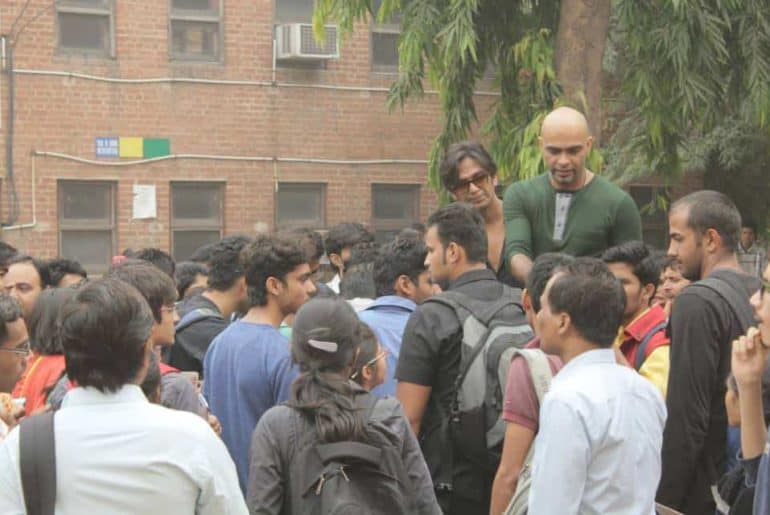
In this context, we went around the campus for MTV India’s Rock the Vote campaign to understand how much Delhi University students know about this political process everyone is talking about – the Lok Sabha elections. Before the the city goes for polling on 10th April, we felt there were few questions that should be answered, few concerns that should be resolved. In order to make sure you use your vote to the best of your ability, this post is all you need.

How many seats are there in the Lok Sabha?

The maximum strength of the Lok Sabha as envisaged by the Constitution is 552 – upto 530 members to represent the States, up to 20 members to represent the Union Territories and not more than two members of the Anglo-Indian Community to be nominated by the President, if,  in his opinion, that community is not adequately represented in the House. However, the present composition of the Lok Sabha has 545 seats, with 543 open to elections and two seats up for nominations by the President.

How many constituencies are there in Delhi?

Delhi has a total of 70 constituencies in the Vidhan Sabha and 7 constituencies in the Lok Sabha. The Lok Sabha elections taking place on 10th April, 2014 will witness elections taking place for the seven Lok Sabha seats in question.

Who is standing for elections in your constituency?

With NCT Delhi being divided in seven constituencies, it is important for a voter to know who is standing in their constituency before you vote. Here is a list of all the candidates standing in different constituencies. In order to know more about a candidate (including their financial assets), just click on their name.

Note: All data regarding the contesting candidates is sourced from Association of Democratic Reforms (ADR)’s portal – myneta.info.

[tabgroup][tab title=”East Delhi”]

Candidate

Party

Criminal Cases

Education

Age

Arun Thakur Samyak Parivartan Party 0 12th Pass 39
Deepak Kumar IND 0 12th Pass 31
Dr. Nabhit Kapur Naya Daur Party 0 Doctorate 26
Jagannath Tiwari IND 0 12th Pass 39
Jai Ram Lal JKNPP 0 10th Pass 79
Kumar Vivek Gautam IND 0 Graduate 32
Mahesh Giri BJP 1 10th Pass 39
Manjeet Singh IND 0 Graduate Professional 26
Manju Chhibber RPI(A) 0 Graduate 58
Mohammad Shakeel Saifi BSP 1 Literate 42
Mohammed Naeem IND 1 10th Pass 37
Mohd Naseer Peace Party 0 8th Pass 39
Mohd Shahid Siddiqui AITC 0 12th Pass 51
Ompal Singh Kalyankari Jantantrik Party 0 Graduate 44
Padam Chand IND 0 10th Pass 61
Praveen Kumar Bhartiya Jan Manch 0 8th Pass 33
Prem Singh Socialist Party (India) 0 Doctorate 57
Rajesh Ambedkar National Congress 0 Graduate 45
Rajmohan Gandhi AAP 0 Post Graduate 78
Ram Briksh Mall Hindusthan Nirman Dal 0 Post Graduate 58
Sandeep Dikshit INC 0 Post Graduate 49
Shakeel Ahmed Jai Maha Bharath Party 0 12th Pass 32
Virendra Mayer Samajwadi Janata Party (Rashtriya) 0 Graduate 60

[/tab] [tab title=”West Delhi”]

Candidate

Party

Criminal Cases

Education

Age

Babu Singh Dukhiya IND 1 Graduate 57
Charan Jeet Singh AIFB 0 Post Graduate 46
Deepak Kumar Rashtriya Janadhikar Party 0 8th Pass 30
Dinesh Kumar Akhand Bharat Samaj Party 0 10th Pass 34
Har Gobind Arora SHS 1 12th Pass 42
Istak Khan IND 0 5th Pass 38
Jarnail Singh AAP 0 Post Graduate 41
Jarnail Singh S/O Gurbax Singh IND 0 8th Pass 59
Jarnail Singh S/O Rajinder Singh IND 0 10th Pass 44
Karam Chand Lathwal Bhartiya Pragatisheel Congress 0 Post Graduate 48
Mahabal Mishra INC 1 12th Pass 59
Parvesh Sahib Singh BJP 1 Post Graduate 36
Raj Pal Singh BSP 0 Graduate 51
Rakesh Kumar Bhartiya Janta Dal (Integrated) 0 10th Pass 31
Sunil Sourabh IND 0 Post Graduate 45
Uday Kumar Singh Bahujan Mukti Party 0 12th Pass 31
Virender Mohan Vats IND 0 Graduate 56

[/tab][tab title=”Chandni Chowk”]

Candidate

Party

Criminal Cases

Education

Age

Abdul Amir Amiro IND 0 5th Pass 44
Ajay Kumar Khemka Kalyankari Jantantrik Party 0 Graduate 41
Altaf Husain Bhartiya Janta Dal (Integrated) 0 12th Pass 40
Ashutosh AAP 3 Post Graduate 48
Ashutosh Mudgil IND 0 8th Pass 38
Balram Bari IND 0 8th Pass 47
Bir Singh Soni IND 0 12th Pass 46
Dhan Raj Chauhan Naya Daur Party 0 8th Pass 53
Dildar Hussain Beg IND 0 12th Pass 44
Dr. Harsh Vardhan BJP 2 Post Graduate 59
Dr. Tarun Kumar Vishva Shakti Party 0 Graduate Professional 33
Gagan Rastogi IND 0 Graduate 30
Hariom Sharma AITC 0 10th Pass 49
Jag Mohan Singh Bakshi Atulya Bharat Party 0 12th Pass 54
Jagjeet Singh Bharatiya Gaon Taj Dal 0 10th Pass 0
Kapil Sibal INC 0 Graduate Professional 65
Md Afaq Jai Maha Bharath Party 0 5th Pass 49
Mohd Mursaleem Peace Party 0 12th Pass 39
Musarrat Jahan Rashtriya Janmorcha 0 Graduate 49
Narendra Kr Pandey BSP 0 12th Pass 48
Rashmi Kashyap Bhartiya Pragatisheel Congress 0 10th Pass 55
Sanjay Gandhi Braj Vikas Party 0 12th Pass 0
Surender Singh IND 0 Graduate 42
Tariq Mirza RPI(A) 0 8th Pass 29
Vijay Shankar Chaubey IND 0 12th Pass 42

[/tab] [tab title=”New Delhi”]

Candidate

Party

Criminal Cases

Education

Age

Ajay Makan INC 1 Post Graduate 50
Anjuman Agnihotri IND 0 12th Pass 53
Ashish Khetan AAP 0 Post Graduate 38
Biswajit Ranjit Chatterjee AITC 0 12th Pass 77
Dalchand IND 0 8th Pass 52
Devi Singh Rashtriya Jankranti Party 0 Post Graduate 33
Dheeraj Puri SHS 0 10th Pass 35
Ghanshyam Dass IND 0 10th Pass 57
Harkrishan Das Nijhawan IND 1 12th Pass 50
K P Sankaran Menon IND 0 Doctorate 68
Lakshmi Narayan Bharatiya Bahujan Party 0 8th Pass 46
Lukman Khan IND 2 5th Pass 52
Meena Singla Poorvanchal Rashtriya Congress 0 Graduate 44
Narendra Singh Rawat IND 0 12th Pass 43
Naveen Chandra Naya Daur Party 0 Graduate 40
Nikhil Sablania IND 0 Graduate Professional 34
Padmaja Kandukuri IND 0 Not Given 50
Pradeep Varma Bharat Vishal Party 0 Graduate Professional 49
Ramanuj Patel Samyak Parivartan Party 0 12th Pass 36
Ratheesh IND 0 Graduate 26
Ravi Kumar Gupta IND 0 12th Pass 66
Rubina Khan IND 0 Graduate 27
Smt. Meenakshi Lekhi BJP 0 Graduate Professional 46
Solomon George BSP 0 Post Graduate 50
Sujeet Jha Bhartiya Janta Dal (Integrated) 0 12th Pass 30
Sunita Chaudhary JKNPP 0 10th Pass 36
Swadesh Ohri Atulya Bharat Party 0 12th Pass 72
Ved Prakash IND 0 10th Pass 56
Vishal Khosla IND 0 12th Pass 51

[/tab] [tab title=”North East Delhi”]

Candidate

Party

Criminal Cases

Education

Age

A.K. Aggarwal Agar Jan Party 1 10th Pass 47
Abdul Sami Salmani BSP 0 Others 58
Ali Husan IND 0 5th Pass 40
Amit Kumar Sharma IND 0 Graduate 38
Anand Kumar AAP 0 Doctorate 64
Dan Bahadur Yadav IND 0 Graduate 50
Dharamveer Singh Rashtriya Ekta Party 1 10th Pass 50
Dinesh Pal Singh IND 0 8th Pass 35
H.K. Mahendru IND 0 8th Pass 78
Harsh Kumar IND 0 Graduate Professional 38
Jai Prakash Agarwal INC 0 Graduate 69
Manoj Tiwari BJP 0 Post Graduate 43
Mohd Arif Siddique AITC 0 Illiterate 26
Mohd Hasnan Khan JKNPP 0 5th Pass 33
Mohd. Hasnain IND 2 10th Pass 55
Mukesh Kumar Arora IND 0 Graduate 40
Narendra Sharma SUCI(C) 0 Post Graduate 68
Om Dutt Sharma SHS 2 12th Pass 49
Pradesh Kumar Ambedkar National Congress 0 Post Graduate 31
Rajan Lal Bharatiya Republican Paksha 0 Graduate Professional 36
Ramesh Singh Siral Naya Daur Party 0 8th Pass 40
Roshan Ali National Loktantrik Party 0 Not Given 56
Vinay Bharatiya Sarvodaya Kranti Party 0 12th Pass 29

[/tab] [tab title=”North West Delhi”]

Candidate

Party

Criminal Cases

Education

Age

Basant Panwar BSP 0 8th Pass 46
Bhup Singh IND 0 Graduate Professional 77
Dharamraj Bhartiya Pragatisheel Congress 0 8th Pass 40
Inder Singh Asankhya Samaj Party 0 10th Pass 51
Jodhraj Paharia IND 0 Illiterate 65
Kamini Kaur IND 0 8th Pass 49
Krishna Tirath INC 0 Graduate 58
Rajesh Kumar Rashtriya Bahujan Hitay Party 0 10th Pass 41
Rakhi Birla AAP 0 Post Graduate 27
Ram Karan Sauran IND 0 Graduate 60
Shailender Kumar IND 0 Graduate 34
Sunil Chhikara IND 3 Graduate Professional 42
Udit Raj BJP 1 Doctorate 56
Vijay Kumar RPI(A) 0 Graduate 39

[/tab] [tab title=”South Delhi”]

Candidate

Party

Criminal Cases

Education

Age

D K Chopra IND 1 Graduate 68
Devinder Kumar Sehrawat AAP 0 Post Graduate 48
Dushmanta Kumar Giri IND 1 Doctorate 54
Hafiz Mustaq Jan Samanta Party 0 Illiterate 53
Kiran Pal Singh IND 0 8th Pass 63
Mohan Kanuga JKNPP 0 Post Graduate 66
Naresh Kumar IND 0 Illiterate 50
Ombir Bharatiya Bahujan Party 0 12th Pass 51
Rakesh Kumar IND 0 10th Pass 42
Ramesh Bidhuri BJP 4 Graduate Professional 52
Ramesh Kumar INC 0 10th Pass 58
Ruby Yadav IND 0 Post Graduate 33
Sanjay Kumar Rai BSP 1 12th Pass 47
Shahid IND 0 10th Pass 38
Shri Chand Tanwar CPI 0 8th Pass 68
Sreerupa Mitra Chaudhury AITC 0 Post Graduate 49
Sumant Kumar IND 1 Graduate 51
Sunil Kumar IND 0 10th Pass 38
Tej Pal Singh IND 0 10th Pass 38

[/tab][/tabgroup]

What is NOTA?

Let us assure you, this word being thrown in political debates has nothing to do with terrorism (please watch the video below to understand further).

None of the above (NOTA) is an option on the EVM for people who are not satisfied with any of the candidates running in their constituency.  You should know it is not akin to ‘Right To Reject’ where if a certain percentage of the voters choose the latter option, the elections are cancelled and all the candidates have to be changed by the parties. In India, even if a majority of the voters choose NOTA, the candidate getting the most number of votes will win the contest. (No, a hung parliament or President’s rule do not follow a scenario with majority of votes casted for NOTA)

There is something called a manifesto (and you should read it)

An election manifesto is a document released by a party or candidate with the agenda of what all would one seek to fulfill if brought to power. Irrespective of whether these promises are actually converted to actions, in order to make an informed choice, it is only sensible to go through what each party is promising. After all, you don’t want to support a party or candidate that have something against your beliefs in their agenda, right?

To make things easier, here are the links to the manifestos of the three major political parties: Indian National Congress (INC) | Bhartiya Janata Party (BJP) | Aam Aadmi Party (AAP) 

To see more videos of how Delhi University answered our questions visit DU Beat’s Instagram account. Share your opinions with @du_beat and @mtvindia using #RockTheVote.
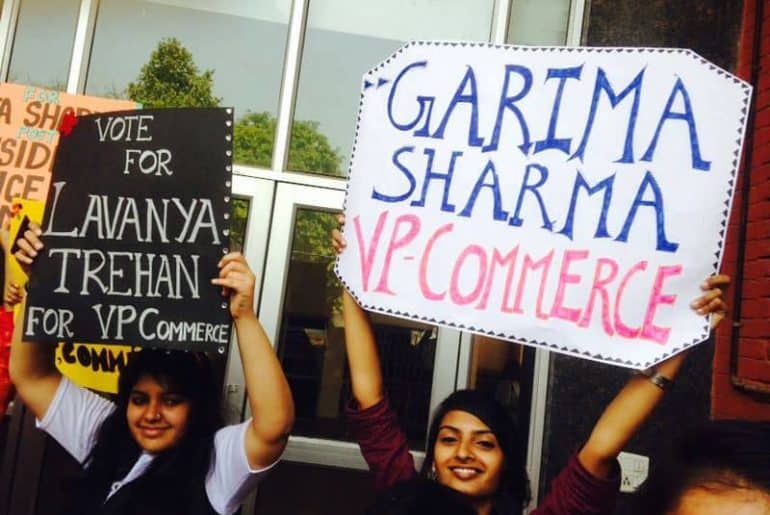
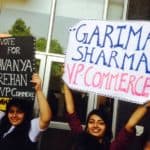
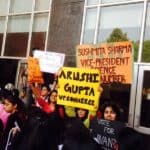
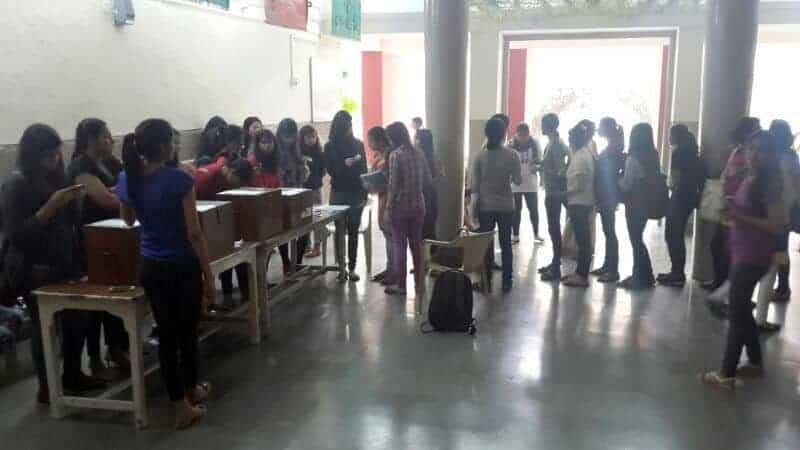
In the midst of jitters, confusion and excitement , Gargi College elections were held on Friday, 28th of March’14. Students came up to vote in huge numbers as voting convened from 10am and stretched on till 2 pm.

The election process had begun with the release of nomination forms. Applicants were required to fill all necessary information which included the post they were applying for and also answer a few questions, on the basis of which they were to be shortlisted. The shortlisted applicants had to submit their agenda which was then put up on the main notice board of the college on 21st March.

The campaigning for elections started once the agendas were displayed on notice board. Candidates were allowed to campaign only during college hours and inside the college campus without use of personal funds. The electoral debate, Big Fight took place on Wednesday, 26th March in the Arts Quad of the college, from 10 am to 4pm. An informal confrontation,  students were allowed to put up their questions to the candidates based on their agenda. Says Jayapriya, the newly elected Cultural Secretary, “Though I was nervous at the beginning, but then the continuous support from my peers made me confident and now I feel that I am capable enough of handling the cultural department.”

On the day of voting, every student was given a slip which had the list of the candidates against their proposed post. Students were supposed to tick against the names of candidates they wish to vote for and drop the slips into the ballot box. The results of the poll were declared at 5pm. “This is not my victory alone, everyone in the college will now be the decision maker. The power lies in the hands of students of the college. Gargi college has always been an excellent college and I want to take this excellence to new heights. And Congratulations to all the new union members!” said Kajal Bhatia, the newly elected President of the college.

Gargi College Students’ Union Election Results:

President- Kajal Bhatia
Vice President (Arts)- Binita
Vice President (Commerce)- Garima Sharma
Vice President (Science)- Sushmita Sharma
Treasurer- Rubinder Kaur
Public Relations Officer- Arshita Nandan
General Secretary- Parineeta Khera
Cultural Secretary- Jayapriya Nair
Sports President- Ruchi Bhatt
Sports Captain (Science)- Kriti Shukla
Sports Captain (Arts)- Nisha Pandey
Sports Captain (Commerce)- Arushi Gupta
Proctor (Arts)- Mehar Kakkar
Proctor (Commerce)- Ayesha
Proctor (Science)- Prapti Bajaj

Come every spring and the Lady Shri Ram College for Women’s campus comes abuzz with political fervor and elections become the flavor of the season. It is the time of the year when the baton is passed on from one generation of office holders to another. In a span of two weeks, the Students’ Union, the many departments and societies, the NSO (National Sports Organization), the NSS (National Service Scheme), the NCC (National Cadet Corps) and the Residence Hall all elect their new representatives.

As in a democracy, the elections process for the Students’ Union comprises of a series of steps. Nominations are filed, core teams for each candidate formed, agendas released, campaigns carried out and secret ballots cast. The process for the various department and society associations is not an as elaborate one; however, it is as democratic in its conduct.

DSC_8524
Students Campaigning. | Image Credit: Mugdha for DU Beat

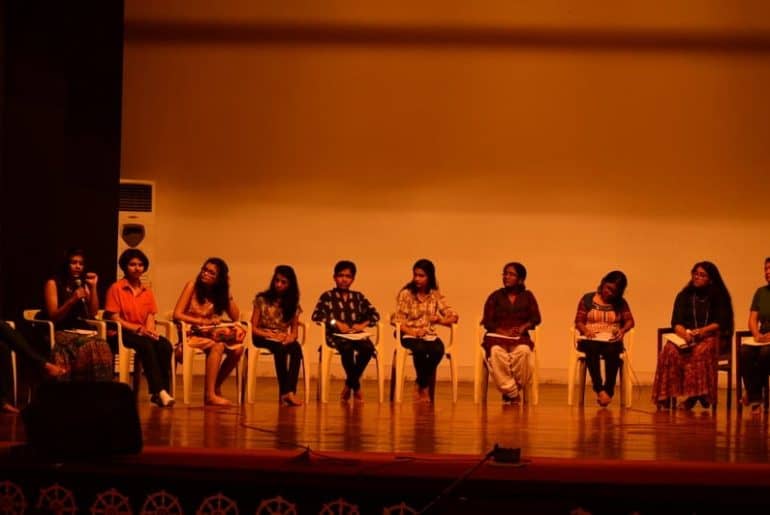
The Students’ Union at LSR comprises of four posts- President, Cultural Secretary, General Secretary and Treasurer; the first three in that hierarchical order. The first two posts are open to all second year students and the second two to all first year students, the Union that gets elected replaces the incumbent Union at the end of the academic year in a formal Passing Over Ceremony. This year, the college saw a considerably overwhelming number of applications for all posts and an equally encouraging voter turnout. Three students each contested for the post of the President and Cultural Secretary, five for General Secretary and four for Treasurer. When asked why the aspiring candidates chose to contest, Lakshmi Venkitesh, who contested for the post of Cultural Secretary said that it was the best way to give back to a place that had changed her for the better in more ways than one.

While the informal confrontation saw demands like Urdu rap and English nursery rhymes in Hindi, the formal confrontation saw each candidate present her agenda and take questions from the from the existing Union and the audience. In the Group Discussion, questions like ‘Should the social media be used for college election campaigning’ were deliberated upon. These events were held with an aim to intimate the student body with their candidates’ ideas and outlook.

IMG-20140328-WA0010
Students Voting. | Image Credit: Keshini Dhamania

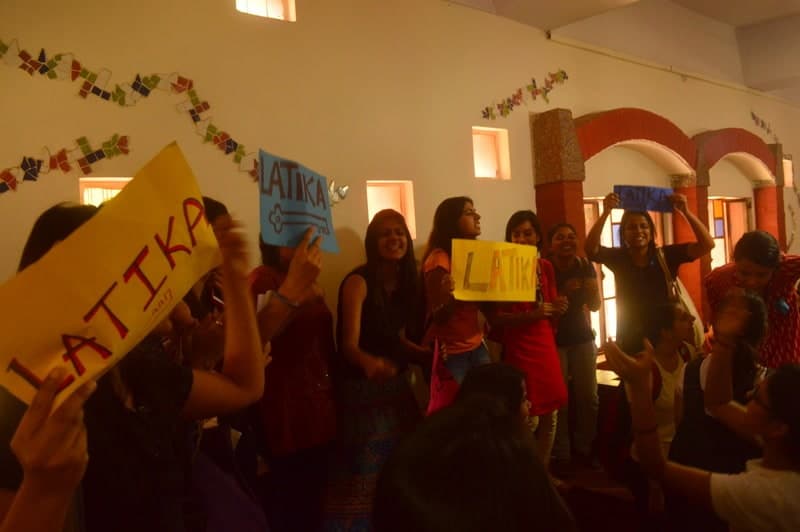
But at the end of the day, it was the campaigning that stole the show. The two day long campaigning saw the wackiest of slogans- ‘Janhit mein jaari hai, Sabika ki baari hai’ and ‘Main Jaya Jaya chillaungi kurta phaad ke’. With the amount of clamour, sometimes musical and sometimes not, it was quite the battle of the bands, albeit with cymbals and tambourines. “Our voice cords trembled as the tempo increased but the game was on”, says Shireen Vidrohi, a campaigner for one of the presidential candidates.

The week long elections remained largely hassle-free one and some great camaraderie despite the competitive air. After the polling was conducted on 28th March, 2014, the results were announced by college Vice-Principal Priti Dhawan the very same day. The newly elected Union has Sabika Abbas as the President, Manosi Chaterjee as Cultural Secretary, Jyotirupa Das as General Secretary and Latika Sidhu as Treasurer. “I wish the new Union luck and hope that will take the collaboration model further. Work hard and party harder“, says incumbent President Tanvi Bist who is happy to pass on the reins to Sabika who assures us that she will try her best to fulfill her agenda promises and will focus on the accommodation and integration of Hindi medium students into the college.

Featured Image Credit: Mugdha for DU Beat

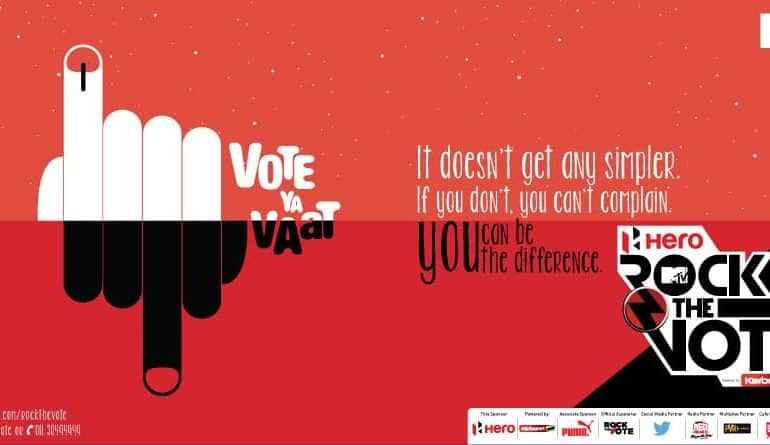
With the general elections just around the corner (April 2014), the involvement of youth in Indian politics, or lack thereof, is an issue that needs immediate attention. Being aware of politics is one thing and being politically conscious is another. To address this question among the youth, MTV India has come up with a campaign ‘MTV India Rock The Vote’ to understand the political mindset of India’s future and proactively encourage them to be a part of the system, at least fulfill their obligation and exercise their right to choose the next head of the country. The Campaign, which started with MTV promoting the cause on its various media platforms, both with celebrities and the youth, has now spread its wings. DU Beat has joined MTV’s endeavor to make the youth understand the urgency of the hour and the need for them to be a part of the most important aspect of the country- its Government.

Rock-the-Vote_Banner-1-X-2_Ice-Cream-New

The Campaign kicked off in December 2013. Through its inceptive weeks, MTV took the campaign to various youth- centered platforms including college fests, events etc. They have also used their brand power to bring together various personalities through web and TV episodes, who pledge to ‘Rock the Vote’ this year and have their voices heard.

With a tongue in cheek tagline ‘Dabao na… Button’, Rock The Vote emphasizes on the idea that if you don’t vote to affect the system, you can’t complain when the system wrongs you. The campaign also guides you as to how to go about the entire electoral process, including getting a voter ID made. Visit their website for more information!

Through our association, DU Beat plans to take the campaign to its core- The youth. We plan to reach out to the empowered DU student and promote awareness and political participation this April along with understanding and attempting to develop the mindsets that they have with regards to the Indian political system.

We’ve grown 18 years of age listening about politicians and politics, corruption and scams, lack of agility and force to cause an action in the society. But gone are the days when we were a mute spectator of growing problems, for now is the time to bring about a concrete solution to major, if not all problems prevalent today. The best way to this and to extend your support in a democracy is to vote.

With the voting process scheduled for tomorrow, 7th February 2015, here are a few things for you to keep in mind:

1. Be an informed voter

The entire city of Delhi has been divided into 70 constituencies with numerous candidates from each.. For detailed and objective information about the nominated candidates of your constituency do visit www.myneta.info, a portal that provides all necessary facts on qualification, allocated budget and use, and criminal proceedings, that can make you make up your mind and be an informed and aware voter.

2. What if I am in favour of none of the candidates?

If in case you are not satisfied by any of the candidates running in your constituency, choose the none of the above (NOTA) option on the EVM. If we have the liberty to express our collective decisions by choosing our leaders, then we have the right to express our displeasure at the candidates too. You should know it is not akin to ‘Right To Reject’ where if a certain percentage of the voters choose the latter option, the elections are cancelled and all the candidates have to be changed by the parties. In India, even if a majority of the voters choose NOTA, the candidate getting the most number of votes will win the contest.


3. Vote with prejudice to none

Cast your vote on the basis of your own research and experience, on your own vision and weighted capabilities of the individuals contesting elections. Narrow objects of voting in favour of known but incapable candidates does more bad than good. Refrain from being brainwashed my views, surveys and issues, base your thought process on them instead. Don’t vote for a party or candidate because your family is supporting it, rather vote because they meet your vision.

Do not let your voting decision to be affected by any externalities like call for votes on caste, creed, religion, gender or extended common roots. Do not accept any gifts, appeasements or cash from candidates, report events like distribution of liquor, undue influence, booth capturing to the regional election officer. Do not even accept nominal perks like commutation to the voting booth from the contestants.

4. How does the voting happen?

Mere possession of EPIC (elector’s photo identity card) doesn’t guarantee voting right, the name of voter should appear in the electoral roll. This checking of identification and credentials is the first thing that happens as the voter enters polling booth. The second polling officer marks the left hand forefinger of voter with indelible ink and takes his signature on the electoral roll. The third polling officer collects the electoral slip and makes the voter vote. The voter shall then press the button against the desired candidate, only once. The pressing of button would glow a red lamp in front of candidate’s name following a beep sound meaning that the vote has been is registered.

5. Secrecy of Vote & Tendered Vote

According to the Election Commission Guidelines, it is mandatory for the voter to maintain secrecy about his/her selection, failing to do which shall disqualify him/her from voting and may amount to legal proceedings. Also, incase the voter upon arrival finds his/her vote to be already cast, he/she can complain against such discrepancy. This shall forfeit the previously casted vote and the original voter shall be entitled to cast his/her vote on a tendered ballot paper, however not on the EVM.

Hope the above stated guidelines help you!

We hope the first time voters successfully cast a legitimate vote – one that is backed up by information and choice and is not a random button pressing futile exercise. As long as you cast an informed vote, you are being a responsible citizen.

Delhi University has around half a million students on its rolls. Delhi has a total of 1.15 crore voters on the electoral rolls. Even if half of the University students are eligible voters, that accounts for roughly 2.8% of the total vote bank of Delhi. Shouldn’t that make the political parties look out for these young voters?

We have been contemplating if the student elections in the university are any way a measure of the upcoming Delhi assembly elections. Well, Congress absolutely would not want this to be the case. Most of the university students are first time voters. The timings, though, have made sure that exams are the buzzword, not elections, in the university campus.

(Also see: Political parties set out to woo voters from Delhi University)

Karan Marwah from Zakir Hussain College says, “My vote would go to Congress, more specifically to Sheila Dikshit, because she has been in power for three terms and no one would know Delhi as well, as she does. Her track record for development has been good, although the law and order problem should have been taken care of through stricter regimes of security”.

Gauri Khanna from Shyam Lal College says, “I would vote for Bhartiya Janata Party (BJP). Choosing to vote for Congress again would be nothing but stupidity on our part. And as far as AAP is concerned, I think they deserve a fair chance but, I want to go with Narendra Modi’s patry this time”.

Besides, there is no dearth of students supporting the newly formed Aam Aadmi Party (AAP). Most of the students are first time voters. Vishal Upadhaya and Monika Bansal from the College of Vocational Studies are ecstatic about their first vote and they say that that they will vote for AAP as they want to be a part of the change that is so badly needed in the country. The Election Commission together with some NGOs have started campaigns to woo university students to vote on December 4.

]]>

With the state elections just around the corner, Delhi University happens to be a stage for political campaigning by different parties. In the university elections itself, many bigwigs come out in support of the students’ wing of their respective parties.

Besides, two of the most prominent politicians of Delhi happen to be DU alumni. The present Chief Minister, Sheila Dikshit, did her graduation in History Honours from Miranda House and Vijay Goel of Bhartiya Janata Party (BJP) is an alumnus of SRCC, who was also the Delhi University Student Union President in 1977-78. Congress has fielded Ragini Nayak and Amrita Dhawan for the upcoming elections, who have been former DUSU office bearers. Parties have been fielding young leaders to attract young voters.

Let’s have a look at the campaigning activities of major political parties in the University:

Aam Aadmi Party

Aam Aadmi Party (AAP) is the most visible among all the political parties in its campaigning in Delhi University. Arvind Kejriwal visited St. Stephen’s College in August to interact with students. Many students from different colleges have joined AAP and are volunteering for the Delhi Assembly Elections. Yogendra Yadav addressed a rally on 30th October in the University. Recently, MTV VJ Raghu Ram could be seen campaigning for AAP in different colleges of DU and in IIT Delhi. Prashant Bhushan has also addressed students on various occasions.

Adding to this, in the party manifesto released on Wednesday, the party declared that if brought into power, they would open more colleges in the state and roll back the Four Year Undergraduate Programme (FYUP).

Bhartiya Janata Party

1391529_10202372890313042_87270023_n

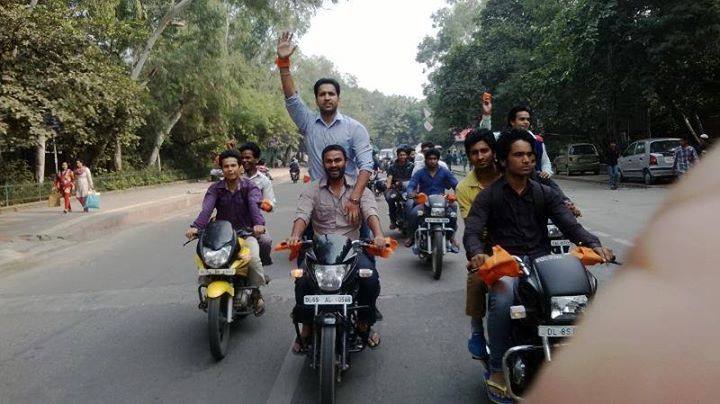
BJP has its share of young leaders who have been DUSU office-bearers. Nakul Bharadwaj, popular face of Akhil Bhartiya Vidyarthi Parishad (ABVP), the student wing of BJP, contested elections last year as well. ABVP has organised a bike rally to spread awareness about voting among the youth. ABVP has also initiated a campaign ‘Youth For Change’, to spread voting awareness. The emphasis on the youth is apparent in the campaigning by the party where it promises to open 15 new colleges and one university under the Atal Yuva Mission, if voted into power. They are also promising to exempt all taxes on computers, laptops, tablets and smart phones for college students.

Congress

National Students Union of India (NSUI) the students wing of Congress had organised a protest march against Vijay Goel. At least four ex office-bearers of NSUI are fighting elections from Congress ticket in the upcoming Delhi Assembly elections. With the release of the party manifestos, the Congress promises to increase the number of evening colleges across the University, a new university for health sciences and 5 more medical colleges. Besides, the state government had also proposed 90% quota for Delhi students in the state funded colleges of DU in October.

The Election Commission is leaving no stones unturned in roping in the young voters. It has started campaign with many NGOs to rope in the young voters and enrol students of various colleges to vote in the upcoming elections.

]]>

With just months to go for the state elections, in October, the Congress-run Delhi government had proposed a revolutionary plan in favour of the students having their domicile in Delhi. The plan offered an average of 68 percent reservation in 28 colleges of the University of Delhi. Not leaving behind in the race to polls, the Bhartiya Janta Party too joined the track by claiming the decision as being instigated by its own party agenda. Nonetheless, the stakes are high and whether its a serious reservation docket or a fantastical poll mantra is still a matter of debate.

If passed, this plan would ensure that not less than 90 percent of seats would be reserved in colleges fully funded by the state government and about 50 percent in those partially funded by it. With the state elections nearing and taking into context the huge number of seats being reserved, this might eventually be seen as a politically-driven manoeuvre or even more less, a mere rhetoric.

Though, even after a month, the decision is still being condemned by various student bodies and has flared up the reservation debate once again with many terming it as a directed political twist. “It is a populist stunt and a political gimmick.”, said All India Students’ Association’s (AISA) National President, Sandeep Singh. “The state government should better take interest in improving the primary and medium level education system.”, he added.

ABVP is too flowing in the same wind. “DU is a central university, and state goverment should refrain from using it for its own poll agenda.” said ABVP’s National Executive Member, Raj Kumar Sharma. When asked about the similar poll agenda by BJP, he made a clear distinction between the two parties saying that ABVP works in interest of students and has its own perception.

The Bhartiya Janta party too came out all guns blazing, with Dr. Harshwardhan, the Chief Ministerial hopeful from the party referring this to as indirect plagiarism. “Our party’s national president Shri Rajnath Singh ji has already raked up the issue several times and Congress has just taken a leaf out of his book.”, he said.

Though, Congress is getting support on this from the party’s students wing National Students’ Union of India (NSUI), with President Rohit Chaudhary fully supporting the plan. “Certain DU colleges are funded by the state government and hence Delhi students must have the advantage of reservation.” he said.

Aam Aadmi Party, the first time contender in the State elections refused to comment on the issue.

With varying approaches to the issue from the different contesting parties, it might be adhering to poll tactics keeping in mind the large vote bank of young voters in the stake.

Image Credit: Sahil Jain

Lady Shri Ram College is one of the first colleges in DU to hold its college elections, and this year, the elections began in a hurry as the date for the college day was declared late. The department elections began on Monday, 1st April with the candidates submitting their nomination forms. Elections for some departments were held on 2nd; whereas other departments had their election on 3rd. Strict rules for elections were laid down. According to the rules, any candidate found campaigning through internet or SMS would be immediately disqualified from the elections. On the 2nd History Department held their elections, whereas other departments like Political Science, Statistics, Philosophy, Economics, etc. held their elections the next day. All candidates needed a third year and a second year to nominate them, and one could see frantic first years running around asking seniors to nominate them and read their agenda. According to a first year candidate running for the post of Department Treasurer, ‘contesting the elections has been a whole new experience for me altogether. I have learnt through my research about so many problems that the students are facing, especially when it comes to accounts, and I hope I can create a more transparent accounts system for my department in case I get elected.’ The following candidates were declared Presidents of their respective department Unions: Amanjit Kaur: Sociology Vaishnavi Singh: History Srujana Yadav: Political Science Prerna Kannan: Statistics Charvi Kain: Economics Gurman Bhatia: Journalism Image: Sapna Mathur (sapna@dubeat.com)   ]]>


Last year was my first year in college and as the elections approached, I started to root for that holiday that all my friends were getting. The election day holiday. But my bubble burst when I realized that my college is not a part of Delhi University Student Union (DUSU). I study in Indraprastha College for Women, yet another all-girls college which is not a part of Delhi University Student Union (DUSU). So election time for us is just like any other time, dull and drab with no new excitement. It’s the same old life of everyday. In spite of being located in North Campus, all we get to do is hear about how alive other colleges are- campaigning, rallies and demonstrations- and not get to see it. Nobody is shouting slogans or bribing us to vote for them, no graffitis and no agenda fliers littered all over, nothing.  We completely miss the election hullabaloo that happens in most other colleges. We’re never a part of any election scandal! No candidate barges into to our college and (to our major disappointment) disrupt our classes or create a commotion! And the worst part, we do not get a holiday on the election date. We have regular classes throughout the day since we don’t have to go and vote. We miss being a part of one of those DU cults that define it.

What we don’t miss is well the hooliganism that is rampant during this time, mobs, fights, eve teasing and the likes of these. We all saw the extremities it could go to when a girl was molested during a rally. I guess this is why all girl colleges abstain from being a part of DUSU. Better safe than sorry, but safe is sure boring! We feel rather left out and it’s not like people spend that holiday voting, they have fun, we don’t even get to do that. So it’s just really sad! There are too many disadvantages and not enough advantages to balance it out. But let me make one thing clear, it is not about who wins to represent us; it’s the whole experience that is worth having which we are deprived of.

So, where is the democracy which everyone claims to live in and how come we don’t get our adult suffrage rights?