Tag

elections

Browsing

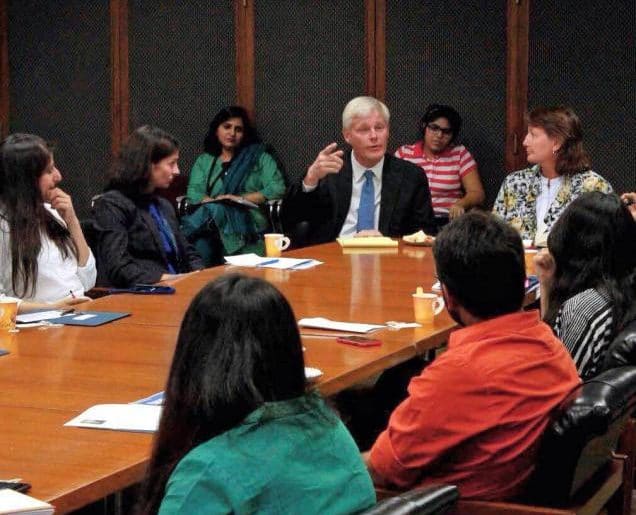
Youth Forum on Foreign Policy recently launched its initiative ‘M.P. Engagement Series’ which is a unique programme aimed at bridging the gap between concerned MPs with the youth of our nation. As part of an outreach session under the MP Engagement Series, they hosted Senator Ellen Roberts of Colorado and Representative Paul Thissen of Minnesota at the American Center, New Delhi on 5th October 2015.

The theme of the event was “US Elections: Campaigns, Processes and Procedures.”  Students from DU, JNU and IIT-D participated in a healthy discussion on the US electoral process, among several other matters.

The session gave the students an opportunity to learn about the different aspects of a successful political campaign meanwhile drawing parallels between the electoral processes in India and the US. The US State Legislators shared their experiences in the office and shared insights into the challenges they faced early in their careers in their respective domains.

When the floor was open for questions, students asked about sources of campaign finance, redistricting and the electoral college in the US. The State Legislators also discussed the top agendas and issues for the  2016 United States Presidential elections. Further discussions revolved around additional measures the government takes to engage its youth in the political process.

Owing to the fact that the US elections are so extensively followed globally, the students were interested to know more about the frontrunner for the Republican Party’s nomination, Donald Trump. “Mr. Trump is riding a wave of enthusiasm; it is a wave of protest. He’s saying such outrageous things, but people are identifying with it,” said Ms. Roberts.

The role of social media and technology in a successful election campaign was also briefly discussed. Mr. Thissen explained how India’s global perception is changing partly because of Mr. Modi’s international trips which is encouraging international investors to venture the Indian markets.

The session concluded with a quick review of the intricacies of the American electoral process. The students left with a clearer grasp of American polls, and a better understanding of the process overall.

DU Beat is the official media partner of YFFP.

Featured Image Credits: Paurush Bhardwaj

Surbhi Arora

[email protected]


Miranda House witnessed a lot of heat during this year’s Student Union elections. Unlike last year when the post of the President had just one person contesting for it, the competition this year was fierce. After a well-contested election, Miranda House elected Nitasha Dabas as the President of the Miranda House Student Union for the 2015-16 session. A third year Chemistry Honours student, Nitasha has been a part of Mridang, the Indian dance society of Miranda House for two years now and also works with the environment society Vatavaran, and the Miranda House NSS unit.


Nitasha got down to business right after her oath-taking ceremony. Nevertheless, we managed to get to know what’s on her mind as she kickstarts her tenure:

Q. Congratulations on your win, Nitasha! When did wanting to be a part of the Student Union become a plan for you? What motivated you towards student politics?


For the last two years I have observed the basic problems that students face and felt the urge to work for the college. I have been constantly making plans in my mind for the betterment of the college and being a part of the union was one of the ways to execute my plans.

Q. While there are obvious ecstasies about representing the students of Miranda House, what are some of your inherent fears for your tenure?

As much as I am enjoying my victory, I am aware of my responsibilities and the promises I’ve made in my manifesto. I am not really afraid of any obstacle; I’m fully prepared to face them. I do have a lot of things in mind to execute my plans, but sometimes I feel that the time period available is not enough. Nevertheless, I’m determined and will devote all my energy and time towards working for the students.

Q. What tops the to-do list of your union?

Our first step was to realise the problems of our college, of which we are now completely aware. Now is the time to act. Like I said, with all the time I’ve spent in the college I have deeply felt and faced the issues faced by everyone, and I believe that our team is capable of fulfilling all our goals set for the session. We are determined to work for our college and make a change.

Q. Before the elections we had been made to realise the problems of the College. Do you think the new union is harmonious enough to deal with these?

The newly elected union has good experience with working for the college. In the last two years, we not only got the opportunity to work for various societies but also for the union. The new union consists of people who had worked very closely with the previous Student Union, so we have sound knowledge of how an organization is run in Miranda House. With the managerial and coordination skills that we have gained, we will be able to work very efficiently as a team and take Miranda House to new heights.

Q. What is your message to all Mirandians?

I would like to tell them to not restrict themselves. Try to explore. Miranda House is a place where you can make your dreams fly high. You should not only be proud to be a part of this great institution but also feel blessed because only a few and the finest become Mirandians.

Image Credits: Jasmine Chahal

Tooba Towfiq

[email protected]


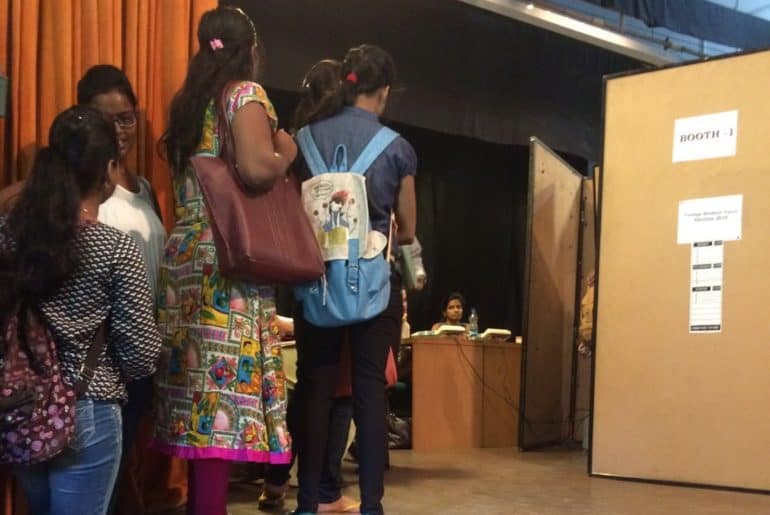
Amidst tight security provided by the Delhi Police, the season of campaigning finally came to an end as voting for the Delhi University Students’ Union concluded on Friday. The results of the elections will be declared on Saturday at noon.

The turnout was reported to be over 44% for morning colleges. The turnout for evening colleges will be confirmed later. Last year, the figure for morning colleges stood at 42.3%. Voting began at 8:30AM and went on till 12:30PM for morning colleges.

#Live: Voting has begun! Do go out and exercise your right and responsibility this year at the #DUSU #election 2015.By Shraman Ghosh for DU Beat

Posted by DU Beat on Thursday, 10 September 2015

Elections for college unions were also conducted on Friday. The results for the same were announced on the same day.

Major parties like ABVP, NSUI, CYSS and AISA halted campaigning on the 9th. AAP’s CYSS is the new entrant to DU’s politics this year. Last year, ABVP swept all 4 seats of the DUSU.

DUSU is one of the most influential students’ unions of the country; numerous past office-bearers, Arun Jaitley and Ajay Maken to name a few, have gone ahead to hold public offices in Central and State Governments.

Image credits: Jasmine Chahal

Politics never seizes to amaze me. Like art, at a different age, you decipher the riddles of various politically active figures and their vote banks in a different way. I always knew that a large part of it requires a lot of money and support, but that was all that I knew before I decided to contest myself. Throughout my second year, I had strived hard and made a ‘name’ for myself. I had started two societies, and being a university journalist added brownie points to my already sparkling repertoire in the college. I had a really nice chance of winning, or so I thought.

A month before the elections I stepped into the limelight, letting my friends know about my intention to contest for the elections. The response however took me by surprise – “You are not election material” and “you have achieved so much, why do you have to do this?” These responses made me more eager to prove my mettle. So I buckled up for the adventurous days that were deemed to come.
Here’s what I learnt while I was campaigning –

1) Your post is never decided until the last week – This is because people who handle your election portfolio need to constantly negotiate with the opposite party for the post of each other’s liking. At the same time, there is always a risk of you not getting nominated because of some discrepancies in the filing process.

2) Endless death-threats – Your opposition is always ready to either make fun of you or discourage you. And if the preceding acts leave no mark on your morale, then the obvious next action is an obscene amount of death threats either on your face or on the phone.

3) You have to organize a good unofficial fresher’s party – Wooing the fresher’s and securing a strong competent vote-bank never seemed more important.

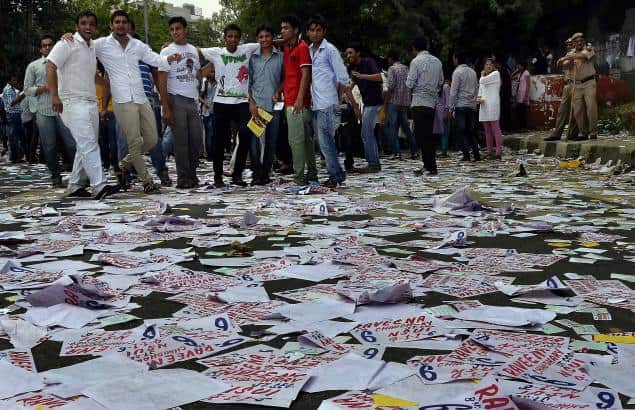
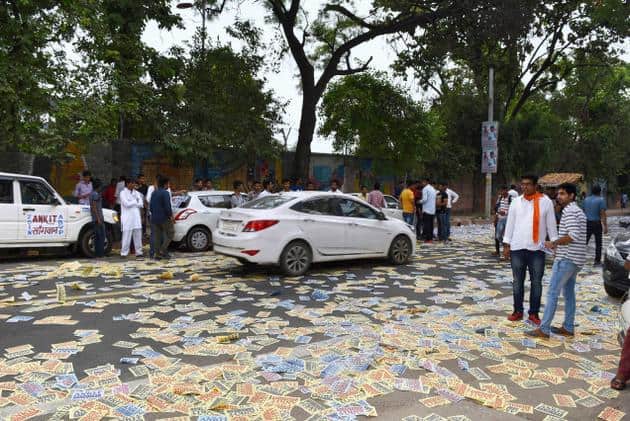
4) Wastage of paper reaches a record high in the election month – From posters on walls, to handed cards and even chits thrown on the floor, this menace never stops. Walls, eventually start losing colors because of these.
I ended up not contesting because of discrepancies in the form, but I have truly learned a lot from the experience of campaigning.

Image Credits- youthkiawaaz.com

Ishaan Sengupta
[email protected]


With the date of polling just 9 days away, the political arena of Delhi University is catching fire as contesting parties step up their campaign for DUSU elections. Parties including Chatra Yuva Sangharsh Samiti, Akhil Bharatiya Vidyarthi Parishad, National Students’ Union of India and All India Students’ Association are leaving no stone unturned in their pursuit of victory.

The week gone by had the Delhi Police register over twenty FIRs against various student parties for cases related to defacement of public property through promotional posters. Last week, we reported the move of the Chief Election Officer of DUSU elections, DS Rawat, to seek help from the Delhi Police in cracking down on defaulters of civic and election rules.

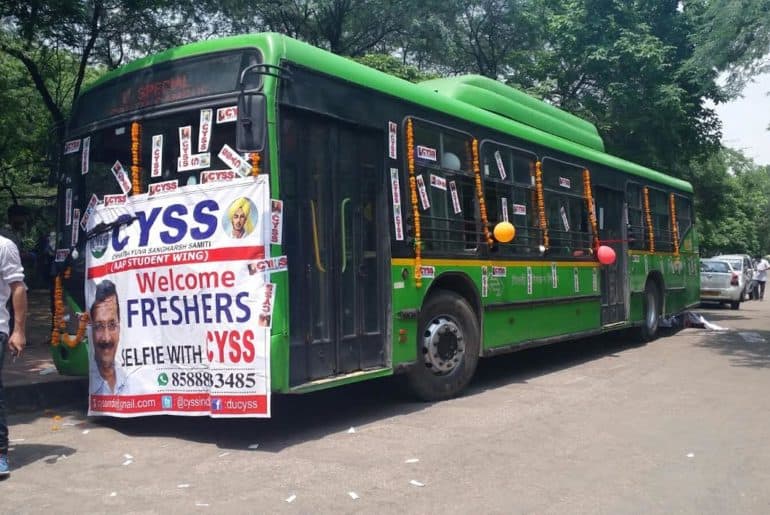
In another development, the launch of a University-special bus in the South Campus of DU took an ugly turn when CYSS and ABVP took to social media to claim the credit for the same. The bus was covered with posters of CYSS, one of which read, “Welcome freshers.” Saket Bahuguna, State Secretary of ABVP, referred to a meeting DUSU had had with the CM of Delhi, Arvind Kejriwal, earlier this year to demand similar amenities for DU students. He also went on to ask why action was not being taken by the police for the ‘act of defacing public property’.

The CEO of DUSU elections has also announced the availability of Delhi University Community Radio (DUCR) to candidates in order to promote paperless campaigning. Candidates will be allowed to record five-minute long speech which will be moderated and aired on the radio at 90.4Mhz.

The CEO also announced the doing away of allowing candidates to change their names by prefixing the letter ‘A ‘several times before their names. This practice enabled candidates to get their names enlisted higher on the EVM machines as names are placed in alphabetical order.  Last year, AISA had challenged the practice legally.

AISA organised a referendum dubbed as ‘Opinion Dhamaka’ in which 93% respondents reportedly voted against the Choice Based Credit System. Earlier, Students’ Federation of India conducted a similar referendum in which 92% respondents voted against CBCS.

Ishaan Gambhir

[email protected]

]]>

This year, St. Stephen’s College did not see the riot of fervent election campaigns or the heated debates at the legendary ‘Open Court.’ When an announcement on the notice board declared Aina Singh of 3rd year, English Honours, as being chosen the President of the Students’ Union Society (SUS) of St. Stephen’s College unopposed, most Stephanians wondered if it might be a prank by the notorious Wodehouse Society of the college. An official declaration made by the Principal cleared the air. Of the five candidates standing for the position of President, four had been disqualified on the basis of having inadequate attendance, leaving Aina as the only eligible candidate. In our conversation with Aina, we find out what’s going on in her mind as she takes on this responsibility.

What are your thoughts about the circumstances under which you have been chosen?

Like most other people, I initially thought this was a prank. Being the only valid candidate was not something I expected as I didn’t even have a campaign for the elections. All I wanted to do was give the voters another alternative to the candidates who were already standing. But as the news is sinking in, it seems strangely satisfying. It feels like an opportunity has been served to me on a platter without me having to fight for it. What scares me the most right now is the resentment and anxiety of the student body since I have not been elected by them. My most daunting responsibility would be to convince the students that the SUS is not unstable just because it isn’t elected.

How do you feel about being the second female SUS President in the history of St. Stephen’s College?

It is important for women to take up posts from where they can make a difference and fight patriarchy in the country. Representation of women is highly significant and much needed. But being a woman President of the SUS is not the be all and end all. That in itself will not solve any problems.

What are the ideas on your agenda for the year?

I hope to focus on sanitation as well as inclusiveness of karamcharis working in college, the differently-abled and women. I also hope to start a conversation on trans-gender students and how they might be included in the life of the college. We, as a college, need to have a conversation about issues such as allotment of residence blocks to trans-gender students. I know my emphasis on equality sounds ambitious, but we will try.

With regard to leadership positions, Aina says that she has never been a part of Students’ Union earlier. “But as long as the ideology is sorted in your head, go ahead, do what you have to do and ignore popular opinion which is usually wrong and unfair,” she signs off.

Image Credits: ststephens.edu

Abhinaya Harigovind

[email protected]

Amidst uproars over the exploitation of employees and claims about the government’s commercialisation project engulfing the University by Left wing Democratic Teachers’ Front (DTF), various teachers associations announced their candidates for the Delhi University Teachers’ Association (DUTA) elections slated for the 27th of this month. DTF, in a press release has appealed to the teachers of the University by attacking red tapism.

Nandita Narain, Associate Professor of Mathematics at St. Stephen’s College and the incumbent DUTA President has been nominated by the association for the position of President again this year. For the DUTA Executive, the nominated candidates are Angad Tiwari (Department of Hindi, Sri Aurobindo College- Evening), Bhupinder Chaudhry (Department of History, Maharaja Agrasen College), Vijaya Venkataraman (Department. of GRS, Faculty of Arts, DU) and Vivek Mohan (Department of History, Delhi College of Arts and Commerce). The Congress backed Academics for Action and Development has announced Sanjay Kumar from Zakir Husain College for the position of President. The National Democratic Teachers’ Front, which is led by BJP, has nominated V S Negi (Department of Geography, Shaheed Bhagat Singh College- Evening) for the position of President. For DUTA Executive, Anil Sharma (Department of Hindi, Zakir Hussain PG College – Evening), Ashok Kumar Yadav (Department of Commerce, Shyam Lal College- Evening), Shambhu Nath Dubey ( Department of Political Science, ARSD College) and Sunil Kumar (Department of Political Science, Dyal Singh College) have been nominated.

In another development, the varsity declared that the Delhi University Students Union (DUSU) elections will be held on September 11.The elections will decide the office bearers in the union and the central council and will be closely watched by major national political parties. The last date to file nomination is September 2 and the date for withdrawal is September 4. This year will also witness the debut of the Aam Aadmi Party’s Chhatra Yuva Sangharsh Samiti (CYSS).

The varsity on July 28 also announced the names of officials responsible for the fair conduct of DUSU elections. “The Vice Chancellor has appointed DS Rawat of Department of Chemistry as the Chief Election Officer, Satish Kumar, OSD (Examinations) as Chief Returning Officer and Anju Gupta, Director of Non-Collegiate Women’s Education Board as the Returning Officer for the conduct of 2015-16 elections,” said an official statement.

Sidharth Yadav

[email protected]


Lok Sabha Elections 2014 are here. The voting  scheduled to take place in nine phases throughout the country from April 7th,2014 to May 12th, 2014 has already started. The first phase constituting of 6 of the 543 seats being contested for, saw a voter turnout of a whooping 79.5%. The graph has of course risen and is  a healthy sign for the Mandate 2014.

A mega turn out like this could mean resentment in minds and desire for change in hearts of people. Only as the process unfolds further we shall know, whether this trend continues in the phases to come and if it leads to sustenance of current throne holders or formation of anti incumbent government. However, another aspect to attribute this turnout could be the increasing glamour quotient of election contenders  and an upsurge in technology driven promotion.

As glamour embraces politics!

Indian politics is no longer what it used to be decades ago. Nor is the image of Indian ‘neta’ same any longer. The white kurta dhoti guy with specs resting on his nose and hands resting on his round belly, wearing a Nehru jacket and a Gandhi topi atop his head ceases to exist in real and is only to be found in works of fiction.  Indian leaders today are dynamic,brand conscious,completely informed, well dressed and nowhere less as the demarcating line between politics and glamour industry is gradually disappearing.

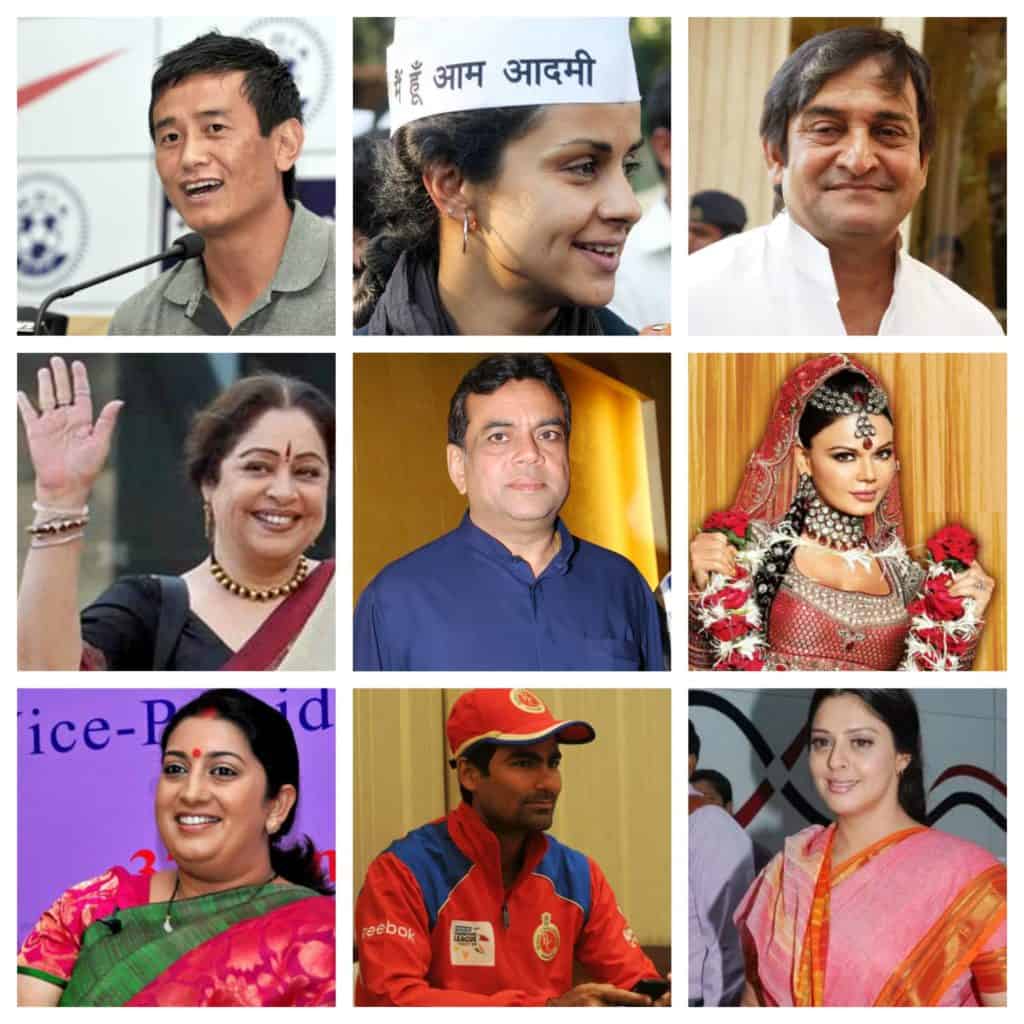
Bollywood celebrities like Dharmendra Deol, Hema Malini and Late Sunil Dutt have been into politics for decades.  This year too,  numerous Bollywood celebrities are looking for a decent second innings in politics. Kirron Kher (BJP Chandigarh), MNS candidate Mahesh Manjrekar, Samaajwadi Party’s Kamaal Rashid Khan, BJP’s Smriti Z. Irani (from Amethi) and Paresh Rawal (from East Ahemdabad) are some of such names who’ve been a part of the glitzy industry and now wish to serve the people. In addition Congress is also fielding veteran actors such as Ravi Kishan, Aparijata Mohanty and Nagma as contenders from their party.
main

Also, 2014 elections witnessed an inflow of young and fresh blood into the system with numerous ticket receivers being representatives of the youth of the nation. Gul Panag (AAP Chandigarh), Babul Supriyo( BJP West Bengal),  TMC’s actor Indraneil Sengupta,  AAP’s Jaaved Jaaferi and Rashtriya Aam Party’s Rakhi Sawant are few famous people to name. The list isn’t just limited to Bollywood  but also famous sports personalities like former Indian cricketer Mohammad Kaif, famous footballer Baichung Bhutia and magician P.C. Sorcar Jr. are also contesting Lok Sabha 2014 polls.

As the glamour quotient of politicians is rising,  India is eventually having leaders with better personalities and perspectives. Also, the celebrities have their own fan base, which helps them  to garner support in this new arena. The goodwill of celebrities comes handy for the party too, and as people have seen them and heard of them, the celebrities eventually have an advantage over their fellow contenders who are relatively unknown. In the elections of 2014 too, some celebrity seats like Amethi shall be interesting to keep an eye on.

In Social Media’s Ambit

The Lok Sabha Elections 2014 are the first ones to come after internet, smart phones and social networking sites like Facebook & Twitter have become household names and their updates have become the topic of dinner table discussions. No matter any other industry has or has not, but politicians have very well exhausted this unique methodology to reach out to the people at relative ease and cost efficiency. All major politicians and parties have launched their Facebook pages and Twitter handles that keep the party supporters and public updated on movements and activities of their leaders.

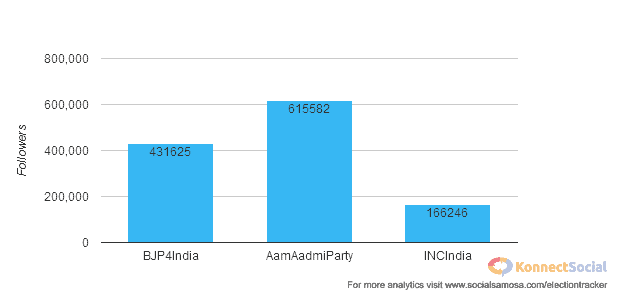
Arvind Kejriwal, who is being considered the pioneer of this new trend, has used it smartly enough, that within few years of its formation and function, the party tops the Twitter followers list, leaving behind the traditional twin parties – INC & BJP.

KS

 AAP tops the list in popularity ratings based on Twitter followers of the three major parties in India.         

This can be attributed to Kejriwal’s spontaneity with updates and posts, leaders’ humorous twitter conversations and patience of accepting sportingly even the negative most regards and gestures with utmost grace. He was also seen engaging in a conversation with the attacker, an auto driver Lali who allegedly slapped him in his rally. The video footage have been posted online, pictures uploaded on Facebook, indeed the best way of social media marketing.

Arvind Kejriwal tweeted a parody song made to mock his frequent staging of Dharnas, refering to it as an ‘interesting song’ on February 16th, 2014.

Numerous social media websites like Facebook & Twitter have been carrying out surveys and online opinion polls to provide insights into what voters feel.  Facebook has been showcasing leading parties and candidates status at a glance, while Twitter is running ‘#ElectionTracker2014‘. Another social media platform, Social Samosa, is carrying out another election tracking mechanism that shows politician popularity in terms of positive/negative mentions on Twitter/ Web for voters to judge

Another interesting trend observed in terms of unofficial online promotion, has been of the ‘Norinder Mudi’ memes, that combines random lines with the jingle ab ki baar, Modi sarkar. The idea has gone viral, and off late, similar memes on Arvind Kejriwal have also begun to circulate in social networking circles.
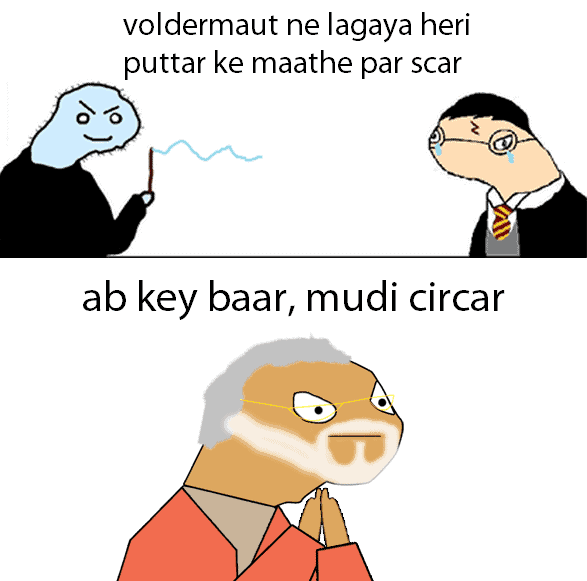
Image Courtesy: Facebook Page 'Norinder Mudi'


Not only has social media eased the way of reaching the masses, it has also led to some tiffs, jibes and cold wars among competitors. The recent Kirron Kher – Gul Panag face off on micro blogging website – Twitter has been an example of the same.

Thus in all, the Lok Sabha elections of 2014, have been different in all terms, from participation to promotion. The trend till date is encouraging, and it is hoped to continue, for Democracy is a religion, elections are the festivals, wherein everyone is supposed to celebrate and participate. Don’t merely exist, make your say count, make a difference, for there is ample information available,  in news dailies and on TV, on radios and with experienced people, and now even at  a distance of a few clicks.

Make an informed well thought upon call. I am a first timer like you, but trust me, that ink mark on my finger, I think it’ll all feel good. Happy Elections!

Every political process comes with a set of questions. On the 7th of April, the country went on for what is being labeled as the biggest general elections in Indian history. While on one hand, experienced players such as Bhartiya Janata Party (BJP) and Indian National Congress (INC) are battling at the forefront, a newly formed Aam Aadmi Party is also claiming to bring in notions of change. In the previous general elections, the total voter turn out was 57 percent and only 12 percent of the youth made it to the polling booths.


In this context, we went around the campus for MTV India’s Rock the Vote campaign to understand how much Delhi University students know about this political process everyone is talking about – the Lok Sabha elections. Before the the city goes for polling on 10th April, we felt there were few questions that should be answered, few concerns that should be resolved. In order to make sure you use your vote to the best of your ability, this post is all you need.

How many seats are there in the Lok Sabha?

The maximum strength of the Lok Sabha as envisaged by the Constitution is 552 – upto 530 members to represent the States, up to 20 members to represent the Union Territories and not more than two members of the Anglo-Indian Community to be nominated by the President, if,  in his opinion, that community is not adequately represented in the House. However, the present composition of the Lok Sabha has 545 seats, with 543 open to elections and two seats up for nominations by the President.

How many constituencies are there in Delhi?

Delhi has a total of 70 constituencies in the Vidhan Sabha and 7 constituencies in the Lok Sabha. The Lok Sabha elections taking place on 10th April, 2014 will witness elections taking place for the seven Lok Sabha seats in question.

Who is standing for elections in your constituency?

With NCT Delhi being divided in seven constituencies, it is important for a voter to know who is standing in their constituency before you vote. Here is a list of all the candidates standing in different constituencies. In order to know more about a candidate (including their financial assets), just click on their name.

Note: All data regarding the contesting candidates is sourced from Association of Democratic Reforms (ADR)’s portal – myneta.info.

[tabgroup][tab title=”East Delhi”]

Candidate

Party

Criminal Cases

Education

Age

Arun Thakur Samyak Parivartan Party 0 12th Pass 39
Deepak Kumar IND 0 12th Pass 31
Dr. Nabhit Kapur Naya Daur Party 0 Doctorate 26
Jagannath Tiwari IND 0 12th Pass 39
Jai Ram Lal JKNPP 0 10th Pass 79
Kumar Vivek Gautam IND 0 Graduate 32
Mahesh Giri BJP 1 10th Pass 39
Manjeet Singh IND 0 Graduate Professional 26
Manju Chhibber RPI(A) 0 Graduate 58
Mohammad Shakeel Saifi BSP 1 Literate 42
Mohammed Naeem IND 1 10th Pass 37
Mohd Naseer Peace Party 0 8th Pass 39
Mohd Shahid Siddiqui AITC 0 12th Pass 51
Ompal Singh Kalyankari Jantantrik Party 0 Graduate 44
Padam Chand IND 0 10th Pass 61
Praveen Kumar Bhartiya Jan Manch 0 8th Pass 33
Prem Singh Socialist Party (India) 0 Doctorate 57
Rajesh Ambedkar National Congress 0 Graduate 45
Rajmohan Gandhi AAP 0 Post Graduate 78
Ram Briksh Mall Hindusthan Nirman Dal 0 Post Graduate 58
Sandeep Dikshit INC 0 Post Graduate 49
Shakeel Ahmed Jai Maha Bharath Party 0 12th Pass 32
Virendra Mayer Samajwadi Janata Party (Rashtriya) 0 Graduate 60

[/tab] [tab title=”West Delhi”]

Candidate

Party

Criminal Cases

Education

Age

Babu Singh Dukhiya IND 1 Graduate 57
Charan Jeet Singh AIFB 0 Post Graduate 46
Deepak Kumar Rashtriya Janadhikar Party 0 8th Pass 30
Dinesh Kumar Akhand Bharat Samaj Party 0 10th Pass 34
Har Gobind Arora SHS 1 12th Pass 42
Istak Khan IND 0 5th Pass 38
Jarnail Singh AAP 0 Post Graduate 41
Jarnail Singh S/O Gurbax Singh IND 0 8th Pass 59
Jarnail Singh S/O Rajinder Singh IND 0 10th Pass 44
Karam Chand Lathwal Bhartiya Pragatisheel Congress 0 Post Graduate 48
Mahabal Mishra INC 1 12th Pass 59
Parvesh Sahib Singh BJP 1 Post Graduate 36
Raj Pal Singh BSP 0 Graduate 51
Rakesh Kumar Bhartiya Janta Dal (Integrated) 0 10th Pass 31
Sunil Sourabh IND 0 Post Graduate 45
Uday Kumar Singh Bahujan Mukti Party 0 12th Pass 31
Virender Mohan Vats IND 0 Graduate 56

[/tab][tab title=”Chandni Chowk”]

Candidate

Party

Criminal Cases

Education

Age

Abdul Amir Amiro IND 0 5th Pass 44
Ajay Kumar Khemka Kalyankari Jantantrik Party 0 Graduate 41
Altaf Husain Bhartiya Janta Dal (Integrated) 0 12th Pass 40
Ashutosh AAP 3 Post Graduate 48
Ashutosh Mudgil IND 0 8th Pass 38
Balram Bari IND 0 8th Pass 47
Bir Singh Soni IND 0 12th Pass 46
Dhan Raj Chauhan Naya Daur Party 0 8th Pass 53
Dildar Hussain Beg IND 0 12th Pass 44
Dr. Harsh Vardhan BJP 2 Post Graduate 59
Dr. Tarun Kumar Vishva Shakti Party 0 Graduate Professional 33
Gagan Rastogi IND 0 Graduate 30
Hariom Sharma AITC 0 10th Pass 49
Jag Mohan Singh Bakshi Atulya Bharat Party 0 12th Pass 54
Jagjeet Singh Bharatiya Gaon Taj Dal 0 10th Pass 0
Kapil Sibal INC 0 Graduate Professional 65
Md Afaq Jai Maha Bharath Party 0 5th Pass 49
Mohd Mursaleem Peace Party 0 12th Pass 39
Musarrat Jahan Rashtriya Janmorcha 0 Graduate 49
Narendra Kr Pandey BSP 0 12th Pass 48
Rashmi Kashyap Bhartiya Pragatisheel Congress 0 10th Pass 55
Sanjay Gandhi Braj Vikas Party 0 12th Pass 0
Surender Singh IND 0 Graduate 42
Tariq Mirza RPI(A) 0 8th Pass 29
Vijay Shankar Chaubey IND 0 12th Pass 42

[/tab] [tab title=”New Delhi”]

Candidate

Party

Criminal Cases

Education

Age

Ajay Makan INC 1 Post Graduate 50
Anjuman Agnihotri IND 0 12th Pass 53
Ashish Khetan AAP 0 Post Graduate 38
Biswajit Ranjit Chatterjee AITC 0 12th Pass 77
Dalchand IND 0 8th Pass 52
Devi Singh Rashtriya Jankranti Party 0 Post Graduate 33
Dheeraj Puri SHS 0 10th Pass 35
Ghanshyam Dass IND 0 10th Pass 57
Harkrishan Das Nijhawan IND 1 12th Pass 50
K P Sankaran Menon IND 0 Doctorate 68
Lakshmi Narayan Bharatiya Bahujan Party 0 8th Pass 46
Lukman Khan IND 2 5th Pass 52
Meena Singla Poorvanchal Rashtriya Congress 0 Graduate 44
Narendra Singh Rawat IND 0 12th Pass 43
Naveen Chandra Naya Daur Party 0 Graduate 40
Nikhil Sablania IND 0 Graduate Professional 34
Padmaja Kandukuri IND 0 Not Given 50
Pradeep Varma Bharat Vishal Party 0 Graduate Professional 49
Ramanuj Patel Samyak Parivartan Party 0 12th Pass 36
Ratheesh IND 0 Graduate 26
Ravi Kumar Gupta IND 0 12th Pass 66
Rubina Khan IND 0 Graduate 27
Smt. Meenakshi Lekhi BJP 0 Graduate Professional 46
Solomon George BSP 0 Post Graduate 50
Sujeet Jha Bhartiya Janta Dal (Integrated) 0 12th Pass 30
Sunita Chaudhary JKNPP 0 10th Pass 36
Swadesh Ohri Atulya Bharat Party 0 12th Pass 72
Ved Prakash IND 0 10th Pass 56
Vishal Khosla IND 0 12th Pass 51

[/tab] [tab title=”North East Delhi”]

Candidate

Party

Criminal Cases

Education

Age

A.K. Aggarwal Agar Jan Party 1 10th Pass 47
Abdul Sami Salmani BSP 0 Others 58
Ali Husan IND 0 5th Pass 40
Amit Kumar Sharma IND 0 Graduate 38
Anand Kumar AAP 0 Doctorate 64
Dan Bahadur Yadav IND 0 Graduate 50
Dharamveer Singh Rashtriya Ekta Party 1 10th Pass 50
Dinesh Pal Singh IND 0 8th Pass 35
H.K. Mahendru IND 0 8th Pass 78
Harsh Kumar IND 0 Graduate Professional 38
Jai Prakash Agarwal INC 0 Graduate 69
Manoj Tiwari BJP 0 Post Graduate 43
Mohd Arif Siddique AITC 0 Illiterate 26
Mohd Hasnan Khan JKNPP 0 5th Pass 33
Mohd. Hasnain IND 2 10th Pass 55
Mukesh Kumar Arora IND 0 Graduate 40
Narendra Sharma SUCI(C) 0 Post Graduate 68
Om Dutt Sharma SHS 2 12th Pass 49
Pradesh Kumar Ambedkar National Congress 0 Post Graduate 31
Rajan Lal Bharatiya Republican Paksha 0 Graduate Professional 36
Ramesh Singh Siral Naya Daur Party 0 8th Pass 40
Roshan Ali National Loktantrik Party 0 Not Given 56
Vinay Bharatiya Sarvodaya Kranti Party 0 12th Pass 29

[/tab] [tab title=”North West Delhi”]

Candidate

Party

Criminal Cases

Education

Age

Basant Panwar BSP 0 8th Pass 46
Bhup Singh IND 0 Graduate Professional 77
Dharamraj Bhartiya Pragatisheel Congress 0 8th Pass 40
Inder Singh Asankhya Samaj Party 0 10th Pass 51
Jodhraj Paharia IND 0 Illiterate 65
Kamini Kaur IND 0 8th Pass 49
Krishna Tirath INC 0 Graduate 58
Rajesh Kumar Rashtriya Bahujan Hitay Party 0 10th Pass 41
Rakhi Birla AAP 0 Post Graduate 27
Ram Karan Sauran IND 0 Graduate 60
Shailender Kumar IND 0 Graduate 34
Sunil Chhikara IND 3 Graduate Professional 42
Udit Raj BJP 1 Doctorate 56
Vijay Kumar RPI(A) 0 Graduate 39

[/tab] [tab title=”South Delhi”]

Candidate

Party

Criminal Cases

Education

Age

D K Chopra IND 1 Graduate 68
Devinder Kumar Sehrawat AAP 0 Post Graduate 48
Dushmanta Kumar Giri IND 1 Doctorate 54
Hafiz Mustaq Jan Samanta Party 0 Illiterate 53
Kiran Pal Singh IND 0 8th Pass 63
Mohan Kanuga JKNPP 0 Post Graduate 66
Naresh Kumar IND 0 Illiterate 50
Ombir Bharatiya Bahujan Party 0 12th Pass 51
Rakesh Kumar IND 0 10th Pass 42
Ramesh Bidhuri BJP 4 Graduate Professional 52
Ramesh Kumar INC 0 10th Pass 58
Ruby Yadav IND 0 Post Graduate 33
Sanjay Kumar Rai BSP 1 12th Pass 47
Shahid IND 0 10th Pass 38
Shri Chand Tanwar CPI 0 8th Pass 68
Sreerupa Mitra Chaudhury AITC 0 Post Graduate 49
Sumant Kumar IND 1 Graduate 51
Sunil Kumar IND 0 10th Pass 38
Tej Pal Singh IND 0 10th Pass 38

[/tab][/tabgroup]

What is NOTA?

Let us assure you, this word being thrown in political debates has nothing to do with terrorism (please watch the video below to understand further).

None of the above (NOTA) is an option on the EVM for people who are not satisfied with any of the candidates running in their constituency.  You should know it is not akin to ‘Right To Reject’ where if a certain percentage of the voters choose the latter option, the elections are cancelled and all the candidates have to be changed by the parties. In India, even if a majority of the voters choose NOTA, the candidate getting the most number of votes will win the contest. (No, a hung parliament or President’s rule do not follow a scenario with majority of votes casted for NOTA)

There is something called a manifesto (and you should read it)

An election manifesto is a document released by a party or candidate with the agenda of what all would one seek to fulfill if brought to power. Irrespective of whether these promises are actually converted to actions, in order to make an informed choice, it is only sensible to go through what each party is promising. After all, you don’t want to support a party or candidate that have something against your beliefs in their agenda, right?

To make things easier, here are the links to the manifestos of the three major political parties: Indian National Congress (INC) | Bhartiya Janata Party (BJP) | Aam Aadmi Party (AAP) 

To see more videos of how Delhi University answered our questions visit DU Beat’s Instagram account. Share your opinions with @du_beat and @mtvindia using #RockTheVote.

In the midst of jitters, confusion and excitement , Gargi College elections were held on Friday, 28th of March’14. Students came up to vote in huge numbers as voting convened from 10am and stretched on till 2 pm.

The election process had begun with the release of nomination forms. Applicants were required to fill all necessary information which included the post they were applying for and also answer a few questions, on the basis of which they were to be shortlisted. The shortlisted applicants had to submit their agenda which was then put up on the main notice board of the college on 21st March.

The campaigning for elections started once the agendas were displayed on notice board. Candidates were allowed to campaign only during college hours and inside the college campus without use of personal funds. The electoral debate, Big Fight took place on Wednesday, 26th March in the Arts Quad of the college, from 10 am to 4pm. An informal confrontation,  students were allowed to put up their questions to the candidates based on their agenda. Says Jayapriya, the newly elected Cultural Secretary, “Though I was nervous at the beginning, but then the continuous support from my peers made me confident and now I feel that I am capable enough of handling the cultural department.”

On the day of voting, every student was given a slip which had the list of the candidates against their proposed post. Students were supposed to tick against the names of candidates they wish to vote for and drop the slips into the ballot box. The results of the poll were declared at 5pm. “This is not my victory alone, everyone in the college will now be the decision maker. The power lies in the hands of students of the college. Gargi college has always been an excellent college and I want to take this excellence to new heights. And Congratulations to all the new union members!” said Kajal Bhatia, the newly elected President of the college.

Gargi College Students’ Union Election Results:

President- Kajal Bhatia
Vice President (Arts)- Binita
Vice President (Commerce)- Garima Sharma
Vice President (Science)- Sushmita Sharma
Treasurer- Rubinder Kaur
Public Relations Officer- Arshita Nandan
General Secretary- Parineeta Khera
Cultural Secretary- Jayapriya Nair
Sports President- Ruchi Bhatt
Sports Captain (Science)- Kriti Shukla
Sports Captain (Arts)- Nisha Pandey
Sports Captain (Commerce)- Arushi Gupta
Proctor (Arts)- Mehar Kakkar
Proctor (Commerce)- Ayesha
Proctor (Science)- Prapti Bajaj