Author

DU Beat

Browsing

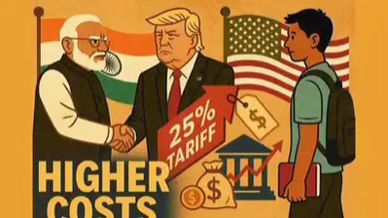
Can we really afford war? I here present a take on tariffs, tumultuous markets, unemployment and unhappy nations.

Tolstoy wrote, “Happy families are all alike; but every unhappy family is unhappy in its own way.” What is a nation if not one giant, unhappy family, each in its own twisted way? We begin right there with the unhappiness—the boils on the world map. With warring nations, job markets have become tighter and the competition fierce. The fate of Delhi University graduates has been sealed—taped with tariffs and marked ‘siren-ready’.


Geopolitics and the Global Economy


According to the WEF’s Global Risks Report, compared with last year, “state-based armed conflict” has climbed from number 8 to number 1 in the rankings for 2025, and sits third for 2027. At the same time, there is a declining investment in humanitarian aid and the size of the UN peacekeeping operations has been reduced from over 100,000 peacekeepers in 2016 to around 68,000 in 2024. The rise in tariff-based protectionism is also expected to lead to a decline in global trade. 


“The ensuing risks are becoming more complex and urgent, and accentuating a paradigm shift in the world order characterized by greater instability, polarizing narratives, eroding trust and insecurity.” says Saadia Zahidi, MD of the World Economic Forum. The Geopolitical Risk Index by the World Bank also shows that the instability caused by the invasion of Ukraine and the latest conflict in the Middle East has caused two prominent surges in the charts—within a gap of just two years, as never seen before. China hoarding critical minerals for automotives from the world at such a time, is another bolt in the global economy’s coffin. 


The fiscal consequences of the shooting GRI includes complete disruption—with higher inflation, lower economic growth, increased market volatility, trade policy shifts, and the subsequent reduction in global trade and FDIs. And this is to say the least. 


Has Delhi University been Spared? 


One might here raise the issue of the ultimate cul-de-sac to the long, laborious education journey of our lives—a job. Internships are as competitive as a real life Squid Game sequel. Everyone is fighting for the perfect opportunity to cross another; chemically enhanced rats with superbrains in a race to win the JPMorgan stamp. Francis Fukuyama said, “history ended with the onset of consumerism,” when money became the centre of the economy replacing labour. And now, time is taking a toll on the last man standing in this struggle. 


Add to this the geopolitical tensions adversely impacting the Indian job market. A recent survey shows that over 63% of companies are freezing hiring or downsizing in response to the tensions in the Middle East. A shift toward contract-based and freelance roles is also evident as companies adapt to global instability. Thus, the graduating students are meant to be stuck in what The Economic Times defined as a “loop of endless applications and minimal results”. 


The Silver Lining 


India signed an MoU with the International Labour Organisation, amid global geopolitical tensions, to advance ‘International Reference Classification of Occupations’ and facilitate the youth in availing global employment opportunities—a recent report stated. This usually means that India is committing to align more closely with international labour standards (fair wages, decent work, occupational safety, gender equality)—a landmark development in the global landscape as it signals stability and commitment to fair labour standards. This reveals a sharp contrast with the economies around the world currently unstable due to flaring political tensions. 


This helps India attract foreign investment, strengthen exports, and formalise its workforce. For DU graduates, it means better opportunities in globally compliant sectors like IT services, consulting, social sectors, or global supply chains. ILO connections may also open the door for international collaborations, fellowships, or exchange programmes. This entails a silver lining for India’s new position in the current world order—with a rapidly growing economy and worldly connections. A direct impact is caused on the lives of graduating Delhi University students, whose goals and aims circle back to this moment of securing a placement at the glorious end of their college life. 


You know the storm is fierce when its warnings rise louder than the cries of a wounded planet. India’s attempt to bind itself to fairer labour standards is like a stitch in the chaos. What war and politics couldn’t reconcile, they have succeeded in tearing apart—trust, trade and the tender hope of the youth. 


Shreya Bhushan 

[email protected] 


Image Caption: From Global Deals to Local Consequences 

Image Credits: The Times of India

Men in suits have always governed what we think and who fights whom. Isn’t it time we break the cycle and drop out of the race? Someone has to do it first.

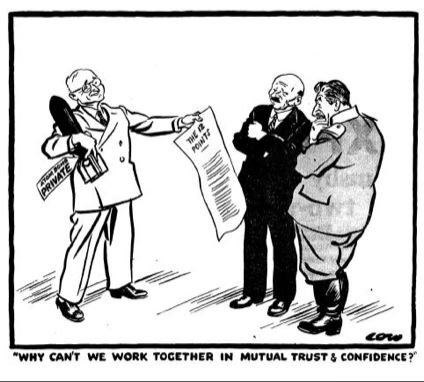
Global politics is the theatre of national security and patriotism, but in reality, it veils a carefully crafted business model, one that will eventually price peace out of the market. Corporations and governments that hold defence equipment will only profit from perpetual global instability, as every escalation, whether it be in Israel, Ukraine, or the South China Sea, will lead to a spike in stock prices for weapons manufacturers. Weapons, in any form—bombs and other physical weapons, drones, surveillance technology, cyber arsenals—are an economic incentive for both the entities that produce them and those that buy them, which includes private actors in addition to governments and nation-states. This means that conflict not only indicates grievance in solidarity anymore, but also a fast-tracked, scalable enterprise—one that an increasingly capitalist global cosmology is determined to keep alive. 


Even if there are no direct economic transactions between countries, that may not mean the economic intention does not exist. It is important to question why the United States is willing to donate billions of dollars to Israel if there is no incentive to do so. While one reason is the strategic political position that Israel provides to the US in the Middle East, another is, most unequivocally, that Israel is the breeding ground for global technology, innovation, and entrepreneurship. This billion-dollar “donation” or “aid” is then just an investment into a potential trillion-dollar industry.


According to a report by ODI Global, the largest importers of military weapons are, of course, countries engaged in conflict or those experiencing ongoing tensions. The biggest exporters, on the other hand, are the US, China, Russia, and other NATO allies, which together make up almost 80% of total arms exports. It is obvious who is gaining and who is losing in this race. Corporations that export defence equipment meet every day in air-conditioned rooms while innocent individuals, institutions, and children are bombed to oblivion. Even if we look at India, initiatives such as Atmanirbar Bharat that focus on defence indigenisation are strengthening India’s economy and reducing dependence on imports, but are doing so quite literally at the expense of lives. The solution to national security is not war; it is trying to cut off the root of war in the first place—hatred, media polarisation, and consent manufacturing; the factors that mobilise citizens into believing war is something that they want. Is this the kind of future we want to be funding?


Image source: British cartoon by David Lowe, 1946


Image caption: Truman negotiates with Attlee and Stalin while keeping the ammunition firmly in American hands

Manya Marwah 

[email protected] 

This analysis compares recent student-led uprisings in Bangladesh, Sri Lanka, and Nepal, highlighting how disillusioned youth challenged corruption, repression, and economic crises, emerging as catalysts for political change across South Asia.

South Asia has been facing unprecedented political instability in recent years. The commonality stems from an observation that these movements or uprisings are unorganised in nature and lack any cohesive organisational support or leadership. This establishes the ground for comparison between these countries besides being from the same region and being postcolonial countries. The role of students in movements has been crucial in various uprisings which have led to transitions of governments throughout the pages of history.

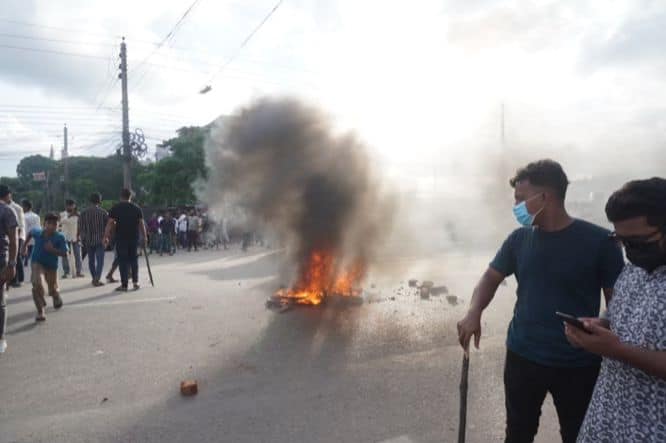
The July Uprising of 2024 in Bangladesh showcased the deeper dissatisfaction of students in terms of the lack of civil liberties, political freedom and robust social security for the majority, which was often overlooked due to the economic and technological progress of the nation. However, as the country’s economy thrived, the government appeared to believe this gave it free rein to suppress civil rights and freedoms, sideline opposition parties, and govern without regard for the nation’s laws or international democratic standards. This led to the creation of political outfits like Ganatantrik Chhatra Sangsad, or Democratic Student Council. Every revolution has an incident which serves as an immediate trigger to a larger uprising; in this case, it was the quota system in jobs giving 30% reservation to the families of freedom fighters that fought for the liberation of Bangladesh from Pakistan in 1971. The manner in which the government at the top, run by Sheikh Hasina, reacted made the situation even worse, which led to the killing of various student protesters, including Abu Salem, who was the lead coordinator of “Students Against Discrimination”.

Skyrocketing fuel costs, rapid depreciation of the rupee, and massive power outages had caused deep disgruntlement among Sri Lankans, especially the younger generation. When the nationwide power cuts reached more than 10 hours a day in late March, mass protests broke out in a number of regions in Sri Lanka, where demonstrators urged for the resignation of the country’s president, Gotabaya Rajapaksa. Sri Lanka’s Inter University Students’ Federation (IUSF) made an important contribution to the people’s struggle throughout the country. IUSF has around 70 affiliated student unions – about 95% of university student unions in the country, including those at all major universities. Youth and students, including the IUSF, played a similar key role in 2015 to defeat Gotabaya Rajapaksa’s elder brother, former president Mahinda Rajapaksa, upending the ‘unshakeable’ Rajapaksa regime during elections that year.

The most recent, widespread protests in Nepal, which are quite literally being termed as Gen Z protests, highlight the young and mostly university-going students as the pioneers of the uprising. The banning of social media apps like Instagram, YouTube,etc, triggered the same; however, it would be a grossly incorrect observation to term it as the key reason for the protest. The youth of Nepal see how their country has suffered from around 2 decades of corruption since the country transitioned from being a monarchy to a democracy and the power rotations between 3 leaders who have allegations of serious corruption cases over them, with their family and children openly enjoying luxurious lifestyles. On the other hand, average youth are suffering with a lack of employment, due to which they have to migrate for better opportunities, and on top of that, the unjust taxing rate is at 39%. 

The students have a bolder voice because their dreams are still fresh and dear to them, and the ability to see hope as the silver lining amidst all the chaos gives them the unique ability to unite their peers and form an effective movement which straightforwardly communicates the grievances that they have and how they would no longer be tolerated. 

Caption- Advocacy of students against injustice. 

Divyanshi Dusad

[email protected]

Indian students’ solidarity on Palestine can make a difference. But when does our solidarity matter less than what side of the line we’re speaking from?

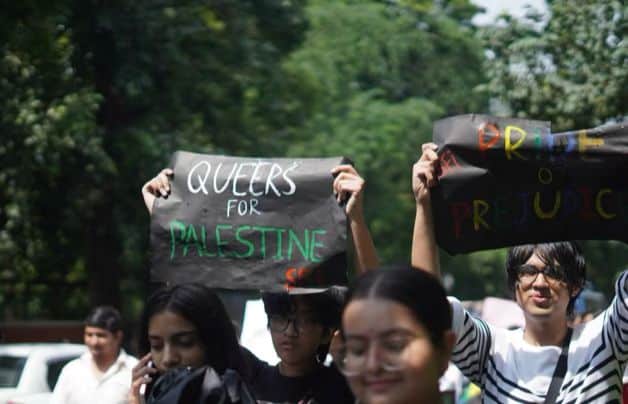
From the pouring of fake ‘blood’ on the steps of Kamla Nagar’s Starbucks to chants of “Free Palestine” at protest marches, Delhi’s student body has been at the forefront of protest in support of Palestine. With estimated death tolls crossing sixty thousand in Gaza and a collapsing health and food situation, keeping the Palestinian issue alive through active engagement is critical. However the entire narrative around a Free Palestine has become more and more politicised. One cannot shirk the feeling that the term ‘Free Palestine’ is at risk of becoming a buzzword.

Today, a watermelon emoji next to your social media account is not just a symbol of solidarity. It also connotes a political identity, often linked to left or centre-left student groups. This is evident in the actions of outfits like AISA and SFI, which have consistently organised marches and protests supporting Palestinian rights. In May 2024, AISA held a candlelight march in Delhi condemning Israeli airstrikes and demanding an end to the siege of Gaza. Similarly, IPSP coordinated protests on Global Action Days, to highlight the humanitarian crisis and support the Boycott, Divestment, Sanctions (BDS) movement. The SFI-organised Campus Pride Parade last week also echoed “From the River to the Sea, Palestine Will be Free.” These efforts certainly succeed in bringing people together in support of Palestine but tend to do so under a coloured banner.

The pushback from right-wing student groups has been no less. In April this year, ABVP members at Jawaharlal Nehru University burnt the Palestinian flag during student election vote counts, deeming Palestine activism anti-national. Even more recently, ABVP activists vandalised a Palestinian flag mural at the University of Hyderabad, sparking widespread condemnation from other student bodies.

In this backdrop, an Indian student finds their opinion on the issue a mark of their political affiliation. It isn’t feasible to be an active Palestine supporter in DU without finding yourself associated with the left or losing affiliation with the right. For those keeping distance from both camps, it isn’t easy to join the movement strictly on humanitarian grounds without being questioned on their political standing. 

What should be a humanitarian cause gets caught in the conditionality of what beliefs entitle you to be a true supporter—and which ones you are now required to unsubscribe from.These watertight compartments, at some level, inhibit any real collaboration on global issues.

Palestine is undoubtedly political, but it is a politics far more important than any other politics we are fighting. A politics that needs solidarity.

Anjali Paruvu

[email protected]

Image Source: Mahin for DU Beat

This article is borne out of  a simple question: Why did India, which once championed the rights of Palestinian autonomy, gradually recalibrate its stance to cultivate one of its closest strategic partnerships with Israel? What unfolds  is a complex story of ideals meeting geopolitical pragmatism, of moral postures negotiating with strategic necessities, and of a nation navigating its own internal and external transformations in the decades following independence.


Step onto any street in India in 1947 and mention that today its youth are among the most fervent amplifiers of the Zionist project, and you would likely be met with incredulity. Yet, that is exactly the world we live in. Since Israel began bombing Gaza in “retaliation” for the Hamas attacks on 7 October, networks of Hindu nationalists have mobilised online, and sometimes in the streets, advertising their solidarity with Israel as if it were a moral and civilisational duty. This was far from India’s first stance. What we see today marks a rupture with the ideas that shaped India’s early engagement with this subject. 


“Palestine is essentially an Arab country and must remain so, and the Arabs must not be crushed and suppressed in their own homelands.” Nehru declared in 1938. At the time, Palestine was in the throes of a revolt against British rule and endless Jewish migration from fascist and anti-Semitic Europe.


This stance aligned itself ideologically with Indian National Congress’ broader anti-colonial worldview. They had engaged with liberation movements in Syria, Iraq and Egypt which indeed were the seeds of the ties between the Arab world and India. Ariel Glucklich notes that Indian intellectuals viewed Zionism less as a liberation movement and more as an extension of Western colonialism.


This refusal to support the creation of a Jewish state was also motivated by a desire to mediate tensions between the Hindu-dominated Congress Party, which advocated for a strong and ostensibly secular central government, and the emerging group of Muslim leaders, who, wary of their minority status, sought greater autonomy within a more federal structure for India.


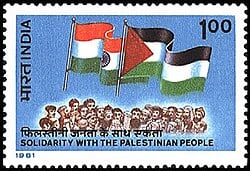
Following independence, India’s foreign policy under Nehru maintained its pro-Arab and anti-colonial posture, emphasising solidarity with Palestine while carefully navigating relations with Israel. In 1947, India, along with newly created Pakistan and Arab bloc, voted against the partition of Palestine at the United Nations. As the leader of the Non-Aligned Movement (NAM) in 1961, India became attached to its self-image as a buffer against Western imperialism.


At the same time, India had to contend with the realities of regional geopolitics, particularly its rivalry with Pakistan, which used Islamic solidarity as a diplomatic tool to gain influence in the Middle East. Supporting Palestine became both a moral stance and a strategic necessity, helping India secure backing in the Arab world on issues like Kashmir. For all its moral stance, India’s domestic politics with respect to Kashmir and North-East revealed a gap in its professed commitment to self-determination and anti-colonial solidarity. Also, India’s significant energy needs and trade routes through the Suez Canal made strong relations with Arab countries crucial.


Yet beneath this public pro-Arab posture, India’s foreign policy operated a careful shadow game. India engaged in significant backdoor military trades and intelligence cooperation with Israel from the 1960s onwards, driven by urgent security needs. During the 1962 Sino-Indian War, Nehru discreetly requested and received heavy mortars and ammunition from Israel, despite objections from Egypt. Publicly, however, India doubled down on its stance and became the first non-Arab country to recognise the Palestinian Liberation Organisation (PLO). 

The traces of any real shift in policy  were witnessed under Rajiv Gandhi in the 1980s. Representing the growing bourgeois middle class, he moved the Congress Party away from its strictly socialist posture toward economic liberalisation. This shift coincided with a recalibration of India’s foreign relations: while the government maintained its public pro-Palestinian stance to honour commitments and preserve ties with Arab states, it increasingly pursued pragmatic engagement with Israel behind the scenes.


In 1992, following the end of the Cold War and the beginning of the American unipolar moment, India formally exchanged diplomatic missions with Israel, more than four decades after first recognising the Jewish state. As India ventured into the global market economy, it had to represent, according to Azad Essa, an “evolution” of the Indian state from a purported outsider to an “insider” in the neo-liberal international order. Thus began a series of increasingly overt engagements with Israel, spanning trade, technology, and defence, progressively shedding the cloak of secrecy that had defined much of the Cold War-era relationship. Arab participation in the Middle East Peace Conference also gave India space to normalise relations with Israel.

Subsequently, we see an unprecedented acceleration in the India-Israel relationship, particularly in the BJP-led state. Members of RSS had long idealised the Zionist project. V D Savarkar, the ideological father of Hindutva, wrote that “if Palestine became a Jewish state, it would gladden us almost as much as our Jewish friends.” It is hard not to notice, if nothing else, a similar pattern of right-wing ethno-nationalist states states employing a rhetoric of historical victimhood to justify military aggression and consolidate domestic majoritarian politics.


Yet ideological unity is not enough to understand the subject. A key aspect of this evolution was India’s ability to decouple its bilateral interests from its public stance on the Israeli-Palestinian peace process, enabling rapid expansion in military and security cooperation. This included defence modernisation, joint research, and significant purchases of Israeli technology and collaboration in counter-terrorism and border management. Economic ties deepened as well, with bilateral trade extending to agriculture, technology, water management, and arms sales, later reinforced by initiatives like the “I2U2” grouping and the acquisition of Haifa Port by Adani. Even Congress under Manmohan Singh pushed for improving ties with Israel in the form of joint missile development. Today, the relationship is best described by Naor Gilon, the Israeli Ambassador to India as “very deep, very emotional, and truly unique.”

What then are we to make of this complex entanglement? To me, the convoluted, multilayered story of the India–Israel relationship reveals a longer and deeper story of  our postcolonial nation. Noam Chomsky once remarked that “today’s Israel and Modi’s India are natural partners.”Hopefully, this reflection makes us question whether it is just an ideological alignment driving the partnership, or if it has become an enduring feature of India’s identity.  


Caption: 1981 stamp issued by the Government of India in support of the Palestinian people.

Source: brownhistory on instagram

Yashika Jain

[email protected] 

Indian students are active “psychogeographers” of global politics—shaped by world events yet reshaping them through solidarity, dissent, and everyday engagements beyond state-centric politics.


In the twenty-first century, the student is no longer confined to the classroom. The internet, transnational education, and global crises have transformed campuses into spaces where young students are constantly negotiating their position in the world. Indian students, in particular, have emerged as what can be called the psychogeographers of global politics—not merely charting the impact of world events on their lives but also redrawing the contours of political solidarity itself.


When war breaks out in Ukraine, or West Asia, or when climate change forces entire communities into precarity, Indian students do not experience these events as distant abstractions. They encounter them in their campus discussions, their social media feeds, and their diasporic family networks. In these moments, they are often portrayed as passive recipients of crisis—waiting for evacuation flights, and reeling from the aftershocks of geopolitical tensions. The student figure, in this narrative, is primarily vulnerable, caught in the cross-currents of power without agency.


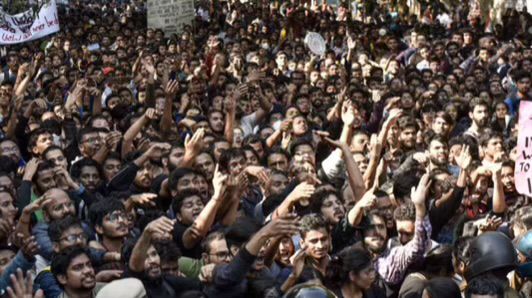
Yet, to stop at this description is to miss the ways in which Indian students are increasingly reshaping the moral geography of global crises. The solidarity marches on campuses, the fundraisers for disaster relief, and the vocal demands for international justice reflect a deeper engagement. From Delhi University students issuing statements on Palestine, to Indian youth activists co-ordinating with counterparts in Europe and Africa, these acts of alignment reimagine students not as spectators but as agents who extend the terrain of politics.


The idea of students as psychogeographers rests on this duality: they are simultaneously mapped by crises and mapping new routes of resistance. The student who studies in Canada while organising aid for Manipur, or the one who prepares for competitive exams in Delhi while amplifying Palestinian voices online, is engaged in a form of border-crossing politics. They are charting emotional and political landscapes that escape state-centric diplomacy.


This agency, however, comes with its own contradictions. Many Indian students abroad struggle with visa precarity, racial discrimination, and economic vulnerabilities. Their solidarity is often curtailed by fear of state backlash—whether from host governments or from Indian authorities keeping an eye on dissent. On campuses at home, political polarisation and surveillance discourage free debate. Yet, despite these constraints, student voices consistently seep through. Even when formal protests are suppressed, the circulation of petitions and social media campaigns becomes a cartographic act—tracing new geographies of empathy.


It is important to recognise that students’ interventions do not always take the shape of loud political statements. Sometimes they manifest as the translation of distant suffering into local conversations—debating refugee policies, questioning media bias, or challenging the ethics of investments in arms. By reframing global crises through the lens of everyday student life, Indian youth ensure that politics does not remain the monopoly of statesmen but becomes the concern of citizens-in-the-making.


In this sense, Indian students are not just navigating global crises; they are re-scripting them. They move between the vulnerability of being acted upon and the agency of acting back. As psychogeographers of global politics, they leave behind trails of solidarity, dissent, and imagination that future generations will follow. And in doing so, they remind us that the classroom of politics is not confined to textbooks and lecture halls, but is spread across the uneven terrain of our shared world.


Featured Image Source – DNA India

Image Caption: By linking global crises to daily student life, Indian youth make politics a concern of citizens-in-the-making, not just statesmen

Richa Choudhary

[email protected]

Desensitisation of the average Indian student with the Palestinians’ occupation directly points at disconnect and overall systematic erasure towards our own history and struggle against colonialism.


The world has, as time has passed, seen multiple phases of fascism. Despite these phases, all fascists around the world have had common structure, common fundamentals, and common aesthetics of politics that they follow. The messaging, symbolism, myths, and now even memes, to manipulate emotions, shape political obedience, and instil some mindless belief into people’s heads, has been the ‘trick’ for a while. The right-wing parties have also, historically, just been better at spreading their propaganda and having it reach the grassroots than the left. The message from the Palestinian land and its people has been broken, distorted, presented as a religious war, a terror attempt: all logic and all history as if erased from the minds of people. Diplomatic world views and neutral stances are taken seriously even as Gazans bring us the footage of the genocide waged on them. The world is a witness to this all: the killing of innocent kids, shooting people looking for aid, the spread of starvation and disease, a whole second Nakba live-streamed to the world. The propaganda and myths run so deep that, since the last two years, Palestinians have struggled to breach normality.


The Balfour Declaration of 1917 was the means through which British Imperialism could approve of a Zionist colonial project of establishing Jewish people’s ‘homeland’ in Palestine. Israel is not a country but a colonial settlement based on the displacement of Palestinians by Western imperialists. On 7 October 2023, the prisoners of the concentration camp in Gaza carried out a violent revolt against the Israelis, which was labelled as an act of terror, one that Israelis have been ‘defending themselves’ from over the last two years. If a parallel were to be drawn to India in 1925, 100 years from now, when the country and its citizens were living under colonialism, their land seized, labourers receiving crumbs, no job security, and extreme oppression from their landlords and the British, we would recall that, during that period, members of the HRA planned and executed the Kakori Train Robbery. Young revolutionaries like Chandra Shekhar Azad, Ram Prasad Bismil, Asfaqulla Khan participated in this and inspired others like Bhagat Singh to join HSRA as well. Bhagat Singh went on to assassinate a police officer and throw a bomb in the Central Legislative Assembly. These were our revolutionaries, who violently resisted the colonisers for our liberation. Can using violence to fight for the freedom of one’s own country, and against violence, humiliation, and blockade by imperialists, be termed terrorism? Because if yes, then our revolutionaries would also be deemed terrorists.


Outside the Kiran Nadar Museum of Arts in Delhi, a few months back, a blackboard was set up, inspired by the art exhibit in the museum. I sat there for a while and watched the guard in the mall erase all graffiti of “Free Palestine”, all symbols of resistance, off this board. On asking why he would do that, he simply replied, saying that he cannot support terrorist nations, and it is his personal responsibility to clean the board in this case.


Why are we, as Indians, so desensitised to the sufferings of Palestinians? How is it that, to us, the happenings of 7 October 2023 are a greater act of terrorism than eight whole decades of violent oppression by the colonial settlement of Israel on Palestinians? This doesn’t just show our gradual disconnect with the world and humanity, but also with our own history and struggle.


The reason for unempathetic responses to struggles that were once ours is also systematic erasure of revolutionary and leftist history in our universities: saffronisation of syllabi starting with kids as young as fourteen, and growing communalism in university spaces, society, and even our own families. Not just this, but also erasure of critical thinking and nuance, discouragement of subjectivity even in entrance exams, makes people pursuing higher studies gradually less thoughtful or interested in actually learning about and making such connections.


We cannot ignore that a huge part of Indian youth’s coldness towards cruelties faced by Palestinians is due to their religion. Even though there are Christian Palestinians as well, the fact that Muslims are in majority in the country makes the average Indian student, who is daily being taught to be more communal, easily neglect their genocide. We are daily being taught to practise our religious beliefs over our humanity, which once again goes against our own history and past, where the fight for liberation came through intersectionalities and class uprisings and struggles.


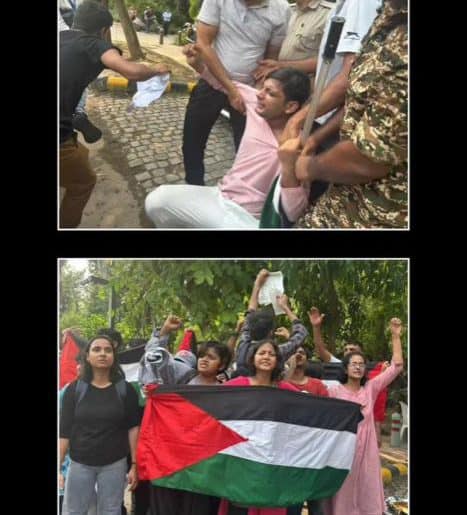
Students peacefully protesting for Palestine in India are beaten up and detained. DU’s debate and MUN circuits, with their need to be ‘politically correct’, often choose to talk about Palestine diplomatically, praising India for having a neutral take. The truth is that there is nothing neutral about Palestine: years of occupation, and two years of genocide. Our history and legacy tell us about our own freedom struggle under the British Empire – blood shed by our ancestors, families broken, labourers exploited, revolutionaries hanged. It is important that we connect the dots to Palestine instead of pretending to be apolitical.


Image Captions: Activists beaten and detained for demanding freedom for Palestine, and yet, silence continues.

Image Source @indians_with_palestine on Instagram


 Gaurika Bahl

[email protected]

To download the StuCred app, click on the link:  https://stucred.flyy.in/JXR2Q13

1. Introduction: My ₹5,000 Saving Challenge

Every month, I wondered where all my money went. It is not that I was spending a fortune on gadgets or trips, but by the end of the month, there was nearly no money in my bank account.

Sound familiar?

Every week you make some money, or get an allowance, spend on a few things, and voila… the dimes are all gone.

Like many students and young professionals, I thought saving was impossible on a tight budget. And my logic was that I would save when I made more. That dawned on me — If I could not save now, then I probably wouldn´t be able to save later either.

That’s when I decided to take on a personal 30‑day saving challenge with one goal: to save ₹5,000 each month. No extreme frugality. No giving up on fun entirely. Nothing fancy, just common-sense stuff that has a long-term impact.

In this article, I will provide an ultimate guide to achieving it, step by step, with real-life money-saving tips for university students of every kind. This guide will help you learn how to save ₹ 5,000 in a month, or the easiest ways to save money quickly in India.

2. Why I Thought Saving Was Impossible (But I Was Wrong)

For the longest time, I believed the myth: “I don’t earn enough to save.”. I thought saving was something only those who made more money or had multiple streams of income needed to do. It’s not about how much you earn, it’s about how you spend.

Over the past few months, I finally got my finances in order and coined the term “money leaks” to refer to those small charges here and there that we all make, which add up over time to thousands of Rupees. Just a bag of chips between classes, that one impulse-bought dress online, the random cab rides – hey, those things don’t seem like a lot of cash at the moment. However, when you add them up, they were costing thousands of rupees each month.

In other words, by writing down everything I spent for a single week, I could see exactly what was happening. That was when I came across the first golden rule of budgeting for students. Separate your needs (rent, food, books) from your wants (branded clothes, frequent takeout, gadgets you can’t afford).

Once I realized that, the seemingly impossible notion of saving made a great deal of sense. It came down to deciding how to spend my money, and this was where the true transformation occurred.

3. Step 1: Tracking Every Rupee I Spent

I dove in with some of the free budget tracking apps in India, including Walnut, Money Manager, and Spendee. For my first week, I tracked every single expense — from chai in the morning to online shopping at 1 a.m. → you name it. I also maintained a simple Google Sheet as a backup to verify my entries.

The results were eye‑opening. A significant amount of my daily spending would be spent on snacking, midnight cab rides, and impulse online shopping (I shudder as I type this) during late-night scrolling.

As soon as I had seen these patterns, I was able to act. My first quick wins:

  • Cancelled unused OTT subscriptions.
  • I cancelled the gym membership that I wasn’t using regularly.
  • Limited cab rides to emergencies.

I became more self-aware with this single practice of recording expenses. Before buying anything, I asked myself, “This is going to be on my spending tracker, should I really buy it?” Just that one shift started saving me hundreds a week.

  1. Step 2: Setting My ₹5,000 Savings Goal

After identifying where every rupee of my limited weekly allowance went, it was time to set a clear savings goal. This month, I wanted to put a ₹5,000 savings challenge, but instead of looking at it as one considerable number, I broke it down into smaller, manageable targets.

Instead, I made it smaller and more manageable, with ₹5,000 a month, which equals ₹1,250 per week. Weekly, the ₹1,250 sounded much easier to save when I compared it with the bigger ₹5,000.

To hold myself responsible, I devised simple visual cues. I stuck colorful sticky notes on my desk with my weekly goal on them. My phone wallpaper was a simple progress bar that reminded me of how much money I was saving away every day or week. These tiny reminders were terrific because they kept the savings challenge at the top of my mind every day.

Smaller goals are less overwhelming when working towards them in the present. Every time I reached my ₹1,250 target, I felt a boost of motivation to keep going. This is how to save every week. Reducing my usage of daily small expenditures.

5. Step 3: Slashing Daily Small Expenses

Another eye-opening thing I discovered while tracking all my expenses was the Latte Factor. A concept that small daily expenditures can gradually siphon off vast sums of money over time.

Imagine spending just ₹200 a day on coffee, snacks, or takeaway food doesn’t feel like much. But over a month, that’s ₹6,000 gone, more than my entire monthly saving goal!

I resolved to make some significant alterations:

  • Instead of ordering, I made food at home or ate in the hostel mess.
  • Brought my own water bottle and snacks so I wouldn’t be tempted to purchase an expensive drink or street snack while out.
  • Skipped random impulse purchases, such as an additional dessert or another quick purchase online.

Another habit I established was No-Spend Days. Every week, I decided to have two no-spend days. This included no ordering food (I only walked or used free methods of transportation) and no online shopping.

I tracked the exact amount from each cut to keep myself accountable. For instance, skipping coffee for a week saved me ₹1,400. We also saved another ₹1,500 by using public transport instead of cabs that month.

If you save on daily expenses and participate in a no-spend challenge in India, your savings will start piling up significantly more than you would otherwise expect. And within a few weeks, I watched my bank balance grow, without feeling like I was depriving myself.

6. Step 4: Smarter Shopping & Spending Habits

Cutting daily expenses was a big win, but the next step was learning to shop smarter. Every purchase became a chance to save more.

First, I started actively hunting for student discounts in India. Many places, from software providers like Microsoft and Adobe to transportation services, cafes, and even movie theaters, offer special rates for students.

Just show your student ID or sign up with your college email, and you’re all set. These discounts alone saved me a few hundred rupees for the month.

Then, I switched from premium brands to generic. Whether it was groceries, toiletries, or even stationery, the quality difference was negligible, but the savings were substantial.

I even began purchasing necessities in bulk. Dry goods, such as rice, lentils, soap, and toothpaste, are significantly cheaper per unit when purchased in bulk. This meant my overall cost went down, as did the number of times I had to go out to buy groceries.

I leveraged cashback apps in India, such as Paytm, CRED, and Amazon Pay, to further extend my budget. With every essential purchase I made, I received cash back or rewards, and all that money directly went into my savings.

Finally, I applied the 24–hour rule to other non–essential spending. I adopted a 24-hour rule, which meant waiting at least one full day if I saw something I wanted, so I would never make an impulse purchase again under any circumstances. It removes the impulse that leads us to spend, so the temptation to buy vanished in most cases.

7. Step 5: Earning a Little Extra

I was already cutting costs like crazy to save faster, but realised that I could meet my goal even sooner if I made a little extra on the side. This does not mean a full-time job for students, even just a few hours per week can go a long way.

I searched for easy side hustles for students. I used to give tuition in subjects that I excelled at, so there was decent pocket money coming in too. I would even sell old books, clothes, or gadgets online through various platforms like OLX, Quikr, converting clutter into cash.

Having dabbled in photography, writing, and basic graphic design myself, I began trying my hand at some freelance gigs on platforms like Fiverr and Upwork. I was also making money even on small projects — such as logo design for college, posting for local events, or writing 300-word blogs occasionally.

I earned an additional ₹500–₹1,000 that month, and these part-time efforts went straight to my savings jar. It’s incredible how much simpler my money-saving challenge became when I used less and earned more.

8. Step 6: Tracking Progress & Staying Motivated

I tracked my savings during the week, one of the things I did during this INR 5,000 savings challenge. I wrote my weekly review of expenses and savings every Sunday. Learning from mistakes and near misses. Having a weekly check‑in kept me honest, where if I overspent one week, I would figure it out quickly the next.

To stay motivated and save money, I celebrated small victories. Every time I passed ₹1,250, ₹2,500, or ₹3,750, I rewarded myself with something inexpensive but entertaining — a cheap movie ticket or a little treat that I had been wanting. Those rewards made it seem fairer and less like a chore.

I also told a few friends of mine what I was doing. Even knowing that they would ask me about my progress helped further hold me accountable. Sometimes we even swapped tips and encouraged each other when the temptation to spend hit.

The biggest lesson? Personal finance discipline isn’t about denying yourself everything you enjoy. It’s about staying consistent, tracking your progress, and finding joy in small wins along the way.

9. The End Result – Did I Save ₹5,000?

At the end of this month, I was pleased to discover that I had saved Rs 500 more than my goal, bringing my total savings to Rs 5,500. But with a couple of simple adjustments, something that had once felt impossible started to feel manageable.

The most extreme cases of my wins were achieved through cooking at home, eliminating impulse purchases, and maximizing cashback apps. I was able to save more than half of my monthly income solely from these three habits.

But my favourite thing was not just the cash. The most significant gift the saving challenge in India gave me was something far more precious: control over my money. It reduced my stress and increased my confidence in spending, which is super motivating to keep going.

If you’ve ever wondered how to save ₹5,000 in a month, trust me — it’s possible, and it feels incredible.

10. Quick Money Saving Tips You Can Start Today

If you are ready to start saving money but are not sure where, use these tips for keeping it immediately on every finance website:

  • Take a reusable water bottle and some snacks instead of buying expensive drinks or food.
  • I never pay full price for anything — from coffee and trains to software and movie tickets.
  • Stay away from online shopping sites that say “just browsing”; that usually tells me impulse buys lie just a few clicks away.
  • Prep your meals so you don’t end up ordering expensive takeout at the last minute.
  • Sell unused books, clothes, or any gadget you are not using on online e-commerce.

They help you save money fast in India as a student without living in misery. The sooner you get started, the sooner you will begin to see your money work for you, and it will only become easier to break bigger targets.

11. Final Thoughts: Your Turn to Try

When it comes to saving, you don’t have to be perfect, just consistent.. In fact, saving ₹2000–₹3000 a month is also a significant savings. The critical part is forming a habit of doing something, even if it’s just a small step.

Track your expenses from now on, and you will realize how much potential money has been going out. With a bit of money discipline and some minor lifestyle tweaks, you’ll realise that saving isn’t about sacrifice, it’s about making more intelligent choices.

After all, a penny saved is a penny earned, and every rupee saved today ensures more freedom tomorrow. So, whether you are a beginner or on your way to becoming a pro-saver, take action from today forward. The future self will thank you.

To download the StuCred app, click on the link:  https://stucred.flyy.in/JXR2Q13

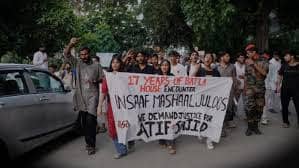
On Friday, September 19th, Delhi Police detained at least 12 students of Jamia Millia Islamia during a march being conducted to mark 17 years since the Batla House encounter. It is claimed that among those detained were AISA Delhi State President Saiyed Ishfaq, AISA Jamia Secretary Saurabh, and two other student leaders.

Students at Jamia stated that Friday’s march remained peaceful until it was disrupted near Gate No. 7 of the university. They alleged that police escorted them off campus and detained several participants. The All India Students’ Association (AISA) asserted that the detentions took place openly in the presence of the Jamia Nagar police station SHO. AISA further claimed that women students were among those held, and some were transported to locations far outside Delhi.

Police reported that the students were stopped only after the procession proceeded to move out of the college premises and raised what the requisite officers term “provocative slogans”.

The students said that the march has been organised every year, except during the COVID pandemic, in Jamia Nagar to demand a judicial inquiry into the 2008 encounter. How ironic that when students even gather to remember one injustice, the state delivers another, AISA said.

The police, while denying these claims, stated that a student had tried to come off campus while shouting slogans, which is when 12 of them were detained. They were all released within two hours, the officer added, and no student is currently under detention.

Still, the incident has upset many on campus. Mishkat Tehrim, AISA President, said, “I thought we would be safe inside campus…” I have never seen something like this after the CAA-NRC protests.”

Saiyed Ishfaq, AISA’s Delhi State President, who was among those detained, also alleged that students were forcibly picked up and dropped far from the university.

The Jamia administration purposely left the gate open, creating confusion… I was detained on campus. Women students were dragged by guards…”

The Batla House encounter occurred on 19th September 2008, followed by numerous incidents of bomb explosions in Delhi, which resulted in the deaths of 39 individuals and injuries to 159. Delhi Police’s Special Cell, having received a tip-off, stormed into a flat in Jamia Nagar, where suspected terrorists had taken shelter. During the ensuing gunfight, Inspector Mohan Chand Sharma and Head Constable Balwant Singh were wounded; Sharma later died of his injuries. Two men in the flat, Atif Ameen and Mohammad Sajid, were also killed.

Twenty-four-year-old Atif Amin was a student of Jamia Millia Islamia, and 17-year-old Sajid was an aspirant of Jamia School. Atif Amin was the chief bomber of the terrorist outfit ‘Indian Mujahideen’, which was responsible for terror attacks between 2007 and 2009 in Delhi, Ahmedabad, Jaipur, Surat and Faizabad.

On the second anniversary of the encounter, a shooting took place at the gates of Jama Masjid, in which two foreign tourists were injured; a car bomb with a failed timer was also found in the vicinity.

Read More: Ramanujan College Principal Suspended by Delhi University  Over Harrassment Allegations

Image Credits: Muslim Mirror 

Divyanshi Dusad
[email protected]

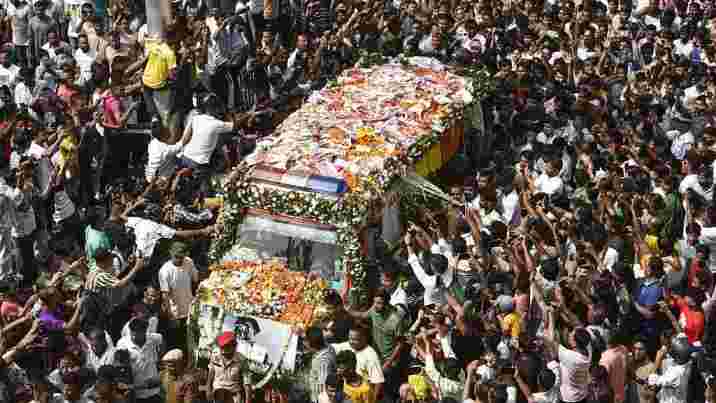
Even generations later, his music echoes through the lawns of Delhi University. A man of cultural charisma, he embodied the magnitude of what it means to possess an extraordinary talent.

With an illustrious career spanning over 35,000 songs in more than 40 languages, cultural icon Zubeen Garg was laid to rest with state honours in Kamarkuchi village, around 20 kilometres from Guwahati, Assam. Nearly 2,000 kilometres away, his legacy resonated across Delhi University’s Arts Faculty, where students fondly revisited songs like “Ya Ali” and “Hori Naam.” The Students’ Federation of India (SFI) organised a solidarity gathering to remember him. Garg passed away from a fatal heart attack in Singapore, where he had travelled to perform at a live concert.

On the call of SFI DU, students and fans gathered at the Arts Faculty to pay homage to the legendary Zubeen Garg. We remember him fondly.

Posted by SFI DU Speaks, along with a few videos of people singing and enjoying his songs. In a similar chain of events, the Deshbandhu North-Eastern Student Society also paid homage to the singer.

“Yesterday, Deshbandhu College, in collaboration with the Northeast Students’ Society of Deshbandhu College, paid heartfelt tribute to the legendary singer Zubeen Garg. With a remarkable legacy of nearly 38,000 songs across 40 languages and dialects and contributions to many films, Zubeen Garg was not just a musical icon but a symbol of Assamese pride and culture. Admired across India and among Bollywood singers, he was more than a gifted artist; he was a compassionate human being who championed social causes, stood for humanity and animal welfare, and touched countless lives through his generosity. In this moment of profound loss, Deshbandhu College stood in solidarity with the people of Assam and the Northeast, offering an official homage by playing his iconic song “Mayabini”, honouring Zubeen Garg’s own wish that it be played upon his passing.”

Assam CM Himanta Biswa confirmed that Garg’s body went through a second autopsy to rule out any possibility of foul play in his death. State mourning is being observed in Assam, marking the significant impact he has left on music.

Kinjal Sharma
[email protected]

Picture Credits – BBC