Author

DU Beat

Browsing

The 2025 DUSU elections showed a striking paradox: voter turnout increased, while NOTA captured over 23,000 ballots. Together, these trends reveal a student body eager to participate in democracy yet frustrated with the choices offered.

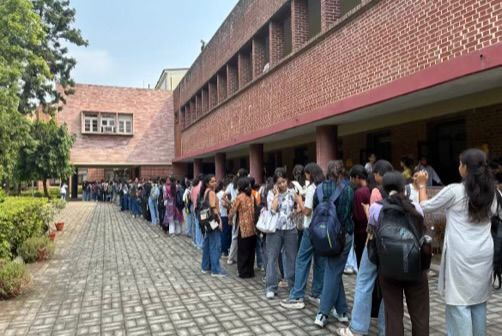
The Delhi University Students’ Union (DUSU) elections this year told two very different stories simultaneously. On one hand, Turnout this year stood at 39.45% , a clear jump from the 30–35 % range of the past few years. On the other, thousands of them also pressed the “None of the Above” (NOTA) button, choosing to reject every candidate on the ballot. Put together, these numbers show us a student body that is more active but also more dissatisfied with the choices in front of it.

Many credit this rise of turnout to the “Clean Elections” effect. After the Delhi High Court pulled up DUSU candidates last year for their excessive defecation, this election was much more regulated. For many first-year students, this made the whole process worth engaging with. 

However, many also used their vote to say no to everyone. NOTA polled over 23,000 votes across the four central panel posts—around ten per cent of all votes cast which is significantly higher than last year’s. 


Post NOTA Votes Percentage of Total Votes Polled (Approx.)
President 3,175 5.3%
Vice President 5,820 9.7%
Secretary 7,365 12.3%
Joint Secretary 7,314 12.2%
Total Across 4 Posts 23,674 ~10% of total votes polled


Why did so many students go this way? For one, the reputation of DUSU elections as contests dominated by money and power still lingers, even if this year looked cleaner. For another, there’s frustration with the limited choice. The ABVP–NSUI rivalry has long dominated the union. 

This leaves us with a paradox. Students are more engaged: they are turning up to vote in bigger numbers—but they are also more critical, and less willing to settle.


Picture Credits: Anjali P for DU Beat

Juhi Bansal

[email protected]

Two Kerala students from Delhi University alleged mob assault, police brutality, cultural humiliation, and extortion near the Red Fort. MP John Brittas demanded an inquiry, while police cited contradictory hawker testimonies disputing claims.

Two students from Kerala were subjected to violence and false accusations of theft last week near the Red Fort area. These students were from their 1st year of undergraduate studies at Delhi University’s Zakir Hussain Delhi College. Taking action on the incident, Rajya Sabha MP John Brittas has written to Satish Golcha, Delhi Police Commissioner. He demanded an investigation into what he termed “an inhuman attack, custodial assault and cultural humiliation”. 

The letter stated that the students – identified as Aswanth I T and Sudhin K – were rudely confronted by a group of scoundrels on September 24th and falsely accused of theft. The letter alleged, 

Instead of extending protection, the policemen colluded with the mob… The students were dragged, beaten with fibre lathis, stomped upon, stripped and humiliated in the most degrading manner.” 

The letter further informed that their footwear and phones were seized non-consensually. They were allegedly coerced into false confessions, and one of them was mocked for wearing a mundu, a traditional Kerala attire. The MP described the incident as “custodial brutality” and an “affront to the cultural and linguistic diversity enshrined in our Constitution.” The CPI(M) MP demanded a robust inquiry to find the culprits as well as the return of the belongings of the victims. 

Police have responded by stating that an inquiry has been enforced based on the allegations. However, they have been presented with different and contradictory testimonies of the incident. DCP (North) Raja Banthia said,

We have ordered an enquiry into their allegations. However, hawkers have alleged that they came five-six days ago and purchased goods worth Rs 14,000. They paid Rs 4,000 in cash and showed an online payment of Rs 10,000, which was not actually made. When they came again on the 24th, the hawkers identified them, and a scuffle took place.”

Some hawkers brought the two students to the Red Fort police after allegedly thrashing them in the market, according to a source of the police. DCP Banthia said, 

“The matter was settled, and both parties left. There was no PCR call or complaint or any representation to supervisory officers regarding this incident by the two students. As far as the allegations of beating by police personnel are concerned, nothing has been substantiated till now. But we are further enquiring into the matter”

However, Sudhin, one of the victims, has another side to tell: ​​

Instead of helping us, he slapped both of us multiple times and made us sit on our knees in front of all the people. He took my friend’s phone and gave it to the locals. My friend’s phone was an iPhone, and he tried to take back the phone and run, but he was beaten a lot and dragged to a police booth.” 

He further added, “Another police officer, an ASI [assistant sub-inspector], started hitting us. He removed our lungi and started hitting us and kicking us on our faces and private parts with his boots. We have been in Delhi for a month and did not know Hindi very well.” He said that when his friend struggled to speak, the ASI kicked him, saying, “Talk in Hindi,” Mr Sudhin said. “It is still difficult for him to eat food even now.” He said the police officers at the booth also made fun of them for wearing lungis.

Mr Sudhin was allegedly tortured at the police booth and was coerced into accepting the charges and making a settlement of Rs. 20,000. 


Image Source– Just Dial 


Read More: Student from Ramanujan College Suspended, Admission of Two Others Cancelled


Divyanshi Dusad 

[email protected]

The politics of our country has long been shaped by caste arithmetic. DUSU politics could have been a model of issue-based politics but, even today, its elections are swung by the “caste lobby”.

To me, the most attractive thing about DU’s red brick walls used to be their political spirit. Debates at tapris, protests against administrations, and the feeling that there I could touch and feel politics was what defined DU for me. I once imagined student politics as an accessible space. A space where any student, regardless of background, could speak, contest, and belong.
That imagination was built on the hope that education and democracy could dissolve social hierarchies, and that Delhi University, with its national reputation could be a rare equaliser. That utopian vision perhaps came from DU’s reputation as a cosmopolitan university—a gathering  of bright young minds from across the country. In some sense, it is cosmopolitan. However, its student union is anything but.

The Delhi University Students’ Union (DUSU) has become a mirror of the worst in Indian politics. It is a space where the caste arithmetic dictates tickets, campaigns, and results.DU’s campuses draw their student demographic heavily from Haryana, western Uttar Pradesh and Uttarakhand, and the political fibres of those states replicate themselves on campus. The student wings of the RSS (ABVP) and Congress (NSUI) end up mimicking the caste blocks of their parent parties. The Jat community, for instance—an influential agrarian group forming roughly a quarter of Haryana’s population—has long dominated the state’s politics. The 2016 Jat reservation agitation, which paralysed Haryana for days, showed us just how decisive their mobilisation could be. Since then, both BJP and Congress have carefully calibrated tickets along the “Jats versus others” divide. This same arithmetic plays out in DUSU, where tickets rarely ever go outside Jat and Gujjar groups.

On paper, it may seem that this student election is free for anyone interested. But to fight a DUSU election with any reasonable chance of winning requires resources, and resources have always been controlled by a few groups. Networks of village associations, PG landlords, shopkeepers, and alumni associations directly transform this caste mobilisation straight into votes. As per policy, DU has a 22.5% reservation for students belonging to Scheduled
Castes and Tribes (SC – 15% and ST – 7.5% interchangeably), a policy that frequently comes under fire from supporters of “meritocracy”.

It’s worth asking then why our student politics remains firmly in the grip of dominant castes. Not once in its history has DUSU elected a Dalit or Adivasi president. The post has always gone to Jats, Brahmins, and other dominant communities. In the last two decades especially, Jat dominance has been near- total, perhaps a spillover of their post- 2016 political assertion.

In a student election as important as DUSU, where campus news makes national headlines, representation matters. Almost every DUSU office- bearer goes on to a career in mainstream politics, and the exposure and connections it offers are invaluable. That Dalit and Adivasi students—despite being present in significant numbers—are systematically excluded from leadership is evidence of the glaring social and resource gaps that remain.

The knowledge of the overpowering sway of caste politics on DUSU has become almost banal. During the 2025 campaign, rebel candidate Umanshi Lamba told Dilli Tak that Joslyn Nandita Choudhary “isn’t a Jat, nor…a Gujjar…[and yet] she got the ticket on Jat lobbying, but now is saying she is a Gujjar. I am a Jat.”

The interviewer further continued on this line of questioning asking, “Aryan Maan is a strong Jat candidate, and you are a female and a Jat, how come you did not get the ticket?”The fact that such statements can be made openly, in 2025, inside one of India’s premier universities, says it all. DU is meant to be a representation of the brightest, most intelligent minds of India. What does it say of our character that the brightest kinds of our country are only as powerful as their background allows them to be?

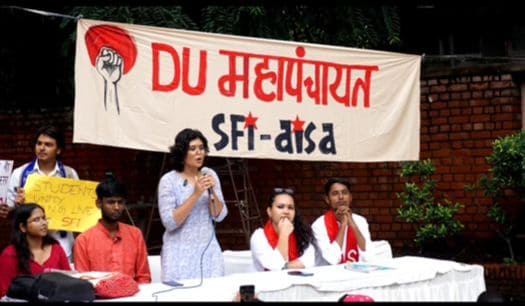
The share won this year by SFI-AISA’s Abhinandana Pratyashi suggests students are not only voting along caste lines. Perhaps it was her strength as a candidate, perhaps a new appetite for issue-based politics. I used to find it inspiring to hear parties talk of menstrual leave, scrapping SEC/VAC, or defending student rights. But the politics of marginalisation, of equality, of an end to the caste system, doesn’t seem to carry much weight.`DUSU should have been a space of cross-state unity and collaboration, a place where the most marginalised voices of our student body could take centre stage. Instead, it has been reduced to a microcosm of India’s ugliest politics. Until caste dominance is broken here, DU cannot claim to represent the future of India.

Perhaps this is the sobering truth we must face: the very students who are supposed to create a more equal tomorrow have become complicit in a tragically unequal system. If our leaders here believe that this exclusion is natural, then we shouldn’t be surprised when the same logic echoes in Parliament.


Image Credits: Manan for DU Beat

Anjali Paruvu
[email protected]

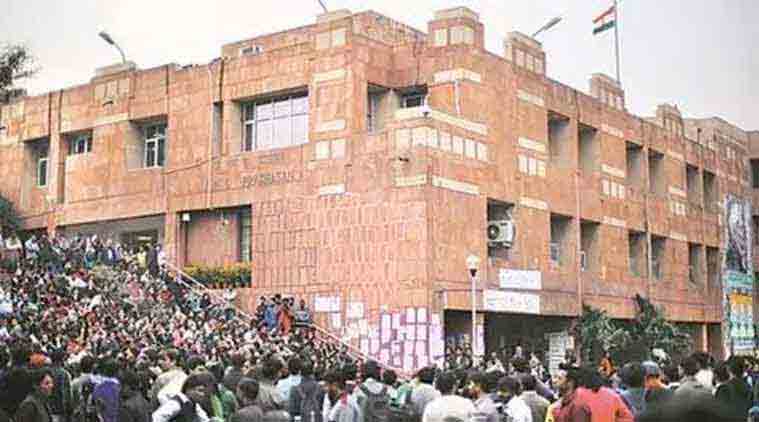
JNU, known for its extensive initiatives on creating environmental capacity building and livelihood practice, has approved another milestone, setting up a statutory body for creating animal welfare seeking to integrate compassion and sustainability.

JNU established an animal welfare society, a known initiative also adopted by Ashoka University, which possesses an Institutional Animal Ethics Committee (IAEC) that supports an animal welfare club known as Team Pawsitive.

The initiative has been rolled out under the leadership of Vice Chancellor Santishree Dhulipudi Pandit, in line with directives from the Ministry of Education and the University Grants Commission (UGC), and in keeping with the vision of the National Education Policy (NEP) 2020.

This initiative includes an animal feeding zone, awareness campaigns, and teams to research animal law, ecology, and sustainability. This move is also getting attention  in the wake of the recent order by the Supreme Court to not send the stray dogs to shelter homes. This will definitely help the varsity animals to get an ally in this precarious situation. 

This initiative was accompanied by several dog bites reported earlier this year. Since the campus is surrounded by extreme forest canopy, it is likely that the animals from nearby Sanjay Van hop and reside here. The campus is spread out over 1,000 acres, accommodating several animals; while some students feed them, others feel scared. 

Currently, the society will be chaired by associate dean of students, Professor Piyush Pratap Singh, and includes faculty members, staff members and external advisers such as animal-rights activists Gauri Mauekhi and PAWS Foundation’s Vipu Jain. 

According to Vice Chancellor Pandit, the initiative is designed not only to encourage sustainability but also to embed animal welfare into the university’s academic and social environment, 

This move creates a model for other universities by bringing together education, biodiversity conservation, and sustainable living.

Kinjal Sharma

[email protected]

Featured Image Credits: The Indian Express

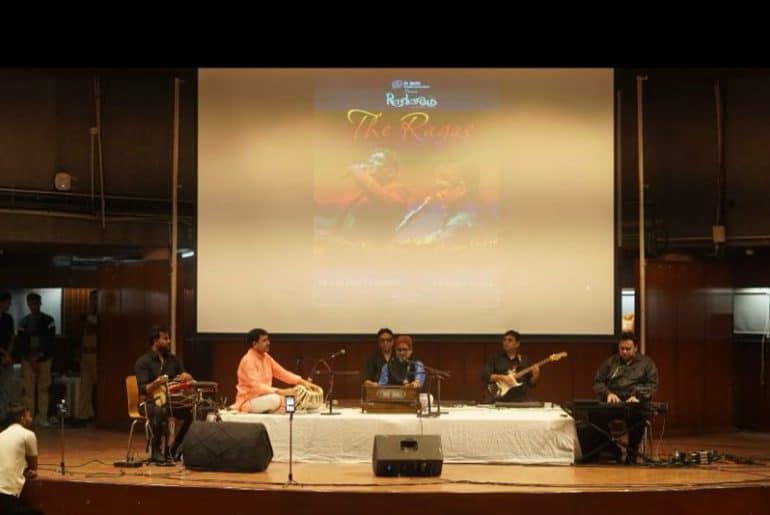
Golden Threads of Time: IIT Delhi’s Rendezvous ‘25 ended officially on 30th September. The fest saw energetic and soulful dance performances and glimpses of some of the iconic influencer’s lives, alongside a concert courtesy 

The final day of the Rendezvous’25 (RDV’25) at Indian Institute of Technology Delhi had arrived on 30th September. However the day started off with heavy rain, but despite the rainy blues threatening to dampen the crowd, there was still an outpour of attendants which made their way to RDV’25. The ramp up to the fest was slow and bumpy but the enthusiasm of the attendees never wavered. People were seen sharing an umbrella or using their friend’s dupatta to shield themselves from the rain.

The day kicked off with Synerz, a dance event featuring duo and solo performances, in the Lecture Hall. The duo performances ranged from energetic bhangra which made everyone cheer loudly to mesmerizing kathak dance performance paying a tribute to deities. The solos were just as mesmerizing, a dancer’s ribbon routine inspired emotions of serenity and calmness, while another heartfelt piece contrasted the curated perfection on social media with the raw, unfiltered reality of everyday existence. The competition ranged on as each participant poured their heart and soul into their performance, leaving the audience captivated with every move, gesture, and expression. 

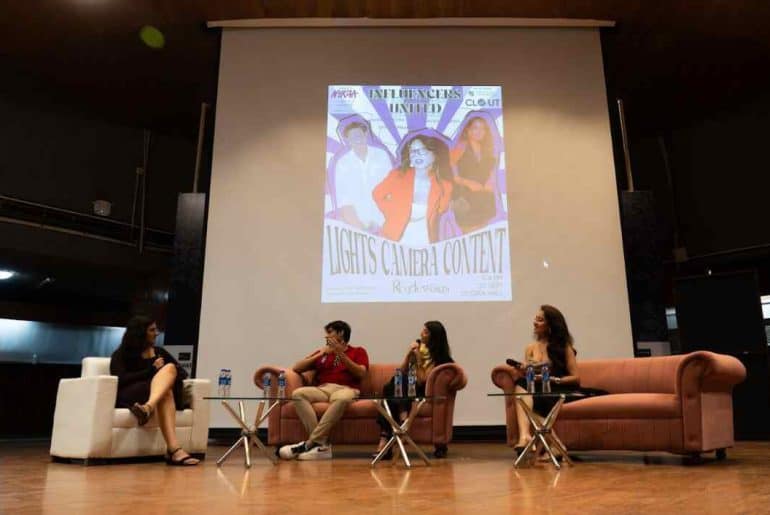
The audience saw their beloved influencers gracing the stage of Dogra Hall in IIT Delhi, having only met them on their Instagram feeds. ‘Influencers United’ first half saw the faces of Devishi Maadan, Mahir Mulhotra and Bhavika Mothwani, known for their funny short-form videos and lifestyle content. They answered all questions with enthusiasm. However, that wasn’t all: the interviews were followed by a rapid-fire round, featuring questions like,  “Which internet slang has stuck with you?” or “Have you ever posted a video hoping a crush would notice?” 

The second half of the ‘Influencers United’ introduced Mitali Sharma and Satshya who are known for their relatable lifestyle content. The host asked Mitali about her transition from NEET related content to her lifestyle content, while Satshya reflected how she had come full circle from her content about her parents ever since she became a parent herself. The conversation was lively with callbacks to their previous content. Both halves of the event had ended on a high note with pictures being clicked by all die-hard fans. 

Despite the heavy and unpredicted rain that had occurred in the morning, stalls had opened for all looking to eat and play games. Major brands like ‘Belgian Waffles’ had opened up to satiate everyone’s sweet tooth alongside the stalls were challenge games like eating 8 parle biscuits in a minute or hanging challenge. In the evening where energy was at an all time high, the iconic and most awaited concert which happened at 8pm featuring Ankit Tiwari and Shah Mal. As the rain gave way to music and cheers, RDV’25 closed not with a whisper, but with a roar.


Image Credits: Manan for DU Beat

Reva Rawat
[email protected]


Read More: India-Japan Talent Bridge Programme Organized at Delhi University

Day 2 of Rendezvous’25 at IIT Delhi lit up with Shalmali Kholgade’s Pronite, soulful Qawwali Night, and vibrant cultural showcases. From case competitions and debates to comedy, art, and carnival games, the campus buzzed with innovation, performance, and celebration, embodying the fest’s theme—Golden Threads of Time.

The campus buzzed from morning to midnight as IIT Delhi continued with Rendezvous’25 with the same spark and energy. With the theme “Golden Threads of Time” every corner of the campus came alive with a blend of competitions, performances, innovation, and pure cultural joy. By the evening the campus was filled with students waiting for the pronite to begin! 


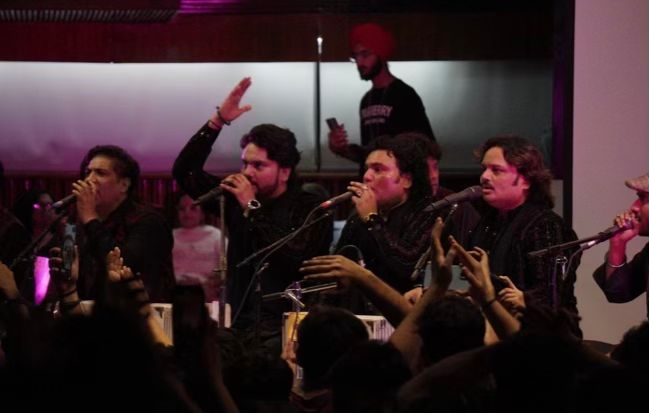
The most anticipated events were undoubtedly the flagships. Beginning with Pronite: Shalmali Kholgade—a musical storm that had the audience on their feet, the evening was later lit up with Qawwali Night at Dogra Hall. The Nizami brothers who performed there are regarded as cultural ambassadors of traditional Sufi music, blending age-old Gayaki (vocal tradition) with modern sensibilities. It painted a soulful contrast as voices rose in harmony, mixed with the claps and cheers of the dancing crowd—the hall subdued in a truly timeless performance. For those who preferred daytime festivities, the Live Stage ensured there was never a dull moment. The Lifestyle Show in the evening added a glamorous edge, with fashion and creativity weaving seamlessly into the festival fabric.


The day was filled with intellectual chatter to accompany the festive spirit. Empowering Encounters with Shri Anurag Thakur brought a thoughtful pause amid the chaos, as students engaged with the former Minister for Information & Broadcasting and Youth Affairs & Sports, in an enriching dialogue. The Faces of Rendezvous turned into a spotlight for raw campus talent, paired with the Flavour Fest, where flavors from around the world delighted tired yet eager attendees. Social media culture found its own arena in Influencer United, featuring Nishant Chahar and Neha Agrawal, bridging the gap between digital fandom and on-ground festivity. Meanwhile, laughter echoed through the Comedy Hunt with Naman Jain as the judge for the event. Though, rules had to be altered to remind the contestants of propriety, amid the common theme of semi-dark humor and unbecoming comments. It set the stage for raw talent and real humor with the cohort ranging from 18-35 years in age and just starting their standup journey as recently as just 6 months. The entry to the grand lecture hall building was lined up with the Auto Expo, where car enthusiasts marvelled at the fresh addition to this year’s lineup. 


The lecture halls were each a different world, ranging from casecomps to slam poetry. From cracking numbers in the Guesstimate League to pitching ideas at the Startup Expo, innovation was on full display. Students dived deep into global problem-solving with Ecostrat: Global Policy Simulation, debated business models in the BloodConnect Case Comp and Enactus Case Comp, and coded for glory at the Krafton Hackathon.Writers and poets spun words at Word Weave and My Jottings, while quizzers battled over cricket scores and trivia in the Sports Quiz and SBT Quiz. The creatives were on display in the Art Gallery and Natika Vatika, while performers set the stage ablaze in the Street Battle. 


Step outside the lecture hall building and Day 2 felt like a carnival. Students queued up for Ice Breaker Games, dove into immersive worlds at Virtual Reality Entertainment, and battled it out in Laser Tag. The Hanging Challenge continued until dawn with every corner of Informals offering some light-hearted fun. By evening, the entire campus was glowing—food stalls served late into the night, pop-up merchandise flew off shelves, and groups of students sprawled across lawns, catching their breath between events. The crescendo of the day built toward the Pronite, where Shalmali Kholgade gave a performance that left the audience buzzing long after. The night closed on a soulful note with Qawwali, making Day 2 a perfect balance of intellect, art, fun, and culture.


Read Also:Rendezvous 2025: Creativity, Culture, and Conversations Mark Day 1

Image Credits: Ayushmaan Patwa for DU Beat 


Shreya Bhushan 

[email protected]

The University of Delhi organised the India-Japan Talent Bridge Programme on September 25 aimed at establishing collaboration between Indian students and Japanese organisations, as part of initiatives aimed at strengthening India and Japan’s bilateral ties.

Delhi University (DU) officially organised the India-Japan Talent Bridge Program on Thursday, September 25. According to an official statement given on Friday, the program was geared towards Indian students, with an aim to foster academic, professional and cultural collaboration with Japanese organisations. The event began with the Japanese delegation’s official reception at the Vice Chancellor’s Office, where they were formally welcomed by the Vice Chancellor Prof Yogesh Singh, and the Dean of Students’ Welfare Prof Ranjan Kumar. 

The order of the day consisted of a detailed presentation on the University of Delhi, and a campus tour. Later in the day, an India-Japan Career Seminar was held at Miranda House college. The event consisted of corporate presentations delivered by leading Japanese organisations, including Directors Inc., Rimo LLC, Scheme Verge Inc., Dai-ichi Life Holdings Inc., Nichi-In Software Solutions Pvt. Ltd., Green Carbon Inc., and the Japan Science and Technology Agency (JST).

According to the University, the seminar sought to provide students with insights into career opportunities in Japanese industries and encouraged cross-cultural academic and professional exchange. This initiative comes as part of India and Japan’s Action Plan for Human Resource Exchange and Cooperation, which aims to facilitate the exchange of more than 5 lakh people between the two countries over the next five years to meet needs in development, infrastructure, academics, and more. This was announced during the 2025 India-Japan Annual Summit on August 28, 2025

The aim of this initiative is to strengthen bilateral ties and strategic partnership between the States. Part of the Plan was geared towards exchange of highly skilled personnel between the States, with Japanese companies expected to actively engage Indian universities to recruit talent. and strengthen cooperation in skill development through programmes like the India-Japan Talent Bridge.


With the event held at Delhi University, officials hope to create meaningful engagement between Indian students and Japanese companies, strengthening future pathways for cooperation in education, research, and industry.


Read Also: Miranda House Students Repeatedly Face Safety Issues Due to DUSU Elections – DU Beat – Delhi University’s Independent Student Newspaper


Image Credits: Devesh for DU Beat

Mangalya Singh

[email protected]

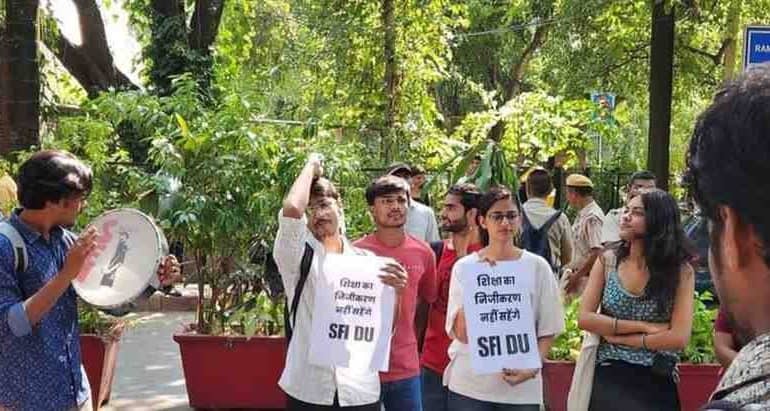
On 25th September, the Student Federation of India(SFI) submitted a memorandum to the Vice Chancellor of the University of Delhi after nationwide protests were held by them opposing the Learning Outcome-Based Curriculum Framework(LOCF) released by UGC recently.


SFI students held protests in Kerala, Himachal, Rajasthan, Uttar Pradesh, Tripura, and New Delhi during the last few weeks, rejecting the LOCF and calling it a direct product of NEP 2020. The demonstration in Delhi was followed by the submission of a memorandum opposing this draft, students called it out for “posing a threat to the autonomy of institutions, the quality of education and the democratic fabric of universities.”  


While the draft claims to prioritise the inclusion of Indian thinkers in their objective with the rationale that the Indian higher education system has “long been influenced by colonial structures, which have often disconnected students from the country’s rich indigenous knowledge”, the students protest for the forceful and unnecessary insertion of “Indian Knowledge Systems” in order to promote saffronisation of the syllabi as well as dilute important and relevant themes and topics in order to do so. Texts and concepts such as Ram Rajya form of governance in Commerce and dharmic perspectives on wealth and prosperity, trade ethics, and collective enterprise in Economics proposed as ‘ancient wisdom’ are called out by SFI for being selectively rooted in upper caste Hindu traditions and for sidelining diverse cultures. 


Asikul, a student of Hansraj College and a member of SFI said, “The LOCF dilutes scientific rigour and rational inquiry. The framework glorifies RSS ideologies such as Savarkar while ignoring revolutionaries like Bhagat Singh and Subhash Chandra Bose, reshaping history to fit a Hindutva narrative.” Students also said that the framework is being rushed without meaningful conversations with students, teachers or other experts and proposed that universities be given the freedom to design their curriculum free of communal and religious biases and instead, give room for critical thinking and inclusivity. 


Featured Image Credit: @sfiduspeaks on Instagram

Read Also: 

Opposition, Students Protest UGC Draft Over Saffronisation Concerns

Gaurika Bahl

[email protected]


The 50th edition of IIT Delhi’s Rendezvous kicked off with vibrant competitions, inspiring conversations, and cultural showcases, setting the tone for the next days of creativity, glamour, and student-led celebration.

The 50th edition of IIT Delhi’s annual cultural festival, Rendezvous, opened on September 28th with a burst of colour, food, and ideas. Day 1 brought together competitions, conversations, and performances that reflected the festival’s legacy as one of the largest student-run cultural gatherings in the country.

The day began behind Bharati Building with ‘Alchemy’, the festival’s street art segment. Mural-making/road-painting competitions transformed blank roads into canvases, with teams given five and a half hours to work on the theme ‘Golden Threads of Time’. The idea of an “eternal journey” was interpreted in multiple ways; some focused on cycles of growth and decay, while others played with the image of time as woven strands connecting past, present, and future. Paints were provided, but many participants arrived with their own supplies, adding individuality to the collective burst of colour that quickly became a talking point for students passing by.

In Dogra Hall, the spotlight shifted to ‘Empowering Encounters’, a Q&A session with Samar Sighla, the founder of ‘Jugnoo’, and ‘Chaayos’ founder Raghav Verma. Speaking to a packed hall with over a hundred registrations, they shared stories of their IIT years, skipped lectures, late-night brainstorms, and the early struggles of entrepreneurship. Their advice was rooted in personal experience: take risks, embrace failures, chase passions and remember that campus life is about experimenting, not perfection. The candid tone of the session resonated strongly with students in the audience, who laughed knowingly, relating to the stories of missed classes and deadlines.

Fashion and flair came alive at the ‘Lifestyle Competition’, judged by author and lifestyle influencer Devanshi Sharma. With the theme ‘Gravity to Glamoraty’, the competition tested style, stage presence, and performance. After an initial online round of submissions, the top five teams made it to the prelims, performing six-to-eight-minute sequences that blended modelling with storytelling. The round ended in a rare tie for the first position between ‘Envoke and Slayers Club, with four teams now heading into the finals instead of three. The excitement in the crowd matched the confidence on stage, proving once again that Rendezvous is as much about spectacle as it is about skill.

All day long, the live setup hosted artists from across the country, selected through Google Forms and outreach by the IIT Delhi team. Musicians and performers brought their own flavours to the festival, ensuring there was always something happening no matter where you turned. The open-air performances kept the campus alive with sound and movement, adding to the buzz of competitions.

Day 1 of Rendezvous 2025 balanced artistry with entrepreneurship and glamour with grit. From roads splashed with colour to plates filled with inventive flavours, from candid entrepreneurial lessons to stage performances that tied gravity with glamour, the golden jubilee edition opened with a celebration of creativity that both looked back at fifty years and forward to the journeys yet to come.

Read Also: IIT Delhi’s Rendezvous ’25 is On!

Image Credit: Mahin for DU Beat

Anjali Kumari Jha
[email protected]

While DUSU elections are indicative of a vibrant political culture all over campus, they have also led to safety concerns over and over again, especially for students of girls’ colleges such as Miranda House.

Year after year, the Delhi University Student Union (DUSU) elections create an increasingly unsafe environment in university areas, especially for women. This year, once again, Miranda House students allegedly faced several instances of catcalling, harassment, and invasion of personal space by campaigneers affiliated with the various student political parties. 

It was noticed that cars belonging to members of student parties were parked in a line in front of the Miranda House college campus, in addition to other areas in North Campus. This year, the gate most accessible by foot to the metro had been closed off for the pre-election and election time period by the college, citing security concerns. This obligated the students to take the long route to the metro station from the front gate. A student clarified,

It became really inconvenient for us—we had to walk through all the ABVP and NSUI party members who hung and drove around in groups, which became really uncomfortable at times. Even taking a rickshaw wasn’t an option sometimes due to the heavy traffic caused by their cars. This became especially bad in the week before DUSU elections took place.”

Several instances of Miranda House students being stalked, catcalled, and teased around and during the time of this year’s DUSU elections were recorded. Another mentioned;

On 14 September, when campaigning was in full swing, my friend and I were walking towards the Arts Faculty when a huge group of burly men gathered around us. They whistled at us, heckled us, and stared at us from head to toe. We were petrified and somehow made it out from there.

Miranda House College is no stranger to such incidents. During the 2023 DUSU elections, around 30 men allegedly affiliated with the Akhil Bharatiya Vidyarthi Parishad (ABVP) entered the all-girls’ college campus without permission, and reportedly disrupted classes, created chaos and made the students feel uncomfortable. The college’s guidelines, in accordance with the University’s, regarding DUSU campaigning inside the college campus allow for only up to five people, including the candidate themselves, to enter the college premises at a time, that too with valid ID cards and permission from the principal and the police.

However, despite these rules, the next year saw a similar incident taking place, namely during the 2024 DUSU elections. This time, the former DUSU president Ronak Khatri, and the then presidential candidate for NSUI, reportedly broke the college gates and entered the premises forcefully, once again creating a hostile environment for the students.

The Miranda House campus has long been a space where women felt safe from transgression and obscenity, a principle which seems to be violated almost every year during the election season. This year, many students, both day scholars and pg-renters, even asked for classes to be cancelled around the election day, giving safety issues as a reason.

Image Credits: Free Press Journal

Manya Marwah
[email protected]

Read More: DUSU Elections Record 39.36 per cent Turnout, Up from 2024 Amidst Clashes and Controversies