Tag

Slider

Browsing

With the rosy season of auditions going on, this is an introduction for freshers to the dark side of DU Societies.  

As the audition season approaches, one could have seen the college areas buzzing with auditions. On the online campus, it’s a bit different; the society’s social media pages, which have been abandoned for long, now become the main agenda of society meetings. All of a sudden, reels are being posted, and you see clips of happy members of societies playing along, some on screens while some on the ground, and a Ritviz song playing in the background. The usual words that will be used in these videos are “family”, “creative community” and every adjective you can imagine for a bunch of happy undergrads. But are societies really this happy, or is it just the poster happiness to lure in freshers?

(Obviously, not all societies fall into this category, the main aim is to introduce freshers to the toxic side of DU societies.) A lot of societies are run by seniors who exercise control over all the functioning. At some colleges, administration or the teacher or convenor intervene, but at some, they don’t pay any heed. Some societies have also faced such extreme obstruction of administration that even their performances have been canceled, whereas the bullying by many societies goes unchecked due to no surveillance. (Societies should ideally lie between this tussle of control, where admin maintains minimum control but a required check, but hey, we are in DU!)

A hierarchy is maintained among all the members to maintain ‘discipline’. But this setup often leads to toxicity as seniors in positions of responsibility take undue advantage of their power. The societies that should act as communities housing creative talent become a powerhouse of trashy politics and toxicity, where bullying and ragging houses.

Recently, such a situation came to light during the auditions of Finance Investment Cell of Hansraj College, about which a first-year student said,

During our Finance Investment Cell interviews, the core team members made us dance against our will, I felt uncomfortable but since I wanted to get into the soc, I had to go with the flow. Later on, they were boasting about the fact that they made us do squats, dance, and sing in the interviews during our induction meeting.” 

First Years who are already ridden with anxiety get pushed underneath the wish of being in the cool circles of college and fail to report such behaviors, and the cycle of toxicity continues. Another student from a dance society shared their experience in a conversation with DU Beat.

This certain level of hierarchy restricts our freedom as an artist and as a person. The role of unions should be to represent the members of the society and to guide us, but it feels like someone has given them authority and they just want to show it off.”

Even in the online mode, several students have suffered terrible things at the hands of societies. With the second batch moving into the online campus, we need to configure our thinking accordingly. If the cultural front of the university keeps on reeking privilege and toxicity, the development of the individual would be a far-gone concept here. It’s high time proper redressal forums (talking about Cultural Secretaries) work in every college to respond to all grievances and dismantle these toxic hierarchies.

Kashishkanchanshivani@gmail.com

Kashish Shivani

On the occasion of Teacher’s Day here is looking at one of the most loved scenes of comedy, from one of the most beloved comedies of our times and asking if we realise the cost of the humour we so amply glorify.

It was genuinely all fun and games.

Every time people, peers, and elders, would sit down to discuss 3 Idiots, the film, invariably the Teacher’s Day speech would come up. Look at how Rancho so smartly explains his point to Raju. Did you see how Chatur was put in place? Serves him right. Love watching Virus being put in his place, it’s such fun!

Growing up around people who revered the now cult classic as a rip-roaring comedy on the farcical nature of our education system and parental expectations from children, aspects of the film ever hardly struck me as odd. Until recently while speaking to one of my high-school teachers I was pleasantly taken aback to hear,

I have no respect for a film that makes such comedy out of a public humiliation of teachers and that too by making them the butt end of rape jokes. It is obscene and crude.

Here was a man, a teacher at that, who disliked what is arguably one of the most impactful and successful films of recent years. Not because it spoke about herd mentality, and emphasised excellence over success, but because of the way it treated it’s teachers in the process of proving a point.

Of course not all teachers deserve to be worshipped on altars. Some are mean, insensitive and just bad at their job. But is it okay to make an entire nation laugh by making your professor the butt end of rape jokes? Think about it.

The scene in question serves a dual purpose in the narrative of the film. It is to explain to Raju the importance of excellence and enjoying your curriculum as opposed to rote learning the same. But at the same time it is yet another widely lauded vilification of the figure of the nerd, who is close to his professors, knows nothing but studying, is socially awkward and of course is the butt end of bullying and abuse. And in the context of the film, this very same stooge of the professor becomes the instrument by which the cool students get back at the professors they hate so much.

My argument is simple. In no way am I endorsing a cut-throat competitive world or a teaching persona who believes your life is of no worth unless you pursue engineering or medicine. My problem is simple and different. How can we, as a society come together to hate b laughing at them and making them the butt end of rape jokes? The perpetrators of the crime literally go on to celebrate the victory of the same in the next scene and by the end of the film are hailed as heroes. The nerd is the one who is made to appear in poor light.

Humour is tricky business. Comedy is purposely designed to critique societal norms and the establishment but if the core purpose of comedy is to relieve through laughter then isn’t it important to question where that humour or laughter is coming from? Really think about it. Sexual harassment and abuse in academia is a widespread problem across the world. Horror stories of students, male and female, being abused by professors and teachers galore. We all have that one friend who confided in us about that one evening, in one empty tuition class, when the teacher they revered for so long transgressed from all acceptable social norms.

Another, easily overlooked aspect of the scene in question is the use of language as a tool of oppression. The student in question, Chatur, grew up in Pondicherry and Uganda and speaks, quite unconvincingly, broken hindi. How is it alright to use this as an excuse to vilify him and the teachers he so deeply adores? As a student of a university as large as Delhi University, every day I see students from distant parts of the country, struggling to convey the most basic of questions. Why? They do not know Hindi and their English is not perfect. But they still try. And even as they try and helplessly request people to not speak in hindi, there are people in abundance who think it fun to reply to their questions in hindi just for the sake of a few laughs. It is 2021 and yet linguistic chauvinism is a tool of abuse in the student community.

In the post-MeToo scenario, films, especially cult classics like the one in question, need to be recognised for their casual humouring of abuse. As an outcast nerd myself, I do not know how long it will take for society to actually come around to stop vilifying us. But that is a different issue altogether. But what we can start off, as students, is to recognise these instances of trivialisation of deeply troubling issues such as abuse in educational spaces. Our teachers are not without their faults and by god we are part of a deeply fundamentally flawed education system. But really our teachers and by large our students deserve better representation than this.

Now that I think, is it really all fun and games?

Anwesh Banerjee

anweshbanerjee2001@gmail.com

Following the recent events, we tried to locate what language our nation speaks—of hate or of Mir?

“I knew that language is the most private and yet most public things.” – Arundhati Roy, In What Language Does Rain Fall Over Tormented Cities?

What language do we speak altogether, collectively as a nation? 780, or the ones actually recognised? Of love or of hate? Do we even speak together, ever?

I learned in my history class about imagined communities. Are we just one true imagination that exists with all its hypocrisies with just one name that binds us together? The peculiar curiosity about your identity starts somewhere around our age only, I think India never got out of that phase, she is still trudging the path of curiosity to know all about it.

Being trilingual, I get how difficult it can be to brainstorm with three words meaning something somewhat similar but never the exact same. How does India manage with so many? We read about diversity since first grade. In the language, I read it, “Anekta mei ekta.” At times, I think her diversity could never get out of this essay. It tried and tried, but it was such a high pedestal that returning was never an option, but we found out her invisibility on the streets at times, for we all read or maybe heard it – India: A Land of Diversities.

But whose language does India actually speak? Of Ghalib or of those who went rallying against Fab India when it named its Diwali Collection Jashn-e-Riwaaz, which loosely translates into a celebration of tradition.

The social media went mad with hails of ‘NO Abrahaminsation of Hindu Festivals’. And amidst this, a Markazi Khayal came to me that what word could we substitute for Khyal in Kabhi Kabhi mere dil mei Khayal aata hai? Or maybe what would we substitute when the people actually discover that the words Hindi, Hindu and Hindostan are from Persian Arabic? Did I miss a class of Language partition when the words of Urdu casually entered the conversations and even a bit of Shudh Hindi found its place with slang from the local dialect?

The Partition happened when, during the British era, the Hindustani language broke up into Hindi and Urdu, and since then, the graph has been up and down with the ‘language’ that we decide to speak publicly, sometimes of hate and sometimes of mir.

According to a research paper about the decline of Urdu sounds,

First, the decline of Urdu sounds began in the 1990s, which marks the rise of the Hindutva politics and the beginning of the mushrooming of cable television networks.”

So, this is the language I have been referring to the language that the current hegemony chooses to speak.

A good thing about Grammarly is that you can set the tone of language that you want to deliver your content in, and it rectifies the words accordingly. What would the tone be when people don’t let Munawwar Faruqui perform in Goa for 500 people would set themselves on fire. The organisers received threats from several Hindutva groups, and shows in Raipur, Surat, Ahmedabad, Vadodara and Mumbai had to be cancelled. Munawwar was also arrested for a joke he did not tell, and the apex court that granted him release said the tone of the FIR was vague and no apparent reason for his arrest.

Clearly, the cancel culture in our country goes a different way, where the dominant group shuns the language that it does not want to hear, be it just the name of the collection, an advertisement that talks of love bonds, or anything that might prick the forces of Hindutva. Who will be the next Kaifi saheb, perhaps Ghalib or the true sense of diversity that we talked about on pages?

Although Hindi’s victory has been a resounding one, it does not seem to have entirely allayed its keepers’ anxieties. Perhaps that’s because their enemies are dead poets who have a habit of refusing to really die.” – Arundhati Roy, In What Language Does Rain Fall Over Tormented Cities? 

There is a linguistic relativity hypothesis that says our language shapes our thought, and Arundhati writes in her essay that a country’s public language is its own public imagination. So, the next time you say ‘ye Ishq nahīñ āsāñ itnā hī samajh liije ik aag kā dariyā hai aur Duub ke jaanā hai’ know that in the current context it literally applies to the word Ishq for someday people might take offence for its existence because of its source.

All this is to say that we in India live and work (and write) in a complicated land, in which nothing is or ever will be settled. Especially not the question of language. Languages.” – Arundhati Roy, In What Language Does Rain Fall Over Tormented Cities? 

Kashish Shivani

kashishkanchanshivani@gmail.com 

A brief overview of some offbeat and unique museums in Delhi which are worth a visit.


  1. Sulabh International Museum of Toilets

This museum is certainly interesting, and if you find museums boring, this museum certainly won’t seem mundane to you. The Sulabh Museum, as the name suggests, contains various exhibits related to the history of toilets from 2500 B.C. to the present day. Divided into three sections, the ancient, the medieval, and the modern, it highlights toilet-related technology from all over the world. The closest metro station is Dwarka sector 9. It would be easy to say without a doubt that the things you will learn at this museum, you won’t get to learn anywhere else. If you haven’t visited a lot of museums, it would be a good idea to keep this museum as number 1 (no pun intended).

Image Credits: Sulabh International


  1. Ghalib Museum and Library


A short auto ride from Hazrat Nizamuddin metro station, The Ghalib Museum and Library is a museum dedicated to the life and times of 18th century Urdu poet Mirza Ghalib. This museum should be on the list of every poetry aficionado and fan of Mirza Ghalib. It is also interesting for those who like history as the museum also houses several coins, seals, as well as pictures of residences and attire from Ghalib’s time. The museum is located in the Ghalib Academy building. Humayun’s Tomb and Nizamuddin Auliya’s tomb are also situated at a walking distance from the museum.

Image Credits: Little Black Book

3) National Philatelic Museum


A treat for those of us who liked to collect postage stamps and other souvenirs, the national Philatelic Museum is operated by the Department of Post and contains stamps from throughout India’s history and stamps from all over the world. It also exhibits the very first postage stamp used in India in 1854. The museum also contains an amphitheatre, a library, and an area where artists can sit and work. This museum is located in Dak Bhawan and the closest metro station is Patel Chowk on the yellow line.

PhilatelicMuseum
Image Credits: Little Black Book

4) Shankar’s International Doll Museum


The International Doll Museum might be one of the most diverse museums in terms of where the exhibits are from. Established in 1965, the museum contains 6500 exhibits from 85 countries. It is definitely a must-visit to rekindle that childhood love and fascination many of us have had with dolls. It is right next to the ITO metro station and is situated in Children’s Book trust-building. It was set up by K. Shankar Pillai, a political cartoonist. The museum began due to Shankar’s idea to collect dolls from various countries and hold exhibitions for poor children after he was gifted a doll from a Hungarian diplomat.

Image Credits: Trip
Image Credits: Trip

5) Tibet House


An auto ride from either Khan Market or Pragati Maidan metro station, Tibet House is a museum, library, and educational centre present in Lodhi Colony. The five-storied building was established in 1965 by the Dalai Lama to showcase the culture and heritage of Tibet, and also acts as a centre for Buddhist studies. The museum, which takes up one floor is quite small but showcases an interesting range of ancient Tibetan artefacts and craftwork which you might not get to see anywhere else. The library contains a wide range of books about Tibet. Many old and rare books in the library in Tibetan, English, or other languages are found there. Events and programmes on culture and politics in Tibet are also held regularly.

Image Credits: Delhi Capital

Feature Image Credits: DNA India


Prabhanu Kumar Das

prabhanuk@dubeat.com

When was the last time when we managed an escapade from the fascinating content provided by the creative OTT platforms that literally has its subscribers glued to the screens? Perhaps it would be a matter of prior engagements, over the last four years the over-the-top media service has seen a significant consumption, especially with respect to the Indian market which as of now values around INR 3,500 crores and is estimated to rise by many folds to dethrone the television industry and environment altogether. An endless supply of level original content in high definition quality is easily available with an affordable subscription fee, that seems really economical from our recreational budget matrix but the cost that the environment suffers seems extremely exorbitant.

Although streaming platforms like Netflix are extremely cautious with the provision of spectator data, their ‘Prime’ presence everywhere is as shining as a ‘hot-Star’ and hence cannot be ignored like a bad ‘Spotify’ playlist. Millions of people on a daily basis consume a large amount of data on these on-demand content platforms which is binge-watched for hours, inducing a large amount of carbon dioxide emissions into the atmosphere we actually need. According to the Shift Project, a French think-tank that claims to advance the shift to a post-carbon economy, ‘Watching a half-hour show would lead to emissions of around 1.6 kilograms of carbon dioxide, that’s equivalent to driving a car for 6.28 kilometres.’

‘Digital videos come in very large file sizes and (are) getting bigger with each new generation of higher-definition video,’ said Gary Cook from Greenpeace, which is administered to look on the IT sector’s energy footprint.

Cook further adds, ‘More data equals more energy needed to maintain a system that is ready to stream this video to your device at a moment’s notice.’

Much of the energy needed for streaming services is consumed by the data centres, which further provides data to our computers and handsets. Reportedly, the centres contribute about 0.3 per cent of all carbon emissions and the ever-increasing steadfast demand for better technologies has stressed our energy sources substantially.

As matters of fact, screens with 4K resolution use about 30 per cent more energy than high-definition screens; upgraded devices and technologies require more amounts of energy to store, process, and share data and further corresponds for increased production and consumption wastes at every level of test and research development praxis.

On the contrary, we are ought to agree that these platforms are extremely entertaining and provide a good dose of change from our monotonous lives but the stringent fact remains that in such hard times where our cities like Kanpur, Gurugram, and Delhi as heavy ‘cyber-hubs’, they also hold the title for the most polluted cities on the planet. The carbon emissions caused by the digital media markers which are expected to rise and expand significantly needs alternative renewable energy sources and judicious sustainable management.

But it won’t be enough for us to rue the online platforms and their capitalist endeavors hindering the environment without realising these suggestions that are put forth by Professor Chris Priest and Dr Dan Schien of the University of Bristol who advocate terrestrial Broadcast TV to be lot more efficient than network streaming, whereas mobile phones continue to be more energy-efficient than a TV or a PC. Professor Priest even underlines the fact that a Wi-Fi connection can be more efficient than a 3G or 4G connection; downloading videos rather than viewing it online could pose as a much better alternative in terms of energy preservation.

Significant steps, conventions and debate continue to stall at the global level with increased stress and collective responsibility being observed worldwide it would continue to be an incomplete effort if small things like these go unnoticed and are not corrected or duly accounted for.


Feature Image Credits: Lighthouse insight

Faizan Salik

faizans@dubeat.com

Growing up in a dysfunctional family is a roller coaster ride of emotions. Here’s an understanding of how such families impact the children.

Our families have the biggest and most crucial influence on our lives. Family is unarguably the most important aspect of one’s life and gives an individual his/her identity and a sense of belonging. The dynamics of one’s family can tell a lot about how a person will grow up to be in most cases. Thus, it holds the power to make or break you.

While a normal functioning family produces mentally healthy adults, a dysfunctional family can have some serious repercussions on the overall well being of a person. A family where conflicts, misbehavior, and neglect are common deals, it is said to be dysfunctional. It is widely believed that most children borrow parental and familial traits from their families and inculcate the same when they have families of their own. Therefore, it becomes significant to identify the dynamics of one’s family and the resultant impact on oneself.

A healthy family comprises members having each other’s back and a mutual feeling of love and respect. Children are well taken care of. Children from such families grow up to become adults having high self-esteem and find it easier to form friendly bonds with people around them. They are found to be more positive and hopeful in their perspective towards life.

But the aforementioned things, sadly, don’t stand true for dysfunctional families. A family turns dysfunctional due to a myriad of reasons like mental and physical abuse, absent parent, single parent, financial crunch or drug and alcohol addiction. These can have adverse impacts on the children.

A child grows up to find abuse and neglect as ‘normal’. They tend to have lower self-image and in many cases, be a part of unhealthy relationships. People pleasing, excessive guilt and hopelessness are some other traits commonly seen in those individuals coming from a dysfunctional family.

Family is a haven we lean back on in times of difficulties. But, what if it is the family from which we need to escape? Growing up in a dysfunctional family is harder than it appears. It crushes your sense of identity and can even result in anxiety and depression. They begin seeing the world with the same perspective with which they see their families. It is dull, defeating, disempowering and even scary, at times.

Peers of such individuals need to be more empathetic and help them see the world through a brand new lens. They need to push them to see their selves with empowering light and increase their sense of self-worth.

As difficult as it may seem, it’s not impossible to overcome the ill-effects of being a part of a dysfunctional family. The most important aspect involves identifying one’s behavioral problems and getting to its roots. The process of getting better will involve a lot of unlearning and learning.

Identifying the issue will help the individual not replicate the toxic behaviors of one’s family. Creative treatment of one’s frustration will help vent the negative. Efforts towards mending the ties in the family are necessary to protect the further generations from going through similar emotional turmoil.

Growing up in a dysfunctional family is troublesome but you can either choose to replicate or repair.

Feature Image Credits: Filmy Sasi

Shreya Agrawal

shreyaa@dubeat.com

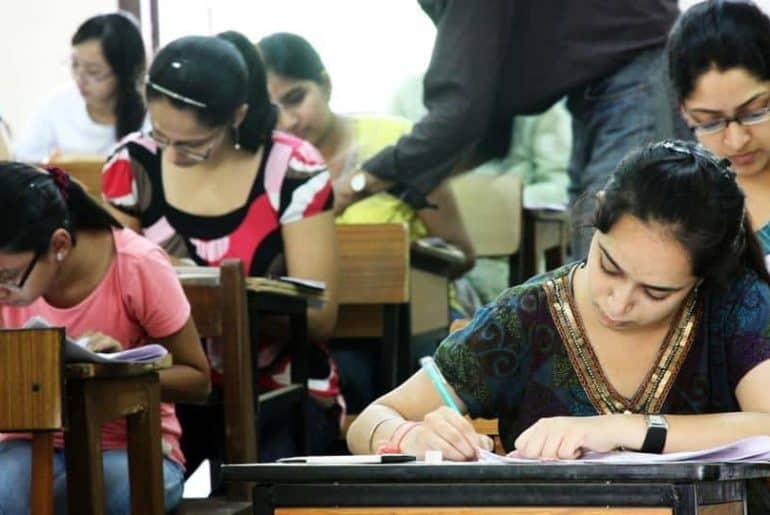
The administration of the University of Delhi
(DU) has announced the reintroduction
of mid-semester papers, which will be
held immediately following the end of the
University’s sanctioned mid-semester break
in October.

After continual speculation, Professor
Yogesh Tyagi, Vice Chancellor, DU, has
declared that the University would be
reintroducing mid-semester exams for all
papers across every undergraduate course
provided by the University. The exams
would commence immediately following
the end of the University’s mid-semester
break in October, in accordance with the
Academic Council (AC) of the University. The date sheet for the mid-semester exams will be released on 1st October 2019 via the University’s official website. The changes in the academic calendar were sanctioned on 26th September 2019. The press release states that the administration acknowledges that the unannounced decision may come as a shock to the students and faculty. However, it clarifies that the decision is for the welfare of the students, in an attempt to mitigate the stress of a singular exam per paper at the end of a semester.
Though the Varsity’s action aims at making the academic year less stressful for the students, the faculty of the University is less than happy with the decision. Professor Angad Mehta, from the Department of Economics at Hindu College, says, “This is a rash decision on behalf of the administration. The professors were completely unprepared for this decision; now we have to rush the syllabus.” Another professor from Indraprastha College for Women said that it burdens the students rather than “lessen the pressure, as the administration wished for.”
Students of DU have mixed reactions. Aarti Bhaskar, a B.Sc. (Honours) Mathematics student from Daulat Ram College, stated, “This decision is honestly a godsend. Our entire GPA is currently dependent on one exam at the end of the year. This way, we have a way to compensate.” A student from Lady Shri Ram College said, “I’m glad that the decision was introduced as a way to lessen the burden on students during exam season, but the University’s decision of taking such a drastic step suddenly has blind-sided us. I’m a part of multiple ECA societies, and trainings and practices take up a lot of my time, and I’m lagging on my studies. Now I have to rush to complete them in just a matter of weeks when I would have had at least two months prior to this change of rules.”
The decision has been contested by the students’ unions of colleges like Hansraj College, Hindu College, Miranda House, and Motilal Nehru College. DU Beat tried contacting the Registrar, but he was unavailable for a statement.
Disclaimer: Bazinga is our weekly column of almost believable fake news. It is only to be appreciated and not accepted.

Feature Image Credits: DU Beat.

Shreya Juyal

shreya.juyal72002@gmail.com