Tag

North Campus

Browsing

The University of Delhi’s long-time pending demand for the construction of two hostels has finally bore fruit with the University ready to sign a Memorandum of Understanding (MoU) with the Central Public Works Department (CPWD). This stands as one of the key developmental issues that will take place in the University.

The University of Delhi (DU) along with the CPWD is planning to construct two hostels in the North and South Campus. A ‘400 bed capacity with double accommodation’ hostel is to be constructed in Mukherjee Nagar and the one in South Campus is yet to be finalised.

Currently, there are only 17 hostels in the University with a total capacity of 3,215 students whereas the total number of students for undergraduate, postgraduate, and certificate courses stands above a staggering number of 2,23,000 students. Having more hostels will bring better and safer living alternatives for the students of the University.

Along with the construction of the hostels, DU is also planning to preserve the century old Central Library as a ‘heritage building’. The Central Library is a host to a collection of 1,380 gifted books and functioned as a shifting space, until it found the present location at the Faculty of Arts in 1950. According to the plan, the library will be renovated and preserved along with the addition of another new block to it. The plan includes the construction of smart class rooms, seminar halls and an auditorium.

These two projects are spearheaded by CPWD along with the construction of a fully ‘digitalised Academic Block’ which will be located at the Maurice Nagar. The academic block will only be used for teaching purposes and will be constructed with digital and world class technology.

The University is working on more interesting plans and new technology for the students. As reported by The Pioneer, Mr. Tarun Das, Registrar, DU, said, “With the CPWD as the executing agency of the project, an estimated budget cost of the entire project is said to be 200 crores.”

The environment angle will duly be kept in check while all of these construction projects take place. Mr. Das also quoted, “Permissions need to be sought from environment department for felling trees.”

All of these projects stand as great stepping stones in bringing world class facilities to the university and making the spaces more accessible and centres of learning and ease for the students.

Feature Image Credits: Niharika Dabral for DU Beat

Amrashree Mishra

[email protected]

A video of men dancing atop cars seen to be disrupting traffic, surfaces post Delhi University Students’ Union (DUSU) Election results. Violators are yet to be identified.

A video of men dancing atop cars in the vicinity to the North Campus caught many eyes on the social media. This video appeared post the victory of Akhil Bharatiya Vidyarthi Parishad (ABVP) in DUSU elections, for the posts of President, Vice President, and Joint Secretary while, the candidate from National Students’ Union of India (NSUI) won the post of Secretary, paving way for Akshit Dahiya to become the President, Pradeep Tanwar- the Vice President, Ashish Lambba- the Secretary, and Shivangi Kharwal- the Joint Secretary.

The video comprises of men dancing atop cars, sitting on their windows, bonnets, throwing pamphlets out of their cars, and disrupting vehicular traffic near North Campus area. As reported by Hindustan Times, Anil Mittal, additional Public Relations Officer of Delhi Police, when asked about the incident, said, “We are analysing the videos and are trying to identify vehicles and the persons seen in them.”

Sidharth Yadav, the State Secretary of ABVP said, “ABVP concluded its victory procession in the evening while those videos were shot at night. There are no ABVP members and candidates in those video clips. Police should identify those who violated traffic norms and take strict action against them”. Akshay Lakra, NSUI Delhi President also said that they did not carry out any procession of Friday.

Harsh Singh, a student from Shri Ram College of Commerce, said, “The most fair and accurate, or at least what should be representation of our opinion, should be election. People may have different ways of expressing their opinions, some ways being more violent than others and not allowing them to do so would be against our Fundamental Rights, but the question which arises is- where should we draw the line between availing our rights and infringing on others?” Another student, Swarnim Agrawal from Lady Shri Ram College, said, “This is what we call ‘dirty politics’. I can’t believe the magnitude of resources wasted in these extravagant campaigning for just an election. The acts of violence are also a very grim picture of the ugly and chaotic political atmosphere that we, unfortunately, are living in.”

Feature Image Credits: India Today

Priyanshi Banerjee

[email protected]

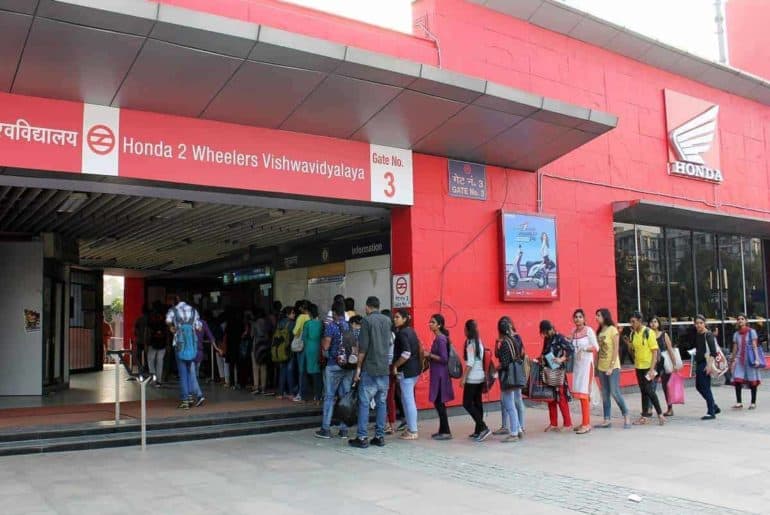
The University of Delhi (DU) has come face to face with the Delhi Government with regards to the construction of a 39 storey private building in North Campus.

As per a report by the India Times, DU has written a letter to the Centre, the Municipal Corporation of Delhi (MCD), and Lieutenant Governor of Delhi, Anil Baijal, demanding to stop the construction work immediately.

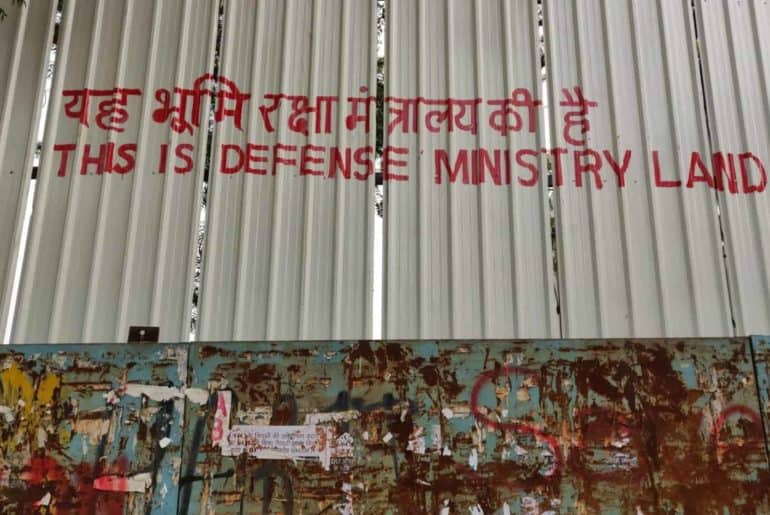
In the year 2001, The Delhi Government had acquired three acres of land from the Ministry of Defence to construct the metro line. Only an acre was used and the rest two acres were sold to a private builder in order to build a 39 storey building.The University believes that the construction of private property would lead to great repercussions for the varsity as it threatens its educational space and can also pose a threat in terms of safety.

In 2018, varsity had written to the Ministry of Urban Affairs and Housing, lead by Mr. Durga Shankar Mishra requesting for restraining North DMC from granting any sanction to the Group Housing Projects of Young Builders Private Limited, near Vishwavidyalaya Metro station.

Delhi University’s Officer on Special Duty Mr. Vipin Tiwari talked to India Today, about this move. He stated that he had witnessed the construction of the building behind the metro station.

According to him, this poses a great threat to the University space as it’s a private building and is very close to not only four girl’s hostels but also the office of the Lieutenant Governor and the DRDO office. The construction was not stopped despite various complains, not only that it will also be the tallest building around if constructed. It poses a great threat as this a high-security zone.

He also added that this also violates the three points of Clause 11 of the Delhi Master Plan 2021. Various political parties also showed their dissent against this move. The Mayor of Delhi Mr. Avatar Singh responded by stating that a letter requesting the clearing of doubts raised has been sent to the Governor. “All at being fault shall be persecuted”, he added.

Feature Image Credits: DU Beat Archives

Stephen Mathew

[email protected]

On 3rd August 2019, the University of Delhi (DU) witnessed one of its most vibrant pride marches ever in the North Campus, starting from the hostel of Hansraj College, till the office of the University’s Vice Chancellor.

On Saturday, Project CLAP organised the DU Pride March, as a celebration of fifty years of pride. The march was inaugurated with a performance by the Western music society of Sri Guru Nanak Dev Khalsa College.

Members and allies were seen with face paints, flags, and posters. The event began with an introduction by the members of CLAP, followed by a Bollywood mashup rendition. Rishi Raj Vyas, a famous queer activist, addressed the parade and spoke about the repeated suppression of the community’s gender identities and sexual orientations.

Chants of “prem che, prem che, tharo maro same che” (your love and my love are all the same), and those of “Aazadi!” (freedom) from homophobia.

When asked what Pride meant to them, a member of the community commented, “For me, pride is being proud of who I am and finally accepting myself, it feels like I have a place where I belong.” Another supporter who was attending their first-ever pride march felt relieved to be a part of the event.

Arshia (name changed), a student at Lady Shri Ram College and a part of the community, remarked about how homophobic the Indian society is, how members are constantly subjected to violence just for showing love, and how pride representation was important.

With the marchers getting down to the tunes of the dhol, each step drew more traction and support. The event drew to a conclusion with an open-mic where few enthusiastic members and supporters took to the mic and performed for spectators with a vow to promote awareness and break the shackles which restrict people to love freely. “Pride is a day to showcase yourself as freely as possible, and to ask more and more people to support you. So it’s more of a supportive act than being proud of yourself, because we’re proud of ourselves every day,” a member of the community remarked.


Feature Image Credits: Bhagyashree Chatterjee for DU Beat


Shreya Juyal

Anandi Sen

[email protected]

[email protected]


The National Student’s Union of India (NSUI) held a protest march against the amendments made to the Right to Information Act (RTI) by the Government. Read on to know more. 

On 1st August 2019, the NSUI held a protest march in front of the Faculty of Arts, North Campus, showing its strong displeasure towards the move taken by the Government to make amends to the RTI Act. The members of the students’ political party marched from the Faculty of Arts to Kirori Mal College, all the while chanting slogans like “RTI Bachao, Desh Bacho

Neeraj Kundan, National President, NSUI said, “Today the RTI is one of the most important laws in the country, it directly affects the people. In 2017, when the BJP Government saw that the RTI could expose high government officials like Smriti Irani, and even Prime Minister Narendra Modi, they started trying to curb its power. The Government is now trying to reduce its autonomy and cage it. NSUI is going to hold protests all over the country until our rights are given back to us.”

Students and associations like The North East Students’ Society, Delhi University (NESSDU) turned up in large numbers to support the NSUI’s protest against the RTI amendments. They marched with bold banners and enthusiastic slogans. The presence of the Delhi Armed Police and Central Reserve Police Force (CRPF) showed how protests in the DU are feared to turn violent, but this was an extremely peaceful protest.

Surbhi Dwivedi, National General Secretary of NSUI and the RTI Team Convener emphasised on the importance of the RTI for the student community. She said, “The RTI is the most effective tool in student politics. It helps students to find discrepancies in the University. A strong RTI is our right.” Robin Chaudhary, National Secretary of NSUI, said that they were determined to fight for democracy and that if the Government did not heed to their demands, they would go on a hunger strike.

The RTI Act, 2015 is an Act of the Parliament of India “to provide for setting out the practical regime of right to information for citizens”. It has made the workings of the Government more transparent, helped to reduce corruption and has facilitated in the workings of this democracy. The RTI Commissioners used have fixed five-year tenure and their salaries were equal to certain posts in the Election Commission and the bureaucracy. The recent amendments made to the act by the BJP Government have changed this. According to the new amendments, the central government now has direct control over the Chief Information Commissioner and Information Commissioners’ term of office and salaries. The changes made to the RTI are being seen by many as the Government trying to control it, and as a result of this many voices in objection to the RTI amendments are being raised all over the country.


Feature Image Credits: NSUI


Juhi Bhargava

[email protected]

Months on, the road outside Ramjas College is yet to be fully constructed. The road poses a serious threat to differently-abled students.

Amidst the unpredictable Delhi monsoon, the road outside Ramjas College turns into a sludge of dirt, grime, and puddles. Delhi police barricades stand in strange places as students leap over puddles and potholes.

The road that was dug up in March, in hopes of creating an improved one, still remains unfinished.

It limits the movement of students, and other travellers towards Daulat Ram College and Vijay Nagar. The looming cloud of dust became a permanent resident of the college, as students and teachers with breathing issues struggled.

During the second phase of construction, the road right outside the main gate was dug up, a gaping pit, roughly 10 feet deep stared at the world as students were forced to make their way to the college through the sidewalks caked with mounds of dirt and rubble. A walk to the college became a hiking trip.

As the raging Delhi summer went by, the capricious monsoon arrived. The dust outside the college has settled to puddles and swamps. Delhi Police barricades stand at the opening of the road, sometimes, it turns into a parking spot.

The tarmac on the road is yet to be laid but bikes and scooters still manage to scoot past the barricades. On the days when it rains heavily, the road turns into a massive puddle, forcing students to make their way through the sludge.

Letters to authorities have remained unanswered. Udhav Sharma, a third-year student wrote to the North Delhi Municipal Corporation (NDMC), explaining his concerns over the damaged roads. However, the NDMC is yet to respond. “The Principal told me that the work will get over in a few days.” But that’s yet to come true. Another pit has been dug up towards the sports ground gate of the college.

The road is also a source of great discomfort, and a possible threat to differently-abled students, faculty members and visitors to the college. Ramjas College is yet to become fully disabled-friendly. “The college space is inaccessible for people like me, the staff are rude, the damaged road is the cherry on top. There’s always a major risk of getting injured,” said a master’s student who chose to be anonymous.

The college Principal and Vice Principal remained unavailable for comments.


Feature Image Credits: Jaishree Kumar for DU Beat


Jaishree Kumar

[email protected]


If you are reading this in a North Campus college’s canteen, you have your fortunes to thank for. You have made it to The Inaccessible.

The paid admission applications stood at 2,58,388 after the last date of registration at the undergraduate portal this year. The University of Delhi (DU), one of the most coveted education-hub of the country has provision of seats for less than a quarter of these applicants. To make up for this “exclusivity”, the University has a presumably foolproof hack: astounding cut-offs. With every year, the poor standard of education is validated by the rich number-game of cut-offs. National headlines in dailies are blaring announcements of which college set the highest cut-off percentage this year.

This practice necessitates the question of alarming ambitions that we are handing out to young high-school students, and for the sake of what? The University is a lot of things, but not the best academic space. How important is it, then, getting a whopping 99% if you wish to pursue B.A. (Honours) Political Science from Hindu College?

Our school system has been reduced to unhealthy academic pressures, topped with the co-curricular necessity to be an “all-rounder”. School teachers are critical when a student underperforms. The acknowledgement of good work is brushed aside with “you have to do even better in the Board exams”.

The severe and mortal fear of Board exams, as you will relate with, dear fresher, presents the most harrowing March ever. The DU cut-offs soaring through the roof have sustained the brand-value of colleges like Shri Ram College of Commerce, but their effect on the lives of high-school students have been largely treated as ambitions. “I remember my Business Studies teacher chiding me in front of a class of fifty-odd students, ‘If you plan on getting a 90 in your Board exam, better do not consider appearing for it in the first place.’ This was 15 days before the Board exams started, and till date, I am not over this statement, despite getting a good score. I remember it flashing in my mind every second during my Board exam.”

Truly, getting 95% today is disturbing. If you wish to pursue Economics Honours from Lady Shri Ram College, you need at least 97% or above, which is more or less saying that you must not lose more than 2.5 marks in each of your Best of Four Subjects. The Central Board of Secondary Education and other boards have also adjusted to the demand. 100s are tirelessly awarded to students in language papers. Such distribution puts to question the idea of 100s. But then, as long as you are getting a seat for English Honours at St. Stephen’s, how does your English proficiency matter? College comes with its opportunities, and hiding behind these opportunities are insecurities and vulnerabilities. The definition of a good college is earmarked in its history and brand-value. Most school students are blasted with the academic pressure by their parents and teachers, all to enable them to make it to their dream college. The inconsistent debate of the quality of our education system, along with the question of the inconsequential social exposure that we allow to our students pointedly screams at the alarming ambitions that we have enforced on the youth.

India is one of the leading countries in terms of its rich human-resources under the age of 35, but how effectively can we translate this resource into its most conducive form? Surely, not by falsely feeding the inadequate need for validation of the “top colleges of DU”.


Feature Image Credits: Manjit Thapp via Instagram


Kartik Chauhan

[email protected]

The continuing problems related to admissions in the varsity have raised several questions on the functionality of the administration.

Student organisations Akhil Bhartiya Vidyarthi Parishad (ABVP) and National Students Union of India (NSUI) of the University of Delhi (DU) have voiced their concerns and demonstrated against the DU Vice Chancellor regarding the difficulties faced by students during the time of admissions. The demonstation also sought to question the fee hike that has taken place for almost all courses in the University.

ABVP has voiced the concerns of the students by protesting at the Arts Faculty, addressing various issues related to admissions. The increment in college fees has been challenged along with irregularity in Sports Category admissions. Provision of admission by accepting undertaking, and introduction of EWS category in M. Phil/ PhD admissions has been requested. Importantly, inadequate arrangement in colleges for parents at the time of the admission process are some of the issues amongst other key issues that have been raised by the ABVP.

They (ABVP) has brought into the limelight how the admission staff in colleges who were admitting students to the first cut-off were not aware of the rules prescribed by the University. This caused problems in the smooth functioning during the admissions process. Admissions of students were also cancelled due to loopholes in the admission process.

Siddharth Yadav, the State Secretary of ABVP Delhi, said that if the demands are not met within the time period of ten days, then there will be more resolute protests against the administration.

DUSU President Shakti Singh also highlighted the issue of fee hike by saying, “There has been an arbitrary unaccounted fee increase in many DU colleges.” The issue Ramjas College’s fee hike has been previously reported on by DU Beat.

A memorandum to the Dean of Students Welfare had been submitted after the protest ended by the the ABVP delegation.

Attempts have been made by the student organisations so that the DU admission process does not become tedious and burdensome for the students. The true effects of the protests remain to be seen.

Feature Image Credits: Prateek Pankaj for DU Beat

Amrashree Mishra

[email protected]


Citing non-cooperation by the authorities as the reason, Dean and Head of Faculty of Law, Professor Ved Kumari resigns.

In a shocking turn of events, Dean and Head of Faculty of Law, Professor Ved Kumari has resigned from her position on Tuesday, 18th June. 

Professor Kumari, who assumed the post on September 2nd, 2016, resigned three months prior to her term-end, citing “non- cooperation of the University authorities and illegal/ arbitrary actions of Professor-in-charge, Campus Law Center.”

In her letter addressed to the Vice Chancellor of the University, she writes, “I regret to say that despite doing my best, I have not been able to succeed and secure the best interest of the Faculty of Law in the last two years and nine months.”

In her letter, she made some shocking revelations which lead to her resignation.IMG_20190618_213555

She accused the institute and the authorities for allowing students with even 31 per cent attendance to take exams, and in this allowance, serving injustice to the hardworking students who attend the class regularly.

She also revealed that fake records of tutorial classes were maintained in the institute.

According to Professor Kumari, she has “repeatedly felt embarrassed and humiliated at no action and no response,” to her calls, letters, personal meetings as the Dean and Head by the University authorities, when asked for necessary action to be taken.IMG_20190618_213604

She believes that nothing will change in the coming three months and thus, she has decided to resign before her tenure ends.

Speaking to the dismal state of affairs at the Faculty of Law, she says that the institute deserves immediate support from the authorities to deal with the numerous issues hovering over it.

This is not the first time that one of the most prestigious law institutes of the country, Faculty of Law, has been embroiled in a controversy.

Last year, the institute came into the media’s scanner after LLB entrance exam and LLM semester exam papers were leaked.

Feature Image Credits: DU Beat archives

Shreya Agrawal

[email protected] 


With the High Court ordering University of Delhi (DU) to scrap the new admission criteria for B. Com. (Hons.) and BA Economics (Hons.), other courses may also be given the same relaxation.

The University of Delhi (DU) has now repealed the new eligibility requirements for admission to the B. Com. (Honours) and BA Economics (Honours) courses. This move comes following the Delhi High Court orders, after a considerate amount of criticism and a plea against the controversial move to include Mathematics in Best Four Subjects aggregate for the two courses.

DU has released a new Bulletin of Information for admission to undergraduate courses on Monday, based on the 2018-19 eligibility criteria. It has been observed that the new eligibility criteria for other courses has similarly been replaced with that of the last year.

The Court had previously called this move arbitrary, and beyond requesting the varsity to repeal it. It also had asked to extend the process till June 22nd, which was previously June 14th. This order has also been implemented.

A bench of Justice Anu Malhotra and Justice Talwant Singh stated, “There is no dispute that you (DU) to be in tune with the times. Nothing prevents you from improving the education standards. No one is saying your decision is not right, but your timing may not be right.” They further added that these criteria can be applied only with six months’ prior notice.

These changes were put forth by recommendations from different departments in the varsity and then needed approval from the Standing Committee, Academic  Council. But the members of the Executive Council, prior to the conundrum, requested the Vice Chancellor in a letter to not give his approval.

While the inclusion of Mathematics in best of four for B.A. Economics (Hons.), and 50% marks in Mathematics for B. Com. (Hons.) are now not compulsorily required. There is currently a requirement of 55% marks in English for B.A. English (Honours) and in Hindi for B.A. Hindi (Honours). B.A. Programme, B.A. Urdu (Hons.), Arabic (Hons.), and Persian (Hons.) also have a new eligibility criterion for 40% in class 10th or 12th in the respective subjects.

Stuti Tanotra, a Delhi University aspirant expressed her joy stating, “Under the new criteria, my Best of Four (BoF) was getting reduced and I was apprehensive about getting a good college for Economics. Now that this has been scrapped, I am very happy my BoF has increased, and now I look forward to studying Economics at DU.”

This change has led to a lot of changes in not just the extending of admissions, but also a delay in releasing cut-offs as well as the dates for the trials of extracurricular activities, and consequently admissions. St. Stephen’s College has also extended its dates and the cut-off for interviews will now be released on June 24th.

Applicants can check the new corrigendum on the University’s official website: http://www.du.ac.in/adm2019/


Feature Image Credits: The Times of India

Shivani Dadhwal

[email protected]