Tag

exams

Browsing

Last minute revision and examination stress becomes overwhelming. This often leads to skipping some of the vital things of our daily routine, breakfast being the simplest option. Breakfast is the most important meal and is very essential to get ready to write exams. It can even help you improve your grades by increasing concentration and giving energy for this mental marathon.

We all have been gripped by the exam fever and the last moment preparation is almost inevitable. Getting ready for the exam at 9 A.M, and fretting over the last minute revision, feeding our body would be the last thing that would cross our minds. But you can increase your endurance for this mental marathon and in turn stand a fair chance to improve your grades through a simple way- by not skipping breakfast on the exam day.

Breakfast comes as the meal after the longest interval without food; therefore, breakfast seems to influence metabolism more strongly than lunch or dinner. Failing to break your fast with a meal shortly after rising might strain your body. Hence, the right food and drink can energise your system, improve your alertness, and sustain you through the long exam hours.

According to a research conducted by Harvard Medical School, breakfast is the best time to get complex carbohydrates and fibre. In fact, if you don’t start out right at breakfast, you will find it hard or even impossible to get the fibre you need.

An equally important thing is to stay hydrated to maximise concentration. Dehydration can make you feel drowsy and can reduce your attentiveness in the examination hall. Drink plenty of liquids before appearing for the exam.

Breakfast on exam day becomes pivotal as you need your concentration on your exam and not your hunger. Risking your breakfast just for the two minutes of extra revision can result in fatigue and have adverse consequences.

Now, for students living in PG and hostels, skipping breakfast is prudence, rather than waiting in the line to get it.  Some quick fixes in such situation can be to have some brain boosting food which includes food high in protein and whole-grain cereal.  Fruit platter, milk, boiled eggs, etc. are easy solutions.

The right food at the right time will prove to be the best tonic to handle anxiety and nervousness. To avoid the last minute hassle, plan your meals beforehand and don’t miss the morning breakfast. The right choices you make and some steps towards healthy lifestyle practices will surely help you perform better and, as a consequence, will improve your grades.

Feature Image Credits: Rishabh Gogoi for DU Beat

Sriya Rane

[email protected]

Clashes between the students and administration broke out at Vivekananda College Friday as students with low attendance were denied admit cards. The administration is allegedly manhandling the students, the teachers not signing the medical certificates, and the Students’ Union, too, is being uncooperative. 

 Violence broke out in Vivekananda College on Monday when the students whose attendance fell short were not given admit cards. These students also went on a hunger strike from the 30th April to the 1st May.

On 25th April, a list had been circulated, which mentioned the names of students whose attendance was lower than 67%. It also said that these students were not applicable for receiving admit cards unless they presented a medical certificate. The students’ pleas to the administration went unanswered, so they resorted to violence, breaking the windows etc. of the college.

The strike finally came to a halt when the officiating Principal, Dr Hina Nandrajog, met the students. Priyanka, the President of the Students’ Union, said that the Principal agreed to accept medical certificates for the fifth and the sixth semesters. According to our sources, many teachers have refused to sign the medical certificates saying that it is ‘unethical’ and they might lose their jobs if they do.

The detained students haven’t been allowed to enter the college in the last two days, security forces have been deployed to stop them from coming in. A new rule dictates that the students must be accompanied by teachers in order to enter college premises. According to the protesters, the teachers have stopped answering their phone calls.

“Students have protested and a hunger strike also happened but the admin remains unshaken. Now she (the Principal) has banned our entry in the college and there is police force to stop us from entering our own college. We are the ID card holders of the college and still, we are not allowed to enter…(sic) So, I guess that isn’t fair. Though we have short attendance, I guess the principal should listen to us and provide us with a solution rather than just declaring that we need to repeat the session,” said a detained student who wished to stay anonymous.

For many students, the semester exam begins on the 6th of May, and for some, the looming fear of repeating the session hangs in the air. “Some people could have genuine issues and some students have financial issues and cannot repeat the session at any cost. What about them? I do understand the rules of the college but there is a solution if the principal is fair enough,” added another student.

Priyanka denied the allegation that students couldn’t get their medical certificate signed. “They stirred up violence in the college, they protested, I asked them to calm down but they didn’t listen. They must be polite with the teachers and respect them; nothing can move forward otherwise.”

The protesters, on the other hand, claim that the Students’ Union has barely shown any support.

“They didn’t work for us all year, they don’t even come to college these days, they told us that they need to study for their exams and stayed home while we were being manhandled by the administration and the police. How do we trust them?” added another detained student.

“I waited outside the college gate in this heat for hours today, they wouldn’t let me in,” said a detained student “I don’t know what options do we have left anymore, we wrote applications to the principal, Dean of social welfare and the Vice Chancellor of the university. We are awaiting their response.”

Speaking to DU Beat, Sidharth Yadav, State Secretary, Akhil Bhartiya Vidyarthi Parishad (ABVP) Delhi said, “Students from various colleges are suffering because the university is strictly imposing the requirement for minimum attendance but have ignored the prerequisite condition of the minimum number of classes in an academic year. ABVP has taken up the issue in various colleges like Vivekanand, Ram Lal Anand, Ramanujan, Janaki Devi Memorial College, Jesus and Mary College, amongst others and we are fighting so that students don’t suffer. The strike by the Delhi University Teachers’ Association (DUTA) had suspended the classes for a long time and so the students are at the suffering end. Few colleges are even not accepting medical certificates or are not acknowledging ECA certificates. This is a sad state. We demand that either university should have organised tutorial/remedial classes or there should be relaxation to the criteria.

In a video posted online, protesters are seen banging against the big black metal college gate in a fit of rage, they swing it around in hopes to break it open. In light of the same, many from both the teacher and the student community are of the opinion that it was the protesting students who were in the wrong. “These students have very low attendance,” says Bhavya, a student of Vivekananda College. “After being denied the admit card, they resorted to violence. Windows were shattered and they were abusing our principal, after which the principal decided to call the police. A friend told me that the protesters tried to disrupt the practical exams last week. Their behaviour towards the administration was completely unacceptable and wrong.”

The President ensures that most of the students will get their admit cards by Monday; however, the protesters remain doubtful, their future uncertain.

Shakti Singh came to the college on 7th May, broke open the gates along with the protesters and barged into the Principal’s office. Even after repeated pleas of the students, Nandrajog refused to budge from her decision to not grant admit cards to students with attendance of less than 67%.
The protesters even sat in front of her car to block the way, but were forcibly removed by the police. They are thinking of moving to the HC with a case against her.
Today, 8th May, parents of the students will come to the college to have a word with the Principal.

Image Credits: DU Beat


Jaishree Kumar

[email protected]


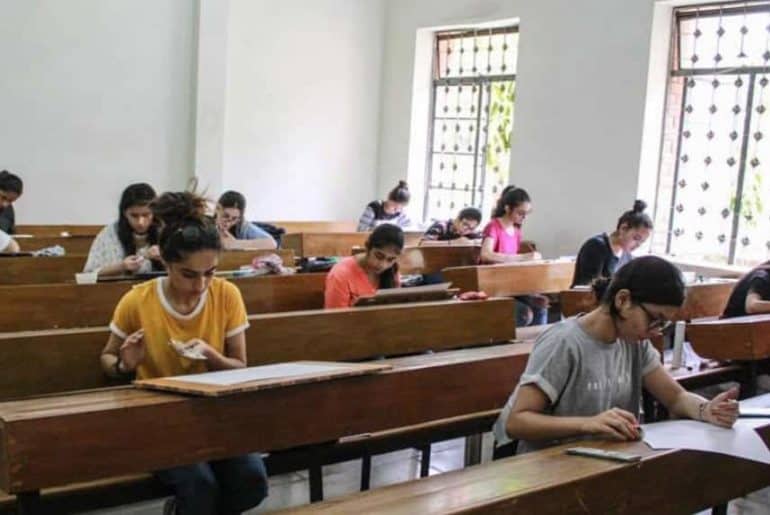
With the ongoing examinations, stress and anxiety increase tremendously. Here are a few tips and tricks to help you prepare well for your exams.

It’s that time of the year when the third-year students will bid adieu to their colleges to embark upon a new journey. This is also the time when anxiety regarding the future will be at its peak with the entrance exams approaching. Semester examinations and assignments have only added to the misery. Thus, preparing for entrance examinations is one herculean task.

Here are a few tips and tricks to ease this pressure and help you prepare for your entrance examinations.

Image Credits: Etoos Blog
  • Make a plan-Write down how many exams you have and the amount of time left for each of them. Allocate more time to subjects which you think are difficult. Do not leave anything for the last minute. We often end up making a plan which is unrealistic. Keep in mind your strengths and weaknesses while making a plan. This will help you develop better study habits.
  • Be strict with yourself- Execution of your plan is the most difficult thing. You are bound to get distracted while studying. But it is important to be strict with yourself and follow your plan rigorously.  Studies have shown for long-term retention of knowledge, short study breaks are vital.
Image Credits: Asana Academy
  •  Prioritize  well- With a number of things going on- assignments, semester exams, internal assessments, party plans with friends, make sure you learn the art of prioritizing and decide what is more important for you. This will eliminate the waste of time.
  • Practice previous year question papers- The best way to know the status of your exam preparation is by solving previous year question papers. A mock test will help you understand the format of the questions. It is also a worthy practice for measuring the time you need for the actual test.
Image Credits: Pinterest
  • Keep calm and believe in yourself- Anxiety and stress tag along with any exam preparation and hamper your productivity. Thus, it is important to not lose your calm. Practice meditation to release stress.  Eat healthy food and stay hydrated. Most importantly, believe in yourself.

All the best!

Feature Image Credits: Institute Skill

Shreya Agrawal

[email protected]

As the fest season concludes, the alarm of upcoming semester examinations starts beeping.

Even semesters are filled with zest and euphoria. They bring with themselves numerous events and fests which keep the students across the colleges on their toes. Unlike the odd semesters, the lectures are less, bringing in more fun. Colleges are a sight to behold during the months of February and March as they gear up to present their extravaganza of talent. For societies, this is the most crucial time as they put their yearlong hard work on the stage and compete rigorously with other colleges. From attending numerous fests, struggling for passes, witnessing celebrity performances, and meeting new people, fest season fills the students with energy and exhilaration.

With fest season and the mid-semester break coming to an end, the same monotonous life of college awaits the students. The fear of upcoming semester examinations fills all of us with gloom and tremendous amount of pressure. The farewell and entrance examinations further accentuates the sadness as the third-year students start preparing themselves to bid adieu to the institution which shaped their last three years and gave them a head start for their future. The reality that there won’t be any more events to attend, competitions to take part in and academics will take the front row is a bit hard to sink in.

If you think this semester was only fun and games, then it would be utterly disappointing to learn that continuous strikes and numerous fests have left us with only few days to cover that huge chunk of syllabus lying unattended catching dust. Coming out of the zone of fun and party isn’t an easy task too. But well, not all is bad after all. There’s still over a month left for those dreaded days of exams to begin.

With the month of March coming to an end, it’s high time we gear ourselves up for the next two months and put our heart and mind in studies for the upcoming semester examinations. We need to fix our focus back to academics which we had been conveniently ignoring for the past three months.

Fest season this year was a totally enthralling time to be in and its end is sure to bring some gloom. But, let’s look beyond the gloom, cherish the memorable moments and get into action mode for the coming two months.

Feature Image Credits: DU Beat

Shreya Agrawal

[email protected]

Studying is never as simple as it sounds.Targets are set and schedules are made to be followed during the preparation leaves before the semester exams. But, the fortnightly ‘vacation’ is riddled with distractions and procrastination. 


Image Credits: Aakarsh Gupta for DU Beat.
  • Friends

A very important group of people in your life that will surely ping at all the wrong times during exams. Exchange of notes over late night cups of coffee acts as a great stress buster, but not when you have the syllabus piled up!


Image Credits: Mahi Panchal ad Vaibhav Teckchandani for DU Beat.
Image Credits: Mahi Panchal  for DU Beat.
  • Lovers

Lovers, the people you can rely on for almost everything. They will pick you up when you fall down, and love you even at your worst. But have patience, young lovebirds! Love can wait, but exams can’t.


Image Credits: Mahi Panchal for DU Beat.
  • TV Shows and Movies

TV Shows and Movies gravitate a serious attention during the exam time. One might resolve to watch them during breaks, but at times it  happens that some videos that we watch tend to stay with us and, hence result into a major distraction. A subtle escape mechanism from the melancholic exam schedule, watching movies is definitely one of the most time taking distractions.


Image Credits: Mahi Panchal and Vaibhav Teckchandani for DU Beat.
Image Credits: Vaibhav Teckchandani for DU Beat.
  • Party Plans

A party during exam? Doesn’t sound that bad. That is what you find yourself saying when your phone pings on the table covered with books. Friends are going, what is the harm? Well, the harm is that the party will turn into an after party, and you won’t know when to stop. Be the party pooper if you have to. Reserve such parties after exams when the weight of the semester lifts off your shoulders!


Image Credits: Mahi Panchal and Vaibhav Teckchandani for DU Beat.
Image Credits:  Vaibhav Teckchandani for DU Beat.
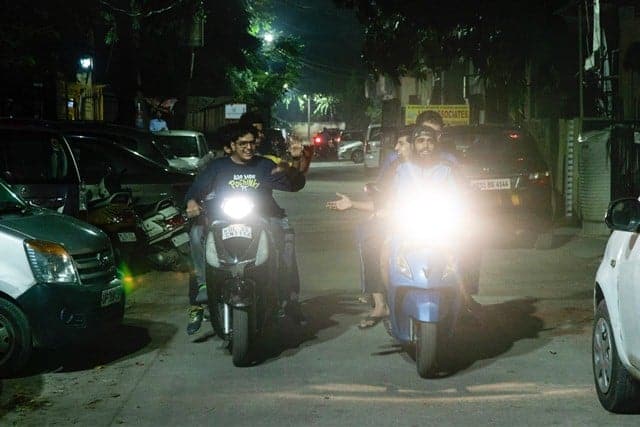
  • Late Night Hangout Plans

How could you say no to a late night plan of driving across the city with friends or simply hanging out at a friends’ place? After all, it does seem to be relaxing, especially after a day wrapped in a tight schedule of studies. Everything seems to lure during the exams, but drawing a line between a ‘relax-time’ and distraction is what it’s all about.


Feature Image Credits: Aakarsh Gupta for DU Beat.


Akshada Shrotiya

[email protected]

Mahi Panchal

[email protected]

Vaibhav Teckchandani 

[email protected]

In a desperate call for quick action, when you find an essay online that even remotely connects with your own submission, the default action is to cite without reading. Efficiency, right?


Most of us would agree with the truth that all our submissions are the burdens we bear. The burdens that block our exposure to the outer world; a world seemingly ours for the taking with its immense prospects and adventures. For instance, every second that you spend reading a critical essay, you could rather be complaining about the mounting work on your social media handles. And we all know that the latter seems too enticing.


The sad truth in the complexity of our education system is its incomprehensibility by most people. Increasingly, the idea of education has been overshadowed by the idea of getting a job. And not just a normal job, but one that comes with unending perks. Much as this debate invites moral intervention, it is nonetheless as irrefutable as the reality. In this race, we often find ourselves to be lost. And with the advent of internet, our crises are averted by ‘hacks’.


Being unimaginative, unthinking, and avoiding application of intellect by students today is becoming a real choice. Some may say that the choice is enforced. There is so much to do and so little time; the true refrain. It is in the event of a crisis that the need for a desperate escape is felt, and that means that we want a guide or a solution book.


It is not in my purview to question the credibility of such solution books, guides and answer booklets or for that matter any essay, writing or answer available on the Internet. But what can be said about all these ‘comforts’ is that they do you more harm than they offer you a chance to revive.


The idea of education to develop free thinking needs reinstatement. Our jumping to academic hacks implies our failures to act on our own. Sometimes, it does prove helpful to seek such a measure. But a study reveals that excessively depending on hacks and the easy-way-out, cripples your thinking. When you let the keyboard function on its three keys, your functioning of the brain is put to a miserable test. Try to use all these keys. Try to use all of your own merit.


Dependence is perceived to be an easy way of living. In an age where our opinions are shaped by public majority, where is the scope for expression? What we ask in such questioning is the failing object of education. There is a lot that deserves your attention. There is always a lot. And this is why you need to avoid the haphazard academic ‘hacks’. In the infinite pools of knowledge, even a quick plunge can heighten your spirit. The shallows of guides and help books will offer you a respite, but you will never learn to swim.


Feature Image Credits: DU Beat


Kartik Chauhan

[email protected]


With the semester exams coming closer each day, DU Beat brings to you a guide to writing papers in English Honours.

“… And medicine, law, business, engineering, these are noble pursuits and necessary to sustain life. But poetry, beauty, romance, love, these are what we stay alive for.”

  • John Keating, Dead Poets Society

Literature is a problematic yet beautiful vista of thought. It teaches you to love strongly, and the opposite. It teaches you something that transcends the very meaning of literature- the written word. A perfectly imbalanced translation of human emotions onto pages; the magic and mayhem, literature is food for the soul indeed. Studying English as your core subject at the university level makes a narrative of you. You see yourself becoming a story and a story teller. You are enraptured in the literary melody of words and powerful emotions. But all this must transliterate into good marks for you, because as a professor at my college once said, “Let us face it, with English Honours, your prospects are bleak. So at least get a good score.”

Literature is best understood through perceptions. It is highly subjective and invites your own ideas in the mix. But it will be wrong to claim that it is highly technical. The grammar rules and syntax, even the sound of two words together, the redundant alliterative usage of words, and the consequent inferences of two words written successively; the minutest technicality needs to be perfected to obtain a heightened grasp. Language is as complex as arithmetic probably, in this regard.

While writing academic papers in English Honours, it is a given fact that plagiarism leads to your self-inflicted doom. Literature always retains the artistic credit in the acknowledgement of every single word that is not your own. But it is as Professor Keval Arora’s guide to Assignment Submissions pointedly notes, “Quote sparingly, only in order to strengthen your own argument. Do not treat quotations as a substitute for the work that you are expected to do.” Professor Arora in the same document instructs warningly:


SPOILER ALERT:
PLEASE NOTE THAT ANY UNACKNOWLEDGED BORROWING WILL BE PENALISED AS AN ACT OF CHEATING.

The penalty for widespread copying can be as high as a non?negotiable* ZERO/10.

It is extremely significant then, to ascribe the quotations to authors and/or sources. As Professor Arora notes, “Acknowledge the source (book/essay; author’s name; website) from where the material is taken.”

It is a very obvious point to be mentioned at the onset, but nevertheless its pressing importance cannot be overstated.

“Your writing should always make sense to yourself first, and you should be reading it as a critic,” says Professor Laboni Bhattacharya of Hindu College. It is very important to have a structure for your writing. The introductory lines, the main body, and then the conclusive inferences. More often than not, we find the lacking of adhesion in our writing. The over-emphasis on certain ideas is played well, but then the cohesion seems to wither. It is suggested that every idea should be presented in a different paragraph; broken down into a series of ideas so as to enable a greater understanding of the written material. It always helps to play with the sentence structure and length in this regard. From short phrases to elongated sentences, the idea becomes to create a melody in your writing.

Every piece of writing in English Literature offers some arguments, and some justifications. The author describes certain ideas as per his own volition. Khyati Sanger, a second year English Literature student of Miranda House shares her passionate opinions on the subject, “Always seek for conflicting ideologies in your readings. Read about multiple schools of thought and then make up your own mind. The real aspect of Literature is that it cannot possibly mean the exact truth. As a student studying Literature, we are told to always argue; to question the idea of a thinker and that is one of the various intriguing activities peripheral to Literature.”

An essay might deeply interest you, and sometimes even appear to be the word of ultimate reason. But it is always a perspective that is impressed on you, for you to indulge in an exploration of your own. “When reading a text, I always make it a task to transcend myself into the historical background of the text. History, not just the political but the socio-economic background of the text is extremely important to dissect the layers of meaning the text aims to explore,” says Khyati. Quoting a thinker is not just for the sake of it, it is felt that the quote needs incorporating into the sentence that you form. Through such citings, building up your own justification of the answer is important.

Literature has been through trends and revolutions and so, it becomes a task to identify the writings with their period-specific thinking. It is after such understanding that you enable a brilliant writing of your answers and essays. Writing in English Literature needs to be as interpretative, as interpolative as you can possibly endeavour to manage.

As for writing the answer scripts in a moment of exam induced anxiety, Prachi Mehra, a second year English Literature student at Gargi College states, “Once you get the question paper, take a quick scan. It is always a better option to attempt the 15 markers first and maintain your speed with them. When writing the first paragraph, think of the structure of your answer. A well-structured answer always scores more. Also, while analysing literature, the present tense is preferably used.” To bring everything back to attention while writing an answer with a drowsy mind due to lack of sleep, that becomes a challenging task.

Before you begin with your answer, read the question carefully and give it to your analytical skills to recall the incidents to be quoted, the arguments to be made and the justifications to be rendered in the course of your answer. Making bullet points of the necessary points can prove useful here. Your originality, hard work and interpretative abilities will render good scores to you.

Once you have the quotes, the ideas and the opinions on paper, you have written your piece. And in that moment of completion, there is an immense joy. You cannot always aim at excellence, and the arbitrariness of Literature is one of its characteristic merits. Sanchi Mehta, President of the Department of English of Hindu College captures the joy of writing an exam of literature when she says, “Writing an English Honours exam is an anxious outpour of the revelations, questions and criticism of the texts, authors/poets/playwrights and age that arouse in us while reading. It is an endeavour to sieve and pick the right arguments and defending them copiously to produce an adumbration of the prodigious critical essays one reads in preparation and the marvellous knowledge imparted by teachers in classroom. What one does achieve at the end is a certain level of catharsis and well, comfort that at least the assessment of how good (or bad) it was can be procrastinated till the results are declared.”

The most important idea while writing a paper in English Honours is essentially the ability of the writer to maintain his or her originality with the copious interaction of a whirlpool of interpretations ascribed to a multitude of authors and writers. It is a parallelism that is required. Parallelism and the spirit to pursue it.

So read and write as a habit, as a passion and you are halfway there.

Feature Image Credits: Learning Skills


Kartik Chauhan

[email protected]

Contrary to the popular opinion among the youth that marks don’t really matter, the truth of the situation is that, marks do matter, and even if they do not define your entire life and career, they do certainly help in getting an individual one step closer to their desired goals.

Class 12th boards are a stressful period for parents and students alike. Months of mock exams, tuitions, and hefty amounts of money are spent on preparing students for the most important school level exam in India. A whole new industry is booming as a consequence of the average Indian parent and student stress. The competitiveness of exams has increased as a consequence of shortage of seats owing to the increasing population. The coaching industry is bearing its ugly head at every level of education. Lakhs of students burn the midnight oil to get that extra edge over their counterparts, in a bid to outbid the best for a seat in prestigious institutes like the University of Delhi.

Saying that marks don’t matter is a stretch, especially considering the amount of preparation that goes into making students ready for any exam at any level. If marks truly did not matter, the coaching industry would perish, and the country’s stress levels would plummet. With a population as large as a country like India, a basic criteria which comes even slightly close to fair selection are marks, where performance decides results. Not to say that the marking system and whole education system is not flawed in various ways, but so far it is the closest thing to fair that is considered for entry into college and work.

Point in case marks do help get you into your desired school, college, or even work place, they are the sole criteria in terms of segregating the deserving from the undeserving, those who work hard, versus those who don’t, according to Indian societal standards.

Another argument supporting the concept of marks is that, saying marks don’t matter, disregards the months or even years of hard work put in by lakhs of students in colleges and schools across the country and even the world. The sugar coated world that exclaims that “marks don’t define you” is letting you down easy, with an attempt not to hurt any feelings. In practical life, a student with good marks is unlikely to say that marks don’t matter, whereas those with sub par or ‘bad’ marks is more likely to say the controversial phrase.

The college coaching industry is second to the school, and competitive exam industry, but equally big, and expensive. The end goal of these institutions is not to impart knowledge, but rather to help students attain a certain number of marks. The main question we grapple with, as a society is the question of knowledge versus marks, are we teaching students something new, or merely how to attain marks ?

In a system where marks serve as the deciding criteria for most important life decisions, completely denying their value is unreasonable. Until we move forward as a nation to create fairer ways to determine individual talent, aptitude, and ability, marks do matter.


Feature Image Credits: The Times of India


Meher Gill

[email protected]


Exams, in the pluralistic usage can inspire the deepest fears in every student. Sometimes this fear is heightened to a hysteria.


There is no other way to inspire anxiety in college students than handing them their date sheet for semester exams. More often than not, we are given the internals and practical examinations during regular days at college; but the semester exams inspire an excitement that is too real. Internals and practicals, meant to prepare us for the ultimate semester exams, fail to help us in their direct motive. It is in such times that we become hysterical with horror.


A friend of mine had to go through the grind of completing a respectable part of her unending curriculum, bereft of the comforts of her mattress; staying up through the night for a good score in a test scheduled at 8:30 am on a wintry December morning. At 7:30am, having covered a sizeable part of her syllabus, she decided to freshen up with a quick nap. But then she slept through the exam. And well, to be fair, we all know she had the better bargain— you cannot put a price on an innocent dreamy slumber after a wakeful night.


“In the middle of protests and elections in full swing through the early months of this semester, classes and studies took a major hit,” said a third year Political Science student at Kirori Mal College, retaining the request of anonymity. Truly, the cancelled classes are now being conjured up out of thin air, early in the mornings for an 8:50 session or later into the day— when exhaustion is a mutual feeling between the professors and students—  for a reckless 3:50 lecture.

Exams, you see, inspire some scares.


In the course of the exams, you can never laugh at the hysteria. It is a retrospective activity, to be fair. It is, as a third year English Honors student at Hindu said, when asked to share her hysterical exams stories, “Exams are hyperventilating! They become hysterical later.” Possibly no argument exists to refute this. Maybe the expectations that we have, or in some cases are imposed to have, go a long way in adding to this smothering nature of exams. “You have admitted yourself successfully in one of the most prestigious colleges in the nation. Did you think your work was over? You thought wrong,” said a professor of English Literature at Hindu College in a particularly scathing lecture in the first week of the new session.


Sometimes it so happens, that the standards we are expected to match and possibly, outmatch, are highly unreasonable. Like another friend studying Journalism from Delhi School of Journalism mentioned, “My teacher asked us to shoot a documentary in one day- 10am to 4:30pm was the time allotted for the same”. Maybe it is just this overburdened spirit that crumbles under unreasonable standards of intelligence enforced on us for being in the university.


But it is good to see some spirited victims of oppression retaining their merit through this grind. “I have two internals tomorrow, I’m just binge eating and crying…” said a third year Psychology student at Daulat Ram College. “Two assignment submissions, one core internal and one Generic Elective internal for tomorrow. Planning to doze off.” said another inspiring model of chill studying at Kirori Mal College.


Allowing the sharing of my own experience. I finished reading the wrong book a day before the exam. And then despite my quick reading habits— avoiding the retention or understanding of the content— I decided not to read the right book. I walked into my class the next day, sat for an internal unprepared totally, and ended up scoring a single digit on a 20-marker paper. I mean, that is better than a zero, at least.


An interesting subplot to the exams season is the trouble of attendance. Let us face it, the 67% mark is impossible to reach, let alone maintain. And then the problems with admit cards adding to our hysterical narrations later in the next semester. During exams, the most arbitrary engagement will appear most promising. Infinite no-thank-you’s to videos like “Cat reads chemistry” on YouTube for instance; killing time but teaching us to live the high life during exams.


I feel unpreparedness is an opportunity to explore our innovation, so we all know who is the winner.


Feature Image Credits: 1to1tutoringwithjoy


Kartik Chauhan

[email protected]
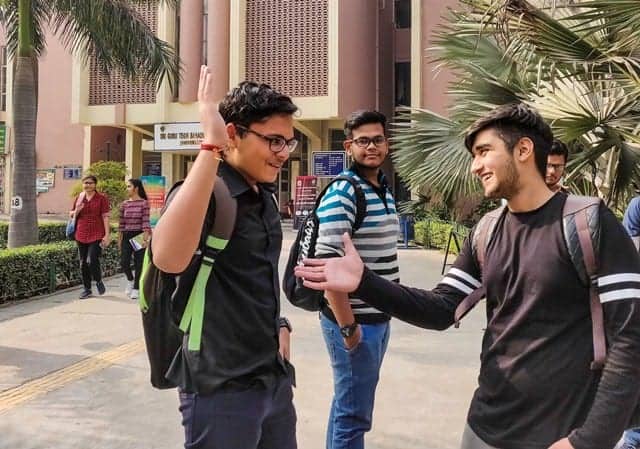
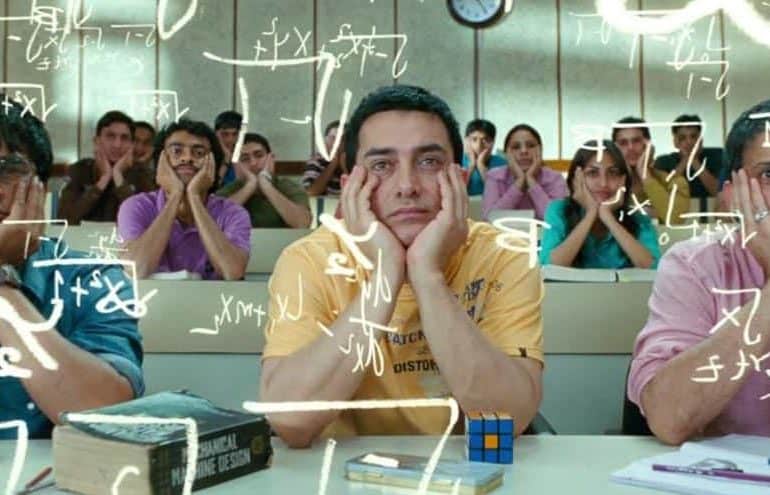
Time flies! And in what seems like the blink of an eye, the semester exams have, yet again, come knocking at the reluctant doors of students. Here are seven hacks to help you save this semester! 


Exams are an inevitable reality in students’ life, and although the effectiveness of the concept of examinations is debatable, there is but little we can do about them.

Having said that, here are a few hacks that will get you through this exam season.

  1. Begin studying: This seems to be a no-brainer. However, it is the most difficult step because often we are so caught up in procrastination, that we spend the day being anxious and get little or nothing done. Physically force yourself to study for five minutes, and it should be a smoother process from there.


  1. If you don’t feel like studying, ask your body why: When in a situation wherein you can’t seem to study, ask yourself the reason behind it. Often, it is elements like fatigue, an untidy study-space, information overload, or hunger that acts as a barrier. When your body tells you the reason, listen to it and take measures accordingly – be it a power-nap, tidying up, or a snack.


  1. Stay hydrated: Water is always a better option over caffeinated drinks, because the latter tends to make you jittery and restless. Accompanied by a snack, this will give you the little doses of energy that you require.


  1. Watch motivational videos: Studying for several hours may render you lifeless, and throw you into pits where you question your existence. But, there are motivational videos that could, possibly, bring back the enthusiasm.


  1. Try to change your place of study: Studying in the same corner may get a bit dull after a certain point. Think of sitting outdoors or on your balcony while reading texts, on the floors of the rarely-used guest bedroom while writing an assignment, and then getting back to your good-old-study-table eventually.


  1. Ask for help: If there are concepts that aren’t clear, don’t hesitate to ask your peers or teachers. Teachers should be able and willing to help, and on teaching you, your peers are revising their portions as well.


  1. Solve previous years’ question papers: There is a set pattern for the type of questions that are asked in an examination.
    Here’s the link to DU’s question papers: http://www.du.ac.in/du/index.php?page=academic-resources

We won’t say that exams aren’t important, because how society has it, they are. If you haven’t started studying yet, don’t panic and begin with it. If you put honest effort into it, a good score is waiting for you.

Best of luck!

Image credits: DU Beat


Maumil Mehraj

[email protected]