Author

DU Beat

Browsing

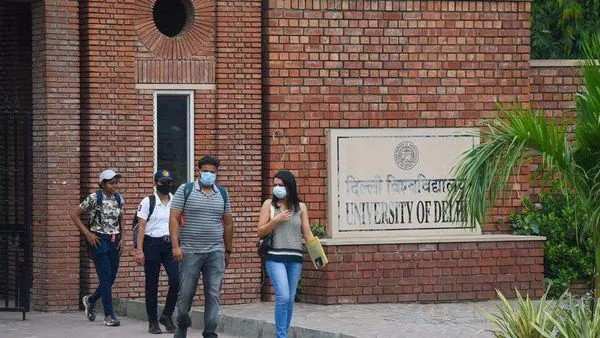
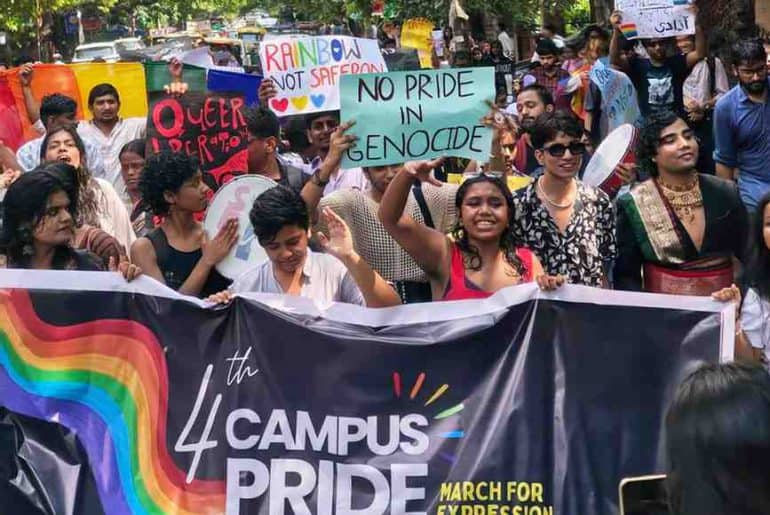
Over a hundred students marched through DU’s North Campus on 6 September 2025, demanding safety and equality for the queer community within the university.

On 6 September 2025, the 4th Delhi University Campus Pride Parade took place in North Campus, commemorating the historic 2018 Supreme Court verdict that read down Section 377 of the IPC.

Since its inception in 2022, the student-led Pride Parade has grown into a collective assertion of queer identity, rights, and political presence. The event was organised by seventeen organisations and queer collectives in association with the Students Federation of India ( SFI) and Delhi University queer collective ( DUQC). The Back Gate of the Arts Faculty at the University Enclave witnessed a turnout of more than a hundred students and protestors despite rains during the first few hours of the parade.

The parade started and culminated at the Arts Faculty, followed by an open mic session. The SFI candidate for the upcoming DUSU elections, Abhinandana Das, was present at the session. “We were expecting a much larger turnout, but we faced last-minute bureaucratic issues,” said the candidate. “Permission was taken for the main gate, but we were asked to shift to the back gate at the last minute” continued Simran, organiser and founder of DUQC. The parade gave voice to anti-homophobia, anti-transphobia, pro- Palestine and “Jai Bhim” sloganeering.

The organisers highlighted a recent issue of the alleged attack on Nitara, a transwoman in Motilal Nehru College. An assertion was made to unite the queer community of Delhi University towards creating a safer and freer space for themselves.

The parade witnessed participation from queer collectives from across DU. “DU’s queer activism has been soaring over the years, and I hope to see the same momentum in every educational institution through our collective efforts. It is extremely necessary for queer people, especially, to be aware of their rights and to fight for them,” said Shifa, Vice President of Vikirya, Gender Champions of Dyal Singh College, one of the collaborating organisations.

The first DU Campus Pride Parade in June 2022 was initiated by SFI with the slogan “March for Love, Freedom, and Social Justice.” Around 800 students marched that year, amidst backlash from the university administration and right-wing groups.

As Mehina Fatima, convenor of the Queer Students’ Subcommittee of SFI and a founding member of DUQC, recalled,

It is from these parades that I have realised how strong in numbers the queer student community of DU is. We are all fragmented here and there because of the distance between our campuses but we are not a negligible force

She commented on the political nature of the parade, saying“ pride is political… pride is not just a celebration but an unapologetic assertion of the queer identity and experience… We have refused to depoliticise the campus pride parade despite pressures… With every passing year we see that the resistance towards politics in pride is decreasing and this year, already we are hearing students talk about how pride is political, and we are very excited to see how it will materialise in the parade.”

The campus Pride March listed out their ‘charter of demands’ as follows:

  • Establish gender neutral washrooms in all educational institutions
  • Enact horizontal reservation for general students in all educational institutions
  • Establishment of proper mental health cells in all universities in colleges with certified mental health professionals
  • Establish reserved hostels for query and transgender students in all educational institutions
  • Mandate the existence and administrative support of collectives and all educational institutions
  • Conduct service in all educational institutions for the formal record of the number of transgender students and enrolling in higher education
  • Conduct mandatory gender sensitization workshops for students teaching and non teaching staff in educational institutions every year with emphasis on lgbtqia + identity and experience”

“The charter holds great significance; it was first accepted at the General Body Meeting of all queer students in Delhi, organised by SFI. It was put forward in the 2024 elections as the Queer Students Manifesto. This year, we have included eleven demands,” said Simran, founder of DUQC.

Read Also: Major DU PG Syllabus Cuts on Religion, LGBTQ+ and Pakistan Spark Faculty Divide

Image Credit: Shaafi Mahin for DU Beat

Anjali Kumari Jha

[email protected]

Anjali Paruvu

[email protected]


Delhi University’s NCWEB releases the special drive cut-off list for BA (Programme) and BCom admissions 2025–26. 


The Non-Collegiate Women’s Education Board (NCWEB) of Delhi University has released the special drive cut-off list for BA (Programme) and BCom admissions for the academic session 2025–26. This special drive provides another opportunity to students who were eligible but could not secure admission in the earlier cut-off rounds.

According to the university, the online admission process began on September 9 at 10 AM and will remain open until 11:59 PM on September 10, 2025. Candidates still seeking admission can apply through the official portal. 

The cut-off list is applicable for both BA (Programme) and BCom courses offered through various DU colleges under NCWEB. Students from categories including General, SC, ST, OBC, EWS, and PwD are eligible to apply based on the marks specified in the cut-off for each teaching centre. 

According to an NCWEB official, more than 12,000 seats out of 15,200 have been filled, and many centres are now left without any seat available. However, many seats reserved for OBC and SC categories still remain vacant. 

University officials have advised applicants to ensure that all details are entered correctly and that the required documents are uploaded while filling out the admission form. They also urged students to complete the process well before the deadline to avoid last-minute technical difficulties.

NCWEB offers women students the option to pursue BA (Programme) and BCom degrees in a non-collegiate mode, with classes held at 26 designated teaching centres and affiliated colleges. The programme is specifically designed to provide flexibility for those women who are balancing higher education with other commitments, especially to give working women the chance to pursue a college degree with classes structured on weekends. 

For further updates and detailed guidelines, candidates have been advised to visit the official Delhi University website and the admission portal.

Read Also – It’s Still a No-Go for Off-Campus Colleges


Featured Image Source – Mint


Richa Choudhary

[email protected]

Will off-campus colleges ever witness a dawn? This article addresses the irregularities, myths, and implications of the recent reforms, as well as the need for a fundamental and judicious approach to address this bias effectively.

St. Stephen’s, SRCC and Miranda are the first colleges that find a place in every CUET aspirant’s preference. It’s more of an elite biasness of a child who thinks of serving this country only as an IAS, IPS or an IFS. Other professions are just manifestations of disillusioned power and a mere internal pomposity on their nameplate for them. Because, ideally, these elite services are the only way to penetrate into the biggest, most viable network in the world.

This same superficially embedded mentality a 17-year-old pertains to when they apply for DU colleges. But then these are also the same people who mostly come from the ‘liberal arts’ courses who hem and haw when it comes to mingling with the students of off-campus college: exceptions include members of debating, quizzing and theatre societies, who feel obliged enough to maintain a certain ‘network’ with these people. This is a paradox of hypocrisy in the most unfeigned way possible.

The only differential factor that determines a college as an “off-campus” is their proximity to their administrative office. This becomes a slightly complex idea for students to distance themselves from the idea of getting into an off-campus college, considering it as a sabotage to the life that has not even begun.

In the recent reforms introduced by the DU Admission Dean, Ms Haneet Gandhi (refer also to reading), the DU administration is still not able to fill in the vacancy; primarily affected are colleges like Bhagini Nivedita and Aditi Mahavidyalaya, where the enrolment capacity has just touched a meagre 60-70% even in courses like Political Science. This has forced these colleges to create an outreach programme for students in government schools and a constant persuasion to the university for filling these gaps. 

Colleges which are situated around villages like Aditi Mahavidyalaya emphasise that girls usually are unaware of CUET and other provisions for college studies.

Delhi University, in order to fix the high vacancy problem, has announced mop-up admission rounds for undergraduate programmes from Sept 4 to fill vacant seats for which admissions will be based on Class XII marks, not CUET scores. 

The university said it will release a college-and course-wise list of vacant seats on its admission portal. According to the guidelines, already registered candidates who are not admitted anywhere can apply for the mop-up round by logging into their CSAS dashboard. Fresh applicants can also register by paying a one-time non-refundable mop-up fee of Rs 1,000, in addition to the registration fee of Rs 250 for UR/OBC-NCL/EWS and Rs 100 for SC/ST/PwBD categories. Colleges will shortlist candidates based on Class XII marks and available vacancies from Sept 8 onwards. Candidates may receive multiple allocations and will have two days to accept an offer. Students already admitted through CUET will not be eligible to participate. The mop-up will be processed only through the university’s official portal.

The only solution that looks promising and surviving shall not be pushed by the university but by the student community themselves. This is a red line for these colleges to survive in the long run. However, a brutal and non-forgiving emphasis should also be given on the development of the faculty and other infrastructure pertaining to the regularities of this college.


Kinjal Sharma

[email protected]

Read Also: The Dawn of Off-Campus Colleges

Image Credits – DU squad


The result of the 2nd hostel admission list, which was supposed to be announced on August 25th, has been indefinitely delayed. No official circular has been out for the said delay.

Many students have reported that there has been a delay in the second round of hostel admission in IPCW. The circular, which claimed that the result would be out on 25th August, had been delayed as of September 3rd without any circular being issued for the said delay. Many students have expressed their frustration with the delay. The forms have been closed since 19th August, with no official circular of an extended date.

Upon asking the students as to what reasons have been provided by the college for the delay, the reasons have ranged from renovations, which we confirm with a couple of hostelers were true, to spot admission, since many students within the hostel are leaving for their upgraded colleges.

A student who requested anonymity said:

Actually, they [administration] keep giving different reasons for it; first, it was said that renovations have been going on, but now that I mailed again, they said it’s due to the ongoing admission process… as many students have upgraded to different colleges.

Another student who opted for anonymity said:

I did talk to the warden… I was told that it is late because of spot admission. I asked further if there is any notice you know for the results to come out, and I was told no, it will come out at any point in time, and you just have to check the website.”

However, in some cases, the administration has simply told the students to check the website for updates. Looking at the old archive for previous years, it’s a stark contrast; previous hostel admissions lists used to be released timely and in fact, a senior student claimed that hostel lists went on till December in 2023.

Hostels remain one of the more affordable and safer alternatives for students residing outside of Delhi. With colleges already starting and no hostel list in sight, students are stuck between finding a PG or waiting for the hostel admission list.

We have contacted the hostel warden of IPCW, but as of yet, we have not received any response.

Read Also: Discontinuation of NCC Safety Units in DU’s Lakshmibai College

Image Credit: Indraprastha College for Women’s website

Reva Rawat
[email protected]

Delhi University Teachers’ Association (DUTA) Elections 2025 are scheduled for 4th September for the 2025–27 term. Voting will be held at the Arts Faculty and Satyakam Bhawan, North Campus, from 10 am to 5 pm. Strict guidelines, security, and no-campaign zones are maintained. The results will be announced the same evening.

The Delhi University Teachers’ Association elections are scheduled for today, 4 September 2025 for the term 2025–2027. Voting will take place at the Arts Faculty Building and Satyakam Bhawan, North Campus, from 10:00 am to 5:00 pm, with vote counting starting the same evening. 

Each college was allotted to one of the two venues, and the list for the same was released on 2 September 2025. For example, Gargi, Hindu, and Hansraj have been assigned to the Arts Faculty, while Ramjas and Stephens are assigned to Satyakam Bhawan. This is done to maintain order and avoid crowding. The list also specifies the room and booth numbers, along with a special provision for computer-assisted voting stations designed for specially abled teachers. These centres were chosen because of their huge capacity, as they can handle thousands of faculty voters in a single day. 

The DUTA elections are a medium for faculty members to elect their leaders for a specific term, typically spanning two years. The leadership includes a president and 15 members of the Executive Committee. Membership (paid subscription) in the DUTA is mandatory to vote, along with timely registration before 12 August 2025.

The guidelines list specific categories of faculty who can participate. Mobile phones are strictly prohibited, and only election officials, polling agents, and voters of that booth are allowed inside. In addition, canvassing in and around these locations is strictly prohibited. Posters, banners, and handbills are also banned. The approach roads and areas near polling booths are also strictly no-campaign zones. There can be no campaigning within 200-meters of the polling premises. Delhi University’s security and Delhi Police will be present at booths and counting centres to ensure discipline. Any violation (e.g. disorderly conduct, canvassing, bringing in unauthorised material) can lead to the disqualification of the candidate or expulsion of the voter. The results are also scheduled to be announced this evening.

Image Credits: Devesh for DU Beat

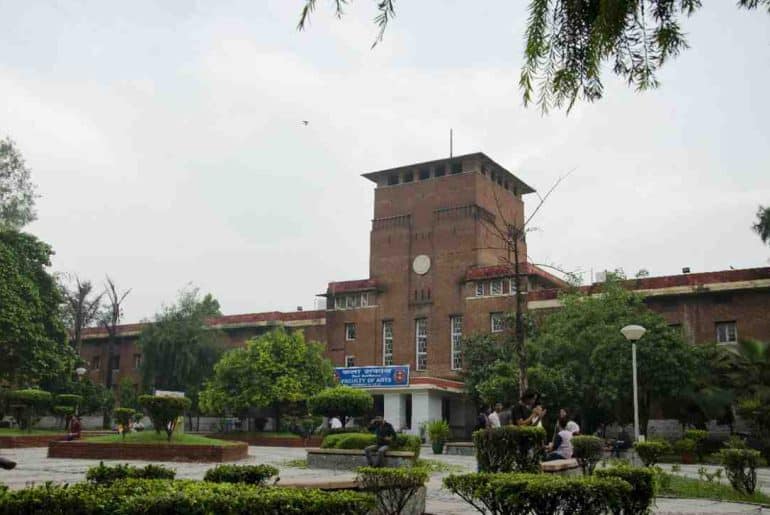
Image Caption: Arts Faculty turns to a ballot ground as DU faculty cast their votes for DUTA elections 2025

Read More: “Clean Campus, Green Campus”: ABVP’s Eco-Friendly Election Campaign

Shreya Bhushan 

[email protected] 

In a significant development ahead of the Delhi University Students’ Union (DUSU) elections, Congress’s student wing NSUI has started the process of appointing a new national president, claiming it to be for the overall strengthening of the organization.

An office notice was issued on 1st September, 2025 by NSUI in-charge and All India Congress Committee (AICC) leader Kanhaiya Kumar. This move comes at a crucial time for NSUI, with DUSU elections fast approaching, and may be viewed as a calculated attempt to reassert the organisation’s presence in campus politics—whether as a step toward strengthening its base or as a gamble that could spark fresh contestation.

Given the urgency of the situation and the spontaneous nature of the decision, questions were raised on the timing of this announcement, to which Dr. Anshul Trivedi, AICC national coordinator, said,

For us, the organisation must always come before individuals; there was nothing particularly irregular about the timings”.

Furthermore, the notice talked about the eligibility criteria noting that national office bearers, state presidents, national coordinators and student leaders engaged in constitutional movements are eligible to apply. Interested candidates will have to fill the prescribed form and submit it in person to AICC national coordinator, Dr. Anshul Trivedi at the central office in Delhi.

Speculations are rife over whether the current NSUI president, Mr. Varun Chaudhary, will continue in his post until the DUSU elections. If not, he may end up having the shortest tenure after Alka Lamba (1997-1999)

With the new announcement in place and the interviews yet to commence, an air of ambiguity surrounds the DUSU elections. It remains to be seen whether this move will prove to be a politically strategic step or lead to further uncertainty.

Read Also: DUTA Elections 2025: Delhi University Voting Today

Image Credits- The Times of India

Arshia Sharma

[email protected]

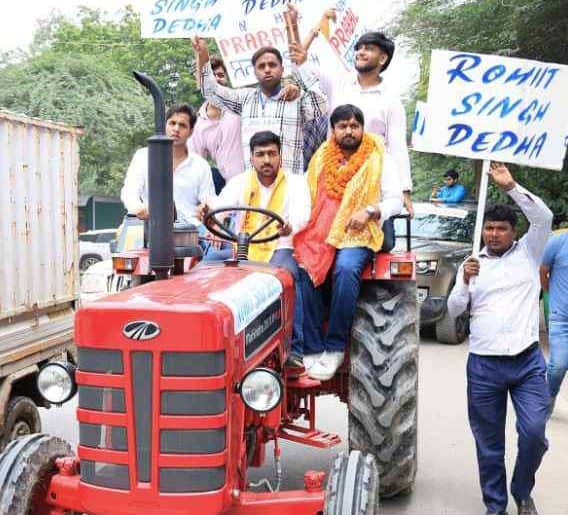
On Monday, 1st September 2025, the RSS-affiliated Akhil Bharatiya Vidyarthi Parishad (ABVP) launched its new, eco-friendly “Clean Campus, Green Campus” campaign for the Delhi University Students’ Union (DUSU) elections.

The campaign featured a bicycle rally that commenced at Vishwavidyalaya Metro station and proceeded to several North Campus colleges, including Ramjas College, Hindu College, Kirori Mal College and Daulat Ram College, before concluding at the Arts Faculty.

The campaign aligns with the efforts of the student union to keep the electioneering process “environment-friendly and campus-friendly”. According to ABVP leader Harsh Atri, the union will keep introducing thoughtful, eco-friendly campaigning practices such as bicycle rallies and clean-up drives. These endeavours complement the ABVP’s goal to keep the entire process of campaigning clean, transparent, and peaceful. The union is allegedly reaching out to students and strictly adhering to the Delhi High Court guidelines in its campaigning practices. 

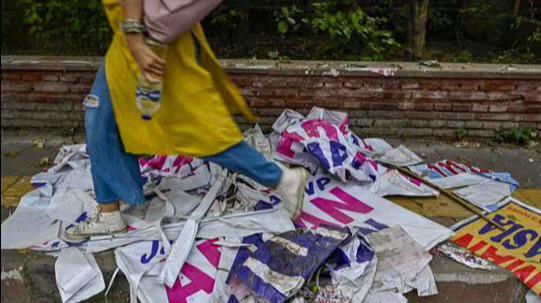
The emphasis on responsible campaigning is well expected, as the 2024 DUSU elections had brought about legal trouble due to the violation of court directives and the Lyngdoh Committee’s guidelines for defacement of public property, leading to the halting of vote counting by the High Court until all defacement was undone and the restoration of public property had been completed.

On Thursday, 28th August 2025, the ABVP released a list of 11 probable candidates for the 2025 DUSU elections, which are set to take place on 18th September 2025. The final list of four candidates for the central panel will be released on Thursday, 11th September. The counting of votes will take place on 19th September 2025 under strict measures in order to avoid any form of defacement or disruption.

Featured Image Credits: @RohitDedhaABVP on X

Read Also:  ABVP and NSUI Welcome Freshers: A New Year of DU Student Politics

Souparnika
[email protected]

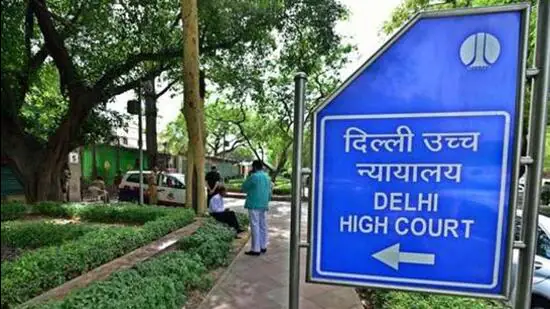
Delhi High Court directed all DU colleges to mandatorily reserve 5% seats under Sports/ECA quota from 2026-27, after hearing Aditi Rawat’s petition challenging Hindu College’s reduced allocation.

The Delhi High Court orders all the colleges under Delhi University to allocate 5% of their seats for the sports quota from the next academic session of 2026-27, designating it as mandatory. The direction by Justice Vikas Mahajan comes amidst a petition filed by a potential sports quota candidate, Aditi Rawat, who sought a seat in Hindu College through the lawn tennis sports quota for the academic year 2025-26. The order was delivered on August 25 but was released on Saturday.

Rawat’s lawyer argued in the petition that even though the admission brochure for undergraduate courses required colleges to set aside 5% of seats under the Extra-Curricular Activities (ECA)/Sports quota, Hindu College had only reserved about 1%. Out of the total 956 sanctioned seats, the college allotted just 10 seats for ECA and sports instead of the required 47.

The college countered that the brochure did not make it ‘obligatory for them to roll out admissions for the seats through the ECA/sports quota’. However, Rupal Mohinder, the counsel from the university, admitted that it was binding to follow the brochure. But, he argued that the petition will be unproductive since the seat allocation through the supernumerary quota has been closed.

Acknowledging this, Rawat’s counsel chose not to pursue the petition further but urged the court to issue directions ensuring that all colleges adhere to the 5% reservation mandate in the future.

The court stated, “With regard to the above, it is hoped that the colleges of the University of Delhi be careful in the future in following the mandate with regard to the seats under ECA/Sports Admission, which, as per the Information Bulletin of the Academic Session 2025-26, was mandatory.” 

The order is likely to have wide-ranging implications for DU’s admission process, especially for students who depend on non-academic avenues to secure entry into prestigious colleges. Every year, thousands of candidates apply under the Sports and ECA quotas, but inconsistencies in seat allocation across colleges often lead to confusion and disputes. By making the 5% quota mandatory, the court has effectively addressed a gap that colleges had previously interpreted at their discretion.

Read Also: Candidate Files Petition in Delhi High Court Challenging the Omission of Lawn Tennis Under the Sports Quota at Hindu College


Image Credits- The Hindustan Times 

Divyanshi Dusad 

[email protected]

Delhi University tells the Delhi High Court it is scrapping the ₹1 lakh bond rule for DUSU poll candidates. Students now only submit an affidavit and security bond after petitions argued that the clause was arbitrary, exclusionary, and unconstitutional.

The Delhi University on Friday informed the Delhi High Court that candidates contesting the Delhi University Students’ Union (DUSU) elections will no longer be required to deposit ₹1 lakh bond, as earlier mandated by an 8 August notification. The university said that the provision was withdrawn following widespread criticism and legal challenges.

Representing the University, counsel Rupal Mohinder submitted before Justice Mini Pushkarna that election candidates will now only need to provide an affidavit and a security bond at the time of filing nominations. The clarification came during the hearing of a petition filed by two students, Anjali and Abhishek Kumar, challenging the 8 August notification that introduced the ₹1 lakh deposit rule.

The contested notification was issued with the stated objective of preventing university defacement and public property during elections scheduled for 18 September. The university argued that the hefty bond was intended to avoid a repeat of last year’s incidents, when widespread defacement forced the High Court to delay the counting and declaration of results by nearly two months after the September 2024 polls.

However, petitioners, represented by advocate Raja Choudhary, contended that the rule was arbitrary, discriminatory, and unconstitutional under Article 14 of the Indian Constitution. They argued that the provision disproportionately affected students from middle class and rural backgrounds, effectively excluding them from the electoral process. The plea further pointed out that the rule contradicted the Lyngdoh Committee recommendations, which assign joint liability to candidates for defacement rather than imposing individual financial burdens.

“The impugned clause subverts the democratic ethos of student unions, turning elections into an elitist arena, contrary to judicial mandates for inclusivity,” the petition stated. It was also alleged that the registrar lacked the authority to introduce such a condition.

The 8 August notification drew sharp criticism from several students’ groups. The Akhil Bharatiya Vidyarthi Parishad (ABVP) earlier this month submitted a memorandum to the university administration opposing the deposit requirement. The group demanded immediate withdrawal of the provision and warned of large-scale campus agitation if it was not revoked.

Student leaders argued that the rule went against the spirit of campus democracy by restricting participation to those who could afford the steep bond. Many have also questioned the practicality of such a measure, claiming that it would not address the root causes of poster wars and graffiti.

Taking note of the university’s submission, the High Court disposed the petition filed by the two students. The court’s acknowledgement effectively removes this contentious requirement, allowing the electoral process to continue without financial hurdles for candidates.

The DUSU elections, scheduled for 18 September are a significant event in Delhi University’s political calendar and are often seen as a reflection of broader student politics across the country. With the withdrawal of the bond requirement, the focus is expected to return to key campus issues such as affordability of education, hostel facilities, and the quality of academic programs.

The university administration has yet to clarify which alternative steps, if any, will be taken to curb defacement during elections. For now, candidates will contest under the revised rules, with only one affidavit and security bond required at the time of nomination filing.

Read Also – DU Not Bound to Share PM Modi’s Degree Records, Says Delhi HC

Featured Image source – Hindustan Times

Richa Choudhary

[email protected]

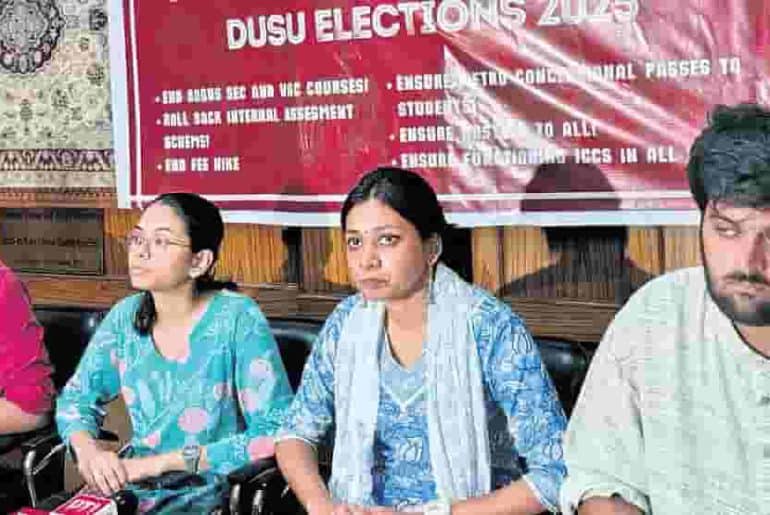
SFI and AISA announce an alliance for the upcoming DUSU elections, fighting fee hikes, privatisation, and money power in DU politics, with their campaign focusing on affordable education, student welfare, and resisting RSS-ABVP influence on campus.

In a significant development ahead of the Delhi University Students’ Union (DUSU) elections, the Students’ Federation of India (SFI) and the All India Students’ Association (AISA) on Wednesday announced a pre-poll alliance, declaring their intent to counter what they termed the dominance of “money and muscle power” in campus politics.

At a joint press conference held at the Press Club of India, the two Left-affiliated student outfits said they would contest the polls on a common platform, highlighting issues of affordability, quality education, and student welfare. Under the seat-sharing arrangement, AISA will field candidates for the posts of president and joint secretary, while SFI will contest the vice president and secretary positions.

Aishe Ghosh, SFI’s Delhi State Secretary, underlined the alliance’s commitment to challenging the prevailing campus political culture. She further added that,

SFI and AISA have been the frontal forces against the domination of money and muscle in DU politics. Last year, too, our panel polled nearly 9,000 votes, asserting a strong third pole in DUSU. This time as well, fighting for accessible and quality education, the AISA and SFI will contest on a joint platform of student struggles.

Echoing this sentiment, AISA’s Delhi University president Saavy criticised the current education policies, alleging that universities were facing “an all-out attack” under the present dispensation.

The four-year undergraduate programme has diluted the content and quality of education. There are rabid fee hikes across courses and colleges. The recent metro fare hike will hit students the hardest. Both organisations have come together to make this election a struggle for affordability and quality in the university.

The alliance has announced a “DU Mahapanchayat” on September 2 to press for their demands. These include the rollback of fee hikes, concessional metro passes for students, adequate hostel facilities, functional internal complaints committees in every college, and an end to what they described as “bogus SEC and VAC courses” and the current internal assessment scheme.

The leaders of SFI and AISA also accused the Rashtriya Swayamsevak Sangh (RSS) and its student wing, Akhil Bharatiya Vidyarthi Parishad (ABVP), of using Delhi University as a “laboratory” for the past decade. They pledged to challenge what they termed the “RSS-ABVP nexus of privatisation and saffronisation of education”.

With the alliance positioning itself as a “third pole” in DU politics, the upcoming elections are expected to witness a keen contest, as issues of accessibility, affordability, and academic quality take centre stage.

Read Also: Delhi High Court Directs Blocking of Sci-Hub and Libgen Amid Copyright Infringement Dispute

Featured Image Source: DU Beat

Richa Choudhary

[email protected]