Author

DU Beat

Browsing

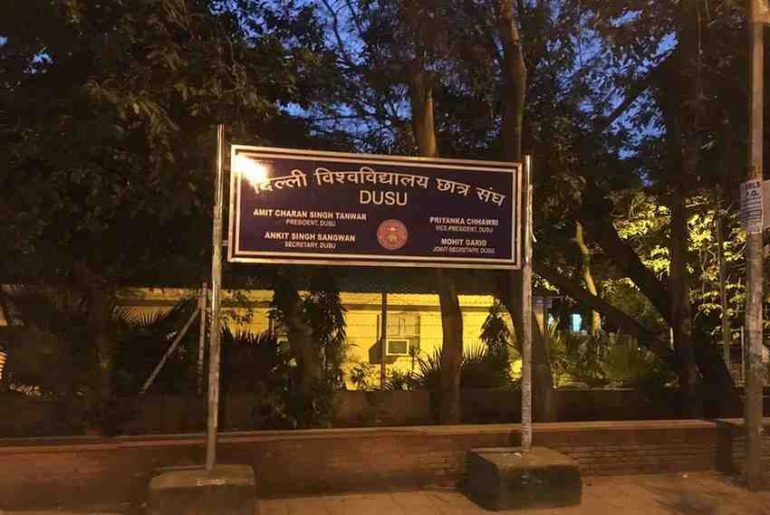
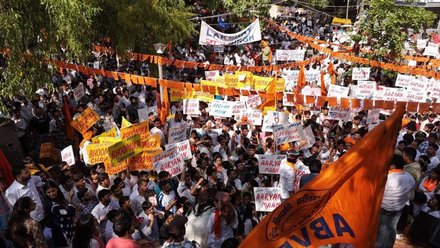
In a troubling incident the night of August 18, a group of around 20–25 unidentified individuals forcefully entered the Delhi University Students’ Union (DUSU) office. They broke open the main gate, attacked security staff, smashed glass doors, overturned chairs, damaged tables, and even destroyed an air conditioner, according to Delhi University officials. Campus authorities have confirmed that police are investigating the case, and the vandalised office has been sealed for now.

A day later, the Congress-affiliated National Students’ Union of India (NSUI) condemned the act, calling it “cowardly” and blaming the RSS-backed Akhil Bharatiya Vidyarthi Parishad (ABVP). NSUI national president Varun Choudhary alleged that ABVP had a long history of campus violence and creating unsafe spaces, particularly for women students. He described the vandalism as a “clear display of ABVP’s frustration.”

ABVP, however, rejected the charges, accusing NSUI of staging the attack to gain attention ahead of polls. In its statement, the student wing said,

Groups that are unable to work on the ground or connect with students resort to propaganda.

ABVP further alleged that the vandalism was a “media stunt” designed to tarnish its image.

Choudhary, meanwhile, said NSUI would continue to campaign on issues of affordable education, timely scholarships, social justice, and women’s safety under the banner of “Mohabbat Ki Dukan.” 

This is not the first time student politics at Delhi University has seen such flashpoints. From the defacement of DUSU offices in past years to violent clashes during presidential campaigns, incidents of hostility have increasingly overshadowed the democratic spirit of campus elections. In 2023, the election season was marked by allegations of physical intimidation and misuse of money power. Many students now argue that the real issues — ranging from affordable housing and better transport to the lack of hostels and deteriorating infrastructure — rarely find space in these campaigns. Instead, the narrative is often dominated by national party rivalries that play out on campus grounds.

All this paints a clear picture: DUSU politics have shifted from simply political debate to increasingly performative and destructive spectacles. Rather than fostering constructive dialogue, recent developments suggest that winning appears to have become more about leveraging force or acts of power.

Read Also: DU Cracks Down on Poster Politics Ahead of Election Season

Featured Image Credit: DU Beat

Juhi Bansal

[email protected]

To download the StuCred app, click on the link:  https://stucred.flyy.in/JXR2Q13

1. Introduction
In college, there are so many firsts — your first taste of freedom, your first all‑nighter — and for
most of you, the first time budgeting with your own money. Being free, however, also means
having a great deal of spending options and a lack of choices.

College is not solely about studying and taking tests, but it is also a way to practice essential life
skills, particularly those related to managing money. Shocker alert: Schools do not teach
financial literacy, so students are often left to learn about budgeting, saving, and debt the hard
way. And while a number of these lessons are just minimally painful, others may be universal
errors that take several years to correct.

Why does this matter? You see, the money habits you establish today don’t just have an impact
while in college; these habits develop and shape your financial future. Those early bad habits
can turn into avoidable debt — that you carry with you for the better part of your career, missed
opportunities as a result of these fewer points on poor financial health, and long-term financial
stress.

Today, we will examine the everyday poor money habits that students often develop in college
and explore ways to avoid them. Whether you are a fresher running out of pocket money
midway through term, or an experienced senior working part-time alongside your studies:


2. Why College Students Struggle with Money

Managing money in college can feel like a juggling act, and for many students, it’s a constant
challenge. Between limited income, high expenses, and the temptation to spend, it’s easy
to see why so many struggle to stay financially stable.

2.1. Limited Income & High Expenses
Allowances, scholarships, and part-time jobs are the primary sources of income for students.
However, the bad news is that it’s often money that has to be stretched across rent, food, tuition,
transportation, social activities—and yes, the occasional travel. Even the most prudent of
budgets can start to feel a little strained as the cost of living rises.

2.2. Lack of Financial Literacy
College prepares you for a career, but it hardly ever teaches practical money skills, such as
budgeting, saving, or understanding interest rates. The result is that many students reach
adulthood without having the first idea of how to budget for living, balance a bank statement, or
handle debt properly — thus making some costly mistakes.

2.3. Peer Pressure & Social Comparison
College is a social environment, and peer pressure can strongly influence spending.
Whether it’s the latest gadgets, weekend trips, or trendy clothes, students often feel the need to
match their friends’ lifestyles, even if it means stretching their budget too far.

2.4. Easy Access to Credit
Managing Credit Cards, BNPL (Buy Now, Pay Later) Apps, and quick loans has now reached a
point where spending beyond your current means is as easy as tapping the tile for a purchase.
Even if they are helpful in case of an emergency, these tools can encourage students to overuse
them and incur debt.

3. Common Bad Money Habits in College
College can be an exciting time, but it’s also a place where many students develop bad money
habits without realizing it until years later, when they have dug themselves a massive financial
hole. We unpack some of the biggest ones here — and how you can avoid making those same
mistakes.

3.1. Living Beyond Your Means
It’s tempting to buy the latest gadgets, eat out every other day, or wear branded clothes just to
keep up appearances. While it may feel harmless at the moment, this habit can quickly drain
your wallet.

For example, ₹1,500/week on coffee and snacks, meals out when you could be cooking or
eating mess food. That is ₹6,000 over a month, and you can overhaul your grocery shopping or
even go on a domestic holiday with that.

How to avoid:
● Set a realistic spending limit for non‑essentials and stick to it.
● Try the “budget envelope” method — keep separate envelopes (or app categories) for
food, entertainment, and essentials. Once the envelope is empty, no more spending in
that category.

3.2. Over‑Reliance on Credit Cards & BNPL Apps
Although credit cards and Buy Now, Pay Later (BNPL) apps can sometimes be perceived as a
godsend, for many students they become an easy way of getting “free money” that led them to
forget that they need to pay the amount back — at times with no small change of it being
charged with high interest rates if payments are missed.
How to avoid:
● Credit is a loan, not free income.
● Ensure that you pay your entire balance by the due date to avoid interest and penalties.
● Keep debit cards for most purchases and credit cards for emergencies.

3.3. Ignoring Budgeting Entirely
It is easy to keep track of your spending if you have a budget. Thus follows the inevitable
“Where did my money go?” moments every month.

How to avoid:
● Simply use free apps, such as Walnut, Money Manager, or even Google Sheets, to track
your daily expenses.
● Take 10 minutes each Sunday to review your previous week and identify where you went
over budget.

3.4. No Savings Habit
Most students have the mindset of, “I will start saving when I get a job once I’m full‑time! Yet, if
you can’t master the formative behavior of saving now, then it is much tougher to put into place
when needed. As an added benefit, you also lose out on that little emergency fund for those
unexpected costs.

How to avoid:
● Small beginnings — even if it is ₹200–₹500 per month
● Establish Automatic Transfers to a Separate Savings Account from Your Spending
Account

3.5. Impulse Purchases & FOMO Spending
Flash sales, peer plans, and influencer recommendations — they often drive impulsive
decisions, especially when a fear of missing out (FOMO) is associated with the deal or
experience.

How to avoid:
● Apply the “24‑hour rule”: Wait a day before buying non‑essential items.
● Create a wish list to purchase later, then revisit it after a week to see if you need those
items.

3.6. Paying Full Price When Discounts Exist
Most students also forget to buy student versions of software, take advantage of discounts for
travel plans or events, and visit cafes. It’s just throwing away money to pay full price when a
discount is present.

How to avoid:
● Search online for “student discount + product name” before making a purchase.
● Always carry your student ID with you, as you never know where you’ll find a discount,
so be sure to ask.

3.7. Borrowing Without a Repayment Plan
It makes sense to take out a loan for something necessary, such as rent or textbooks. However,
borrowing for a party, concert ticket, or gadget upgrade without considering repayment can
lead to debt stress.

How to avoid:
● Borrow only when necessary.
● Find out what you are used to and how easily it will be returned before giving a loan.
● Do not take multiple loans simultaneously.

3.8. Ignoring “Small” Expenses
Those daily snacks, premium coffee shop visits, occasional rideshares, or unused subscriptions
may seem minor, but they compound over time.
Again, spending ₹2000/day on cabs versus public transport = ₹6,000/month.

How to avoid:
● Keep track of small, recurring expenses for just one month, and you will see how quickly
the total adds up.
● Cut unused expenses (stop paying for that streaming service, home delivery, and gym
memberships you do not use).

3.9. Neglecting Financial Goals
Many students have earned income through summer internships. Yet, they often spend without
considering how they will pay for a trip related to their internship, upgrade their laptop, or fund
their graduation trip. Without a plan, they end up scrambling for money later.

How to avoid:
● Establish savings goals for the shorter term (3–6 months)
● Create a new savings account labeled with your goal, like “New Laptop Fund.”
3.10. Mixing Fun Money & Essentials
If you have all your money in one bank account, it may be too easy to spend your rent or
grocery money at a whim. How to avoid:
● Have two different accounts or wallets: one for your everyday expenses and another for
when you want to have fun.
● Only ever touch your essentials account when there is a true emergency.

4. How to Build Good Money Habits in College
The good news? You can never start too early in developing good money habits. The earlier you
start doing these little things, the more relief and confidence you will feel, knowing that your
finances are being taken care of — both now and after graduation.

4.1. Create a Simple Budget
● Follow the 50/30/20 rule:
● 50% for wants (rent, food, tuition)
● 30% want (clothes, going out, fun spent)
● 20 per cent for savings or debt pay off

4.2. Track Your Spending
Whether it’s budgeting apps or just a notebook, writing helps you identify where your money
leaks. The first step is awareness.

4.3. Start a Mini Emergency Fund
All it might take is, say, ₹2,000–₹5,000 saved up to cover emergencies like medical bills or
last-minute travel or replace a broken phone charger — and there will be no need for debt.

4.4. Borrow Responsibly
Use short‑term student loans like StuCred only when you need support, and always have a
repayment plan in mind if your financial position changes from the budget you set for yourself.
Do not borrow for consumption or impulse buys

4.5. Maximise Free & Low‑Cost Options
Utilize student discounts and library resources, and attend free campus events. Opting for
no-cost or low‑cost options means that there is more money left over for savings and the basics.

5. Why Breaking Bad Money Habits Early Matters
Your money habits, for better or worse, have a cumulative effect. In the same ways that savings
has compound effects, overspending will grow from little leaks in a boat to gaping holes costing
you money hand over fist as the years go by.

The earlier you break bad money habits, the more you will save now and in the long term. Not
graduating with a burden of debt allows one to concentrate on their career, travel, or invest in
further studies rather than dealing with loan repayments.

Unsurprisingly, a corollary of good money habits is an improved credit score, which matters
more than you might think. A good credit record facilitates housing leases, automatic financing,
and visa applications for traveling to other countries.

By starting now, you’re giving yourself a financial advantage that most people only realise they
need when it’s too late. You don’t have to be rich to be financially savvy; just start making
intentional choices today.

6. Final Thoughts + Takeaway
Understanding is the first step forward in better money management. Once you have identified
the bad money habits that were learned in college, you can then make new choices. And keep
in mind, the small stuff does add up in the long run.

You don’t have to be perfect with your finances. You just need to keep at it! It does not matter
whether you follow a budget, save a few hundred rupees each month, or give up on something
you don’t need.

Every rupee you save or spend wisely today buys you more freedom tomorrow — freedom to
travel, to take opportunities without financial stress, and to build the life you want after
graduation.

So start now. Your future self will thank you.

To download the StuCred app, click on the link below:

https://stucred.flyy.in/JXR2Q13

The Veer Savarkar College in Najafgarh, which was set to admit its first batch of students in the academic session 2025-26, has now been delayed by pending government approvals. The opening might be pushed back to next year if approvals are not cleared by this month.

DU’s newest college, being established after nearly 30 years, is facing delays pending financial clearance by the Education Ministry. According to an earlier announcement by Vice-Chancellor Yogesh Singh in March, the Veer Savarkar College was supposed to open admissions in the academic session of 2025-26.

Earlier this month, The Indian Express confirmed that DU officials intended to begin the admission process and start the session even 15 days late given the procedural delays were cleared. According to DU South Campus Director Rajni Abbi, the faculty and staff positions for the college had been sanctioned by the University Grants Commission earlier this year.

However, the college’s admissions may instead be pushed back to the 2026-27 session if the approval does not come through by the end of August, as DU’s admission cycle is set to conclude by August 19 and the university does not intend to hold separate admissions to the college.

This comes as a major setback to Delhi University’s initiative to meet Delhi’s rapidly growing demand for higher education. Veer Savarkar College was built at Roshanpura village, Najafgarh, at a cost of Rs 140 crore on land donated by the Gram Panchayat. Part of an Rs 600 crore expansion project, also including plans to develop DU’s East and West Campuses at Surajmal Vihar and Dwarka Sector 22, respectively.

The college, located close to DU’s West Campus, will include 24 classrooms, 8 tutorial rooms, 40 faculty rooms, department libraries, conference rooms and a canteen. For this academic session, two four-year undergraduate programmes with 60 seats, namely B.Sc. Computer Science and Bachelor of Business Administration, are planned to be started. The college will also follow the reservation policy of 2 seats in each course reserved for students from Roshanpura village, with one of these seats reserved for female students.

The college’s journey to opening has been rocky since the beginning. Earlier this year Prime Minister Narendra Modi had laid the foundation stones for the Veer Savarkar College, along with the academic blocks for DU’s East and West campuses, an event which stirred controversy among political groups given that the event was held ahead of the 2025 Delhi Assembly Elections and that the college is named after Hindu Mahasabha leader V.D. Savarkar, a Hindu nationalist.

Even though this set of unexpected delays might cast some doubts, the future expansion plans of the university are in full throttle. Earlier in July, DU approved infrastructure development plans of Rs 1900 crore. Whether the plans stay on track remains to be seen.

Read Also: Delhi University’s 1900 crore Infrastructural Push: Solar Installations, Surveillance System and New Co-Ed College


Image Credits: Devesh for DU Beat


Mangalya Singh

[email protected]

Delhi University signed an MoU with Google Cloud aimed to train students in AI, data analytics, cyber security, and digital literacy.

The University of Delhi has entered into a multi-year partnership with Google Cloud to train students in some of the most in-demand skills of the 21st century, including artificial intelligence (AI), cloud computing, cybersecurity, data analytics, and digital literacy. The collaboration, announced on August 14, is being positioned as a step towards creating an academic environment that prepares students for technology-driven careers while also strengthening India’s digital ecosystem.

For one of India’s largest universities, with a student body running into lakhs across affiliated colleges and departments, the move marks a significant effort to match higher education with the demands of a rapidly evolving global workplace. At a time when technology has become central to almost every industry, the partnership is expected to provide Delhi University students with both the conceptual grounding and the hands-on exposure needed to remain competitive.

According to the official statement, the initiative will not only expose students to advanced tools but also provide practical training through certifications, mentorship, hackathons, and start-up incubation programmes. Google Workspace for Education will also be integrated into DU’s teaching framework to ensure students have access to collaborative digital platforms.

Dean of Colleges, Professor Balram Pani, described the collaboration as a landmark move for the university. 

“Delhi University is the number one university in the country. This collaboration will benefit both Google and DU,” 

Registrar Dr Vikas Gupta highlighted that the programme aligns with the National Education Policy (NEP) 2020, which stresses the need for digital literacy and employability-focused learning. 

From the industry side, Google Cloud’s India Managing Director, Shashi Sreedharan, highlighted the transformative potential of the initiative. 

“Technology is a powerful equalizer. It is vital that India’s next-generation talent is equipped with practical, future-ready skills,” 

The announcement has also drawn attention to how global technology companies are increasingly partnering with Indian universities to nurture talent at the ground level. In DU’s case, the collaboration is likely to set a precedent for similar tie-ups.

While it promises to bring global-level training to one of India’s largest public universities, will all students benefit equally? The real challenge will lie in ensuring that these opportunities reach beyond the North and South Campus colleges to the far corners of the university.

Still, for many students, this partnership signals hope. In a world where job markets are constantly evolving, the chance to graduate with not only a degree but also industry-recognised certifications could make DU graduates more competitive.

Also Read: SBSC (Evening) Warns Against Loitering During Class Hours


Picture Credits: Delhi University 

Juhi Bansal

[email protected]

As the much-anticipated DUSU elections dawn upon Delhi University, the administration’s decision to impose a mandatory ₹1 Lakh bond on contesting candidates has triggered a storm of protest. What the administration portrays as a measure of accountability is being widely condemned as a deliberate financial barrier that strikes right at the heart of campus democracy. For decades, DUSU has stood as a microcosm of Indian democracy, producing leaders who went on to shape national politics. By attaching a steep financial cost to participation, the administration risks rewriting that history. 

The policy has ignited rare partnerships as long-time rival student organisations come together to protest. While major organisations like ABVP and NSUI have historically housed high-profile candidates and expensive campaigns, they, too, have accused the new policy of being undemocratic and regressive. NSUI President Varun Chaudhary termed it a ‘political weapon’ that works in favour of their adversary, ABVP. 

Leftist student organisations like the Student Federation of India (SFI) also demand the withdrawal of the bond, describing it as “a regressive move that is nothing short of an elitist barrier designed to exclude ordinary students from democratic participation and stifle genuine student voices”. SFI calls out the university for their “anti–common student nature”, and highlights the growing concern over the integrity of free and fair student politics in India.

The imposition of this bond also raises much larger questions, especially those that target the identity of the university itself. The protesters claim that while administrations often justify restrictions in the name of discipline, the cumulative effect is a systematic narrowing of democratic participation. In an institution renowned for its inclusivity, the bond seems like a gatekeeping tool and risks silencing those very voices the union is meant to represent. Rather than strengthening electoral integrity, the bond tethers participation to monetary capacity, shrinking democracy to those who can afford it. 

With the DUSU election process now officially announced for September, the ₹1 lakh bond feels like more than just a procedural rule. For many students, it seems like a statement of who is considered fit to participate in democracy and who is not. As the elections draw closer and the campaigns gather pace, the debate over the bond is likely to remain at the centre of campus politics.

Image Source: The Hindu 

Navya Chandok
[email protected]

Read Also: DU Cracks Down on Poster Politics Ahead of Election Season

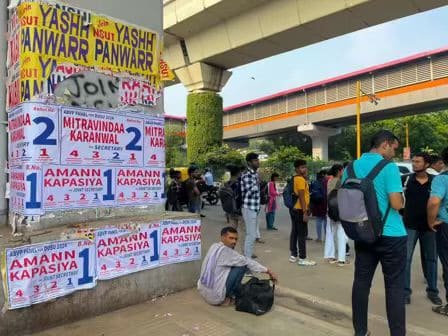
Over the years, DUSU elections have been accompanied by a flood of campaign material. Posters, banners, and flyers plastered on every available wall, pole, and surface on campus. The Delhi University Administration, in its quest to curtail the ever-growing splandour of posters during the DUSU elections that infest the infrastructure of campus, has given a set of anti-defacement guidelines to the contesting parties this year. The move comes as part of a larger effort to reduce the poster overload that takes over the university’s infrastructure each election season.

 Regurgating this stance at a sensitisation programme organised under the Swachhata Hi Seva 2025 initiative, Prof Yogesh Singh told the NSS volunteers and NCC cadets that, We will not vote for the candidate who has more printed posters.” 

He urged the studentsto de-incentivise candidates from resorting to posters and make them “afraid of doing any defamation”. He further emphasised that keeping the campus clean is a year- round responsibility and not limited to days of drive. 

The programme, with DU Registrar Dr. Vikas Gupta, Dean of Colleges Prof. Balram Pani, and other officials in attendance,  slipped in a pledge against drug addiction. Prof. Singh, meanwhile, likened the challenge to the Yamuna’s pollution, a reminder that the youth hold the mop and bucket for a “developed” India.

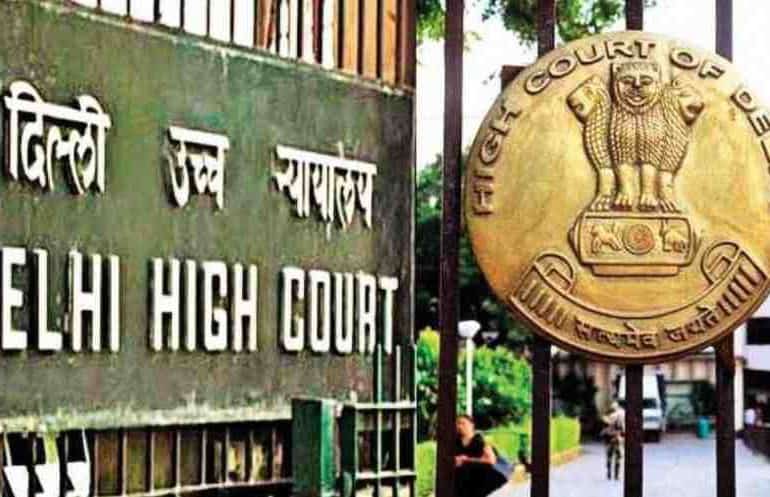
In 2024, the Delhi High Court had directed the university to ensure all campaign graffiti and posters were removed before vote counting could begin. The court made it clear that the exercise was “corrective rather than punitive” and ordered that results, originally scheduled for September 27, be declared only after DU submitted an affidavit confirming the clean-up. The outcome was eventually announced in November.

This year, the administration has gone an extra mile to enforce the new guidelines by making the candidates sign a 1 lakh bond to ensure no violations in addition to signing the anti-defacement affidavit. This sort of strictness is only comparable to the anti-ragging policy. 

Whether these efforts will actually bore fruit is yet to be seen as Delhi University awaits its (in)famous election season, the timeline of which was released recently. For now, at least we have an idea of where the administration stands in midst of it all.

Image Credits: Ayushmaan for DU Beat

Yashika Jain
[email protected]

Read More: DU Issues Anti Defacement Measures; Mandates Rs. 1 Lakh Bond Rule For DUSU Poll Candidates

The Veer Savarkar College in Najafgarh, which was set to admit its first batch of students in the academic session 2025-2,6 has now been delayed by pending government approvals. The opening might be pushed back to next year if approvals are not cleared by this month.

DU’s newest college being established after nearly 30 years, is facing delays pending financial clearance by the Education Ministry. According to an earlier announcement by Vice-Chancellor Yogesh Singh in March, the Veer Savarkar College was supposed to open admissions in the academic session of 2025-26. 

Earlier this month, The Indian Express confirmed that DU officials intended to begin the admission process and start the session even 15 days late, given that the procedural delays were cleared. According to DU South Campus Director Rajni Abbi, the faculty and staff positions for the college had been sanctioned by the University Grants Commission earlier this year.

However, the college’s admissions may instead be pushed back to the 2026-27 session if the approval does not come through by the end of August, as DU’s admission cycle is set to conclude by August 19, and the University does not intend to hold separate admissions to the college.

This comes as a major setback to Delhi University’s initiative to meet Delhi’s rapidly growing demand for higher education. Veer Savarkar College was built at Roshanpura village, Najafgarh at a cost of Rs 140 crore on land donated by the Gram Panchayat. Part of a Rs 600 crore expansion project, also including plans to develop DU’s East and West Campuses at Surajmal Vihar and Dwarka Sector 22, respectively.

The college, located close to DU’s West Campus, will include 24 classrooms, 8 tutorial rooms, 40 faculty rooms, department libraries, conference rooms and a canteen. For this academic session, two four-year undergraduate programs with 60 seats, namely B.Sc Computer Science and Bachelor of Business Administration, are planned to be started. The college will also follow the reservation policy of 2 seats in each course reserved for students from Roshanpura village, with one of these seats reserved for female students.

The college’s journey to opening has been rocky since the beginning. Earlier this year Prime Minister Narendra Modi had laid the foundation stones for the Veer Savarkar College, along with the academic blocks for DU’s East and West campuses, an event which stirred controversy among political groups given that the event was held ahead of the 2025 Delhi Assembly Elections, and that the college is named after Hindu Mahasabha leader V.D. Savarkar, a Hindu nationalist.

Even though this set of unexpected delays might cast some doubts, the future expansion plans of the University are in full throttle. Earlier in July, DU approved infrastructure development plans of Rs 1900 crore. Whether the plans stay on track remains to be seen.

Read Also: Delhi University’s 1900 crore Infrastructural Push: Solar Installations, Surveillance System and New Co-Ed College

Image Credits: Devesh for DU Beat

Mangalya Singh

[email protected]

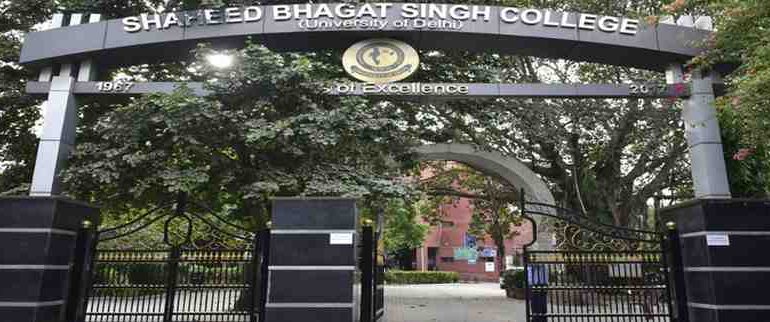
SBSC (Evening) has officially warned the students of loitering during class hours. 

In a formal notice on 14th August, Arun Kumar Attree, the Principal of Shaheed Bhagat Singh College (evening), announced that ‘strict disciplinary action’ would be taken against any student who isn’t in class during scheduled hours and is roaming around the campus without a proper reason.

The principal stated that these measures are important to be taken due to the disruption which is caused by the Delhi University Students’ Union (DUSU) elections every year. He told the Indian Express that the election campaign is used as a reason not to attend classes. He aims to increase class attendance for students with this directive.

The notice specified that,

All students of the college are hereby informed that they must attend their classes strictly as per the scheduled timetable. Students are not permitted to loiter on campus during the period when their class is going on. 

According to the college principal, the ban only applies to people who choose to loiter in groups rather than attend planned classes.  The notice said,

Any students found loitering without a reason during their class will be liable for strict disciplinary action as deemed appropriate.”

The principal underlined that the action is also intended to keep the campus safe and orderly by removing any chance for ragging or other types of harassment. He emphasised that the goal was to protect the interests of the students, not to place excessive limitations. He informed the Indian Express that the college offers socialising opportunities and spaces to its students and that they are free to utilise the canteen, library, and other common spaces if they are not scheduled in for classes at that time. He also added that to help students with their academic and extracurricular activities, Shaheed Bhagat Singh College (Evening) has extended its library’s completely air-conditioned reading hall hours till midnight.

Read Also: DU Issues Anti Defacement Measures; Mandates Rs. 1 Lakh Bond Rule For DUSU Poll Candidates

Image Credits: sbsec.org

Anjali Kumari Jha

[email protected]


Delhi University (DU) is reconsidering its rule requiring candidates in the DU Students’ Union (DUSU) elections to submit a ₹1,00,000 bond. Introduced on August 8 as part of new poll guidelines to curb campus defacement ahead of the September elections, the rule forms part of a wider framework aligned with court orders and Lyngdoh Committee recommendations. These directives also mandate an anti-defacement affidavit, limit rallies and loudspeaker use, and impose penalties for violations. The bond requirement has drawn sharp criticism from student organisations, who say it imposes an unfair financial burden, especially on candidates from underprivileged backgrounds. A senior DU official told The Hindustan Times that the University is reviewing the provision in light of these objections.

According to the guidelines, “Each contesting candidate shall be required to execute a bond of Rs. 1.00 Lakh for the offence of any defacement/violation of provisions of these Guidelines by themselves or their supporters, at the time of filing nomination for any post of DUSU.” 

Speaking to The Hindustan Times, Chief Election Officer Raj Kishore Sharma said that during a meeting with students and representatives of student organisations, participants expressed unwillingness to pay the bond. Following the discussion, the election office asked them to submit written representations to the university administration by August 16. The matter will be reviewed again before a final decision is taken.

The backdrop to these new regulations lies in the 2024 DUSU election, when widespread vandalism during campaigning led the Delhi High Court to intervene. As a result, vote counting was delayed by nearly two months, pending the removal of defaced property and its restoration. 

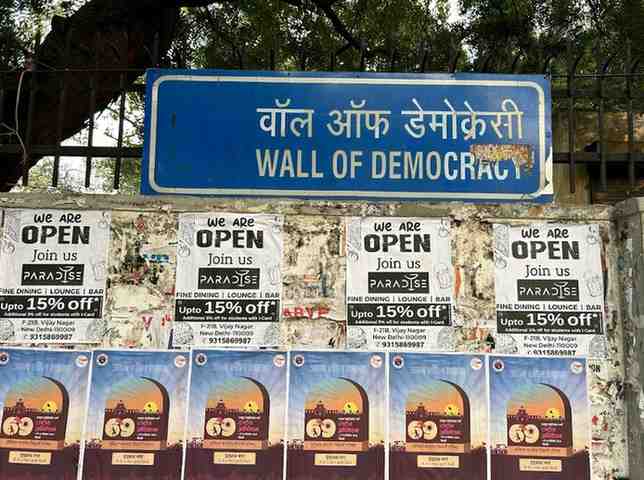
Last week, university officials reaffirmed a zero-tolerance stance on defacement, limiting campaign materials to handmade posters, imposing expenditure limits, and promising to set up “walls of democracy” in colleges as approved spaces for election displays. They also agreed, following student suggestions, that these “walls” would be formally recommended for both college-level and university-wide elections.

Sharma further affirmed, “Following last year’s incidents, the university submitted a set of reform suggestions to the court aimed at preventing defacement this year, which included the ₹1,00,000 bond requirement. However, in view of the opposition from students, we have yet to take a final decision.”

The university has notified the schedule for this year’s elections—the DUSU elections will be held on September 18, with counting scheduled for September 19. The notification also sets September 10 as the deadline for filing nominations along with a ₹500 demand draft, affidavit, and ₹1 lakh bond, followed by scrutiny and the publication of nominated candidates the same day. The withdrawal deadline is September 11, after which the final list will be released. Voting will run from 8:30 a.m. to 1 p.m. for day classes and 3 p.m. to 7:30 p.m. for evening classes.

With the deadline for filing nominations less than a month away, the fate of the ₹1 lakh bond provision remains uncertain. Student bodies await the administration’s final decision, which could determine whether the upcoming polls proceed under the contentious rule or with revised guidelines. For now, preparations for the September 18 elections continue under the shadow of last year’s controversies and the university’s push for cleaner, regulation-bound campaigning.


Image Credits: Deepanshi for DU Beat

Neeraja Unnikrishnan
[email protected] 

Read Also: DUSU And Central Council Elections 2025-2026: Official Timeline Announced

With DUSU election day less than a week away, tensions rise as Delhi’s largest student body puts forth its demands and expectations from the parties it votes for. Infrastructural upgrades, increased hostel seats, and campus hygiene remain the most widespread demands.


Stakes are high as tensions and excitement rise over the upcoming Delhi University Students’ Union (DUSU) elections which are to be held on September 18th 2025. The counting of votes is scheduled for the following day, on September 19th 2025. The DUSU elections serve as a platform that acts as a stepping stone for students into politics, either as representatives or voters. With the University of Delhi having the largest student body in the capital, the parties involved in the DUSU elections certainly have a significant weight on their shoulders.


Students have put forth multiple demands with increased hostel availability and campus hygiene being top concerns. First year philosophy student, K.Sameepya from Indraprastha College for Women stated that the administration is quite detached from the students.

If you want to connect with [the administration] there are a lot of things you kind of have to jump through. And even then it is actually quite difficult to connect with any of them.”

A first year student from SRCC remarked on the need for improved safety outside colleges, particularly women’s colleges. She also raised concerns about the lack of campus hygiene, talking about the state of the restrooms on campus saying, “with the current conditions of the washrooms, you wouldn’t even want to step in there.” Akanksha Singh, a first year student from Ramjas College talked about how the restrooms do not have proper doors – “So, even dogs sometimes come and go in the washrooms on the ground floor.” The availability of hostels, especially for first year students and students from out of state, needs to be increased according to several students.


The release of the manifesto was also a concern. Akanksha Singh, among other students, expressed their frustration over candidates simply “barging into classrooms” before introducing their names and blatantly asking for votes. Candidates generally give little information about their past work, promises and what they stand for, skipping to directly asking for votes. Students say that it is difficult to vote for people they don’t really know they can trust.


The 2025 DUSU elections are likely to be the most competitive yet with the introduction of the fourth year for undergraduate degrees by the NEP. This implies that third year students are no longer considered “final year” students and are hence eligible to compete for positions such as President and Vice-President, increasing the overall competitiveness of the entire process. Further, the 2025 elections will follow stricter guidelines with bans and limitations on loudspeakers, banners, and posters. Posters are to remain handmade and put up in only certain locations. This is expected after the vote counting for the 2024 elections was withheld upon the involvement of the High Court due to alleged defacement of public property.


The presidential candidates for this year’s elections include Aryan Maan for the Akhil Bharatiya Vidyarthi Parishad (ABVP), Joslyn Choudhary for the National Students’ Union of India (NSUI), and Anjali for the SFI(Students’ Federation of India)-AISA(All India Students’ Association). With the highly competitive atmosphere of the DUSU elections, each candidate is likely to give the other a run for their money. 


Read Also: Protest at Motilal Nehru College against Student Election Nominations


Souparnika.S.R

[email protected] 


Image Credits: Jansatta