Author

DU Beat

Browsing

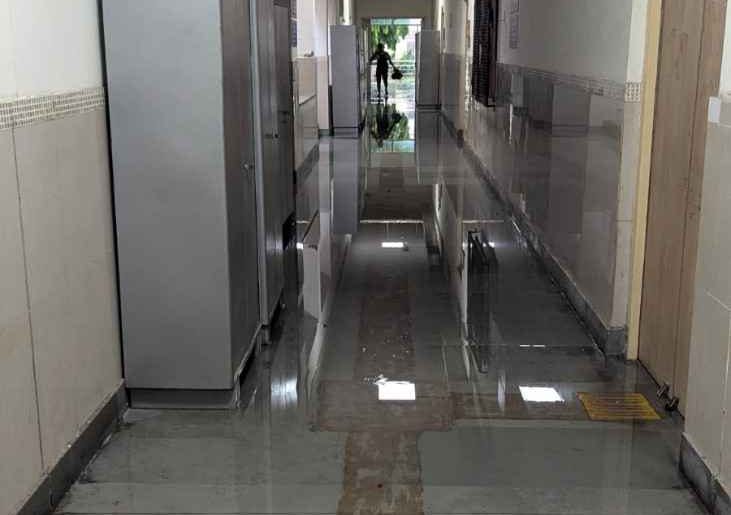
On the morning of 14 August, Delhi saw heavy rainfall, causing waterlogging, leaked ceilings, broken panels, traffic around DU colleges and even a tragic death. Students faced difficulty in reaching colleges and even walking around campuses because of ankle-deep water flooding, affecting both the indoors and outdoors of college buildings.

Delhi-NCR witnessed heavy rains on Thursday, 14 August, causing waterlogging. Amidst the relentless downpour, one of the major victims of the waterlogging were DU colleges. Areas near colleges like Zakir Hussain College faced extreme waterlogging. Despite the installation of water pumps to drain the water, the area still remained jammed. The road near Shaheed Bhagat Singh College, Jesus and Mary Marg of JMC, Siri Fort Road of Gargi College was completely waterlogged, blocking the entrance. Delhi College of Arts and Commerce and Deshbandhu College had a similar fate, with water flooding up to students’ ankles and leaking ceilings in classrooms.

The Science Block (APJ Abdul Kalam Block) of Deshbandhu College was flooded with ankle-deep water despite being situated at a relatively elevated area from its surroundings. Indoor areas of the college weren’t spared from the rainfall’s wrath, leading to leaked ceilings and broken panels in some classrooms.

A student from Deshbandhu College said, 

It took hours of continuous sweeping to get water out. The ceiling of certain classrooms in the Porta Block has broken panels, which allow water to enter the classrooms. The first bench of the entrance P-2 (Porta Block) was bathed in water.

The situation around Deshbandhu College even turned tragic, as due to heavy rainfall, a large tree fell on a bike in Kalkaji, killing a 50-year-old man and leaving his daughter fatally injured. Delhi College of Arts and Commerce likewise suffered because of water flooding. The ground floor of its old building was entirely filled with water, including the washrooms, canteen, classes, and open areas too. The main college campus was submerged in water above the ankles, and no precautions were taken to lessen the effects at the time. Jam-packed roads made it almost impossible for students to enter their college, let alone their classrooms.

Almost all colleges which were waterlogged in or around the campuses made travelling to and from colleges very time-consuming, difficult, and dangerous. Due to waterlogging, autos were charging way higher than usual, and while on the road, water entered even inside autos. Areas like Siri Fort Road near Gargi College were flooded to an extent where vehicles weren’t able to reach near the main college gate, leaving students stranded either far from college or at metro stations, with no help and cancellation of classes on the spot due to dangerous circumstances. 

Eventually, as the weather worsened, the India Meteorological Department issued a red alert in some areas, the tragic Kalkaji accident becoming one of the prompting factors. The condition of Delhi and DU colleges in particular raised questions about drainage systems and the safety of students.

Read Also: Delhi High Court Quashes JMI Professor’s Termination Over Breach of Natural Justice

Featured Image Credits: Shazia for DU Beat 

Umang

[email protected]


The National Students’ Union of India (NSUI) launched a protest on 13th August at the Arts Faculty of Delhi University’s North Campus calling for 12 days of menstrual leave per semester for female students of DU. Using the slogan, ‘From Pain to Power,’ and imprinting nearby walls with red handprints, the protest gained traction from students across the DU circuit.

The demonstration, carrying out a signature campaign in furtherance of their advocacy, was held under police supervision.

“Every signature is a stand for dignity, equality, and the right of female students to rest without stigma,” NSUI had claimed via a post on their official Instagram account.

Varun Choudhary, the nationwide President of NSUI emphasised on menstrual leave as a basic right for every female student, stating that, We will continue the fight until Delhi University implements this rule, as this provision exists in many universities in India and abroad. NSUI has also fought for this in Panjab University,” he said.

According to the student outfit, menstrual health significantly influences female students’ academic outcomes, mental well-being, and active involvement in campus life. They emphasised that neglecting this concern often leaves students with the difficult choice of missing classes, or they get bound to endure considerable discomfort merely to satisfy attendance criteria, not excluding other curricular commitments that they have.

NSUI urged Delhi University to formulate policies that accommodate female students’ plight in order to make campus more inclusive and gender sensitive. The organisation vowed to continue their efforts to urge educational institutions to implement multi-stakeholder policies. 

Image Credits: NSUI Delhi via Instagram 

Divyanshi Dusad
[email protected]

Also Read: DUSU and Central Council Elections 2025-2026: Official Timeline Announced 

University of Delhi has revealed the official calendar for the election of office bearers of the Delhi University Students’ Union (DUSU) and Central Council members for the academic session 2025-2026. The announcement marks the beginning of one of the most dynamic and politically vibrant seasons of the academic year, with the election process scheduled to take place in September. 

The official notification issued by the Registrar sets 10th September, 2025, as the deadline for the submission of nomination papers, which must be filed by 3:00 p.m. and accompanied by a demand draft of Rs.500, alongside an affidavit, and a bond of Rs. 1 lakh. Scrutiny of nomination papers will take place the same day at 3:15 p.m., with the list of duly nominated candidates to be published at 6:00 p.m. For DUSU positions, nomination papers must be put in a sealed box located at the Office of the Chief Election Officer, Conference Centre, University of Delhi, North Campus. For Central Council elections, nominations must be filed with the respective college or department. Nomination forms can be accessed and downloaded from the official Delhi University Website. 

Candidates who wish to withdraw their nominations must do so by 11th September, 2025, before noon. The final list of candidates running for office will be published later that day at 5:00 p.m. The polling day is set for 18th September, 2025, followed by the counting of votes which will take place the next day on Friday, 19th September, 2025.

The voting process will be conducted in two stages. Students enrolled in day classes will vote during the window of 8:30 a.m. to 1:00 p.m. and those in evening classes must vote from 3:00 p.m until 7:30 p.m.

The notification further aligns itself with the Code of Conduct, DUSU Constitution, and court orders from the Supreme Court of India and the Delhi High Court. It reiterates that the procedure would be carried out in compliance with the Delhi Prevention of Defacement of Property Act (2007) and the National Green Tribunal guidelines. 

With the schedule now in place, the university is set to witness a charged election season, as student organisations and candidates prepare to campaign for leadership positions in one of the country’s most closely watched student political arenas. 

Image Credits: Sushil Kumar Verma

Navya Chandok
[email protected]

Read Also: DU Issues Anti Defacement Measures; Mandates 1 Lakh Bond Rule For DUSU Poll Candidates

The Delhi High Court sets aside Jamia Millia Islamia’s termination of a professor, finding that the University had recommended his removal before issuing a show-cause notice and failed to share the inquiry report. Upholding the principles of natural justice, the court gives him a fair chance to respond.

The Delhi High Court quashed the order by Jamia Millia Islamia University, which had terminated the services of Dr. Sarfaraz Ahmad, an assistant professor in the Department of Persian. Dated 20 March 2023, the termination followed a unanimous decision of the Executive Council to dismiss him. The dismissal was to take effect from the date the written order was issued. 

In his judgement, Justice Prateek Jalan said that the dismissal was fundamentally flawed, with the facts of the case showing inadequate compliance with the principles of natural justice—fairness, impartiality, and the right to be heard before a decision affecting someone is made. He found that the University failed to comply with Statute 37(4) of the Jamia Millia Islamia Act, 1988, by not providing the teacher a reasonable opportunity to show cause before removal. Describing this as “a clear case of too little, too late”, he noted that the dismissal had already been recommended by the Executive Council even before any show-cause notice was issued.

Dr. Ahmad (petitioner), appointed to the aforementioned post in 2012, was alleged by the University to have been unauthorisedly absent from his teaching duties for almost two years, which he attributed to victimisation by certain senior professors at the department. According to him, the matter was subsequently resolved by the University’s registrar, following which he resumed taking classes in 2021. However, the University maintained that several complaints were received against him for his unauthorised absence, and that his return had caused disruption in academic functioning. An Inquiry Committee, constituted in April 2021, investigated and concluded that his presence would “vitiate the academic atmosphere”. Consequently, the Executive Council on 10 August 2022 recommended strict action—his removal under Statute 37 of the Jamia Millia Islamia Act, 1988—on the grounds of:

Dereliction of duty, refusal to perform other academic responsibilities like setting of question papers, attending departmental meetings, performing invigilation duties, etc, defiance of administrative authorities; non-compliance with office orders, and misbehaviour and obstructing others in their work.

Following this, a show-cause notice was issued on 8 September 2022, to which Dr. Ahmad replied on 22 September 2022. Despite his response, the Executive Council passed a resolution on 22 February 2023, terminating his services, which the university implemented via the 20 March 2023 order.

According to The Bar Bulletin, the Delhi High Court thus noted that the inquiry report was never given to him, denying him a real chance to defend himself. Setting aside the termination order, the court directed that the resolution dated 10 August 2022 be treated as only a proposal for removal. It also ordered JMI to give Dr. Ahmad the inquiry report and related documents, allowing him two weeks to reply, after which the Executive Council must reconsider the matter afresh in its next meeting. However, it also kept open Dr. Ahmad’s right to seek review under Statute 37(5).

In a parallel but contrasting case in July, the Delhi High Court upheld the dismissal of Dr. Amit Kumar, a professor in the Department of Political Science at Bharti College, University of Delhi, who faced allegations of sexually harassing students. A few students alleged that Dr. Kumar had sent them inappropriate and unsolicited messages filled with sexual intent via Facebook Messenger and WhatsApp. Following a thorough inquiry, the Internal Complaints Committee (ICC) of the University found a case of sexual harassment under the POSH Act and recommended his dismissal. According to Law Chakra, Dr. Kumar challenged the decision on multiple grounds—arguing that interactions on social media do not constitute harassment at the “workplace”, questioning the constitution and procedural fairness of the ICC, and claiming that he was not given a fair hearing by the ICC and DU authorities. However, the HC rejected the argument and held that harassment on social media is not outside the POSH Act’s purview. 

While both cases involved the removal of professors, the Delhi HC had opposite conclusions based on how procedural fairness was handled. In Dr. Ahmad’s case, the inquiry report was never given to him before the decision to terminate him, thus citing a breach of natural justice. On the contrary, in Dr. Kumar’s case, the HC noted that the complaint, inquiry proceedings, and final report were not only all shared with him, but he was also given the chance to respond. Therefore, the case was not overturned.

This issue also sheds light on Delhi University’s ad-hoc culture. In December 2023, eight out of ten long-serving ad-hoc teachers were displaced from the English department of Ramjas College. Satyawati College (evening) also reported en masse displacement of teachers from the Department of Hindi in September 2023. According to DU Beat, only five out of the existing eleven faculty were retained, despite there being 16 posts for which interviews took place. The shocking suicide of Professor (Dr.) Samarveer Singh, who had been working as an ad-hoc faculty member at Hindu College’s philosophy department for six years, brought the issue of DU’s ad-hocism to the fore. He was among the many professors displaced during the permanent faculty recruitment drives.

Another recent case High Court ruling reflects this problem. The court in July criticised Delhi University for “deliberately relying on ad-hoc appointments in place of regular employment”, concerning Namita Khare and Mehak Talwar’s case. The HC ordered the regularisation of these two ad-hoc teachers in the Department of Germanic and Romance Studies since 2017, who had challenged not being shortlisted for regular positions, despite fulfilling the eligibility criteria, arguing that the screening was arbitrary and excluded them unfairly. According to The Indian Express, Delhi University has filled around 3,500 permanent teaching positions with approximately 3,000 ad-hoc teachers. Without increments, promotions, and medical security, this is not just short-term precarity, but work conditions that have persisted for decades. In this scenario, the HC judgement offers a sliver of hope for the regularisation of hundreds of similarly placed teachers who have long served without permanency, benefits, or protection. 

Summing up, these cases show a recurring pattern of systemic challenges—procedural lapses and over-reliance on ad-hoc appointments, inadequate protection of faculty, causing not just employment uncertainties but also emotional disruption. Professors often spend years working on a contractual basis, with their job security hanging by a thread. Therefore, a stricter adherence to due process is imperative across India’s institutions of higher education. 

Read Also: U-Special Buses to Return to DU, Students Ask if They’re Still Needed

Image Credits: DU Beat

Nasheta Zaidi

zaidinasheta @gmail.com



Delhi University’s iconic U-Special buses are set to return, but students question their need in the Metro era and call for better last-mile solutions.

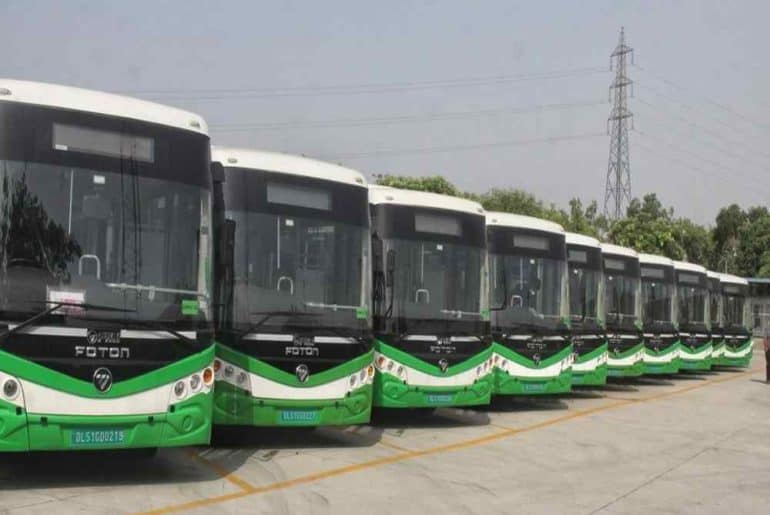
Delhi University’s U-Special buses, once a daily lifeline for students criss-crossing the city, are set to return after years off the roads. Announced by Chief Minister Rekha Gupta on August 5 during the inauguration of the new academic block of the Delhi University (DU) Social Centre School at Maurice Nagar, the revival is being presented as a “gift to students” — complete with air-conditioning, music, and upgraded interiors.

Launched in 1971, the U-Special service carried generations of DU students from far-flung neighbourhoods directly to North and South Campus. Before the Metro connected most of Delhi, they were cheap, direct, and often doubled as part of the campus culture as much as canteens or fests.

But with the Metro now covering nearly every DU-bound route, many students say the buses may no longer be the best solution. Kaashvi Khubyani, a second-year Journalism student at Delhi College of Arts and Commerce says:

The Metro already provides me with everything needed as it’s air-conditioned and quick, especially with Delhi’s unpredictable traffic. Unless these buses can match or beat the Metro’s speed and convenience, I’m not really keen to swap my daily commute for them.”

Others believe the focus should be on solving the ‘last-mile’ problem — the often long and tiring walk from Metro stations to classrooms. Urmika Srivastava, a first-year student at Jesus and Mary College, pointed out that:

A mini shuttle from Jesus and Mary College to the nearest bus stop or Metro would make daily travel much easier for students, especially given the embassy area location and long walks to South Campus after exhausting hours of classes.”

While some welcome the nostalgia and identity the buses carry, others see them as a costly throwback in a city where transport priorities have shifted. Student groups have also argued that funds would be better spent on frequent electric shuttles or safer pedestrian routes rather than adding on to the already deteriorating traffic conditions of Delhi roads. 

So far, the government has not confirmed the new U-Special routes or when they will start running. Until then, the debate continues — whether DU should look back to its most iconic bus service, or forward to transport that matches the city’s current needs.

Also Read-  CM Rekha Gupta Inaugurates New Academic Block of Delhi University’s Social Centre School

Picture Credits- Daily Pioneer

Juhi Bansal

[email protected]

Amid rising dog-bite and rabies cases, Delhi-NCR’s stray dogs face mass relocation by Supreme Court order. Residents welcome it, but activists warn of cruelty and ecological risks—who truly bears responsibility, and can safety coexist with compassion?

On August 11, 2025, the Supreme Court of India ordered the relocation of all stray dogs in Delhi-NCR to shelters within eight weeks, citing a rise in dog-bite and rabies cases and prioritising public safety over sentiment. The bench of Justices J.B. Pardiwala and R. Mahadevan acted suo motu after media reports highlighted the growing menace. The case was taken up after a Times of India report, “Delhi Hounded By Strays, Kids Pay Price,” detailed incidents, including six-year-old Chavi Sharma, who suffered multiple bites despite repeated complaints, and four-year-old Abhishek Rai, attacked on July 23, 2025, in Alipur, leaving facial injuries and forcing parents to keep children indoors.

The bench announced it would hear arguments only from the Centre, excluding petitions from dog lovers or other parties: 

We are not doing this for us; it is for the public interest. So, no sentiments of any nature should be involved. Action should be taken at the earliest.

The amicus curiae Gaurav Agarwal urged permanent relocation of all stray dogs to shelters, citing over 37 lakh dog bites in 2024, including 25,000 in Delhi, and a sharp rise in early 2025. He proposed shelters for 5,000 dogs within 6–8 weeks and adoption drives via welfare groups. Solicitor General Tushar Mehta noted a Delhi relocation site was stalled by an activist-led stay order, which the bench criticised, stressing the need to clear streets entirely. Warning that adoptions could lead to dogs being released again, the court ruled out adoption and ordered all strays to be moved to shelters without exception.

The Supreme Court has ordered Delhi-NCR authorities to build dog shelters immediately, relocate all stray dogs, and report progress. Shelters must have trained staff for sterilisation, immunisation, and containment, with CCTV to prevent escapes. Authorities must also set up a dog-bite helpline and prioritise vulnerable areas, rounding up all strays, sterilised or not. Civic bodies may use any method, including a dedicated force, with contempt penalties for obstruction. The bench called the situation “grim” and directed NCT Delhi, MCD, and NDMC to make clearing localities of stray dogs their top priority.

Residents’ welfare associations (RWAs) have welcomed the Supreme Court’s directive to shift stray dogs in Delhi-NCR to shelters within eight weeks, calling it a long-awaited relief amid rising dog bite cases. Atul Goyal, president of United Resident Joint Action (URJA), said the move would ease the growing menace and urged similar action against stray cattle: 

Along with stray dogs, cattle on the roads have also started attacking people and causing traffic jams. The authorities should take similar action for such animals as well.

Animal rights groups condemned the Supreme Court’s order, calling the mass removal of community dogs inhumane and ineffective. PETA India’s Dr Mini Aravindan noted that Delhi has around 10 lakh community dogs, less than half sterilised, and that forced relocation would cause suffering, public uproar, and fail to control population, rabies, or bites. She blamed poor implementation of the 2001 sterilisation and vaccination mandate and urged focus on comprehensive sterilisation, shutting illegal breeders, and promoting adoption instead of displacement drives:

Communities think of neighbourhood dogs as family, and the displacement and jailing of dogs is not scientific and has NEVER worked.

Congress leader Rahul Gandhi criticised the Supreme Court’s directive as a reversal of humane, science-backed policy, arguing on X that shelters, sterilisation, vaccination, and community care can keep streets safe without cruelty. Former minister and animal rights activist Maneka Gandhi called the order “impractical,” warning that it could upset the ecological balance, citing the 1880s in Paris, where mass dog removals allegedly led to a rat infestation. 

Mass appeals urge the Supreme Court to revoke its Delhi-NCR stray confinement order, calling it cruel and impractical. Petitioners advocate sterilisation, vaccination, waste control, and community care instead.

An LSR student says,

I’ve cared for strays since childhood and never felt unsafe. Rabies deaths are rare; the Bombay HC says vaccinate, sterilise, and let them live freely. This city is theirs too—they’ve even protected women at night. We have no right to decide how they live.

The protests have also faced criticism from some individuals who view them as selective in focus. According to these voices, many participants come from privileged backgrounds and have not been equally vocal on other human rights issues, such as the treatment of Bangladeshi migrants.

The Supreme Court’s order to relocate all Delhi-NCR stray dogs spotlights a clash between public safety and animal welfare. The debate leaves key questions unresolved: Can humane, science-backed measures protect people without mass displacement? Who is truly responsible for the city’s stray population—the authorities, the community, or the animals? And in striving for safety, can compassion be preserved?

Read Also: Daily Commute to DCAC in Crisis

Image Credits: Hindustan Times

Neeraja Unnikrishnan 

[email protected]

Delhi University was recently criticized by a parliamentary committee for ‘faulty implementation’ of SC/ST reservation rosters, leading to lost faculty posts, dismal student admissions, and a call for urgent reforms.

The University of Delhi is currently under intense scrutiny from the Parliamentary Committee on the Welfare of Scheduled Castes and Scheduled Tribes, which has accused the institution of significant lapses in implementing reservation policies. The report reveals widespread “discrepancies” in the recasting of reservation rosters, allegedly leading to the loss of legitimate posts for the Scheduled Castes (SC) and the Scheduled Tribes (ST) faculty and a “dismal” representation of these communities in student admissions. The panel’s report noted that the representation of SC students was below the 15% prescribed quota except in 2024-25, when it barely crossed the required threshold. 

The Committee’s principal concern centers on the university’s 2013 decision to switch its reservation policy from “department as a unit” to “university as a unit”. This change, the report contends, resulted in numerous unreserved posts being improperly converted to reserved ones, with the university reportedly failing to notify these newly identified backlog vacancies. In some alarming instances, these reserved posts were even “dereserved” and filled by unreserved candidates, effectively snatching opportunities away from eligible SC and ST applicants. 

The Committee are constrained to note that since the inception of the exercise of recasting rosters in University of Delhi, the same has been marred with various discrepancies and shortcomings due to its faulty implementation,”

the report stated unequivocally

The parliamentary panel also highlighted that the alphabetical arrangement of departments during this recasting inadvertently led to imbalances in the distribution of reserved positions, further aggravating the issue. The committee vehemently rejected the university’s assertion that there are no backlog vacancies. It has issued a stern directive to DU to immediately identify these elusive posts and initiate a special recruitment drive to fill them within an ambitious three-month deadline. Furthermore, the committee recommended that any reserved posts currently occupied by unreserved faculty must be reassigned to eligible SC/ST candidates as soon as they fall vacant. To promote transparency and accountability, it also mandated the online publication of updated reservation lists. 

Expressing serious concern about the lack of SC/ST staff, especially at the associate professor and professor levels, the panel urged the university to provide concessions and relaxations for eligible candidates. It criticized the common use of “None Found Suitable” as a reason to reject qualified SC/ST applicants, seeing it as an obstacle to proper representation. To promote job security and fairness, the committee recommended the immediate regularization of long-serving ad hoc and contractual employees from these communities. The panel headed by BJP MP Faggan Singh Kulaste noted that despite there being  68 colleges under DU, the University only has one SC/ST Cell that too “with meagre staff”. 

Beyond faculty appointments, the report also highlighted important issues related to student admissions, describing the low enrolment of ST students, despite existing concessions, and recommended a considerable cut-off reduction to ensure that reserved seats are filled properly. The committee also discovered that the reservation rules for hostel accommodations were not being applied consistently and suggested creating dedicated SC/ST hostels to tackle this gap. 

To strengthen institutional support, the committee further recommended setting up SC/ST cells in every college under the University of Delhi. It also suggested sharing principal posts among colleges to ensure that reservation policies are effectively applied at this important administrative level. Finally, to improve professional development and exposure, the committee also recommended increasing the nominations of SC/ST staff for foreign training programs.


Read Also – Delhi University Earns an A++ NAAC Grade Upon the Second Round of Evaluation

Featured image Source – News18


Richa Choudhary

[email protected]

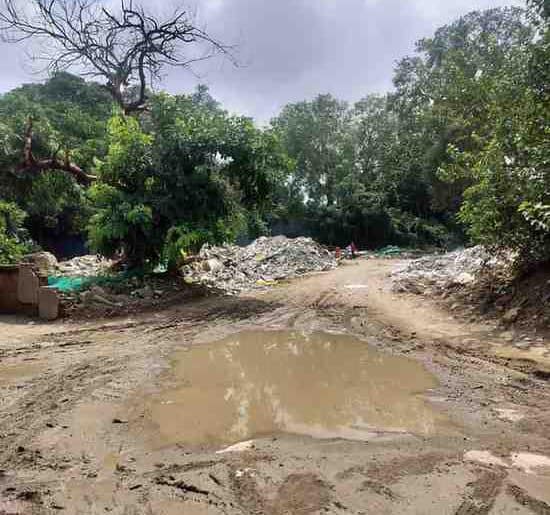
The daily journey to Delhi College of Arts & Commerce (DCAC) is becoming harder, riskier, and more frustrating for students, as key roads around the college remain broken and unsafe. Despite these conditions being a long-standing problem, no steps have been taken by the relevant authorities to address them.

One of the latest disruptions is the digging of the lane leading to Mini Market, the only nearby eatery frequented by students. The path has been broken for the construction of a mall, leaving the area littered with debris and obstructing movement to the market which is a vital stop for students looking for affordable food options close to campus. 

The road problems, however, extend far beyond Mini Market. The two main routes students take to college and back are in a poor state. The Metro route, popular because of its relatively short distance, is inconvenient to take as students walking or commuting along it face uneven surfaces that make it difficult to navigate, especially during the monsoon when potholes get filled with water. On top of this, the stretch is known for repeated incidents of catcalling and harassment, making it particularly unsafe for women students. Tinkle Singh, a second year student says:

We always have to walk in groups to the metro and taking an auto everyday is not financially viable. It’s not just the potholes, it’s also the stares and comments that make it unsafe.”

The only road between DCAC and ARD Complex, a key residential area where many students live, has also been in disrepair. Potholes, dust, and an uneven road surface have become part of the daily commute, affecting both pedestrians and those travelling by auto. Anjali, a third year student of DCAC and a residential of ARD says:

The street near the roundabout sees pathetic puddles and it is almost impossible to commute without an auto when it rains.”

Additionally the road has seen no significant repair work in almost 2 years, and with no proper footpaths or lighting, it poses safety risks at all hours. The problems are compounded by the lack of traffic regulation. Speeding vehicles are a common sight, and even the potholes acting as the speed breakers do little to slow them down. 

Despite repeated inconveniences, there has been no sign of improvement from the civic authorities responsible for road maintenance. No repair work has been initiated, and no safety measures such as CCTV cameras or patrolling have been introduced on these paths. The only official action so far has come from the college itself, which issued a notice saying:

“Students who walk from Metro to College and College to Metro are hereby advised to travel in groups as a park, construction site and other isolated areas fall in the route.”

For students, this lack of response is not just an inconvenience – it is an everyday challenge that impacts their ability to attend classes safely and on time. 

Picture Credits: Juhi Bansal for DU Beat

Juhi Bansal
[email protected]

Also Read: AAP’s Revamped Student Wing Gears Up For DUSU Elections

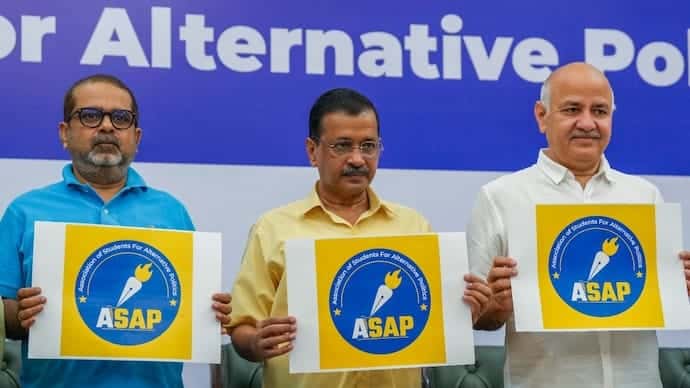
With a rebrand, AAP’s ASAP enters the DUSU race promising a new political culture — free from education mafias and rooted in equity and reform.

The Aam Aadmi Party’s rebranded student wing, the Association of Students for Alternative Politics (ASAP), has kicked off its campaign drive a month ahead of the Delhi University Students’ Union elections. Relaunched in May with a new name and mission, AAP National Convenor Arvind Kejriwal promised to turn student activism into a force for national transformation. Previously known as the Chhatra Yuva Sangharsh Samiti (CYSS), the party was established in 2014 to bring AAP’s vision of “alternative politics” to campuses. CYSS made its debut in the 2015 Delhi University Students’ Union (DUSU) elections but failed to secure any seats. Despite winning the president’s post in the Panjab University Campus Students’ Council elections in 2022, CYSS’s presence and influence in campus politics remained largely limited. The party, thus, struggled to gain a foothold.

ASAP’s logo features a torch-shaped fountain pen nib. Kejriwal stated,

The mainstream politics of the past 75 years is the root cause of all problems in India,” describing the launch as a departure from a system where elections are won through the misuse of power. ASAP’s mission, he added, was to “win hearts”.

Although the on-campus presence of ASAP is comparatively smaller than that of its competitors — the BJP’s student wing, Akhil Bharatiya Vidyarthi Parishad (ABVP), and the Congress’s student wing, National Students’ Union of India (NSUI) — there has been a subtle shift in allegiances, with several former ABVP and NSUI members now seen in ASAP. The Lyngdoh Committee recommendations stipulate that no candidate should be allowed to spend more than ₹5,000 or use printed material such as posters and flyers; however, “money and muscle power” continue to be evident through large hoardings, the distribution of printed manifestos, and the use of branded vehicles for campaigning.

As reported by The Indian Express, Deepak Bansal, a former DUSU joint secretary (2011) and ex-ABVP member who joined CYSS in 2023, stated that contesting DUSU elections has traditionally required significant financial backing, with candidates often expected to come from affluent backgrounds even to be considered. Therefore, it closes doors on students hailing from middle-class families, who have ideas and vision but no political godfather. Another issue, highlighted by The Indian Express through Ishwar Chand — who served as ABVP’s Delhi state president from 2009 to 2015 and joined AAP last year — is that tickets are almost always given to Jats and Gurjars, typically those with political clout and money, citing a “regional advantage.” He added that it was not just ABVP, and that NSUI too operated in the same manner. A massive number of DU students from UP and Bihar are left without a voice because candidates are chosen based on wealth and caste.

Moreover, another Delhi University student told The Week that the dominant national parties don’t often pick issues that resonate with students. If they do, however, pick relevant issues, many students may turn towards them. ASAP’s entry into the DUSU race thus represents an attempt to widen the space for participation in campus politics.

In the words of AAP’s Avadh Ojha,

ASAP’s mission is to make the people feel that they are the true rulers of this nation, and that they must demand their rights from the government.”


Read Also: Delhi University Earns an A++ NAAC Grade Upon the Second Round of Evaluation

Image Source: PTI/India Today

Nasheta Zaidi

zaidinasheta @gmail.com
 

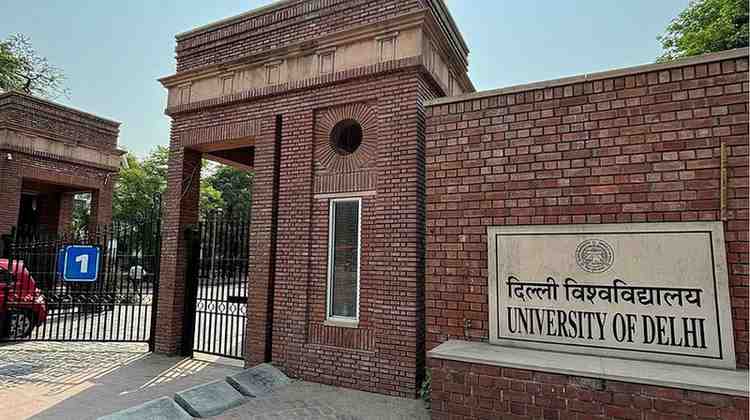
Delhi University officially secures its position in the prestigious list of Higher Education Institutes of India by receiving the highest NAAC grade, ‘A++’, on 9th August, 2025.

The National Assessment and Accreditation Council (NAAC) recently bestowed upon Delhi University (DU) and Lucknow’s King George’s Medical University (KGMU) its highest accreditation grade of A++. 

In the latest assessment, which was also the second cycle of evaluation, Delhi University was honoured with a CGPA of 3.55, reaffirming its position as one of the prominent institutions of the country. KGMU became the second medical institution in Uttar Pradesh to receive this excellence, earning a CGPA of 3.67. 

In a public statement Delhi University proudly said,

This achievement reflects the collective dedication of our faculty, students, staff, alumni, and stakeholders.”

Before having received this certification, DU has had many of its individual institutions honoured with the same long before. 

Shri Ram College of Commerce, the leading institution of DU was awarded with an A+ grade in the year 2016, with a CGPA of 3.65. In the second round of evaluation, it moved up to A++ accreditation with a CGPA rating of 3.75 now.

Two of Delhi University’s women colleges, namely Lady Shri Ram College and Miranda House have been awarded A++ in their second round of evaluation, with LSR bagging a CGPA of 3.75 in 2023. Similarly, Miranda House received the accreditation with a CGPA of 3.61. Joining the other acclaimed colleges, St. Stephens too received an accreditation of A++ in the year 2023 with a CGPA of 3.76 alongside Hansraj that bagged a grade of 3.71 CGPA. Other colleges like Ramjas, Kirori Mal, and Hindu also have an A+ grade conferred upon them. 

The National Assessment and Accreditation Council (NAAC) was established in 1994 by the University Grants Commission of India (UGC). It is an autonomous body that assesses and evaluates the quality status of a higher education institution and inspects the performance of the said educational body related to education, faculty, research, infrastructure, curriculum coverage, governance and much more. The council uses a seven-point grading system to evaluate colleges ranging from A++ to D. The accreditations are valid for a period of five years. 

Although established in the year 1922, Delhi University received its first NAAC grade of A+ in the year 2018 with a CGPA of 3.28. The University worked its way up to the 6th position in the NIRF ranking amongst Universities in India and 15th position overall. 


Read Also: Delhi University Relaxes Criteria for Minor Subject Selection Under UGCF


Image Source: DU Squad


Ananya Agarwal

[email protected]