
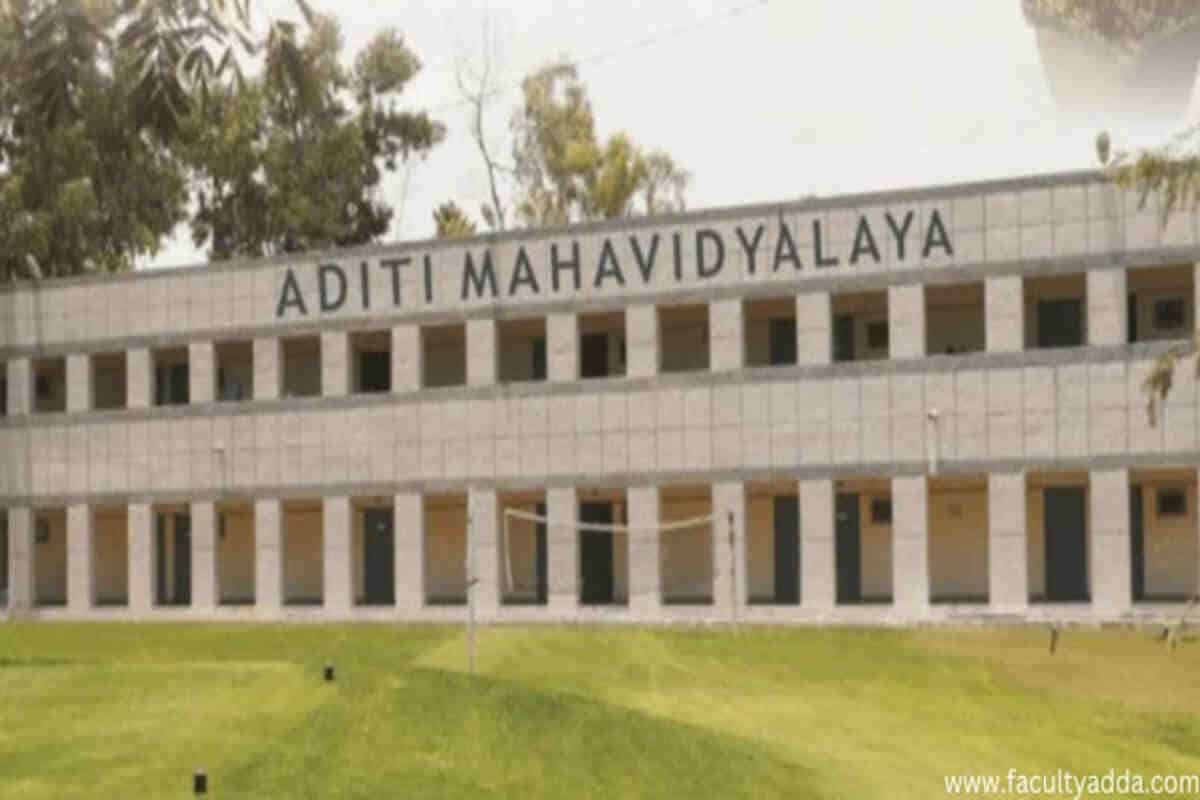
Off-Campus colleges of Delhi University might see a new break of reform as the University plans to increase seat allocations by up to 100% in courses where the seats remain largely vacant.
The DU ecosystem has been a welcoming atmosphere for students all over India aiming for the top-ranking colleges under Delhi University. With the introduction of preference lists and NRIF rankings, the process of making informed decisions based on the course structure, the infrastructure, and peer groups has become easier for students. Broadly, students aim for the top-ranking colleges, like Miranda, SRCC, St. Stephen’s, and Hindu, to expose themselves to the best of DU culture, even if it means giving up the course of their choice.
According to The Pioneer, DU has submitted its data for the 2024-2025 admission cycle. Among all colleges, SRCC has received the highest number of first preferences at 38,795, followed by Hindu College (31,901), Hansraj College (15,902), St. Stephen’s College (12,413), and Miranda House (11,403). These numbers clearly state the persistent bias of students towards North Campus and other top-tier colleges, which often comes at the expense of off-campus colleges.
Primarily, the reason underscoring this bias is the lack of infrastructure and the location of these off-campus colleges on the outskirts of Delhi, such as Aditi Mahavidyalaya. The lack of visibility of these colleges as a part of the core DU culture has significantly downgraded these colleges to the least-preferred institutions. Students have been reported saying that they would rather take admission in a private university than be a part of the excluded DU campus, thus making a significant point on how the North Campus has been a dominating place for the students to make the best of their college life, professionally and personally.
Hence, to bridge this gap, Delhi University has employed a new strategy this year. According to Professor Haneet Gandhi, Dean of Admissions, the university will implement 100% allocation to fill seats in the off-campus colleges. The same strategy will be followed in North Campus colleges, where additional allocation will be made only in the language course where the seats remain largely vacant. Specifically, an additional allocation of 80% will be made for the Unreserved (UR) category and 100% for SC/ST and OBC categories. However, the criteria will be different for mid-range colleges, where it will be 20% for the UR category and 30% for SC/ST/OBC categories.
This reform seems to leave no choice for students but to accept the seat provided to them in the consecutive rounds of CUET admission. Hence, these students either migrate in the second year or simply give up a DU degree, which is what usually happens. More than that, it is also a hint to market these colleges in the best possible light so that they get the visibility and the required attention from authorities to improve the infrastructure and the potential upgrade of these colleges in terms of societies and atmosphere, which has been the biggest reason for the fall of these colleges in being a part of the DU circle.
The reform, however, fails to address the core problems faced by the institutions, which are the development of robust infrastructure, a dedicated faculty and a severe paucity of funds. This superficial fix, thus, does not seem to be a comprehensive, long-term solution to the problem.
Read Also: CUET and the Gender Equation: Why Fewer Women are Entering Delhi University
Image Credits: facultyadda
Kinjal Sharma
[email protected]


Comments are closed.