Tag

Off-campus colleges

Browsing

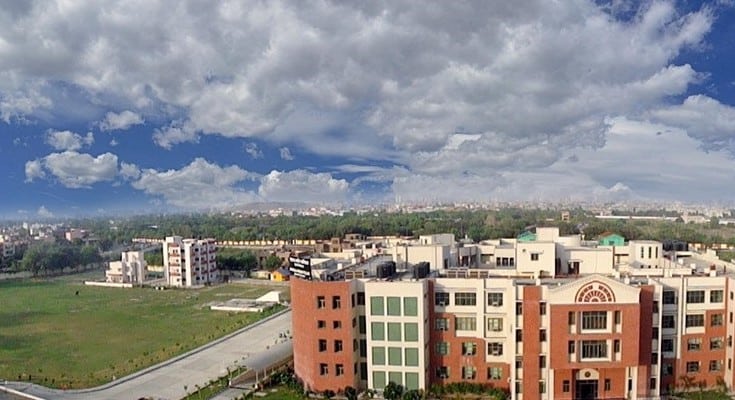
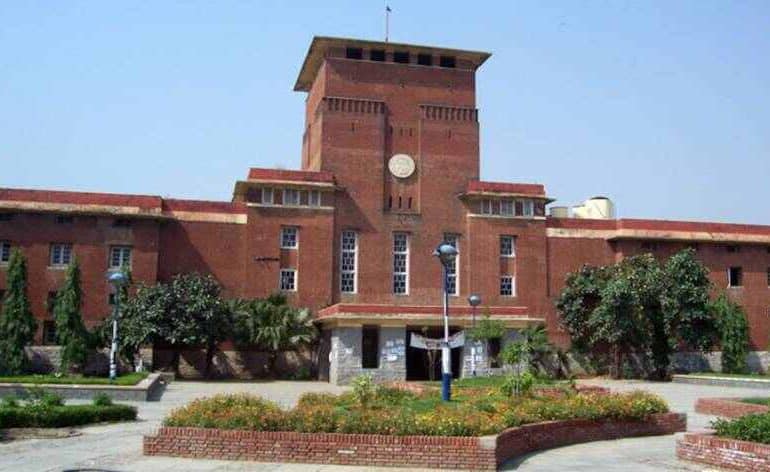
DU grants Aditi Mahavidyalaya and Bhagini Nivedita College a one-time exception to admit undergraduates via Class 12 marks after CUET counselling left hundreds of seats vacant, amid AADTA’s uniform-policy demand. 

The University of Delhi has granted two colleges, Aditi Mahavidyalaya and Bhagini Nivedita College, a one-time exception to admit undergraduate students the “traditional” way — through Class 12 marks and offline applications — after CUET-based counselling left hundreds of their seats empty.

DU Registrar Vikas Gupta told The Tribune that both colleges can now admit students through a mix of CUET scores and merit-based selection for the 2026-27 session.

Both colleges approached the university after repeated CSAS counselling rounds failed to generate adequate enrolments, and proposed considering Class 12 marks alongside CUET performance to fill remaining seats.

In a notice, Aditi Mahavidyalaya invited applications for undergraduate programmes for 2026-27, stating that admissions would be “subject to the availability of seats and approval of the University of Delhi.” Bhagini Nivedita College Principal Dr. Ruby Mishra, issued a similar notice inviting applications “in the physical mode.”

Both colleges are located off DU’s main campuses — Aditi Mahavidyalaya in Bawana and Bhagini Nivedita College in Najafgarh. University data from the previous admission cycle’s mop-up round showed both institutions among the worst affected by vacancies: Bhagini Nivedita had roughly 700 of 985 seats unfilled, and Aditi Mahavidyalaya had approximately 600 of 1,000 seats vacant, per DU’s official admissions portal figures reported by ThePrint.

Principals at both colleges have previously attributed the vacancies to low awareness of CUET among students from nearby government schools and rural areas, which they said had historically formed the bulk of their intake.

The Aam Aadmi Party’s teachers’ body, the Academics for Action and Development Teachers’ Association (AADTA), has separately demanded reinstatement of college-conducted merit-based admissions, citing over 9,500 vacant undergraduate seats across DU in the last cycle, concentrated in off-campus colleges and language and science courses, according to Careers360.

DU has not announced whether the exception granted to Aditi Mahavidyalaya and Bhagini Nivedita College will be extended to other colleges facing similar vacancies or whether it will apply beyond the current admission cycle.

Read Also: DU Classes Begin as Sports Quota Aspirants Continue Waiting for the Allocation List

Image Source: The Times of India

Mayank Scripts
[email protected]
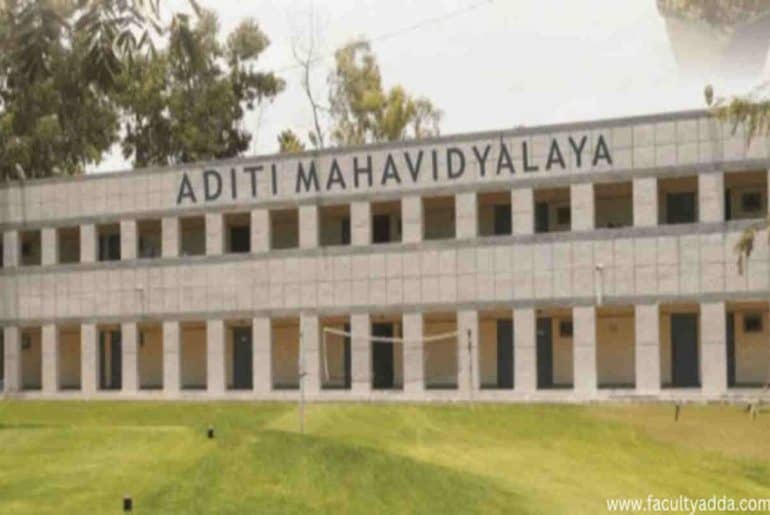
 

Off-Campus colleges of Delhi University might see a new break of reform as the University plans to increase seat allocations by up to 100% in courses where the seats remain largely vacant.

The DU ecosystem has been a welcoming atmosphere for students all over India aiming for the top-ranking colleges under Delhi University. With the introduction of preference lists and NRIF rankings, the process of making informed decisions based on the course structure, the infrastructure, and peer groups has become easier for students. Broadly, students aim for the top-ranking colleges, like Miranda, SRCC, St. Stephen’s, and Hindu, to expose themselves to the best of DU culture, even if it means giving up the course of their choice.

According to The Pioneer, DU has submitted its data for the 2024-2025 admission cycle. Among all colleges, SRCC has received the highest number of first preferences at 38,795, followed by Hindu College (31,901), Hansraj College (15,902), St. Stephen’s College (12,413), and Miranda House (11,403). These numbers clearly state the persistent bias of students towards North Campus and other top-tier colleges, which often comes at the expense of off-campus colleges.

Primarily, the reason underscoring this bias is the lack of infrastructure and the location of these off-campus colleges on the outskirts of Delhi, such as Aditi Mahavidyalaya. The lack of visibility of these colleges as a part of the core DU culture has significantly downgraded these colleges to the least-preferred institutions. Students have been reported saying that they would rather take admission in a private university than be a part of the excluded DU campus, thus making a significant point on how the North Campus has been a dominating place for the students to make the best of their college life, professionally and personally.

Hence, to bridge this gap, Delhi University has employed a new strategy this year. According to Professor Haneet Gandhi, Dean of Admissions, the university will implement 100% allocation to fill seats in the off-campus colleges. The same strategy will be followed in North Campus colleges, where additional allocation will be made only in the language course where the seats remain largely vacant. Specifically, an additional allocation of 80% will be made for the Unreserved (UR) category and 100% for SC/ST and OBC categories. However, the criteria will be different for mid-range colleges, where it will be 20% for the UR category and 30% for SC/ST/OBC categories.

This reform seems to leave no choice for students but to accept the seat provided to them in the consecutive rounds of CUET admission. Hence, these students either migrate in the second year or simply give up a DU degree, which is what usually happens. More than that, it is also a hint to market these colleges in the best possible light so that they get the visibility and the required attention from authorities to improve the infrastructure and the potential upgrade of these colleges in terms of societies and atmosphere, which has been the biggest reason for the fall of these colleges in being a part of the DU circle.

The reform, however, fails to address the core problems faced by the institutions, which are the development of robust infrastructure, a dedicated faculty and a severe paucity of funds. This superficial fix, thus, does not seem to be a comprehensive, long-term solution to the problem.

Read Also: CUET and the Gender Equation: Why Fewer Women are Entering Delhi University

Image Credits: facultyadda

Kinjal Sharma
[email protected]


Over the years, off-campus colleges have been stealing the spotlight away from North and South Campus Colleges in various spheres of courses, infrastructure and cultural societies. Therefore, with each passing year, they have successfully attracted more and more Delhi University aspirants for admissions.

What’s causing this remarkable shift from the core campus? Let’s have a look!

1. Infrastructure

With sprawling campuses and well-developed infrastructure, off-campus colleges like Keshav Mahavidyalaya, the newly built Deen Dayal Upadhyaya College, Sri Guru Gobind Singh College of Commerce, Shaheed Rajguru College of Applied Sciences for Women, Maharaja Agarsen, Shaheed Sukhdev College for Business Studies are proven to be better than many core campus colleges. Dyal Singh College (M) recently also became the first college to be powered by solar energy. Off-campus colleges are thus, in a constant process of improving their infrastructure!

[caption id="" align="aligncenter" width="735"] Deen Dayal Upadhyaya College[/caption]
 

2. Specialized Courses

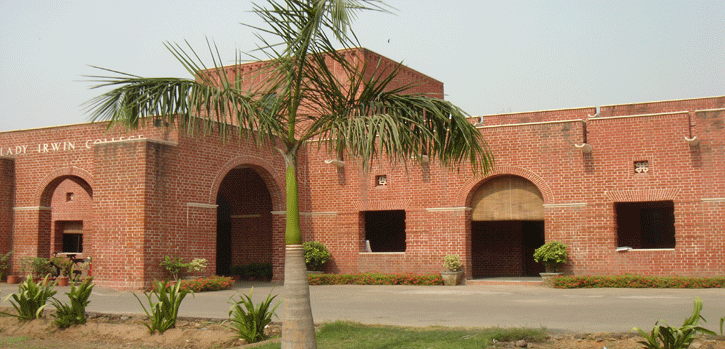
Another reason for the shift are the specialised courses that off-campus colleges are known to offer. Institute of Home Economics (IHE) and Lady Irwin College are the only colleges that offer Home Science as an undergraduate course. Bhaskaracharya College of Applied Sciences also offers many unique specialised courses on instruments, rarely found in any other colleges.

[caption id="" align="aligncenter" width="725"] Lady Irwin College[/caption]


3. NAAC grading

Acharya Narendra Dev College (ANDC) secured the second spot by getting a CGPA of 3.31 (Grade A) in The National Assessment and Accreditation Council’s (NAAC) evaluation. Shaheed Sukhdev College of Business Studies (3.16), Ramanujan College (3.06), Shivaji College (3.26), Sri Guru Gobind Singh College of Commerce (3.02), Keshav Mahavidyalaya (3.01), Bharati College (2.85) and Deen Dayal Upadhyaya College (2.63) were some of the off- campus colleges that too received good NAAC scores this year.

[caption id="" align="aligncenter" width="950"] Acharya Narendra Dev College[/caption]


 4. Cultural Societies

Misba – Western Dance Society, and I Vogue – The Fashion Society of Sri Guru Gobind Singh College of Commerce (SGGSC), won all the major competitions in Delhi University this fest season. Vayam – the dramatics society of Shivaji College, Glamoratti – The Fashion Society of Dyal Singh College (Morning), Zephyr – The Western Music Society of Kamala Nehru College and SGND Khalsa College’s folk dance societies are some of the best societies in Delhi University’s circuit.

[caption id="" align="aligncenter" width="735"] Kamala Nehru College[/caption]


Nidhi Panchal

[email protected]

]]>

It’s that time of the year again when the farewells have just ended and everyone is busy with exam preparation. It’s also that time of the year when students are eagerly waiting for the exams to end and the fucchas to arrive. Well, the fucchas -to- be, on the other hand, have nothing to do but sleep, eat, dream and repeat. Dream about making it to the college they’ve always wanted to be in and have a taste of the freedom that college life promises. And a lot among these young aspirants also dream of making it to North Campus.

Allow me, a former North Campus aspirant just like them, to bust all myths about this place.

1. Elite Colleges
When people talk about North Campus, the first thing they mention is the number and names of elite colleges it has. Hindu, Stephen’s, Miranda and the list goes on. What they forget to take note of is that some of the best and top colleges of Delhi University are either Off Campus or South Campus Colleges. (Heady hint: LSR, CBS, JMC)

2. Food Joints
Can college life ever be complete without eating joints? Nay! So, when people from North Campus come up to you to tell you about how North Campus (NC) has Hudson Lane and apart from the million other small eating joints, tell them about Satyaniketan which is home to almost all the cafes in NC or the proximity of Amar Colony from PGDAV College and drive home the point by mentioning the proximity of HKV, Shahpur Jat and Cyber Hub from South Campus.

3. Markets
Now, everyone knows how the North Campus walas have K-nags all to themselves but let’s not forget how South Campus has Lajpat Nagar, Khan Market and Sarojini Nagar nearby and the proximity of off campus colleges to the Paharganj Market. We’re not the only privileged one’s here!

4. Infrastructure
Yes, the infrastructure in many North Campus colleges is top notch but that let’s not underestimate the off campus colleges. In the past few years, a lot of off campus colleges from ARSD College to Deen Dayal Upadhyay College have shifted to better locations with better infrastructure facilities.

5. Courses
Off Campus colleges offer specialized courses which is not common in North Campus. Lady Irwin College and Institute of Home Economics, both of which are off campus colleges are the only colleges which offer courses in Home Science.

The next time someone from North Campus comes to you talking about the environment in North Campus ask them to think about the time of the elections in the campus and compare the crass cacophony of sloganeering with the peaceful environment in Off Campus Colleges!

Akshara Srivastava

Image Credits: http://churchak.org/