Tag

CUET-UG

Browsing

The NTA has announced that the CUET UG examination will commence in May. Additionally, provisions have been made for students facing mismatches in identity documents.

The Common University Entrance Test for Undergraduate programmes (CUET UG) 2026 exam is scheduled to be conducted by the National Testing Agency (NTA) from 11 May 2026 to 31 May 2026. Following this exam, admissions to undergraduate programmes at Delhi University are also expected to begin shortly after. CUET–UG 2026 application forms were available between 3 January and 4 February, with a correction window open from 23 February to 26 February. 

As in the past four years, the University will carry out the admission process through its Common Seat Allocation System (CSAS) portal, which operates in multiple phases, the first one being student registration. Students’ admission largely depends on CUET results. Once the results are declared, students can apply for courses and colleges they prefer and are eligible for, based on subject mapping. 

The Dean of Admissions, Haneet Gandhi, stated that the CSAS portal is likely to open around the third week of May, which is also when the CUET examination will take place. While the final details are still being worked out, the University aims to complete admissions promptly this time so that classes can begin at the earliest. Efforts will also be made to shorten the allocation periods, even if it requires adjusting each round by a day or two. Students have also been advised to choose those CUET subjects that they have studied in Class 12, as at least 50 per cent similarity is required for subject mapping, which is an essential part of the admission process.

In recent years, faculty members have raised concerns about delays in the admission process, following DU’s adoption of the CUET-based admission system and its impact on the academic calendar. To address this, the University is already working to make the CSAS portal more user-friendly by adding prompts and guidance to help students avoid mistakes during the application process.

In its latest notice dated 7 April, the NTA has also introduced a special verification window from 7 April to 10 April 2026, for candidates facing issues such as mismatched photographs or identity documents. Candidates facing such discrepancies are required to verify their identity by submitting a signed and attested certificate along with a recent photograph, having it attested by their school/college principal or a Gazetted Officer, and uploading it to the NTA website by 10 April.

The CUET, in its current form, was introduced in March 2022 for the academic year of 2022-23. Implemented by the NTA, it aimed to create a level playing field for admissions across all central universities (not just Delhi University), reducing the high cut-offs and over-reliance on board examination marks. It was a key reform under the NEP 2020, which also allowed students to appear for a single common entrance exam, instead of multiple university-specific exams. CUET is one of India’s largest entrance examinations, with more than 14 lakh applicants this year. 


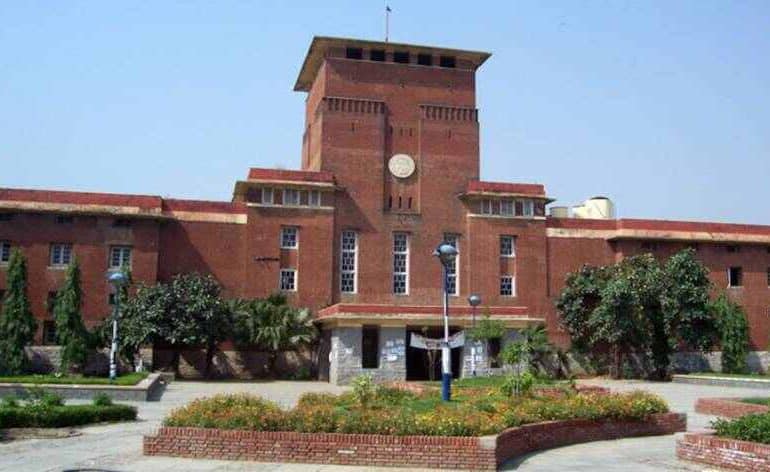
Image Source: Devesh for DU Beat

Read Also: DU UG Admissions 2026–27: CUET UG Mandatory, No Change in Subject Eligibility Rules


Nasheta Zaidi

[email protected]


Off-Campus colleges of Delhi University might see a new break of reform as the University plans to increase seat allocations by up to 100% in courses where the seats remain largely vacant.

The DU ecosystem has been a welcoming atmosphere for students all over India aiming for the top-ranking colleges under Delhi University. With the introduction of preference lists and NRIF rankings, the process of making informed decisions based on the course structure, the infrastructure, and peer groups has become easier for students. Broadly, students aim for the top-ranking colleges, like Miranda, SRCC, St. Stephen’s, and Hindu, to expose themselves to the best of DU culture, even if it means giving up the course of their choice.

According to The Pioneer, DU has submitted its data for the 2024-2025 admission cycle. Among all colleges, SRCC has received the highest number of first preferences at 38,795, followed by Hindu College (31,901), Hansraj College (15,902), St. Stephen’s College (12,413), and Miranda House (11,403). These numbers clearly state the persistent bias of students towards North Campus and other top-tier colleges, which often comes at the expense of off-campus colleges.

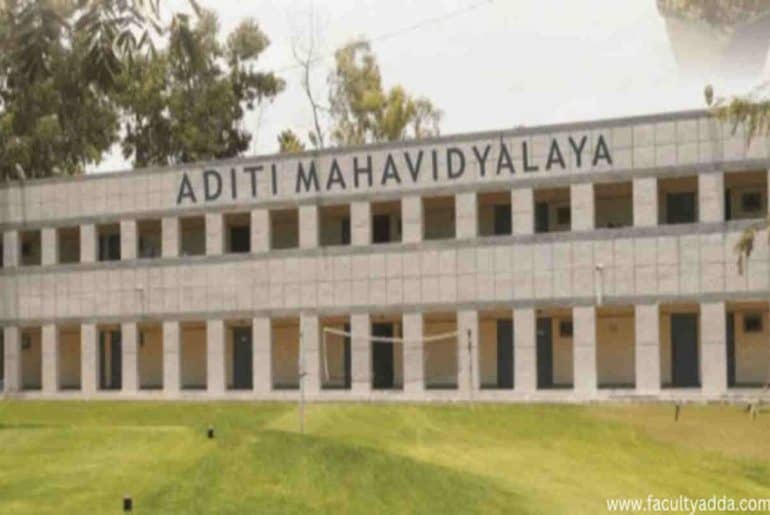
Primarily, the reason underscoring this bias is the lack of infrastructure and the location of these off-campus colleges on the outskirts of Delhi, such as Aditi Mahavidyalaya. The lack of visibility of these colleges as a part of the core DU culture has significantly downgraded these colleges to the least-preferred institutions. Students have been reported saying that they would rather take admission in a private university than be a part of the excluded DU campus, thus making a significant point on how the North Campus has been a dominating place for the students to make the best of their college life, professionally and personally.

Hence, to bridge this gap, Delhi University has employed a new strategy this year. According to Professor Haneet Gandhi, Dean of Admissions, the university will implement 100% allocation to fill seats in the off-campus colleges. The same strategy will be followed in North Campus colleges, where additional allocation will be made only in the language course where the seats remain largely vacant. Specifically, an additional allocation of 80% will be made for the Unreserved (UR) category and 100% for SC/ST and OBC categories. However, the criteria will be different for mid-range colleges, where it will be 20% for the UR category and 30% for SC/ST/OBC categories.

This reform seems to leave no choice for students but to accept the seat provided to them in the consecutive rounds of CUET admission. Hence, these students either migrate in the second year or simply give up a DU degree, which is what usually happens. More than that, it is also a hint to market these colleges in the best possible light so that they get the visibility and the required attention from authorities to improve the infrastructure and the potential upgrade of these colleges in terms of societies and atmosphere, which has been the biggest reason for the fall of these colleges in being a part of the DU circle.

The reform, however, fails to address the core problems faced by the institutions, which are the development of robust infrastructure, a dedicated faculty and a severe paucity of funds. This superficial fix, thus, does not seem to be a comprehensive, long-term solution to the problem.

Read Also: CUET and the Gender Equation: Why Fewer Women are Entering Delhi University

Image Credits: facultyadda

Kinjal Sharma
[email protected]


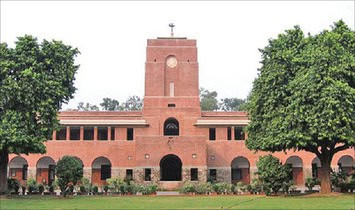
Amidst the haul of the college admissions season, as students scramble to secure seats and colleges navigate the complexities of selection, St. Stephen’s College is facing serious allegations from the university itself for exceeding seats for Christian candidates. 

Delhi University has publicly accused St. Stephen’s of exceeding the permissible quota for Christian candidates during the admission process. While Principal Principal John Verghese has refused to comment on the given situation, the notifications on the official college website provide some clarifications. 

According to one notification,

 “St Stephen’s College has admitted this year, the sanctioned number of candidates, 5% over that number and special categories including that of the Single Girl Child in every programme of study offered in the College”. 

It further mentions, conceding the allegation of exceeding the quota limit that, 

“Despite a request that additional seats should not be allotted to the College this year (as in the previous two years the College had been allotted 20% and 10% respectively in excess to the sanctioned seats), it was finally agreed upon that only 5% extra seats will be allotted to College.” 

Thus, the college asserts that its actions were in compliance with the agreed-upon guidelines.

In a separate notice dated 30th August, St. Stephen’s has requested speedy access to the Common Seat Allocation System (CSAS) portal for its admitted Christian candidates, a request that seems unlikely to be granted as the university’s further concerns remain unaddressed.

Delhi University in its review of the received college’s admission list, has pointed out that well-qualified candidates with sufficient Common University Entrance Test (CUET) scores have been unable to secure seats in popular courses, such as B.Sc. (Hons) programs. The university also highlighted that seats in popular programmes such as B.Sc (H) Chemistry and B.Sc (H) Physics, remain empty despite the availability of eligible candidates meeting the required criteria.

St Stephen’s responded by releasing a list of Christian candidates who have been offered admission into the college for the current academic year on their website.

St Stephen’s was also in the news earlier last week when 6 students were granted provisional admission to the college by the Delhi High Court after their admission was denied despite clearing the cut-off due to a “policy dispute” between the college and the university. 

Such discrepancies have led to delays in proceeding with the allocation for the University. As tensions between the university and the college escalate, incoming students find themselves caught in the middle, facing uncertainty and missing out on crucial orientation days. The confusion has left many students questioning their efforts, as they navigate the complexities of the admission process, only to be stalled by bureaucratic delays and disputes before even stepping into their first college class.

Featured Image Credits: Sunday Guardian 

Read Also: Delhi University to Introduce Biannual Admissions Next Year

Afza Khan 

[email protected]