Author

DU Beat

Browsing

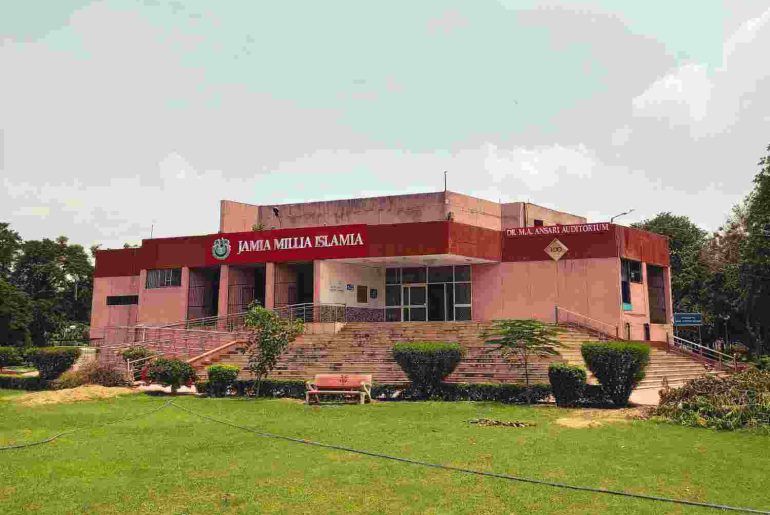
Mr Kapil, a non-teaching staff member at Hansraj College, University of Delhi, following a case of UFM (Unfair Means and Conduct) concerning a student, requested an iPhone 17 Pro as bribe for “settling the case” with the authorities.


An anonymous student source, in conversation with DU Beat, said that the accused student in question was caught with his phone during examinations and subsequently got charged with an offence, leading to an Unfair Means and Conduct (UFM) case from the college. Since the student was supposedly from a “privileged” family, Mr Kapil, a member of the non-teaching staff at Hansraj College, who assists students with exam-related issues, chose to use the case to his advantage and extort money from the student. 


Mr Kapil said that he would take care of the case and accompany the accused student during the hearing since he wouldn’t be able to handle it on his own. He clarified that his assistance would be in exchange for a new iPhone. The student raised a concern stating that it would not be possible for him to withdraw a large sum of money from his parents’ accounts unnoticed, but Mr Kapil kept insisting, asking if he could make use of UPI applications such as Paytm to transfer the money. 


The student eventually conceded, saying that it would take two months to arrange for all of the money needed to purchase a new phone since he would need to take the money out in small amounts so as not to raise suspicions. However, Mr Kapil refused, stating that the timeline is too long, leading the student to conceive an alternative plan. He said that being a content creator gave him access to several events and that he would secure a phone from one of them for Mr Kapil, insinuating motives for theft. 


Mr Kapil’s perpetual insists for a new phone led the student to state that he would give up his own iPhone 17 to Mr Kapil and arrange for another phone for himself. They settled with this agreement and met up near the Vishwavidhyala metro station. Following the meeting, Mr Kapil claimed that he spoke to the university official concerned and did what he could, and that he would also try to reach out through a friend. When the student asked how much money would be needed to bribe said friend, Mr Kapil demanded 30,000-35,000 rupees. The student, unable to meet the demand, proposed offering his personal iPhone 13.


Mr Kapil later quoted an additional amount as bribe, saying that the case would take a lot of work and that the final price would be around 70k to 80k, as stated by the university official. The student filed a case with CBI, stating extortion, bribery, and intimidation as the cause. He reported Mr Kapil’s act of corruption to the authorities, describing the case and stating the unlawful demand.


Image source: DU Speaks

Read Also: Hansraj College suspends over 30 students due to alleged indiscipline, violence, and defamation


Sammepya Karray

[email protected]

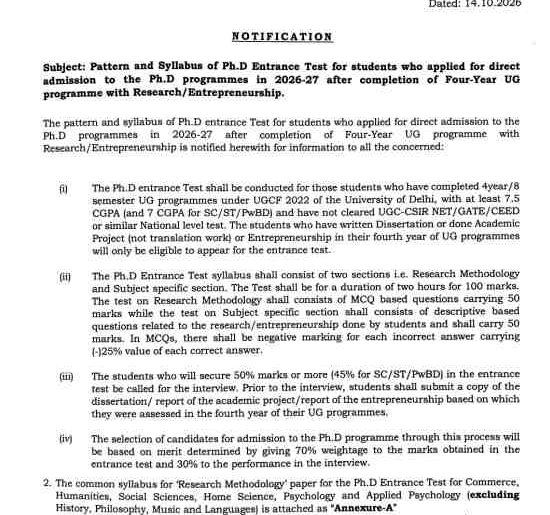
Delhi University has opened PG admissions for the 2026-27 academic session under NEP 2020. Read on to see eligibility, registration dates, application fees, and more.


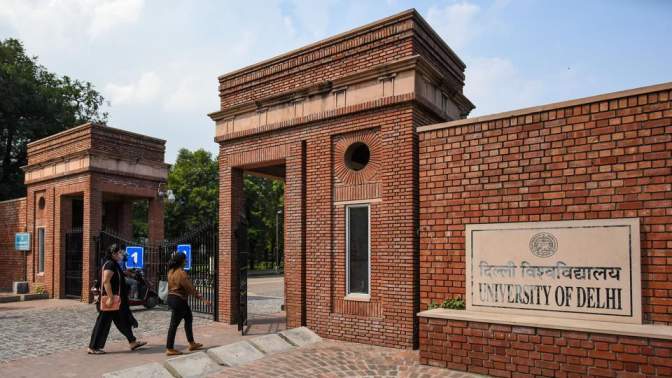
The University of Delhi (DU) has officially announced the start of admissions for its postgraduate (PG) programmes for the academic session 2026-27. Under the National Education Policy (NEP) 2020, Delhi University will now offer two types of Master’s programmes:

  • Two-Year Master’s Degree Programme – The traditional route, open to students from any recognised university across India.
  • One-Year Master’s Degree Programme – A new, shorter route under NEP, available only to eligible Delhi University students. 


The university has also confirmed that registrations are now open for Two-Year Master’s Degree Programmes, while a separate portal and schedule for One-Year Master’s Degree Programmes will be announced by the university in due course. 


Students who are currently in the third year or fourth year of their undergraduate degree from any recognised university are eligible to apply for the Two-Year Master’s programme at Delhi University. 

However, they must meet a few important conditions: 

First, the candidate must have appeared in the CUET (PG) 2026 exam in the relevant subject papers. Second, the candidate must meet all programme-specific eligibility criteria as mentioned in the PG Bulletin of Information 2026. Finally, seat allocation will be done strictly through the Common Seat Allocation System (CSAS-PG) portal, based only on CUET (PG) 2026 scores. 


The registration window for Two-Year PG programmes is now open.

  • Registration Portal: pgadmission.uod.ac.in
  • Registration Start Date: Saturday, May 16, 2026
  • Registration Last Date: 11:59 PM, Sunday, June 7, 2026 


There is also a one-time, non-refundable CSAS (PG) 2026 application fee charged per programme:

  • SC/ST/PwBD candidates: Rs. 100 per programme 
  • UR/OBC-NCL/EWS candidates: Rs. 250 per programme 

Since the fee is per programme, students applying to multiple programmes will need to pay the fee for each one separately. 


This year, Delhi University has introduced a new auto-integration feature for applicants. Using the DigiLocker and API Setu platform, the university will automatically extract key details of the candidates, including the candidate’s name, date of birth, gender, category, parents’ names, and CUET PG 2026 scores.

Delhi University recognises the efforts made by the NTA (National Testing Agency) for integrating student data into a national registry and sharing it securely with universities. 

This step aims to improve data accuracy, reduce errors, strengthen data security, and support the broader Digital India vision of making government-to-citizen (G2C) services more accessible.


 Delhi University has clarified that the One-Year Master’s Programme will be open only to specific DU students. To be eligible, a student must have completed or be completing either a Four-Year Bachelor’s Honours Degree with Research or Entrepreneurship, or A Four-Year Bachelor’s Degree with a Major in the relevant subject. 

Along with these conditions, students must also meet any other eligibility requirements specified for their chosen programme. 


The University of Delhi has advised all candidates to regularly visit the official admissions website at admission.uod.ac.in for updates on admission status, important schedules, and new announcements. 


Given the two-portal system this year, one for the Two-Year Master’s Degree Programme, already live at pgadmission.uod.ac.in and one for the One-Year Master’s  Degree Programme (coming soon), students are advised to check the website frequently and ensure they are applying on the correct portal for their chosen programme. 


Image source: Telegraph India 

Read Also: Protest Leader Gopal Choudhary Gives DU Administration 21-Day Ultimatum Over Campus Safety Concerns


Arshia Sharma

[email protected]

AADTA-led teachers protested at Delhi University against delays in regularisation and promotions of ad hoc faculty in 12 colleges, demanding recruitment approvals and implementation of the High Court’s 2025 judgement.

On Friday May 15, members associated with the Academic for Action and Development Delhi Teachers’ Association (AADTA) staged a protest calling out the lack of regularisation and promotion to permanent positions of the ad hoc teachers working in 12 colleges across Delhi University. The association called for immediate action and for the immediate approval of ex post facto sanctions for posts, enabling colleges to commence recruitment processes without delay.

The protest saw wide support from the teaching staff across the university. Academic Council members, Delhi University Teachers’ Association (DUTA) executive members and office-bearers of several college staff associations participated in the protest, the organisation shared in a statement. Additionally, presidents of staff associations from Bhagini Nivedita College, College of Vocational Studies, and Atma Ram Sanatan Dharma College also expressed solidarity with the demands during the protest.

Former Executive Council member and AADTA member Rajesh Jha said,

 “DU has done away with the ad hoc system in other colleges, which naturally leads to a feeling of insecurity among these teachers as they have no idea where they stand.” Mr Jha said the issue emerged due to the limited number of sanctioned posts created in 2010-2011.

 “A total of 301 posts were sanctioned in these 12 colleges, but those were not enough. Currently, there are around 1,000 teachers, including permanent and ad hoc faculty, working in these colleges,” he said.

The association’s demand is with relation to the Delhi High Court’s judgement of the Namita Khare case in which a teacher from the Department of Germanic and Romance Studies demanded regularisation after her prolonged ad hoc status. She had been an ad hoc teacher for 8 years, yet her pay grade and teaching position remained unchanged. The court ruled that long-serving ad-hoc teachers should be made permanent and regularised, underlining that the ruling should be enforced “in letter and spirit”.

In conversation with DU Beat, Bimlendu Tirthunker, the secretary of DUTA and a member of AADTA, said,

 “The teachers that we are raising this issue for have been teaching for more than 18-20 years; the lack of regularisation really affects their lives in terms of low pay scale and other benefits. They are not in a position to switch jobs. It is a duty on a human level to give them a permanent position.”

He further added,

‘The DUTA delegation had previously met Rekha Gupta with this grievance, and she gave us reassurance, but it still isn’t getting implemented.’ Our simple demand is for the administration to follow directions given by the Delhi High Court in the Namita Khare case with immediate effect.’

Read Also: The Age of Automated Academia
Image Credits-Facebook Page of AADTA

Divyanshi Dusad
[email protected]


Delhi University’s revised May-June 2026 exam datesheet has scheduled papers on Sundays, clashing with several national postgraduate entrance examinations, affecting thousands of final-year students.

Delhi University recently revised its undergraduate examination schedule for May-June 2026. The exams begin on May 16 and will now end by June 14, instead of June 19 as originally planned. To fit everything into this shorter window, the university has scheduled some papers on Sundays as well. For thousands of final-year students, such a decision could take a serious toll on their future.

The Controller of Examinations, Gurpreet Singh Tuteja, explained that the schedule was changed because Semester 6 and Semester 8 students may need to appear for other exams, interviews, or job opportunities. Ironically, this statement refutes its own claims as the revised schedule clashes directly with some of the most important entrance examinations in the country.

The GCET Round 2 of the Gokhale Institute of Politics and Economics (GIPE), Pune, for admission to eight distinct MSc and MA programmes in Economics; the entrance exam of the Madras School of Economics for five postgraduate programmes in economics and finance; the Wildlife Institute of India’s entrance for its MSc in Freshwater Ecology and Conservation; and the UP B.Ed. JEE 2026, are all scheduled to take place on Sunday, May 31, 2026, one of the dates on which DU has also scheduled its end-sem exams. The dates for all of these exams were announced weeks in advance and are widely available in the public domain.

It is a well-known fact that entrance exams across India are almost universally scheduled on Sundays and it’s a deliberate, longstanding practice to avoid clashing with the weekday commitments of the candidates. Such an overlap has raised serious questions about administrative coordination, with students and teachers calling for an immediate and effective review of the datesheet.

Delhi University has, for decades, carried with itself, the legacy of producing undergrad students who go on to pursue their careers in the country’s most premier postgraduate colleges, but this time, the same students have been brought to a standpoint, forced to choose between their degree and their future at these institutions.

The university’s concern for the welfare of its Semester 6 and Semester 8 students, if genuine, must extend beyond how fast the examinations can be wrapped up and must most definitely take into account the bigger goals and aspirations of the students after these exams get over. Additionally, the fix is neither complicated nor costly. The original schedule which ran until June 19 provided adequate space. Reinstating that window, or redistributing the affected papers across available weekdays, would help resolve the conflict. 

Students and teachers have already registered their objections to the revised datesheet. The university administration has both the information and the authority needed to address these concerns and one would hope they act on them before the students are forced to bear the consequences. 

The issue, ultimately, is not just about revising a schedule, but also about the administration’s apparent unwillingness to recognise what students stand to lose because of it.


Read Also: Delhi University Revises UG Exam Timetable, Sunday Papers Added for NEP Students

Image Source: Telegraph India


Arshia Sharma

[email protected]

Instagram has a new trend of “AI dissertations,” where students claim to proudly generate entire research projects using AI tools, questioning the absence of integrity, critical thinking, and originality in present-day academia. 

“Hey Chatbot, how do we write a dissertation? What should I include so that it looks AI-free? Can you write it for me?” Sounds ridiculous, right? Yet this was the exact scenario that came to my mind when I came across Instagram posts claiming, “Guys, this is how I wrote my dissertation using AI tools like ChatGPT and Claude.”

Satire aside, a genuine question emerges: a course that was designed to foster purely research-oriented discourse now appears to be deeply permeated by AI. Has it, in some sense, begun to lose its very essence? A more plausible narrative could have been, “Here’s how I used AI to enhance my research for my dissertation.” However, the shift toward complete reliance on AI to carry out the work itself feels deeply problematic.

But what does this situation actually signal? While exploring this issue further, I came across a research paper suggesting that students who lacked early access to AI tools in their academic journey were, interestingly, the ones who later relied on them the most. Why does this happen? The study pointed out that it was not fear or lack of capability; rather, AI appeared almost “magical” to them. Its promptness, speed, and range of outputs became the primary factors that drew them in.

This reframes the problem. The issue is not simply why students rely heavily on AI, but rather what institutions can do to establish clear boundaries and frameworks for its appropriate use.

Several articles addressing this concern highlight the absence of well-defined standards and policies to guide students. While modern scholarship continues to emphasize individual authorship and original research, it must also evolve alongside the inevitable integration of AI. The dominant concern now is that students who rely heavily on AI are not being assessed at a level that truly reflects their understanding. Many incorporate AI-generated concepts and ideas directly into their work, which undermines the traditional process of learning through trial and error. In such cases, students often grasp terminology rather than the underlying concepts.

A more effective approach to assessment, therefore, could involve shifting the focus back to the student’s reasoning. For instance, asking questions such as: Why did you choose this particular method? What alternatives were available? This would relocate the burden of critical thinking from the AI tool back to the student, encouraging deeper engagement with their own research process.

So, what can be the way forward? While it is both expected and necessary for students to understand the true essence of research and adhere to it ethically, it is equally important for institutions to acknowledge that AI is inevitable and will continue to penetrate academic spaces with increasing frequency. Rather than resisting this shift, the focus should be on developing clear policies and guidelines that not only reinforce the fundamental principles of how research ought to be conducted, but also equip students with an awareness of the limitations of AI. More importantly, institutions must guide students on how AI can be used as a tool to enhance their research, rather than allowing it to completely overtake the process.

In doing so, the goal should not be to eliminate AI from academia, but to integrate it in a manner that preserves critical thinking, originality, and intellectual accountability.


Read Also: Colleges across Delhi University crack down on low attendance, confusion persists

Image Credits: Screenshot from Instagram User @fragrance______


Rahul Kumar

[email protected] 

All India Students’ Organisation (AISA) members held a protest at Jantar Mantar on Thursday against the NTA following the cancellation of NEET 2026. The National Testing Agency(NTA) has announced a re-examination in light of the paper leak. 

Students of the All India Students’ Association (AISA) came together in protest against the National Testing Agency (NTA) at Jantar Mantar, Delhi today. This comes two days after the NTA officially cancelled NEET 2026 due to the paper leak, announcing a re-examination in the coming days. 

Over 50 students gathered at the monument this Thursday, with many Central Reserve Police Force (CRPF) officers present on site. Speaking on the paper leak, AISA-DU Secretary Anjali said that the “series of paper leaks over the years” were “manufactured and systemic”. 

“NTA is an incompetent body. It outsources all its functions making it bound to corruption.” In conversation with DU Beat, she reasserted AISA’s demands for Education Minister Dharmendra Pradhan to resign and for the NTA to be scrapped.

Students across the country have slammed the NTA’s decision on May 12 to cancel the exam following the paper leak.

 “The current system starts and concludes with profit, resulting in the systematic collapse of this education system—be it slashing public funding of educational institutions, or the coaching-NTA nexus. We demand the decentralisation of exams to respective states and educational institutions.” 

shared AISA member Abhishek Kumar with DU Beat.

The agency has urged students to wait for a revised schedule for re-examination, along with hall tickets, which will be released on official platforms. The NEET exam, an entrance examination for medical aspirants, was written by over 22 lakh students this year on May 3. 

Other student organisations have also taken to the streets. Members of the Akhil Bharatiya Vidyarthi Parishad (ABVP) staged a protest outside the NTA office in Delhi on Wednesday. They demanded action against the alleged irregularities within the system, with some students attempting to breach the security gates. 

The student outfit of the Congress, the National Students’ Union of India (NSUI) similarly organised a protest outside Union Minister Dharmendra Pradhan’s residence. The protestors demanded his immediate resignation and carried placards deeming him ‘paper chor’.

 AISA’s Ranchi outfit also held a protest against the agency on Wednesday, with placards asserting that ‘Re-examination is not the solution’. NSUI president Vijay Jakhar asserted that the NTA had “shattered the dreams of millions” in conversation with The Hindu. 

The government-ordered CBI enquiry into the matter has led to the arrest of seven accused of involvement in the leak so far. Following the registration of the case with the CBI on May 12th, several locations have been searched as part of investigations. 

Initial investigations revealed an elaborate conspiracy, involving scanning and distribution beginning in Nashik and spreading across the country. The medical entrance test’s question papers were leaked using sophisticated technology, including portable scanners, a complex Telegram network and a shadow server. A PDF containing large parts of the paper was circulated as reported by NDTV.

Union Minister Dharmendra Pradhan has not responded to questions about the leak thus far. His silence has been met with frustration from students online and on ground. The NTA’s responses have also been discredited by student activists as ‘vague’ and unclear. Student agitation has only increased with many aspirants and their families expressing deep dissatisfaction with the cancellation of the exam. 

A similar situation had taken place in 2024, where the NTA faced allegations of paper leaks owing to the unusual 720/720 score attained by multiple students. CBI inquiries then led to the arrest of 36 persons. However, the exam was not cancelled due to lack of evidence of a “systemic breach”, as stated by the Supreme Court. A repetition of paper leaks two years apart has been felt as lack of any improvement by many aspirants.

Image Source: Anjali (DU Secretary AISA)

Read More: NEET Cancelled: The Fate of Students amidst Institutional Chaos


Anjali Paruvu

[email protected] 

As Delhi University colleges detain students over attendance shortages, inconsistent implementation of Ordinance VII and varying relaxation policies across colleges have sparked confusion and scrutiny.

News of students being detained for failing to meet the minimum attendance criteria has been on the back burner for the past couple of weeks. Colleges evaluate students’ final attendance as the academic session comes to an end, with the end-of-semester examinations commencing shortly.

Recently, around 465 students of the Shaheed Rajguru College of Applied Sciences for Women were declared ineligible to appear for the upcoming end-of-semester examination cycle due to attendance shortage. Principal Dr Payal Maggo commented on the decision. “We will follow university rules, and students with less than 66.67 per cent attendance are not allowed to sit examinations.” The students were granted relief after the Delhi University Students’ Union (DUSU) president, Aryan Maan,  submitted a plea letter, raising the issue. Shri Ram College of Commerce also released a provisional list of 82 students across all the batches who would be detained.

Lady Shri Ram College for Women adopted a different policy. In a notice by the attendance committee, the college allowed relaxation of the rules to students in semesters 6 and 8 while emphasising that it takes serious cognisance of the defaulters. Students in Semesters II and IV must, however,  meet a 66.67% attendance requirement (including medical/ECA) or face paper-specific detentions. Those with less than 25% attendance are detained on two papers, while those between 25% and 40% are detained on one paper. Students with an attendance in the range 40%–66.67%, who were already short of attendance previously, are also detained in one paper, whereas first-time defaulters in this bracket may sit for exams by signing an undertaking to make up the deficiency.

A lot of discrepancies have been flagged out in the implementation of the prescribed attendance policy by the university in different colleges, and a lack of clarity regarding the same remains.

Ordinance VII mentions the university’s policy by stating that, to appear in any semester examination (I through VIII), a student must have attended at least two-thirds of all lectures, practicals, presentations, and tutorials combined. If a student’s attendance falls below 66.7% but is at least 40%, the principal has the discretion to allow them to sit for the exam. In odd semesters, students are allowed to sit under the discretion that they must make up the deficiency in the following semester of the same academic year. In even semesters, students must make up the deficiency by combining attendance from the previous semester. For students in their final semester (VI or VIII) seeking to exit with a degree, eligibility can be determined by calculating the combined attendance across all academic years to reach the two-thirds requirement.

Students can receive “deemed attendance” for periods of absence due to university-sanctioned activities or medical emergencies. The total benefit from medical exclusions cannot exceed 1/3 of the total lectures delivered in a semester.

The university provides significant discretionary power to colleges. The principal may permit a student to appear for an exam even if they haven’t met the 40% threshold, provided the principal believes the student will make up the deficiency in the succeeding academic year. Additionally, eligibility is also tied to satisfying the principal’s requirements for written or oral tests. A principal can detain a student if their performance in these tests is unsatisfactory, regardless of attendance. The principal also has the power to strike off the name of any student who is “grossly irregular” in attendance despite warnings.


Image source: SRCC Official Instagram (@srccofficials)

Read Also: NEET Cancelled: The Fate of Students amidst Institutional Chaos


Divyanshi Dusad

[email protected]

NTA cancels the earlier NEET examination amidst leak allegations, prompting sharp reactions from student bodies over growing institutional mismanagement and uncertainty.


On May 12th, the National Testing Agency announced that the NEET UG Examination, which took place on 3rd May 2026 and is a crucial exam for medical aspirants across the country, stands cancelled. This decision was made after an alleged leak of questions was detected, despite there being heightened security measures across test centres in the country, according to the NTA. 


This year, more than 22 lakh students appeared for the NEET examination which came under scrutiny after claims surfaced that a “guess paper” circulated before the test closely matched several actual questions, particularly in certain areas of Rajasthan and Uttarakhand, according to a report by NDTV. The NTA then acknowledged complaints regarding possible malpractice, and the matter was soon referred to investigative authorities. The controversy intensified after the Rajasthan Police Special Operations Group reportedly found significant similarities between the circulated material and the examination paper, prompting nationwide concern over the credibility of the medical entrance test. Growing public outrage and mounting pressure eventually led the NTA, on May 12th, to cancel NEET UG 2026 and announce a fresh examination. Multiple detentions have already been made regarding the matter in Rajasthan, with over 45 people under scrutiny. 


This situation not only raises questions about the competence of the NTA itself, but also puts the futures of students on the line. The examination had integrated GPS-tracked movement of question papers, biometric verification, AI-assisted CCTV monitoring and deployment of 5G jammers in test centres across the country this year. In conversation with DU Beat, a medical aspirant who attempted the examination for the first time earlier this month, said,


“I feel that this is likely NTA’s greatest screw-up because this is not the first time this has happened, 2024 being the biggest example. It’s just so disappointing to see this happening despite the NTA having three years to learn from their mistakes. Giving a retest like this is basically just toying with people’s futures and their lives. Many might say that this is an opportunity to improve ranks or marks, but it’s not just about that second chance; this is about those who have given years to this three-hour exam just for it to get cancelled because of a leak. It really questions the NTA’s integrity and the security of conducting these examinations.” 


For many students, the cancellation implies restarting preparation with added emotional distress and travel costs for those aspirants living in rural areas. For those who have taken several drop years in hopes of clearing the examination, this may just lead to another year wasted with no fault of their own.


Soon after the cancellation was announced, members of the National Students’ Union of India (NSUI) took to the streets outside the Education Ministry in Delhi under the leadership of NSUI National President Vinod Jakhar. They demanded the resignation of Union Education Minister Dharmendra Patel, who refused to take any questions from the media, according to many news channels, and also to ban the “corrupt NTA”. ABVP and AISA also released official statements on their social media regarding the matter. SFI activists were even “brutally detained” during the peaceful procession outside the Shastri Bhawan, which included the SFI All India President Adarsh M Saji, All India Joint Secretary Aishe Ghosh and Delhi State President Sooraj Elamon. They wrote, “NTA has proven its inefficiency over the years and the NDA government hasn’t moved a finger. It proves the nexus between the coaching mafia and the government agencies.” 


Evidently, the student body at large is outraged over this controversy. However, the NTA has given some official instructions regarding the re-examination. They have mentioned that the new examination dates and reissued admit cards will be communicated through official channels in the coming days, the matter having been referred to the Central Bureau of Investigation (CBI). Also, no fresh registration or fee will be required; the data from the earlier examination will be carried forward to the re-conducted one. This crisis also comes at a time when educational institutional failure is already at large, considering the uncertainty surrounding semester examination timetables within the Delhi University administration itself.


Earlier today, the Federation of All India Medical Association (FAIMA) also moved to the Supreme Court regarding the matter, seeking to replace the NTA with a “more robust, technologically advanced and autonomous body.” The plea demands the formation of a “High-Powered Monitoring Committee” to conduct the NEET UG re-examination of this year until the new body is formed, as well as a shift to Computer Based Test (CBT) mode and the release of results of the cancelled examination to detect anomalies. This committee is proposed to be chaired by a retired Supreme Court judge, a cybersecurity expert and a forensic scientist. 


Image source: @sfidelhi on Instagram

Read Also: Delhi University Revises UG Exam Timetable, Sunday Papers Added for NEP Students


Manya Marwah

[email protected]

DU students held a follow-up infrastructure-safety protest at the VC lawns on 11th May, which was reportedly stopped by the Delhi Police during a VIP lockdown.

Students of the University of Delhi staged a protest on the Vice Chancellor’s lawns on 11th May over concerns about campus infrastructure and student safety. According to photos and videos shared with the editorial team, around 15 students participated in the demonstration led by NSUI member Gopal Choudhary.

Protesters were seen sitting outside the VC lawns wearing construction helmets and holding placards carrying slogans such as “DU matlab, DANGER UNIVERSITY!” (“DU means Danger University”) and “VC Sir, Responsibility bhi aapki hai, sirf circular nahi” (“VC Sir, responsibility is also yours, not just issuing circulars.”) Other placards read “padhne aaye they, jaan jokhim mein daalne nahi” (“We came here to study, not to risk our lives”).

Unlike the earlier protest held at the Faculty of Arts, the 11th May demonstration took place directly outside the Vice Chancellor’s premises and involved a smaller group of protesters attempting to raise their concerns before the university administration. Videos from the site showed police personnel speaking to the protesters and questioning whether permission had been taken for the demonstration and whether the police had been informed beforehand.

According to students present at the protest, they were unaware that a VIP movement was expected at the VC lawns and believed that holding demonstrations within the campus premises was permitted, citing previous instances of student protests within the university. 

In a video posted online following the protest, Gopal Choudhary stated that students had already given the Delhi University administration an ultimatum of 21 days regarding their demands and described the demonstration as part of continued efforts to show that the protesters were serious about the issue. Students involved in the protests have been demanding structural safety inspections, repair work in unsafe buildings, and greater administrative accountability concerning campus maintenance and student safety.

The demonstrations were organised in the backdrop of a recent incident reported at the Department of Botany, Faculty of Science, where the false ceiling of a laboratory allegedly collapsed during an MSc practical examination on 4 May 2026, injuring students present inside the room. Following the earlier protests, the Delhi University administration has reportedly instructed colleges and departments to conduct structural and electrical safety inspections across campuses

Image Source: Gopal Choudhary

Read Also: Protest Leader Gopal Choudhary Gives DU Administration 21-Day Ultimatum Over Campus Safety Concerns

Suansh Dembla

[email protected]

The care economy is the most foundational ingredient of a resilient economy. Where then, is the recognition?


The sound of my childhood is many things. It’s waking up to an auntie aggressively sweeping the floor, knocking things over as she makes her way through the room and haphazardly putting them back. It’s the sound of the pressure cooker, the tawa sizzling, the tandoor crackling away as sweet potatoes bathe in the heat of the coal. In almost every way, the sound of every average Indian child is also the silent one of compliance, to the system that is brazen in its onerous ways, to the family that unknowingly falls victim to this system, and the realisation that eventually accompanies it. 


Compliance, in this context, is borne from the sentiment that really has no viable response, no widely feasible solution, except a few, but that discussion will perhaps be better suited for the latter part of this piece. “Agar main nahi karungi, toh kaun karega? (If I don’t do it, who will?)” That is exactly why the question of how to include the care economy into traditional economic activities has left economists hanging. It’s because care is elusive; the methodological fundamentalism of any study that involves the economy or the economic being requires that the rationality assumption be fulfilled. This is where the concept of the ‘rational economic man’ comes into the picture, and why the care economy fundamentally cannot function within a historically orthodox mainstream or neoclassical framework, because care itself isn’t driven by rationality in any sense. Love, concern, responsibility, and obligation may motivate care work, but rationality may neither be achievable nor conceivable as an option for most care workers. If it were so, most mothers, domestic workers, and home nurses would not be doing what they are, and instead engage in economic activities that are traditionally more ‘productive’. 


The important point to consider here is that the care economy is absolutely essential. Of course, this is a historically recognised fact, but it cannot be ignored that certain sections of society must bear the burden of not only providing care work, but having it remain hidden, unrecognised, and as a service existing in perpetuity. This is where the issue lies. First of all, by restricting endless aspirations, individual nuances and souls behind the obligation of care–without which the economy would falter completely, there remains no real possibility of redistribution. The heteronormative structure that divides familial responsibility is efficient, and is definitely rational, but whether it is equitable, or even realistic in the humanistic sense, is the question we must ask ourselves. Secondly, we all have heard non-participants in the care economy singing praises of those who function under it. What they do is selfless, they say, the hallmark of a good, responsible caretaker and person; they are just as they should be, there is no other place for them to exist in. All of this is an illusion to distract from the reality of the situation, the fact that as soon as there are people performing obligatory economic activities with no true compensation (except perhaps the validation of those they care for, or maybe society) or a wage of any kind, it reduces their bargaining power almost to oblivion. They become passive participants in the political and economic diaspora of their environment and, in a way, displace the control over their own fate.


In India, especially, once we consider care and extended care activities that the classical economic models generally ignore, the labour force participation rate for females (in the heteronormative structure) increases dramatically, three or four- fold in comparison to when they are not included. What this means is that there is a particularly large chunk of society in the country right now, which is moving from working in a recognisable space where there is formal compensation, to unpaid, unrecognised work. Isn’t that deeply concerning?


This is a complex situation to resolve because creating a distributive care economy would, firstly, require an overturning of generations of psychosocial training, and secondly, entail authorities to acknowledge that there is even a requirement to overturn a system that fundamentally operates in their favour. When care work is outsourced, as many Indian households do, it creates a supply chain that leads to the same outcome for another individual. For example, if a domestic helper is paid to cook and clean for a particular household, they would not have enough time to do the same at home. It is then likely that, if they have the means to, they outsource their care work as well (or train future care workers within the family) or exist in a perpetual state of “time poverty”. There simply isn’t enough time to work, to care for children or elderly family members, and to care for the house as a whole, while still caring for oneself. The most important thing that gets lost here is recognizability, monetary and otherwise, and there must be a way to regain it. Perhaps, it is otherwise false to claim that we enjoy a democratic setup when so many people aren’t even given space to exist within it. 


Image credits: Carlin, a Peruvian political cartoonist

Read also: When Reclamation Becomes Recklessness, But the Fight for Respect Becomes a Spectacle


Manya Marwah

[email protected]