
Tag

Slider

Browsing

Delhi University’s bold transition to a four-year undergraduate programme (FYUP) reveals a clear trend: humanities students and those in top-ranked colleges are embracing the change most enthusiastically. In centrally located colleges such as Miranda House, Lady Shri Ram (LSR), and Hindu College, nearly 40% of students have opted to continue for the fourth year, compared to an overall university average of about 30%, according to DU officials.

The highest continuation rates have been recorded in the humanities and social sciences, especially subjects like political science, English, psychology, history, and Hindi. In contrast, students in science courses show less interest in extending their studies. A DU official explained, “Many science students prefer to move on to postgraduate programmes at premier institutions such as IITs and IISERs, where they can specialise immediately.”

This makes the FYUP’s early success a story led by liberal arts and social sciences, traditionally popular disciplines at DU’s prestigious colleges. “At Miranda House, about 30% of students are continuing; Hindu College has retained 38%, and LSR has reported close to 40% retention,” the official said. However, colleges located on the city’s outskirts have seen significantly lower participation, with continuation rates ranging between 15% and 27%.

The divide, principals say, stems from differences in infrastructure, visibility, and student profiles. Centrally located colleges tend to attract higher-performing students and provide stronger academic and research facilities, while off-campus colleges face resource constraints. Still, some administrators see a positive side. “Smaller fourth-year batches give us time to fine-tune the system before scaling up,” said the principal of a South Campus college.

The new four-year programme, introduced under the National Education Policy (NEP) 2020, aims to encourage multidisciplinary learning, flexibility, and research orientation. Launched in 2022–23, the programme offers three exit points — a certificate after one year, a diploma after two, and a degree after three, with the fourth year leading to an honours with research qualification.

Last week, DU officials held a review meeting with affiliated colleges to assess implementation. Some institutions reported very low enrolments, with fewer than 10 students in some fourth-year classes, posing academic and administrative challenges. Colleges have been advised to form clusters so students from different institutions can attend joint classes for similar courses. A DU Spokesperson says,

We expect participation to rise once students see the long-term academic and career benefits.

For many students, the decision to stay reflects career planning and academic ambition. Another final-year student from Hindu College said, 

The fourth year lets me specialise and focus on research. The ‘honours with research’ tag will strengthen my postgraduate applications and give me an edge professionally.”

As Delhi University becomes one of the first central universities to fully adopt the FYUP model, the transition marks a significant shift in India’s higher education landscape—one that places research, flexibility, and academic depth at the core of undergraduate learning.

Read Also: DUTA Demands Action After Professor is Slapped by DUSU’s Joint Secretary

Featured Image Source: The Indian Express

Richa Choudhary

[email protected]


Sri Venkateswara College has advised faculty not to schedule tests from 27–31 October 2025 to allow students to participate in post-Diwali festivities. This is the only DU college to have made this advisory thus far.

Sri Venkateswara College has issued a notification asking faculty members to avoid scheduling academic assessments, including class tests, assignments, and practical exams, between October 27th and October 31, 2025. The communication, circulated by Principal Prof. Vajala Ravi, states that the pause on tests is intended to ensure students can “actively participate in festivities” following the winter break.

According to the official DU academic calendar, winter break runs from October 19th to October 26th. Regular classes resume across the university on October 27, and Sri Venkateswara College will also reopen as scheduled. The college administration, however, has urged faculty to delay assessments until after October 31. This notification perhaps aims to give students some leeway in case of delays in return or time to readjust without ‘academic inconvenience’.

As of now, no other DU college has issued a similar guideline instructing teachers to refrain from academic tests during that period. Given that Diwali (20 October) and Bhai Dooj (23 October) fall just before the period the college has flagged, and with Chhath Puja observed from 25–28 October, many students may already be navigating travel, family commitments, and rituals. In such cases, rushing back immediately for tests could lead to attendance issues or students missing internal marks. Avoiding academic backlogs due to festival delays seems to be the administration’s primary focus.

The timing also overlaps with heavy inter-state travel for many out-station students, meaning disruptions or delays are common and could make immediate academic obligations difficult. The advisory may therefore be aimed at preventing avoidable loss of marks or attendance issues.

However, some students claim the notification has not been entirely effective. Some departments have reportedly retained planned assessments, with faculty members stating that their test schedules were decided well in advance and are difficult to alter at short notice.

Read Also: Teachers’ Bodies Demand Action After Alleged Assault on DU Professor by DUSU Joint Secretary

Image Credits: WikiMedia Commons

Anjali Paruvu

[email protected]

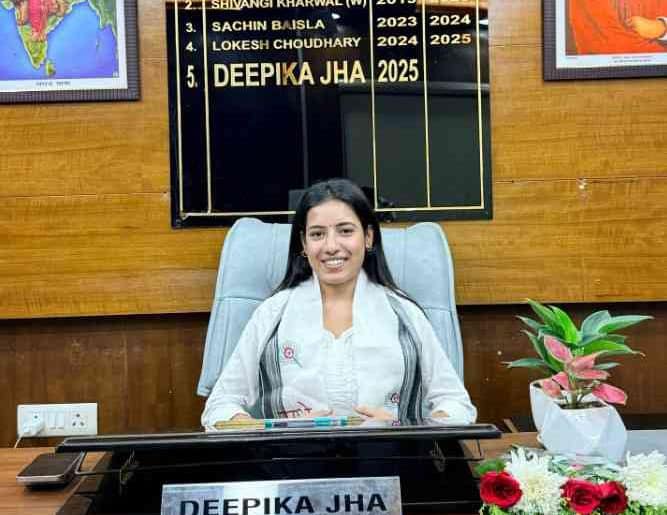
DUSU Joint Secretary Deepika Jha allegedly slapped Professor Sujit Kumar at Dr. B.R.Ambedkar College, prompting outrage from teachers’ associations, police investigation, and a DU-appointed six-member committee to probe the assault.

On 16th October, Deepika Jha, the Joint Secretary of DUSU (Delhi University Students’ Union) of the current term, was seen slapping Professor Sujit Kumar, a senior teacher of Bhim Rao Ambedkar College of Delhi University. The incident occurred at the principal’s office in the presence of the police.

Professor V.S. Negi, the President of DUTA, in his letter requesting a General Body Meeting after the autumn vacation, stated that,

This incident has rattled the entire university and is an assault on the dignity of teachers and other stakeholders of the teaching-learning process in Delhi University. Teachers from across the country too have expressed their shock and indignation.

The letter further stated that DUTA’s effort to call for a flash protest on the 17th is simply not enough, in addition to the lack of a public addressing system.

Several organisations, including the Common Teachers’ Front, Democratic Teachers’ Front, Democratic Teachers’ Initiative, INTEC (I), Rashtriya Shiksha Morcha, and Samajwadi Shikshak Manch, have come together to demand a DUTA GBM on the 16th October physical assault on teachers.

The letter further stated,

It is shocking that the perpetrators of this act of violence are acting with total impunity. Encouraged by the fact that no action has been taken against them, they are making public statements maligning the teachers and creating a false narrative of the incident. Meanwhile, the affected teachers wait for justice.

The letter saw signatories from various organisations, including the Common Teachers’ Forum (CTF), Democratic Teachers’ Front (DTF), Delhi Teachers’ Initiative (DTI), Rashtriya Shiksha Morcha (RSM), and Samajwadi Shikshak Manch (SSM).

A senior police officer confirmed that a complaint has been received and the matter is under investigation.

We received the complaint late in the evening. The video has been seen by investigators. They are obtaining CCTV footage now. The matter is being enquired into.

The University of Delhi has formed a six-member inquiry committee to investigate the alleged assault. The committee will be chaired by Professor Neeta Sehgal of the Department of Zoology. Vice-Chancellor Yogesh Singh said the panel has been directed to submit its report within two weeks. Other members of the committee include Professor Jyoti Trehan Sharma, Joint Proctor (Member Secretary); Professor Rama, Principal of Hansraj College; Professor Swati Diwakar from Environmental Studies; Professor Darvinder Kumar, Principal of PGDAV College; and Awadhesh Kumar, Joint Proctor

Image Credits- The Indian Express

Also Read – Crisis Erupts at SAU: Students Protest After Alleged Gang Rape

Divyanshi Dusad
[email protected]

Delhi University witnessed an assault on one of their Commerce Professors, after he was allegedly slapped by DUSU’s Joint Secretary while being on duty.

A professor of Dr. Bhim Rao Ambedkar College, Mr. Sujit Kumar was allegedly slapped and assaulted by Delhi University Students’ Union (DUSU) Joint Secretary Deepika Jha and other members of Akhil Bharatiya Vidyarthi Parishad (ABVP), in the presence of police personnel on Thursday, 16th October. Sujit Kumar serves as the convener of the college’s disciplinary committee and is a senior teacher at Delhi University’s B.R. Ambedkar University.


The incident sparked immediate outrage in The Democratic Teachers’ Front (DTF), who claimed that around 50 students entered the college, alongside Aryan Maan, the DUSU President and Deepika Jha, the Joint Secretary, and ‘mistreated teachers, demanding the resignation of the disciplinary committee convener.’ 


The Democratic Teachers’ Front (DTF) issued a statement asserting that the committee was investigating recent incidents of campus violence involving students from different groups when the assault took place. The Delhi University Teacher’s Association in turn has written to the Vice- Chancellor demanding swift action and has urged the university administration to conduct thorough research and to take further measures. 

The incident has drawn widespread condemnation from the university’s teaching community.


Even though Deepika Jha alleged that Prof. Kumar misbehaved with her, she apologised to the entire teaching community. The professor, however, rejected the allegations. Deepika Jha asserted that she was called to the college to address complaints of `misbehaviour and physical assault’ raised by the students against Prof. Kumar. She further accused the professor of being in an inebriated state and of making indecent remarks, constantly threatening her and of making her feel unsafe. 


Aryan Maan, on his Instagram, implicated that the party showed up after a student was seen to be dragged by the collar by the professor in addition to him smoking within the college premises. 


The Joint Secretary admitted to slapping the teacher but asserted it to be an impulsive reaction to his alleged `staring’, `verbal abuse’ and `provocation’. She expressed regrets over her actions but claimed them to be a concern for female safety on campus. 


A DU professor, on the condition of anonymity, had given a statement: “A student from the National Students’ Union of India (NSUI) had won the president post in the college student council, and two other posts had been won by the ABVP. The NSUI student had allegedly been assaulted by ABVP members, and he had lodged a complaint against them.”

Prof. Kumar stated that he was forced to resign from his position, and the event took place after. 

In an a statement, the incident was labelled as `ABVP-led DUSU hooliganism’ by the NSUI, who condemned the lack of action by the authorities despite CCTV evidence. 

Anonymous

Featured Image source: Screengrab from CCTV footage


1. Introduction: Why This Conversation Matters

Imagine a scenario: you and your friends are out for dinner, the bill comes, and you pay as usual. Perhaps it is the friend who always “forgets their wallet,” or who borrows and says they will pay you back, but then never does? Even if it is not instantly damaging, these situations can create unspoken tension that quietly erodes even the strongest friendships.

If you want to bring up money and friendship in a conversation, most people will do the squirm dance. We don’t want to seem stingy or embarrass a friend who is going through financial struggles. So, we avoid the topic until resentment starts to build.

If you are tired of being the friend who always pays your way, or struggle to say no to friends who never pay, it is time we start talking about lending money between friends and setting some boundaries. This article will investigate the reasons why this is indeed the case, and how it influences connections and approaches to ensure that money remains far removed from developing friendships.

2. Why Money Conversations in Friendships Feel Awkward

Money is one of the trickiest topics to bring up in friendships. In India, cultural norms often encourage generosity, whether it’s picking up the bill as a host or avoiding the awkwardness of a “formal split.”

Many friend groups still live by the unspoken mantra, “I got it this go round and you get it the next time,”…yet the “next time” never seems to arrive.

The hesitation also comes from a fear of appearing stingy or cheap. No one wants to be labelled as “that friend” who makes a fuss over a few hundred rupees. On the other hand, there’s often guilt about asking friends to repay, especially if they are going through a tough financial time.

On top of that, gender dynamics come into play with men sometimes feeling social pressure to always pay for women they are out with, even when it may be a financial strain. Add to that the social media effect, where everyone’s chasing a glamorous lifestyle, and it becomes harder to admit you can’t afford specific plans.


It is therefore not everyone’s cup of tea to discuss money and finances with friends. But shunning the conversation exacerbates a weird money vibe and creates unspoken awkwardness, silently tearing away friendship and finances together.

3. Signs of an Imbalance

A healthy friendship is one of balance; sometimes money can not only tip the scale but buck it. If you have begun to feel the same way lately or are still trying to figure out the reason behind this feeling, then here are a few signs of an unfair friendship that you should note.

  1. You’re Always the One Paying

And not just for the dinners, cabs, or things your group picks up, but overall. Sometimes you do it by rote, other times because “…no one else is stepping up…”

  1. They’re Always Borrowing

You get frequent requests for “just ₹200” or “I’ll pay you next week,” but repayment rarely happens without reminders. Over time, these small amounts add up—and so does your frustration.

  1. One‑Sided Generosity

They take your free food but never offer to do the same for you. This is a red flag because if you are the only one who treats, and they never reciprocate with a similar gesture.

  1. Silent Resentment

You probably wouldn’t say it, but you’re taking mental notes of who owes whom. That should be an indicator that the scale is out of whack and you are being taken advantage of.

  1. They Avoid Money Talks

Every time you bring up the idea of splitting a bill or repayment, they avoid the question, change the subject, or brush it off.

If you’re catching onto these patterns, give them a shout-out. Point them out as soon as you notice. And while some friends might get away with never paying or showing up on a Friday night, this can actually create an imbalance in your friendships over the years, where trust and respect can become damaged.

4. Why This Happens – The Psychology & Circumstances

Money imbalances in friendships usually do not occur overnight. Neither are they standalone things, but rather a mixture of personal circumstances, unspoken patterns, and group dynamics that generally don’t just appear overnight. Knowing why friends borrow money or why one person seems to foot the bill every time can enable you to address the situation without causing friction where it’s not needed.

  1. Different Financial Situations

Well, there are always some friends who truly have little disposable money. They could be lower-income students or those working part-time on low wages. Yeah, it’s a nice gesture every once in a while, but walking on anything unstable works at your mind after a bit.

  1. Upbringing & Money Values

Our early experiences shape our money habits in friendships. If you were raised with the belief, “friends always treat each other”, then your natural state is paying for someone because that is what friends do so when it comes time to pay, if they pay or offer to help, then they are putting in as much effort into it as you, and all things being equal.

  1. The “Generous Friend” Pattern

For example, you may have always been the one paying, so now others can expect it to be offered — with no malice. Eventually, this becomes an unsaid rule to everyone in the group.

  1. Lack of Awareness

People often do not realize that they are doing so. This could mean that they actually forget to pay back the little ones, or they might be presuming that you do not mind forking out.

  1. Entitlement Mindset

On the other hand, a couple of friends may genuinely think they are entitled to your generosity because, in their eyes, you have a better income than they do. This crushing can become another form of unhealthy dependence.

  1. Peer Group Dynamics

Friend circles have some of their own unresolved power dynamics. Give and take among a friendship circle can lead one friend to feel they deserve more (the alpha), while others fall into roles such as the provider or supporter. The psychology of generosity may be intertwined with aspirations for social dominance.

If you identify these root causes, you can determine whether they stem from an innocent misunderstanding, unconscious habit, or deliberate exploitation. However, when you understand the why, it becomes easier to set boundaries without damaging the friendship.

5. The Impact on Friendships

Unspoken money issues with friends deteriorate the relationship. The effects may not be immediately apparent, but over time, they become impossible to overlook.

  1. Silent Resentment Builds Up

Into unspoken resentment that only builds with every bill that goes unpaid or loan that is charitably written off. Even if you still hang out, the emotional connection is no longer there.

  1. Power Imbalance

One person ends up as the “giver” and one the “receiver” → an unintended power shift takes place. The money giver might feel implicitly superior, while the other person could feel dependent, or even resentful of having to be dependent.

  1. Awkwardness in Future Plans

You may start worrying about expensive days out or group holidays because you’re concerned about having to pay again. This detaches us from the shared experience and memories.

  1. Breakdowns in Trust

After not getting paid back too many times, you might begin to question whether they are honest or if they are the type of person who will never help their friends in any way.

  1. Friendship Drift

Without addressing friendships and financial boundaries, the relationship often fades naturally. One day, you realise you’re no longer close, not because of one big fight, but because of a slow erosion of trust.

Ultimately, losing friends over money isn’t always about the money itself; it’s about what the imbalance says about respect, fairness, and mutual care in the friendship.

6. How to Handle Money & Friendship Without Awkwardness

The good news is that money boundaries in friendships don’t have to mean awkward fights or lost friends. With a few innovative strategies, you can protect your wallet and your relationships.

  1. Have the Talk Early

Prevent resentment from developing. If you notice a pattern, address the issue. Mention it lightly, such as after an event, and present your side of the story.

For instance, I would say this in an ‘I’ statement, like ‘I am trying to get my budget together,’ so you know, sorry, but maybe not try to cover for everyone all the time. This makes it not feel like an accusation.

  1. Use Bill‑Splitting Apps

Apps like Splitwise, Google Pay groups, and PhonePe split make it easier to keep a record of who owes what. This takes out the awkwardness of having to nag your friends and makes everything more transparent.

  1. Set Clear Lending Rules

Before lending, decide your boundaries. A solid rule of thumb: Only lend what you are comfortable with losing. Or, if you lend, ensure they repay you on a specified date. This is essentially the holy grail of lending money safely without jeopardizing the friendship.

  1. Rotate Treats

Pay each other in turns, instead of one person paying repeatedly. It goes like this. Someone will cover this coffee run, and they get the next one. It makes it fair and prevents exploitation.

  1. Suggest Budget‑Friendly Plans

You just cannot hang out every time in some costly cafe or restaurant, right? Host game nights, visit taco trucks, attend campus events (often free), or organize a potluck. They are inexpensive and require minimal maintenance.

  1. Say “No” Without Feeling Guilty

It’s okay to decline lending if it’s becoming a pattern. Say something like, “I’m on a tight budget right now, so I can’t help financially, but maybe I can help in another way.” Offer non‑financial support, like helping them find a part‑time gig or planning cheaper outings.

Get good at these habits, and you know how to share bills with friends, establish easy money boundaries among pals, and maintain a healthy friendship as well — all without letting cash come between.

7. If You’re the One Always Asking

Take time out to stop the cycle if you are the kind of person who almost always needs to borrow some money from friends. You know, sometimes it is out of your control, you are waiting for an allowance, or there was some sort of emergency. Extend this culture to areas where borrowing is frequent, and you risk straining even the best of friendships.

First, recognise your own dependency. Also, consider where you are on the spectrum and ask yourself: Am I friendsourcing because I can’t budget properly or because it’s all gone to food/alcohol/experiences, or am I genuinely at my wits’ end? The first step to a change is awareness.

Additionally, you may also cause unnecessary tension if you continue to borrow from the same person too often. Feel out friends, even if they never complain, they might be getting annoyed or starting to avoid money-involved situations.

Start Creating a Budget That Reflects Your Real Income. Monitor your spending to identify areas for reduction. However, small steps, such as cooking at home rather than eating out, can make a significant difference in reducing borrowing requirements.

Strive to find non-monetary avenues of contribution. Host a party at your house, cook for the group, or plan cheaper hangouts. It is by these kinds of gestures that you prove to value the friendship beyond monetary fact.

Finally, explore small income streams to avoid dependence. For example, tutoring the juniors, freelancing, selling old books, or a part-time campus job.

With these adjustments, you will be dialing back on asking for so much money and beginning to feel more financially independent as a student, which will also strengthen those friendships.

8. Healthy Money Habits for Friendships

Great friendships rely on mutual respect, and this principle also applies to financial matters. Healthy friendships are a balance of generosity and responsibility.

  1. Always Repay Quickly

If you ever borrow money from a friend, pay it back as soon as possible, and I mean within days. Repaying quickly reflects positively on you, emphasizing that their trust was well placed and saving them the embarrassment of having to ask.

  1. Keep Transactions Transparent

Ensure that costs are transparent, whether it’s a group dinner or a weekend trip. Bill-splitting apps so no one is left in the dark, or a group chat tally for transparency.

  1. Treat Generosity Like a Road

And if someone covers for you today, find a way to pay it forward. Even a coffee treat or an offer of a ride home might be enough to balance things out.

  1. Offer to Split or Take Turns Without Being Asked

Don’t wait for someone to request their share. Volunteering to split costs shows you’re mindful about sharing costs with friends.

  1. Don’t Keep Score in Rupees, But Ensure Fairness

Of course, healthy friendships aren’t about micro-managing every single rupee, but they are about keeping tabs on where the cash flows. Just remember, it is fair play that gets trust and pay.

By practicing these healthy money habits, money will no longer pose a threat to your relationships, allowing you to continue supporting one another.

9. What to Do If the Friendship Turns Toxic Over Money

And sometimes, no matter how hard you try, money trouble is the symptom of a much deeper problem in a friendship. If you notice a pattern of being taken advantage of, manipulated, or consistently experiencing financial distress as a result, it may be time for an evaluation.

These are when it is time to take a step back: the friend who guilts you into paying; your repayment agreements are being ignored; and/ or your grab-bag of understanding is considered by the debtor as service! You can see how this is about more than just money. It also reflects a lack of respect for your boundaries.

Perform it nicely and firmly if you choose to create some space. You can say no to expensive plans, refuse lending, and limit the situations that involve financial matters. You are not necessarily going to have to say that you are “ending the friendship blatantly”, but slowing your role in the situation and reducing contact is a great way to move on from this person.

Most importantly, look after your financial boundaries and mental well‑being. Friendships are supposed to enrich your life, not drain it (financially or emotionally). Here and there, losing friendships over money can be a matter of choosing self-respect.

10. Final Thoughts & Takeaway

Money will always be a part of life, and avoiding the topic doesn’t make the problem go away. In fact, silence often allows minor issues to grow into bigger ones. Friendships are strongest when built on mutual respect and fairness, and that includes how you handle money together.

If you have been experiencing some imbalance, do not wait until bitterness sets in before balancing things out. The sooner it is addressed, the better. It should have financial boundaries in place. Ultimately, open communication is crucial. Most friends will appreciate your honesty, and those who don’t might not be the kind of friends you want to hold onto.

Competing is never the point of discussing money; instead, it falls under the umbrella of preserving trust and maintaining a relationship. By tidying up money matters today, your friendships are more likely to stand the test of time.

Students at South Asian University (SAU) protest institutional negligence and police delay after an alleged attempted gang rape on campus; top officials face accusations of cover-up as students demand arrests and accountability.

On 16 October, 2025 the South Asian University (SAU) witnessed protests after a first-year B.Tech student was allegedly gang raped by four men on campus on the night of October 12, 2025. This incident, which reportedly involved two university students, an outsider, and a university security guard, sparked a major confrontation between students and college officials.

The anger started immediately because the college did nothing. When the victim’s friends approached the caretaker and the hostel warden, both refrained from taking any action. The administration also failed to provide the student with immediate medical assistance.

Students have accused officials of terrible behaviour. Testimonies state that the authorities made “insensitive comments” and even “tried to fabricate evidence.” One student vented online about the administration’s indifference, “They are hiding inside the office and having tea and samosas, they do not care what happened? Is this humanity?”

When the administration did not help, the students began a silent protest. They gathered and surrounded the admin block on October 13. Later that night, the registrar and proctor refused to meet the students’ main demands, which included the immediate suspension of the warden and caretaker.

The police action further inflamed the situation. Although a PCR call was made at 3 PM, the police greatly delayed the process, only registering an FIR early the next morning. Early on October 14, police “forcefully made students vacate the space that they were occupying.” 

For two days, the administration avoided the students’ protests. Protesters noted that officials had to “run away from the back door” to avoid speaking to them. This led to a huge protest march at the university on 15 October. The problem even reached outside the campus, with the DUSU President and some DU representatives pressuring the administration. The MEA also requested a report.

Although there are talks that students’ demands were met in a meeting with the administration on the 15th, official information is yet to be released to know the extent and success of the meeting. However, the silent protest is still continuing for two reasons given by the students:

  1. There is a lack of transparency in police investigations and harassment of victims.
  2. No arrests have been made by the police, even though the victim has named the culprit.

The students refuse to leave until they see real action and the responsible people are arrested. 

Read More: Protest Sparks in Delhi University Following Vice Chancellor’s Speech

Image Credit: Anonymous

Juhi Bansal

[email protected]

A student at Satyawati College was attacked with a wooden stick after refusing a caste slogan. The assailant was expelled, and an FIR under Section 308 was filed. However, there is dissatisfaction with the lack of security within the college premises.

On Monday, 13th October, a student from Satyawati College got beaten up by a fellow student within the college premises. The victim is a third-year student of Political Science. He was attending a society event, and after its completion, he was wrapping up the event and its arrangements; this is where he encountered a few students from the college who were recording a video. On getting accidentally recorded in the video, the students coerced him to say ‘Jai’ (caste name), to which he refused. After repeated exchanges of them forcing him to say the same, a person from the group snapped and hit him twice on his head using a wooden stick. The group, after committing the assault, immediately fled from the college. 

The college staff took him to the hospital, where he got treated and sustained eight stitches. The friends and batchmates of the victim further reported about the incident to the Professors and Staff association, for which they received full support. It is alleged that those students had a history of committing unruly acts in the college where they got rusticated as well. However, it is also alleged that there is a faction of teachers, who give their support to these students because of ‘caste reasons’. 

The college authorities, including the professors, the Proctoral Committee and the Principal, assured the students that effective disciplinary and legal action would be carried out against these students. On 14th October, the whole department of political science from across the years protested near the staff room to proceed with this matter urgently. Following which, the Staff Association had a meeting and expelled the student. The person who propagated violence and got expelled, Deepanshu Chauhan, is a habitual offender and has chargesheets filed against him in previous cases, but there was no strict action taken against him.  

The notification of his expulsion stated that “As per the provisions laid down under Ordinance XV-B of the University of Delhi, which deals with Maintenance of Discipline among Students of the University, any act of violence, threat, or intimidation against a teacher, student, or any other member of the college community constitutes grave misconduct and warrants strict disciplinary action, including rustication or expulsion from the institution.”

The students, along with the teachers, held a march towards the DCP (Deputy Commissioner of Police) office to get immediate legal action against the offender. After deliberation an FIR was lodged against the student on the grounds of Section 308 (attempt to culpable homicide). The protestors received multiple threats from people who stated that they won’t shy away from assaulting other students as well. 

Our source, who requested anonymity, quoted, “This incident raises a larger concern of student safety within the college premises; it further made the parents of the victim insecure about the potential dangers within the campus. Due to this large lapse, we will proceed to boycott the college for 2-3 weeks.”

Read More: Delhi University Palestine Solidarity March Turns Violent

Image Credits- Official Expulsion Order by the college, Satyawati College

AISA and Bhagat Singh Ambedkar Study Circle’s Palestine solidarity event at Sri Venkateswara College faced administrative backlash, with organisers allegedly harassed, threatened, and forced to sign undertakings by college authorities.

On 10th October All India Student’s Association organised a session with Bhagat Singh Ambedkar Study Circle in Sri Venkateswara College’s Rock Garden on the theme of ‘Marking Two Years of The Ongoing Genocide in Palestine’. The event was supposed to be a group discussion as well as poetry recitation in solidarity with Palestine. The college authorities, before the commencement of the session, allegedly called two of the organisers to their office. This incident is what the AISA states to be “harassment and an attempt to terrorise students.”

Witnesses claim that the authorities including the Principal and the Proctor first publicly scolded and humiliated the students in front of the whole college. Mr. Chetan, who is a professor at the Statistics department forcibly took students’ phones and made them unlock it without their consent impinging on their right to privacy. The students were allegedly made to share their contact details extensively. He made remarks of “Main tumhe ghar mein ghus ke marunga, dekhna tum” (“I’ll beat you up in your own house, you’ll see”) and “If you say any of this in class, I will shoot you.”

The Principal, Vajala Ravi, in response to this situation further allegedly warned the students with suspension and forced them to sign a written note stating that such sort of event wont be held again.

Read More: Delhi University Palestine Solidarity March Turns Violent Amid Alleged ABVP and Police Assaults

Image Credits- Instagram handle of AISA VENKY

Divyanshi Dusad

[email protected]

In this insightful conversation with DU Beat, artists M.D. Pallavi and Bindhumalini discuss Threshold—their collaborative project born from the 2017 “Under the Raintree” women’s festival—where music becomes a dialogue on gender, identity, and self-expression. Performing at the KNMA Music Festival, day 3 on October 11th, they explore women’s voices across time and culture. As they beautifully say, “a lamp on the doorsill sheds light both inside and outside”—a fitting metaphor for their art that bridges tradition and introspection.

DU Beat-  You describe threshold as a musical conversation between two artists. First and foremost, how did this collaboration come about, and what does the idea of ‘Threshold’ mean to each one of you, especially in the context of music and your personal journeys?

Bindumalini – Threshold started with the specific women’s festival curated in Bangalore called the Under the Raintree Women’s Festival in 2017. Pallavi was asked by the main curator of this festival to curate the music section of this 3-day festival. The last day it was all about the duet. The curator had also put up a condition to Pallavi that apart from curating the whole festival, the music part, she also had to be one of the performers. That is when we collaborated for the first time, and Pallavi invited me, and our conversations could not be away from the context of women, which the whole festival was about, and from there, conversations started about gender and women. That’s the genesis of ‘Threshold’.

M.D. Pallavi: And Threshold, if I may continue with what Bindu said, there’s a poem that we picked from Lingama, who belonged to the 12th century, which talked about a lamp on the doorsill shedding light both inside and outside, and that’s what Sharana is also trying to achieve: to look both inside and outside. So that we thought was a very apt title for what we are also trying to do.


DU Beat- Gender is central to your performances. Could you share how your personal experience as women and artists influences the way you interpret or reimagine traditional or contemporary songs?

M.D. Pallavi- For a long time I was unaware about the lens of gender in my music or in the work that I was doing, but gradually, say in the last 15 years, I became more aware about the poetry of who it is written by, and I also became more aware over the years of how to see the delicate differences between the male and the female perspectives. And in this project we are particularly focusing on poems and songs written by women, and it has helped us understand in a way how different these poems are even though they are very similar to the ones written by men.

Bindhumalini: I would say in my house, it was my grandmother and mother who laid the path for me, and it was not like anybody was supporting them as such. My grandmother started her journey in music after the age of 45, and she saw in music an anchor which held her together through various aspects of life. So for me whatever I have received in terms of art from my house has been through women only. But as Pallavi said, even I was not told to look at things from a gendered way, from the lens of a woman as such. Slowly it started to come into my awareness, and then doing research and creating this project was an eye-opener in many senses.


DU Beat- So you are choosing the narratives and voices of women especially, which are unheard. How do you usually select these texts and poems, and when you started, how much time did it take to curate them?

MD Pallavi: Firstly, we started to look at stories of women who had sort of broken barriers in terms of music and came out into the world. And it could be about people lesser known or about people we knew but did not know about this side of them, and then we could also sort of just present them with the same text, similar kinds of poems, which disseminate the same ideas. We also try to draw parallels between songs and stories of women from different time periods and places. For example, will there be any similarities between the struggles of a woman from Morocco or a sex worker from Karnataka, or are there any parallels between La Ded in the 14th century saying something which is similar to what Mudupalini is saying in the 18th century in the court of Travancore?  And we have a stone assembly found by researching for this.


DU Beat- I also wanted to know from both of you if you come from the same musical traditions or are trained in different musical traditions, and if yes, then how do you negotiate these differences in the musical vocabularies?  Also, while performing together, do you seek to retain your individuality, or does that subsume itself under this larger project called ‘Threshold’?

Bindhumalini: Well, that’s interesting because, definitely, our individual trainings helped us in certain ways. At the same time, both of us are aware of the possibilities, the potentials and also the limitations. So if you see the threshold, a few things drive it. There is a Hindustani bandish that we perform, and in that case, if it’s a tradition-driven performance, then we try our best to do justice to that. But at the same time there is a complete freedom for self-expression, and mostly it is given by the energy that we establish and the emotion that we perform at that point. The third aspect is a bit tricky. We sometimes represent certain ethos of some musical traditions, but we are not really the practitioners of that at that specific moment, but we sing it, and in that moment it’s mostly us, but it may point at something. While we are being true to ourselves, at the same time we might also be hinting at something from which we are trying to draw it.

M.D. Pallavi- I would pretty much repeat what Bindu said. And the fact that both of us enjoyed doing experiments. And the fact that we both have learnt classical form, so there is a grammar that we both fall back on, but there are times when we are beginning the rules and presenting them, and then there are some points when we are being very loyal to our forms. And it is very difficult to find a collaborator who can co-conspire with you in all of this, and in that way we are both very lucky.


DU Beat – You will be performing at the KNMA Music Festival, and it is themed after ‘Voices of Diversity’. What does this diversity in music mean to you, and how do you see your work contributing to a larger dialogue about inclusivity in art?

M. D. Pallavi- When we talk of diversity, we need to see diversity of artists on stages, and a lot of the times what happens is that music festivals mostly repeat the same kind of artists. So I think it’s very important they look for diversity both in terms of performers and art. Also, while creating it, it is important to think of the experience one wants to give to the audience, and that’s why it’s also very important for festivals to be open to possibilities in terms of providing different experiences.

Bindhumalini: Let us take note of these curations mostly happening in the urban spaces, and the audience are also of a certain kind. My experience of diversity has definitely been in these kinds of spaces, but also what I have really enjoyed is when I had gone into rural India, and their diversity has a different shape. The experience is totally different when I go on yatras or in villages which are on the border of Rajasthan and Madhya Pradesh, and there are the kind of people who become your audience – from the children to the men and the women – and then it’s happening the whole night. Then there are local artists. That is what diversity looks like to me. I don’t know if this really answers the question, but I felt like sharing the experience.


Read Also- DU Beat in Conversation with Bhushan Kargaonkar, the Director of Lavani Ke Rang


Image credits- Banglore International Centre 


Madhav Choudhary 

[email protected]

A Palestine solidarity march at Delhi University on October 9 turned violent after alleged assaults by ABVP members and police. Student groups including Fraternity, MSF, AISF, Disha, and ASA condemned the attacks, calling them acts of suppression and intolerance. Similar crackdowns on pro-Palestine protests have been reported across Indian campuses.

A  joint march in solidarity with Palestine, organised by the Fraternity Movement and MSF (Muslim Student Federation), a student wing of IUML (Indian Union Muslim League),  on Tuesday, 9th October, turned violent after alleged assaults by members of the Akhil Bharatiya Vidyarthi Parishad (ABVP) and the police.

The march, which began from Vijay Nagar at around 5 p.m. and was headed towards the Faculty of Arts, saw participation from student organisations including Fraternity Movement, MSF, AISF (All India Student Federation), Disha, and ASA (Ambedkar Student Association), along with several Delhi University students. The protest was held in Old Gupta Colony, and was described by participants as a peaceful demonstration before tensions erupted.

According to multiple protesters, members of ABVP, the student organisation affiliated with the Rashtriya Swayamsevak Sangh (RSS), entered the march and began chanting slogans such as “Jai Shree Ram” and “Vande Mataram.” Protesters alleged that ABVP cadres threw eggs, pelted stones, and even struck a demonstrator with a helmet.

In a statement condemning the assault, Fraternity Movement claimed that ABVP members objected to the display of Palestinian flags. One protester recounted an exchange in which they were told,

“[J]handa lehrana hai toh idhar aao.” (If you want to wave the flag, come here.)

Several protestors accused Delhi Police, which was deployed to control the situation, of siding with ABVP. In a video recorded by Maktoob, a news organisation, the police were seen beating protestors, manhandling women and detained students. Many of the protesters who were women had stood in the front to ensure that violence wouldn’t erupt. A protester said,

“Instead of threatening or sending them (AVBP) away, they wanted to “control” the situation”

On October 9th at night, in a post by Fraternity Movement, the 8 detained students were released including 3 members Farhan Israil, Najwan, and Abdul Rashid of the Fraternity Movement.

Fraternity Movement, MSF and AISA have issued a statement condemning the attack on protesters by ABVP and the police. MSF and Fraternity Movement have labeled the attack as deeply intolerant and islamophobic. A statement by Fraternity Movement reads,

“This brutal suppression of a peaceful expression of solidarity with the people of Palestine exposes the deep intolerance and Islamophobia thriving within the institutions of this country.”

This incident follows a series of recent crackdowns on Palestine solidarity protests across India. On October 7, students at the English and Foreign Languages University (EFLU) in Hyderabad alleged that ABVP members disrupted their gathering condemning the genocide in Palestine, tore down posters, and verbally and physically assaulted participants. Earlier, on October 4, six activists were detained in Rohtak, Haryana, for organising a demonstration in support of Palestine.

This pattern of consistent disruptions of peaceful gatherings raises concerning questions on the ability to exercise ones’ fundamental right heralded by our constitution.

Read also: Protest Sparks in Delhi University Following Vice Chancellor’s Speech

Image credits: Maktoob