Tag

Slider

Browsing

Curated by T.M. Krishna, the Kiran Nadar Museum of Art (KNMA) Music Festival, being held in Sunder Nursery from 9–12 October, brings together artists from the length and breadth of India. The theme, ‘Voices of Diversity’, carries KNMA’s spirit of making art more inclusive, accessible and a reflection of lived realities. The festival opened with ‘Lavani Ke Rang’, a dance-music-theatre production performed by traditional Bari artists directed by Bhushan Korgaonkar. 

In this interview, we speak with the Director of ‘Lavani Ke Rang’ to understand the inspiration behind the production and the legacy of Lavani.

DU Beat: What is Lavani Ke Rang and what inspired you to create this production? 

Bhushan Korgaonkar: Lavani Ke Rang is a theatre production. Now it can be categorised under dance also, music also or theatre. That’s the beauty of Lavani because it includes everything. Lavani Ke Rang is a production that is based on my book titled Sangeet Bari. I wrote this book in 2014 and it chronicles the real lives of traditional Lavani artists who come from matriarchal traditions. It also mentions various types of Lavani songs and the different ways in which Lavani used to be performed and what are the changes in the art form over the period of time. It’s all there in the book, and based on that, we have actually created more than two productions, and Lavani Ke Rang is one of the most successful productions, I would say. It’s a 90-minute production and the speciality of this, and all our productions, is that we work with these very artists. That’s the real charm because what has happened is that Lavani, as an art form, has gained some kind of popularity but not the artists—not the Khandaani artists who have lived these lives and who are living these lives. So, through our productions, we try and make them meet the audiences, the other non-traditional Lavani audiences. That’s what the production is all about. Also, when we started this production, when we started all our work, it was in the original language, that is, Marathi. But we realised that a lot of people who don’t understand Marathi are also very curious, and they used to come and attend our shows irrespective of the language barrier. In fact, because of their suggestion, we have also created these multilingual versions. So, Lavani Ke Rang narration is in Hindi. Although the Hindi has a Marathi flavour, but it’s in Hindi so that people who understand Hindi can also understand that. I also conduct lecture demonstration sessions, which are primarily in English. So, the narrative part of all our productions is either in  Hindi or English, and the Lavani songs are in Marathi. 

DU Beat: You have an award-winning book credited to your name, Sangeet Bari. So, what exactly is the Sangeet Bari style of Lavani and how does Lavani Ke Rang show that style?

Bhushan Korgaonkar: Sangeet Bari’s style of Lavani is the intimate experience of Lavani. It has a rich tradition of several years, several centuries and it is still continuing where artists from matriarchal communities dance to entertain men. That has been the traditional format. Now, there are two ways to look at it—that it’s extremely patriarchal and why should they do this? This is one way to look at it. Now the other way is to look at it from a holistic point of view where we can see the art, and then see if we can bring that art because the art is amazing. Their captivating performances are brilliant, but it’s just the linear equation that women dancing to entertain men is problematic. So, why not bring them to a platform where they can entertain everyone irrespective of their gender and preferences? So, that has been our effort. And also to add to this point, we have also introduced a transwoman—a transgender artist who also dresses up like a woman and they perform with us in this book.

DU Beat: Your book also talks about the lives of Lavani performers, their experiences and their narratives. So, how exactly does Lavani Ke Rang reflect that in its dance performances? 

Bhushan Korgaonkar: We narrate their stories, and these are all real-life stories. We talk about their systems. So, your earlier question was, What is Sangeet Bari? So, Sangeet Bari is basically a centre. These are like performance centres situated in Maharashtra, which host different groups of dancers to come and perform. Rather, these are residential places. So, the artists, around 100–150, stay in that premise throughout. These are government-regulated centres. Each group, which is known as Sangeet Party, hosts around 10 girls and 5 men who play the musical instruments—there are two of them who are like helpers and three musical accompanists. So, this is the system. Every evening, there are public stage show performances and there are also private performances. So, a single man or a group of men can go and request for a private performance. Because it’s a closed-door performance, it is looked down upon in the society. But, because of this very reason, there has also evolved a different type of Lavani, which is the Baithakichi Lavani, which is similar to Thumri—where performers sit and sing, and do adakaari and perform. Along with this style, there are other types of Lavani songs also. All these different types are demonstrated in our show Lavani ke Rang.

DU Beat: Just to get it right, is the term you mentioned “Sangeet Party”?

Bhushan Korgaonkar: Yes, “Sangeet Party”. “Party” as in the English word—like a political party. So, “Sangeet Party”.

DU Beat: There is this common perception that people have nowadays that Lavani is just flashy, fast and sensational, dance numbers on TV and in movies; And there has been a lot of criticism around the same as well. So, how does Lavani Ke Rang challenge that? And how does it show that Lavani is so much more than that? 

Bhushan Korgaonkar: Yeah, exactly. Glad you asked that question. Lavani, as I said, is gaining popularity. But the image that Lavani has or the kind of Lavani that we get to see is only this fast-paced and highly, I would say, acrobatic style of performance. Now, is it Lavani? The answer is yes. That is also Lavani. But is that the only thing Lavani is all about? The answer is no. There are so many other nuances and so many other styles. So, through our show, we show all—not all—but many of these different styles, which are very slow-paced, which use a mix of rhythm—it starts slow and then picks up, and then again, it slows down. So, we show all these different types and styles. We also show a type where a woman artist takes the character of a man, and she behaves like a man and performs. Different topics are also covered in Lavani Ke Rang. We try and show these topical, subject-based Lavanis

DU Beat: What is your vision for Lavani Ke Rang? Where do you see it going in the future?

Bhushan Korgaonkar: We have already done a couple of foreign tours, and also nationally, we have performed at many festivals. But these, as I always say, are like very token recognitions. ‘Okay, we have a festival, you come and perform’—which is great for the form, for the artists, for everyone, and for the audiences also. But there has to be sustainability. Like, how these artists who have this talent and who have familiar traditions can sustain only on these shows, and don’t have to dance at those centres where everything is reduced—in the sense—where they don’t get enough respect that they deserve as artists. So, we are also trying to find an answer to this question. But, I think the more we do these types of shows… and we have also created various modules. In fact, I am at Studio Safdar right now, and I have an AV lecture on Lavani scheduled in an hour’s time—just because I was in Delhi, had a free day and Studio Safdar was kind enough to host me here. I have done and I’ll be doing this—these types of things…As much as possible, we’ll reach out to more and more people. Through that, through word of mouth, through recommendations, we get and take leads, and then, you know, things happen. 

DU Beat: What message would you like to give the younger generation about why Lavani and other folk styles are important, and why they should be preserved today? 

Bhushan Korgaonkar: I think if they come and watch these forms, not just Lavani Ke Rang, but also any other form, they will realise…and I can share our experience with the young generation—Gen Zs and everyone—that those who come, for whatever reason, they get hooked to it. They get glued to their seats and leave their phones for at least one or two hours, and they realise the importance and significance of this form. Because the form, although it’s ancient, talks about your sexuality and your desire in a very strong and a very, I would say, desirable way—in the sense, it comes in a very organic way. And also, I will just deviate a bit, but what happens with Lavani performances when they are performed by people who don’t have any Lavani background is that they get confused, and they do too many sexy movements. I mean, they try and exaggerate the sexiness, which kind of kills the performance because it makes it look very same. So, you can enjoy one at a time, but then if you keep on watching that, you’ll get bored. So, through Lavani Ke Rang or through all our shows, we try and showcase the range. The young generation, especially when they come, realises that this ancient art form has so much of freeness or the freedom of expression, and there are so many topics which the Lavani songs cover. The way our dancers interact with the audience, they (audience) realise the importance of live theatre and our folk tradition, where the audience is not a mere spectator, but a part and parcel of the entire performance, and they have to participate. A lot of them come and meet us and share their experience that ‘thanks to you, we were away from our phones for two hours’. I think that’s the biggest compliment we can get today. 


Read Also: DU Beat in Conversation with Wild Wild Women (WWW)


Image Credits: KNMA Music Festival


Nasheta Zaidi

[email protected]

Delhi University, known for its vibrant fests and celebration of music, art, culture, and connections, has issued safety guidelines for campus events to ensure the safe and smooth conduct of college festivals during the festival season.

Delhi University, on Wednesday.  issued a new advisory for “safe, smooth and orderly conduct of events and gatherings”. As part of the new framework, two liaison officers must be appointed by the University—one for the North Campus and one for the South Campus. Every college conducting an event is required to assign its own liaison officer for proper management and crowd control. The officer must be available at all times and share essential details of the event with the local police prior to its commencement.

Additionally , every event is required to have a first aid kit, a static ambulance, and fire safety measures in place within the college, hostel, or designated venue. Events should have separate entry and exit gates for VIPs and general attendees, with contingency routes planned.

CCTVs are mandated at gates, along with trained security guards and bouncers in sufficient numbers to ensure the safety of all participants. The advisory reiterates that the sole responsibility for the conduct and management of events rests with the respective college or institution.


“Delhi Police, as part of its mandate, is tasked with maintaining overall law and order and not providing security cover to private events.”

In addition, the advisory mandates social media transparency. It requires the colleges to provide detailed online notices specifying event timings, passes, traffic arrangements, and other logistics to avoid confusion.

This notice has been released following the security breaches and gate-crashing incidents at events that happened in  Miranda House in 2022, as well as the harassment of students after walls were scaled at Indraprastha College for Women.

Delhi University officials have clarified that these measures are not intended to dampen the student experience but to create a secure, safe, and inclusive environment.

Read Also: DU VC calls Arundhati Roy’s remarks ‘hate speech’ at Law Faculty event

Featured Image source: Hindustan Times

Ananya Agarwal

[email protected]

DU students led out a demonstration on Monday in response to the recent assertion made by the Vice Chancellor in his YouTube video. 

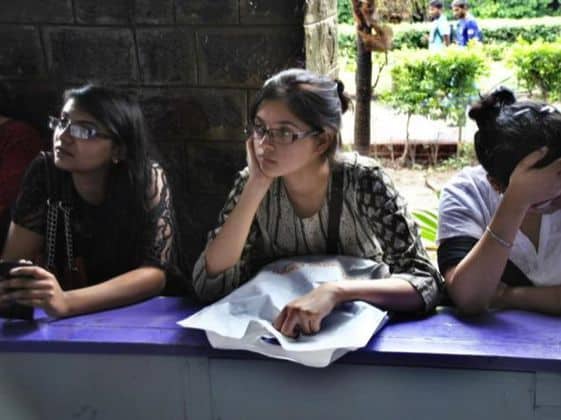
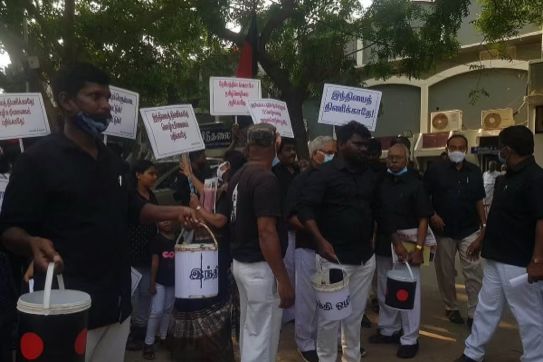
Delhi University witnessed a massive protest staged on Monday, 6th October 2025, by the students in response to the statement issued by the Vice Chancellor, Yogesh Singh. The issued remarks included labelling the student movements and activists such as Pinjra Tod and Professor Hany Babu as `Urban Naxal’. This assertion was seen to criminalise and defame the struggle for rights and freedom by the students.

The movement began from Gate No.4 along Chhatra Marg. Slogans and voices were raised in equal amounts, aiming to be heard and to claim campus democracy. The demonstration stayed united despite police deployment and the attempts of the campus guard to break up the group.

The remarks were criticised for being `anti-student’ and `anti-democratic’ by the Secretary of AISA DU, Anjali. She further added that the declaration of the student movements to be anti-national exposes the Vice Chancellor’s ideology to divide the nation and act against our interests. She also thought his remarks to be `contrary to the spirit of academic freedom’.

The students remained unified in the face of the attempts at intimidation made by the authorities and the force used by the guards. It was ensured that the protest took place as planned.

The words of the vice chancellor were seen as his venture to treat the University as his kingdom in the eyes of the students, which led this great wave of rebellion to take place by them.

The video consisting of the statement is from Yogesh Singh’s address at the event `Bharat Manthan 2025: Naxal Mukt Bharat — Ending Red Terror Under Modi’s Leadership’, released on 28th September.

Read Also: Kerala Students at DU Allege Police Brutality and Humiliation After Clash near Red Fort

Featured Image source: Instagram

Ananya Agarwal

[email protected]

Delhi University Vice Chancellor Yogesh Singh, at a Law Faculty event on hate speech, cited author Arundhati Roy’s past remarks on the Indian state as an example of divisive rhetoric, urging intellectuals to avoid such statements.

At an event on “Hate Speech and Electoral Politics in India” held at Delhi University’s Faculty of Law on 7th October, Vice Chancellor Yogesh Singh cited author Arundhati Roy’s past remarks about the Indian state as an example of hate speech. The event, organised to explore how language shapes public opinion and political narratives, became notable for Singh’s strong comments on what he viewed as harmful rhetoric from public intellectuals.

Quoting from one of Roy’s older speeches, Singh referred to her statement describing India as a “perpetually upper-caste Hindu state” that has been “at war with its own people” since Independence. In her speech, Roy had listed conflicts in Kashmir, Manipur, Nagaland, Punjab, Goa, Telangana, and other regions as evidence of this claim.

Singh remarked these statements as a pure definition of hate speech. Adding that such comments “pollute children and citizens’ minds because these statements are made from a very selective perspective.”

He further stated that public figures and intellectuals should avoid such statements since they influence young people and shape the discourse in ways that can harm national unity.

Singh said that hate speech often emerges from the public’s own biases and attitudes. “Politicians think that if they make hate speech, they will get more votes. Is it their fault or ours?” he asked the audience, noting that electoral incentives play a major role in normalising such rhetoric.

“We all should keep in mind that politicians are the smartest people in the country. They know the pulse of the people. If they realise they will not get votes by making hate speech, they will stop making such speeches.”

Read More: 32 Students Move Delhi HC Against DU’s LL.M. Practice Prohibition

Image Credits: News18

Juhi Bansal

[email protected]

“We want to talk about everything a woman goes through. We are here to make a community and make women feel heard.”  An all-women hip-hop collective from Mumbai, Wild Wild Women (WWW), are set to perform at the Kiran Nadar Museum of Art Music Fest on 9th October 2025. In a conversation with DU Beat, they talked about breaking stereotypes in a male-dominated industry. In the quest to create music that is rooted in lived experiences, community, and empowerment, WWW emerges as a voice of hope, aspirations, and revolution for women in Indian hip-hop.


The Kiran Nadar Museum of Art will inaugurate its Music Festival on October 9, 2025, a four-day celebration of India’s musical diversity, featuring ten exceptional artists from across the country. As part of this vibrant lineup, Wild Wild Women will take the stage on the opening day, and we had the opportunity to speak with the collective about their journey, music, and message before their live performance.

Question: ‘Wild Wild Women’ is definitely a name to remember. Can you tell us the story behind it, who came up with it and what inspired it?

Pratika: The name kind of resonates with us as people who love being wild and free. It didn’t come from anything specific; Krantinari and HashtagPreeti just kind of conjured it out of thin air, and it stuck. It always reminds me of the Wild Wild West in a way. And yeah, we’re from the west coast of India, so there’s that little connection too. But ‘Wild Wild Women’ just felt apt for us, not just a single ‘wild’, but ‘wild wild’ to really emphasise how free-spirited and bold we are!

Question: Hip hop has traditionally been a male-dominated field. What has the experience of breaking into the industry as an all-women collective been like? Have you encountered stereotyping, and if so, how have you navigated it?

MC Mahila: Hip-hop has always been a male-dominated industry, and it’s been that way for a long time. But this power we have as Wild Wild Women—when we come together—it just turns all those barriers into dust. We’ve seen people throw hate at us just because we started as an all-female crew. They were scared we’d flip the game… and we did flip the game. We pushed through all those outdated norms that said women can’t work together for long, that it won’t last. We’ve even had people comment on our bodies, saying we don’t fit in, that we’re ‘too big’ or whatever. But by ignoring all that negativity, we rose above it; we made more music, we stayed together, and we flipped the game. That’s exactly what our track ‘Game Flip’ is about; it’s our statement that we’re here, and we’re changing the game.

Question: Where do you see the hip hop scene in India heading? Artistically, what do you feel Wild Wild Women brings to the current scene?

#HashtagPreeti: The hip-hop scene is heading towards a really important milestone. A few years ago, or even before that, hip-hop was seen as something very male-dominated. If you thought of a rapper, you’d automatically picture a man. It was hard for people to imagine women in that space. Back then, a lot of male rappers only talked about parties, alcohol, girls, bling, and that whole luxurious lifestyle. But that’s not the full picture. Hip-hop actually comes from the grassroots—it’s about street culture, about real life. In India, hip-hop has brought attention to street artists and communities and to all the elements: skateboarding, beatboxing, graffiti, rap, and knowledge. Hip-hop is no longer just a sub-genre. It’s at the forefront now. It’s what people are listening to.

That’s where WWW comes in. We bring something that’s never been on the table before, something that was needed. We’re here to change the narrative that women can’t be rappers. But honestly, you can only really understand what WWW brings when you experience it in person. We’re not just five rappers on a stage. What we do makes people think about society, about gender, and about how they see women. I can’t put it into just a few words. You have to hear the lyrics. You have to watch the show.


Question: Wild Wild Women is often highlighted as an all-women collective with a focus on empowering women of all ages. Do you ever feel pressure to create art specifically with this purpose in mind? Does it ever feel limiting to your artistic expression?

HashtagPreeti: As Wild Wild Women, we’ve kept everything open for ourselves creatively. It’s not just about WWW; we each also work on and release our individual projects. But as a collective, we do stick to certain topics, because that’s our purpose. If no one else is going to talk about these issues, then we will. And it never feels like pressure. All our artistic expression finds its way into both our personal lives and our music.

Honestly, it takes a village to do what we do, especially in a country like India, where very few women and girls have a platform like this. We know how lucky we are to have this opportunity, and we don’t take it for granted. Also, we’re not limiting ourselves to just women empowerment as a theme. We’re experimenting and exploring a lot more; we want to talk about everything a woman goes through. We’re here to build a community, to make women feel seen and heard.

Question: What has been Wild Wild Women’s main inspiration in creating music? Are there any specific artists or voices that have been our go-tos?

JQueen: I’d say our biggest inspiration is Wild Wild Women itself. Even though we’re five female rappers, along with two breakdancers, a mural artist, and a skateboarder, all our goals are aligned; we know where we want to go, and we’re pushing to get there.

We’re not just rappers; we’re messengers of the people. Each of us is an individual artist with our own identity, but we always come together under one roof. We understand each other, we lift each other up, and we make sure everyone’s goals are supported. In the beginning, it wasn’t easy. Not everyone wanted to help us. But now, we’ve created our own space, and we’re killing it. And we always knew we would.

Right now, it’s India… But soon, it’s going to be international. Wild Wild Women is coming your way—so get ready to handle the heat!


Read Also: JNU Establishes Animal Welfare Society

Image Credits: Wild Wild Women

Anjali Paruvu and Anjali Kumari Jha

[email protected]

[email protected]

JNU, known for its extensive initiatives on creating environmental capacity building and livelihood practice, has approved another milestone, setting up a statutory body for creating animal welfare seeking to integrate compassion and sustainability.

JNU established an animal welfare society, a known initiative also adopted by Ashoka University, which possesses an Institutional Animal Ethics Committee (IAEC) that supports an animal welfare club known as Team Pawsitive.

The initiative has been rolled out under the leadership of Vice Chancellor Santishree Dhulipudi Pandit, in line with directives from the Ministry of Education and the University Grants Commission (UGC), and in keeping with the vision of the National Education Policy (NEP) 2020.

This initiative includes an animal feeding zone, awareness campaigns, and teams to research animal law, ecology, and sustainability. This move is also getting attention  in the wake of the recent order by the Supreme Court to not send the stray dogs to shelter homes. This will definitely help the varsity animals to get an ally in this precarious situation. 

This initiative was accompanied by several dog bites reported earlier this year. Since the campus is surrounded by extreme forest canopy, it is likely that the animals from nearby Sanjay Van hop and reside here. The campus is spread out over 1,000 acres, accommodating several animals; while some students feed them, others feel scared. 

Currently, the society will be chaired by associate dean of students, Professor Piyush Pratap Singh, and includes faculty members, staff members and external advisers such as animal-rights activists Gauri Mauekhi and PAWS Foundation’s Vipu Jain. 

According to Vice Chancellor Pandit, the initiative is designed not only to encourage sustainability but also to embed animal welfare into the university’s academic and social environment, 

This move creates a model for other universities by bringing together education, biodiversity conservation, and sustainable living.

Kinjal Sharma

[email protected]

Featured Image Credits: The Indian Express

The University of Delhi organised the India-Japan Talent Bridge Programme on September 25 aimed at establishing collaboration between Indian students and Japanese organisations, as part of initiatives aimed at strengthening India and Japan’s bilateral ties.

Delhi University (DU) officially organised the India-Japan Talent Bridge Program on Thursday, September 25. According to an official statement given on Friday, the program was geared towards Indian students, with an aim to foster academic, professional and cultural collaboration with Japanese organisations. The event began with the Japanese delegation’s official reception at the Vice Chancellor’s Office, where they were formally welcomed by the Vice Chancellor Prof Yogesh Singh, and the Dean of Students’ Welfare Prof Ranjan Kumar. 

The order of the day consisted of a detailed presentation on the University of Delhi, and a campus tour. Later in the day, an India-Japan Career Seminar was held at Miranda House college. The event consisted of corporate presentations delivered by leading Japanese organisations, including Directors Inc., Rimo LLC, Scheme Verge Inc., Dai-ichi Life Holdings Inc., Nichi-In Software Solutions Pvt. Ltd., Green Carbon Inc., and the Japan Science and Technology Agency (JST).

According to the University, the seminar sought to provide students with insights into career opportunities in Japanese industries and encouraged cross-cultural academic and professional exchange. This initiative comes as part of India and Japan’s Action Plan for Human Resource Exchange and Cooperation, which aims to facilitate the exchange of more than 5 lakh people between the two countries over the next five years to meet needs in development, infrastructure, academics, and more. This was announced during the 2025 India-Japan Annual Summit on August 28, 2025

The aim of this initiative is to strengthen bilateral ties and strategic partnership between the States. Part of the Plan was geared towards exchange of highly skilled personnel between the States, with Japanese companies expected to actively engage Indian universities to recruit talent. and strengthen cooperation in skill development through programmes like the India-Japan Talent Bridge.


With the event held at Delhi University, officials hope to create meaningful engagement between Indian students and Japanese companies, strengthening future pathways for cooperation in education, research, and industry.


Read Also: Miranda House Students Repeatedly Face Safety Issues Due to DUSU Elections – DU Beat – Delhi University’s Independent Student Newspaper


Image Credits: Devesh for DU Beat

Mangalya Singh

[email protected]

Golden Threads of Time: IIT Delhi’s Rendezvous ‘25 officially starts on 27th September 2025. This year’s fest reached the country with nationwide elimination and tons of competitions and activities on day 0 itself. 

The buzz was real at the Indian Institute of Technology Delhi on September 27th as they officially kicked off Rendezvous’25 (RDV’25), their huge annual cultural fest. With the theme ‘Golden Threads of Time’, this year’s edition is a landmark celebration, commemorating the golden jubilee of IIT Delhi’s iconic fest. Day Zero started a bit slow, but it totally caught fire later on. From serious competitions to wild fun, the whole campus was alive by evening.

The whole thing began with the grand opening ceremony, ‘Udgam’ (which means ‘The Beginning’), held in the Seminar Hall. It was a beautiful tribute to how Rendezvous started, and the stage was graced by some true legends of IIT Delhi. The event was honored by the Chief Guest, Prof. R.C. Malhotra, the retired professor known as the Founding Father of Rendezvous, alongside other incredible figures like Prof. S.C. Datta Roy, Prof. S.S. Jamuar, Prof. Prem Vrat, and a distinguished alumnus, Mr. Raghu Hari Dalmia. 

After the ceremony, the schedule filled up fast, and the entire lecture hall was vibing in the competitive spirit. The day saw plenty of brainpower in action with the formal sessions of the Model United Nations (MUN) and Debutant (Asian Parliamentary Debate) starting up. Business students tackled real-world problems in the Startup Expo Case Comps and the Mystery Business Challenge, while tech enthusiasts jumped into the intense coding battles of the Eightfold Hackathon and Aries Hackathon. If you liked trivia, there was a Crimes and Controversies Quiz and a Universal Challenge Quiz to test your knowledge. Creative and performance arts were everywhere too, with poets and speakers showing off their skills in Sam Blues (Poetry competition), Kavi Sammelan (Poet’s Meet) and JAM (Just-A-Minute), and dance groups putting on their best moves for the Western Group Dance Prelims.

Beyond the official schedule, the campus grounds transformed into a massive carnival. The air was thick with the smells from the food stalls and pop-ups. Major brands set up interactive stalls, often featuring fun games, giving away the best freebies—branded merchandise, discount coupons. The Biotech Lawn was booming with energy all day long, hosting the stage for Mimansa (The street play competition) along with games like Laser Tag, Virtual Reality, and Adventure Games. The day’s energy peaked with two huge evening events: the colorful, traditional Dandiya Night at the SAC Lawns, and an energetic Silent Disco at the Red Square. 

Importantly, Rendezvous’25 isn’t just an IIT Delhi event anymore. They’ve launched Nationwide Eliminations so students from all over can qualify for the finals without even coming to Delhi first! With rounds held in Jaipur, Bangalore, and Pune, RDV’25 is truly sharing its golden celebration across the country. With such a strong, meaningful start, the stage is perfectly set for an epic few days.

Read More: Festember 2025: India’s Grand Cultural Celebration

Picture Caption: Stage set at Mimansa: The street play competition at IITD Rendezvous ‘25

Picture Credit: Aastha Bishnoi for DU Beat

Juhi Bansal

[email protected]

A male student from Ramanujan College is suspended for allegedly body-shaming two female students. Two first-year B.Comm students have their admissions cancelled as mutual violence escalates, and another fresher remains suspended for a year for his attack on a senior philosophy student.

Campus fights and verbal assaults are not unheard of, and unfortunately, it is not too often that colleges significantly reprimand these actions. However, Ramanujan College, on September 17th, issued a suspension order on a male student for allegedly body-shaming two female students, making derogatory remarks about their physical appearance. The issued suspension order stated that the student had performed these actions on September 16th. Being suspended for 88 days, he is prohibited from entering the college campus, let alone attending classes or participating in any college activities. 

The student’s behaviour was stated as a “serious violation” of the code of conduct of Ramanujan College, and he will remain unable to step inside college premises until December 10th. While some argue that the 88 day suspension was too harsh, others believe that it was necessary for the institution to take a firm stand in order to inculcate the virtues of discipline, empathy and basic civic sense in the student body. 

In addition to a case of verbal abuse and the issuing of a suspension order at Ramnujan College, a fight had broken out between two first-year B.Comm students. Both students involved are said to be injured. One of them was in possession of an iron rod. The college condemned the act and stated that possession of weapons of any sort is a serious threat to student safety. The admissions of both these students stand cancelled. Further, with another student from the Philosophy department being severely injured at the hands of a first-year student on September 12th, it can be expected that the college takes stricter measures to prevent any form of violence or assault on campus. The attacker has been given a year-long suspension and a fine of 10,000 rupees. 

The college administration has warned that any attempt to violate the suspension will result in stricter penalties, including expulsion. It is hoped that new reforms and stricter enforcement of rules will place student safety as a matter of great priority, making the campus a safe space to learn and thrive.

Read Also: Students of Jamia Milia Islamia University Detained during 17th Batla House Anniversary March

Featured Image Credits: Ramanujan College Website

Souparnika Rajkumar

[email protected]

To download the StuCred app, click on the link:  https://stucred.flyy.in/JXR2Q13

1. Introduction: My ₹5,000 Saving Challenge

Every month, I wondered where all my money went. It is not that I was spending a fortune on gadgets or trips, but by the end of the month, there was nearly no money in my bank account.

Sound familiar?

Every week you make some money, or get an allowance, spend on a few things, and voila… the dimes are all gone.

Like many students and young professionals, I thought saving was impossible on a tight budget. And my logic was that I would save when I made more. That dawned on me — If I could not save now, then I probably wouldn´t be able to save later either.

That’s when I decided to take on a personal 30‑day saving challenge with one goal: to save ₹5,000 each month. No extreme frugality. No giving up on fun entirely. Nothing fancy, just common-sense stuff that has a long-term impact.

In this article, I will provide an ultimate guide to achieving it, step by step, with real-life money-saving tips for university students of every kind. This guide will help you learn how to save ₹ 5,000 in a month, or the easiest ways to save money quickly in India.

2. Why I Thought Saving Was Impossible (But I Was Wrong)

For the longest time, I believed the myth: “I don’t earn enough to save.”. I thought saving was something only those who made more money or had multiple streams of income needed to do. It’s not about how much you earn, it’s about how you spend.

Over the past few months, I finally got my finances in order and coined the term “money leaks” to refer to those small charges here and there that we all make, which add up over time to thousands of Rupees. Just a bag of chips between classes, that one impulse-bought dress online, the random cab rides – hey, those things don’t seem like a lot of cash at the moment. However, when you add them up, they were costing thousands of rupees each month.

In other words, by writing down everything I spent for a single week, I could see exactly what was happening. That was when I came across the first golden rule of budgeting for students. Separate your needs (rent, food, books) from your wants (branded clothes, frequent takeout, gadgets you can’t afford).

Once I realized that, the seemingly impossible notion of saving made a great deal of sense. It came down to deciding how to spend my money, and this was where the true transformation occurred.

3. Step 1: Tracking Every Rupee I Spent

I dove in with some of the free budget tracking apps in India, including Walnut, Money Manager, and Spendee. For my first week, I tracked every single expense — from chai in the morning to online shopping at 1 a.m. → you name it. I also maintained a simple Google Sheet as a backup to verify my entries.

The results were eye‑opening. A significant amount of my daily spending would be spent on snacking, midnight cab rides, and impulse online shopping (I shudder as I type this) during late-night scrolling.

As soon as I had seen these patterns, I was able to act. My first quick wins:

  • Cancelled unused OTT subscriptions.
  • I cancelled the gym membership that I wasn’t using regularly.
  • Limited cab rides to emergencies.

I became more self-aware with this single practice of recording expenses. Before buying anything, I asked myself, “This is going to be on my spending tracker, should I really buy it?” Just that one shift started saving me hundreds a week.

  1. Step 2: Setting My ₹5,000 Savings Goal

After identifying where every rupee of my limited weekly allowance went, it was time to set a clear savings goal. This month, I wanted to put a ₹5,000 savings challenge, but instead of looking at it as one considerable number, I broke it down into smaller, manageable targets.

Instead, I made it smaller and more manageable, with ₹5,000 a month, which equals ₹1,250 per week. Weekly, the ₹1,250 sounded much easier to save when I compared it with the bigger ₹5,000.

To hold myself responsible, I devised simple visual cues. I stuck colorful sticky notes on my desk with my weekly goal on them. My phone wallpaper was a simple progress bar that reminded me of how much money I was saving away every day or week. These tiny reminders were terrific because they kept the savings challenge at the top of my mind every day.

Smaller goals are less overwhelming when working towards them in the present. Every time I reached my ₹1,250 target, I felt a boost of motivation to keep going. This is how to save every week. Reducing my usage of daily small expenditures.

5. Step 3: Slashing Daily Small Expenses

Another eye-opening thing I discovered while tracking all my expenses was the Latte Factor. A concept that small daily expenditures can gradually siphon off vast sums of money over time.

Imagine spending just ₹200 a day on coffee, snacks, or takeaway food doesn’t feel like much. But over a month, that’s ₹6,000 gone, more than my entire monthly saving goal!

I resolved to make some significant alterations:

  • Instead of ordering, I made food at home or ate in the hostel mess.
  • Brought my own water bottle and snacks so I wouldn’t be tempted to purchase an expensive drink or street snack while out.
  • Skipped random impulse purchases, such as an additional dessert or another quick purchase online.

Another habit I established was No-Spend Days. Every week, I decided to have two no-spend days. This included no ordering food (I only walked or used free methods of transportation) and no online shopping.

I tracked the exact amount from each cut to keep myself accountable. For instance, skipping coffee for a week saved me ₹1,400. We also saved another ₹1,500 by using public transport instead of cabs that month.

If you save on daily expenses and participate in a no-spend challenge in India, your savings will start piling up significantly more than you would otherwise expect. And within a few weeks, I watched my bank balance grow, without feeling like I was depriving myself.

6. Step 4: Smarter Shopping & Spending Habits

Cutting daily expenses was a big win, but the next step was learning to shop smarter. Every purchase became a chance to save more.

First, I started actively hunting for student discounts in India. Many places, from software providers like Microsoft and Adobe to transportation services, cafes, and even movie theaters, offer special rates for students.

Just show your student ID or sign up with your college email, and you’re all set. These discounts alone saved me a few hundred rupees for the month.

Then, I switched from premium brands to generic. Whether it was groceries, toiletries, or even stationery, the quality difference was negligible, but the savings were substantial.

I even began purchasing necessities in bulk. Dry goods, such as rice, lentils, soap, and toothpaste, are significantly cheaper per unit when purchased in bulk. This meant my overall cost went down, as did the number of times I had to go out to buy groceries.

I leveraged cashback apps in India, such as Paytm, CRED, and Amazon Pay, to further extend my budget. With every essential purchase I made, I received cash back or rewards, and all that money directly went into my savings.

Finally, I applied the 24–hour rule to other non–essential spending. I adopted a 24-hour rule, which meant waiting at least one full day if I saw something I wanted, so I would never make an impulse purchase again under any circumstances. It removes the impulse that leads us to spend, so the temptation to buy vanished in most cases.

7. Step 5: Earning a Little Extra

I was already cutting costs like crazy to save faster, but realised that I could meet my goal even sooner if I made a little extra on the side. This does not mean a full-time job for students, even just a few hours per week can go a long way.

I searched for easy side hustles for students. I used to give tuition in subjects that I excelled at, so there was decent pocket money coming in too. I would even sell old books, clothes, or gadgets online through various platforms like OLX, Quikr, converting clutter into cash.

Having dabbled in photography, writing, and basic graphic design myself, I began trying my hand at some freelance gigs on platforms like Fiverr and Upwork. I was also making money even on small projects — such as logo design for college, posting for local events, or writing 300-word blogs occasionally.

I earned an additional ₹500–₹1,000 that month, and these part-time efforts went straight to my savings jar. It’s incredible how much simpler my money-saving challenge became when I used less and earned more.

8. Step 6: Tracking Progress & Staying Motivated

I tracked my savings during the week, one of the things I did during this INR 5,000 savings challenge. I wrote my weekly review of expenses and savings every Sunday. Learning from mistakes and near misses. Having a weekly check‑in kept me honest, where if I overspent one week, I would figure it out quickly the next.

To stay motivated and save money, I celebrated small victories. Every time I passed ₹1,250, ₹2,500, or ₹3,750, I rewarded myself with something inexpensive but entertaining — a cheap movie ticket or a little treat that I had been wanting. Those rewards made it seem fairer and less like a chore.

I also told a few friends of mine what I was doing. Even knowing that they would ask me about my progress helped further hold me accountable. Sometimes we even swapped tips and encouraged each other when the temptation to spend hit.

The biggest lesson? Personal finance discipline isn’t about denying yourself everything you enjoy. It’s about staying consistent, tracking your progress, and finding joy in small wins along the way.

9. The End Result – Did I Save ₹5,000?

At the end of this month, I was pleased to discover that I had saved Rs 500 more than my goal, bringing my total savings to Rs 5,500. But with a couple of simple adjustments, something that had once felt impossible started to feel manageable.

The most extreme cases of my wins were achieved through cooking at home, eliminating impulse purchases, and maximizing cashback apps. I was able to save more than half of my monthly income solely from these three habits.

But my favourite thing was not just the cash. The most significant gift the saving challenge in India gave me was something far more precious: control over my money. It reduced my stress and increased my confidence in spending, which is super motivating to keep going.

If you’ve ever wondered how to save ₹5,000 in a month, trust me — it’s possible, and it feels incredible.

10. Quick Money Saving Tips You Can Start Today

If you are ready to start saving money but are not sure where, use these tips for keeping it immediately on every finance website:

  • Take a reusable water bottle and some snacks instead of buying expensive drinks or food.
  • I never pay full price for anything — from coffee and trains to software and movie tickets.
  • Stay away from online shopping sites that say “just browsing”; that usually tells me impulse buys lie just a few clicks away.
  • Prep your meals so you don’t end up ordering expensive takeout at the last minute.
  • Sell unused books, clothes, or any gadget you are not using on online e-commerce.

They help you save money fast in India as a student without living in misery. The sooner you get started, the sooner you will begin to see your money work for you, and it will only become easier to break bigger targets.

11. Final Thoughts: Your Turn to Try

When it comes to saving, you don’t have to be perfect, just consistent.. In fact, saving ₹2000–₹3000 a month is also a significant savings. The critical part is forming a habit of doing something, even if it’s just a small step.

Track your expenses from now on, and you will realize how much potential money has been going out. With a bit of money discipline and some minor lifestyle tweaks, you’ll realise that saving isn’t about sacrifice, it’s about making more intelligent choices.

After all, a penny saved is a penny earned, and every rupee saved today ensures more freedom tomorrow. So, whether you are a beginner or on your way to becoming a pro-saver, take action from today forward. The future self will thank you.

To download the StuCred app, click on the link:  https://stucred.flyy.in/JXR2Q13