Tag

Delhi

Browsing

College life is filled with fun and learning, but if you are hungry for more and wish to see, experience, and delve into untouched topics, we are suggesting the places to go. These institutions can be visited at any time (in the day, of course) and you’ll find something interesting to check out.
INDIA INTERNATIONAL CENTRE

india-international-center
Image Credits: iicdelhi.nic.in

It was officially inaugurated in the year 1962 and built upon the arrival of Japanese prince Akihito in 1960. It is generally referred to as Triveni, meaning ‘a structure of three’. It serves the ‘Intellectual Stream’ by organising seminars, meetings, discussions, debates as well as harbours a library of renowned published papers. For the ‘Cultural Stream’, it organises dance performances, plays, and film screenings. It also boasts of hostel and catering facilities to bring people together and give rise to brain-storming sessions.

Address –  40, Lodhi Gardens, Lodhi Estate, New Delhi

SIRI FORT AUDITORIUM 

siri-fort-audi
Image Credits: eventshigh.com

It is a premier multi-auditorium complex of the Government of India. It is the headquarters of Directorate of Film Festivals (DFF), Ministry of Information and Broadcasting. It hosts musical concerts, film screenings, documentary screenings, plays, debates, seminars, and more.

Address – A-25, Balbir Saxena Marg, Siri Institutional Area, Siri Fort Institutional Area, Gulmohar Park, New Delhi

GOETHE INSTITUTE – MAX MUELLER BHAVAN

max-mueller-bhavan
Image Credits: sodelhi.com

Max Mueller Bhavan is best known for its German language course and the international examinations held at the institute. It fosters international cultural cooperation and boasts of a huge collection of books, DVDs, etc.

Address- No.3, Kasturba Gandhi Marg, Near Connaught Place, New Delhi

INDIA HABITAT CENTRE

india-habitat-centre
Image Credits: indiahabitat.org

The India Habitat Centre was built in 1993 as an office building shared by workers of HUDCO and some non-profit organisations. It is now spread across nine acres, designed by Joseph Stein and provides facilities like conference venues, auditoriums, hospitality areas, library, resource centre, and art galleries. Penguin Random House has collaborated with the Centre to host their Annual Penguin Lecture which witnesses a huge number of turnout.

Address – Lodhi Road, Near Air force Bal Bharati School, New Delhi

ALLIANCE FRANCAISE DE DELHI

alliance-francaise-de-delhi
Image Caption: alliancefr.org

It is an association of the Indian Law and the Alliance Francaise de Paris. It is known for its French language courses and providing various levels in it. It hosts premiers of French movies, plays and also international contest. The Cine Club of the organisation is about to host a movie screening of Des Fommes et Des Hommes (Women and Men) whose entry is free to all. The institute is also about to hold an International Photography Contest with three prizes worth more than 12.000€.

Address – 72, KK Birla Ln, Lodhi Gardens, Lodhi Estate, New Delhi


Feature Image Credits: Touristt Turtle


Prachi Mehra

[email protected]

Explore the Non-Governmental Organisations (NGOs) with international recognition that are committed to bringing about a change in the world one life at a time, where you can contribute or work too.

As human beings whose various needs are fulfilled through societal resources, responsibility lies on our shoulders to give back to that very society. It can be done in the form of repaying the underprivileged strata which cannot avail the resources that we easily can. A few weeks or months of our lives can bring about a paradigm shift in a person’s life for which they will be grateful forever. Plus, acknowledging and contributing to a noble cause looks good on one’s Resume/CV. Here are some NGOs that are committed to improving the lives of destitute children, women, and elderly.

Smile Foundation:

Founded by young corporate professionals in 2002, Smile Foundation works at the grassroots level with numerous initiatives in child education, healthcare, and livelihood programmes benefitting 400000 underprivileged children and families each year. For providing free healthcare facilities to rural people, Smile on Wheels was started in 2006 with urban doctors, paramedics, and surgeons contributing in each round of project. A small amount of money donated each month can ensure a child’s proper education.

Goonj:

Goonj is an NGO that started out as a clothes distribution organisation 18 years ago but has won several awards and accolades nationally as well as internationally. It deals in 3000 tons of cloth material and initiates 1500 developmental activities under its ‘Cloth for Work(CFW)’ flagship annually. It has succeeded in producing 4 tons of sanitary napkins out of waste cloth which has reached rural women and girls. Their Green by Goonj project of upcycling waste cloth material and promotion of entrepreneurship by small communities has garnered much appreciation. It has various ways for individuals as well organisations to contribute money to the NGO and volunteering activities youngsters.

HelpAge India:

Established in 1978 by the HelpAge International, it aims to provide an active, healthy and dignified life to the 3 million elderly citizens of the country right now. Their main programs include mobile healthcare, physio care, cataract surgeries, cancer care, health camps, disaster management, old age homes, livelihood support and elder helplines amongst others. The organisation has won many Excellence and Social Impact awards over the years.

Robin Hood Army:

“The challenge is not the lack of food – it is making food consistently available to everyone who needs it.” Reads the first line on the official website of RHA. The Robin Hood Army is a volunteer organisation of students and young professionals that go about taking the leftover food from restaurants around Delhi and distributing it amongst the poor people who usually go to the sleep without a full stomach. The organisation doesn’t require any donations, only a few hours of your day. Thinking of helping in the fight against hunger.

Teach for India:

Teach for India is part of the Teach for All Network, an expanding group of independent organisations working in the field of educational opportunities spread across 40 countries. The organisation selects the brightest and the most promising individuals for their fellowship programs. Applications for this year’s fellowship program are open for those aspiring to bring a change in the society via their teaching.

Feeling motivated? A meager amount of monthly donation won’t hurt your pocket and would help save someone’s life or future.


Feature Image Credits: DU Beat 


Prachi Mehra

[email protected]


With summer approaching, the scorching summer heat is guaranteed to be hard on our bodies, our moods, and our electric bills. After all, this is the time we forgo memories of our cooler past, we put behind us the days when constant sweating was not part of our daily routine.

For those of us sweltering away in this part of the world, with no obvious escape in sight, consider some of the following to beat the Delhi heat:

  1. Hydrate: Drinking 1-2 litres of water is very essential, spruce up your water game by opting for flavoured water instead (Strawberry is highly recommended!)
Credits: gethealthyu.com
  1. Streat Treats – Cool off with a Chuski and some Banta: This is time for the pocket-friendly experience we’ve all been waiting for. So whether you head to Prince Paan or India Gate, I assure you that the mind-numbing iciness of one chuski will keep you cool for the rest of the day.
Credits: indianstreetfood.com
  1. Shop Till you Drop – Head to the Malls: What better way to beat the summertime sadness than some retail therapy at the mall. Enjoy the air conditioning and check out the latest summer trends without having to worry about tan lines or sweaty faces. Head on to your favourite mall and catch the latest flick.
article-2its-shopping-time-pt-3-credits-mygola-com
Credits: mygola.com


  1. Splash About – Hit the Pool: There is no better time of the year than to attend/organise that pool party you’v been waiting for. Step out and dive into the pool for a cool, refreshing dip.
Credits: shutterstock.com
  1. Cotton and comfort: Make use of all the summer sales. Adopt the boho style of dressing with maxi dresses, tie and dye shirts for the girls and linen shorts for the guys!
Credits: shutterstock.com


Anahita Sahu
[email protected]


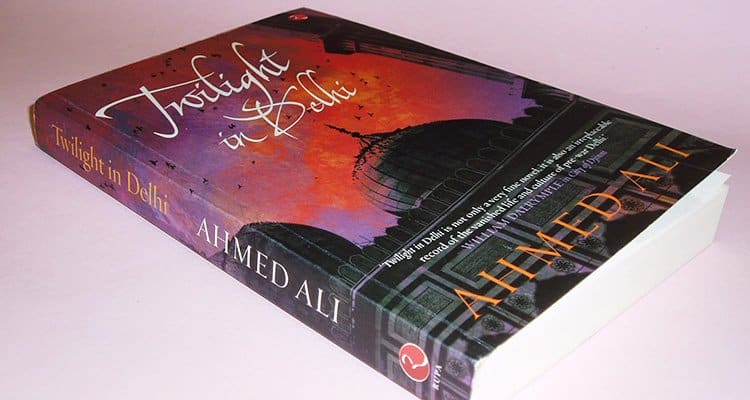
The classic novel, set in Delhi of 1911-1919 with the backdrop of colonial rule and Indian independence struggle, chronicles the rapidly changing socio-political happenings through the eyes of Mir Nihal, his family, and the denizens of beloved old Delhi.

Like a lot of people I got to hear about Twilight in Delhi through City of Djinns by William Dalrymple. In William Dalrymple’s own words ‘Twilight in Delhi is not only a very fine novel; it is also an irreplaceable record of the vanished life and culture of pre-war Delhi.” After reading the 275 pages of this 1940 classic, which was originally published in Britain on the behest of  E. M. Forester and Virginia Woolf, I can second every single world said in its praise.

Writer Ahmed Ali has succeeded in bringing the Delhi of the early twentieth-century alive. The story revolves around Mir Nihal, his family, and other inhabitants of the city. The story-telling is so vivid that one can actually feel, smell and sense the activities that are being described. One could hear the cries of fakirs and pigeon fliers, the buzz of Chandni Chowk, the renditions of poets, and smell the stink of sewers, the fragrance of jasmine and the medicated scent of hakims. The changing seasons of Delhi are illustrated so well that the stark oppressive heat, dampness of rainy July and chill of December could be eerily felt. The novel also encapsulates many historical moments, such as the coronation of the British King George V as the Emperor of India, the pillage of old city walls which was followed by the construction of Lutyens’ Delhi.

Even though there really is no plot to speak of, the story remains engaging. The characters are endearing and you will find yourself rooting for them at a crossway between their most joyful and most vulnerable moments. In one particular scene when Mir Nihal is left heartbroken after the death of his beloved pigeons, the sadness drips through the pages, but when he recovers from the loss one feels relieved.

What is most interesting is that the snippets of daily lives of characters give precious insights into the norms of that time. For instance, during a sandstorm, Begum Nihal tells her house help to place a broom under a leg of the cot as it was believed that doing this stops the sandstorms.

Another special feature is that couplets of Ghalib, Zauq, Zebun Nisa and Bahadur Shah Zafar are bestrewed liberally throughout. While the bland English translations rob the verses of their essence, the tone of the book remains very poetic. Sample this – “The night, with its awakening cold, was spreading her dark and star-bejeweled wings over the earth.”

For the love of poetry, family saga that delineates cruel restlessness of life, and Delhi – pick this book as your next read.

Image Credits: Andrew Amesbury

Niharika Dabral

[email protected]

Aarzoo has reached into Delhi’s communities and ignited the untapped potential of many women and children. Nidhi Lamba and Deeganta Datta (Fellows) were shocked by what they found in their classrooms. The children were never encouraged to participate in extracurricular activities. Yet plenty of students were inclined towards the arts. Many kids were interested in dance, theatre and performing arts, but their mothers seemed wary of allowing participation. The pair were taken aback, but realized that many of the mothers stayed home alone and were restricted to the meagre income earned by their husbands (if anything). The community also suffered from rampant domestic violence and substance abuse. For a group that didn’t have the chance to complete school, learning dance or theatre provided a welcome creative, productive outlet. “Most of them felt they were dependent on their husbands and also wanted to learn skills that could be used to get a job or earn money,” says Nidhi. “They were so intrigued, they said: ‘even we want to do it!” So, Project Aarzoo began as a performance showcase of 40 kids in Shahdara (and their mothers), which grew to a production featuring 350 students and aims to reach 6500 kids in the future!


Applications for the 2017-2019 Teach For India Fellowship program are now open. Please visit apply.teachforindia.org to submit your application by March 21st, 2017.

Last year, app-based two-wheeler taxi services such as Bikxie (in Gurgaon) and Baxi (Faridabad) were launched as effective means of easing congestion on the roads, providing commuters with an alternative to cabs and buses in the NCR (National Capital Region). While the reactions there have already been noted, Delhi still reels under heavy traffic and relies on cab services primarily. The app keeps a track of the route and distance covered, alongside the calculation of fare, working along the lines of a taxi’s metre machine. They also come with women drivers in many instances. So how does the student community react to the idea of such a scheme? Should it be inaugurated in Delhi too?

“Bikes and scooters are definitely more convenient. They will help with the Delhi traffic as well. But at the same time, one’s comfort level has to be kept in mind. I don’t think many people would be open to the idea of riding on a bike with a stranger. It’s not the same thing as travelling in a cab,” says Srishti Kapil, a student of Sri Venkateswara College, originally from Chandigarh. Another student from Lady Shri Ram College, however, sees no issues with the scheme if an equal number of women drivers were to be made available with a choice between drivers for each commuter.

Responses have been varied and wide-ranging, with some warming up to the idea and others absolutely rejecting it. There is, of course, also the issue of safety and necessity. While the app’s tracking feature makes it safe, it is not available on all operating systems. It is not available for Windows phones, which makes it inaccessible for several commuters. But the same could be said for several apps for cab-based four-wheeler services as well. In the case of Baxi, for instance, it is even possible to bypass the app and hail a bike directly, if the driver is not plying on any route and is standing free. Then there is the question of whether Delhi needs such a service in the first place. Several students also pointed out that with a robust public transport system, connectivity is not a major issue in the capital. According to them, with autos and cabs already plying on the roads unlike in the NCR, most of the parts of the city are well-connected. Besides, the Delhi Metro has been making in-roads rapidly too. The idea, however, is no doubt unique and one the capital could perhaps use as an alternative to cabs so as to cover shorter distances if not the longer stretches.

Image credits: Hindustan Times

Deepannita Misra
[email protected]

India is a deeply homophobic nation, with not only rampant homophobia in mainstream society, but also policies that deny the LGBTQ community basic human rights and access to laws regarding equality and privacy. In such an environment, it is difficult to stay optimistic about love and support. However, the LGBTQ community in Delhi offers several events to combat the negativity that we face on a daily basis.

In the second week of December, Harmless Hugs and Love Matters organised the Delhi International Queer Theatre and Film Festival. While the turnout here was quite low, one of the most exciting events that the community looks forward to each year is the Pride Parade.

Taking place on the last Sunday of November, the Delhi Queer Pride Parade draws a huge crowd, including both members of the LGBTQ community and allies. The Parade kicks off each year on the crossing of the Barakhamba Road and Tolstoy Marg, and members marching until Jantar Mantar, where there is a stage for anyone who would like to perform. The Parade is characterised by banners, both heart-wrenching and hilarious, eccentric personalities, and smiling faces. The two years that I have attended Pride have ended in me going home with an aching jaw, tired from all the smiling that was the result of an environment of confidence, defiance, and happiness.

While the Parade misses out on a chunk of syllabus-cramming students due to its time of year, it never fails to garner publicity from major media outlets. Last year, renowned activist Laxmi led the Parade. This year, NDTV and the online portal Youth Ki Awaaz were some of the coverage partners at the event. While the most obvious cause of the Parade is the demand for LGBTQ rights, the march also focuses on contemporary issues. For example, the violence in Kashmir and the discrimination against Dalits were some of the topics this year.

For anyone looking to gain a sense of home, Pride is the perfect place to fit in, even among strangers. Despite 2016 being the worst, at least Delhi is keeping alive the culture of love in these awful times.

pride

Two boyfriends at the Delhi Queer Pride Parade, 2016


Image Credits: Vagabomb


Vineeta Rana

[email protected]

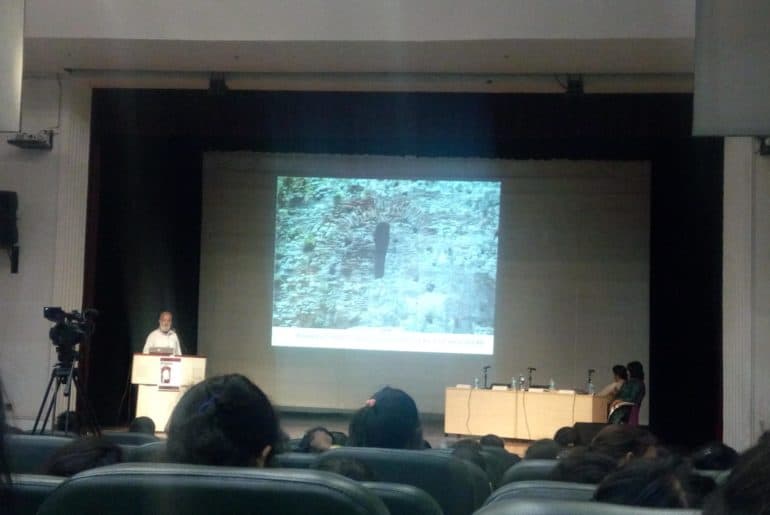
The Centre for Inter-Disciplinary Studies, Indraprastha College for Women (IPCW); organised a Conference on “Dilli: Perspectives on Delhi” on October 6, 2016. The College hosted speakers with years of experience in the study of various aspects of Delhi. Encompassing issues from Ancient Delhi Architecture to Makeshift Bazaars, the event gave deep insights into the capital city’s cultural understanding.

The first session, with the theme – Delhi’s Cultural Heritage opened with the Delhi Heritage virtuoso, Mr. Sohail Hashmi’s presentation. His address included an in depth historical explanation of Delhi’s architectural and religious culture He also put forth and attempted to break certain myths attached to Islamic architecture. The second speaker, Ms. Fauzia, an expert in Old Delhi Culture; familiarised the audience to ‘Dilli ke lehaze’– the long lost linguistic culture of Old Delhi.

Centered at ‘Equitable Access to Delhi’s Resources’, the second session witnessed speakers Mr. Ashutosh, Spokesperson of AAP and filmmaker Mr. Shaunak Sen presenting some eye-opening realities of the Delhi’s common man. Mr. Ashutosh, in conversation with Ms. Poornima Joshi, political editor, the Hindu; discussed the Delhi Government’s efforts in improving health, education and the bijli-pani concerns of the populace. Filmmaker, Shaunak Sen, on the other hand, presented clips from his documentary, ‘Cities of Sleep’ highlighting the issue of sleep shelters in various parts of Delhi. The screening was followed by a discussion on the issues highlighted.

The post lunch session with the theme –‘The Tragedy of Delhi’s Commons’ had Mr. Manoj Kumar Mishra; who has been working for the cause of reviving River Yamuna for over a decade, present to the audience, the miserable condition of the River through a series of slides. He also pointed out the possible solutions to revive the Lifeline of the city. The next speaker; Dr. Sunil Kumar, Professor at the Department of History, University of Delhi, talked about ‘The Medieval History of Saket region ‘. He also elaborated on the geographical history of the water bodies in the Lashkargah and Quila Rai Pithora area.

Towards the last session of the Conference, speakers Mohammad Sayeed, Ms. Samprati Pani and Mr. William F. Stafford focused on issues that lay close to the common man, ‘Making Space in Delhi: Ethnographic Explorations’. Speaker Mohammad Sayeed threw light on the issue of unauthorized housing and its consequences in particular areas of the city. Ms. Samprati Pani, highlighted the culture of Makeshift Bazaars in Delhi, their modern face and their influence on the life of Delhi commons. As the last speaker of the session, William F. Stafford discussed about the convergence of modes of transportation. He further talked about the common mode of transport, the auto rickshaw, as a symbol to understand public transactions.

The first Conference, from Series 1 of ‘Dilli: Perspectives on Delhi’ came to its close, with a vote of thanks by the College fraternity to the guest Speakers.

Image Credits
Priyal Khattar

Priyal Khattar
[email protected]

Being queer is tough in our country. To go through the process of understanding and accepting one’s sexuality and coming to terms with it, especially when no one around you seems to be open about discussing these topics, is tough.  In an environment like this, to find people around you who not only accept their own sexuality but even yours and are open to discussing it is heavenly.

It was just a few days back that I attended a gay party in Delhi with one of my friends. It was his third party and he wanted me to come along with him to put an end to my never-ending questions about how it feels to be in an environment of total acceptance. We attended a party in Green Park, and to me, it was like an undercover mission that I was a part of. In a country where LGBTQ rights are not accepted legally, to be a part of this setup, even for some time was scary. What if something went wrong?

We entered the party while I was still a little nervous, only to sink into an environment of comfort. The party had a mixed crowd – from transgender people to gay men, and lesbian women. Initially, I felt a little left out and sat in a corner nursing my mocktail and observing the people around me. It was liberating for me, a straight woman, to see to see my friend, who otherwise is a shy man and a closeted gay, to come out in the open and interact (even flirt!) with people- accepting drinks from them, exchanging phone numbers and dancing. I can only wonder how liberating it must have been for him the first time he attended one of these parties and why, even though he doesn’t like the crowd much, he likes to attend these parties every once in a while.

I was talking to some of his friends who told me that these parties happened every Tuesday and Saturday. They also told me about Central Park in Connaught Place which also hosts several LGBTQ+ events.

I was soon asked to join them on the dance floor and, for the first time in the entire 19 years of my life, was hit on by someone. All I could do was smile at her and let her know about my preferences!

Image credits: princeton.edu

Akshara Srivastava
[email protected]

With the pressure of studies and society activities slowly building up, DU Beat brings you some must have Delhi experiences that every fresher must catch.

1. Cycling trip to Rashtrapati Bhavan
Pick up the bright green bicycles from the Patel Chowk Metro station and go for a cycling trip to the majestic Rashtrapati Bhavan with your friends. You can also combine this with a picnic in the India Gate lawns. Delhi being the heart of power of the country and this being a powerful location of the city, the trip might give you a feeling of being closer to power and will be a good memory to go back to any day!

Cyclin trip DUB

(Image Credits: Alex Arthur for DU Beat)


2. Midnight exploration of the Ridge
Having spent quite a few days in the college, your seniors must have filled your ears with the stories of the crying woman in a white saree or the monkey which hunts people at night, all of them residing at a common address- the ridge. Why not explore it yourself with your friends at midnight?
The silence of the night and the street lights combine perfectly to give you a feeling of someone who’s been waiting for long and is beckoning you. (Try this at your own risk and have a strong heart throughout!)

NC Ridge
(Image Credits: www.holidify.com )


3. Photoshoot at India Gate
With the Independence Day approaching and a patriotic fever rising all over the country this is the best time to plan a trip to India Gate and obviously click a picture of yours to set as your Independence Day cover photo on Facebook. What better way to display your patriotism and flaunting being in the capital at this time of the year?

India Gate
(Photo Credits: commons.wikimedia.org)


4. Going for a theatre experience
The capital is home to some of the best auditoriums of the country which play hosts to lots of plays. If you’re a theatre enthusiast then Mandi House which stations the National School of Drama, Shri Ram Centre for Art and Culture, Bharatiya Kala Kendra and many more literary avenues can become one of your most visited locations in Delhi.

Shri Ram Centre for Art and Culture Delhi
(Photo Credits: commons.wikimedia.org)


5. Catch the light and sound show in Red Fort
The great red building has been a witness to the rise and fall of the mighty Mughal Empire and the rise of Modern India. They say it right when they say that the red sandstones of Red Fort narrate history, for one trip to the Fort will take you back in time to the glorious days of Mughal rule in India. You can catch the light and sound show in the evening which would take you through a beautiful journey of history.

Red Fort
(Photo Credits: www.flickr.com)


So whether you are of the adventurous kind or prefer artful displays, there are many things you do to keep yourselves excited and amazed. This list is just a preview. So buckle up freshers! Delhi has tonnes of adventures in store for you!

Feature Image Credits: Alex Arthur for DU Beat
Srivedant Kar
[email protected]