Tag

admissions

Browsing

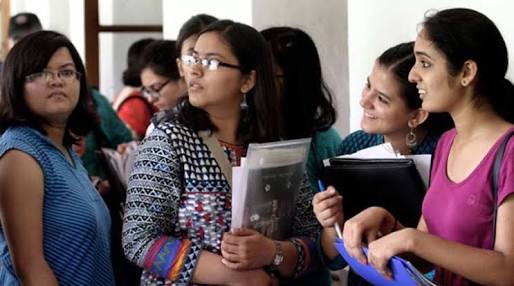
Delhi University continued its attempts to answer queries and clear doubts of DU aspirants today during its 5th Open Day. Hundreds of aspirants have been flocking to Conference Centre, North Campus each day to resolve their queries and to get to know the intricacies of the admission procedure in the coming month.

The session was moderated by Mr.Gurpreet Tuteja, Deputy Dean of Admissions, University of Delhi. The admission committee projected a comprehensive presentation focusing on myriad queries and information that is of utmost prominence and importance. Beginning with a brief introduction about the University and affiliated colleges, the presentation further covered details about the admission procedure and reservation policies.

As applications begin tomorrow, special emphasis was given on reminding students the important dates. Online registration for Common Admission Forms begin on 28th May, 2015. Offline registration shall begin from 5th June, 2015. The cost of the forms is Rs. 100 for General and OBC Categories and Rs. 50 for SC/ST/PwD Categories. The last day for registration, both online and offline is 15th June, 2015.

Offline forms will be available on the following centers:
1. ARSD College
2. Gargi College
3. PGDAV College
4. Dyal Singh College
5. S.G.T.B Khalsa College*
6. Rajdhani College
7. Shyam Lal College
8. Maharaja Agrasen College

*Added to the list later by DU in place of SGGS College of Commerce.

The first cut off shall be released on 25th June, 2015. A period of three days would be given before the release of subsequent cut offs. “It is not mandatory for candidates to submit the offline forms to the same center they took them from. They can be deposited to any of the centers,” Mr. Tuteja announced.

With this, details regarding Sports Quota reforms as per university guidelines were discussed. The introduction of B.A. (Hons.) Multimedia and Mass Communication in Indraprastha College for Women was also announced which will also have a system of entrance examinations. More details of the BMMMC entrances are expected on Thursday.

The presentation ended with an interactive question-answer session – aspirants directly spoke to University officials.

“The session was very helpful. All our doubts were more or less cleared. Though we expect the University to be more active in online declarations which will avoid our need to attend such Open days.”, said Shubham, a B.Com aspirant from Gurgaon.

The session saw substantial turnout and was well-managed overall. The aspirants were seen satisfied post discussion with most of their queries being solved. Open Day sessions shall continue till the end of this week.

In a span of one week, 2 departments of Delhi University (DU) in their respective General Body Meetings (GBM) have decided to reject Choice Based Credit System (CBCS) and disassociate themselves from the drafting of syllabus.

Under CBCS, contents of courses are divided into ‘credits’ which students can earn “at their own pace with seamless mobility,” as the UGC has said. Under the system, a student may choose to earn some credits of even a course different from the one they applied for from another college and, potentially, another University. CBCS is dubbed by the UGC as a “cafeteria-approach of education”. The system is, according to UGC’s directive, to be introduced in the coming academic year with the new batch. It has been relentlessly opposed by teachers.

The GBM of the History department was convened on 16th May and the same of Mathematics department was called on 21st May to discuss the directive of the Jt.Registrar of DU to draft the syllabus of various courses in accordance with the proposed syllabus of the UGC. Universities are only allowed to deviate a maximum of 20% from UGC’s proposed syllabus.

The History department adopted the resolution to reject CBCS unanimously. While voting was not allowed at the Maths department’s GBM, a thumping majority backed the resolution to reject the change.

The most notable points of objection raised by teachers include the requirement of all Universities to teach a common syllabus and the risk of privatisation of education. Teachers of the history department maintain that different regions of the country have varied socio-cultural realities and learning needs and allege that the syllabus given by the UGC is diluted.

Teachers allege that the matter of CBCS was brought on the table at an Academic Council meeting under the head of “Any Other Matter” and no discussion was allowed. Going beyond alleging the DU administration for thrusting the reform upon the University, teachers of the two departments accused the Ministry of Human Resource Development (MHRD) and the University Grants Commission (UGC) for “pushing CBCS onto all Universities without discussion with the primary stakeholders, i.e. teachers and students on the desirability, feasibility and long-term implications of such a systemic change”.

Last week, DU’s media spokesperson Malay Neerav told Times of India that the University will not go ahead with CBCS if the councils do not approve of it.

Featured image credits: DUTA website

Ishaan Gambhir
[email protected]

The admission process for Bachelor in Management Studies (BMS), one of the popular courses of Delhi University at the undergraduate level, can undergo major changes.

Till last year, an entrance test, interview, and the class 12th score formed the basis of getting admission into this course. But this year, the entrance test can be removed altogether. As per the sources, such a proposal has been put forward by the Faculty of Management Studies (FMS), but still needs to be approved by the University of Delhi.

According to a senior officer of the university, if the entrance test is removed then a different criteria will have to be made for the admissions to take place according to class 12th scores since the students of all the three streams, i.e., Science, Commerce and Arts, are eligible to opt for this course. Giving equal opportunities to the students of all the streams will have to be taken care of and the rules of admission will be different for the students of the three streams.

This course was earlier called BBS but the duration of the course was made four years, last year. The responsibility of conducting the entrance test was handed over to FMS. Many questions were raised regarding the entrance test and the matter was taken to the court. There were mistakes in the answer key which was uploaded on the website.

According to some people, the course will lose its value if the entrance test gets removed as it has a lot of demand in the market. The present procedure ensures that the selection process is tough for the students. At present, fifty percent weight-age has been given to entrance test.

The university is expected to reach a conclusion regarding the matter shortly.

Source: Navbharat Times dated 17th March, 2014.

Update (20th May): Entrance exam for BMS will be held in 2014 as well. Read this article for further details.


report published in the Times of India (TOI), students will be able to get their master’s degree based on a new credit based system. This move is expected to give more flexibility to students while picking a suitable course for themselves. DU Vice Chancellor Dinesh Singh stated that few reforms will be seen effective from the approaching session itself, whereas the full set of changes will be brought and visible from 2015-16 onward. He added that the work on the PG course reforms and proposal was going on and that he may like to call it a credit based system. Students will not only have to pass in the examinations, but also may have to attain a certain minimum number of credits to clear the examination. “The expectation is that a DU student will be able to gain the credits in about a year’s time”, he was quoted saying to TOI. Singh also hinted at some changes at the FYUP level. Trans-disciplinary programmes will enable students to gain extra points during the last year of their undergraduate course, the benefits of which can be availed at the postgraduate level. He explained that re-mixing of courses would bring about more flexibility to the system and enable students to reach their higher potential. However, the basic format of the FYUP, especially the foundation courses will not be altered. Projects might be merged and more changes will be announced which will hopefully be approved by regulatory bodies. Project areas like population and internet  have been identified. The complete information is expected to be declared soon. However, this proposal for a one year PG reforms is yet to be approved by the University’s Academic and Executive Councils. Talking about the success of the FYUP, Singh admitted that there was positive feedback from the economically and socially disadvantaged strata. Girls who get married during their college years and as a result ended up wasting their studies, are now given a chance to complete their studies in the given time period of 10-years. “Trans-disciplinary knowledge has definitely gone up tremendously,” he added.]]>

After the sixth cut-off, the ground around the rocketing cut-offs for admissions into Delhi University has begun to sink in. The initial cut-offs were over-hyped with much media coverage, but here is the other side- you can get into DU even with 33% marks.

Could anyone wonder getting into DU with just 40% marks after the likes of Ram Lal Anand fixing 100% mark for admissions into one of their courses? But, here it is, Kalindi College for Women is offering Sanskrit Honours at 33% for reserved category and 45% for general category students. At the famous Daulat Ram College, Sanskrit Honours is available at 42% for all the reserved category students. Hindi Honours is available at colleges like Deshbandhu and Kalindi at 40% for reserved category students and 50% for general category students.

Besides, courses like Economics honours are available at as low as 45% for students belonging to Scheduled Tribes at Lakshmi Bai College and at 50% for Persons with Disability at Deen Dyal Upadhayaya College and Dyal Singh College(Evening). Mata Sundri College is offering Philosophy Honours at 40% and Political Science Honours at 43% for Persons with disability. Popular courses like Economics and Commerce are also available for general category students at a few colleges with lower cut-offs.

Let’s take a look at last year cut-offs. Geography Honours was available at 50% for OBC category students at Aditi Mahavidyalaya in the seventh cut-off list. Political Science and Philosophy Honours was being offered at 45% for reserved category students at I.P. College for Women in the tenth cut-off. Even, the elite courses like Economic Honours were up for grabs at Kalindi College at 55% for reserved category students in the seventh cut-off.

After the initial rush, colleges usually lower their cut-offs, as they get an idea of the actual number of students seeking admissions. Besides, the colleges do not want their seats to go vacant, so they lower the cut-offs in the succeeding lists, especially for reserved category students. Also, the cut-offs for several off-campus colleges usually go considerably down for most categories after the initial cut-off lists.

With around 47,000 students scoring over 90% in the CBSE 12th examination, there was nothing unexpected about the sky-high cut-offs for DU. But as colleges start enroling students, the high requirements are bound to go down. And for several colleges these ‘lower cut-offs’ are not a part of the ‘media hype’.

Image credit: freedigitalphotos.net

The sixth cut-off for Delhi University college admissions is here and with that is the news of several vacant seats for General category students.

Commerce is still available for the general category in 16 colleges as compared to 23 colleges during the fifth cut-off. The number includes popular colleges such as Hans Raj and Gargi as well. Hans Raj still confident about its previous cut-off sticks to 96.5-98 for Commerce for the four times in a row.

In terms of B.Tech courses, while most courses are closed, Hans Raj and Keshav Mahavidyalaya are still offering B.Tech in Electronics. Computer Science at Hans Raj is finally closed after 5 cut-offs.

History at LSR is now closed while Hindu is still offering admissions in Sociology. Journalism and Mass Communication aspirants might have a reason to rejoice with Kamala Nehru College re-opening admissions for the course at 92.5-94.5. The course is also open for admissions at Delhi College of Arts and Commerce at 91.5.

Reserved category cut-offs still seem to be gaining momentum in colleges such as DCAC and Miranda House with several courses still vacant.

With colleges slowly bringing down the cut-offs in order to avoid over-admissions, general category admissions lasting till the sixth cut-off in popular colleges is an unusual affair for Delhi University. With what seems to be going on, it can be expected that a few colleges will also go on till the seventh.

Admissions for the sixth cut-off will last from Monday, 15th July up till Wednesday, 17th July. The seventh cut-off is scheduled to be out on Thursday, 18th July.

Links to cut-offs: Arts and Commerce | Science | B.Tech

Delhi University has recently introduced the Meta College concept in the form of a B.Tech. Humanities Course, which is open for application to any student enrolled in any course at any college/SOL/Non-Collegiate Programme of the University of Delhi. The concept basically works on the idea of designing your own degree.

The Cluster Innovation Centre, or CIC, has designed a course which while allowing a student to gain competencies in core areas required in any corporate role today, also give the freedom to study and explore areas in various fields of study. Students will be given the choice to choose courses to specialize in a particular stream such as Journalism, Education, Historical Tourism, Counseling and Art and Design and will also have the liberty to choose appropriate professions for themselves. The course plans to emphasize learning through hands-on projects, virtual learning and group based activities rather than relying exclusively on class room learning.

The first and the last semester of this four-year course will be compulsory for all students regardless of their stream choices, with the first semester consisting of papers such as The Art of Communication and Mathematical Awareness. The last semester, on the other hand will focus on papers like Legal Literacy and Social Enquiry. The University also organized Open Days on 7th August at S. P. Jain Auditorium, South Campus and on 8th August at the Conference Hall, North Campus for any queries on the same.

The introduction of this course is a bold move and hopefully, the first amongst many which are needed to bridge the gap between interests and opportunities. Applications for the course are open on the Delhi University website till 17th August. The admission procedure involves an one hour written test with multiple choice questions, followed by an interview of the shortlisted students.