
Tag

admissions

Browsing

One of the biggest bafflement a commerce student faces, during admission time, is whether to pursue B.Com. or Economics. To begin with, you are spoilt for choice since you’ve got the option of choosing between two of the most prestigious subjects that DU offers.

A lot of people decide between the two courses based on their interest/marks in class 12th in Accounts and Economics. Just to make things very clear, there is a lot of difference between what you study in college and what you studied in school. Speak to college students, teachers and the Internet.

The popular notion of B.Com. and Economics having similar topics is false; there is vast difference in the courses. B.Com. is a generalised course which combines accountancy, economics and business studies. Economics, on the other hand, is a specialised course which deals with rational behavior and making the best choice with limited resources.

B.Com. opens up avenues for the field of Chartered Accountancy, Finance, Business Entrepreneurship, Company Secretaryship and Law. It also gives you a boast to look into management, IT and academics. Economics is a builder for jobs in the policy making, corporate sector, developmental sector and key specialized areas. It also allows you to take up IES services after post-graduation in the subject.
Economics requires a lot of usage of maths and statistics. So if you are not big fans of these subjects, three years of graduation can be very tough with them. Commerce, on the other hand, is 60% theoretical, give or take.

Commerce comprises of trading commodities of economic value such as goods, services, information or money between two or more entities. Commerce works as the mechanism which drives capitalism and certain other economic systems. Economics is the branch of social science that studies the production, distribution, and consumption of goods and services.

Do your homework before deciding because this shall affect your future. Chalk out a list of your interests and compare it with the subjects offered by the two courses. Get hold of the Under-Graduation syllabus to get a better view.

Important Links

Commerce

Course content: http://goo.gl/8aygAA

Unconventional further study options: https://dubeat.com/?p=26724

Economics

Course content: http://goo.gl/arDd4e

Unconventional further study options: https://dubeat.com/?p=27081


All the best for the admission season!

Ishita Sharma

[email protected]

University of Delhi will be conducting its Joint Admission Test for BMS/BBA(FIA) and BA(Hons.) Business Economics on Sunday, 20th June 2016.

The exam is only the first stage of the admission process where its weightage is 45% along with 40% weightage given to the 12th Board scores and 7.5% given to both the interview and group discussion round. Read more about the seat breakup and other crucial details from our previous report here.

According to the Admission Brochure given by DU, –

– The exam will have 120 questions to be attempted in 120 minutes
– Each question will be objective type multiple choice based.
– The exam will be take place from 3PM TO 5PM 6th June 2016.
– Each correct answer will get the candidate 3 marks and every incorrect answer will get them 1 negative mark.
– The question paper will be divided into 4 sections.
Here is a detailed section-wise guide I have made based on my experience of giving 2014 JAT –

1. Quantitative Ability

This section will contain questions from the 11th and 12th Maths syllabi. Questions from the 12th class Math syllabus won’t be that challenging, although you might want to brush up on Relations and Functions as many people skip it as it doesn’t have much weightage in the board exams, 5 questions are expected to be coming from Relations and Functions.

3-D Geometry is another unit you might want to prepare as it might contain 4-5 questions.
From the 11th Class syllabus, Sets and Permutations and Combinations are important units to be covered. Probability is a unit which spans both the 11th and 12th syllabi, therefore it is expected to be a major part of the Quantitative Ability section. Questions involving dice and deck of cards are expected to come.

2. Reasoning and Analytical Ability

This section will include reasoning and assertion based questions. It is also expected to contain a subsection of either a bar graph or chart and 8-10 questions based on analysis of that graph. Any data interpretation book will help you to practice questions which might appear in this section.

3. General English

This section’s name might make you think that it will be easy to attempt but it might prove to be the toughest for many people.
It will contain a reading comprehension subsection containing at least 5 questions which is considerably easy to attempt and does not need much preparation. 5 questions are expected to be idiom-based so learning basic English idioms may help. 5 direct vocabulary questions are also expected. For the vocabulary questions, research previous year papers and other exams (for example: CLAT) and identify and learn important words from there, this is the best shot to score in vocabulary as mugging up hundreds of words at this point will not benefit you. Fill in the blanks and one word substitution are also expected to come and are considerably easy and do not require practice.

4. Business and General Awareness

This section will contain direct general knowledge based questions. Since this section does not require much thinking, do not give too much time attempting it.

The main feature of General Awareness is that most of it contains ‘static general knowledge’ based questions. Popular questions in this section are along the lines of product and their companies. Start memorizing what product is produced by which company (your shampoo bottle,your shoes, clothes etc) and taglines of products and companies. Memorize what banks are nationalized and important international days  (Eg: Women’s day, Earth Day, AIDS Awareness Day)
Look up where popular companies’ headquarters are located, memorize important international and national prize winners of the current and previous years (eg: Nobel Prize, Bharat Ratna)

Some other helpful tips-
– Attempt the General Awareness and English section first as they require lesser thinking than the other two sections, this will give you more time to devote to the time consuming math problems. Be careful of the question numbering in the OMR sheet, though.

– I personally recommend you NOT to wild guess. Other exams generally have a 4:1 ratio of positive and negative marking however this exam has a 3:1 ratio so you have more to lose.

– A very repetitive tip but if you’re stuck on a question, leave it. It will be a challenge to attempt 120 questions in 120 minutes, utilize the time carefully.

All the best!

University of Delhi began sale and receipt of the common pre-admission OMR forms on Friday, 5th June. The forms are available at 8 designated admission centres of the University. Last date to fill the form is 15th June. A candidate is required to fill the pre-admission form only once, either online or offline. Last week, the University began accepting online forms on its website.

DU deploys an ‘optical mark recognition’ type of form for applications. The form will have circles that the candidates will have to darken entirely with a pen. Care must be taken to ensure that the necessary circles are darkened completely but no excess ink should be used on the form.

The forms are available at the following centres:

1. ARSD College
2. Gargi College
3. PGDAV College
4. Dyal Singh College
5. S.G.T.B Khalsa College*
6. Rajdhani College
7. Shyam Lal College
8. Maharaja Agrasen College

*Added to the list later by DU in place of SGGS College of Commerce.

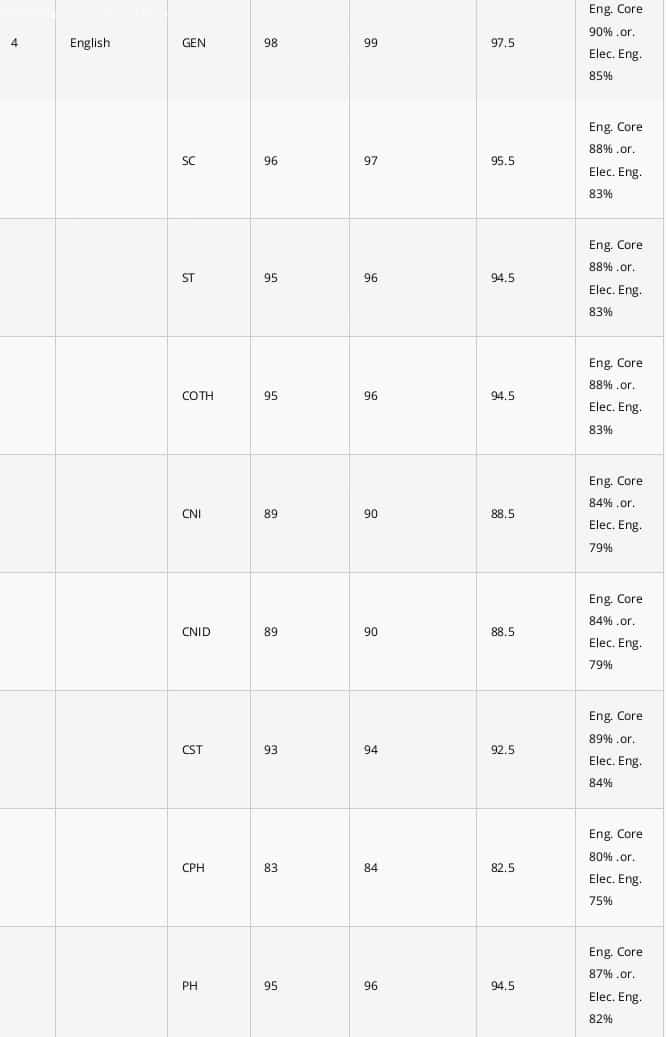
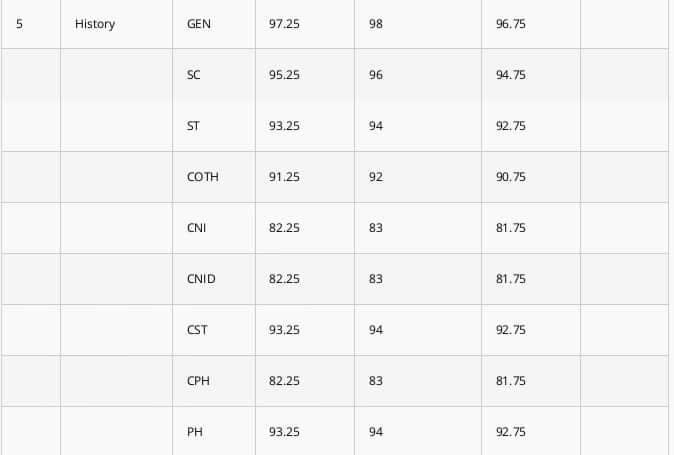
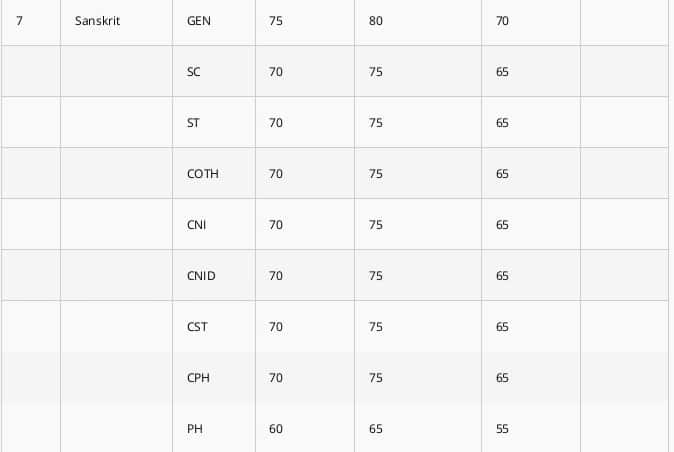
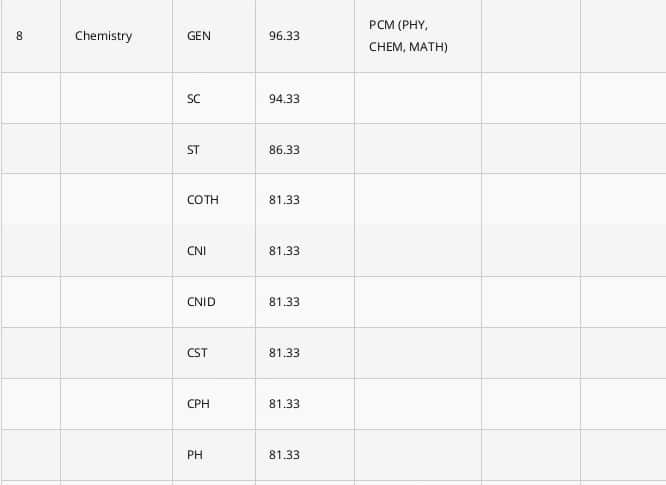
The following subject code chart should be used while filling the form:

Subject codes

The University has specified the following guidelines for filling of the application form:

  • The form can be bought from any of the centres and can be submitted at any of the centres. A candidate is not required to visit the same centre for both the purposes.
  • There are 2 forms: one for General/OBC categories and the other for SC/ST/PwD categories. A candidate must fill the correct form.
  • Only blue or black pen is to be used to fill the form.
  • The form, after filling, should be photocopied (both sides of the form on one sheet of paper, back to back). The photocopy is to be kept by the candidate as acknowledgement.
  • It must be ensured that the formed is not folded, crumpled or mutilated. No markings should be made on the form other than those required. The marks on the margin of the form are also not to be tampered with.
  • For PwD candidates: PwD 1: Blindness/low vision; PwD 2: Hearing impairment; PwD 3: Locomotor disability and Cerebral Palsy

For more information, visit: http://du.ac.in/du/uploads/Admissions/2015/ug/27-5-2015-ug.pdf

Featured graphic designed by Naman Sehgal

Ishaan Gambhir

[email protected]

The NCWEB is well established institution under Delhi University which seeks to provide education to women with special coaching but without attending regular classes. It was started in 1944 and due to its increasing popularity and logistical issues, it has established centers in colleges like Bharati College, Janki Devi Memorial College, Jesus & Mary College, Kalindi College, Lakshmi Bai College,Mata Sundri College, Maitreyi College, PGDAV College, Shyama Prasad Mukherjee College, Sri Guru Gobind Singh College of Commerce, Hans Raj College, Maharaja Agrasen College and Vivekananda College. It only conducts weekend classes – on the remaining days of the week, students are free to pursue an occupation or another educational course.

Like SOL, NCWEB follows the annual examination system. It teaches the following two courses:

  • BA Programme (English, Hindi, Punjabi, History, Political Science, Sanskrit, Economics, Mathematics, OMSP-Office Management & Secretarial Practice)
  • B.Com.

The Non Collegiate Women’s Education Board (NCWEB) has declared its guidelines,  important information along with dates for admissions to undergraduate courses.

  • The forms will be sold from 8th June to 24th June at 4 centres, namely Kalindi College, Maharaja Agarsen College, PGDAV College and Shyama Prasad Mukherjee College.
  • Admission to the NCWEB centers will be decided on the basis of cutoffs.
  • The percentage for B.A. Program will be decided on the basis of 10+2 board results by taking the best of four subjects which should have one language and three best subjects which can include maximum one vocational subject.
  • While for B.Com. the criteria is one language, Business Studies, Accountancy and one more best subject which could be a vocational subject as well. Students from streams other than Commerce will be considered with a deduction of 5% marks in best of four percentage.
  • The first cutoff list will be out on 8Th July and the last on 21st July.

The OMR form needs to be filled with attention. Only black/blue point ink is to be used. No photocopies are to be attached with the form. After filling the form, its photocopy must be stamped and kept as an acknowledgement. Make sure that the boxes in the form are properly filled, otherwise you stand a chance of getting your form rejected.
For more information, check: http://ncweb.du.ac.in/ncweb/sites/default/files/UG%20Information%20Pamphlet%202015-16.pdf
http://ncweb.du.ac.in/ncweb/sites/default/files/UG%20Notice.pdf

Image credits: NCWEB website

Ishita Sharma

[email protected]

Now that the Board exams are done, have you already started day-dreaming about your dream college in India’s top university? At the same time, are you apprehensive about moving to a new city altogether? Here’s a little something for all would-be outstation students wishing to be a part of the University of Delhi in the upcoming academic year- a survival recipe exclusively for outstation students, by an outstation student.

 (Author’s note: ‘survival’ is just used for a dramatic effect; you’ll sail through college here!)

All about Delhi

First things first- Delhi is NOT the rape capital of India. It’s as safe and as unsafe as any other city in the country. There are people on the road that will help you; there are shopkeepers and auto-waalas who won’t rob you of your money, so clear your head of all these clichés about Delhi.

 The plus points? Easy access to all landmarks across the vast city via the city’s lifeline- the Delhi Metro. Delhi-ites swear by the efficiency of Delhi’s metro system. Other than this, exceptional food joints with as much variety as you wish to have on your plate along with being a shopper’s paradise, an art-lover’s heaven and an observer’s utopia., just when you start thinking you’ve got to know it all, the city throws something majestic at you to ponder upon!

Essentials for an outstation kid

Find good accommodation

Finding good accommodation is one of the most essential aspects you need to focus on once you get into the college of your choice. Many colleges across DU don’t have adequate hostel seats and hence alternative accommodations such as flats and PG (Paying Guest) accommodations are popular. Confused about what to choose? Here’s something to make your life a little easier-

Hostel– While many colleges have inadequate hostel seats, it’s still considered the first choice for most outstation students. The safety of the accommodation and lesser rent in comparison to flats and PGs are the main benefits hostels have to offer.

With this, hostels do come with certain guidelines and regulations to comply with. These maybe in the form of curfew deadlines and leave regulations. Food is also an issue in certain cases since all of us spoiled, in-love-with-home-made-food kids might find it a little difficult to adjust to the hostel mess’ food. It is a myth though that hostels are all about regulations. The mid-night parties, studying and staying together, sharing food (the list goes on till where your wishes can take you) will bring you a lifetime of friendships and irreplaceable memories.

PG Accommodation– One of the fastest growing businesses in Delhi (it’s not IT!) is of the Paying Guest Accommodations. You will have hundreds of PGs to choose from as per your own preferences. PGs in Delhi come with both rigid and flexible curfew deadlines. The food issue one might face in hostels is a rarity in cases of PGs given that you have the option of demanding the food of your own choice.

However, higher rent, difficulty in adjustment with fellow PG-mates (yes, that’s a term!), curfew deadline issues and safety concerns at times are a few negatives tagging along.

Flats –  As rosy as the thought of owning your own flat may sound, it’s a mammoth task. Unless you’re willing to bargain with the subzi-waalas and relying on the wishes of a maid to turn up and get you some food, flats is not a good idea.

But, you surely cannot ignore the benefits of having a house party or calling your friends over whenever you wish to. Your parents will certainly have a lesser control over your activities since there’s no deadline issue and they’re often cheaper than PG accommodations.

The only advice is to think thoroughly before choosing your accommodation and consider all pros, cons and worst case scenarios for all options. Ultimately, your comfort (and survival!) overrules all other factors.

Wish you could be home…

Homesickness is something every outstation kid feels at some point of time. We understand how close you are to home but always think of the time you were earnestly waiting to get out of your home and explore. Well, the independence a new city gives you is your perfect chance to live your dreams. While doing all your work yourself might seem to be a burden initially, it’ll eventually become something you’ll be thankful for and proud of.

There are ways to get over the feeling of homesickness, of course! Take an early morning walk, go on a shopping spree, explore historical places in and around the city with your new found friends- the more you try to get your mind off the thought of home, the more at-home you’ll feel!

Adjustment issues often crop up when you come across unfamiliar people. The key is to see this unfamiliarity as a part and parcel of growing up and becoming your own person. It’s also important to understand that every kid in your hostel/PG is in the same boat as you are, and is facing similar issues.

The best part about Delhi is the fact that you will never run out of ‘things to do’. With its historical and cultural importance, the city in itself has a lot to offer. You might feel a little lost initially but embrace the change with open arms. Within no time, you’d be a part of this cross-cultural hub making a mark of your own. (Too much philosophy? Well, you’re getting the first hand experience of an outstation kid!)

Feature Image Credits: thedisneyden.com

Arushi Pathak
[email protected]

One of the great reasons why Delhi University is way ahead than other universities in India is the advancement in its courses. There are courses beyond the realm of conventional and mainstream subjects like Economics and Commerce, etc. These include language and vocational courses. The language courses have been embraced as a part of academics in many colleges. For vocational courses, Delhi University took a bigger step and established an institution called College of Vocational Studies. These courses are of three years and one graduates with the complete knowledge of the subject, both theoretically and practically.

Following is a list of all the language and vocational courses in Delhi University.

Language Courses

1. B.A. (Honours), M.A., M. Phil, PhD

There are a number of languages that you can get a degree in from the above options. These include French, German, Italian, Spanish, Russian, Bulgarian, Japanese and the Chinese language.
For taking up any of these as your major, you need to clear an entrance test. For some of the languages, you also be interviewed.

The languages are divided into different departments and the contact numbers and office addresses can be found in the following links.

For Russian and Bulgarian, you need to contact the Department of Slavonic and Finno-Ugrian Studies.
http://www.du.ac.in/du/index.php?page=slavonic-finno-ugrian-studies

For French, Spanish, German and Italian, you should contact Department of Germanic and Romance Studies.
http://grs.du.ac.in/index.html

For Japanese and Chinese, Delhi University has the Department of East Asian Studies.
http://www.du.ac.in/du/index.php?page=east-asian-studies

2. Diploma/Advanced Diploma

Delhi University offers a Diploma degree in German, Portuguese, Spanish, Italian and Romanian, Swahili, Pali, Tibetan, Modern Arabic and some European languages. In the case of some languages, you need to have passed a Certificate course for Diploma. For advanced diploma, a Diploma in the same language is mandatory. The admission process of these courses starts after the regular admissions and classes start from August.

The links for the departments of these languages are as follows:-

Department of Germanic and Romanian Studies- French, German, Spanish, Italian, Portuguese, Romanian
http://grs.du.ac.in/index.html

Department of Slavonic & Finno-Ugrian Studies- European Languages

http://www.du.ac.in/du/index.php?page=slavonic-finno-ugrian-studies
Department of African studies- Swahili
http://www.du.ac.in/du/index.php?page=african-studies

Department of Buddhist studies- Pali and Tibetan
For more details: http://www.du.ac.in/du/index.php?page=buddhist-studies

Department of Arabic- Modern Arabic
For more details: http://www.du.ac.in/du/index.php?page=arabic

3. Certificate Courses

DU also offers certificate courses for those who wish to learn a language beyond their main subjects. People can apply to any of these courses right after class 12th. Graduates and post-graduates can also apply and the course lasts for an entire year. Several colleges in Delhi University offer these courses, some of which include Kamla Nehru College, Daulat Ram College, CVS, etc. The admission process of these courses starts after the regular admissions and classes start from August. You can study these languages even while studying another regular course at DU!


Vocational Courses

College of Vocational Studies offers around seven different vocational courses. Under each of these, you are provided with all the theoretical knowledge accompanied by industrial visits. You get rigorous training in the course you pursue and get a job easily right after graduating. The cutoffs for these courses range between 70-85%.

These are some of the courses that this college provides.

  • Tourism
  • Office Management and Secretarial Practice
  • Management and Marketing of Insurance
  • Small and Medium Enterprise
  • Materials Management
  • Human Resourse Management
  • Marketing Management and Retail Business

The vocational courses do not have any entrance tests and students are admitted solely on the basis of 12th Boards percentage.
If you have time on your hands and wish to do something different, then these courses offer immense opportunities. People who wish to become an entrepreneur and start a business of their own or wish to become a proficient in a certain language should definitely enroll for any of these courses.


Image source http://traitdunion-online.eu

Sudisha Misra
[email protected]
Every year hundreds of students enrol in various colleges through the Defence and Kashmiri Migrant categories, the process for which is a lot different from the usual procedure for admission to the University. Here are the important guidelines and dates to keep in mind while enrolling through these quotas this year:


1. Defence category


Children/widows of the officers and men of the armed forces including paramilitary forces killed/disabled in action or those who died/were disabled on duty, gallantry awardees are eligible for admissions to the University which reserves 5% of the seats in each course for the same.

Application forms will be obtainable from Academic Branch- 1, Room no 218, New Administrative Block, University of Delhi, Delhi – 110007 from 5th June 2015 to 15th June 2015 between 10 AM to 1 PM (Excepts Sundays). After attaching the relevant documents, the form is to be submitted at the same address. On 30th June 2015 (1PM) notification of the admission list will be put at the notice board of the New Administrative Block and the university website. Selected candidates will be issued provisional admission slips from 30th June  to 2nd July after which they have to go to the concerned colleges for final admissions.


2. Kashmiri migrants category


The Academic Branch- 1, Room no 218, New Administrative Block, University of Delhi, Delhi – 110007 would register the wards of Kashmiri migrants from 5th June 2015 to 15th June 2015 between 10.00 AM to 1.00 PM (Excepts Sundays).The Joint Registrar (Academic) will release a list of candidates for admission in various colleges on 13th July 2015 after 9 AM. Admissions will start with the release of the list and will end by 16th July.

A concession of maximum 10% in the last cut- off list for the general category candidates shall be extended to the candidates for admissions to various courses (Reservation not applicable for courses requiring entrance test).  Candidates will have to fulfil the minimum eligible criteria prescribed by the university. Candidates can refer to the Bulletin of Information (Undergraduate Courses) for the year 2015-2016 for the same.


Featured image credits: Surbhi Bhatia
Sidharth Yadav

[email protected]

Delhi University incorporates students who are not just academically excellent, but also physically proficient. To nurture and encourage the sportspersons of the nation, the University provides a Sports Quota in its admissions to its undergraduate programme. Given below is a quick summary of the things you need to know about these trials and tests.

The University has notified each and every college to display on their websites and notice boards information regarding the number of seats under Sports Quota along with the positions/events for various Sports/Games that sportspersons will be tried for by 27th May 2015. This information has been provided well in-advance of the beginning of the regular UG admission procedure. The issue and receipt of applications/forms will be done from 28th May to 15th June. It is important for aspirants to fill the college-level form before appearing for the fitness tests and fitness trials.

Super Category

The sportspersons who have participated/represented the country in the following competitions are not subject to any trials and are infact admitted to any college they apply to.

  • Olympic Games
  • World Championships
  • Asian Games
  • Asian Championships
  • Commonwealth Games
  • Paralympic Games

Admission Procedure

1. Fitness Tests conducted by Delhi University

Three fitness tests will be conducted by DU as a preliminary examination for subsequent marking of Sports Certificates and Trials. The tests will be video-graphed and will judge one’s endurance, strength and speed. The fitness tests will be conducted in the University Polo grounds, from 18th June to 20th June, 9am onwards and the results of which will be displayed on the DU website on 22nd June 2015.

Test #1: Standing broad jump

Test #2: 1000mts. run/walk

Test #3: 50mts. dash

Note: For archery, chess and shooting, it is essential for a candidate to pass in at least one of the above mentioned tests to be able to give college trials. For other sports including cricket, football and basketball, a candidate is required to pass in at least two of the above menti0ned tests.

2. Sports Trials conducted by colleges

The colleges will hold trials for various sports 23rd June 2015 onwards which too will be video-graphed. The trials will hold a total of 50 marks. Minimum 18 marks out of 50 are necessary for admission to the college. The trials will be assessed on the basis of skill test, game performance test, game specific fitness, fundamentals of the sport etc. Each sportsperson will also be awarded marks out of 50 for their sports certificates. The image below indicates the marking criteria of certificates:


spotta

 Source: www.du.ac.in


Colleges set their own schedules for sports trials. Aspirants are prompted to keep checking the websites of their desired colleges for information. They may also dial or visit colleges for information. Some of the colleges that have notified their guidelines are online are:

St.Stephens College: http://www.ststephens.edu/admissions/sports.htm

Hindu College: http://www.hinducollege.org/sports_notice.asp

Moti Lal Nehru College: http://www.mlncdu.ac.in/pdf/Sports_Criteria_for_Admissions.pdf


Documents Required

The candidate should submit self-attested copies of all the certificates along with the application/form. If the candidate clears the trials, his/her name will be displayed on the college website for three days to address any grievances, after which the student will be required to submit an undertaking on judicial stamp paper of Rs.100/- declaring that he/she shall play for the University during the course of their undergraduate study. The candidate should have been active in the sport recognized by IOA and AIU for the past three years. Preference will be given to sports in which Inter-College and Inter-University Events are held.

Japji Kaur, a National level gymnast from IP College says, “It is very highly beneficial if one has a recommendation letter from a well-known sports personality of their field or their coach. Also, personal interview is where you can either move a step ahead in getting selected or simply be cleared out of the trial. Be absolutely sure in your answers and show your dedication towards your sport and the college you are trying for. Your certificates must show consistent participation in the sport or there is a good chance you won’t be selected even if you have a medal.”


For more details, follow the links below:

http://www.du.ac.in/du/index.php?mact=News,cntnt01,detail,0&cntnt01articleid=5484&cntnt01returnid=83

http://www.du.ac.in/du/uploads/Admissions/2015/ug/20052015_UG_guidelines.pdf


Featured image credits: Wikimedia Community

Ayesha Sareen

[email protected]

Indraprasth College for Women’s (IPCW) journalism course has gone through a host of changes since the introduction of the Four Year Undergraduate Programme (FYUP). Initially known as Bachelor in Mass Media and Mass Communications, it was renamed to BJMC and its entrance exam was scrapped in favour of admissions through cut-off percentages. Last year, after the scrapping of FYUP, Bachelor in Multi Media and Mass Communication (BMMMC) was reintroduced but admissions continued through cut-offs.

In a press conference on Thursday, the college announced the return of the entrance exam system for the course, which has now been renamed to BA(H.) Multi Media and Mass Communication in order to fall in line with the University Grants Commission directives on course nomenclature.

There will be two exams for admission to the course. The first entrance exam will be an objective (MCQ) test and is scheduled for 21st June. The second entrance exam will be held on 25th June. It will be a subjective test on English comprehension and creative & analytical skills.

The college will issue a list of accepted candidates on 29th June followed by payment of fees from 1st July to 3rd July.

To register, candidates can collect and deposit forms at IPCW starting 1st June. Last date to apply is 10th June. The chargeable fees for the form and the test is Rs.950 for general category and Rs.475 for other categories. Aspirants can also request postal delivery of the application form.

A student from the Class of 2015 (last batch to have taken the entrance test) suggests that entrance exams ensure that only candidates who are ready for the highly specialised course make it through the admission procedure. “It’s a welcome change,” she said, on condition of anonymity. The graduating batch reportedly also faced problems while filling application forms for PG courses due to the change of name of the course from Mass Media and Mass Communication to Multi Media and Mass Communication.

In the press conference, IPCW also announced the proposal of  a new journalism course to the University of Delhi. The course will include Fashion Communication, Disaster Management & Communication and Public Service Broadcasting among other subjects.

The University of Delhi, as scheduled, began accepting online applications for admissions to undergraduate courses on Thursday, 28th May. The admissions portal can be accessed here: http://ug.du.ac.in/2015/index.php/site/login. A step-by-step textual guide is also available on the admissions portal under the tab “Steps to Apply”.

Online admissions will continue till 15th June. Aspirants also have the option to apply offline beginning 5th June at the University-designated centres.

While filling the online form, the following few guidelines should be kept in mind to ease your process of application:

1. The website has a reputation for being slow in the initial days of applications. If you are facing similar issues, the way out is giving it time and checking the website from time to time for improvement.

2. An aspirant is only allowed to fill one form, i.e. either online or offline. Thus, it is imperative that you fill out your application with extreme care.

3. Changes to your application are possible only before payment of registration fee is made. After payment, you will not be able to modify your application.

4. Upon entering the Board roll number, your subjects and their respective marks are filled by the system itself under normal circumstances.

5. Subject codes assigned by DU are as follows:

Subject codes
Source: www.du.ac.in

DU’s Info Centre
Ph: 155215, E-mail ID: [email protected]

Featured graphic designed by Naman Sehgal for DU Beat

Ishaan Gambhir
[email protected]