Tag

Admission

Browsing

The last two batches have faced unique hurdles from CUET that are unfamiliar to everyone else. So, here is a letter full of warmth written by a senior to a junior that will help the freshmen to overcome their anxiety. We got you!

Since the results of the CUET 2023 exam were released a month ago, there has been a tinge of nostalgia in the air for the Pilot Batch of CUET students. Only 8-9 months ago, we experienced the same emotions as our juniors. The paradox I experienced on the day of orientation was looking at the strange faces of juniors and finding myself there.

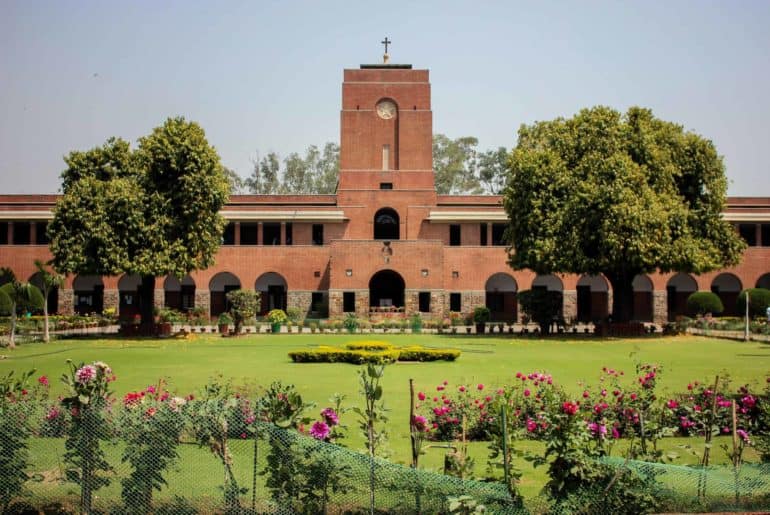
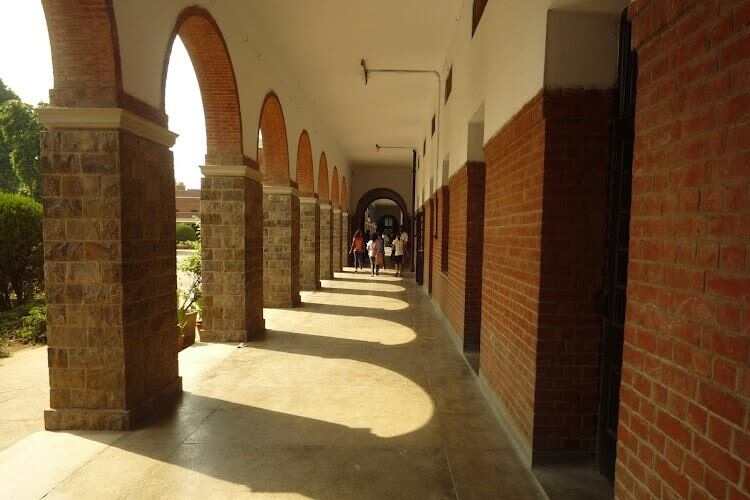
As a new semester began, a fresh batch of students, full of energy and excitement, toured the campus that would be their home for the next four years. They look out the creamy white corridors of my college at the high ceiling classrooms and lush green lawns. They are witnessing their seniors’ soft, welcoming smiles and the worried expressions on the faces of their classmates.

I can still feel the overwhelming emotions, anxiety, and excitement that coming in as a fresher brought about. Even while you may be eager for the future as a freshmen, there is a hidden despair. That could be the sadness of leaving your home or the stress of not knowing what lies ahead.

I’ve been in your shoes, so I understand this struggle to choose between happiness and confusion. So, before I take the role of a senior who advises juniors on these life’s curiosities, let me give you a warm hug and assure you that what you are feeling is valid. Feeling overwhelmed and exhausted is reasonable given the obstacles we had to overcome on the way.

The recent batches have faced some uncommon difficulties, including fighting the pandemic and learning online away from the comfort of a school and its warm memories. None of the previous batches had ever gone through this. In a same manner, my class of 2022 was juggling double exams and online classes. As our teachers struggled with these new adjustments, I recall how my other peers and I felt utterly unprepared to handle them. We all worked to achieve the best grades in the face of huge competition to get into this prestigious 100-year-old university.

The atmosphere around us, which is preoccupied with the idea of an ideal education and career, compels us to think about whether the suffering we are presently going through is worthy. However, the introduction of CUET was what really put our determination to the test.

Its sudden advent changed this belief system of getting good grades in the 12th system. We had no experience with competitive tests, in contrast to our peers in the Science and Math fields who had been preparing for their entrance tests for the previous two years. In our field, we are the first two batches to face this new task, which made us more anxious due to the limited resources and lack of experience from our teachers and seniors. Life taught us patience in the midst of this uncertainty and confusion.

As I followed this year’s exam as well, it felt like déjà vu to see the same things happening again, this time with juniors. The social media overloading students with information, while coaching offered a wide range of courses. The rank predictors were constantly evaluating grades and worth, and NTA’s websites crashed frequently, adding to our anxiety.

This time, I was delighted and grateful that I could help my juniors with this procedure, but at the same time, I was thinking immediately of the conversations I had with my seniors and how they told me that this system was completely foreign to them. They exclaimed, “Thank God! This didn’t occur with our batch” it matched with my exclamations of “Why our batch?” Our paths and experiences just diverged so much within a year that they were no longer related. Despite their best efforts to assist us, we were aware that we needed to prepare for the difficulties ahead. This year, a special senior-junior relationship was developing as we introduced our juniors to the idea of preference lists, informed them of the realities of college, and provided them with advice on how to ace the entrance exam.

As a new batch embarks on a new journey, I understand the plethora of emotions and doubts you are confronted with.  Believe me when I say that your Batch 2022 seniors are the best people to talk to about this. I can relate to you even more when you ask naïve questions and show your apprehension because I did the same things just a few months ago. What I can tell you is that you must allow yourself to experience each of these emotions and allow the reality to sink in. Yet don’t sit around lamenting about these issues. This is the stage when anything is possible if you just take more risks and learn from your mistakes.

I also want you to know that taking competitive tests will teach you a lot of things, but the most essential lesson is learning to believe in yourself despite the little voice in your head that tells you differently.

Please remember that you can’t plan everything. It’s okay to take a step back, choose the second-best option, or modify your plans if that’s what you want to do. I want you to remember that not everyone gets into the colleges of their dreams, and that worrying about it is futile. Some of us will also be accepted to our preferred colleges, which may be disappointing if your expectations and the reality fail to match.

It can take you months to adjust to the new circumstances, and you don’t have to necessarily love all of it. What you can do is just identify things that make you happy and make good use of the resources you have.

You should also be aware that your interactions with your classmates and teachers won’t be determined by your CUET score or percentage of the 12th board. People will evaluate you and determine whether they want to be your friends based on who you are and how you treat them, regardless of how well you performed. Be honest to yourself and your goals.

And every time you think you can’t manage something or that it’s too much, go to the classrooms on the floor above you. There will be a group of students, your seniors from Batch 2022, who can identify with your problems and hear about your experiences. They will guide you and assist you as you go. By taking a look at them, you’ll be able to see how they overcame these obstacles and how you can too. They will admire your courage and patience. Then, perhaps, a senior CUET student and a fresher CUET student will walk to the canteen and talk over hot momos and coke.

Perhaps maintaining the warmth between senior and junior relationships is something that CUET couldn’t change.

And if you ever get in touch with me, I’ll give you the same advice my senior gave me: “Time flies fast; instead of overthinking, enjoy your life as a fresher; it is temporary.”

I’m hoping you’ll stick to it.

With love,

Your senior

CUET Batch 2022


Read Also :  https://dubeat.com/2019/07/28/dear-freshers-welcome-to-the-real-world/

Image Credits : New Indian Express

-Priya Agrawal

According to the official schedule, registration for Spot Round began on 29 August at 5 pm via the Common Seat Allocation System (CSAS) Portal under the ongoing admission process for Delhi University.

Delhi University administration started the registration for Spot Round of undergraduate admissions. Students can register on the admissions website, admission.uod.ac.in.

In the spot admissions round 1, declaration of allocations was done on 1st September (5 pm), and candidates will have time till September 3, 4.59 pm to accept the allocated seats.

Following that colleges will have time from September 2 (10 am) till 4.59 pm September 4, to verify and approve online applications. Last date for online payment of admission fees is scheduled for September 5, 4.59 pm.

The steps for application process include first visiting the official website, admission.uod.ac.in. Then by clicking on the UG admission 2023 link, the page will be redirected. The next step is to fill in all the requirements, incorporating all personal details and educational qualifications. Next review the application and pay the application fee. Finally, submit the application and download the application for future use.

“In its first round, a total of 202416 eligible candidates were considered for allocation based on their preferences of programme and college combinations. A total of 85853 allocations have been done in the First CSAS round itself. This includes an allocation to all programmes in all colleges in UR, SC, ST, OBC(NCL), EWS and two supernumerary quotas, PwBD and Kashmiri Migrants. As many as 7042 candidates got their first preference. About 22000 candidates have been allocated a seat from their first five preferences.” -ANI Report

During the first round seat allotment round, over 3,04,699 students registered the CSAS 2023 portal, among those, 2,45,235 students submitted their CSAS DU 2023 application form and 59,464 didn’t submit their application forms.

Image Source: Business Today

Read Also: DU Witnesses 87% Seats being Secured in the First Round of UG Admissions

Aanya Mehta

[email protected]


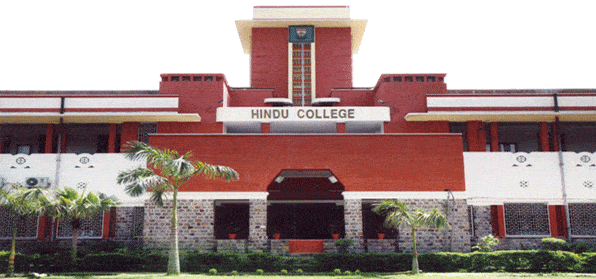
Did you know that the University of Delhi offers a Student Exchange Program? DU Beat recently got in touch with Dominik, an exchange program student from Austria who’s currently enrolled in Hindu College, University of Delhi. Read on to find out all about this program from a candid conversation with Dominik and his journey so far.

Applying to Attend Delhi University

A history student from the University of Vienna, Dominik is currently enrolled in Hindu College as an exchange program student. Talking about his experiences while applying for the program, he says, 

“It was a long process. It took me six months to get everything through. It could have taken even longer if I hadn’t begun on time.”Dominik

The University of Delhi is in a partnership with the University of Vienna under which students and professors from the two universities are given the opportunity of an exchange program, post a rigorous selection process. In stark contrast with Delhi University’s generally ignorant and secretive nature surrounding the student exchange program, Dominik talks about his home university’s efforts in helping him contact a previously unresponsive DU.

“Getting in touch with the University was the hardest part. My home university professors would constantly email on behalf of me and helped me get in touch with Delhi University. This followed extensive research on available courses and colleges.” Dominik

A mandatory prerequisite for the program is a language proficiency test. For Dominik, he was required to submit his English language proficiency test scores. The next crucial stage involves several rounds of interview sessions with professors and exchange program officers, who evaluate the student’s overall suitability for the program. The important documents which are essential to be kept handy are a motivation letter, CV, cover letter and academic transcripts. 

“It’s so hard to get anything done, get a signature or a stamp. They send you back and ask you to come back later, and there’s no actual reason for it.” Dominik

University Culture

The conversation further delved into life at university and the cultural aspects of it. Dominik shares,

“One thing that’s great about the university culture here is that you are really close to your professors. They know your name, they really help you out, you have their phone number. This is something which is unimaginable in Austria.”  Dominik

He further emphasised on the attendance system in Austrian universities, saying, 

“One thing that’s really different in Austria is that we don’t have an attendance policy, you have a choice whether to attend classes, so there’s a lot of freedom and time to pursue other things that way.” Dominik

Academic Contrasts

The selection of your course is a crucial step involved and conducting extensive background research before applying is a good idea. Dominik shares his personal experience of going through hundreds of answers posted on websites which eventually helped him make the choices. Availability of a certain course or paper also plays an important role, since unlike Austrian universities, Delhi University has a pre-structured curriculum. Discussing academics, Dominik adds,

“In Austria, you can choose amongst various different courses and you have the option to decide which course to study in which semester. In the framework of sixteen credits, you can build your own course so to say and try out what suits you best.”  – Dominik

Speaking of his experience of studying history in Delhi University, he comments,

“You can learn about colonial history from the victim’s side, and not from the oppressor’s side. You can feel the emotions still attached to this history, so it’s really interesting to learn from this perspective, and break free from the Eurocentric point of view of history.” – Dominik

Words of Advice

“Don’t give up. It’s a long process but it’s so worth it. There’ll be bureaucratic hurdles; all this hard work and problems will be forgotten and you’ll only have nice memories then.” – Dominik

Feature Image Credits: DU Beat

Sigy Ghosh

[email protected]

Read Also: DUSU Establishes DU’s First Foreign Students’ Cell

In their recent memorandum to the Executive Council, Akhil Bharatiya Vidyarthi Parishad (ABVP) put forth a demand for the increment of 10% seats in all courses. Wandering over the possibilities, if they are feasible on the ground or is this just a demand to be said on paper?

In a memorandum asking for the reopening of campus, Akhil Bhartiya Vidyarthi Parishad (ABVP) included a demand to increase seats for all courses by 10%. With more and more students applying at the university every year, such a demand might look like a problem solver. But this ajooba can’t be done just like that (finger snapping). We wondered if this could really be possible, and there are various odds standing in the way of the expansion of DU.  

Year after year, the cut-offs of the University of Delhi have been soaring high. This year as well 4,38,696 students have applied for the Undergraduate courses. Last year, in 2020 this number stood at 3,53,919. In the wake of a 20% increase in applicants, this year and a significant rise in this number each year might make this prospect appear wonderful. But after taking a closer look at the plethora of problems that the University has hurled upon itself it might appear as a not-so-wonderful idea. 

As we know since last year, some colleges of the University have been struggling with a financial crisis. Lack of funds, non-payment of salaries, and problems faced by Ad-hoc teachers form the avalanche of problems that colleges have been facing lately. The introduction of new seats would put more pressure on the existing funds and infrastructure. This increment would also mean a change in the faculty and student ratio. According to a report in July, out of 1076 sanctioned posts, 846 teaching posts were lying vacant.

After the introduction of the EWS quota back in 2019, the varsity had various seats lying vacant in the category. Even in 2020, the EWS category had more vacant seats than in 2019. As reported by the Times of India, despite special drives and several cut-offs about 5.6% of seats of the EWS quota were still vacant. When DU hasn’t been able to work its way around an increment of seats within a quota, how will it be feasible for the entire university? Shouldn’t our first focus of attention be on filling all the seats in the existing seat count? About 1.5% of seats were left vacant under the OBC quota in 2020, 0.6% were vacant seats under the SC quota and even the ST seats saw the most vacancy in the year 2020.  

Already under the plethora of problems, our beloved Delhi University has also implemented the New Education Policy starting from the year 2022. No talks around extra funds for the same have begun and teacher’s resistance against it continues. Under the Four Year Undergraduate Programme (FYUP), students will have the choice of studying at the university for the fourth year as well, irrespective of what number of students who opt for it, it will lay force on the existing resources. The varsity will have to be prepared to host students for one more year. 

Professor Abha Habib, the Treasurer of DUTA said in a conversation with DU Beat, 

“It is an insignificant demand, a long and due process is followed after sanctions from various committees and UGC. Instead of putting more load on the same University, more attention should be laid on state universities. Why should students be forced to move out of their states for education, premier institutes should be established within states or the existing ones should be improved. There is no scope for expansion in various colleges.” 

Outstation students have to spend a lot on travel and stay for being in Delhi University. Costly PGs and barely cooked food are complementaries to the problems of staying outside your city or state. To understand such a plight DU Beat talked to a parent, Monika Sethi, mother of Ananya Sethi who is a second-year student. 

“ Kids from tier-1 cities get to study in their own state but people from Uttar Pradesh and other states have to send their kids outside because of the dearth of opportunities here. The situation then becomes like there are two households to be taken care of including all the travel costs.” 

Just to accommodate the growing number of students, the existing quality of education (which in itself consists of loads of unsolved problems) can’t be compromised. A lot of questions will have to be answered and a lot more issues to be resolved before the University can even think about the increment of seats. 

Read Also: Why should DU increase its number of seats?

Feature Image Source: Times Of India 

Kashish Shivani

[email protected]

In the list of the things cancelled due to the novel Coronavirus, joining the merit-based form for Delhi University, up next is the Delhi University Entrance Test (DUET 2020).

The National Testing Agency (NTA) has postponed the registrations for DUET 2020 at a time when some of the to-be first-year students are still left with board exams amidst the Coronavirus nationwide lock down. The NTA has been known to conduct various national level entrance exams like Joint Entrance Examinations (Mains), Jawaharlal Nehru University Entrance Exam, etc. DUET used to be conducted internally by the varsity, until last year when the onus was given to NTA.

NTA brought along itself a lot of relief for the aspirants in terms of facilities and ease of conduct of the exams. Some of the popular courses for which this exam is conducted are B.A(Hons.) Humanities and Social Sciences, B.A (Hons) Multimedia and Mass Communication, B.Tech, M.Phil and Ph.D courses. The varsity had promised more student-friendly measures such as a single form admission process; details of which would be more clear once the lock down is lifted and the schedule for the year 2020-21 is announced.

This year, the registration process was supposed to begin from 2nd April 2020 and the exams were to be conducted from 2nd to 9th June 2020. Since the varsity is closed till 14 April as of now, a Press Release on 3rd April 2020 announced the registration to be “postponed till further notice” as well.

Image Credits: Official website, Delhi University

Jahnvi Mishra, an aspiring DU student, said “I am stressed about the admission season but I am much more worried about the last board exam I have left”

With everything being postponed right now, whether it be the board exams or the entrance exam schedules all across the globe, it would be interesting to note the steps that the varsity takes in the coming few months to cause minimal loss to the current students as well as the to-be first year students in the university.

Feature Image Credits: Saubhagya Saxena for DU Beat

Akshat Arora

[email protected]

With a thought of advancement on the previous admission methodology, Delhi University (DU) plans to make the entire admission process for the academic session 2020-2021 online. The pre-admission processes and the portal are likely to start from first week of April.

Earlier for the academic batch 2019-2020 only the form filling, course selection, fee submission, and the availability of the University admission form were online. But, after the declaration of the cut-offs the students had to go to their chosen colleges for document submission, stand in long queues and fill several forms to get admitted. However, this time DU plans to omit all the unnecessary trouble by making the entire process tech friendly and online.

An Admission Committee headed by Rajiv Gupta, Chairman, Dean Student’s Welfare (DSW), and 15 other members has been created. Besides this, this time a separate ‘Dean of Admissions’ headed by Shobha Bagai has also been set up by the University.

Regarding the process, a DU official said to The Indian Express that“The process will provide relief to both students and teachers students come from various parts of the country and abroad, parents and students face a lot of issues during admissions. Thus, making admissions online, the students will be able to take admissions without running from pillar to post,”  The idea regarding the same was proposed in a recent meeting of the admissions committee.

The official further told that after the declaration of the cut-offs students will be required to select a college, submit scanned copies of their documents pay an online fees, after which they will be provided with a month to visit the college for getting their documents verified. Although the same official also informed that the the proposal will be submitted and presented in the Academic Council meeting for further suggestions and only after that its implementation can be confirmed.

Feature Image Credits : Saubhagya Saxena for DU Beat

Kriti Gupta

[email protected]

In response to the petition filed by the professors of St. Stephens College, opposing the inclusion of a member from the Church of North India (CNI) in the admission process of Christian students, the Delhi High Court has sought response from the Varsity.

The Delhi High Court, on Tuesday, 24th September, requested a response from the Delhi University (DU) and St. Stephen’s College on a plea opposing the inclusion of a members from the Institute’s Supreme Council in the interview panel for admission of Christian students.

The Delhi High Court sent a notice to St. Stephen’s College following a plea by three faculty members challenging the decision of the College to have an additional member, from its Supreme Council, in the interview panel for admissions of students.

The decision was challenged in the High Court by the members of the Governing Body of the college- Nandita Narain, Associate Professor from Department of Mathematics, N.P. Ashley, Assistant Professor from the Department of English, and Abhishek Singh, Assistant Professor from the Department of Economics, for allegedly going against the Constitution of the College.

A bench of Chief Justice DN Patel and Justice C. Hari Shankar has issued a notice to the DU, the College, its Supreme Council, its Principal, and the University Grants Commission (UGC) seeking their stand by 16th October on the petition by three professors of the institute.

The petition filed by the Governing Body opposed the increased involvement of the CNI in the admission process by including a member of the Supreme Council in the interview panel. The Supreme Council includes six members from the Governing Body of the CNI. The Chairperson of both the Governing Body and the Supreme Council is the Bishop of Delhi, Bishop  Warris K. Massih,  and the Member Secretary of both is the Principal of the college, Professor John Varghese.

According to the petitioners this decision is in direct violation of the Clause 4 and 5 of the Constitution of the College, which reads

  1. The Supreme Council of the college shall have the control of the religious and moral instruction of students of the college and of all matters affecting its religious character as a Christian College of the Church of North India; and, in addition, shall appoint, after proper advertisement, the Principal of the College who shall be a member of the Church of North India or of a church that is in communion with the Church of North India.”
  2. The Supreme Council of the college shall have no jurisdiction over the administration of the college.”

The response by the University, St. Stephens College, Supreme Council, and the UGC is awaited, which would be clear only by 16th October.

Feature Image Credits: Surbhit Rastogi for DU Beat

SriyaRane

[email protected]

The aspirants at were taken aback by the mismanagement, which led to several parents and students waiting till midnight to get their admission done. 

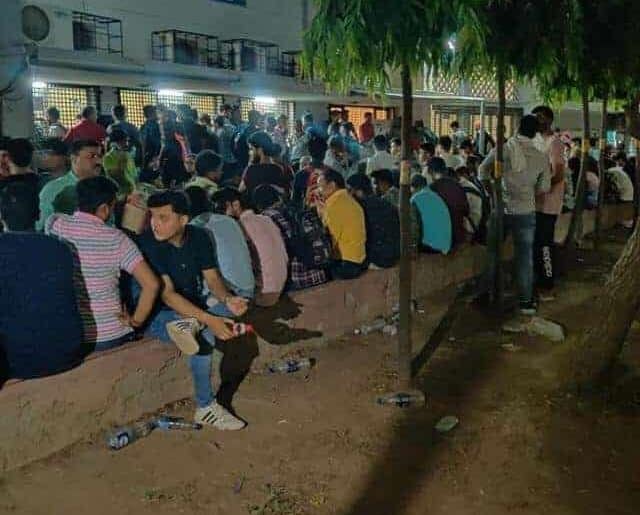
On 1st July 2019, the second day of admissions for the first cut-off list saw over-crowding and unprofessionalism by the authorities which led to a number of students suffer till midnight. 

A source who had gone to get admission in B.A. (Programme) during the first cut-off list revealed that there was only one counter for all the courses which caused the ruckus.  He said “They collected applications from all the students and then announced their names for eligibility. It took nearly four hours to get the eligibility slip.” According to him, many parents waited till midnight and even beyond that to complete the admission process. 

Another applicant’s sister who accompanied him for admission to Shaheed Bhagat Singh College (Evening) also stated that there was major inconsistency in administrations during admissions. She revealed that she had to go there twice to complete the process, first on 30th June and then on 1st July. She said, “There was no systematic process for admissions, no proper counters or queues which created immense chaos. The students from National Cadet Corps of the college were on duty and worked diligently but I couldn’t see any teacher-in-charge supervising them or helping them resolve the chaos.” 

We contacted Mr. Sunil Kumar, Secretary, Staff Council at Shaheed Bhagat Singh College Evening who himself stayed till 11 a.m. in the College to get the admissions done. He touted over admissions as a cause for this prolongation. He revealed that despite having a capacity of 814 seats, the college has taken in 1013 admissions, wherein even now, the admissions are open for courses like B.Com (Programme), B.Com (Hons.) and some combinations of B.A. Programme. While in other colleges, a combination of Commerce and Economics in B.A Programme has 15 seats ideally, the college has admitted around 100 students. He added  “Unlike other colleges l, we did not close the admissions at 6 p.m. We cooperated and admitted all the students who were eligible. My non-teaching staff stayed back till 4 a.m. in the morning to complete procedures for everyone who had come.” He also stated that around 8 p.m. the administration announced that parents can submit their documents and leave, the authorities would complete formalities and give them their fee slips in the morning the next day, but there were many who had come from different cities and wanted to take slips with them, so they stayed in the campus grounds till late.

He also added that there was no mismanagement per se, it just took a lot of time because of the intake of students. He stated  “We have admitted 106 students against the EWS quota which only has 37 seats, 438 against Unreserved category which had 373 seats, 308 admissions were done against 219 seats from the OBC quota and 141 against 121 for ST seats. We didn’t deny admission to any student who was eligible and hence, it took a lot of time”

Feature Image Credits: Anonymous 

Sakshi Arora

[email protected] 

The Delhi High Court says that rule may be reconsidered if petitioner succeeds in petition.

The Delhi High Court has issued a notice with respect to a matter presented to it on 26th June 2019 regarding a plea challenging the rule mandating deduction of 2.5% from the total percentage of a candidate in best four subjects in case of change of stream while securing admission in the University of Delhi (DU).

The rule mentioned in section 2.2 of the Undergraduate Bulletin of Information 2019-20 states that if a student is changing streams and aspiring for admission to the University in a subject that they did not study at the senior secondary level, a deduction of 2.5% from their Best of Four percentage would be considered as their score for making it to the cut-offs; a notion that puts many students at a disadvantage keeping in view the high scores required to secure a seat in the University.

Petitioner Muskan Aggarwal, a student from the science stream, has achieved a score of 96% in the class 12th CBSE Board Examinations and wants to pursue B.A. (Hons.) Political Science from DU.

It is her case that the rule mandating deduction in the percentage of marks in case of a change in the stream is “arbitrary, discriminatory and baseless”. She cites the rationale to support her argument that if a student is scoring well then they should have the opportunity to study any subject of their choice. The Court had directed the University to file a response to the plea within a week’s time.

The University maintains that this rule has been clarified in the earlier ruling of the High Court with respect to admissions criteria for this academic year (W.P. C No.6751/2019 passed on June 14th. 2019). Keeping in view the petitioner’s vehement dispute regarding this claim, the Vacation Bench of Honorable Justice Jyoti Singh has issued the notice regarding further hearing of this matter on 5th July 2019 before the Regular Bench of the High Court.

The High Court has also clarified that the petitioner, if successful in her petition, would be granted admission as per her final marks and corresponding ranking in the merit list.

Feature Image Credits: New Indian Express

Bhavya Pandey

[email protected]

With early registration, de-linking of sports and ECA admissions, reduction in slack for stream change, and usage of CBSE’s database for mark sheet, the aspiring DU students could look forward to a much-simplified experience.

Delhi University (DU) will open the admission portal for the academic year 2019-20 on 15th April, which is much earlier than what was normative in previous years, when it started in the month of May. The registrations will close on May 7, giving the students a shorter duration for filling in their forms, thereby, perhaps limiting the number of applications.
In another novel step, the portal will be reopened on 20th May for students to update their marks and course, and make amends in case of any mistakes. This had been a long-standing demand of students, and previously too, the university had received many grievances about the same.
Rajeev Gupta, who is the chairman of the admission committee, and also the dean of students’ welfare, made public the schedule on Friday.
Besides, the varsity will also restrict the number of times applicants can change courses or colleges during the process of admissions. That number is not known at the moment, but there will be updates on the same soon. Allegedly, it was the principals throughout DU who suggested these changes for undergraduate admissions.
Earlier, on changing their stream, the students faced a five per cent deduction in their best-of-four. The university has now reduced it to only two per cent, making it much easier for students to get enrolled in the course of their choice.
Another much talked-about topic when it comes to admissions in DU is the Sports and Extra Curricular Activity (ECA) quotas. Here, the students who have sufficient skill and certificates for the same, give trials and are ranked accordingly to secure admissions in colleges. Up till now, these trials were a part of the main admission procedure and were linked to cut-offs to some extent, if not completely. Now, the admissions for Sports and ECA will be held separately and will be de-linked to the main procedure completely. The admissions to candidates under this section will begin on 20th May.
All the affiliated colleges, barring St. Stephen’s College and Jesus and Mary College have the combined admission process.
Another thing that DU is trying to do differently is to contact CBSE to use their database, so the colleges could get the students’ mark sheet directly, which would result in ending the practice of submitting the many certificates, and also any chance of forfeited documents.
Colleges will be required to include representatives from various categories such as SC, ST, OBC, EWS, northeast, in their grievance committees, the varsity said. With DU implementing the EWS quota, more seats are expected to be added this year.
With so many things to look at, DU Beat suggests all aspiring students to continually keep track of the changes that are being made, and update their documents accordingly. DU’s official website along with other media houses must be visited regularly for early information and updates. While filing the online admission form, double or triple checking all information will ensure that students don’t have to worry about correcting the information later. Gap year students must have an affidavit and a fresh character certificate ready. ECA and sports category aspirants must also keep checking their schedules and venues of trials.
Rest assured, it can be said that the admission process this year will be much smoother.
Maumil Mehraj
[email protected]

Feature Image Credits: Niharika Dabral for DU Beat.