Author

DU Beat

Browsing

Cracking the UPSC examinations is the real deal for hundreds of students. Who wouldn’t want to have a job that is secure, prestigious and gives you ample power. But at what cost does it come?

The Indian Administrative Services is considered to be one of the most prestigious career options in our country. The Union Public Service Commission (UPSC) is India’s central recruiting agency responsible for all the appointments to the All India Services. Students crave to crack the UPSC examinations and make it through, in order to become an elite jobholder of the government sector. Regardless of the rigorous studying and piling pressure, students give their all just to make it among the few hundreds who successfully crack the examinations. Apart from job security, who wouldn’t want to have all the power and authority of regulating the daily affairs of the government, along with the many incentives? But wait, it isn’t exactly a smooth-sailing as it seems.

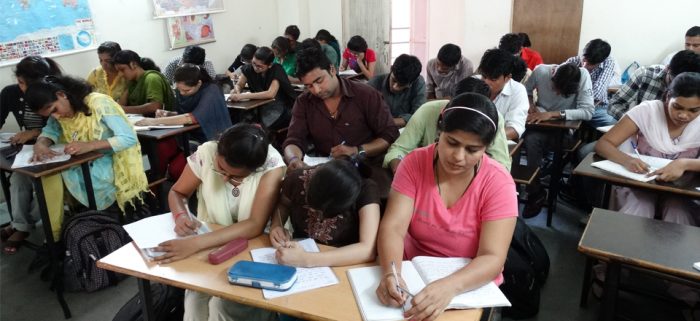
India is home to quality education and has produced excellent professionals in various fields. And when it comes to competitive environments, UPSC exams are no different. As of 2016, around 11.37 lakh students applied for the IAS prelims test. More than 500,000 students appeared for the examinations, out of which, only 15,445 managed to make it through to the Mains. These numbers speak tell us what the scenario is. But is it, in fact, okay that so many students give these examinations though only a few hundred get to successfully complete it? It is argued in favour of for being a lucrative career, thus being worth all the effort. But 11 lakh students getting through annually, and the famous coaching institutes charging huge fees to rope in as many students as they can, is a bleak scenario. The students need to be present in these institutes an hour before their coaching time so that they get the front seat. A single batch of students consists of more than 300 students, at the very least.

Is it truly fine that thousands of students queue up every day in front of these institutes, study rigorously for hours, and get back home to complete assignments and keep up to date with the current affairs? All these things take time and manpower. Just imagine how mentally and physically draining it is for the students. Is any career option above one’s health?

Health is neglected and hardly considered to be an important factor nowadays. No matter what people say, it is evident in the way they are rushing into the best institutes and exhausting themselves, day in day out, trying to crack these examinations.

It is concerning that the way these preparations take place and the number of students who are a part of this process is seriously going out of proportion. Parental pressure may be one reason why so many students are preparing for these. Any parent would want their child’s future to be secure, and what better than a prestigious government job. Another reason may be the lack of scope in vocational fields in India. Career options relating to fields other than Management and Science are hardly considered, and even if they are, to reach the level where one’s future can be secure seems difficult, acting as a demoralizing factor. And if none of these reasons play a part, the lack of courage among students to pursue something else in such a compact environment restricts them from even considering any other option.

We might need to reconsider our choices and look into other options. Not everyone is capable of everything. Everyone has their strengths and weaknesses, and maybe, one should prepare accordingly. If nothing else, it can help minimize a lot of chaos.

Yes, a government job is secure. Yes, there are endless benefits of a government job. Yes, the power associated with such jobs is incomparable. Yes, the prestige one achieves with such jobs cannot be questioned. But at what cost?


Image credits: gatessciascoachingdelhi.in

Karan Singhania

[email protected]

In a tragic turn of events, a 19 year old student from University of Delhi allegedly committed suicide by hanging himself in North Delhi’s Burari, as the police said on Wednesday.

The student, Hijam Bharat Singh, a second year student of Satyawati College hailing from Manipur, was found hanging in his flat by two of his relatives on Tuesday.

DCP Jatin Narwal said the deceased was staying with two of his relatives Rohin and Gautam, at a rented accommodation in Sant Nagar. He allegedly hanged himself, when they were out, leaving behind no suicide note at the spot.

“The incident came to light when they returned to their flat around 9.30 pm and Singh did not open the door. They peeped in through a window and saw his body hanging from a ceiling fan,” an officer told the Indian Express.

“The crime forensic team of north district was also called to lift fingerprints from the spot. The body has been preserved at the mortuary for the post-mortem and police have initiated an inquest proceeding into the matter under Section 174 of CrPC,” the officer added in his quote to the Indian Express.

Police said they are scanning his cellphone to ascertain the reason for the alleged suicide.

Feature image credits – Old Disgruntled Bastard

Ankita Dhar Karmakar

[email protected]

It is that time of the year again, when the university is buzzing with the sounds of busy corridors, humming in novel undertones of bewilderment and slight fear.

Yes, you heard it right! The various societies of the university are holding their auditions in the coming weeks and that is precisely why you see so many flyers in and around the college premises, some resolutely pinned to bulletin boards, while some stuck on walls, witnessing enthusiasts, all too often, lately.

For freshmen, standing on the threshold of the seemingly crucial years of their life, intimidated by the arduousness of the ensuing academic pursuits, a society plays a very convincing dual role. A college society gives its members the kind of exposure that most of them have not been witnesses to, far earlier in their life, which paves way for their holistic development and also acts as a much needed value addition to their CVs. They usually follow professional calendars and a precise modus operandi, which leaves close to no room for speculation about the seriousness with which a society is run. The extensive work that goes into the making of each society, cultural or non-cultural, is abundant which makes it a reputable platform, nonetheless but also one which is incredibly demanding in terms of both time and energy.

As the new academic session has only just begun, the freshers are brimming with excitement, almost to the extent that their enthusiasm is palpable even from quite a distance. The societies are more worked up than usual, trying to score a balance between managing the new finances for the current session coupled with the registrations and auditions for the recruitment of new members.

As simple and exhilarating as it may sound, the auditions are a tedious task, especially so for cultural societies. Starting with the registrations, it maneuvers its way through the long-drawn out audition cycle, which usually lasts a couple of days. The atmosphere, although thick with exhaustion is also very lively, the latter superseding the former on most days.  

The sight of young, impressionable first years standing in long lines, waiting for their turn, desperately imagining different scenarios in their head, gives way to more than one school of thought. The first being the rapid rate at which the societies of The University of Delhi are gaining traction and the second being their willing acceptance of an amalgamation of both, academics and extracurricular activities in their all-round grooming.

The precise reason for a fresher wanting to join a society cannot be very accurately traced, but going by the latest statistics, it can be deduced that participation in the same has only seen an upward trend. It can be due to the increasingly dynamic work profiles which requires a person to have a very diverse Curriculum Vitae (CV) or because of the growing acceptance of heterodox ideas amongst the youth, which usually do not conform to the mainstream career choices.  

We happen to live in a time and age where the competition is relentless and the competitors, barbarous, all in the name of a secure life. Now, a secure life is not necessarily granted by a stable workplace but it does, in some probability, affect it positively. The big IT companies, the flourishing online retail stores or even the very renowned publishing houses for that matter, take into consideration the diversity of arenas that a potential recruit has gotten himself/herself into.

A college society not only instills in its members, a sense of professionalism but also provides them with a platform to express their views and ideas openly. It helps them build relationships both, social and contractual, making way for healthy interactions through consensus and dissent.

The very many intricacies that surface when looking closely at the working of a society are complex and intimidating too, sometimes, but as is very rightly said, with great power, comes great responsibility. The pain and effort that has gone into the establishment of these associations is undeniably worth everything that it demands of its members because it is usually easier to create a legacy, but far more difficult to maintain one.

As Freshers, just out of the cocooned and sheltered environment of schools, it can be a conflicting thought but whatever be the argument after duly weighing the pros and cons, there is a sound ground on which people usually base their judgments about whether or not join a college society; and whatever maybe the choice, the aim should always be prosperity.


Feature Image Credits: DU Beat

Lakshita Arora

[email protected]

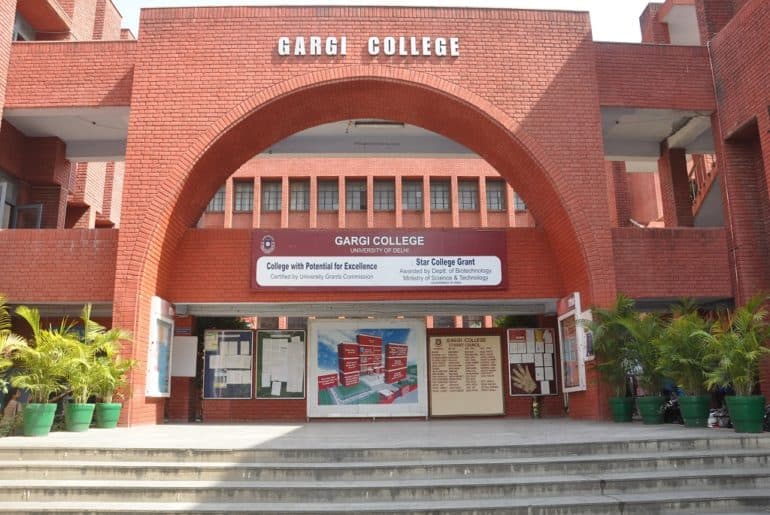
Earlier this week, Gargi College witnessed the inauguration of two new washrooms in its vicinity, in association with Sulabh International, Social Service Foundation, the largest not for profit organisation in India. The guest of honour for the same was, Dr Bindeshwar Pathak, founder of Sulabh International.

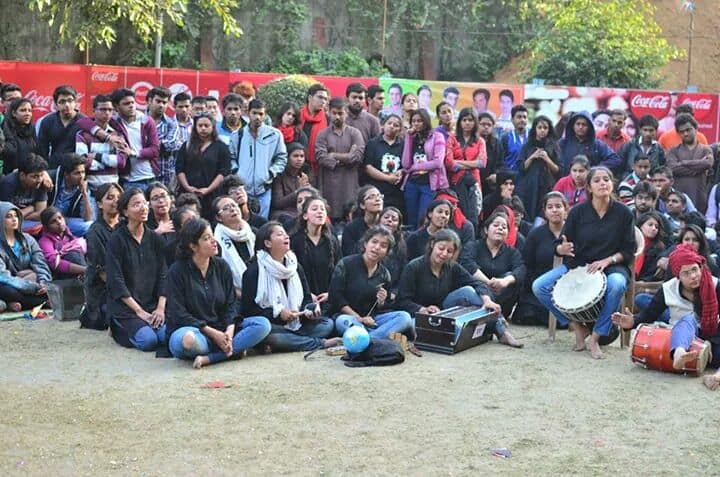
The event was marked by the inauguration of a toilet complex. The toilets have been constructed in the style of recycled rail compartments, a construction style unique to only Sulabh. The inaugural ceremony was organised on August 2nd, 2017. The itinerary for the day included a performance by Kshitij, The Street Play Society of Gargi College. Their narrative focused on the deplorable state of hygiene in our country, especially so in the rural areas and how an initiative like Sulabh, can help overcome this with collective efforts of the masses. The protagonist of their story, Ramu, is an ordinary man with an extraordinary vision for a cleaner India, who works tirelessly towards the realisation of his dream by helping build toilets. Mr Pathak found himself immensely pleased by their performance and said that he could relate to the character of Ramu very well.

This was followed by a felicitation ceremony where The Principal, Mrs Promila Kumar welcomed Mr Bindeshwar Pathak and felicitated him with a bouquet of flowers. Mr Pathak spoke about his campaign at length and cited personal experiences from his life, drawing on which he had resolved to take action. He established Sulabh International Social Service Organisation in 1970. It is an amalgamation of technical innovation and humanitarian principles and works primarily for the betterment of the society by promoting human rights, environmental sanitation, waste management, non-conventional sources of energy and social makeover through literacy. He has been a recipient of The Padma Bhushan from the Government of India and has also been enlisted to the Global 500 Roll of Honour.

The day came to a very fitting end with the ribbon cutting ceremony and the plantation of a Rudraksha Tree in the sports ground. Mr Pathak was awarded a token of appreciation and the event concluded with a vote of thanks.

Image Credits: www.gargicollege.du.ac.in

Lakshita Arora

[email protected]

The University of Delhi declared the release of its 10th Cut Off list. This list is especially for the students of the general category since some colleges still have vacant seats for the general category.  The list comes in the wake of the creation of vacancies in several colleges for the general category seats.

The University of Delhi has 56000 seats in 61 colleges. This year the university aimed at filling all the seats meant for the reserved categories. Having done so, the University now opens its door for the general category students. Earlier the University organised a special drive which aimed to fill up the seats in various colleges for the reserved categories. This was to fill up the seats meant for Scheduled Castes, Scheduled Tribes, Other Backward Castes, People with Disabilities, Children of War Widows, Kashmiri Migrants as well as those under sports and extra-curricular activities quota.

While speaking to The Indian Express Gurpreet Singh Tuteja, the Deputy Dean, Students’ Welfare, and a member of the admissions committee told, “This list will be for colleges which have seats vacant in a few courses. The eighth and ninth list was part of a special drive for those in reserved categories. Hence, we are keeping the 10th list for general candidates.”

According to the report by the Indian Express, this will be the last cut off list for this season, the admissions will be closed after this.


Image credits: www.du.ac.in

Trishala Dutta

[email protected]

“Great things are brought about and burdens are lightened through the efforts of many hands anxiously engaged in a good cause.”

If you believe in it and are ready to act, then this is the time!

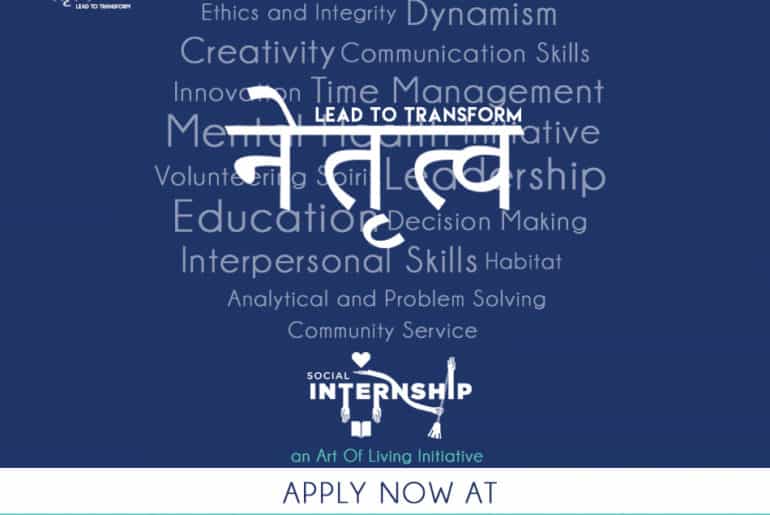
Applications are now open for ‘Netritva – Lead to Transform’ (Apply now at www.netritva.in) , a certified social Internship Program, initiated by the Art of Living.

The Art of Living is an educational and humanitarian movement engaged in stress management and service initiatives. The organization operates globally in 155 countries and has touched the lives of over 370 million people.

This program provides current college students and recent graduates the opportunity to gain practical work experience and emerge as leaders, inspire people and make a difference along with their regular college/work life.  Interns will gain valuable on-the-job experience while contributing back to the society under various pillars of the internship, being: educating the underprivileged, organizing free health camps across the city, spreading awareness about mental health and hygiene, cleaning, beautifying and transforming key locations in the capital, conducting tree plantation and eco drives. Leverage it to immerse yourself in diverse social projects of high impact, to use out of the box ideas, creativity and best of skills to solve real time problems of high importance. Spread over 17-20 weeks, interns will be constantly guided by the mentors to bring out the best in them.

They will also be exposed to a broader perspective through field trips, information sessions, and panel discussions. As a part of the program the interns will take on to do something huge, they will put together best of their organizing skills and managerial skills to host a youth leadership forum, which will get together highly renowned dignitaries including Parliamentarians, Bureaucrats, Entrepreneurs etc. on panel and about thousand distinguished delegates from premier institutes across India. It will be a space to celebrate unique ideas, life changing experiences and heart melting creativity.

If you think you have it in you, and want to live your dream of being a catalyst for social change, then here is your chance!

For queries contact : [email protected] or call on 7838505407

The University of Delhi is all set to direct colleges to fill up seats in the general category. Instructions for the same are expected to be given to colleges on or before the 7th of August.

This move comes just days after the University conducted its special admissions drive for reserved category students who had not previously enrolled themselves in any DU college. An 8th cut-off list was released on 2nd August for this purpose.

In conversation with TOI, Vijay Kumar Verma, the admissions in-charge at Dyal Singh College, said, “We still have a few seats in the general category. If we get directions to start admissions for general category, we will have a 0.5% reduction in cut-offs.”

Since colleges cannot deny admission to anyone who crosses the required cut-off, it’s uncertain whether there will be a reduction in the cut-off. Even a minor dip of 0.25% for a popular course can lead to over admissions.

Last year, the varsity had released five cut-off lists after which colleges released merit lists in correspondence with vacant seats on their respective websites. Even after the conclusion of the merit lists rounds to fill vacant seats, DU later had to release 3 cutoff lists to fill up nearly 6,500 seats; most of which belonged to reserved category students.


Feature Image Credits: DNA India


Vijeata Balani

[email protected]


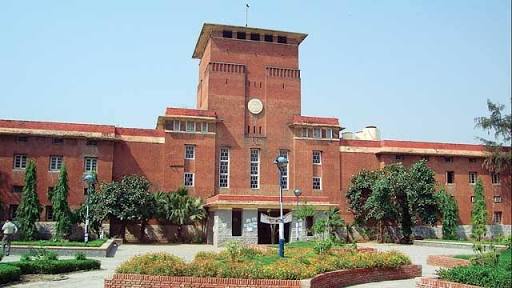
Five departments, namely Chemistry, Geology, Zoology, Sociology and History, have been awarded the status of the Centres of Advanced Studies. These Centres have carved a niche for themselves as centres of excellence in teaching and research, in their respective fields. 

Established in the year 1922, the University of Delhi has made its way to become the premiere institute of the country. It is known for its high standards in teaching and research, and attracts eminent scholars to its faculty.  Ever since its inception, a strong commitment to excellence in teaching and research has made DU a role-model and path-setter for other universities. Its rich academic tradition has always attracted the most talented students who later on made important contributions to the society.

The university had a humble beginning with just 3 colleges, 2 faculties and about 750 students. At present however, there are 16 faculties, 86 academic departments, 77 colleges and 5 other recognised institutes spread all over the city, with 132435 regular students and 261169 students in the non-formal education programme.

It has come a long way since its inception, scaling new heights in research and teaching, leading to the University Grants Commission (UGC) awarding five of its departments the title of Centre of Advanced Studies. These departments are: Chemistry, Geology, Zoology, Sociology and History. The programme is intended to encourage the pursuit of excellence and teamwork in advanced teaching and research to accelerate the realization of international standards. The maximum limit of financial assistance for a period of five years is rupees 150 lakhs for Sciences and rupees 100 lakhs for the Humanities and Social sciences.

Department of Chemistry:

It was started in the year 1922. In June 1949, Professor TR Seshadri took over as head of the department and owing to his untiring effort, the research activities gradually increased. The department attained a formidable reputation in the international scene as one of the finest schools of chemistry. In 1965, the department of chemistry was recognized as a Centre of Advanced Study of Chemistry.

Department of Geology:

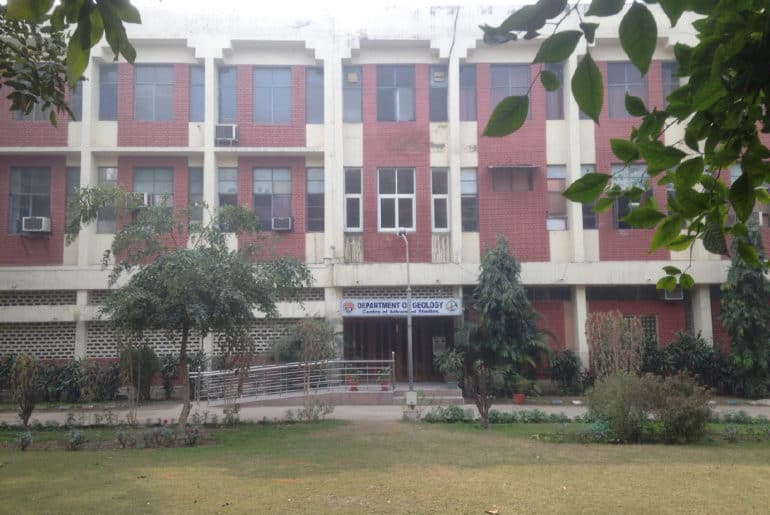
The Department of Geology in DU was introduced in 1966, and was inaugurated by Dr. C.D. Deshmukh, the Vice Chancellor of the university. Dr. A.G. Jhingran, after his retreat as Director General, Geological Survey of India, was offered the charge of founding this Department. The department has since then acquired distinction in teaching and research as well as for dissemination of geological knowledge, both at the national and international level. It is housed in two buildings adjacent to each other. The main three-storey building of the department houses the laboratories, classrooms, museum, auditorium and office of the Geology Department.

It was first recognised as a Centre of Advanced Study (CAS) 15 years back, and since then, has received the distinction 3 times in a row.

Department of Zoology:

zoology

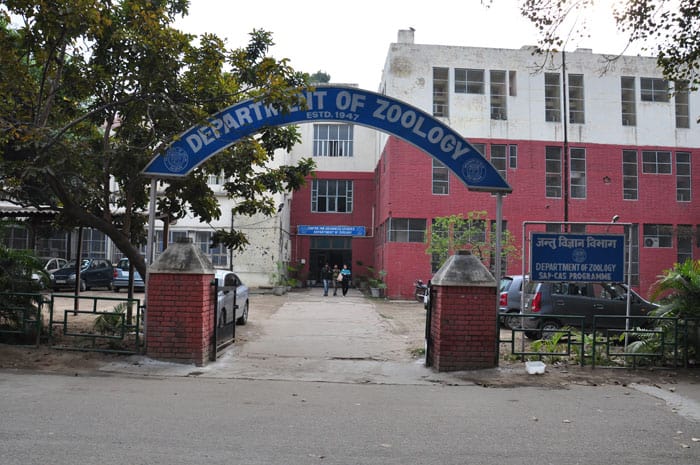
The Department of Zoology is a constituent entity of the Faculty of Science, University of Delhi. Since its inception in 1947, it has been the foremost centre for learning in all aspects of Animal Sciences in India. Despite being one of the youngest departments, it was selected as the maiden CAS in Zoology by the UGC, in recognition for its outstanding research profile in 1963. It continues to hold the honour till date. Many extra mural funding grants were won by its faculties from different agencies like the WHO, Ford Foundation, USDA, USAID, CSIR, ICAR, DBT etc. Thus, it enhanced the research infrastructure and maintained its eminent position in the area of Animal Sciences.

Department of Sociology:

The Department of Sociology was established by the University of Delhi in 1959 as a constituent of the Delhi School of Economics. In 1968, the Department was recognised as a CAS in Sociology by the UGC. The Department has a coordinated programme of teaching and research covering a variety of fields, including some developed for the first time in the country. Studies have been published or prepared on community power structures, local-level politics, trade unions, co-operatives, textual and contextual studies of Hinduism, religious symbolism, family and kinship, and social and religious movements.

Department of History:

The department of history is a constituent of the Social Sciences faculty. The UGC has awarded the CAS status to the Department of History too.


Sandeep Samal

[email protected]

Image credits:

Department of Geology website

Department of Zoology website

The University of Delhi is undoubtedly a breeding ground for personal growth. For 60,000 students each year, the central university becomes a new home, out of which students leave as the best versions of themselves. This is not the work of solely DU itself, though – it requires students to make the best of what the University has to offer.

Delhi University is most popular for its numerous societies. Whether performing or non-performing, these societies usually hold their auditions in the first couple weeks of August. While they may be daunting, auditions are one of the best ways to get out of your comfort zones, especially right out of school. They also work as a quick method of getting to know both your seniors and your peers and finding a group of people who are passionate about the same things as you. College is about exploring and growing – whether that’s excelling in a field you’re already experienced in or going out of your way to developing a new skill. Many a time, your fellow society members will go on to become your friends for life.

These friends are, of course, as diverse as they come. As a DU professor once said, “During our times, classrooms were mostly filled with students who came from Delhi itself, but now every classroom is a picture of Pan-Indian culture.” It is likely that your class has a substantial composition of students who aren’t from the same background or region as you. This diversity gives you a special window into the different parts – and more importantly, the different people – of India. Make an effort to befriend them. You’ll definitely learn about the diversity our country offers, but in addition to that, there’s a good chance you’ll also get to enjoy the cuisines and cultures of other states.

The next three weeks are when you’ll probably pick your college friends and stick with them during your time in DU. As we know, a man’s friends define who he is. The people whom you will choose will play a huge role in influencing your life decisions for the next three years. In both your difficult times and happy moments, they will become your family. They say we can’t choose our family, but college is when lifelong friendships are made. Choose wisely and you’ll have a new, handpicked family in merely a few years.

When it comes to growth, we can’t forget about the sudden shock that college gives you. Prescribed books, reference books, guides, sample question papers, and everything else that previously made your academic journey a set road are now a thing of the past. Xerox readings, partial syllabus coverage, and delayed exam results reflect the sad state of higher education in our country, but on the other side also give you an opportunity to build your skills of self-reliance and forge a personality that seeks success on self-efforts. So when DU gives you a hard time, use it to hone your confidence and spontaneity.

With two weeks of college already completed, make the most out of the coming days to make your mark. Get ready to embrace Delhi University – it’ll be your home before you know it.

ImageDesign by Kartik Kakar for DU Beat

Srivedant Kar

[email protected]

Vineeta Rana

[email protected]

The atmosphere of colleges across the University of Delhi is thick with the repeated mention of freshers’ parties. Conversations reek of both anticipation and bewilderment; two sentiments that newbies are naturally good at emoting, especially so when the takers for the Ms. /Mr. Freshers’ title are so many.

It is more than just okay to want to win the contest because a little adulation does go a long way. Here’s a list of things that you need to keep in mind if you’re in the running to become the Ms. / Mr. Fresher of your college!

Dos

  • Stick to the theme: It is absolutely necessary for you to adhere to the theme of the freshers’, if at all there is any. When the Students’ Union along with the able assistance of the advisory board comes up with a theme, after a lot of contemplation, that is, it expects compliance for the same. If you fail to abide by the theme, chances are that you will lose your eligibility as a potential candidate.
  • Preliminary research on the theme: A Freshers’ contest comprises of several rounds, one of which might be a theme specific question and answer round. Just so you are not caught off guard, acquaint yourself well with the theme. For example, if you happen to have a comic-themed freshers’ party, then it is imperative that you know, what building served as the original headquarters for the Fantastic Four and other questions of the like.
  • Maintain a sartorial splendor: Everyone is excited for the Freshers’; so much that their enthusiasm is palpable even from a distance but the thrill must be such that can be contained or it is likely to lead to a wardrobe disaster. Some people tend to let their exhilaration lead them astray. It is important to look tasteful. A wedding makeover is not what the freshers’ demand; rather a subtle stroke of light make up, coupled with a sartorially pleasing piece of clothing, is probably what it does. It is always important to suit the requisites and not go overboard.
  • Hone your skills: A freshers’ contest is incomplete without a show of the various talents. It is necessary/advised for you to have one specialised skill, at the very least. However, as much as it is important to possess an innate (or acquired) ability, honing the same stands at equal footing with its possession. It is always advisable to prepare well, or think, in advance for this round in particular.
  • Be confident: It is the most clichéd advice in the world but also the most significant one. Self-assurance stands head and shoulders above the rest; word has it that a great figure or physique is nice, but it’s self-confidence that makes someone really sexy. (Vivica A. Fox) If you are in the running to become the Ms. /Mr. Fresher, it is an obligation for you to have faith in yourself and your abilities as an individual contestant. Everyone is a little scared but what is important is to not let the agitation show. The focus should be on showcasing the best version of yourself out there, regardless of how much better or worse your fellow competitor is because trust me, everyone is just as new to that moment as you are.


Don’ts

  • Don’t fret: It is essential for you to understand that the panel in front of you is basing its judgment on how well you carry yourself and how bold your personality is. Faintheartedness is very easy to spot and can severely affect your chances of winning. In order to leave an impression on the jury, it is important that you gulp down the nervousness. Even during the question and answer round, make sure to not let your fear get the better of you. Let your conviction speak for itself.
  • Don’t be brash: While it is okay to be assertive, it is not, to be foolhardy. Everyone has their own set of beliefs and convictions and it as much our responsibility as is theirs, to respect them. In situations involving an interaction with the panel, it is a requisition to be accommodating. It is both, disrespectful and reckless to disregard a perspective without hearing an articulate explanation of the same. Understanding the downsides of ideological coercion is paramount in this regard.
  • Don’t confuse it for a beauty pageant: I cannot lay enough emphasis on how absolutely necessary it is for everyone to know that Freshers’ is not a beauty pageant but a personality contest. It is something that should implicitly be understood but needs perpetual reiteration, nonetheless. The contest abides by a very well thought out criteria for selection, which accounts for pretty much everything with the exception of outward beauty. It is especially mandatory for people competing for the title to rid themselves of any pre-conceived notions of the like.

Having said all of the above, it is also always good to remember that freshers’ is meant for the sole purpose of enjoyment.  It is the beginning of a new year, rather a new life, and it should be dealt with just the same!


Feature Image Credits: TheTab

Lakshita Arora

[email protected]