Author

DU Beat

Browsing

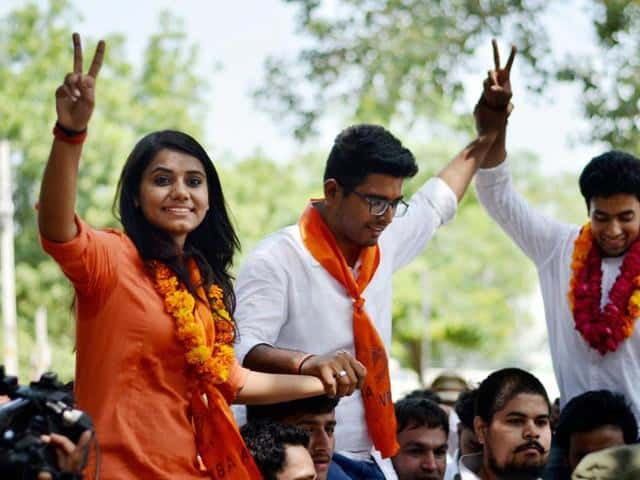
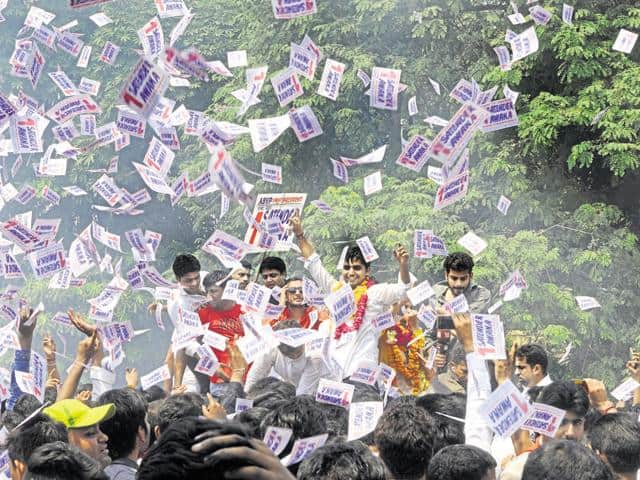
We talked to the two student leaders about their experiences of being Delhi University Student’s Union (DUSU) leaders, allegations of financial discrepancy, the gender bias in DUSU politics, and much more.
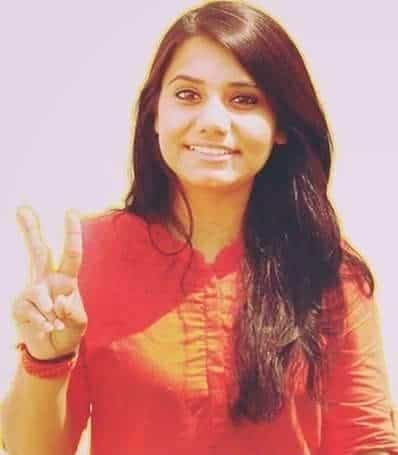
 

Priyanka Chhawri, Vice President of DUSU (2016)
Priyanka Chhawri, ABVP member and Vice President of DUSU (2016)

Correspondent: How has your past experience in DUSU been?

Priyanka: DUSU has been a big platform for me. I have been an ABVP activist since 2011 and to be an activist, a student leader, and an activist again, has been an amazing journey.

Correspondent: Mohit Garid, this years’ Joint Secretary, is a member of NSUI. How did all of you put your ideological differences aside to work as a team?

Priyanka: On a personal level, all of us had a good tuning with Mohit. In fact, we invited him for the first event we organized as a union, a celebration of Ambedkar Jayanti, for which he turned up as well. However, after that I’m not sure what happened. We organized multiple events after that and approached him as well, but we didn’t receive any proper, satisfying answer from him. It was reported that he was rebuked from his organization for attending the Ambedkar Jayanti event alongside us. But he and NSUI need to understand that when in DUSU, we work together. It is for the welfare of the students of Delhi University and not for ABVP or NSUI. He spent five lakhs, I don’t know where, since he conducted no events after this. The President has issued him a five-lakh budget but we didn’t see any programmes organized in the name of Mohit Garid.

Correspondent: For a long time, women in DUSU have been relegated to the position of Joint Secretary or General Secretary, with you (Vice President) being an exception. Are women being treated like tokens in DUSU politics?

Priyanka: It’s a presumption that women are treated like tokens in DUSU politics. In fact, ABVP has a large number of female candidates who are a part of it. Regarding who is offered what position, I would say it is a matter of capabilities and leadership skills. ABVP has women on all important posts, be it the National Secretary or in the Zonal Working Committee. Women have been given an important post and they have just as big a contribution in decision-making, as men do. I don’t think there is any such bias in ABVP.

Correspondent: Mohit, it was recently alleged that a sum total of five lakh rupees had been provided to you, for which no explanation was given, since you organized no major events. What would you say to that?
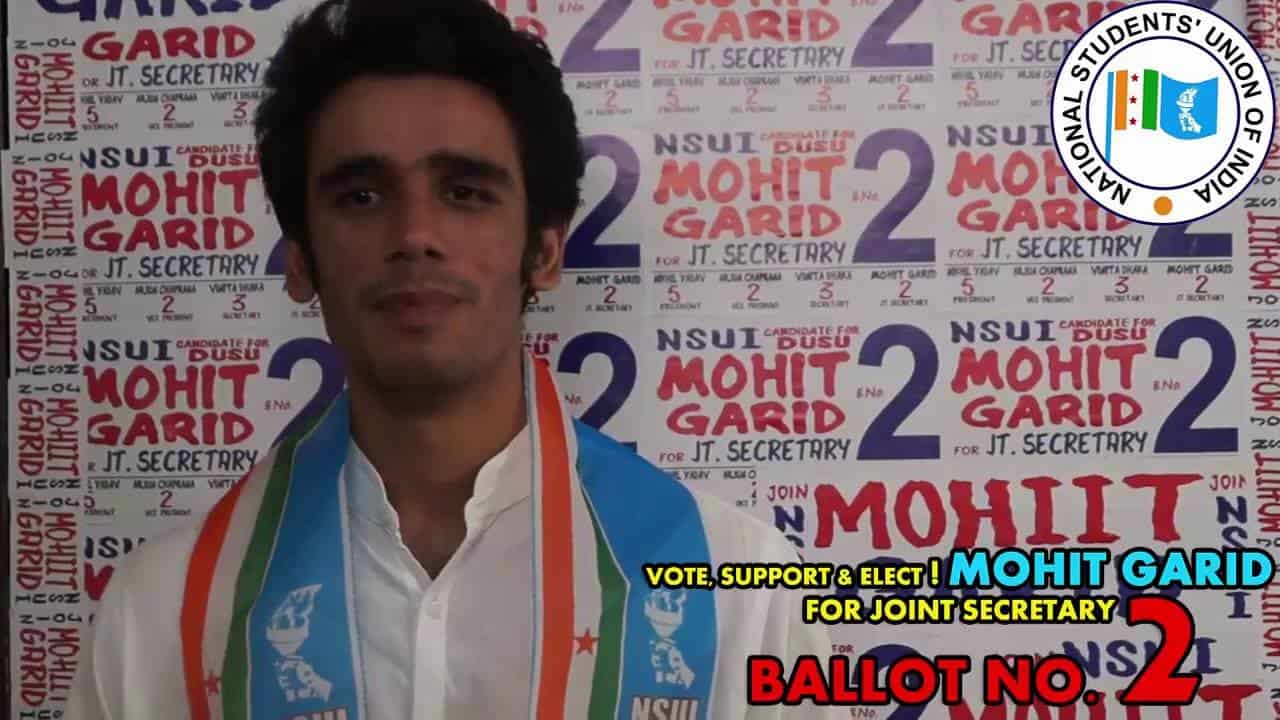
Mohit Garid, NSUI member and Joint Secretary of DUSU (2016)

Mohit: The bills that had been passed on my behalf were worth two lakhs, not five lakhs, as is being claimed. By the time I was supposed to submit the remaining bills, our treasurer had resigned. The allegations that I organized no events are false, since I organized events for sports, specifically kickboxing, volleyball, cricket and football, and a hockey event in Shyam Lal College.  I am deeply passionate about sports and I helped organize events for sports even when I was not in DUSU.

Correspondent: While ABVP stands on the far-right, AISA is on the far-left. NSUI and its ideologies are ambiguous to a lot of students. Do you think that makes it difficult for students to identify with it?

Mohit: We don’t believe in curtailing what people want to say. Unlike some political parties, we are not an organization that believes in classifying people on the basis of who is a nationalist and who is not. We don’t try to certify and label people. Our concern is to work for students.

Correspondent: To what would you credit your unexpected victory, in which you were able to break ABVP’s winning streak from the past two consecutive years?

Mohit: I worked relentlessly for three to four years. My teams in various colleges helped me immensely, helped students with their problems, and engaged with them on a personal level. It is with the support of that team of mine that I was able to win this seat.

Certain parts of the interview have been edited and translated for clarity.

Image credits: Hindustan Times and Youtube

Kinjal Pandey
[email protected]

With low voter turnouts plaguing the student politics of the University of Delhi, the varsity has collaborated with Ola Cabs in an attempt to get more students to participate in elections.

The voter turnout in the Delhi University Students’ Union (DUSU) election has seen a declining trend in recent years. This is due to a number of factors such as the dissociation of students from party politics and the chaos that ensues on the day of the election. In an effort to combat this, the University has entered into a formal partnership with Ola Cabs for the 12th of September and will provide free “Ola share” cab services for anyone who comes to vote on the day.

Many students claim that they do not turn up to vote for DUSU elections because of the ruckus and traffic on campus. Most second and third-year students conveniently consider it a holiday and make no effort to participate in the decision-making process of the University. Aditya Rawat, a third-year student of Ramjas College, states, “My college is in North Campus whereas I live in Dwarka. Commuting every day for classes is difficult enough as it is, and to do that on a day when the roads right outside the Vishwavidyalaya metro station are filled with pamphlets and big cars is an unnecessary pain that I can easily avoid by skipping college on election day.” Rawat has not voted in his last two years in the varsity. When asked if a free cab service from his home to his college would incentivise him to cast his vote, he said, “Definitely. With the convenience that the cab offers, I’d be a fool not to take advantage of it.”

The University of Delhi, urged on by the leftist parties in DU politics, decided to take this step to make matters easier for students who had legitimate problems in accessing their colleges on the election day. The left-wing parties stated that they lack the money and muscle power of other parties which incentivise students to vote for them, by offering drop-off services from their homes to their colleges. To counterbalance this and to ensure that students who genuinely want to vote are able to do so, the University and Ola have come up with an election day scheme. Students can use the code “DUSU100” to get a free shared ride from their home to their college. The scheme is only valid for those who poll in the morning slot, which is 8:30 a.m. to 12:30 p.m. The service will be available in select areas across the capital. Students living in NCR will not be able to access the scheme.

In a first, DU authorities have come up with such a collaboration with the primary aim of aiding the student community. The success of this venture can only be evaluated when this year’s turnout is examined.

Disclaimer: Bazinga is our weekly column of almost believable fake news. It is only to be appreciated and not accepted!

Image Credits: Hindustan Times

Vineeta Rana
[email protected]

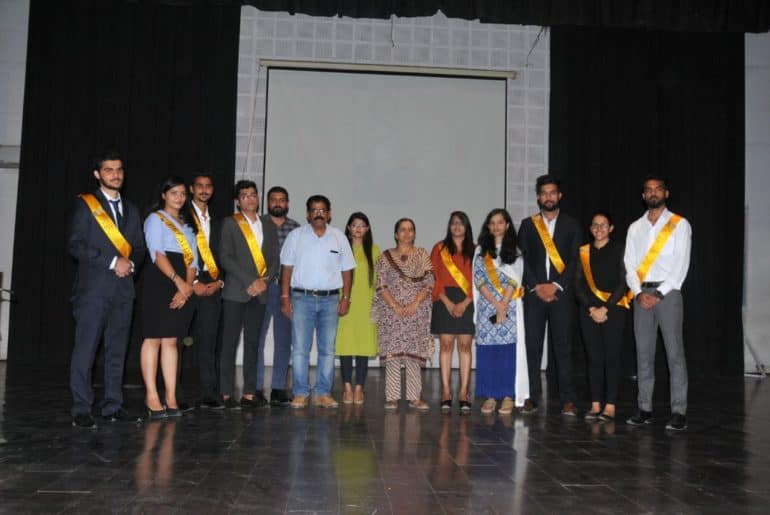
The Department of Sports and Physical Sciences of Hansraj College organised a Sports Orientation on 29 August 2017. The event also marked the 102nd birth anniversary of Major Dhyan Chand, a day which is celebrated as National Sports Day. The highlight of the event was the felicitation of the Sports Council which came into being for the first time in the history of Hansraj College.
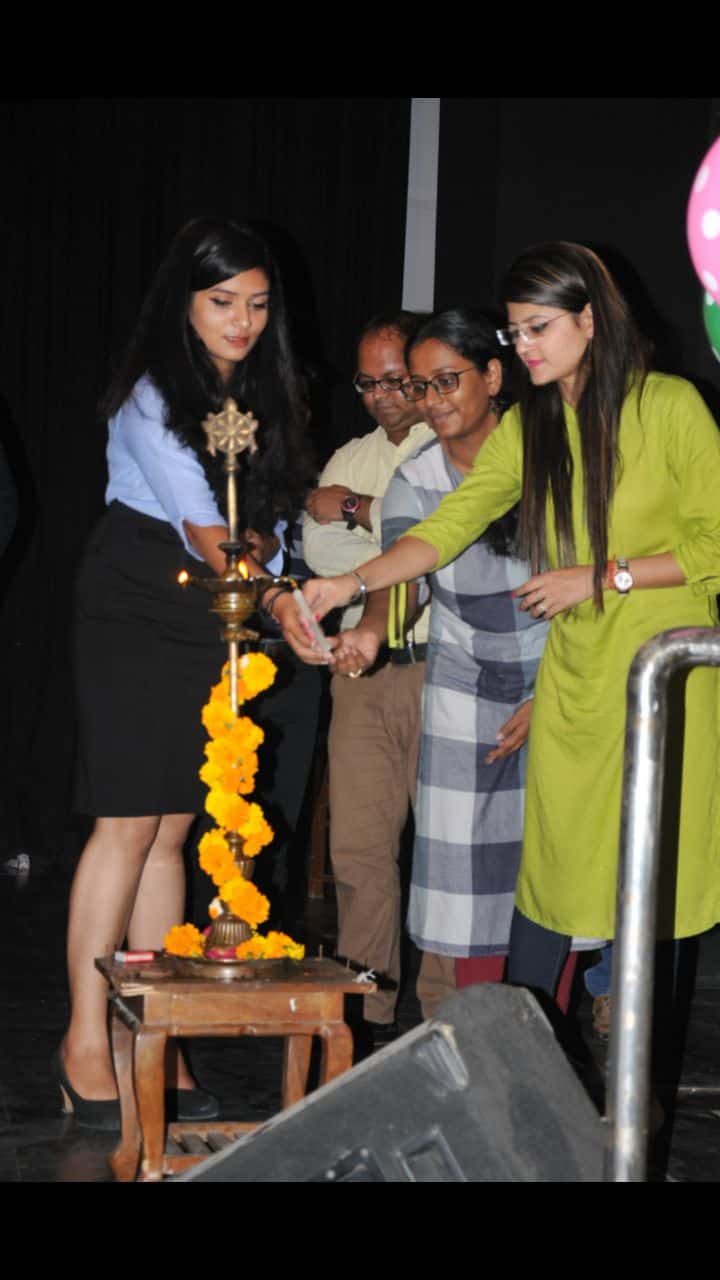
The Principal, Ms. Rama, inaugurated the event with the lighting of a lamp with Dr. M.P. Sharma, Head of Hansraj Sports Department. This was followed by speeches by the two professors. The Principal, along with the Sports Department, felicitated the first Sports Council of the college.
2
The Sports Council will seek to organise and regulate several sports-related events for the college throughout the academic year. This will include organising an annual Sports Day in the college and several sports meets and interactions. Events like circuit training, boot camps, and walkers groups are also a part of the Council’s vision.
Along the lines of their motto, “Come and Play”, the Council hopes to facilitate student participation in different sports. The Council also announced that an annual Hansraj Sports Magazine will be published by the its editorial board.

The Delhi University Student Union (DUSU) elections are one of the most important elections at the college level. Most of the DUSU presidents have gone ahead to make a significant mark in the field of national politics. Some examples of such leaders would be Arun Jaitley, Ajay Maken, Vijay Goel, Vijay Jolly, Alka Lamba etc. Thus being a DUSU president is one of the most lucrative posts that one can achieve at such an early stage of politics. Our country desperately needs the passion, vigour and zest of these young politicians.

With the approaching DUSU Elections, let’s have a look at what are the past DUSU presidents up to in their present lives.

  • Mohit Nagar

Mohit Nagar was the President of Delhi University Student Union (DUSU) in the year 2014-15. He belongs to Akhil Bhartiya Vidyarthi Parishad (ABVP).  He did his B.Com and M.com from Shyam Lal Anand College, University of Delhi. Currently, he is pursuing L.L.B from Law Faculty, University of Delhi and is in his first year and plans to practice law in future. He is also the Organising Secretary at Akhil Bhartiya Vidyarthi Parishad at present (ABVP).

  • Satendar Awana

Satender Awana was the president of Delhi University Student Union (DUSU) in the year 2015-16. He belongs to Akhil Bhartiya Vidyarthi Parishad (ABVP). He is currently the head of the Delhi University unit of ABVP and intends to pursue law as a career in future.

  • Ajay Chhikara 

He was the DUSU President for the year 2011-12. His tenure ended in September 2012 and by December 2012 he was appointed as the National Secretary, NSUI. He was also the made the Chandigarh Incharge, where NSUI won the Punjab University elections for the first time. He also worked in Amethi on Rahul Gandhi’s campaign during the Lok Sabha elections. He was later promoted to National General Secretary, NSUI. He was also made Punjab In charge during assembly elections where NSUI had a successful hold. He completed his law degree in 2012 and now actively pursues law along with politics. He also worked with the assistant Advocate General in the Supreme Court. His life is thriving both in personal and professional terms and he regards his one-year-old daughter Aavya as his lucky charm.

  • Arun Hooda 

He had an unconventional start as compared to most other DUSU Presidents. He pursued engineering and worked as an engineer for a while. Then he cleared SSC and worked for the Indian Air Force for a while. After withdrawing from the Air Force he joined the Faculty of Law, University of Delhi to pursue a Bachelor’s degree in Law.  He was the DUSU President from 2012-13.  He is the Observer Incharge of Delhi Pradesh Congress Committee. He has politically been active in Haryana and was one of the finalist’s for the post of NSUI National President. He practices in the Tees Hazari Court and Delhi High court as a lawyer. Along with an engineering degree, he has an LLB degree along with another in Forensics. He is also pursuing LLM from the faculty of law.

  • Nupur Sharma 

She was the DUSU President from 2008-09. She graduated with a Bachelor’s degree in Economics (Hons.) from Hindu College. When she won the DUSU election representing ABVP, many were shocked. Until her victory, DUSU was a NSUI stronghold. In fact, the remaining three posts in her union were won by NSUI. She went on to pursue a master’s in economics from the London School of Economics. She is an official spokesperson for the Bharatiya Janata Party and contested the 2015 Lok Sabha elections from the New Delhi constituency against Arvind Kejriwal.


Image Credits -The Indian Express

Anukriti Mishra

[email protected]

Kinjal Pandey

[email protected]

Following a historical decision, you can now expect student political parties to hand out pens and notebooks for your vote.


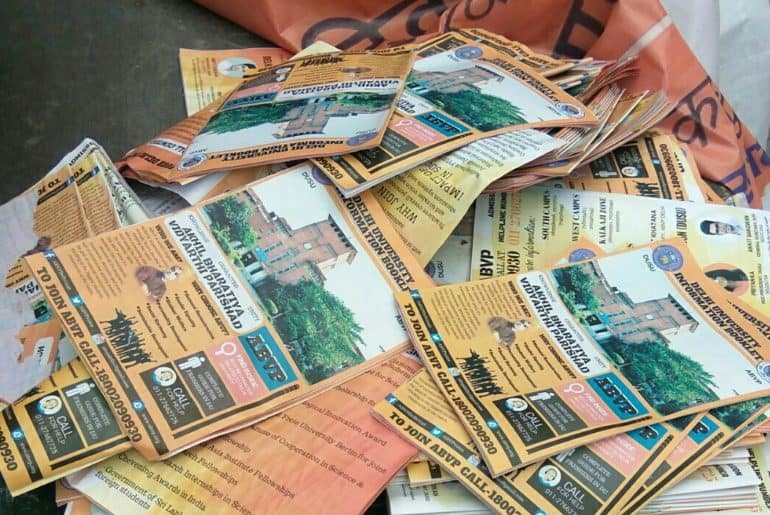
In a latest press conference, the University of Delhi’s Vice Chancellor has sent out an order to political parties which states that they can distribute freebies legally, however, only one day preceding the Delhi University Students’ Union (DUSU) elections. This decision comes right before the polls that are set to be conducted on 12th September this year. When the VC, Satish Saraf, was approached to reason this historical decision, he said, “The DUSU elections happen in an arbitrary manner as no political party follows the Lyngdoh Committee’s guidelines anyway. Through this reform, we plan to introduce transparency in the system.” This report, however, is incomplete without the numerous terms and conditions it clearly states; which need to be followed as protocol to distribute freebies legally. A few of these conditions are:


  1. Political parties can only distribute freebies on only one day, that day being at least one week prior to elections.
  2. Political parties can distribute only education related freebies like pens, registers, books and other similar items that add to the welfare of students.
  3. If the political party is found  distributing alcohol or weed, its candidate would be prosecuted and disqualified to contest the elections with immediate effect.
  4. No printed posters can be put up. This is in accordance with orders given by the National Green Tribunal(NGT) to encourage a poster-less and digital campaign.
  5. A maximum cap of 5000 INR would be set so that parties with lesser funds have no complaints.
  6. To help students make an informed decision, all those parties that partake inthe distribution of freebies are expected to arrange for seminars and workshops, wherein they explain in detail the functioning of DUSU and delineate the actions they will take to achieve all points in their manifestos.


Two schools of thoughts have emerged from this landmark decision- one which strongly opposes this decision, and one which stands in staunch support for it.

A second year student of Shaheed Bhagat Singh College under condition of anonymity, said, “I think the DU VC has gone berserk. His decision places small, genuine parties to a major disadvantage and ensures that parties with large funding get abundant visibility.”

However, not everybody harbours the same viewpoint. Avni Bansal, President of Sangharsh Yuva Parishad is of the view that this decision will transform elections for the better. In conversation with DU Beat, she said,  “Everybody knows that use of muscle power cannot be removed from elections. But, this can definitely be put to good use for the welfare of students. Students belonging to lower economic backgrounds can benefit immensely from this opportunity”


While we already have protests from opposition parties against this decision, the executive council has been tabled to discuss reforms in DUSU budget as well. Whether the decision will face a roll back or actual implementation, only time will tell.

Feature Image Credits: Cloudapp

Disclaimer: Bazinga is our weekly column of almost believable fake news. It is a humorous, light hearted column that should only be appreciated and not accepted.

Vijeata Balani

[email protected]

The yokes of colonialism have still not left the hearts and consciousness of our people. As a consequence, the rising Indian middle class is quick to dismiss its roots and the practices associated with it. No more do we live the way our parents did, or their parents did. As a result, there is a discrepancy in who we want to be versus who we are. We don’t eat, work, or live like our ancestors did anymore. The idea that our ancient sciences were fiction and superstitions with little truth to them is a belief that a large part of the urban middle class firmly believes.

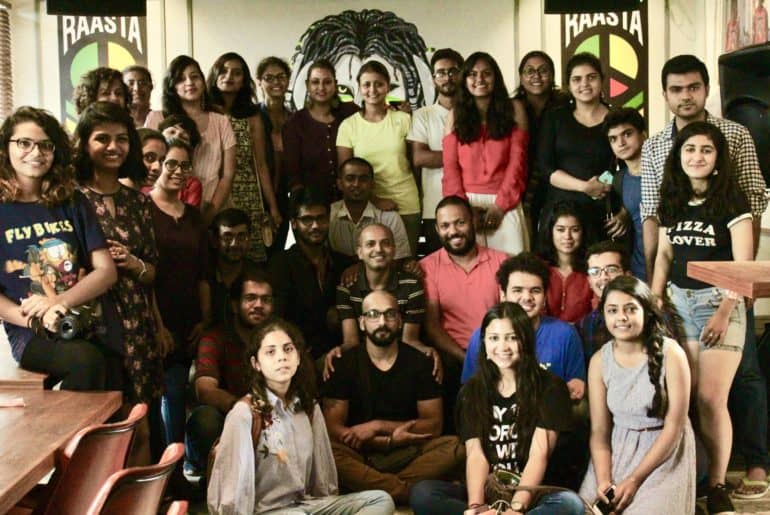
The People’s Club was founded by a few young students with the intention of creating a group where people could get together and talk about things that were relevant to them. The event was conducted on 18th August, propagating a vision to create a judgement-free space that would allow words and beliefs to come out freely. In a world where we are constantly scrutinised for our ideologies, where ignorance is looked down upon, this was a welcome change. The idea to create a platform that would allow young, budding minds to discuss, disagree, and de-stigmatise controversial topics through words seemed like a beautiful idea.

Ekta, one of the founders, recited a personal anecdote about why she chose to start the People’s Club. Her father went to go back to his roots, including Yoga and lifestyle changes after a health complication. The sheer amount of improvement he went through, led her to think long and hard about the significance of our cultural practices and the scientific accuracy of the same.

Last Friday, on a warm afternoon, as I walked into the sunny Raasta café, I saw a score of college students seated around a table introducing themselves while talking about the one thing that connected them to their roots.  As people talked about the sambhar that reminds them of home and the lullabies that took them back to their childhood, I couldn’t help but notice how it comforted others. The knowledge that there were other people who missed certain aspects of their culture, which they could not connect with in the sprawling metropolitan cities that they now lived in,  seemed comforting to most.

The moderator Prithvi Mahabeshwara and the experts Arushi Ralli and Manu Singh felicitated the flow of discussion and ensured that the conversation remained fruitful.  Everything, ranging from a reference to the accurate distance of the Earth and the Sun in the line “Yuga Sahastra Yojan par Bhanu” in the Hanuman Chalisa to the science behind the idea of eating before the sunset, was extensively talked about. The logic behind eating using ones hands during meals, eating on banana leaves, avoiding alloy metals to cook, drinking water from earthen vessels were all discussed in detail. Spices were a strong enough incentive some five centuries ago, for some European men to venture out and sail on lone ships across dangerous seas to find our mysterious homeland. This fact in and of itself is enough to describes how renowned, famed, and ahead of their time our cultural practices were.

What made the People’s Club so special is the fact that they chose to think in a way that most people don’t. Most of us have collectively written-off our cultural heritage as superstition and blind-faith. We classify eating on banana leaves in the same group as believing in Sati or following the caste system. In our desire to rid ourselves of the undesirable aspects of our past, we have thrown off something extremely precious. Out of fear of seeming naïve and gullible, we have aggressively been shedding off what remains of our cultural past.  But perhaps everything comes back to a full circle. Those who were once mesmerized enough to pursue a golden land laden with spices, have once again set out to embrace its cultural practices; be it in the form of yoga and dhyan or in the search of spirituality and peace. It is time we do the same. It is essential we reclaim what is a cultural gift from our ancestors to us. Perhaps then, we wouldn’t feel so lost in these concrete jungles that we have built around ourselves.


Image Credits: People’s Club Facebook Page

Kinjal Pandey
[email protected]

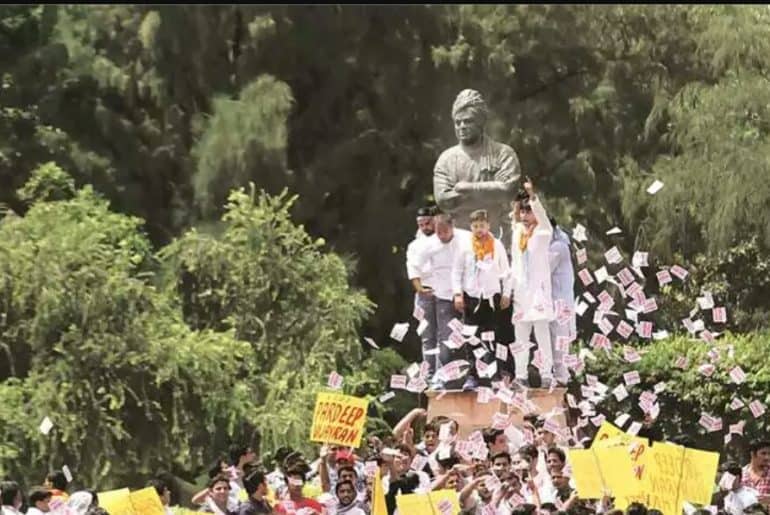
The Delhi University Students’ Union elections are just around the corner and the election fever is in full swing. In this context, we analyse the finer nuances of what sways the DUSU election results.

  • The name game

While campaigning, candidates often change how their name is spelt. Posters and hoardings will often bear the names of candidates with one or more letters misspelt. This leads to the following benefit – if there are any pending cases or FIRs against them, it would be harder for the average Joe to look it up. The second benefit allows them to manipulate the ballot number they received by adding “A” at the beginning of their name as a prefix. For example, the 2015 DUSU President Mohit Nagar filed his nomination as “AAA Mohit Nagar” which resulted in him getting ballot number 1. The ballot list is made in alphabetical order which means that the candidates with the maximum number of As at the beginning of their name would get 1 as their ballot number. Since a lot of people in DUSU elections vote just for the sake of it, the probability of them voting for the first candidate on the list is considerably higher. To combat this, in 2015 the Delhi High Court described this practise as “flawed” and finally put an end to it.

  • Money matters

Freebies ranging from movie tickets, chocolates, t-shirts, pens, notebooks, water park tickets, and what not are distributed during the election season. But it does not stop there. Major student political parties also go to large PGs to promote and campaign for their candidates. An anonymous resident of Aparna Girls Hostel, a private PG that houses around 300 girls, says, “Last year both the ABVP and NSUI came to our PG to campaign. They spent around 20-30 minutes there and also sponsored special food for the day”. These freebies are aggressively thrown around as the election day comes closer in order to sway the maximum number of voters until the very end.

  • Graffiti

Without any regard to either public and private property or to aesthetics, candidates spray paint their names over walls, buildings, pavements, hoardings, and any flat surface which catches the eye. The idea is to familiarise the maximum number of people with a certain name before election day. If the rival party has already put up their logo on a particular wall, instances have shown that political candidates are not above throwing black paint all over it. Every year, in the name of elections, these walls are besmirched with black spray paint and posters.

  • Personal touch

Any politician worth the salt knows how important personal touch is. Vox populi vox dei is an ancient Latin phrase which means that the voice of people is the voice of God. Candidates in DUSU elections are more than aware of this philosophy.  Once people want a particular candidate to win because they think he/she deserves it, there is little that can stop them. As soon as the logistics are dealt with, door-to-door campaigning begins. Personally helping people, reaching out to them, acquiring  goodwill, and building up a network of loyal friends are keys to unlocking the puzzle that is DUSU elections. On the day of the elections it is this goodwill acquired across months of rigorous campaigning and a band of loyal supporters and friends that ensures victory.

  • Party lines

Contrary to what most of us would like to believe, student politics does sync with national politics. DUSU elections are a playground for major national political parties. Most DUSU presidents acquire a certain degree of political relevance and end up with successful careers working with their parent organisations or parties. Delhi University is also a recruitment pool for these parties. A considerable number of today’s political leaders started their careers in Delhi University itself.

As far as the DUSU election results are concerned, the stakes are extremely high. It is a matter of immense pride to win the student elections in one of the largest universities in the country. The pivotal driving force in these elections – perhaps the sole factor that makes it so very grand – is the involvement of national parties. When Delhi University becomes the battle ground for the biggest political parties in the country, one can expect a magnificent showdown.


Image Credits: Kinjal Pandey for DU Beat

Kinjal Pandey
[email protected]

Dr. Shaik Suleman is the General Manager of Overseas Education Services at EdCIL India Ltd. EdCIL is a mini-ratna government company under the Ministry of Human Resource Development which provides education consultancy services to the MHRD.

  1. Russia launched an initiative known as ‘5/100 initiative’ to boost the international faculty and students in its universities by 2020 as part of a wider plan to develop the global competitiveness of their universities.  How does the government plan to increase its institutions’ global competitiveness?


Indian government in the recent days is trying to enhance the standards of the premier institutions of India                  and is already inviting foreign faculty through the ‘Gyan’ program. We are progressing in this endeavour.


  1. According to HRD ministry’s All India Report on Higher Education 2015-16, only 45,424 foreign students were enrolled in Indian educational institutes whereas Indian students are the second largest source of international postgraduates in the UK. Are there any incentives the government plans to offer to invite more international students?


The official number is 45,424 students but informally more students are coming to India i.e. 1 lac students.                    Currently the government isn’t planning for any incentives but is working to generate more opportunities for                foreign students to come and study in India. At present, our premier institutions like IIMs and IITs do not have          any quota for foreign students but the government being a part of the Kasturirangan Committee is planning on            providing some quota to foreign students which will hopefully increase their number.


  3.  At present, roughly a third of all German students spend some time at a university outside                    Germany during their degree programme and are working to increase it to 50%, are any plans in        the pipeline for us, Indian students?

The UGC (University Grants Commission) has given directions to the universities stating that in the designing of         the curriculum there should be an ‘Industry Interaction’ like Barcelona where students attend morning classes             for theory study and in the afternoon they visit industries. Some of the deemed universities are planning for                 similar industry interaction. The government has initiated and the plans are in the initial stages, nothing has               been finalised yet.


  1. The University of California at Berkeley is setting up a new campus at Richmond Bay, California, where it plans to host 4-5 Asian and European universities.Has the Ministry thought of setting an Indian university in their campus?

We have not yet been given green signals regarding the same but renowned private universities of India like                 Manipal University etc. are planning to set up their campuses on foreign soils.


  1. Providing incentives and inviting more international students would strength India’s ties with their countries and greatly influence India’s image as an emerging ‘education hub’, don’t you think?

We can provide scholarships to foreign meritorious students in the fee structure etc. Other than that, quality of            education in the institutions need to be improved. Also, the communication and liaising between the                              institutions and foreign students need to be strengthened like smooth travelling, helping them in settling down            in the Indian culture and exposing them to the Indian culture and diversity. Such aspects play a major role as              well. For India to become an education hub, we need to upgrade our curriculum and provide courses with                      international validity like Big Data, Data Analytics or IOT (Internet of Things). On the other hand, we are very              strong with IT and Science field. The other courses where we are not renowned but good marketing would solve          the problem, then there is no stopping India from becoming an education hub.

Feature Image Credits : DU Beat

Prachi Mehra

[email protected]


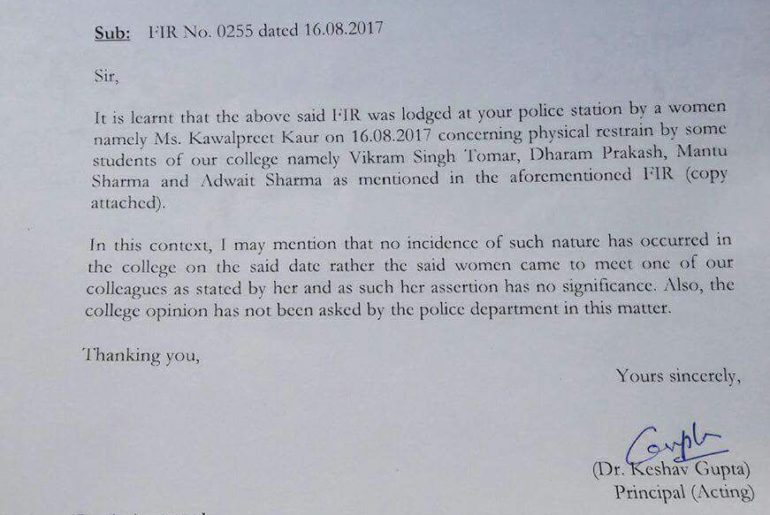
On August 16,2017 All India Students’ Association (AISA) President, Kawalpreet Kaur  filed an FIR against Akhil Bharatiya Vidyarthi Parishad (ABVP) members claiming charges of  physical restraint and verbal abuse , while she had gone to Satyawati College for some academic work.  Ms Kaur alleged in her complaint that ABVP members tried to bully her and called her an ‘anti-national slut’. She also proclaimed that the Principal of Satyawati College helped her to reach out to the police.

In a series of events following this incident,  Satyawati College Principal on August 21,2017 in a press release claimed the incident as hoax and even wrote to the SHO, ACP and DCP of Bharat Nagar Police Station mentioning that all charges put by Ms. Kaur, who is an outsider, are fake. In an official statement to DU Beat by the Media Convenor of ABVP, Mr. Saket Bahuguna  condemned the systematic propaganda and slander campaign against ABVP by some communists. The statement read as,” Repeatedly, Ms. Kaur and her comrades have tried to spread canards about our organization to get some publicity , especially after she and her Naxal- supporting  organisation was rejected by the student community in the DUSU elections.”

ABVP expressed shame on the  half- heard defamation charges without any solid evidence and their publicity by some media groups without knowing the entire reality from the students or authorities of Satyawati College . Keeping the upcoming Delhi University Students’ Union (DUSU) elections in mind,  AISA tried to spread slander and lies against ABVP and maligned its members’ image as claimed by the organisation of ABVP.

AISA in a press release on August 23, 2017, following these remarks carried out a signature campaign in support of Kawalpreet Kaur . Ms Kaur said, “It is  really saddening  that the principal has given into the pressure of ABVP. Such a statement by the Principal attempts to derail the entire case. Also , we have the call recordings and many messages that were sent to my friends in Satyawati  to persuade me to take the case back as well as the ‘receiving’ which was duly claimed by the Principal at the time of the incident. Thus , the Principal’s recent statement of denial stands false.” Niraj Kumar, State Secretary of Delhi State AISA said,” Why is the Principal shielding the culprits? It is this shielding that gives the audacity to harass women. We demand that the police should ensure a proper enquiry in the matter.”

The Principal in his statement mentions that the college opinion  was not taken into account by  the police department which is eagerly supported by the ABVP as well.  It is all up to the police  now to follow the due process of law and testify the truth as the matters have heated up now.

Image Credits: Facebook

Oorja Tapan

[email protected]

There are growing cases of teen depression all around the world. Even when teenage is supposed to be the most wonderful time of their lives, teens suffer from isolation. What really causes this form of depression and what can be done to prevent it?

Teenage is considered to be the golden age of one’s life. And why not, since this is the age when one is blooming, free from responsibilities, and as energized as he or she can be. Making endless friends, sharing carefree giggles, learning life as it comes and sparkling with ideas and creativity, teens are ready to take on the world. With all the energy pouring in, rejoicing the freedom and feeling the blood pumping up with ambitions, it is supposed to be no less than the state of nirvana. Unfortunately, the reality contradicts this notion. Teenagers today are suffering from issues trying to suppress it all within themselves just because they are scared to confess about it. This has devastating consequences and is very unhealthy, to say the least. One such problem that the teens suffer from is isolation.

Isolation is defined as the state of being in a place or situation that is separate from others; it is the act of separation itself. Despite having a whole lot of friends “apparently”, as they put it, teenagers have the sense of being lonely, of not actually being connected to people, which results in the growing feeling of alienation. In fact, untreated depression has been identified as the leading cause for suicide by the United States’ Department of Health and Human Services. Even after being surrounded with social media platforms which encourage one to socialise more, it is ironic how teens have ended up being isolated instead.

As per a survey provided on www.ineedalighthouse.org, approximately 20% of teens suffer from depression before they reach adulthood. That’s a staggering number! The causes of this problem range from hormones and inherited traits to early childhood trauma. The problem worsens when one suffers from depression despite being free from the aforementioned causes. Coming to cell phones, over the years, mobile phones have percolated into our normal lives and have become an integral part of our daily routine. Waking up and checking our cell phones for text alerts regularly, taking out time to use a bit more of our mobiles, or using them to pass our time has become a very common habit. Mobiles are our go-to option and our last resort. Socialising is about talking to people and interacting. Take a second to think about it, how can we really be social if all our focus is concentrated upon a device that won’t even talk back to us? (No, Siri is a program and not a human being.)

Low self-esteem is in itself a huge problem and it highly contributes to depression. It makes one feel under-confident, stops them from speaking, makes them question themselves unnecessarily and develops the tendency of being hesitant every time. What does this further do? It stops them from communicating with others. People end up spending a lot of their time overthinking. Yes, one should spend time with his or her own self, but to curse oneself  and restraining from expressing ideas and emotions is certainly unwanted. Peer pressure is an important factor. Bad influence is one thing, but to think of oneself in a lowly fashion just because one’s peer does something and brags about it is not the only way to go about. The peer may be right or might even be better, but that does not mean that the person not following the same path is wrong or worse. Vulnerable minds are prone to fragility and often become victims of manipulation. Again, while we should keep our minds open to listen to other’s opinions or ideas, we also need to keep in mind the difference between appreciation and application. Regarding someone’s opinion is a good thing. But to beat up oneself for not acting upon the same is a disrespect to the self.

Blaming technology seems a fair and logical option, but at the same time we need to question our use of technology. Depression stemming from technology is a state of mind and we hold the key to change our minds. We need to socialise in literal terms by speaking up and interacting. Maybe it’s all about expressing ourselves and maybe we are doing it wrong. Maybe, we can just try to go and speak up to someone. We need to accept the fact that there’s something wrong in the way we are doings things and not in the things that exist. We need to realize that we are grooming ourselves for the future, and then ask ourselves what kind of people do we want to become? Teenage is an eventful phase, and we are the only ones to make it into a phase that is worth remembering.


Image credits: slideshare.com

Karan Singhania

[email protected]