Author

DU Beat

Browsing

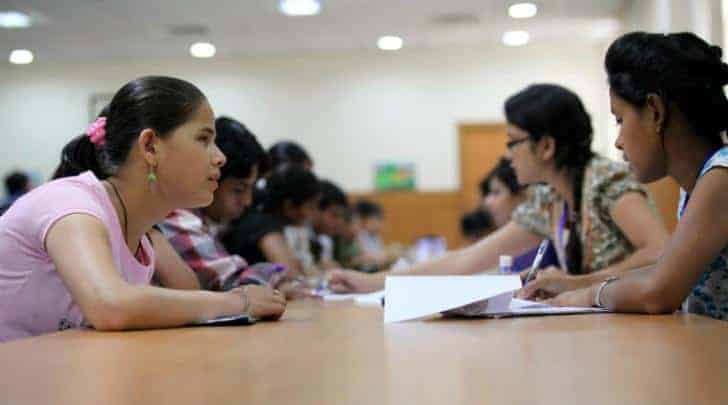
After the first phase of admissions done and dusted with, the University of Delhi will be releasing the second cut-off list tonight. Before that, individual colleges have started releasing lists on their respective websites. The varsity has received over 2 lakh applications for admission into 60 undergraduate programmes.

The University has uploaded a consolidated second cut-off list for all colleges on its website. You can access it here.

Here are the live updates on the cut-off lists as well as colleges. (You can check the cut off list by clicking on the names of individual colleges) 

College wise list:

6:55 PM : Maharaja Agrasen College  has also declared its second cut off with 94.5% for B.Com Hons. The college also offers B.A Hons. Journalism for 93.5% for the general category.

6: 40 PM: Maitreyi College has also declared opened its portal which would declare the second cut off.

6:35 PM: Shivaji College has declared its second cut off with B.Com Hons having the highest cut-off at 96.5%. The college offers 1% relaxation to girl candidates for all its courses.

5:55 PM: Zakir Hussain College has also declared its second cut off with cut-offs for several courses going down.  The college would be admitting students from 9:30 AM to 1:30 PM starting from 1st July to 4th of July.

5:45 PM: Daulat Ram College has released its second cut-off with B.A Hons Psychology grossing the highest at 96.50%. Meanwhile, the admissions have been closed for several courses like B.A Hons. Political Science and B.A Hons. History.

5:20 PM: Kirori Mal College releases its second cut off with B.A Hons Economics  at 96.75%. Admissions for course like B.Sc Hons Physical Sciences, B.A Hons. English, B.A hons.Urdu and  B.A Hons. Sanskrit have closed admissions in general category.

5:00 PM :  Shri Ram College of Commerce

The admission process for phase 2 will commence from tomorrow and will register applicants till July 4th. Candidates who meet the requirements can visit the college between 9:00 am to 1:00 pm on July 1st, 3rd, and 4th. The subsequent steps to complete the admission process can be found here.

Admission process under the first cut-off list culminated on June 28th, 2017. The first bout witnessed a low uptake, with the students experiencing technical glitches, confusion about the requirements, and the high cut-offs dampening the admission day reach.

If you want to withdraw your admissions from any college you can follow the procedure mentioned here

We will keep updating the list as and when the colleges announce their cut-offs. Stay tuned!


Feature Image Credits: University of Delhi

Saumya Kalia
[email protected]

Srivedant Kar
[email protected]
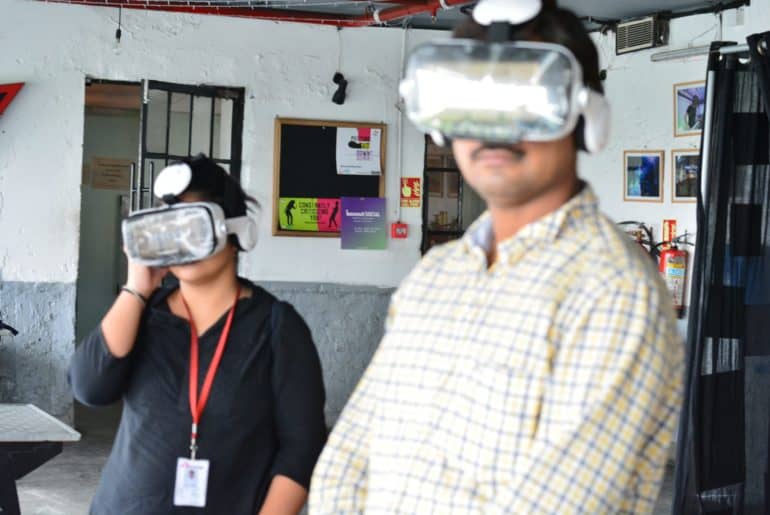
Keeping in tune with its agenda on creating awareness on key issues among the youth in the country, Love Matters India launched the first 360/VR film on the issue of Intimate Partner Violence (IPV) in Delhi and Mumbai on the 17th June 2017. The film ‘Kya Yahi Pyar Hai’ uses virtual reality to narrate a powerful story and connect with young people through immersive storytelling experience.

The film ‘Kya Yahi Pyar hai’ was conceptualized by Love Matters India to generate awareness against controlling relationships that are seen and understood by the young people as caring ones, reiterated by the popular culture. Intimate Partner is defined as “any behavior within an intimate relationship that causes physical, psychological or sexual harm to those in the relationship, including acts of physical aggression, sexual coercion, psychological abuse and controlling behaviors.” Social norms are identified as the dominant drivers for IPV in India. However, there is a high level of reluctance from both men and women victims to talk about violence in their relationship.

Bollywood celebrities like Swara Bhaskar, Gul Panag and Konkana Sensharma took to twitter to support the campaign and talk about this issue.

Speaking on the above initiative Vithika Yadav, Head of Love Matters India said”-“We managed the film launch in both Delhi and Mumbai simultaneously and it feels great. The response to the film has been very good. People are interested in knowing about more screenings that we’ll organize across the country. Next we”ll be organizing free screening of the film across Delhi Metro stations using VR booths, from 21st to 30th June (2017) . The panel discussion on popular culture was really engaging and though provoking views shared on how it can inspire, guide, motivate, rule the mind and even sometimes mislead people.”  

Sharing her experience while making the film, Co-Director of the film, Gayatri Parameswaran said, “Directing this 360/VR experience was challenging on many levels. Firstly, we had to leave the scene every time we hit record because we couldn’t be in the film. In 360, everything is captured. So it helped that we trusted the actor, Arjun, quite a lot. And for him it was difficult too – acting with a camera as your opposing character, isn’t easy! But I’m glad about how it has all shaped up.” 

As part of this campaign Love Matters India  partnered with Social Offline in Delhi and Mumbai, a chain of pubs/ restaurants, to install 360 film viewing booth with VR headsets. The Delhi Metro will also have film viewing booths set up across 10 metro stations in Delhi for 10 days. The launch was kickstarted by a Panel discussion on the topic “Control and Care in popular Culture in India” followed by the screening of the film.

About Love Matters:

Love Matters is a global multimedia project engaging young people to talk about love, sex and relationships, with a presence in 5 countries around the world: India, Kenya, China, Latin America (Mexico and Venezuela) and Egypt. Love Matters believes love, sex and relationships should be a right, a choice, and a pleasure. The first step towards making this possible and having an impact on young people’s lives is offering access to information. LM India is the first bilingual sexual reproductive health (SRH) site to offer comprehensive youth-friendly information in English and Hindi. Since the launch of the bilingual site on January 14, 2014, it has had over 20 million yearly visitors, and has the current website monthly reach of 2 million visitors. Their Facebook community has a following of more than one million making it the most popular sexual health Facebook page in India.


By Love Matters India Team

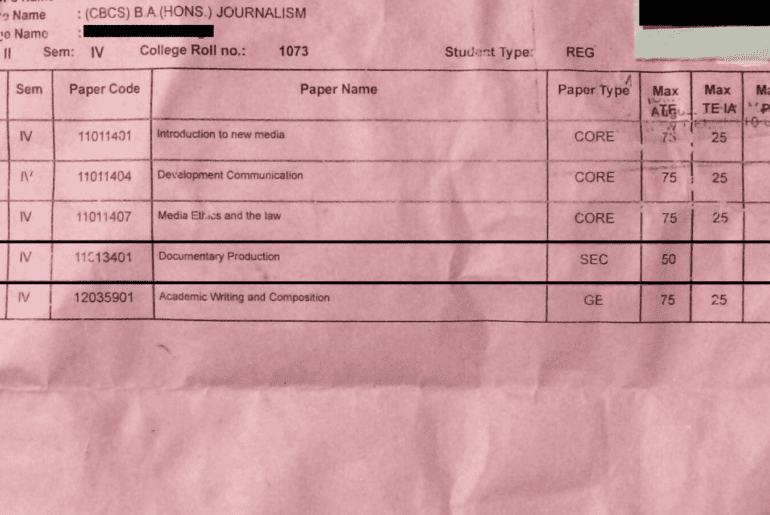
Many students studying Journalism Honours and Psychology Honours under CBCS guidelines received information about the Skill Enhancement Course’s external and internal assessments’ final marks distribution from their college’s faculty members close to the date of their final examination. With the dates of receiving this information varying in different colleges, students from Journalism Honours in Kamala Nehru College (KNC) learnt about the same from their teachers hours before their examination. Interestingly, the confusion of the Psychology Honours’ batch of Daulat Ram College (DRC) was clarified only upon receiving the question paper.

The discrepancy was found out in various colleges upon receiving the admit card. Students of Journalism Honours in KNC and Lady Shri Ram College (LSR) found a 50-50 marks distribution for external and practical assessment for SEC in their admit cards. While KNC students had been studying the course keeping the 50-50 distribution in mind, LSR students were uncertain as they had been following the 75-25 marks distribution, with 25 being allotted for internal assessment. Students from other colleges also underwent similar confusion. “Our admit cards said that the SEC paper that was documentary production would be of 50 marks. But the paper actually was for 75 marks.”, said Aditya, a Journalism Honours student from DCAC.

The situation varied across different colleges and different departments. In certain colleges, the final distribution came to the students’ knowledge quite late, while in certain colleges like Indraprastha College for Women (IPCW), there had been no discrepancy about the same neither in the admit cards, nor with the faculty.

The entire situation around the distribution of marks created confusion and hustle among students. “We were pretty confused since we didn’t know how the marks would be divided and how we are supposed to answer had it been for 50 marks.”, said Utkarsha, a Psychology Honours student from Daulat Ram College, where no clarification from the faculty had been received regarding the SEC Emotional Intelligence paper.

DU Beat reached out to faculty members, but received no comments from their end. There is still uncertainty whether the discrepancy had been for the Journalism Honours and Psychology Honours courses only.

Such action by the college administration as well as the faculty members makes us question whether the students’ best interests are really at heart. After all the formalities and unnecessary steps the students are forced to go through to receive their admit cards, such a massive error with regards to the marks distribution is a careless mistake by the authorities. Students who prepared accordingly, having faith in the college administration and the teachers, were shocked on the day of the examination. With all the buzz around exams and the pressure on students, why was this matter handled so inadequately by the authorities?


Priyal Mahtta
[email protected]

Under the “mapped by digital vision” program, Miranda House has installed a hundred QR Code acrylic scanning sheets at several important places across the campus like the library, canteen, classes etc. Miranda House’s Principal, Dr. Pratibha Jolly, feels proud on taking a step towards making technology more accessible to the visually challenged.

The digital signages work through a customised smartphone app that sends out digital signals when a user is found in a proximity of three feet of the QR Code. The app identifies that location and gives  signals in the form of verbal messages. These messages direct the visually challenged to the direction and number of steps to be taken to enter a place. “If a student wants to meet me, the digital signage in the office corridor gives a warning about the glass door and verbally directs the student on how many steps she should take to reach the spot”, said the college’s principal.

The digital mapping program was undertaken by the college’s “Enabling Society – Lakshita”. The society also carries out a program, “Samdrishti” under which student volunteers guide the visually challenged around the campus, to metro stations, or to bus stops. The initiative of installing digital signages is an extension to the program which adds to making the college’s campus more accessible to disabled students.

By taking such an initiative, the college has taken a big leap towards making Delhi University’s campus more disabled-friendly. The technology may prove to be a boon for students as well as volunteers during the admission season, enabling students to move around in the campus independently.


Feature Image Credits: The Indian Express

Priyal Mahtta
[email protected]

The University of Delhi (DU) has always been recognised by its top league colleges, such as St. Stephens, Hindu, and SRCC. But of late, even its off-campus colleges have been garnering attention. What with their exceptional performance in both the academics and fine arts, these colleges have become just as worthy of a shoutout as any other college in DU.

Here’s a brief timeline about the highlights of the off-campus colleges in the last academic year:

Feature Image Credits: Lakshya, Kamala Nehru College

Deepannita Misra
[email protected]

I still remember the day when I was called for my DU Beat interview. After 3 continuous rejections, it actually happened. But why did I so badly want to get into DUB? Because I used to think that this organisation has rockstars in its team and damn, I was right!
Had it not been for DU Beat it might have taken me a lot more time to discover what I love doing. Thank you DUB for making my college life a beautiful journey and giving me a bunch of amazing people as friends who are passionate about what they do. Each moment spent here will be missed :’)

Signing off

Aditya Rathore
Design Head 2016-17

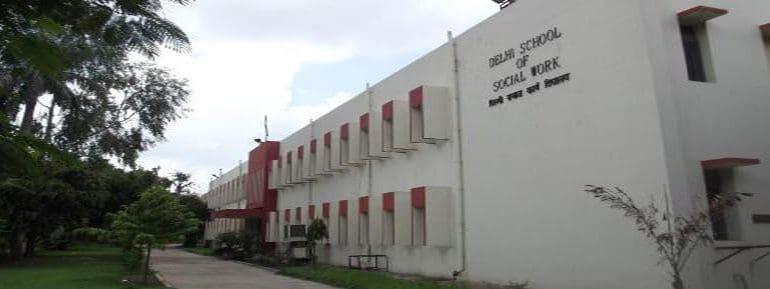
According to a notice put up at Delhi School of Social Work on April 27th, 2017, the residents of the hostel are advised to “dress up properly”, while leaving the definition of “proper” open ended and undefined.

The notice has, however, not been received very well by the students, calling the ruling “patriarchal” and the advice “disgraceful”. In response to which, another notice was put up on April 29th, 2017 by DSW hostel’s warden explaining the context of the complaint. The notice read, “The advice regarding dress was made in context of complaint from some female residents of the hostel with regard to certain male residents sleeping in common room in inappropriate night dress, which was curbing their use of common room.” The hostel, providing accommodation to both female and male students separately while making the common room available to all students, allegedly, led to the ruling by the hostel warden.

As per Professor Neera Agnimitra, the head of DSW and provost of the hostel the notice had been put up in response to certain complaints by some girl students about some male students making use of the common study room while being improperly dressed, making it uncomfortable for them to study or watch television in the room. The professor also told that the notice was temporary and would have been removed after discussion with the students on the matter. A general body meeting regarding this had already been conducted on Thursday. Additionally, the notice also prohibited eating, sleeping, bullying or any other indecent behaviour in the common room, and warned of disciplinary action against those violating the rules.


Feature Image Credits: DSSW Post

Priyal Mahtta
[email protected]

On one hand where it is extremely heartbreaking to get myself acquainted to the fact that I’d never be a part of the Sunday brain storming sessions with the brightest minds from across the university or single-handedly going for meetings with top notch executives from brilliantly huge firms, it also makes me hugely satisfied to see a set of immensely talented juniors who have put in all their effort to make DUB reach new heights this year. My college life, in a nutshell, has been DU Beat. As I sign off as the Marketing Head, I look back in retrospection, at the two year amazing stint that I’ve had at this organisation with the most lovely people that I can, now, proudly proclaim as family.

Thank you, DUB. You’re one college memory I’ll cherish forever.

K.S. Radhika
Marketing Head 2016-17

Over 200 ad-hoc faculty members of University of Delhi observed a day-long hunger strike on Friday, April, 28th, 2017. The strike was observed in order to press their demand to be absorbed as permanent faculty by the University.

The hunger-strike was organised at the Delhi University Arts’ Faculty premises where the ad-hoc faculty members from across the University discussed the problems and irregularities they are subject to by the University. According to Himanshu Singh, an Assistant Professor (ad-hoc) at Satyawati College (Evening),  these teachers are not being made permanent for a long time, and are forced to enjoy a sub-par status, which does not allow them to enjoy the privileges/facilities the permanent members get. He also added while in conversation with IANS, “Some of us have been teaching us for more than ten years, some even more. Why are we not good enough for permanent status, when the university can trust us with teaching students, their evaluation, and their careers?”

The Assistant Professor also told that the ad-hoc teachers are hired through the same selection process as permanent teachers.

According to another ad-hoc teacher from Satyawati College, they will also march to the Vice-Chancellor’s office and present him with a charter on their demands. The Delhi University Teachers’ Association extended its complete support to the protesting teachers in their bid to earn a permanent faculty status in the University.


Feature Image Credits: indianexpress.com


Priyal Mahtta

[email protected]

A research was conducted by the Innovation Project team of Ramanujan College, titled “Designing Distribution Channel Strategy: Forging Consumer and Product Synchrony” under the Project code “RNC- 302”.

The research conducted by the Innovation Project team of Ramanujan College, University of Delhi, titled “Designing Distribution Channel Strategy: Forging Consumer and Product Synchrony” under the Project code “RNC- 302” dealt with drawing a relationship between consumer preferences and distribution channel preferred (local kirana, malls or online) for a particular type of commodity for a given city, under various parameters. The 3 principal operators of this project were Dr. K. Latha, Ms. Isha Gupta and Mr. Rakesh Singh, accompanied by Mr. Pulkit Garg (Country Head of Operations) Arvind Lifestyle Brands Ltd.) as mentor. The student members were Aakar Mangla, Akshit Kakkar, Aditya Sharma, Bharat Anand, Jamaaluddin, Jyoti Tyagi, Kanak Bohra, Pragya Parashar, Ranjeeta Sharma and Saurabh Singh. The team compiled 4 research papers, out of which 3 were focused on individual cities and the 4th one was a joint study of all the cities.

The study aimed to understand the quantitative and qualitative horizons of consumer behavior in different tiers of Indian cities like, Delhi- a metropolitan, Panipat- a developing business hub and Mussoorie- a tourist destination. The results of the study were based on primary data collected by conducting a survey of 600 individuals (200 in each city) of diverse ages, in the selected cities. The sample in each city was stratified and random, and components of study considered only Groceries (oil, grains, confectionery, etc.) and Electronics (Mobile handsets, refrigerators, computers, etc.), which were judged on following parameters-seller’s goodwill, price, product quality, availability, convenience, discount, packaging, timely delivery and payment security.

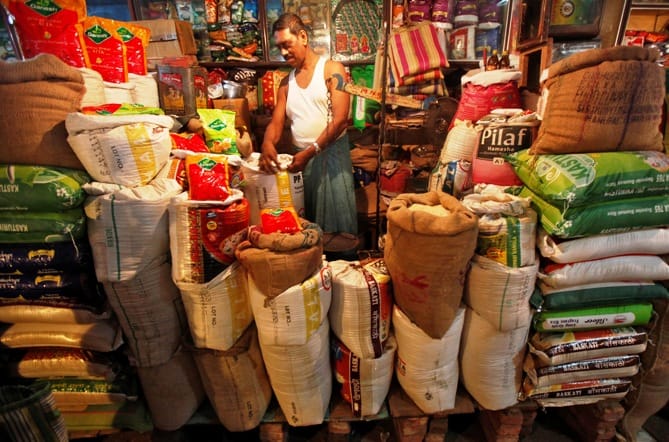
The outcome of the study showed that even with the recent expansion of online portals and malls, local kirana stores remain to be a prominent feature of Indian shopping experience in most cities. The reasons being: convenient, ready availability, product quality, and seller’s goodwill. However, offering discounts, attractive prices, and providing honest reviews proves to be a setback for local kiranas. The outcome was reached upon after an extensive and comprehensive study of these cities. Various innovations and business ideas are given in the research papers compiled by the team which would prove to be of enormous help to new entrepreneurs trying to step into this arena. With online portals growing at this pace, local kiranas and malls are required to undergo a makeover to recapture the customer base they have been losing. Hence, any innovation which could bring this revolution would be more than welcomed.

For more information, watch the short film about their project here.


Feature Image Credits: rediff.com


 Joyee Bhattacharya

([email protected])