Tag

students

Browsing

The abrogation of Articles 370 and 35A has invited a series of memes on social media which are downright insensitive and distasteful. Here’s analysing how much humor is too much, or is it really humour?

Ever since the Articles 370 and 35A have been abrogated, this piece of news has become a hot subject of discussions and debates in canteens, dinner tables, and possibly every social media platform. 

The decision taken on 5th August, which strips Jammu and Kashmir of the special status granted to it decades back, and bifurcates the state into two Union Territories has invited mixed response from the people around the country, as some call the decision a historic step towards unification of the country and an attempt to resolve the long ongoing Kashmir issue, while others find it unconstitutional and a violation of rights of Kashmiris. 

As different opinions and responses found their way to social media, so did the memes. Meme culture in the last couple of years has taken social media by the storm, and it is here to stay. 

For every recent happening in the country and beyond, there are memes to lighten up the mood and give a humorous angle to the situation. Thus, it was only obvious to expect memes flooding our timelines after the abrogation of Articles 370 and 35A, and they did.

While a lot of memes were decent enough to be shrugged away after a laugh, there were double the ones that were really problematic and made us question- how much is too much?

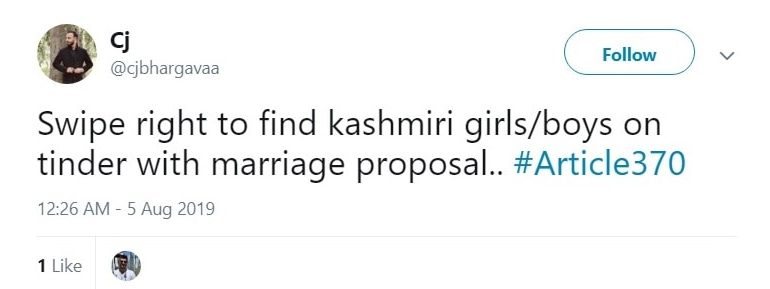
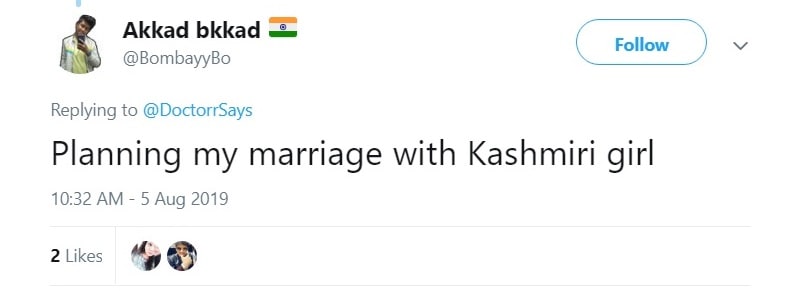
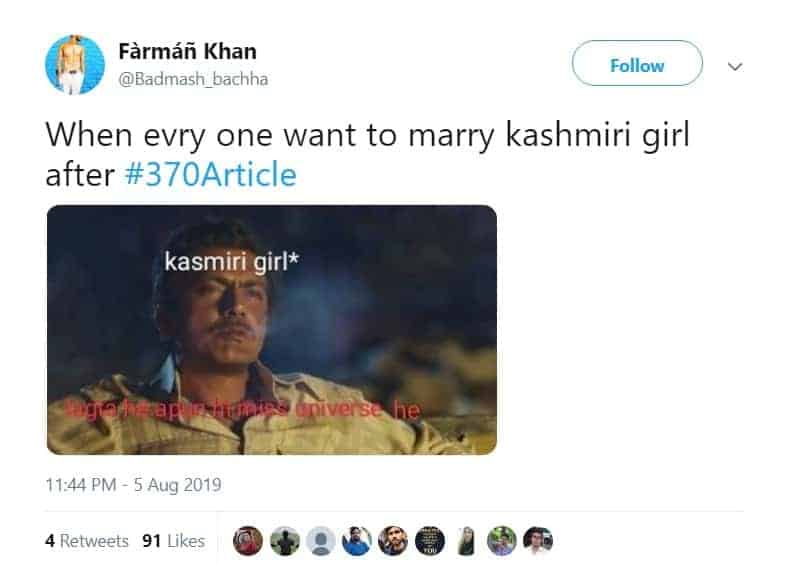
Image Source: Twitter

From people going to buy land in Kashmir to showing their desire to marry “beautiful” and “white” Kashmiri girls, the memes turned insensitive to the people of Kashmir whom the decision impacted in the first place. 

“The memes on Kashmiri girls and land are not helping or creating humour out of this situation. It is only alienating the people of that area furthermore. It is creating a very stifling environment,” said a student from Jammu and Kashmir. 

These meme-makers and sharers turned Kashmir into a mere plot of land which they can now buy and girls from Kashmir as a mere commodity they think they supposedly have rights over. The complete lack of empathy from their end reflected their deeply embedded patriarchy and opportunism.

While it’s completely okay to take sides in a decision and celebrate where one feels necessary, it’s not okay to derive sick and problematic humor at the cost of respect and dignity of the people who are still coming to terms with the change in their lives, and are very much the part of your own nation.

Memes on Kashmir
Image Caption: Deccan Chronicle


Section 144 was imposed on Jammu and Kashmir on the night of 5th August to prevent any threat to security. While Ladakh and some parts of Jammu and Kashmir have started gaining their connectivity to the world back, several districts of Kashmir are still without internet connection. The meme-makers were/are making these distasteful jokes on people who didn’t have access to read and comment upon them. 

It’s extremely saddening to imagine a situation where our people from Kashmir will find these insensitive memes, welcoming them as they log in after days. 

“When the sentiments are so charged and atmosphere is apparently full of fear and distrust. Is it really helping the situation if you make the people of that land unwanted instead of being welcomed?” said one student. 

“The environment feels very occupationist. The way memes are being made on women and land. Trivializing the matter like that makes it seem like everyone cares not about the people But the land and girls,” added another. 

Humour is meant to convert a serious situation into something light to make people see something funny and positive in every situation. But, under this veil of “it’s just a joke”, can we conveniently forget the context sitting on our privileged positions? 

Is it okay to defend every insensitive remark as a joke without paying any heed to how the subjects of your memes will possibly feel amidst the tense situation?

It’s important for these people making careless remarks to register that the place and people they are joking about, thoughtlessly have been living a life of acute distress for over seven decades now. Sounds of bullets and witnessing dead bodies are normal of the lives of these people. Generations after generations, all they pray each day is for one more peaceful day to survive. While you and I live our lives joyously because of our privilege of being born into a state where constant terror attacks don’t haunt our lives, the Kashmiris are under a constant threat. 

twitter 3

It’s okay to celebrate the decision. It’s okay to put forward your opposition. Any debate is healthy to democracy. But what’s certainly not okay is to make our fellow countrymen feel like a commodity and their homeland, property or plot of land. 

It becomes imperative for us as people who “actually” love the heaven that Kashmir is and the people who reside in the valley, to be thoughtful and sensitive of their emotions and make them feel the sense of belonging to the country and fellow citizens. 

In our haste to earn a few likes and comments, let’s not forget that humanity trumps everything. 

Feature Image Credits: Twitter

Shreya Agrawal

shreyaa@dubeat.com


The Executive Council of the University of Delhi (DU) has approved the semester system for the School of Open Learning (SOL) and  Non-Collegiate Women Education Board (NCWEB) starting from the current academic session.

The Executive Council of DU was called on Saturday to discuss the introduction of semester system in the SOL and NCWEB, and it has decided to introduce the semester system from this academic session.

The SOL and NCWEB are currently following the aannual system in which the exams are conducted in the month of May. 

It was decided in an earlier meeting that the Choice Based Semester System (CBCS) would be introduced in these two institutions from the academic session of 2019-2020.

The semester system would enable these two verticals to be identical to regular colleges.

Some officials expressed dissent, as they felt that this move has been taken in a hurry and would affect the students who have enrolled on an annual basis as classes have begun and the study material has also been handed over.

Akansha, who is a B.Com. student in SOL, seemed disappointed and had this to say-  ”There are mainly three reasons for choosing correspondence, those who choose it for convenience and do not have time for regular classes would be pissed as this defeats the purpose and who cannot afford regular education or do not have enough marks to get onto a regular college. I am pissed.”

SOL enables the students to enrol themselves in various courses and programs without being physically present to attend classes unlike other colleges in DU.

This means that students enrolled in undergraduate honours courses will have their examinations under the Central Examination Centre, since SOL offers very few honours courses. Notifications for the schedule of examinations and filing of forms for the students of NCWEB shall be along with regular semester students. Whereas  semester exams for non-honours students would be undertaken by SOL.

The annual system only has one examination whereas the semester system has two examinations during the months of December and May.

The fee structure also varies as semester system requires fee payment to be done in two instalments unlike the annual system with single payment.

The SOL, which was founded in 1962, is one of the largest distance education institute in the country with over five lakh students in its fold, and around one and a half lakh students enrolled annually.

NCWEB, which is exclusive to women, provides weekend to females residing in the national capital.

Feature Image Credits: DU Beat

Stephen Mathew

stephenm@dub.com

Discussing the absolute belief with which we, at times, think we are right, providing no space for any sort of discussion. 

As college students, who are always being bombarded with new ideas and often one-sided news on social media and other platforms, we are, at times, too quick to form certain opinions, which we then start treating as absolute truths of the universe. More often than not, we also get influenced by the talks and views of our professors and friends. Some people, on the other hand, enter college with already fixed notions which they then are ready to defend in the face of opposition and at times even reason. 

Irrespective of how our believes and opinions are developed, for they are a result of our social and personal environment, most of us very strongly believe that we are situated in the moral and ethical corner at all times. Often, this hampers our understanding of why those who are in opposition to our views are so. Many of us who consider ourselves open-minded make statements like “everyone has a right to their own opinions”, but how often do we believe that or not belittler someone, when they hold, beliefs opposite to ours?

As students of the University for Delhi (DU), many of us consider ourselves as politically and socially conscious beings. We attend political rallies and go for protests and some students even join political organizations like the Akhil Bharatiya Vidyarthi Parishad (ABVP) or the National Students’ Union of India (NSUI). However, most of us live in complete denial of even wanting to understand the other side of the argument, leading to a lack of empathy on all sides. Many times we also associate a particular policy with a party. A person who believes in right-wing politics will more often than not believe that all actions of a right-wing political organization are correct and a person who believes in left-wing politics will more often than not believe that all actions of a left-wing political organization are correct, leaving no room for doubt. Incidents of physical and social media bullying or social ostracizing of people because of their political or social believes is a global issue, from which our University corridors are infected as well. 

In conclusion, with partial or complete information, opinionated or neutral media platforms and associates, many of us rush into making concrete judgments, completely oblivious to the fact that the other side must have their reason for their views, irrespective of whether we agree or disagree with them. Dismissing the other side of an argument does not make us victorious on an imaginary debating platform. Perhaps then, at times we can agree to disagree, for discussion is not to win, but to understand and perhaps at times even empathize with those we do not agree with, in a patient and peaceful environment.  

For instance, you may be inclined to follow my line of personal thought and agree with the beliefs behind this article, or disagree with it very strongly; you have a right to do so. I cannot admit to knowing it all but so can’t any of us. 

Feature Image Credits: Aaron Mead 

Juhi Bhargava   

juhi.bhargava2403@gmail.com 


The passing of the Triple Talaq Bill has led to many discussions on campus among students. DU
Beat shares some of the student’s opinions on this new law.

On 1 st August 2019, President Ram Nath Kovind gave assent to The Muslim Women (Protection
of Rights on Marriage) Bill, 2019 making the practice of Triple Talaq a criminal offence,
punishable by law. This has led to many ethical and legal discussions taking place across the
University campus. While many believe it to be a move by the government for the empowerment
of Muslim women, others believe that the government is especially targeting the Muslim
community. According to the new law, if a Muslim man divorces his wife by uttering ‘Talaq’
thrice to her, physically or through any other medium, then he will be sentenced to a 3 year jail
term.

A Muslim female student of the University of Delhi who wanted to remain anonymous said,
“The Supreme Court has already declared the practice of Triple Talaq null and void, so why has
the government turned a civil matter into a criminal one. I am against the practice of Triple
Talaq, but why are men from other religions not being punished for abandoning their wives?”
Another Muslim student of the University who wanted to remain anonymous as well said, “This
law, in reality, is going to hurt Muslim women who are not financially and socially independent,
and most women who have to suffer through the practice of Triple Talaq aren’t. The law
provides for maintenance of the wife and children but how does the government expect a man
sitting in jail to provide for his family? Also, in communities where the practice of Triple Talaq
is seen as valid, a woman usually needs a man for any kind of social standing. Reconciliation
between the husband and wife because of this law is going to be almost impossible now.”

Feature Image Credits: Indian Express

Juhi Bhargava
juhi.bhargava2403@gmail.com

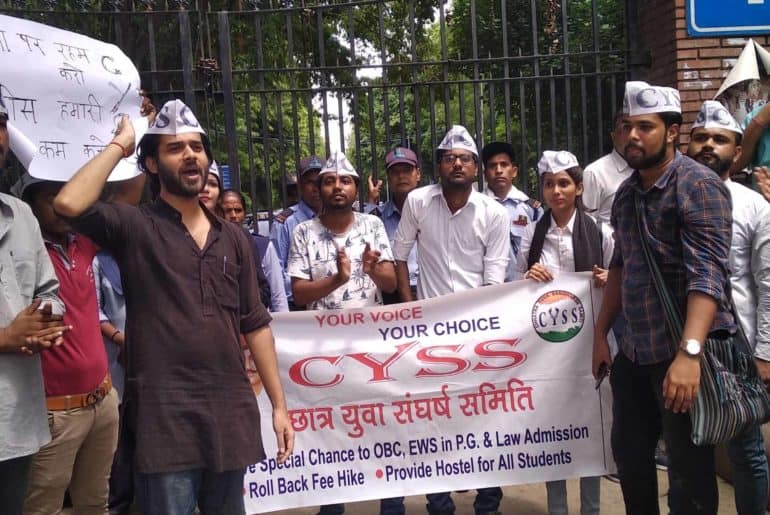
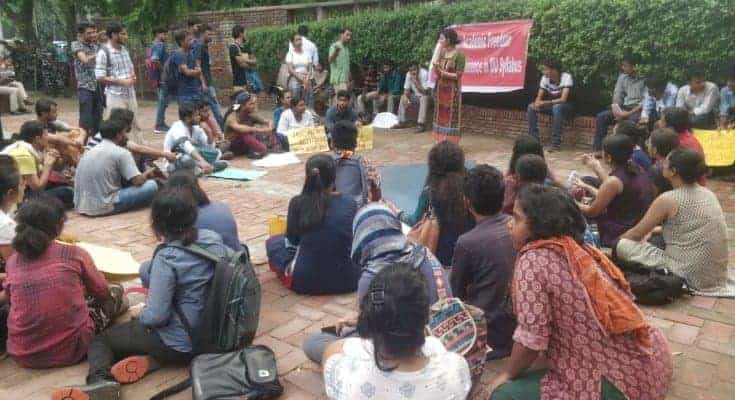
The party members of Chathra Yuva Sangharsh Samithi (CYSS) protested in front of the Arts Faculty today. They demanded a reduction of fees and, hostel facilities for the he OBC and EWS category students.

CYSS, the student wing of Aam Aadmi Party, held a protest in the Arts Faculty. The protest began at 11:30 in the morning continued till three in the afternoon. The protest saw many party workers with banners and posters, shouting various kinds of slogans. 

The march was being led by, Delhi-region State President, Mr. Sumit Yadav. The protest was organised against the fee hike in various colleges and the lack of admissions of students of OBC students postgraduate hostels. It aldo focused on the provision of admissions to OBC and EWS category students in law and other postgraduate courses.

The University had recently increased the fee in various colleges like Mata Sundari. The lack of reservations has been an issue in the University of Delhi (DU) hostels where students are given seats on rank and vacancy basis making it impossible for students of reserved categories to secure admissions in hostels.

However, other than these issues, the issue of a young Muslim girl wanting to seek admission was also raised. 

Afshan, a postgraduate aspirant, wanted to seek admission in DU after completing her graduation from Zakhir Hussain College. She believes that she was prohibited from giving her entrance because of her name which indicated she was a Muslim. 

In addressing the gathering and DU Beat, Afshan said in her speech, translated from Hindi here- “I graduated a year back in 2018 from the University, people here say things like ‘Beti Padhao, Beti Bachao’ yet I have been struggling for two years now for getting my admission done. There was a girl in Unnao who was silenced for asking justice and that’s what they are doing to me. I wanted justice for my education and my leg shivers stating what they’ve done to me. I’ve been blackmailed and told they will ruin my documents as well. I filed a complaint, yet there is no investigation. They say they’ll abduct me. I feel shivers down my spine.” 

She later tried to get in the conference hall of the University, yet she was stopped. There were policewomen ready to tackle her. After a long quarrel, she was finally admitted in the conference hall.  

Later, DU Beat interviewed Mr. Sumit Yadav, Delhi-region State President. He stated, “DU is considered one of the best institutions in the country. All the students across the country even people from rural places of Delhi like Najafgarh choose DU because they get a great education at lower price. Now due to privatisation, they’ve increased the prizes. Our party has always been against privatisation and we’ve been raising our voices for the same.”

The various slogans shouted out were “Chhatro par ab reham, karo fees hamari kam karo ( Have some mercy on the students, reduce fees now)” and “Rehne ko awas chahiye humko Chathrawas chahiye (We need shelter to stay, we need students to have homes)”. They also had slogans critiquing the Vice Chancellor’s inability to provide adequate hostel facilities.

The Party members marched towards gate number four but were stopped by the guards and were not permitted to cross. The situation turned hostile when members tried to climb the gates and cross it over. The guards were forced to push them back. 

“We are protesting here against the fee hike in various colleges which has been implemented this year, that is from ten thousand to twenty-five thousand rupees. It deters students from poor backgrounds from courses diversity courses  as they cannot afford such high fees. We are also protesting again courses as of hostel facilities because of which students are exploited by PG owners to pay very high fees,” said Mr. Hariom Prabhakar who is the General Secretary of CYSS, while in conversation with DU Beat.

Feature Image Credits: Stephen Mathew for DU Beat

Stephen Mathew

Imestephen20@gmail.com

Chhavi Bahmba 

bahmbachhavi@gmail.com

How many times have we rendezvoused at Rajiv Chowk with our opposite campus friends or clicked ourselves in the picturesque lanes of Connaught Place (CP)? Here is a story of appreciation for Central Delhi.

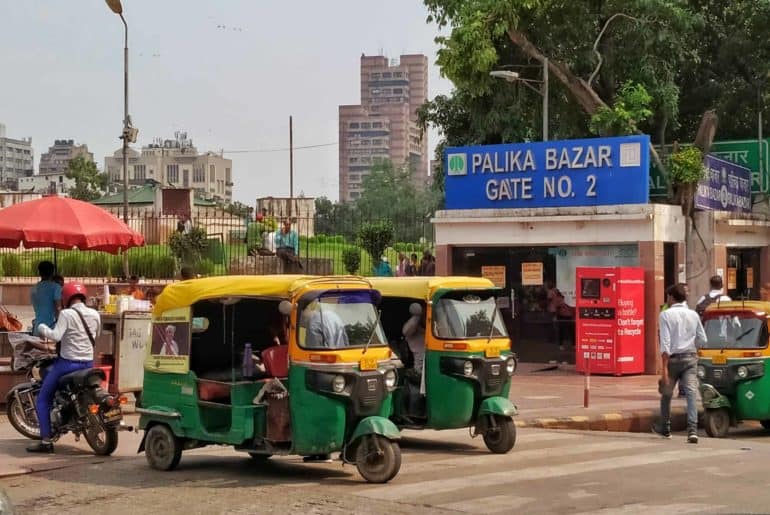
There have been more than a few instances of my friends and I wanting to go out together and have fun, and ending up at CP, which some of my friends call the ‘heart of Delhi’. This British architectural marketplace is a student’s favourite with cheap first-copy goods of Palika Bazaar, clothing and the accessory haven of Janpath, and fancy café lanes, there is a place for everyone to belong here. 

The complex-and-crowded-10-gate-Metro-Station of Rajiv Chowk lies centrally on the map of Delhi. It is an intersection between the two most crowded and heavily connected lines of the Delhi Metro – the Blue and Yellow lines. Hence, this becomes a perfect location to rendezvous with friends from different corners of Delhi. Shubhi Gupta, a student at Lady Shri Ram College, shares that meeting her friend from St. Stephen’s in the North Campus becomes easier at CP because it is equal travel for both of them.

The Central Park in CP sees several young couples venturing out and enjoying a simple yet romantic picnic date. In the evening, ice-cream vendors line up and bhelpuri sellers with balloon vendors create the vibe of a fair. Families come together to enjoy a peaceful evening here, and recently CP has even become a spot for extravagant wedding shoots.

Himanika Agarwal, a student at Gargi College calls CP wholesome in its appeal. She says, “It has fancy brands and top-notch expensive Italian cafes like H&M and Cafe Tonino along with the roadside chaat and rolls and cheap tops, denim, and bags from Janpath. You find the real Maybelline being sold at high prices on the ground and fake first copies being sold underground in Palika. Rajiv Chowk is a place for every mood.” 

Although, many complain of the crowd at Rajiv Chowk Metro Station and many even call CP a by-product of elitist and capitalistic tendencies of the society where Janpath and Palika become home to the struggling crowd while the lanes of CP remain pristine with its upper-class crowd. The seclusion becomes apparent despite it not being deliberate.

Feature Image Credits: Rishabh Chauhan for DU Beat

Sakshi Arora

sakshia@dubeat.com 

Indian political discourse manages to stay off climate change. Read on to find out the reasons and implications of this ignorance. 

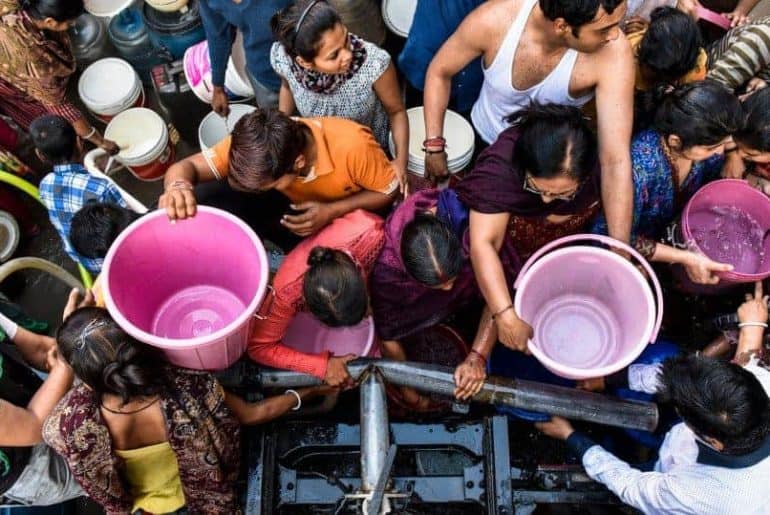
In India, there is a water crisis in several states. Case in point: Chennai. We are a leading country in population, and have leading cities in pollution- to the effect that being a non-smoker in Delhi is no longer possible, as we all breathe in toxic fumes. Ghaziapur garbage dump is as tall as Qutub Minar, among other dumps in Kolkata, Mumbai, and Chennai. One-third of Himalayan ice caps will not survive this effect of climate change; the melting of glaciers has doubled in the last two decades. It will only increase in some time. There is close to no rain in Delhi, but the regular floods in Mumbai, Assam, and Bihar are not unheard of. 

Despite the deteriorating situations, climate change and environmental policies were still not a priority during the elections. Jobs, corruption, and security have always remained popular ideas in the country’s political discourse. This sadly reflects on what the voter-base wants to hear, and shows that we still have a long way to go. Among various reasons for this ignorance, poverty and illiteracy become major factors. For a starving family of unemployed seven or eight people, living in a makeshift tent under a flyover, a square meal will be more important. But who will be affected immediately, and to the worst effect in this situation of climate change? The majority of our population includes people with no homes, who barely make their ends meet, and they will all face the brunt of this (ignorance) the most.

The image of mother, or Maa in Hindi, is highly glorified. The mother, who is called the backbone of the family—in line with the pedestalised notions of motherhood—is only talked about when there is a need to evoke a sense of nationalism or to emphasise the proverbial self-sacrificing nature of women. But between the loud traffic and noises blaring on news channels, all the screaming voices in our country hardly say anything for our ‘Mother’ Earth. 

The crux of the matter is that India needs more environmental policies and laws to be enacted and strictly enforced. Class twelfth Political Science books talk about how after the British drained our resources, it took several years for us to realise the problem, and only much later were we able to rectify them—we are heading down this path again. It is not the time to convince people if climate change is real, because it is. 

The Ministry of Environment and Forests needs to be seen as the highest profile allotted in any cabinet. Simply because currently, environmental issues are not the focus point; our existing policies do not suffice and many of our policies allow industrialists to cut down trees in bulk, and we are ill-equipped to manage any natural disasters. 

Recently, the Garbage Café in Chhattisgarh has acknowledged an important concern. It will open next month, and take certain kilograms of garbage to provide food to people. This café will open in Ambikapur, India’s second cleanest city. A similar story was heard about a school in Assam, which provides schooling to children in exchange of plastic waste. Another revolutionary idea was the Tokyo 2020 Olympic medals having been made from 80,000 tonnes of recycled electronics and mobiles. 

Theories on the world ending in 2012 gained a lot of traction, but scientists telling us how to protect this Earth—an act for which we pointedly have time till 2030—is yet to make as big of an impact as a movie. These ideas that have been proposed are unique solutions to fighting multiple problems together. But they are yet to gain the social mileage that they deserve. The Indian political discourse needs to change and reflect today’s problems to fight the real enemy. 

Feature Image Credits: MIT Technology Review

Shivani Dadhwal

shivanid@dubeat.com

A year in this space has made me question my personal notions- what kind of diversity do we have? And is the presence of diversity the same as accepting it- those who bring it to the University of Delhi (DU)- with open arms? Read a take on the culture of shaming in a space meant for diversity.

For a University situated in the Capital of a nation that sells itself to globalisation with the tagline ‘Unity in Diversity’, cultural, economic, and social diversity is always a good self-promotional point. However, if you have been in DU for even a semester, the rose-tinted lenses wear off soon enough. We may have students from all over the country and beyond, but our academic and cultural spaces have not learnt the rhetoric of respecting the history that comes with different family and socio-economic backgrounds.

An average day in an English literature classroom in a  college considered ‘intellectual’- like Lady Shri Ram College- involves professors coming in class, throwing names of critics (mostly foreigners, usually white), and expecting students to have read them. An academic space is meant to challenge you, and to inform you about things you were formerly ignorant of. But the sighs of disappointment, ‘how do you call yourself educated’, and steely eyes filled with judgement when one is unaware of what the professor is speaking of; all are methods of shaming that do more damage than the promised ‘good’. 

It is unfairly ignorant to only speak of professors and classrooms as the harbingers of this attitude, since our own friend circles play a significant role in this process. We, as young-adults stepping outside the comfort of our homes, seek a sense of self-worth and validation from our friends. When belittled for listening to a certain kind of music, or for not having watched or read a movie or book considered ‘high art’, it is inevitable to lose faith in our intellectual capabilities. To be told that you need to have done specific, mostly privileged, and expensive things in order to fit in, is not only elitist, but also a form of childish bullying that all of us have been subjected to.

Most of us have not grown up with our fathers playing vinyl records of Bob Dylan or The Beatles to us as kids. The tag of a Grammar Nazi (wrong on every level), that we wear as a badge of honour will never encourage somebody to learn better English, but will be a reminder of the inefficiencies in their background. It says something about their history, over which they did not have active control, but it defines you as a person- an elitist who does not wish to be kinder and more empathetic.

To recognise that there are conditionings different than your own is a significant aspect of mental maturity that DU colleges fail to instil in us. Challenging us academically or giving us a plethora of resources to learn from is the thing one seeks, but DU’s rather popular culture of shaming us into learning is psychologically flawed, and ethically problematic in a time when we are learning and unlearning the caste, class, and cultural privileges and meritocracy. It is true that DU is not the only place where the culture of shaming is prominent and propagated, but when I think of DU, I think of diversity. To have diversity comes with the need to accept it, and I know our classrooms can change for the better. Arundhati Roy said, “To love. To be loved… To try and understand… And never, never to forget.” (If you have not read her, it’s okay. Take this as my recommendation, if you were looking for one?) I hope, DU does not forget its role and duty to diversity- intellectual and of all kinds- and understands that we are all learning, and we can do with a little kindness.

Anushree Joshi 

anushreej@dubeat.com

Having bid adieu to uniforms, daily lunchboxes, and travelling in school buses, college is when you learn how and where to spend money.

Coming to college is a step towards becoming an adult; but it can be a tough nut to crack when it comes to managing finances. Here are some tips to manage all this, smartly and efficiently: 

Budget

In all the excitement to go to college all prepared, we do not realise how much money has been spent. When the realisation begins to kick-in, it is best to not have an ambiguous figure in your head; rather, a clear image of how much money is spent on different four major things – clothes, travel, food, and books or other resource material. You can also modify this budget list by adding or removing fields, based on your spending or interests. 

Spending Smartly and Saving

Now try and identify expenses which can be moderated. Instead of purchasing books every semester, borrow these from your seniors or even buy them second-hand. This is a smart choice, given that there is a possibility they will have notes, or important points marked. 

Instead of buying whatever clothes please your eye, make sure you try them on in the store, so there is no possibility of them being the wrong size, or something you are not comfortable in. 

Ishita of Kamala Nehru College (KNC) gave a good tip and said, “I live in Dwarka where rickshawallahs ask for a lot of money even if you go in the shared ones, I discovered that Ola and Uber cost less and were more convenient.” It is important to try out different routes or transports to rule out the most tedious ones. 

Student Discounts and Offers

Today, there are endless online stores, apps, offers and combos that allow you to spend smartly, and save plenty. You only need to become aware of these avenues, for example, waiting for sales to buy clothes. Devyani Arora, a student of KNC, shared, “Many food apps have discounts that can be availed, and there are coupons that reduce the cost further. If you do not have coupons, you can also pay through Amazon Pay or Paytm to get some cashbacks.”

When going out with friends you can look for restaurants offering “1+1” deals. Arora went on to add, “Using online portals or payment through credit cards can also help get points for you to redeem later.”

Feature Image Credits: Akarsh Mathur for DU Beat

Shivani Dadhwal

shivanid@dubeat.com


The administration of the University of Delhi (DU) has been mulling over declaring Saturdays off for first-year students from the new academic session 2019-20. 

The decision comes in the wake of a petition filed by Simple Wasan, a student of Daulat Ram College. Wasan sought the High Court’s justice in the face of the rampant college routine from Monday to Saturday. The petition further voiced various other issues: safety of students, library hours at colleges, subsidised canteen food at the same rate for faculty and students alike, etc. These key issues aimed at creating a more “holistic environment of learning” for the students, as Wasan mentions in her open letter to the Vice Chancellor. The letter has gone viral through Wasan’s Instagram story-series. 

Owing to the massive support the petition has received, the authorities have been considering the suggestion seriously. As the authorities overview and analyse the costs and benefits of this decision, to-be-first-years can expect a path-breaking decision in their favour.

Even if it sounds thrilling at first, college can be extremely taxing for the first-year students, freshly coming out of the promising comforts of school system. The DU administration might have finally come up with a resolution to this everlasting six-day fatigue of its students.  Reportedly, Saturdays could be off for the to-be-first-year students of the Varsity in the coming academic year. 

In the letter published on Wasan’s Facebook profile, Ram Manohar, a student of St. Stephen’s College has commented, “This is an essential movement against mediocrity, that settles in students owing to the relentless academic pressure.” The active supporters have also demanded establishing suggestion boxes in every college for the students, so that they can address their otherwise hesitant concerns to the authorities. “Naturally no one wants to win some professor’s spite, and hence most of us refrain from actually vocalising our issues in front of the faculty,” wrote Manohar. 

“With only one day available in a week to catch up and clear the backlog, Sundays are not enough for college students,” said Naveen Kumar, a student of Ramjas College pursuing his final year of B.A. (Hons.) Sanskrit. 

The decision has invited a mixed reaction from the teaching fraternity; what happens next remains, of course, to be seen.

Disclaimer: Bazinga is our weekly column of almost believable fake news. It is only to be appreciated and not accepted!

Feature Image Credits: Namrata Randhawa for DU Beat

Kartik Chauhan 

kartikc@dubeat.com