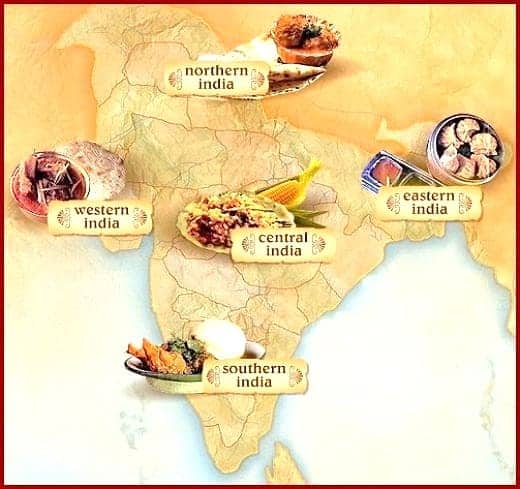
 One lovable thing about Delhi is that it belongs to one and all. It is a delightful mixed bag of all cultures. It is perhaps one of the only cities where you’ll probably find a Bengali, a Gujarati, a South Indian, an Assamese, and a Bihari – all sitting on one table. Similarly enough Delhi University has its wings spread out in all directions, people from all over the country aspire to graduate from DU.
Over the years, DU has managed to create its very own set of regional stereotypes. Why does one have to be a “bong” a “gujju” a “mallu” a “bhaiyya” or a “chink”? A sense of ‘otherisation’ trickles in with the casual labelling people do to those who aren’t from Delhi. There is absolutely no reason why we should reduce ourselves and others to our regional identities.
If you’re from anywhere outside Delhi, you’re expected to know everything from the language to the myths, the fluency, the music, the dance, the recipes and even the soil type. The stereotype goes like this- if you’re a Bengali, you’re supposed to know all about Satyajit Ray and Tagore, you’re supposed to know which halvai sells the best and most authentic mishti doi and sondes, you’re expected to know ten different ways of frying fish; if you’re a south Indian, you’re expected to know all the dances, you’re expected to pick out the best kanjiverem silk by its texture, you’re expected to know how to fry dosas; if you’re a Kashmiri, you’re expected to be romantic, poetic, and (ridiculous as it may sound) even pretty; and if you’re from the northeast, then you’re expected to love momos and know all about tattoos and piercings and affordable fashion.
It is considered unnatural for someone from Haryana to be anything but rowdy, just like it is considered natural for jaats to be the gunda–raaj of the ilaaqa. The “Delhi Boy” memes would probably explain better. There are “tips” for each region as well, be it “Bongtips” “Rajasthan tips” or “Delhitips”. Sadly enough, the generation of iPods has adopted the trend of categorisation, which has further led to regional stereotyping.
Perhaps regional jokes, region-wise tips, memes, etc don’t mean much harm, but somewhere in the middle of all the casual labelling, the jokes, the general assumptions, etc have smudged the thin line between assertion of one’s regional identity, and limiting oneself to it. Somewhere in the midst of all this, we are forgetting one very important fact-that anyone can do anything, or be anything.




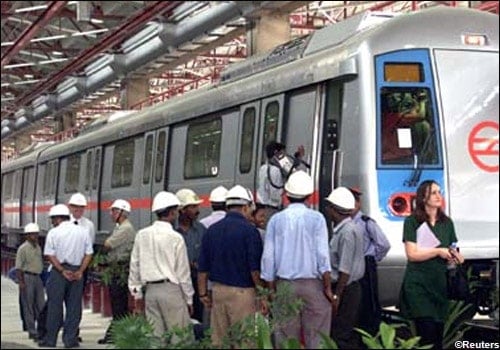
 Picture source: Reuters
As the sun rose over the country this morning, a large part of North India found itself in the middle of the worst power outage in ten years. Citizens of New Delhi, Punjab, Haryana, Rajasthan, Uttar Pradesh, Uttarakhand, Himachal Pradesh and Jammu & Kashmir were left with with no power supply in their homes to carry out day to day activities. Majority of the nation was especially brought to a standstill as all other activities halted due to lack of electricity. Inter- state transport, water supply and public transport faced the brunt of this power cut.
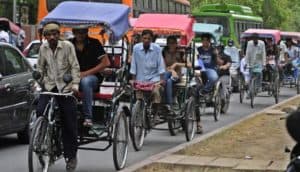
In New Delhi, the metro services suffered as stations were locked out and people were left stranded. Looking closely at the plight of DU Students, as the Delhi Metro (an impetus for commuting) had come to an abrupt halt- students had to rely on over- crowded busses, auto rickshaws or cars on Delhi roads, which already happened to be clogged with traffic.
Adding to their misery, once the students did make the perilous journey to college they discovered that classes had either been cancelled or postponed. “It was horrible, in fact horrible is an understatement. We were squished in the over crowded bus, a friend of mine was on the verge of crying. We had to get off halfway and take an auto- only to find out that classes had been cancelled.” said Riya Anna Kuruvilla, a first year student from Hindu college who had to travel from Dwarka to North Campus.
“I took the metro for granted as I used to travel by it since day one, today I had to take a bus. Being new to this route it was tough for me, but owing to the power cut, I could discover an alternate way of commuting!” Shreya Mudgil, a first year English Hons. student from Bharti College added.
Thanks to the prowess of the authorities most of the electricity supply did return soon bringing life back to normal; however the morning was a bit of a jolt to the whole of North India.
Deepali Datta a first year student from LSR made an uncanny observation she said, “An interesting side of Delhi emerged today as everybody became everybody’s Google Map, people gave way to pedestrians despite faulty traffic lights. Some students like me, did miss out on the attendance for the first lecture, but the lesson learnt was worth it, nothing can stop a city like Delhi. One grid collapsed but another emerged- the People’s Grid.”
A pat on the back to all Delhiites- students, parents, office goers alike- who did made it to their respective duties on time and did not abort any of the city’s activities! And DU students who did manage to get the whole day’s attendance deserve special mention here, don’t they?
Anugrah Gopinath
Picture source: Reuters
As the sun rose over the country this morning, a large part of North India found itself in the middle of the worst power outage in ten years. Citizens of New Delhi, Punjab, Haryana, Rajasthan, Uttar Pradesh, Uttarakhand, Himachal Pradesh and Jammu & Kashmir were left with with no power supply in their homes to carry out day to day activities. Majority of the nation was especially brought to a standstill as all other activities halted due to lack of electricity. Inter- state transport, water supply and public transport faced the brunt of this power cut.
In New Delhi, the metro services suffered as stations were locked out and people were left stranded. Looking closely at the plight of DU Students, as the Delhi Metro (an impetus for commuting) had come to an abrupt halt- students had to rely on over- crowded busses, auto rickshaws or cars on Delhi roads, which already happened to be clogged with traffic.
Adding to their misery, once the students did make the perilous journey to college they discovered that classes had either been cancelled or postponed. “It was horrible, in fact horrible is an understatement. We were squished in the over crowded bus, a friend of mine was on the verge of crying. We had to get off halfway and take an auto- only to find out that classes had been cancelled.” said Riya Anna Kuruvilla, a first year student from Hindu college who had to travel from Dwarka to North Campus.
“I took the metro for granted as I used to travel by it since day one, today I had to take a bus. Being new to this route it was tough for me, but owing to the power cut, I could discover an alternate way of commuting!” Shreya Mudgil, a first year English Hons. student from Bharti College added.
Thanks to the prowess of the authorities most of the electricity supply did return soon bringing life back to normal; however the morning was a bit of a jolt to the whole of North India.
Deepali Datta a first year student from LSR made an uncanny observation she said, “An interesting side of Delhi emerged today as everybody became everybody’s Google Map, people gave way to pedestrians despite faulty traffic lights. Some students like me, did miss out on the attendance for the first lecture, but the lesson learnt was worth it, nothing can stop a city like Delhi. One grid collapsed but another emerged- the People’s Grid.”
A pat on the back to all Delhiites- students, parents, office goers alike- who did made it to their respective duties on time and did not abort any of the city’s activities! And DU students who did manage to get the whole day’s attendance deserve special mention here, don’t they?
Anugrah Gopinath