
Tag

social media

Browsing

One of the biggest hurdles towards effective studying during the exam season is the internet. In particular, social media seems to be impossible to avoid. Here are a few tips on resisting the temptation to avoid checking the screen all the time.

There need not be any elaboration on the point that social media is a major irritant during exam time. It’s one of the most intense love-hate relationships of modern times. We love the fact that we can collectively laugh at the typos, puns, wordplays, and even at death and depression in the form of memes. We can connect with best friends and those we love over distances. We simultaneously also hate the feelings of anxiousness and nervousness we get as we wait for important replies, the feeling of emptiness when we see nothing new as we refresh our feeds at 2 a.m., and when we realise that we are way more dependent on social media than we should be.

While one should ideally reduce social media usage for general mental well-being and one’s eyesight, the fact that it distracts people from their exams that are to take place in a month will probably be the biggest encouragement people need. So as exams are nearing, here are some general precautions you can take to stop your validation-seeking, FOMO-avoiding (that’s Fear Of Missing Out, for all you acronym illiterates) side from running to the warm embrace of red notification pops, waiting to be clicked on.

Firstly, notice which apps you spend the most time on. Whatever they are, uninstall them. If you cannot seem to do so, then limit your use. Set time limits mentally, or set alarms if you can’t seem to check on yourself. Realise that memes and Instagram feeds will remain even after you’ve finished studying and that they will have no contribution in telling you the pointers of that 5 marker.

Note what kind of things make you spiral out of control. If they are YouTube videos, set limits on the amount you see. If they are WhatsApp messages, then mute your notifications or switch your internet off when you’re not on your phone. Whatsapp usage is actually easier to reduce nowadays. Why? Those ugly new emojis, obviously. (sorry for the burn, WhatsApp, but it’s true and we all think so.)

Finally, if you have zero self-control, then appoint a friend to police you and send reminders to stop scrolling. It might seem a little intense but if you’ve read this far into the article, you might need it. Remember, a friend in need during times of no restraint, is a friend indeed.

Image Credits: Sagoon

Rishika Singh
[email protected]

At a time when everyone is demanding Right to Privacy as a Fundamental Right, it is important to understand how much do we actually follow the concept of privacy in our day to day life.

Ours is a generation that is obsessed with putting all our information on the social media platforms. We find ourselves juggling between Facebook, Instagram, WhatsApp, Snapchat, or Twitter. Somehow just one platform is not enough for us to keep our thoughts and ideas across. We are a generation that believes in clicking the photo of food on the table first before eating it. We believe in telling the entire world about our personal life by updating our relationship status on Facebook. We are trying to maintain Snapchat streaks alive and keep a check on the exact time when the other person read our Whatsapp message. We do not understand the concept of boundaries. We like to tell the entire world the place we are visiting, the food we are eating, the dress we are wearing, the song we are listening, the emotions we are feeling, and the list goes on.

There is nothing about our life that we really want to keep private. This paranoia does not stop here. We are equally eager about to know the personal details of someone else’s life too. We are not satisfied till we know all the secrets of our favourite celebrities. We stalk them while trying to capture a moment from their private life. We hide behind bushes and resort to sneaky measures in order to photograph them in their personal moments.

Recently, my sister who is a teacher decided to conduct an examination. She was bombarded with messages from her students throughout the night asking her to clarify their doubts. She finally had to switch off her mobile in order to have a peaceful sleep. Another time I was having a conversation regarding some official work on WhatsApp when an old friend of mine messaged me. I did not have the time to engage in a conversation with him at that moment. Hence, I decided not to reply. However, when he saw that I was online and still chose not to text back, he was deeply offended. Thus we as a generation, have lost the understanding of how to respect someone else’s private space. We expect the other person to cater to our needs immediately, refusing to even have a consideration of their circumstances.

Hence, it is important to ask the question whether there is anything remotely private about our life. Consciously or reluctantly we are becoming a part of a culture where the line between public and private is becoming more and more blurred. Even if we try and resist to it, we are able to succeed at it till a certain point only. When I started fighting this battle, I was quite obstinate and stubborn to not let anyone intrude into my personal space and time. However, I find myself constantly facing failure. It is disheartening to see that one cannot help but succumb to this pressure.


Feature Image Credits: Kulzy

Anukriti Mishra
[email protected]

With 3 May 2017 being declared as World Press Freedom Day by the United Nations Educational, Scientific, and Cultural Organization (UNESCO), the American Center, New Delhi celebrated the month of May to raise awareness about freedom of speech. On the last day of the month, an event was conducted jointly by DU Beat and the American Center – Debate on Free Speech and Social Media – How much is too much? The event brought together debaters from the University of Delhi and the National Law University to speak in support of and against absolute freedom of speech on social media. The debate took place at the American Center, with an interactive audience and listeners who even stood at the back, surpassing seating capacity.

The debate was moderated and judged by Karnika Kohli, Social Media Editor of The Wire, Craig L. Dicker, Cultural Affairs Officer at the Embassy of the United States of America, and Richard E. Pinkham, Director of Programs, North India Office at the Embassy of the United States of America.

The speakers covered a wide range of ideas and topics to support their stance, from allusions to Reliance JIO to details of legal cases. They were asked challenging questions by Ms. Kohli in response to their statements. Additionally, the engaged audience members also gave their inputs and asked the debaters to flesh out their arguments. The passionate speeches left the audience, as well as the judges, in a dilemma with regard to which side to support. As Mr. Dicker stated, he felt “like a ping pong ball” which bounced from side to side with each speech.

At the end of all the speeches, the judges deliberated to announce Abhinav Hansa Raman and Bhishm Khanna of the National Law University as the winners, who argued for and against the motion respectively. The conclusion of the event was followed by a high tea. The entire debate was live-streamed on Facebook and garnered thousands of views.

“It was immensely gratifying to welcome such intelligent students to the American Center so they might contest the appropriate limits of free expression in the realm of social media. I will not be surprised if sometime before long our participants are ?debating the same issue as part of a policy-making exercise. For now, our audience was very fortunate to be able to hear such bright minds argue both sides of this most topical issue. Our thanks to partner DU Beat for organising this excellent session.”
– Richard E. Pinkham

As DU Beat is a platform that has fiercely supported freedom of expression for a decade, it was a privilege to be able to conduct this debate, especially in the current political environment. With mainstream Indian thought becoming increasingly homogenised and peripheral voices being silenced, the debate offered a broader look into the idea of freedom of speech and expression as a whole. A similar scenario is visible in the US, where occurrences of hate speech have become more numerous since the Trump administration came into power. Therefore, this debate could not have been held at a more apt time about such a pertinent subject. We are certain that the event offered food for thought to everyone present and forced them to re-evaluate their presence on social media.


Feature Image Credits: Alex Arthur for DU Beat

Vineeta Rana
[email protected]

In recent times, the use of social media such as Facebook, Twitter, WhatsApp, Youtube etc has become an integral part of our lives. The new technological developments have made internet an innovative way of communication. Under the University of Delhi Innovation Project Scheme 2015-16, Daulat Ram College undertook Project 307, “An Empirical Study of Using Social Media for Facilitating Effective Students’ Learning”.  The objective of this innovation project is to examine how incorporating social media into teaching process can contribute to students’ learning, engagement, and their academic performance.

TEAM:

Principal Investigators- Ms. Malini Sharma, Ms. Pooja Khanna, Ms. Divya Gupta, Mr. Naresh

Student Members- Akshita Nidhi, Bharti Sharma, Bhavya Gupta, Gunjita Dhingra, Harshita Wadhwa, Hiya Saharia, Shaivya Gupta, Smriti Banati, Snigdha Sharma, Vaishnavi V.G.

In this project, primary data has been collected through an online pre-test and post-test survey administered to a sample of Daulat Ram College students (in the experimental group and the control group). With the experimental group, social media has been used for various types of academic and co-curricular discussions. The two group’s differences in engagement and marks are analyzed using statistical software SPSS. This study investigates the acceptability of social media for collaborative learning and the possibility of using it as an effective teaching tool.

innovation

This project also supports the ‘Digital India Initiative’ of the Government. Incorporating social media in higher studies will have a beneficial effect on both students as well as the teachers. Teachers and students would be able to communicate even after the classes. Teachers would be able to stimulate the thought process of the students by launching dialogs. Through social media we can reach out to the students in remote areas and improve the educational system of the country.

Various workshops and seminars have been conducted under this project to spread awareness regarding positive impact of using media in higher studies. Also extensive surveys have been conducted in schools across Delhi and Indian Institute of Mass Communication (IIMC) to analyse the impact the media clubs on students.

innovation-3

The team has presented papers in various conferences and has also won the best paper award. They have presented papers at International Conference of Women Empowerment in Digital India supported by M.P Govt, International Conference at Daulat Ram College sponsored by ICPR, International Conference held at Indian Federation of United Nations Association (IFUNA) and International Conference on Business Management and Social Innovation.

If I ask people about their most-used platform for daily news, majority of them are likely to speak of social media platforms. This is the reality of today. Due to the emergence of digitalization and an immense growth of technology, people of all age-groups are heavily relied on websites like Facebook and Twitter to get their daily dose of updates from all around the world. News channels are seen investing in mobile applications to keep up with the pace of technology and provide timely updates to the readers.

All of this is giving people a power. One, no longer, has to switch on their television set to become aware of the latest debates in the world, and nor do they have to wait around for the arrival of any newspapers. One can actively broadcast news and watch it unfold without any lapse of time.

So, all in all, traditional platforms and social media have become two powerful forces which are working towards a common goal of spreading awareness as efficiently as possible, despite the differences.

But, every power comes with a responsibility and its own set of pros and cons. As we already discussed the pros above, let us now look at some of the disadvantages posed by such a change.

“Half knowledge is more dangerous than ignorance”

This becomes significant in witnessing the relations between the users today and their news-reading habits. Through the help of status updates, shared posts and various 2-minute videos, we sure know what the latest news is all about and have a general idea or an overview of the specific situation; but do we really make an effort to know the whole story?

We know that Donald Trump is contesting in the US elections but do we even know anything about him? Do we understand why he’s being criticised by so many people? He said something about Muslims, right? But what did he say, why did he say so, and what is so wrong about it- do we ever question that?

Also, most of the times, when we come across a piece of news through the social media, we are so constantly involved in doing something else that we are likely to get distracted easily. There is also a fat chance of the article that you read, which is slowly forming your opinion, being factually incorrect because of its autonomy provided by the social media and a lack of stringent fact-checker.

So, somewhere, I believe, reading the headlines in our notification bars alone is creating a false sense of security among us. It sure helps us seem not-so-dumb in a social gathering because, “hey, at least I know there was some movie which was in news for being censored” but this is soon going to harm us in the longer run.

So, use the power, wisely. While the internet is a wonderful place with social media making everything accessible for everyone, do not run away from your own efforts. Read extensively from different authenticated platforms and then form an opinion. After all, knowledge is power, right?

Image credits: www.thehindubusinessline.com

Nishita Agarwal

[email protected]

From Chris Rock’s monologue about the lack of diversity in Hollywood to Leonardo DiCaprio winning the Oscar (can we say FINALLY?!), the 2016 Academy Awards certainly had several memorable moments which understandably sent the world wide web crazy- whether it be through the start of new memes, or the end of others (you know what I mean).

The Twitterverse once again proved itself as the place to be for anyone who wants an immediate explosion of a diverse range of reactions to whatever’s going. We present to you some of the best and most popular tweets about the 2016 Oscars:

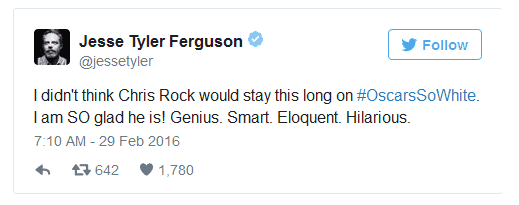
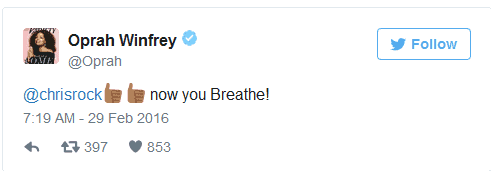
1. When Twitter loved Chris Rock’s monologue about the lack of diversity in Hollywood:

cr1

cr2

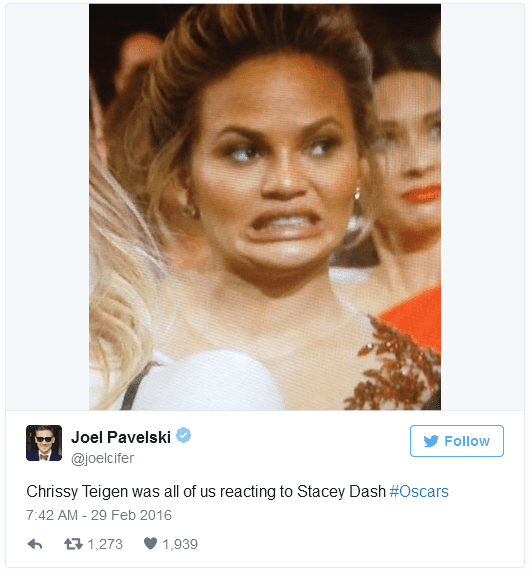
2. Chrissy Teigen was the queen of audience reactions when Chris Rock brought out Stacy Dash, the actress who has criticized the Black Lives Matter movement and the Black History Month, who wished the audience… a happy Black History Month. Awkward much?!

oscars3

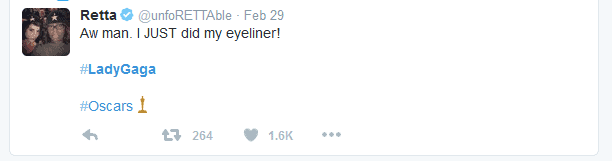
3. Lady Gaga’s powerful performance of her Oscar-nominated song ‘Til It Happens To You’ with survivors of sexual assault onstage made the audience and the Twitterverse emotional. She was introduced by Joe Biden, who has been instrumental in promoting the White House’s “It’s On Us” campaign, aimed at ending sexual assault

oscars 4
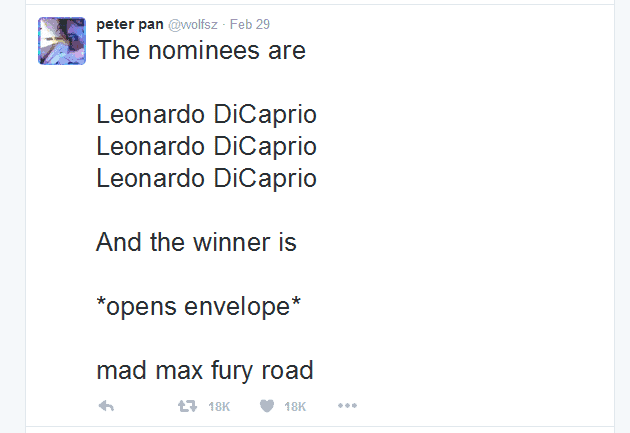
4. When Mad Max: Fury Road went on a mini-spree and the memes, of course, followed:
oscars6
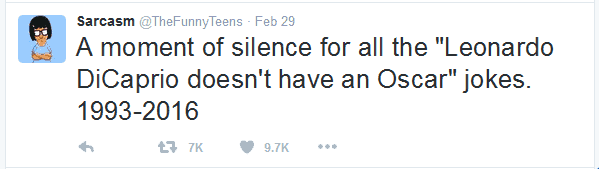
5. And of course, when  Leonardo DiCaprio finally won the Oscar for his sixth nomination. His win nearly broke the internet and definitely broke a Twitter record for the most-tweeted minute ever to take place during an Oscars telecast. There were more than 440,000 tweets per minute posted when he accepted his award, as opposed to 255,000 per minute when Ellen DeGeneres took the legendary Oscar selfie in 2014, which was the previous record holder. This tweet accurately captures our reaction:
oscars5
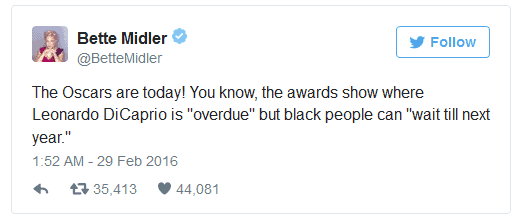
One of the most important tweet was perhaps that of Bette Midler’s before the ceremony even began and captured what many believe was wrong about the biggest Oscar moment of the night:
oscars1
Oh well. The good, the bad and the controversial, all found place on Twitter during the Oscars telecast and it sure made for an interesting feed!
Featured Image Credits: oscars.org
Shubham Kaushik

Ever since it gained popularity in the 2010s, Twitter has been the place to be on the interweb. Quick, concise and relatively direct (you can direct tweets at official celebrity accounts!), everyone from the Prime Minister of the country to the fashion blogger you follow has an account, even if they’re not that active. Recently, Twitter has also emerged as the place to talk about social issues and calamities around the globe. People use it to start campaigns and direct attention towards important issues, as well as to run updates accounts (kinda like fan-pages but with stalkerishly-accurate everyday updates) for every possible celebrity.

2015 was a landmark year that changed quite a few aspects of life as we know it, and you bet Twitter was all over it. Here’s the most loved, popular, trending and retweeted posts of 2015:

1. Most Retweeted:

most rt

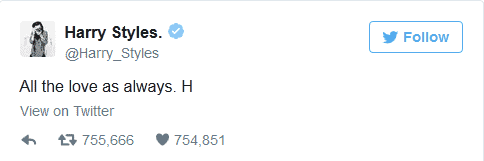
The One Direction fandom reigned supreme amongst the retweeters as the most retweeted tweet of the year emerged to be Harry Styles’ message after the news of Zayn Malik leaving the boyband broke. Other One Direction related tweets also figured amongst the top, including Zayn Malik’s tweet of support after the band’s single ‘Drag Me Down’ dropped.

most rt4

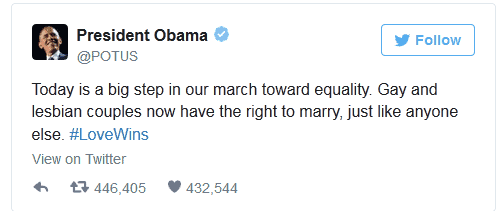
The tweet about marriage equality by the official account of the President of the United States, and Caitlyn Jenner introducing herself to the world, were also amongst the most retweeted of the year.

2. India:

Twitter India also released the annual analysis of tweets that proved to be the most popular in the country.

 shahrukh-zyan

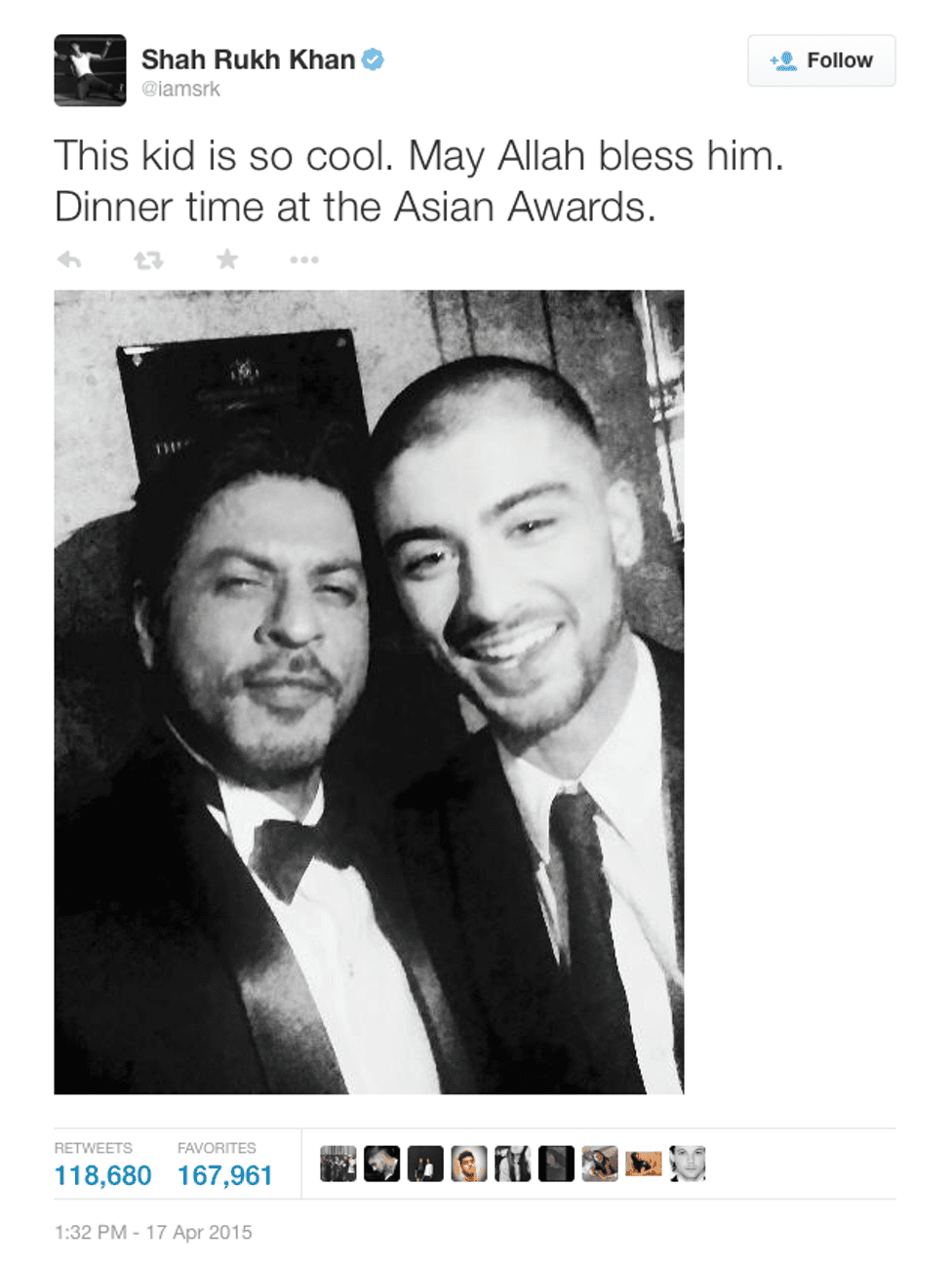
Shahrukh Khan’s selfie with and tweet about Zayn Malik from the Asian Awards emerged as the most retweeted tweet in the country, having been RT’d over 149,000 times.

Amitabh Bacchan’s Twitter Handle remained the most followed with around 18.6 million followers, and Shahrukh Khan and Prime Minister Modi’s ranked in after him.

 india twitter trends

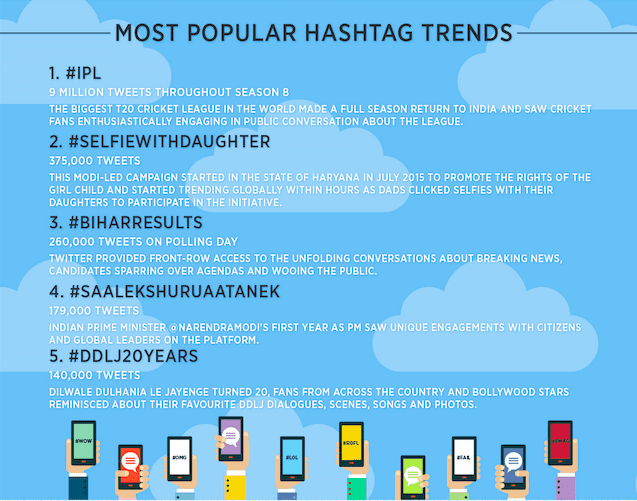
The top twitter trend for India in 2015 was #IPL as the T20 cricket tournament returned and saw a country known for its cricket-frenzy discuss it in over 9 million tweets. Other top trends included #SelfieWithDaughter, which started from a Modi-led campaign in Haryana to emphasise the importance of the girl child, and #BiharResults.

 india

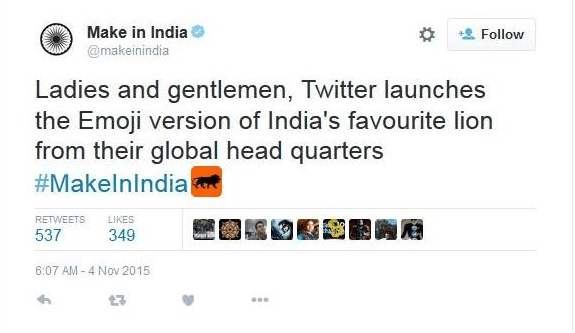
The twitter account of the Modi campaign Make in India became the first non-US brand to create its own Twitter emoji.

 Hashtags related to Chennai Floods (#ChennaiRains, #ChennaiFloods and #ChennaiRainHelp) emerged as a platform for the local residents to communicate and were used to give important information about the situation and in coordinating relief measures.

3. Important Global moments:

paris

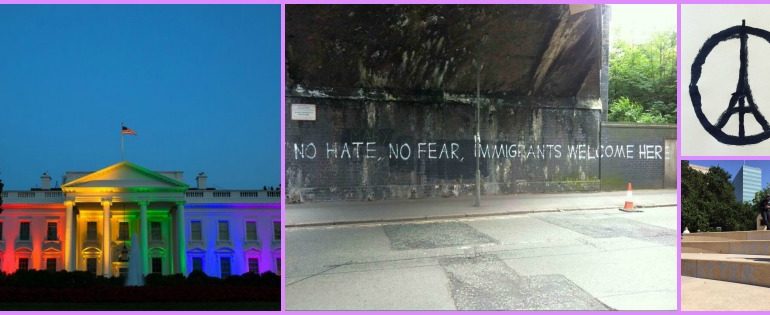
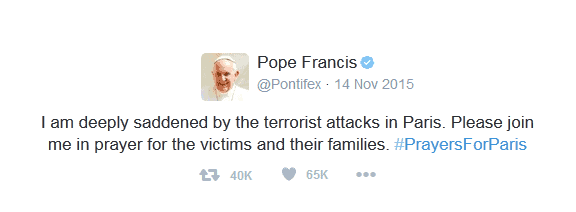
Tweets of solidarity flooded Twitter post terror attacks in Paris and other countries with the hashtags #JeSuisCharlie and #PrayForParis emerging as most popular.

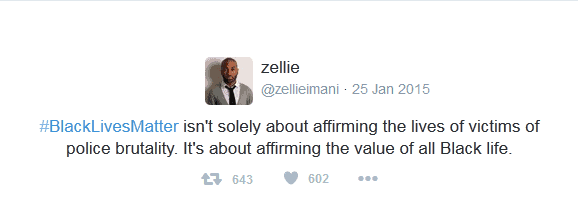
black lives matter

#BlackLivesMatter became ones of the most important social movements on social media, and it all started on Twitter with people speaking out against widespread cases of racially-biased police brutality in the US.

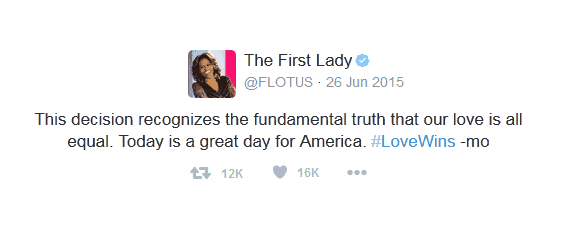
love wins

The world celebrated a landmark move in ensuring more acceptance for the LGBT community through the #LoveWins hashtag after the US Supreme Court judgment that declared that state-level bans on same-sex marriage are unconstitutional, thus making same-sex marriage legal nationwide.

In another heart-touching moment, the Twitter community rallied for refugees from the Middle East and Africa seeking asylum in Europe to not be shunned with the hashtag #RefugeesWelcome.

One Direction emerged as the top music-related trend in 2015, and Ariana Grande as the top-trending celebrity. On the front of World Affairs, #GOPDebate and #Obama figured amongst the top trends.

4. 2015 for DU Beat on Twitter:

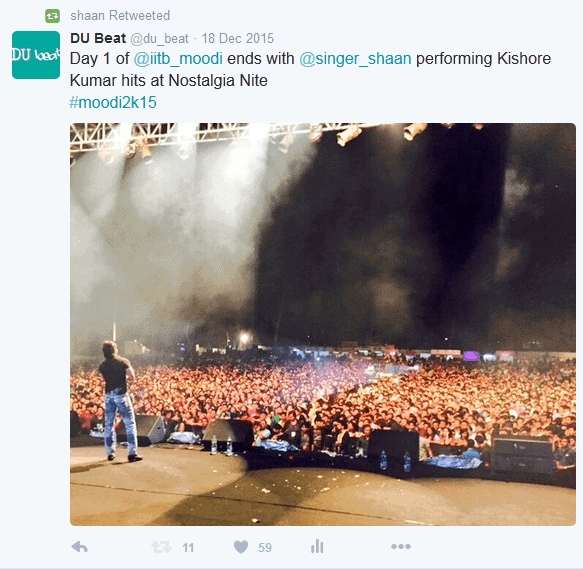
shaan

We at DU Beat believe in connecting with the world through the most efficient mediums, and Twitter is definitely an effective way of doing that. In 2015, we further increased our Twitter activity, with more regular tweets and instant updates from all the Festivals we covered in DU and outside. Standing currently at more than 2760 followers (with the count increasing everyday!), our biggest Twitter moments in 2015 were all the attention we got during the SRCC Youth Conference, and retweeting of our tweets during Mood Indigo 2015, the annual cultural festival of IIT Bombay by people as influential as Shaan and organisations as well-known as Nescafe.

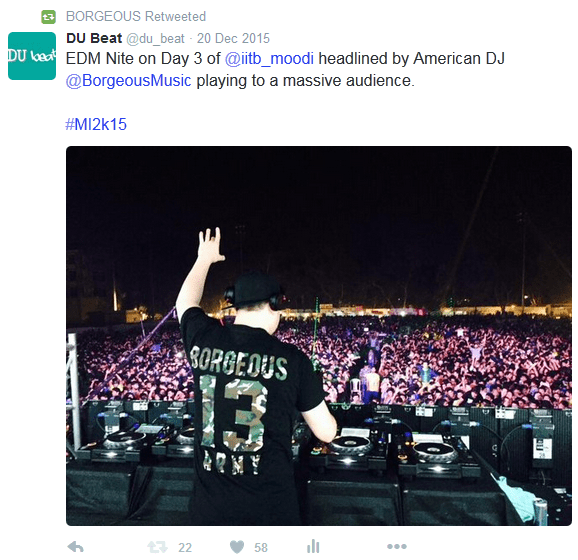
borgeous

The international DJ Borgeous also retweeted a tweet about his performance.

Featured Image Credits: Twitter

All images in the article: Official Twitter Accounts

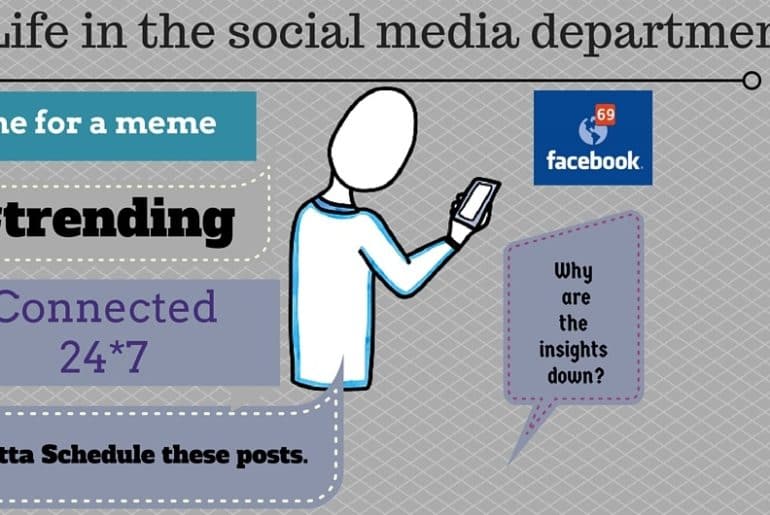
So many of us take up a virtual internship for some reason. Maybe you have entrance exams, or you are occupied with some other work or obligation. And more often than not, the internship job description entails work in the social media department. We’d love to believe that social media is the future, and with the jobs in social media becoming serious every passing day, it is only obvious that many of us are considering a career in this field.

Here’s a quick look at the pros and cons of a social media internship.

Pros:

  1. Quantifiable performance enables you to learn faster while working. We can always assess performances through metrics and analytics such as reach, views, likes, retweets, favourite etc. It becomes easier to learn on your own when you have insight into what works and what doesn’t
  2. You become a pro at knee-jerk reactions. The business environment is more dynamic than ever. Same goes for social media. And a social media internship prepares you well to jump at every opportunity, what with unleashing hashtags when you see something trending on Twitter.
  3. Data analysis becomes a constant job. And sans the agonizing theory of statistics, you get to learn the real world application of mean, mode, median. In an attempt to constantly gauge what works and what doesn’t, you understand the tricks of data analysis faster than any textbook can ever teach you.
  4. You get to be the cool one- from creating memes, trolling the celebrity you dislike, or even the healthy banter that companies nowadays engage in- you get to bring the cool quotient into the otherwise dull and drab corporate affairs.

Cons

  1. No kidding here, but the “glued-to-devices-24*7” isn’t really glamorous. It is all back aches and tired eyes at the end of the day, and you may as well just crash into your bed, with a feeling of hopelessness at yet another unproductive day, when you cannot see the results.
  2. You need to be personally invested and detached simultaneously. Haters gonna hate, and social media makes it so easy for them to lash out on you, whether as a brand or as a person.
  3. The constant urge to stay updated leads to Fear of Missing Out (FOMO), and life becomes monotonous with scheduling and keeping a tab on insights. Consider this: – Tweeting from the wrong account is a legitimate fear, and one typo can be the end of it all.
  4. You are painfully aware that social media is a superficial platform and can never really be fully representative of the real world.


Weigh the pros and cons for yourself, and decide if you’re up for a social media adventure!


Featured Image Graphic by Kritika Narula

Kritika Narula

[email protected]

A social media manager is responsible for monitoring and posting to all social media outlets as well as interacting with and growing a company’s audience. The ultimate goal is to raise awareness of the brand, company, product or a person online while driving traffic online, offline or both. Depending on the job, a social media manager is typically associated with brand building through Twitter, Facebook, Google+, LinkedIn, YouTube, Pinterest, MySpace and corporate blogging.

We all know how important word of mouth is, and social networking is like word of mouth on steroids. As a business, it’s vital to tap into and join online conversations not only about your brand, but also those about your competitors, your industry and your areas of expertise.

Even if you haven’t launched an outbound social media strategy, it helps to keep a pulse on what people are saying — good or bad — about your company, competitors and major trends. And, by representing your company in a positive, authentic way, you can build credibility for your expertise and business and link to customers and prospects quickly. You can also help mitigate damage should negative conversations about your company emerge by quickly responding to complaints.

Also, contrary to popular belief social media management is not only about management but also writing and analyzing. It is an amalgamation of journalism and advertizing. It offers a career in creating content in multiple places, such as a blog, Twitter, a Facebook page, etc.; monitor and scan the views, decide what comments to approve, and respond to replies on these sites, scanning Twitter followers for conversations you may want to join, or checking your RSS reader subscriptions for relevant articles and new ideas. Checking Google Alerts to see when and where your business is mentioned on the Web and creating and monitoring a community and topics on a site such as Facebook or LinkedIn

However, social media management in India is still at a nascent stage and not many colleges or institutes offer it as a course. Having said that, there is a lot to explore in this sector and understanding social media at the root level is enough to kick start your career. A lot has to be learned and figured out on the job.  Getting internships at a digital advertizing firm or an online news publication is the best place to start if someone is interested in a career in social media management. Nirali Hingwala, the Content Head at SocialSamosa.com, a website catering to Indian Social media news says, “Initially Social Media Management doesn’t pay off well, because its still evolving, there is lack of good talent in this field with no proper training as the discipline is still not taught in the Indian universities. There are only private courses.”

It’s a great time to break into a social media career. The importance of social media is becoming clear to more companies every day. This means social media managers are in high demand and the market is wide open.


Picture source:  www.business2community.com


Think about the last time you read an important piece of information. More often than not, it comes from the status updates of your numerous friends on Facebook. When you put forward an opinion, a lot of it might have drawn inspiration from your favourite tweets on the same subject. Instead of flipping through the pages of your neatly organised notebook, you would rather zoom into the picture you saved of your college timetable on your phone. Information is now merely a click away, giving people from even the most remote corners of the world an opportunity to communicate easily and efficiently. However, a majority of us are now crippled by our continuous dependency on these virtual crutches.

In the light of the latest crackdown on social connectivity, consisting of the government restricting messaging to a meagre 5 per day due to the threat towards people from the North-East did not sit too well with a society that is completely in sync with the social networking era. Thus, what actually began as a somewhat reasonable ban to prevent rumours spreading on a wide scale is now being seen as another excuse by our country’s leaders to crack the whip on our freedom of expression, be it through the SMS or the more dangerous threat of control over sites like Facebook and Twitter. Agreed, a simple ban on texting will in no way stop malicious stories leaking into the public domain. However, what is also evident is the fact that the lack of proper texting facilities didn’t lead to the end of the world a good four months before December 21st, 2012. Life continued in the same fashion as it did when the rights of texting were more liberal. When the Telecom Authority of India had declared a ban of 100 SMSs a day, so many users received a reality check when they learnt of their addiction to a piece of electronic genius. However, just as we gradually got accustomed to this new regulation and our tired fingers were fortunate enough to be subjected to marginally less typing, the new ban for a short period of only 12 days is too insignificant a sacrifice being paid for the uproar it has caused.

With the messaging limit being later extended from 5 to 20, and finally the lift of the ban, social networking sites immediately saw the appearance of memes and statuses proclaiming happiness almost equal to a nation winning its first world cup. The excitement of being able to send 15 more messages a day seemed palpable as almost everyone had their phones out the next day, furiously typing as they stared into a mini screen that flickered with notifications received from their equally enthusiastic recipients. However, the comment that made me stop and re-evaluate how dependant we really have become to these social platforms was when someone casually remarked, “I don’t know about people with those outdated phones, but almost everyone has a Blackberry or a smart phone now. That keeps us connected through BBM, Whatsapp and Facebook. This ban on texts is just a minor glitch,” said one such addict with a beeping Blackberry in hand.

The number of times we refrain from using our electronic gadgets for practically everything can be counted off our fingers. When you start working on your super important project one day before the deadline, you thank the Google and Wikipedia gods for showering their blessings on you. Our internalisation of technology is evident from the use of phases like ‘I googled that information’ or ‘I saw that on her wall last week,’ while only a couple of decades ago, walls referred to those rectangular combinations of cement and plaster of Paris that form the outline of every structure. As for the future, this incessant need to be constantly linked to everyone around only seems to be growing as social media spreads its branches and reaches out to every single entity within and beyond its periphery. Social networking and technology provide us with an easier and more efficient lifestyle, but that doesn’t alter the reality that if our parasitic existence continues, we might just be witness to the dawn of a Matrix-inspired end to our civilisation.