Tag

Music

Browsing

Reunion of the Beatles, Mass Wedding, the Seattle duo’s concept of universal love, France’s two great robots back in the game, a seventeen year old winning amongst big pop-stars and the underdogs grabbing most of the awards was witnessed at the Annual 56th Grammy Awards.

Music’s biggest night commenced with Queen Bey (Beyoncé) setting the stage on fire with her performance of “Drunk in Love” on 26th January in Los Angeles. The major wins of the night included Daft Punk and Pharrell Williams winning five awards. The Seattle duo, Macklemore and Ryan Lewis won four Grammys and Justin Timberlake won three. Adding to the list, the newbie pop artist from New Zealand, Lorde, bagged two Grammys. Some of the other noticeable wins were by Kacey Musgrave, country artist, who shot her arrow through Taylor Swift’s win by winning two Grammys and leaving the pop-star go back empty handed from the ceremony. Sir Paul McCartney also won two Grammys. Jay-Z did take a ”sippy-cup” for her baby blue Ivy Carter.

lorde
Lorde performing “Royals”

The major awards such as the Record of the Year and the Album of the Year went to Daft Punk Featuring Pharrell Williams and Nile Rogers for the song “Get Lucky” from the album “Random Access Memories”, the Best Pop Solo Performance the Song of the Year went to the outstanding seventeen year old, Lorde, for the song “Royals”. Macklemore & Ryan Lewis won the Best New Artist as well as many other Rap Nominations.

The prime light of this year Grammys was re-uniting the two living Beatles. Well, undoubtedly, Sir Paul McCartney and Ringo Starr did a surreal performance and reminisced the true essence of Beatles and the effect of them on America and the World.  Yoko Ono (widow of John Lennon) and Sean Lennon as well as Olivia Harrison (widow of George Harrison) were also present to commemorate the performance the living Beatles. Queen Latifah officiated 33 marriages on the Grammy stage. Yes, it is the truth, various couples, and few gay, were married live on the big stage during the performance of Macklemore and Ryan Lewis of “Same Love”. Queen Latifah even mentioned on stage, ”This song is not a love song for some of us but for all of us.” Some of the most awe-inspiring performances were by Daft Punk and Pharrell Williams, Pink and Nate Ruess, Katy Perry, Taylor Swift, Lorde and Macklemore and Ryan Lewis. Metallica also performed this year at the Grammys.

Surely, the French Duo did “Get Lucky”, Lorde was definitely amongst the “Royals” and Macklemore and Ryan Lewis changed our approach towards “Same Love”. This years Grammys was spectacular and did prove that underdogs could also “Get Lucky” and become “Royals”.

Image Credit: Official Website of Grammy Awards

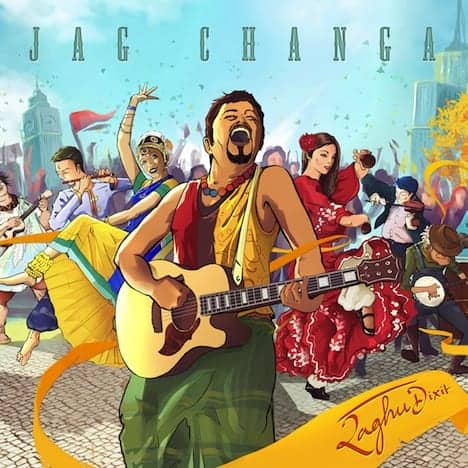
In the last week of November the multi talented Raghu Dixit along with his band the Raghu Dixit Project launched their album Jag Changa. This is their second album following the 2008 release. On this album you can clearly see the singer- songwriter go back to his roots, and if you haven’t caught him live yet, you’re missing out on some soulful music.

We’ve picked out 3 tracks from the album to highlight how this Project is at the top of its game and everything IS changa.

Track 01. Parasiva: The album opens with the song Parasiva (Kannada) that has a rather prominent Indian percussive sound but this soon mellows out when Raghu Dixit chimes in with the vocals and a playful chorus. Things that make this track stand out are the droning violin sound, the rather plastic-y effect on the guitars during the chorus (if you tune in carefully this is easily identifiable) and some brilliant bass work to tie the track up. Enjoy this track while dwelling on its meaning, which acknowledges the many strangers who come to our aid in life when we have our backs against the wall- what else can you call it but an act of God as Raghu Dixit says.

Track 03. Jag Changa: As Raghu Dixit explains while performing live, the album was to an extent inspired by the many Delhi gigs the band performed. He says that they took away the word ‘changa’ and its meaning that everything is fine, beautiful, add to that the word ‘Jag’ and you know it, the world is beautiful. Certainly a world with Raghu Dixit’s music is nothing short of a surreal one. The title track of this album opens with Raghu Dixit strumming a sharp progression and humming to it. Before you know it, a percussive click and a slide of the bass ushers in the banjo and Raghu Dixit harmonizing, before the verse. The lyrics sometimes playful, sometimes satirical however always acknowledging that at the end of it all, the world is beautiful. Navin Iyer chips in on this record with a marvelous flute solo that livens up the track. The satire comes through in probably the most striking lines of this song- ‘Insaan ban gaya hai do pal ka ishtehaar. Sansad se zyaada bhar gaya hai ye Tihar.’- followed by a short violin solo. This song will certainly stay in your head for a long time and has the most repeat value.

Track 04. Yaadon Ki Kyari: This song is literally a garden of the singer’s childhood memories with lyrics as pristine as the waters of the Godavari. It is easily notable that Raghu Dixit pours his heart out while singing this song which ties together snippets of his childhood memories such as the scooter rides with his father, his love for the Rasam Shaadam (Rasam Rice) his father would make and so on. The most striking imagery however is that when he reminisces the long walks along the bank of the Godavari with his mother and how they together lit up several earthen lamps and floated them across the river- all those lamps that ornamented the river are described as the most beautiful sight in the world by Raghu Dixit. So take a peek into the singer’s childhood and maybe re live some moments from your own.

Another track that deserves special mention is Lokada Kalaji. Raghu Dixit can make you sing along and this track is testimony to it. A shame if you miss this track while the band is onstage, since through this song Raghu Dixit is happy to give you a lesson in Kannada and an opportunity to be one with the band.

In its entirety the much awaited album is nothing short of a work of art. To add to that, the album features a rather uncanny but welcome redesign to the conventional CD case format and comes in 3 different colours, so you may choose as you please- but what’s on the inside only gets better with every listen.

It is a common practice for Universities across the world to have a song dedicated for them. Delhi University is all set to enter this foray with a song for the University written and composed by a University student, alumnus or a teacher.

As a prelude to Antardhvani 2014, the DU cultural festival, the University has launched an open competition. Under the same, it invites members of the DU community to compose theDelhi U Song and win an opportunity to present the University a song that is “youthful and full of promise”.

“Since 1920’s, the University has never had a common song for any kind of function. This song will bring uniformity in the system.” says Dr. Satish Kumar, UIC in-charge and Member Secretary of Antadhvani. He urges the students to come forward and participate in this competition and produce a song that becomes as popular as ‘Sare jahan se accha‘.

The entries will be judged by a competent jury, which Dr. Satish suggests will definitely consist of experts from the extracurricular and arts department. Whether they would be from the University itself or an external would be decided later.

The proposed song should be of approximately one minute and the lyrics should be in Hindustani. The last date for submission is 20th January 2014 and the results will be declared a week before Antardhvani which is scheduled to be held on 14th- 16th February, 2014. The entire rules and regulations for the competition can be found here.

The Canadian pop-punk princess Avril Lavigne attempts to climb the music charts with her latest self titled fifth studio album this year. From “Sk8er Boi” to “Girlfriend” to the underrated “What The Hell,” Lavigne has always released pop music that defies the usual. This album has a popular sheen than ‘Goodbye Lullaby’, but mostly dwells on punk and hip- hop elements for which Avril is famous. There are two collaborations- with Avril’s husband Chad Kroeger (of Nickelback fame) and death metal poster- boy Marilyn Manson.

Here is a track by track review for Avril Lavigne’s latest music album:

1. Rock and Roll: This pop anthem has an energetic and wild beat and captures the essence of rock and roll. It reminds us of the classic We Will Rock You by The Queen and sounds like a traditional rebellious Avril track.

2. Here’s to Never Growing Up: This single released as a summer anthem is a notable hit among the teenagers where Avril clings to her youth image. It simply sends across a message about having fun while you’re young.

3. 17: For a 30 year old humming the tune like “All we needed was some love, That’s the way it’s supposed to be 17” seems a bit watered down. But Avril Lavigne delivers perfectly as this pop rock song is an easy listening and catchy single.

4. Bitchin’ Summer: Through this fourth single, Avril wants to capture the mood of a typical American summer in the countryside to be enjoyed with friends and be carefree. It’s a relaxing acoustic track with a surprise when Avril raps over a frantic strum towards the bridge of the song.

5. Let Me Go featuring Chad Kroeger: This heartbreaking love song with Nickelback’s lead vocalist Chad Kroeger seems to be a classic Avril ballads followed by her last album ‘Goodbye Lullaby’. The piano melody is beautiful written with th help of David Hodges.

6. Give You What You Like: This song shows the glimpse of moody sensual Avril singing of exchanging physical pleasures to combat loneliness. The tone of it is really likeable when she claims ‘this is a brand new cure for lonely’ makes it a good sensual sounding ballad.

7. Bad Girl featuring Marilyn Manson:  By far the heaviest sounding track on the album, it’s the flavour that counts. It is catchy and it’s impossible to listen without humming it hours later, regardless of your feelings towards it.

8. Hello Kitty: This is one of the experimental tracks with dubstep and electronica, serving as a nod to Eastern countries. The song is sexy and sassy, and it’s incredibly addictive. As a curveball, it works brilliantly; but as an attempt to make her sound current in today’s EDM-pop dominated charts, it falls considerably short.

9. You Ain’t Seen Nothin’ Yet: The song follows a young romance, but the lyrics are sometimes shockingly bad. “You Ain’t Seen Nothin’ Yet” is not quite as solid as “Avril Lavigne’s” up tempo singles, but it’s almost there, and the unabashedly joyful bridge is worth a listen by itself.

10. Sippin’ on Sunshine: The song is generic and doesn’t really stand out, but is fun to listen to and will work excellently in the summer sun. It sounds the kind of mediocre track that Avril though many may find it to be a catchy teenage anthem.

11. Hello Heartache: Hello Heartache has a country feel to it, with an acoustic instrumental for its verses. With lyrics quite well achieved “Goodbye my friend, hello heartache, it’s not the end, it’s not the same“, Lavigne laments on this straight forward breakup track.

12. Falling Fast: With a simple acoustic guitar riff, Avril returns to a more mature sound here and still manages to retain her innocence. Lyrically, Avril admits that she is falling in love with somebody which juxtaposes with the melancholic instrumental.

Delhi University boosts of some strong alumni in every field be it dramatics, politics or even music. Being big on the music circuit, DU bands have exceptionally evolved and are stepping out of the University circle to perform and make it big. To get to you a band that’s struck chord not just within the University but also in other cities, is quite overwhelming with its humble beginning in a college’s music society.

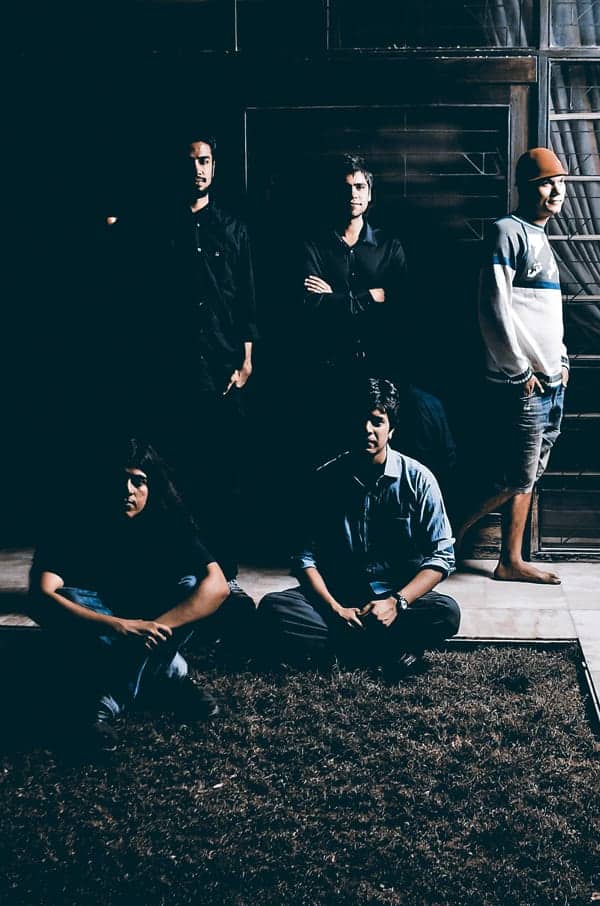
With the release of their first album, Myths and Fables, this electronic/pop-rock band, Jester that was started off in the vicinity of Kirori Mal College, Delhi University in 2009 has become a brand and inspiration for many such upcoming bands to evolve and take it up as a thorough profession. The album offers some exceptional songs like ‘broken arrow’, Harquelin’,’ La questa’ which are my personal favourite. It is easily one of the most relatable albums off late, and freshly offers a new perspective to the indie listeners. The band line up- Dhruv Goel( vocals),Adityan Nayyar( vocals) Pranav Pahwa ( guitars), Akshay Dwivedi ( Bass) Shantanu Sudarshan ( Drums) and Harshit Jain ( Electronic Production and Keyboards). I recently caught up with them (considering their extremely busy schedule after the raving reviews of their maiden album) and got them talking about their DU days and life post-album.
9th

Give us a background of your band. Also, how did Kirori Mal College help you into shaping up the band that you are today?

Jester was formed in 2008,in the music society of Kirori mal college The band was formed at that time with no specific goal but to be the next Kmc college band .Initially we decided to play funk , which was appreciated quite well .We decided to take the band far more seriously after  coming third nationally at campus rock idols .

The band’s sound really evolved after the line-up became stable .So the Jester of today really came about when Akshay joined in 2009 and Adhir and Ronny left.

Bands these days are quickly following the international bands. Jester is influenced by?

Jester is influenced by many different genres of music .Each member brings there distinct taste to the band .The palette is really quite varied, we eventually started listening to everything by the end of it .A lot of the influence come from within our country not just from international bands.

Is it tough beating the conventional bands and carving a niche in today’s ever evolving music scene in India?

Well it is , if you do the formulaic route of playing shows and when your music is just an amalgamation of your influences .When we took the hiatus in 2011 , the real goal was to find out who we were and how individually we could contribute to something .As individuals I mean our interpretation of music rather than just our influences .By that point I think we all formed our opinions and individually had a sound .Which was then brought together .,The album according to us does not sound like anything else .So feel as though have created our own niche .

I don’t think we’ve ever looked at music as competition; conventional bands avante garde artists all have their place.

Considering it’s really critical for a band to get the necessary promotion or the stage for its take off, how did you go about it? Was it tough breaking out of the ‘DU band’ nomenclature?

By 2009 we were quite sick of the tag and all the competitions .We took part in a lot of them in 2008 and then focused on writing playing shows etc .We just played, we never had a marketing or promotion strategy per say. Those days all we did was played our music and somehow it worked.

The tough part was when we all got out of DU, it was as though we started our journey all over again that’s when we start thinking of band as greater than just the music .That is when the band became a brand .Now we promote it as such.

What’s your inspiration for the songs? Do you all pitch in?

Every song is written as a collective .Yes we all do pitch in .It usually takes us a year to get a new song down.

In the last couple of years music circuit has expanded in Delhi, in terms of fests, live gigs, performances in colleges, do you feel Delhi is coming up on the music scene and how is it different from other cities you’ve performed in?

Delhi has come a long way .Even though there has been a boom, there have been a lot of downsides .We were better paid when there were less gigs as well as the gigs were bigger. Delhi has now embraced the pub culture. Lots of gigs and many of them at places which cannot really support a live act .But there is blue frog , Hard rock cafe which are brilliant to play at .The Delhi crowd is really quite open to different music and the indie ,that’s what I think separates us from other cities .I think Mumbai is quite similar.

Tell us your favourite rock bands-in India and Internationally.

Rock I’m not sure of, but here it goes

Internationally –Extreme, tool, porcupine tree, Avishai Cohen, Aaron parks, Kurt Rosenwinkel. Harshit likes a bunch of EDM artists, sting etc

India- Zero, Advatia, Thermal and a quarter, October, Five 8.

Tell us about your DU days.

The DU days were fantastic. They were necessary for the band to grow, for our music to grow. The numerous trips really allowed us to be a band. It definitely gave us the exposure. Plus, college days are unforgettable. The fun we had, the pranks we played on each other backstage, on various fests and trips was just terrific.

Your album ‘myths and fables’ has been doing really well. In fact the ‘big bad wolf’ has become the anthem track. How has life been post- release, seeing the exceptional response Jester has been getting off lately?

It has been crazy, but good crazy. We’re getting a lot of show offers from outside the city. The reviews are a lot better than we expected. In fact what others albums strive to reach at.is what we’ve been getting.

About ‘Big bad wolf’. The song was our first single release and helped us get where we really are. It took us almost 1 year to write and conceptualise the song till its release but it was our hard work well paid off. It was written during our college days; in fact a lot of our songs are from the college days. But in totality it took us around 4 months to get the album out. And the response has been phenomenal.

When not jamming and creating music, what does Jester do?

We hang out at Pahwas. Jam because that just happens. It just happens we all are together most of the days of the week, even if not working together on a song. We chill, dig out old stories.

Lastly, how do you suppose upcoming DU bands who also want to follow the musical path should go about it?

Stop concentrating on shows, Get out there. Try coming up with their own music, it really helps you get the experience, gives you the edge from other bands considering g flocks of bands are flouting about the places. So much of free time college offers, utilize it. Make great music, even more just enjoy your time with music.


Avi & The Uprising have recently surfaced on the Delhi music circuit and have taken it by storm with their music that blends Indian and Western music with utmost ease. Three of their songs that we’ll meet shortly, have helped the band create a niche for themselves. As of now, they have performed countless gigs across Delhi and continue to charm the crowds with their fresh sounds. Balcony TV, a YouTube channel has them on their list of Top 60, among the likes of international acts such as Mumford & Sons and Victor Wooten.

Wahe Guru (live)- Inspired from the thousands of pilgrims on their way to Hemkund Sahib, the singer-songwriter thought of the simple guitar riff which wonderfully complements the somewhat surreal. The song’s music is rather rudimentary and the listeners can form an immediate bond with it. A little more thought would show that it all makes sense even though “there’s so much beyond the logical”. The melodica is soothing to the ears and the overall experience is rather pleasing.

Avi & The Uprising bring two distinct worlds together and tie them up in a successful marriage that is divine yet earthy. It is only the beginning and one can be hopeful that the band will continue to work in this direction, giving the world new music.

Boom Boom Shiva- The lyrics, the video and the vocalist bring out a dynamic mirage of images to mind. The soft guitar, percussions and the drums create an appealing and soothing contrast against the lyrics that are full of energy and vigour. It is one of those songs that showcase that, perfect harmony can be achieved between Indian and western music. Evidence to it is the pakhwaj and the obvious reference to Lord Shiva.

Shiva mentioned in the lyrics is “a quiet observer on the fringes of modern society”. Just as the listeners begin to think that Shiva is just another guy, Avi hits them with the line “he’s got no future, he’s got no past”. The last line of the song adds a completely new dimension, and Avi explains it as, “And suddenly there’s a third world war, a nuclear bomb – a mushroom sky and this guy dreams up another world.”

Aside from the music and the lyrics, what makes the song tick is the video that was shot in Kathputli Colony, New Delhi.  Featuring the former street and circus performers who hail from all over the country, doing dangerous yet stunning stunts, the video is a treat for the eyes. Avi & The Uprising are working to give a voice to urban Indian street performers, and through the video of this song, they have done their bit.

Boom Boom Shiva is the band’s flagship song and has helped the band receive critical acclaim.

Age of Kali (live) – Three things that make this song stand out are- the vocalist’s booming baritone, the esraj and the lyrics. It captures the fierceness of Goddess Kali in who resides the ultimate Shakti. Haunting vocals, combined with the esraj, double the effect of the mysterious ways of Kali. The band offers refreshing music, much different from what is mostly served to us.

Band: Atoms for Peace
Title: Amok
Genre: Alternative rock, Experimental rock, Electronics, Thom Yorke
Producer: Nigel Godrich
Label: XL Recordings
Release date: 25th February, 2013

The debut album by the Alternative rock band Atoms For Peace, Amok features Thom Yorke, the Radiohead Singer (vocals, guitar, keyboards), bassist Flea, Red Hot Chili Peppers, Joey Waronker of Beckand R.E.M at drums, Radiohead engineer/producer Nigel Godrich  and percussionist Mauro Refosco. An arduous intricate exercise in micro-produced digitalia, it’s a pertinent artistic album.

It has such lavishly diverse participation, which essentially results in a collection of buoyant, moderate rock songs. This 9 track album is an enthralling listen full of compelling contrasts.

Let us dig into its striking features then.

Track-1: Before Your Very Eyes

‘Before Your Very Eyes’, the inaugural track floats along gloriously. A well nigh tribal composition intact with dulcimer, drum and bass rhythm. The track opens with looped guitar and the bass guitar that clamps along. The distorted synthesizer and synth bass line makes it more compelling and forceful.

A great addition to the album!

Track-2: Default

“Default” is the album’s first single, which somewhere falls short of a song’s emotional value. Apparently, listeners will have a tendency to relate it with Thom Yorke’s The Eraser. Whole track is wrapped up with throbbing, rattling or drizzling. It’s a jittery five minute ride that may leave a cold impression on the listener. The drums are louder in this track.

Track-3: Ingenue

Thom’s shift to electronic core from indie rock has been an interesting one. A soul carol “Ingenue” is a compassionate and nostalgic turn, yet also most enigmatic. Yorke performed a wild, visionary number with contemporary dancer Fukiko Takase. It is worth getting just for this song alone. This track is characterized by its warped and shimmering layers.

Track-4: Dropped

“Dropped”, is more high-strung track displaying lively instrumentation. It showcases the true meaning of heartbreak and pain. Here, Yorke’s voice combines with clipped orchestrated sounds. “Ingenue”, “Dropped” and “Unless” form a trio of throbbing tracks.  Dropped- weakest of all, but okay.

Track-5: Unless

“Unless” blends variations of boom bap with drum and bass. It creates a sense of paranoia, markedly while listening with headphones. However one may find the track distracting from the cadence of the music.

Track-6: Stuck Together Pieces

This is a jazz-jungle-hued track that gives a feeling of an anxiety attack. And the peaceful guitar melody accompanying the obsessive vocal is really soothing. Flea’s talent on the bass comes through on “Stuck Together Pieces”.

Track-7: Judge, Jury and Executioner

Second single track of the album and is the shortest off all tracks. On “Judge, Jury, And Executioner” Thom wails, “don’t worry, baby, it goes right through me/ I’m like the wind and my anger will disperse.” It is mellower and more harmonious than “Default”.

Track-8: Reverse Running

“Reverse Running” revolves on its opening groove for really long. It passes on into a crowd of electronic bees which gives a contemporary feel. The music is tangled and knotted behind Yorke’s voice which is the focal point of the track.

 Track-9: Amok

It is the swan song of the album. On AMOK, Yorke’s lyrics incline to drift in and out of precision. This track is featured by its deep bass undercurrents and chaffs of crackling and snapping drums. It has justifiable hooks and crooks.

Broadly, it is a frail, praiseworthy record well worth investigating. This satisfies all my carvings for mind-boggling progressive rhythms. I recommend everyone go pickup ‘Amok’ today.

With inputs from Anup Sharma

“Hey hey, my my

Rock and roll can never die

There’s more to the picture

Than meets the eye.

Hey hey, my my.”

The lyrics of this famous Neil Young song resound in my head even after my mp3 battery sadly dies down and I’m left to my own curious thoughts. I often sit and wonder, when Young wrote these lyrics; did he know he was giving birth to a phrase which would be chanted by millions for generations to come?

How many times in a week do you hear someone mention ‘rock and roll’ in some form or the other? Maybe it’s while watching ‘LA Ink’ and hearing tattoo queen Kat Von D go ‘Rock on dude’ (no seriously, I can sue her for using that phrase THAT many times for anything and everything), or maybe when you’re doing the walk of shame after your mom ecstatically yells ‘this is so rockin’, invariably in front of your friends. ‘Music is a refuge, an escape for many. A place without music would be one full of mourn and dread. “Music is higher revelation…music is religion… music is a moral law”. Rockers like Jimi Hendrix, Buddy Holly, Johnny Cash, Jimmy Page and the entire lot of them never thought they would start a revolution when they spoke these few, but truthful words.

From the time when the Rockabilly’s Elvis Presley first warned people from stepping on his blue suede shoes, to the time when Nirvana made grunge seem like the coolest thing in town, to Pearl Jam making us feel more alive; music has never sounded better. Their music is continuing to transform lives of many people, while people themselves continue to shape and remold it in order to do what they love, face what they fear, get rid of what they hate and restart what they stopped.

The timeline of rock and roll unfolds as a crazy roller-coaster ride of debuts, smash hits, breaking stereotypes, coming out of corners, iconic bands, landmark records, creation of sub-genres and many more breath-taking, foot-tapping, head banging events. They mark an emergence of a completely new movement, which forced people to come out, to not comply with social norms (read – Racism) and to break free, as the ever-popular band Queen would claim.

The problem with today’s music is that it’s all about trends and popularity. People WANT to hear music that appeals to them. This leaves us with artists mimicking artists, which in turn leaves us with a muck-filled pool of sweet nothingness. There’s more of production than reality. The surrounding fluff of glitzy sets, skimpily clad background dancers and music video budgets big to feed a small third-world country often take away the focus from actual music making and confuse the listener. Such music is usually evaluated for its visibility and not for its merit. The hottest, the best and the most worthwhile music are usually the ones with a huge fan following developed due to its catchy nature. It’s true that the Beatles were commercially successful, but the commercial is not synonymous with the mainstream. An artist who is good does not deserve to toil for years under obscurity and it would be biased to say that some of the music produced today is not good. However, the problem is that ‘some’ is too less in number to actually come out and dominate the music scene.

An argument can be started on both sides of this issue. It’s mostly grey matter, not a black or white one. It takes a broad brush to paint the entire industry as ‘mainstream and commercial’, but it is we who control the music we listen to and not the majority, and it is only we who can change what we listen to. As Bono said, “Pop music often tells you everything is OK, while rock music tells you that it’s not OK, but you can change it.”

Akriti Gupta
[email protected] 

The Raghu Dixit Project burst on to the Indian independent music scene around 2007 with their hit single ‘Hey Bhagwan’ and a dash of colourful lungis. Having maintained a low profile in India for quite some time, it seems as if they’ve finally made a mark for themselves, gathering up a niche audience. They have, however, experienced phenomenal success abroad, having performed for a show that aired on BBC alongside artists such as the legendary Robert Plant and Adele, among others. His immense popularity is reflected in the fact that they are now flooded with offers to perform at various events around the globe.

Their music, to say the least, is a perfect blend. Beautiful, soulful lyrics combined with equally mesmerizing and soothing tunes; a mix that is rarely found these days. The lyrics are the blend of old and new with inputs coming in from not just their songwriter but also from ancient songs and poetry.

From peppy, foot- tapping numbers like ‘Mysore se Aayi’ and ‘When I’m in Mumbai’ to rich soulful songs like ‘No Man will Ever Love You’ and ‘Ambar’ that make you want to sway in the moonlight, their bilingual songs have got it all. Their most famous song, ‘Hey Bhagwaan’ is a prayer to the God above to give each of us a second chance. “As humans, we tend to make mistakes and it’s never too late to one day wake up, want to leave your past behind and start over!” to quote their website.

Their first and only album as of now, Antaragni, was released back in 2008 with eight songs on the record. Their songs were like a gust of fresh air in the age of mindless Bollywood songs with nothing but groovy beats to back them. That’s probably the reason why their fans have held onto them for so long despite the fact that there has been no new album. Even today, their concerts are jam packed and nobody leaves one without a huge smile playing on their lips and an immense sense of satisfaction.

But along with all the brilliant music, there is something else that makes their concerts memorable– Raghu Dixit, the man himself. His wit and charm alone would suffice to have you in splits. It’s as if he exudes happiness and it makes you realize how much he loves what he does. It makes you want to laugh and sing along to the songs. Then, of course, there is the sheer brilliance of his voice. It has the power to melts hearts.

Their fans are waiting with baited breaths for the release of their new album, having already had a preview of some songs at their concerts. And as someone who has had firsthand experience of a few songs on their yet to be released album, I can assure you that it is definitely worth the wait. It beautifully captures various emotions and exhibits Raghu’s immense knowledge of the classical dance forms.

Prepare to be blown away by the magic that is Raghu Dixit. And to all their ardent fans out there, once this album is out, you’ll finally have a replacement for ‘Ambar’. Or maybe even better, I guarantee.

Surya Rajappan
[email protected] 

2012 was a year that saw movies and music take an experimental and innovative twist in India. From Barfi’s subtle approach towards our society’s outlook on disability, to the recognition of many more bands and upcoming artists, last year seemed to be a ray of hope in an industry mostly monopolised by lewd item songs that consisted of women gyrating to pulsating beats. Despite these differences, the scenario doesn’t seem to have changed much, as the hero is still the policeman or roadside Romeo who thinks it is his birthright to pester and bully the girl of his dreams till she unwittingly falls in love with him.

The biggest sensation that emerged last year was the Punjabi rapper Yo Yo Honey Singh. From an underground artist who was barely recognised for his work, to producing chartbusters like Angreji Beat and Mai Sharabi, this self-proclaimed ‘international villager’ has taken the bollywood music industry as well as its dhol-loving audience by storm. His song ‘Brown Rang’, which refers to the tantalizing beauty of a chocolate-skinned woman that trumps the charms of a typical blue-eyed blond, was the most trending article on YouTube by Indian viewers. Honey Singh has also been one of the most searched artists in India, following Salman Khan and Katrina Kaif. Very little is left to discussion when the three most searched celebrities on the internet are those that promote brainless violence, sexual item songs and misogynist lyrics covered up by feet-tapping beats.

Honey Singh’s songs are, without doubt, highly contagious. When played at parties, very few people will be able to admit to the fact that they sat in a corner while everyone around them swayed to songs like ‘Dope shope’ and ‘High heels’. However, when we dig deep into the colourful rapper’s past, some of his earliest works consist of despicable and filthy lyrics on how to objectivise a woman during sex, including some highly violent references to please his insatiable lust.

As India is a democracy, Honey Singh’s licence to sing is a matter that cannot really be questioned. However, there do exist some disturbing realities that may not directly relate to his work, but hit on the internalization of certain beliefs over the years. Honey Singh might just be one exceptionally obvious case, yet so many others exist in the form of movie scenes and ads. Starting from Fair and lovely and Axe deodorants, even movies like Agneepath and Tees Maar Khan seem to have no use of a woman except to showcase them in sexually charged numbers like ‘Chikni Chameli’ and ‘Sheila Ki Jawani’. As toned and beautiful as the woman look, the leering men that surround them and the crude lyrics that make up the songs don’t do much to show a woman’s independence, no matter how vehemently the actresses and a majority of the audience claim that they portray this. The reality, despite its lack of materialisation into spoken words, invariably focus on what the masses seem to enjoy the most; cheap sexual thrills and an ability to gape at a woman’s body without being ostracized by the society.

Even though politicians and like-minded people seem to have woken up from their beauty sleep after the recent horrific rape case, trying to ban Honey Singh from producing more music is far from what this country needs. Just as his fans believe that he has moved from producing sexually violent songs to dance floor scorchers, blaming one man for his past isn’t going to help a society that is steeped in following practices that marginalise its women.