Tag

infrastructure

Browsing

The recent case of Delhi School of Journalism(DSJ) students protesting against the poor infrastructure faced by them stands as the quintessential embodiment of how many DU students feel about infrastructural facilities in their own colleges.

Inadequate infrastructure has always been one of biggest problems faced by students and faculty alike under colleges affiliated to University of Delhi (DU). Being almost a century old university, most of DU’s colleges were established around mid 20th Century. This, along with lack of proper maintenance and harsh conduct towards it, remain the biggest reasons for DU’s poor infrastructure.

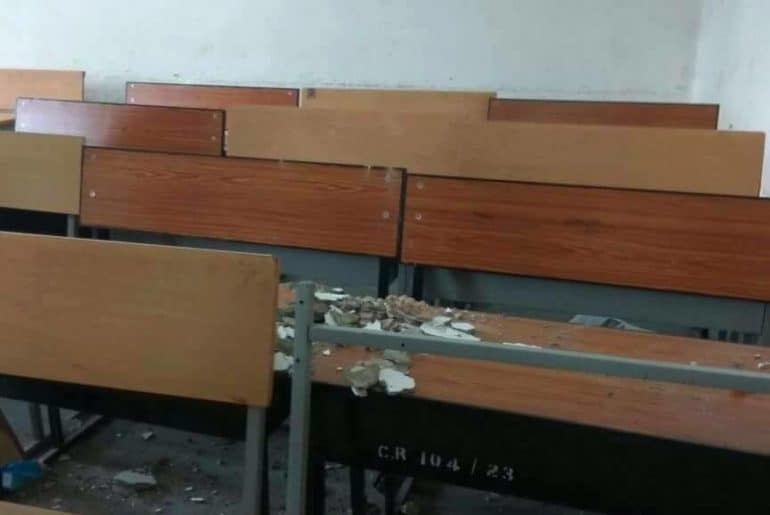
From washrooms with cleanliness levels of porta-potties, overcrowded classrooms with conjoined benches and poor ventilation, rats running around in its canteens, to roofs falling off and permanently damaged infrastructure, to the failure of the Equal Opportunity Cell to maintain adequate facilities for students with special needs, University of Delhi seems indifferent towards basic infrastructural requirements of its students. Such poor maintenance often results in high degree of inconvenience to students and staff alike, there even being some cases of injuries to the students caused by the lumps of roofs falling on them.

Cases such as roofs falling off at KNC and DRC, as well as various cases of inadequate infrastructure such as non-PwD-friendly rooms at SRCC and Rajdhani college stand as fresh examples of the problem. Apart from poor infrastructure in its colleges, the problem of scarcity of hostels and their limited seats also remains one of the biggest infrastructural issues for University of Delhi. There are a total of 12 DU colleges offering hostel facility, out of which only three provide hostel facility for boys. Procedure of admission in hostels itself is a highly complicated process, let alone live under the smeary conditions of the same for years. Students from outside Delhi tend to prefer PGs over DU’s hostels often due to this reason. When asked regarding the issue of such unpalatable infrastructure, university officials generally reply with a variety of reasons ranging from shortage of funding to lack of space for expansion.

However, to its credit, some new and off-campus college such as Maharaja Agraseen College(MAC), Deen Dayal Upadhyay College, Zakir Hussain College etc. do succeed in maintaining decent college campuses, along with some north campus colleges like St. Stephens, Shri Ram College of Commerce(SRCC), and Miranda House.

According to a study conducted by students of the Department of Anthropology in 2016, DU students’ rating of its infrastructure stood at an average of 62%. Being a government funded University, DU is inevitably subject to having comparatively worse infrastructural conditions when compared to private universities such as Amity or Sharda. However, It also is expected to provide basic amenities like cleaner washrooms and ample number of classrooms. With most of its constructions being in dire need of renovation, it is a matter of time to see how long does its indifference towards the highly inconvenient and potentially dangerous infrastructural conditions persists.

Feature Image Credits – India Times

Rishaj

[email protected]

HANS RAJ COLLEGE Walking into college feels like walking into a factory site. Students are welcomed by behemoth construction taking place beside the canteen and near the main block. Initially, the former appeared to be nothing more than an eyesore. Soon however, it turned into a life threat, as debris from the site began plummeting down on students who dared to venture into the canteen area. Imagine feeling like Chicken Little in every single moment you spend at college! It is rather depressing to know that the most beloved and popular space in college – The Lover’s Point – is now also the most lethal and comes with a muted ‘enter at your own peril’ warning. The construction taking place near the main block is problematic because of the sounds emanating from the drilling, breaking, and building activity. The cacophony disrupts teaching and sometimes, splinters and tiny rocks fly into the classroom itself, injuring nonchalant students.

DAULAT RAM COLLEGE

Daulat Ram College has recently made headlines for its inadequate infrastructure, to the point of social media being flooded with memes about students wearing helmets to class. On 30 August 2016, a chunk of cement and plaster fell from the ceiling during a lecture in Room 105, injuring five students. Students had protested a mere couple weeks prior to this event, demanding timely renovation and proper sanitation in the college. In the aftermath of this event however, both students and teachers have taken a more hardline stance and boycotted classes until their demands for safe classrooms are met. The teachers’ association of the college has drafted a resolution stating the same. Police and media infiltrated the college on the day of the event, and emergency meetings were called between the Principal and the governing body. The students went as far as to involve the Vice-Chancellor of DU in the proceedings. An interactive session between administrative authorities, students, teachers, and parents has also been scheduled. We have yet to see whether this will be enough to finally propel the authorities to action. At the end of the day, all students have the same complaint: if only the college had been wiser and undertaken all construction work during the long summer break, students would have not just reaped the benefits of improved infrastructure, but also dodged (pun intended) the menacing consequences of infrastructural development. Kriti Sharma [email protected] Vineeta Rana [email protected]

]]>

Over the years, off-campus colleges have been stealing the spotlight away from North and South Campus Colleges in various spheres of courses, infrastructure and cultural societies. Therefore, with each passing year, they have successfully attracted more and more Delhi University aspirants for admissions.

What’s causing this remarkable shift from the core campus? Let’s have a look!

1. Infrastructure

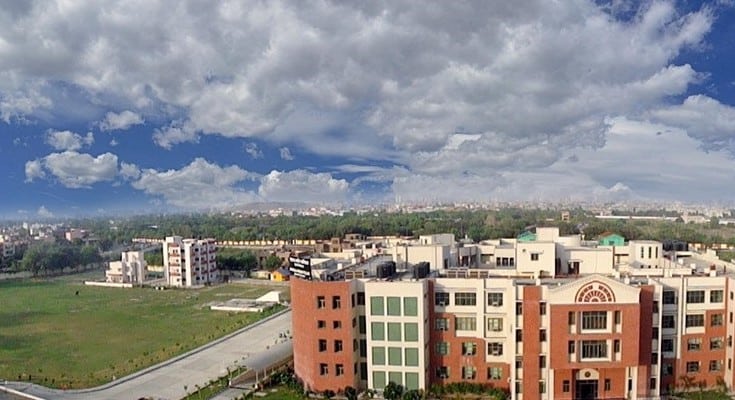
With sprawling campuses and well-developed infrastructure, off-campus colleges like Keshav Mahavidyalaya, the newly built Deen Dayal Upadhyaya College, Sri Guru Gobind Singh College of Commerce, Shaheed Rajguru College of Applied Sciences for Women, Maharaja Agarsen, Shaheed Sukhdev College for Business Studies are proven to be better than many core campus colleges. Dyal Singh College (M) recently also became the first college to be powered by solar energy. Off-campus colleges are thus, in a constant process of improving their infrastructure!

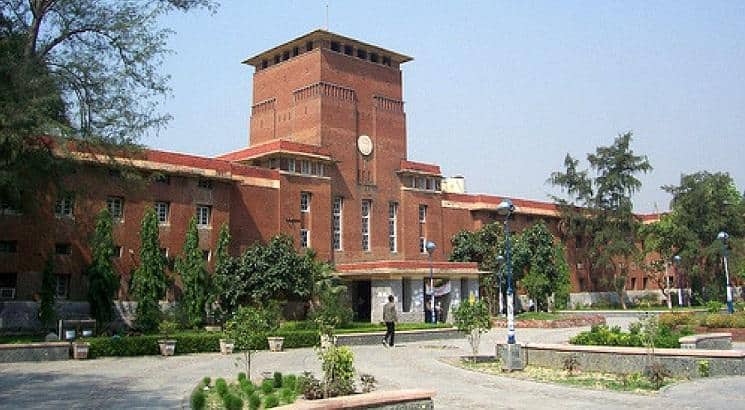
[caption id="" align="aligncenter" width="735"] Deen Dayal Upadhyaya College[/caption]
 

2. Specialized Courses

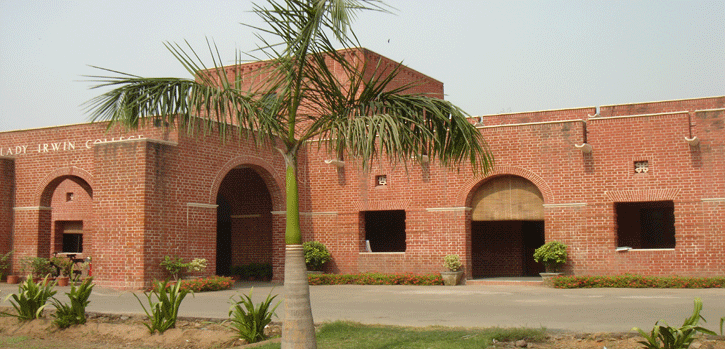
Another reason for the shift are the specialised courses that off-campus colleges are known to offer. Institute of Home Economics (IHE) and Lady Irwin College are the only colleges that offer Home Science as an undergraduate course. Bhaskaracharya College of Applied Sciences also offers many unique specialised courses on instruments, rarely found in any other colleges.

[caption id="" align="aligncenter" width="725"] Lady Irwin College[/caption]


3. NAAC grading

Acharya Narendra Dev College (ANDC) secured the second spot by getting a CGPA of 3.31 (Grade A) in The National Assessment and Accreditation Council’s (NAAC) evaluation. Shaheed Sukhdev College of Business Studies (3.16), Ramanujan College (3.06), Shivaji College (3.26), Sri Guru Gobind Singh College of Commerce (3.02), Keshav Mahavidyalaya (3.01), Bharati College (2.85) and Deen Dayal Upadhyaya College (2.63) were some of the off- campus colleges that too received good NAAC scores this year.

[caption id="" align="aligncenter" width="950"] Acharya Narendra Dev College[/caption]


 4. Cultural Societies

Misba – Western Dance Society, and I Vogue – The Fashion Society of Sri Guru Gobind Singh College of Commerce (SGGSC), won all the major competitions in Delhi University this fest season. Vayam – the dramatics society of Shivaji College, Glamoratti – The Fashion Society of Dyal Singh College (Morning), Zephyr – The Western Music Society of Kamala Nehru College and SGND Khalsa College’s folk dance societies are some of the best societies in Delhi University’s circuit.

[caption id="" align="aligncenter" width="735"] Kamala Nehru College[/caption]

 

Nidhi Panchal

[email protected]

]]>

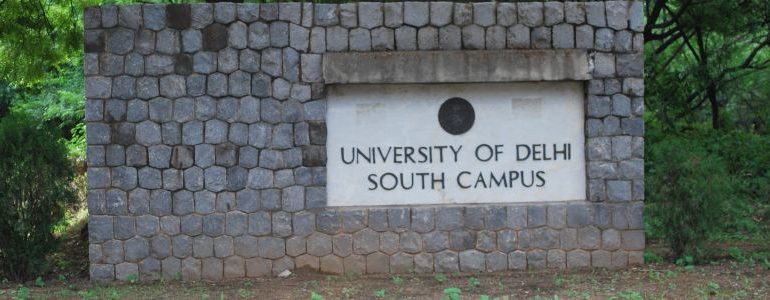
The South Campus of Delhi University comprises of six colleges situated on the Dhaula Kuan stretch, with a strength of almost ten thousand students attending college. However, the public infrastructure has been underdeveloped and ignored.

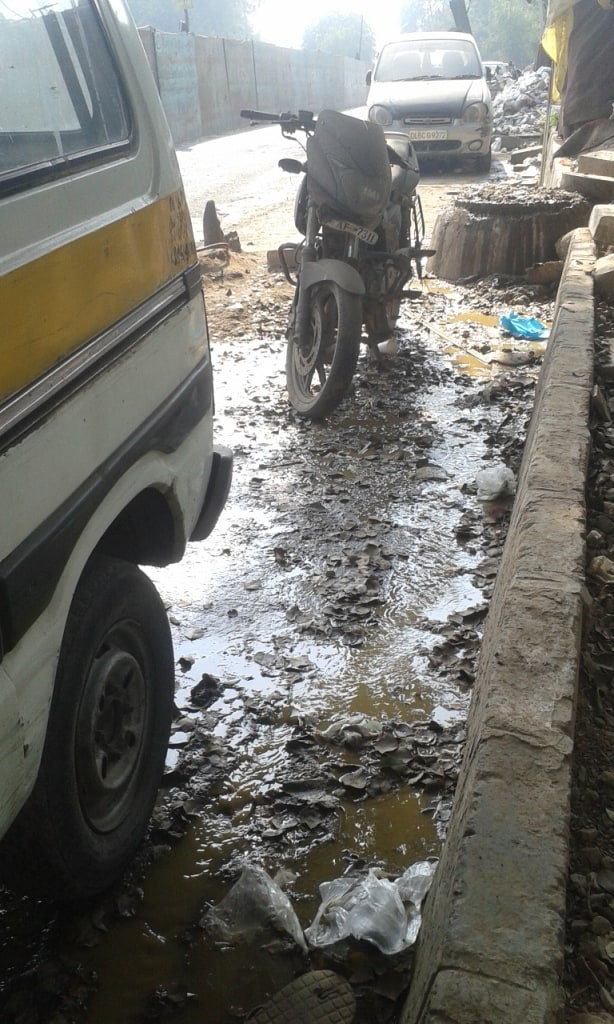
The campus has been facing a continuous problem of sewage leakage and broken footpaths. Open drains in between the footpaths make it a potential accident hazard and the stench from overflowing and exposed gutters makes it unbearable to walk the stretch. Students coming from the Dhaula Kuan ring road side are compelled to take an auto and spend money where as they could easily walk the distance if the footpaths were maintained, clean and continuous.

?????????????

On account of this, three students of Sri Venkateswara college namely, Manish Jain (Central Councillor), Ashutosh Singh (Student Activist) and Anshu Mishra went and met with Ms. Meenakshi Lekhi(Member of Parliament, Lok Sabha) and discussed these issues with her. Ashutosh Singh had also sent a mail to The Chief Minister of Delhi specifying the problems and demands on 8th Jan 2016 which had been received by the Officer on Special Duty (OSD) of the C.M. and has assured that a positive and a legal action regarding these issues will be taken as soon as possible.

The proposal of demands includes, increase in frequency of the university special buses, installation of CCTV cameras and the completion of the underpass on the Benito Juarez Marg at the earliest.  The mail has also been forwarded to the Commissioner, South Municipal Corporation of Delhi (SDMC), Tourism Department and OSD Transport Minister

When DU Beat asked them about their agenda and the execution of changes, Ashutosh Singh said, “After witnessing sewage, footpath, garbage and underpass problems in South campus, we will start a campaign named “Outside the Campus” with the help of all South Campus Colleges. In this initiative student members will write more than 1000 post card letters about the problems they are facing to appropriate authority which will include HRD Ministry, Urban Development Authority, SDMC, Public Works Department of Delhi and the Chief Minister.”

Receiving positive responses and the promise of imminent change, the students are finding strength in their initiative. It’s time South Campus catches up and becomes a pleasant experience for students and others alike.

Featured Image Credits- du.ac.in

Inputs From: Ashutosh Singh

Shefali Bharati

[email protected]

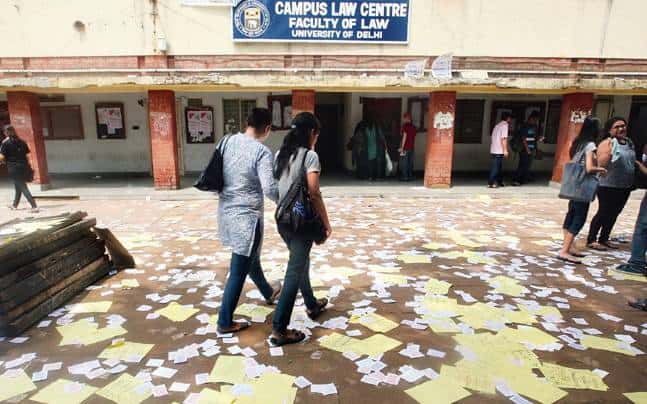
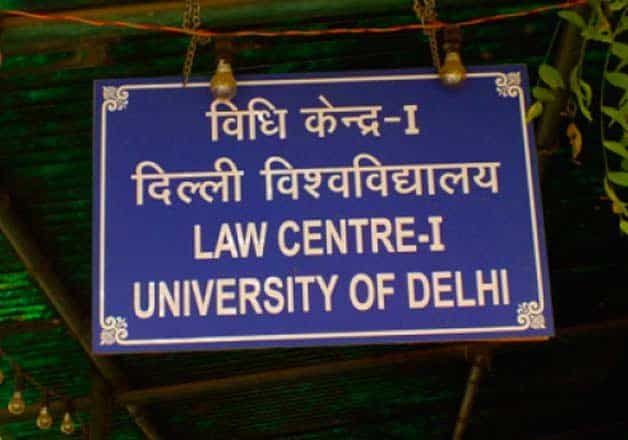
The Bar Council of India (BCI) has issued a show-cause notice to the Faculty of Law, Delhi University, on account of multiple illegalities, including: students exceeding permissible limits, lack of infrastructure and faculty to name a few. The BCI, which is the apex regulatory authority of legal education in the country, had decided in 2014 to de-recognise DU’s law course due to delay in extension of affiliation of its three law centres: Campus Law Centre, Law Centre-I and Law Centre-II.

This notice has come as a fresh trouble for Law Faculty after another inspection by a committee headed by the former Chief Justice of Patna High Court L. Narasimha Reddy. The panel reported that, the Law Faculty had just 20 classrooms instead of 100 for the 5000-plus strength of students it has. With this, it had been functioning with an ad-hoc faculty for the last 15 years. The college also increased its intake by 54 percent, which is considerably higher in comparison to the permissible 27 percent.

“The panel has stated that the Faculty of Law must arrange for 100 classrooms to accommodate the present strength. This apart from other requirements such as library, tutorial rooms, common rooms, moot courts etc.”, said the BCI communication to the University, as reported by The Economic Times.

The Faculty of Law was granted provisional extension of affiliation in 2014 when DU had proposed to shift to a new building which it claimed had adequate space for the faculty to run properly. However, with the illegalities left un-amended, the Law Faculty has been demanded to come up with quick action to keep the credibility of its course intact.

Image Credits: www.indiatvnews.com

Arushi Pathak
[email protected]

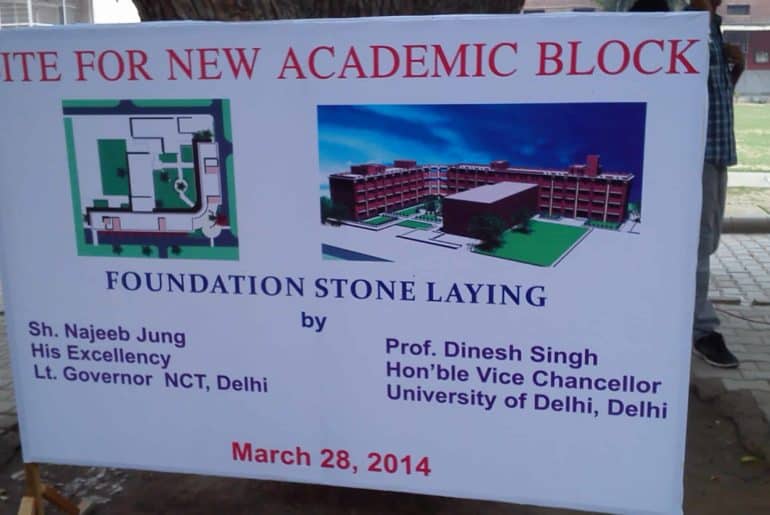
Hindu College witnessed a celebration of sorts on 28th March 2014. The occasion was the Foundation Stone ceremony for the college’s new academic block and the girls’ hostel.

The Academic Block is a result of the increasing student population in the college. This new block would provide lecture rooms, laboratories for the science students and common rooms for both teachers and students. The girls’ hostel, however, has been on the cards since 2006 but due to approval issues from the municipality and other authorities it took the college 8 years to initiate the construction. The hostel is meant to accommodate 200 girls along with 4-5 female teachers.

Lt. Governor Sh. Najeeb Jung, NCT, Delhi; Prof. Dinesh Singh, Vice Chancellor of Delhi University; Mr. SNP Punj, Chairman of Governing body, Hindu College; Shri Desh Rajgupta, Secretary of Hindu College Education Fund and the Acting Principal of the college Mr. Pradyumn Kumar laid down the foundation stone first for the girls’ hostel and then for the academic block followed by the auspicious ceremony of breaking the coconut on the site to ensure its success. After this, they proceeded to the auditorium of the college where students had already been seated to address the gathering. The programme began to the tune of the national anthem which was followed by a speech given by Mr. SNP Punj where he talked about the culture of the college and the success it has achieved till now.

The stage was then taken by Prof. Dinesh Singh who reminisced his old college days when being a Stephanian he would come to Hindu for its “bun andas” and how he is so glad to see that Hindu is ready to build its own girls’ hostel and provide outstation female students with more opportunities to achieve their dreams. Lt. Governor Sh. Najeeb Jung, another Stephanian also talked about Hindu college with nostalgia as he was almost about to be a part of Hindu.

Finally, the principal of the college took a hold of the mike. He relayed a vote of thanks to the esteemed guests and expressed his happiness over the project undertaken by the college. He then addressed his students in his famous sher-o-shayari style with the following lines –

“Unn rahon pe chalna hai,
jahan girna aur sambhalna hai
Hum hai voh diye auro ke liye,
Jinhe tufanon main jalna hai”

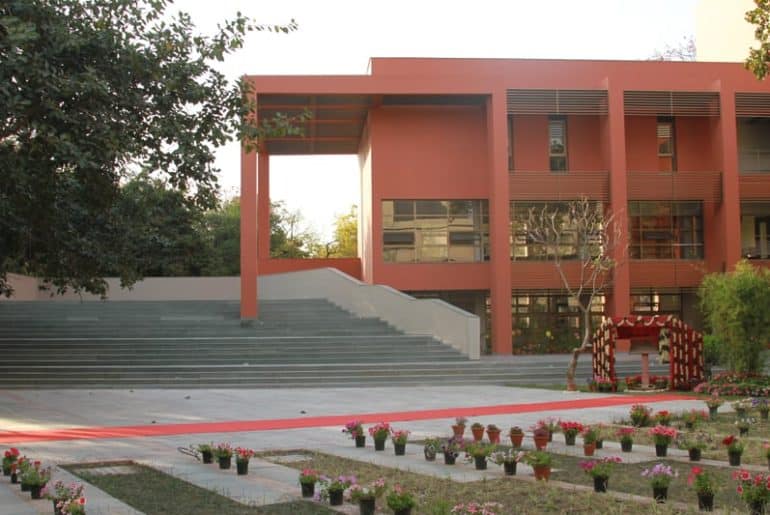
After the much-awaited inauguration of the new blocks by His Holiness The Dalai Lama, the students of Lady Shri Ram College for Women (LSR) are only waiting to move in as soon as the new semester sets in. The new blocks, namely, the Dr. Bharat Ram Academic Complex and the Aung San Suu Kyi Centre for Peace are expected to provide state of the art infrastructure to the students as well as solve the space crunch problem for both academic and non-academic purposes. Paucity of space had become a major concern for most Delhi University colleges after the expansion of OBC seats in 2009. With the introduction of the Four Year Undergraduate Programme (FYUP) and the number of active batches soon to be increased from three to four, this shortage is only expected to become worse.

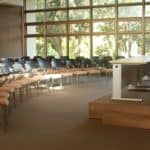
The Centre for Peace has been constructed as an extension of the existing main building and has been envisioned as a centre for research and learning. A part of the centre is also to be used by the Department of Psychology. The Centre has been christened after the college’s most notable alumnus, Nobel Peace Laureate Aung San Suu Kyi. The Dr. Bharat Ram Academic Block is an all new three-storey building which boasts of multiple lecture rooms and seminar rooms, an amphitheatre and an exhibition gallery along with a dedicated section to suit the technical requirements of the Department of Journalism and Mass Communication. Dr. Bharat Ram, after whom the block has been named, was an industrialist and educationist, the son of the college’s founder, Sir Shri Ram.

The interconnected and expandable lecture rooms of the new block, 16 in number, can accommodate 25 to 100 students depending upon the requirement. The seminar rooms too have the capacity to seat a hundred. The Manju Bharat Ram Conference Hall, named after the late educationist and Padma Shri awardee, is the biggest of such rooms. As of now, the Department of Journalism and Mass Communication and the Department of Elementary Education have been allotted rooms in the block. However, the final allocation will take place only by the end of the academic year. Along with the amphitheatre and the exhibition gallery, another new feature is the Multipurpose Room that is expected to be at the students’ disposition for extra-curricular activities.

IMG_8275

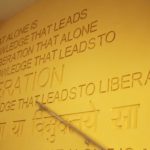
A glass panel on the ground floor acknowledges the contribution of the people and the organizations that helped with the college meet the financial expenditure. The construction of the blocks has been funded in part by the university and in a big way by the alumni, faculty and college associations. The exhibition gallery showcases the journey of LSR through the years, highlighting significant events and turn points while at the same time stressing upon the principles that the college seeks to uphold. And the inner walls reiterate what the college stands for- Leadership with Social Responsibility, an alternative explanation of the acronym LSR, being one of them. With all that has gone into their making, these new blocks are set to carry forward the legacy of the red walls.

Image Credit: Kanchi Malhotra

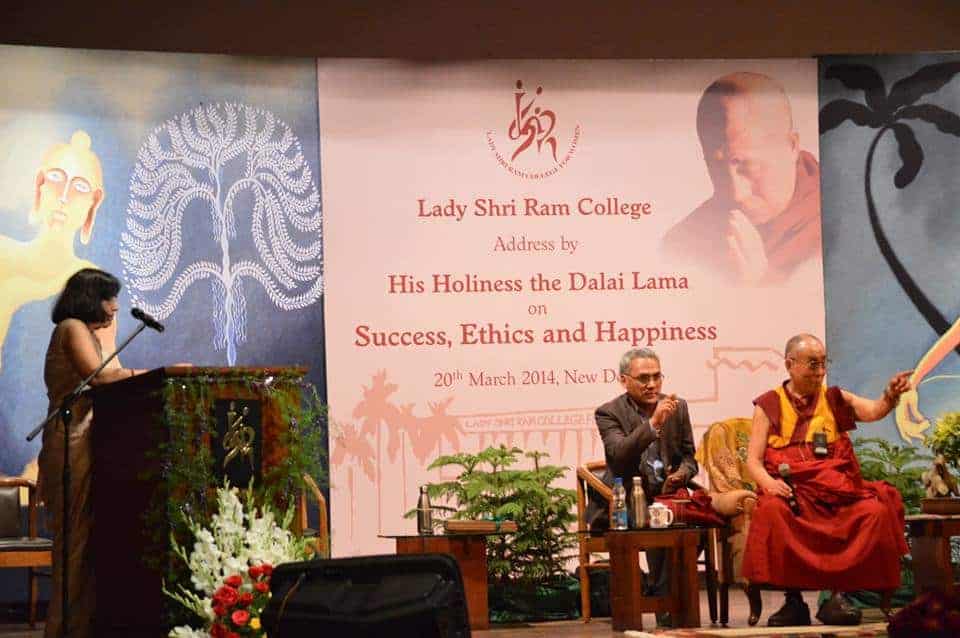
His Holiness the 14th Dalai Lama visited Lady Shri Ram College for Women on the 20th of March 2014. Talking about morality, ethics and the idea of a healthy inner-self, he spoke on “Success, Ethics and Happiness”.

Initially scheduled to start at 12: 30, the spiritual leader arrived for the inauguration of the new academic complex at around 2 p.m. With the sound of the gong marking his arrival, he first inaugurated the Aung San Suu Kyi Centre for Peace and then the Dr. Bharat Ram Academic Complex. This was followed by the lecture in the auditorium.

DSC_7823

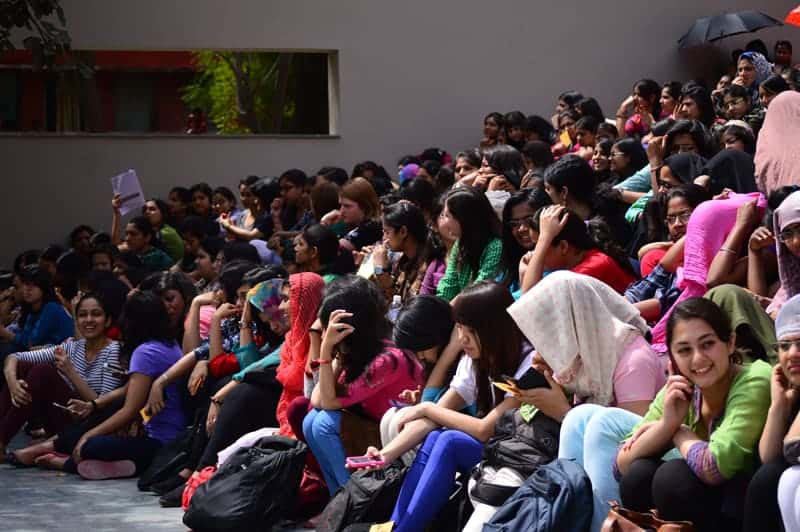
During his address to the audience at LSR, His Holiness spoke of inner-wealth, stating that inner-happiness was above all material wealth. With the ideals of universal responsibility, compassion and altruism dominating the speech, he also focused on social responsibility. While speaking to the set of young girls, he emphasised the importance of the female community to create a better 21st century. He believes that they should play a more active role to bring compassion and empathy to the world. He also appreciated India’s secular framework, stating that it was the only nation in the world where people of all faiths and religion lived together.

Coming to ethics, he spoke of ethics being a necessity for a peaceful and happier world. He says, “Success requires ethics. Ethical life means honesty. Honesty brings trust. Trust brings friendship. Friendship brings unity. Unity leads to a more peaceful world”.


His ideas were followed by a series of questions that members of the audience wanted to bring about in the discussion. Students and faculty raised questions about the definition of success as well as questioned ideas of whether happiness could exist without spiritual belief. The religious leader says that even non-believers can be happy as long as there is awareness. On defining success, he stated that when at the end you are at peace and happy, that is success.

lama


The event closed with the vote of thanks presented by the Students Union President of the college, Tanvi Bist. This was followed by Yashaswini Basu, the Cultural Secretary of the college presenting his holiness a long life prayer with the signature of students and it’s recital in Tibetan by the college students.

His Holiness the Dalai Lama will also be visiting Shri Ram College of Commerce (SRCC) on the 24th of March on the occasion of the college’s Annual Day.

Image Credit: Mugdha for DU Beat

Delhi University is facing a drought in its internet services. The alleged reason for such a situation is a strike by the company providing the services.

The Delhi University Computer Centre serves as the hub for computer related services on the campus. The network, consisting of a gigabit fiber backbone provides connectivity to all departments at the North & South Campuses, all Colleges as well as 64 off campus Colleges.
Services available to users include access to the internet through 36 Mbps bandwidth in North Campus and 24 Mbps in South Campus. The service has been withheld as of now, reasons being unknown. It has been a few months since colleges have reopened and wi fi services in colleges yet remain to be functional.

This has created a lot of problem on the university colleges as students and teachers now have to fund the internet service themselves even though the university spends lakhs on it.As for the preparations for e-learning in FYUP with the coming semester, a doubt remains that with the withheld service whether students would be able to access international scholarly articles and online books.

In a statement published by Neeraj Tyagi, Deputy Dean Works, DU, the University has had no discrepancies in its administrative and financial functions for these services. The problem he said is being caused because of the strike of the service provider. He hopes that the problem will be solved within a week.

imagecourtesy:siliconangle.com

On Friday, 2nd August, the KPMG Resource Center for students with disabilities was inaugurated at apartment 10 of the staff residences at Lady Shri Ram College. The walls of this resource centre adorn art work by students with disabilities, and the notices on the boards are both in Braille script and in English. Spread over two rooms, the computers here have software that makes technology accessible to students and teachers with disability – from coding software that translates sound to text for students with hearing impairments to software like JAWS, Everest –D Braille Embosser, Screen Reading Software, Lex-Talk Scanner, Book Scanners, DAISY recorders and Players and OCR software  for students with visual disabilities. It is equipped with a total of 10 computers, which are installed with softwares needed by both English as well as Hindi medium students.

At the resource center, all text on display is accompanied by a Braille version of the same.

An initiative by REACH (which stands for Reaffirming Equity Access Capacity and Humanism) – an LSR society meant to empower students with any kind of disadvantage, this resource center is a part of KPMG’s CSR activities and will hugely benefit LSR and it’s students and teachers with disabilities.

Hemul Goel, the current student coordinator for REACH said:

“The Resource Centre equipped with the latest assistive technology like the Everest –D Braille Embosser, Screen Reading Software, Lex-Talk Scanner to name a few, really brings us close to our aim of empowering students and making them self reliant. Besides setting up a Resource Centre, a new wing called Kshitij Swavalamban has also been instilled under REACH. Through this initiative we hope to provide placement and internship opportunities for those at a social and economic disadvantage.’’

This initiative by LSR reflects all the values that the college stands for, and is only a beginning of the larger goals of equity and justice that it instills in its students.