
Tag

Hans Raj College

Browsing

A four day spectacle from 23-26th December, Mood Indigo saw a variety of speakers, competitions and events during the fest. We bring to you a list of some of the highlights of this annual cultural extravaganza that added colour, fun and frolic to the festival.


Conchord: The Acapella finals 

Conchord, the acapella music competition at Mood Indigo 2016, was a riot of melodious notes synchronised in perfect harmony, without the use of musical instruments. The event saw four teams battling it out in the finals-Mount Carmel College, Bengaluru; Gargi College, Delhi; Shri Mata Vaishodevi University, Katra and Hansraj College, Delhi. The competition was judged by three musicians-Kenneth Shakira, Shayla Saldanha and Caroline Pereira.

Swaranjali, Hansraj College’s Music Society bagged the first place, while Gargi College came second, followed by Mount Carmel College. Swaranjali enthralled the audience with their rendition of Bad Romance and Barbie Girl, inviting praise from the judges for the balance in their notes and the impeccable coordination within the team. While the all-girls teams from Mount Carmel College and Gargi College earned accolades for their bass voice and versatility respectively, the team from Shri Mata Vaishnodevi University was appreciated for their choice of a medley of foot-tapping popular music.


A photo posted by DU Beat (@du_beat) on


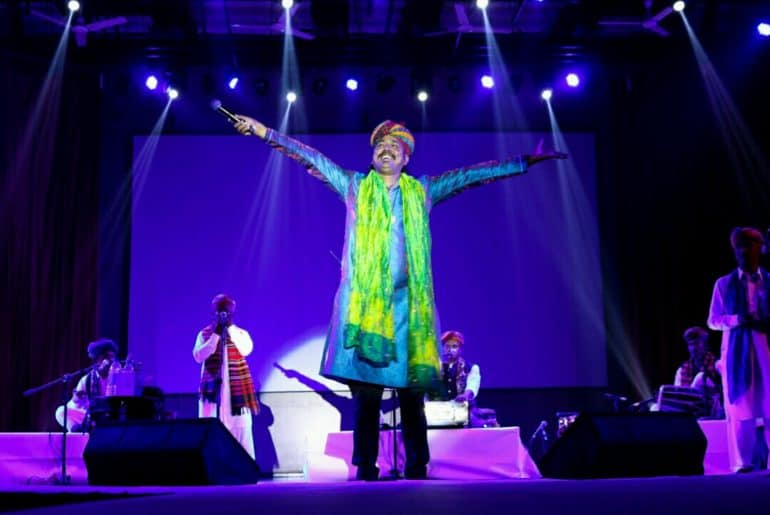
Coke Studio singer Mame Khan steals the show:

With his rendition of ‘Damadum Mast Kalandar’ and other songs, Mame Khan stole the audience’s heart with his super energetic and enigmatic performance. Not only did he engage with the crowd, but also crooned the classic ‘Damadum Mast Kalandar’ that left everyone mesmerised and wanting for more.


A photo posted by DU Beat (@du_beat) on


FusionNite: Karsh Kale 

The ‘fusion nite’ saw the renowned American Indian musician, composer and producer Karsh Kale set the tune straight for his audience as the jamming session pumped up the young lot.

img_1291-2
Karsh Kale performing at Mood Indigo


Saurabh Shukla’s Barff

Saurabh Shukla’s second directorial venture, Barff, was an event that was eagerly awaited at Mood Indigo 2016. The three member cast of Sadia Siddiqui, Sunil Palwal and Saurabh Shukla had a packed hall hanging on to their every word as the stage transformed into a scene from Kashmir, snow et al. Sunil Palwal essays the role of Ghulam, a Kashmiri taxi driver, while Sadia Siddiqui plays his wife, Nafisa. Saurabh Shukla is Dr. Siddhant, coming from afar to treat their unwell child.

dsc_0195
Saurabh Shukla performing in his second directorial venture, Barff

A palpable air of mystery and intrigue envelops the play, giving it the garb of a thriller revolving around the little child. Love, motherhood, a sense of attachment towards Kashmir, and fluidity in the perception of reality are intertwined to create an undeniable masterpiece. The acting is impeccable and lends depth to the three beautifully moulded characters. Nafisa’s heart-wrenching cries, Ghulam’s devoted love for his wife, almost bordering on naivete, and the doctor’s attempt to understand their world, could not have been portrayed more realistically. Reality becomes putty in the hands of imagination driven by intense pain and love. The set, which marvellously locates itself in a Kashmiri home and its surroundings, is meticulously thought out to the littlest detail.

Theatre Fest:  Daddy Cool

 A two-man act starring Jagdish Rajpurohit and Kevin Dave, ‘Daddy Cool’ is a hilarious play that charts the life of a father son duo. As the name suggests, the father is “cool” employing different parental tactics to fuel his son’s curiosity during his formative years. They include sending his son to a sex-worker so as to educate him about sex and smoking with him in order to dissuade him from doing so.

img_1263_2

There are some inevitable questions that come from young children which place their parents in awkward situations. The play focuses on some of these, especially regarding those related to sex. In the process, the ingenious ways in which parents often deprive their children of the right answers rather than touch upon the taboo topic of “sex,” are highlighted.


The most remarkable facet of the play was the effortless acting of the two, which required role reversals and multiple roles playing. The sheer task of holding the attention of the audience for an hour isn’t easy, and they did just that while also cracking them up the entire time.

Jayaprakash Narayan on Demonetisation 

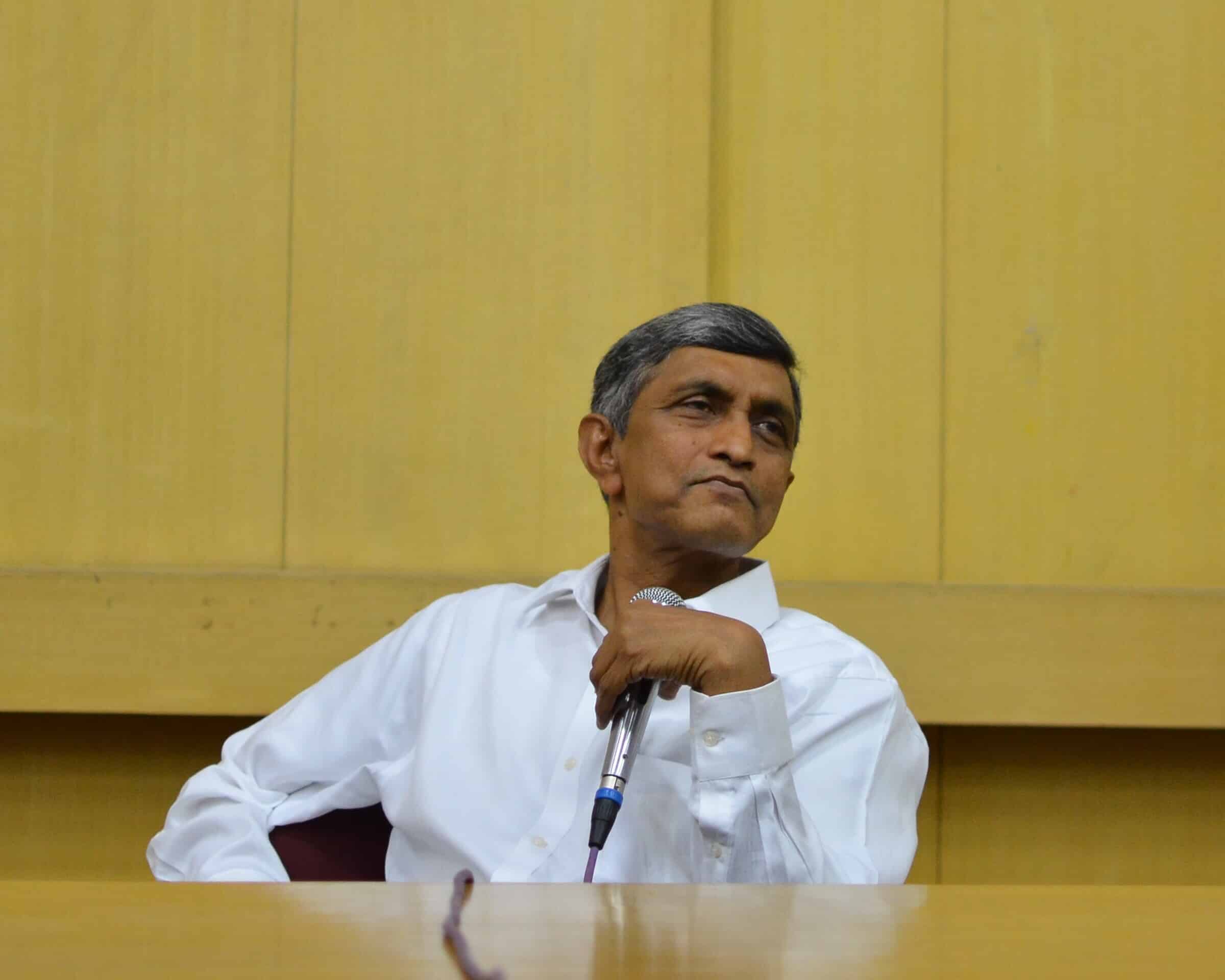
As part of Mood Indigo’s Lit Fest 2016, renowned political informer and founder of the Lok Satta Party who boasts of a 16-year long career in government, Dr. Jayaprakash Narayan conducted an interactive session with the audience on the aftermath of demonetisation.

Dr. Narayan explained that the policy of demonetisation will not work in isolation as a “mantra or panacea.” It must followed by attendant steps to ensure that benefits are released. “One man’s sudden whim cannot become policy in a short period in a country of our size. But, the people of India are extraordinarily forgiving and are willing to pay the price in the short term,” he said.

According to Dr. Narayan, the primary role of the government is to create conditions for people to discover their own enlightened self interest, by delivering quality education and healthcare.

img_1309

In his closing note, Dr. Narayan appealed to the students to go beyond their textbooks and work towards transforming the nation’s future.

Street Play competition: Aagaaz 

Agaaz, the street play competition at Mood Indigo 2016 saw participants bringing tremendous energy and innovative themes to the fore. The 12 competing teams brought out various significant social issues through their nukkad natak. An outdated education system, rigid caste hierarchies and discrimination based on caste, the freedom to express one’s own sexuality and the hypocratic taboos revolving around menstruation are some of the pertinent issues raised by the teams. The event was judged by Tanya Abrol, Chintaman Sahastrabuddhe, Yusuf Qasmi and Padmabhushan Agrawal and was also attended by actor Pankaj Tripathi. Some of the participating teams include College of Vocational Studies, Sri Venkateshwara College, PGDAV, IIT Kanpur and Ashoka University. The judges laid down the yardsticks of a good street play as one that disseminates a universal message and entertains the audience simultaneously. The judges appreciated the diversity and relevance of the social issues raised.


 Feature image credits: Gerush Bahal 

Reporters:

Riya Chhibber ([email protected])

Abhinaya Harigovind ([email protected])

Swareena Gurung ([email protected])

Kavach Chandra ([email protected])


Picture credits: Harshit Thukral, Prateek Singh, Hitanksha Jain and Gerush Bahal for DU Beat.

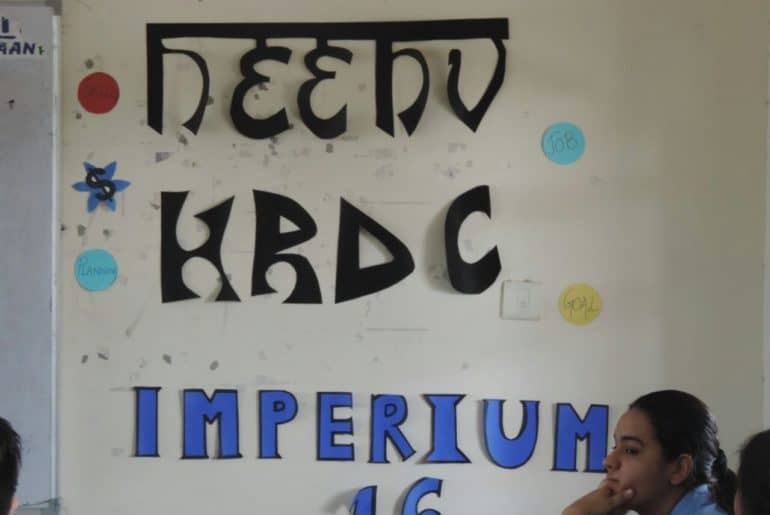
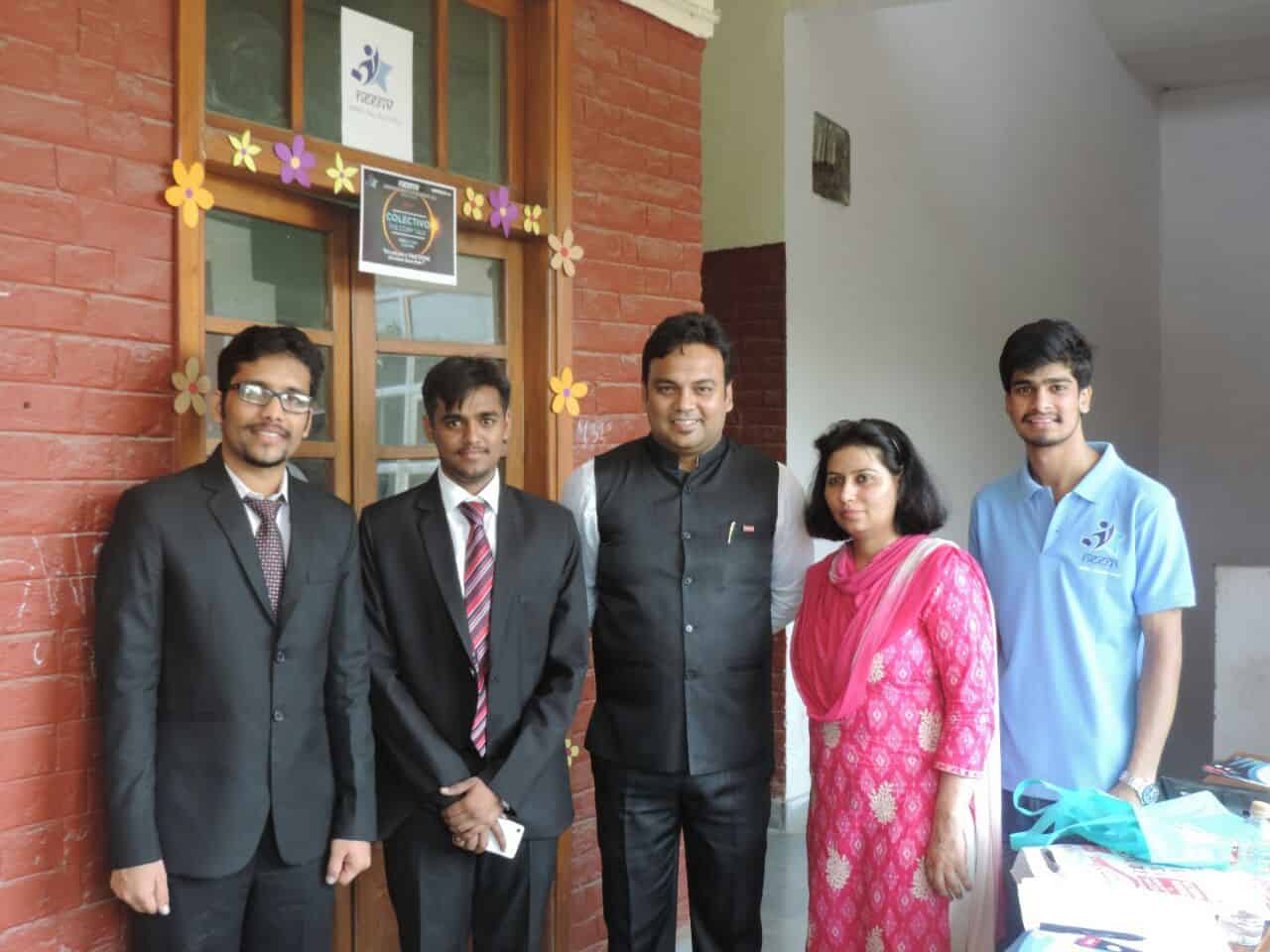
As we all know, Delhi University is one of the most renowned universities of India. All the colleges under this university have various societies that relate to different spectrum of our living. But, the society of Human Resource Development has been an unexplored arena and only 2 colleges had it registered until 2015. However, in 2016, Hansraj College came up with the 3rd HRD cell of Delhi University i.e. NEENV.

“HARD WORK PAYS OFF” is a cliché, yet a very true statement.

After numerous sleepless nights and endless efforts of the Neenv Team, IMPERIUM 2K16, the 1st Flagship event of NEENV, has been successfully organised.

img-20161027-wa0020

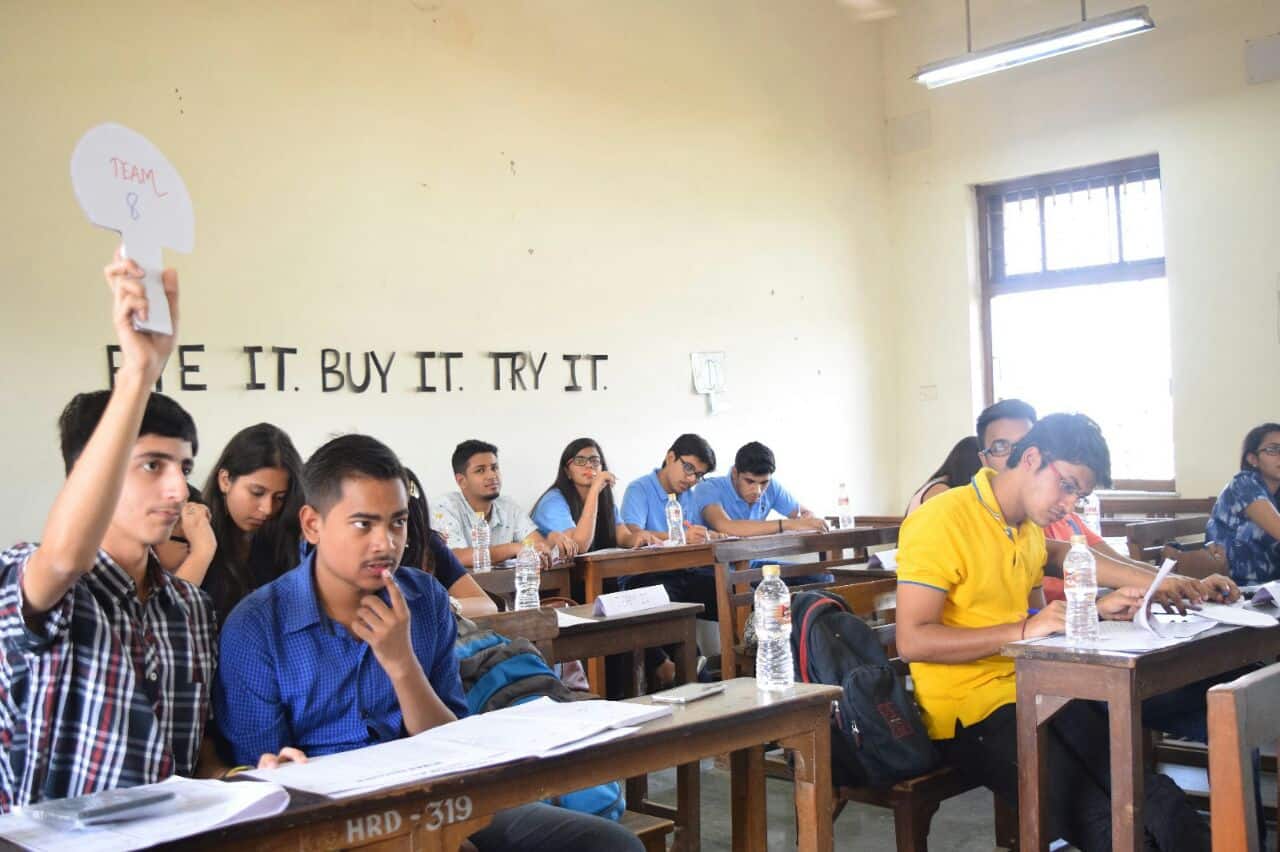
The event accorded of 3 business competitions: House of bids (HR Bidding), Collectivo (Corp Talk) and Case N Curious (Case Study). The event received hopped up responses of more than 100 participants.

Mr. Rohit Kharbanda (Director, Intercontinental Hotel Groups) and Ms. Kawaljeetin Khurrana (Director, Kapp Edge Solutions) were invited as our Chief Guests to grace the occasion. All the three competitions were very well organised. The feedback of the students was also quite good as they were very satisfied by the management of the events.

img-20161027-wa0017

Even though NEENV has just started its journey, the event is just the tip of the iceberg and there is a lot more to go. Thus, the society has earned itself a wonderful beginning, which it can be truly proud of. The continuous hard work will help it to achieve a remarkable position among DU’s other societies.

What began as an idea a mere month and a half ago, was brought to life by the efforts of Culinary Arts Society, Hans
Raj College on 7th October, 2016. With a total footfall of more than 6000 students, this Food Festival 2016 was appreciated and enjoyed by all. The diversity of food was well showcased by over 30 stalls which included Keventers, Pizza Hut, WOW Momos, Fruitish Juice, Bootlegger, Sushiya, Whistling Spices and many more. Along with the food stalls, stalls by Enactus Hans Raj and Kalakriti- the fine arts society of Hans Raj College were also enjoyed by
many.
The event began at 11AM with arrival of students but the real celebration started after 1PM at the arrival of the chief guest Chef Machindra Kasture. He was felicitated first on the stage along with guest of honor Mr. Vikram Agarwal, MD of Cornitos. Following the felicitation, Principal Dr. Rama addressed the gathering along and Chef Kasture congratulated the Culinary Arts Society for organizing this event.
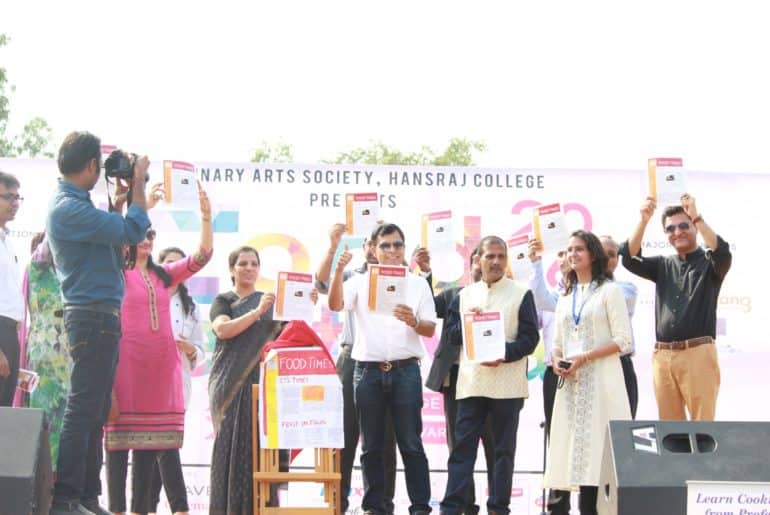
CAS launched on stage their monthly newsletter Food Times with the curtain being raised by the Chief Guest. Thereafter, performances by Swaranjali, the music society of Hans Raj College and Kavyakriti, classical dance society of Hans Raj College, left the viewers spellbound. There were also two competitions conducted- Main Bhi MasterChef, where the shortlisted students had their dish tasted by the Chief Guest and other guests, which saw Vrinda winning the hearts of all with their Kulhe ki Chaat and Garry Pahwa being the runner-up with her traditional sweet-dish. The other competition was Tacos Challenge, a no fire cooking challenge, conducted by Cornitos where people had to create a dish on the spot using delicious ingredients provided by Cornitos. The tacos challenge saw participation in huge numbers with even some faculty members trying their hand at cooking. Meher was declared the winner of the challenge.
Chef Kasture was delighted with the response of the Festival and reminisced, he  said, “At our times, we did not have access to anything. We didn’t have the knowledge of food the way people do now. It is all because of globalization that everyone is aware. One should take advantage of such information and build a career.
Food is a great career to be in.” He was also appreciative of students cooking and was emotional when asked about his favorite dish, “I have travelled the world but nothing can beat maa ke haath ka khana. She introduced me to cooking.” A fashion walk by Fashion Society of Hans Raj College in association with Max Fashions concluded the event on stage while people continued to pour in and savour the variety of dishes being served by stalls and availing great offers.
This was a first time a Food Festival was organized by any society in any college in Delhi, and it turned out to be a
roaring success. Huge footfall, satisfied students, happy guests will have this event being remembered by all who were a part of it and will go down in history for many good reasons!\
Images and content by Culinary Arts Society, HRC.

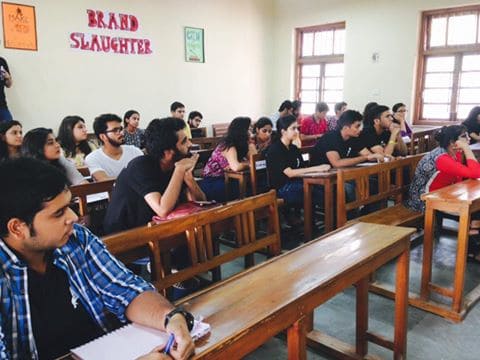
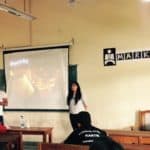
Challenging the marketeer in each participant and incorporating the exhilaration of bidding, MarkUs, the Marketing Society of Hansraj College organized  ‘Brand Slaughter’ and ‘Bidwiser’ , the two unique competitions, on the 6th of October 2016.
After scrutinising hundreds of applications, a total of 12 teams were shortlisted for the final round of Brand Slaughter. On the other hand, 10 teams made it to the final round of Bidwiser. The ball was set rolling amidst a lot of nervous excitement, and the MarkUs’ first event for the session began!

Many brands such as KFC, shaadi.com, Endura mass were slaughtered in the first round of Brand slaughter. In the second round, the teams gave their unique presentations and marketed totally non-marketable products such as Patanjali cigarettes, MRF slippery tyres etc.! The other teams were required to invest in the presenting team’s product and the product with the highest investment won!

On the other hand, in Bidwiser, with prices being shouted, bids getting higher by every second and the hammer being struck, the room was tingling with exuberance. The teams went through several rounds, pitching for brands, taglines and brand ambassadors. Finally, they were given a fun yet challenging task of putting together all they managed to buy, and present it as an advertisement to woo everyone for their brand.

Both the competitions concluded with jubilation all around, and a deep sense of satisfaction with the largely successful event.

Images and Content by Marketing Society of Hans Raj College

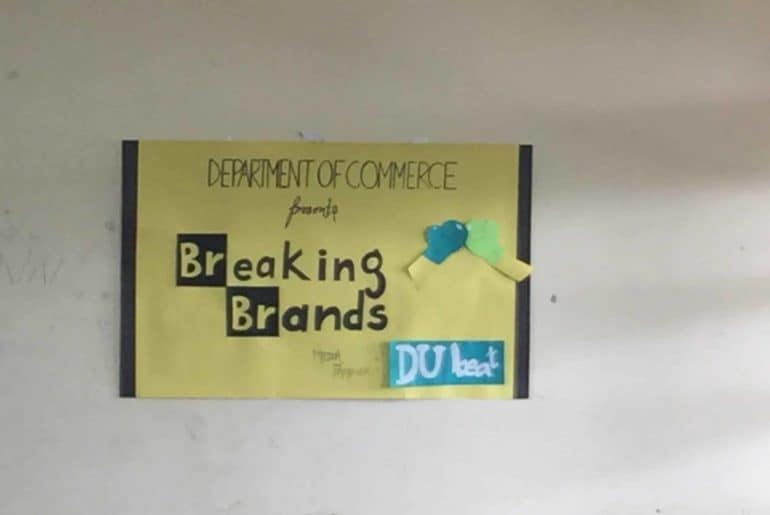
The Marketing & HR Cell, Department of Commerce, Hans Raj College organised its second edition of Breaking Brands with the preliminary round being held on the 21st of September and finals on 24th September, 2016.

The event saw a participation of more than 250 teams consisting of budding marketers sending the solutions to the case study online. After rigorous evaluation, 14 teams were shortlisted for the finals held at Hansraj College.
img_0110
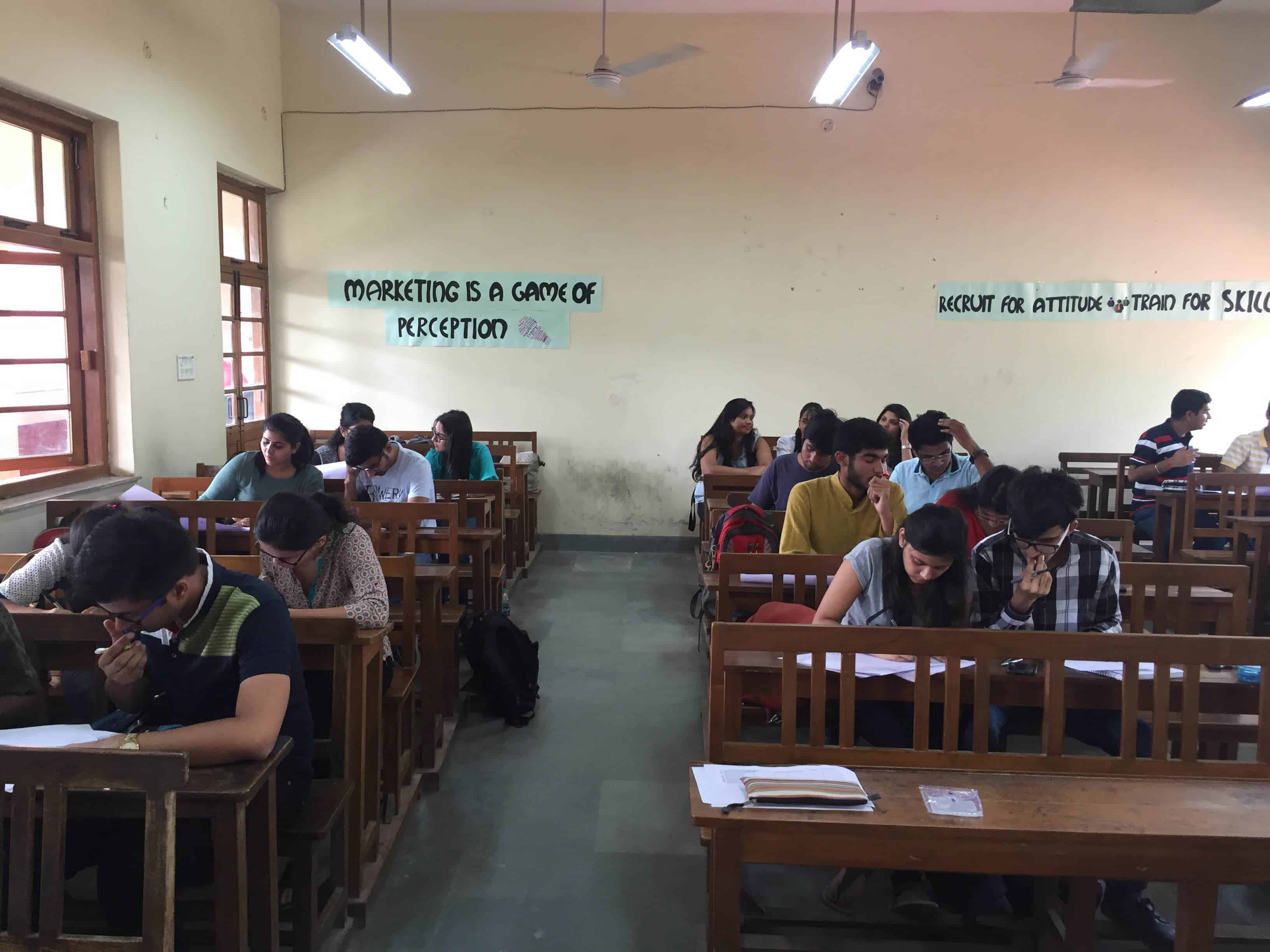
The final round was judged by 2 IIM-L Alumni who specialise in the fields of Marketing and consultancy. The final round involved the students in innovating a pressure cooker and devising a unique marketing strategy for the same with proper budget allocation.
img_0132
Prizes worth Rs.  6000 were distributed amongst the top 3 teams.
Breaking Brands was a huge success and saw participation from students all over the University of Delhi.
]]>

The Marketing & HR Cell, Department of Commerce, Hans Raj College organised its second edition of Breaking Brands with the preliminary round being held on the 21st of September and finals on 24th September, 2016.
The event saw a participation of more than 250 teams consisting of budding marketers sending the solutions to the case study online. After rigorous evaluation, 14 teams were shortlisted for the finals held at Hansraj College.
img_0110
The final round was judged by 2 IIM-L Alumni who specialise in the fields of Marketing and consultancy. The final round involved the students in innovating a pressure cooker and devising a unique marketing strategy for the same with proper budget allocation.
img_0132
Prizes worth Rs.  6000 were distributed amongst the top 3 teams.
Breaking Brands was a huge success and saw participation from students all over the University of Delhi.

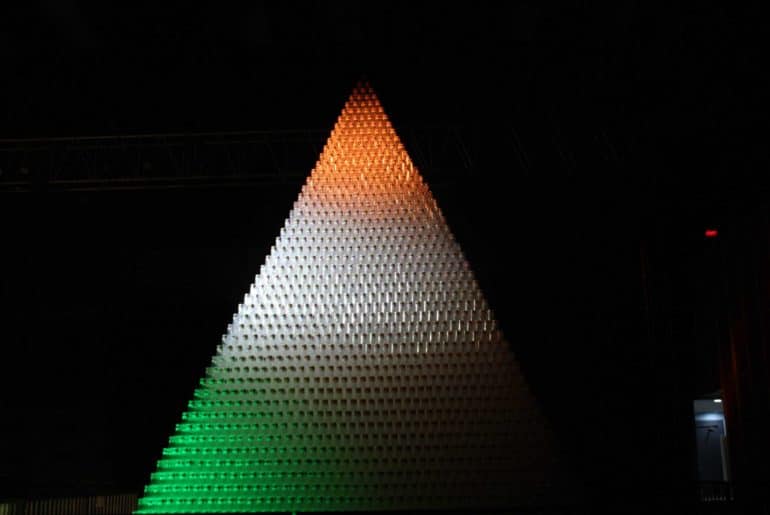
September 17, 2016, New Delhi: An enterprising group of Delhi University students today created a new world record, of making the Largest plastic cup pyramid by using 57,000 plastic cups at Thyagraj Sports complex today. The contingent of 22 students who were led by Kushagra Tayal, an Economics student from HansRaj college took 3 days to accomplish this feat. The students were cheered by an audience of about 1500 people who consisted of friends, family and other well wishers.

Speaking on his achievement, Kushagra Tayal said, “It is indeed a matter of pride for all of us that we have managed to achieve our goal of assembling the world’s largest plastic cup pyramid. What started as a dream long ago, is finally a reality today. I would like to thank each and every member of the team for the support they gave right from the planning stage till today, when we executed our project; my teachers who always believed in my vision; and of course my family who have been supportive for all my endeavours.”

The pyramid was assembled in the presence of officials and adjudicators from Guinness World Records who had specially flown in to be a witness for the attempt and also to give on the spot verification for the world record. As a token of gratitude to the audience present at the venue, the team gave a plastic cup to the audience who had gathered to witness this world record being created. The group broke the existing record, which was achieved in Mexico, using 42,935 plastic cups, which had a height of approximately 30 ft. Some members were seen getting their plastic cups autographed and taking selfies with Kushagra and other members of the contingent.

About Kushagra Tayal: 

Eighteen year old Kushagra is currently a student of Economics at Hansraj College, New Delhi. A keen learner, Kushagra is an avid badminton enthusiast, who has been winner of silver medal in badminton at National School Games. Kushagra has also won a silver medal in Badminton at CBSE Nationals and is a recipient of Airport Authority of India (AAI) scholarship continuously for 2 years. The Dr. Satya Paul Award for Human Values which is highest award given by APEEJAY group at school level has been conferred on Kushagra for showing an all round performance in school. During his free time when he is not studying or playing badminton, Kushagra loves to play drums and read novels.


Provided by Nitin Narain from Mavcomm Consulting. 

Lean IN is an international organisation founded by Facebook COO, Sheryl Sandberg. It aims at creating an equivalent society and working towards making women more confident and better leaders.

Tanya Jain, a student of Economic (H) from Hansraj College has started a Lean IN circle in the college recently. The concept behind this is to have a chapter under which various Lean IN circles are registered. Lean IN Hansraj circle is registered under the Lean IN India chapter and is being initiated in collaboration with the Women Development Cell of the college. Lean IN Hansraj would be following the guidelines from Lean IN itself.

Lean IN provides resources for all its circles and chapters. There are workshops & expert videos which each circle is supposed to follow. Lean IN provides circle members with step-by-step meeting guides, which contain topics for discussion, workshops, and videos recorded by Lean IN Leaders. However, the organisation provides immense amount of flexibility to its members to work according to their circumstances.

All the provided guides/expert videos are aimed at making its members communicate freely with each other along with giving them a confidence boost and turning them into better leaders. Circle meetings include discussions which are highly interactive in nature and allow members to speak up without any qualms whatsoever.

Lean IN circle Hansraj recently conducted its first meeting and set goals to follow in the coming year.

These goals include-
1. Interacting freely with one another and getting to know each other better.
2. Gaining self confidence and getting over fears/inhibitions by accepting themselves.
3. Improving their leadership skills.

How to start a Lean IN Circle:- Visit the website http://www.leanin.org/, click on the tab ‘Start a circle’, fill in your details. You become a new circle leader and are eligible to open your circle for applications. Lean IN has kept the process very simple to let more and more people feel motivated towards starting one circle.

Image Credits- Nikita Mohite from Hansraj College

Akshara Srivastava
[email protected]
Hansraj College will become the first Delhi University college to hoist the national flag in its campus. Is it propagation of a certain idea of nationalism by those in power?

Hans Raj College will become the first college in Delhi University to hoist the national flag in its premises. The decision to hoist the tricolour, the request for which was made by college principal Rama Sharma to college alumnus Naveen Jindal, comes in the wake of the nationalism debate that raged after the JNU controversy in February this year. At an event to mark the 69th founder’s day of the college, the decision was made public by industrialist and founder of the Flag Foundation of India, Naveen Jindal, who shared the stage with the varsity Vice Chancellor Y K Tyagi and other notable alumni like Om Prakash Kohli, the governor of Gujarat.

Jindal filed a writ petition at the Delhi High Court in 1995 contesting the order of the Commissioner of Bilaspur, Chhattisgarh, who invoked the erstwhile Flag Code of India, prohibiting him from flying the tricolour at his factory premises. The court having considered his plea asked the government to constitute a committee which eventually mandated that the citizens, by the virtue of having the fundamental right of expression, have claim over the national flag and can hoist it on days other than Independence Day and Republic Day. The committee, headed by Dr P.D. Shenoy suggested changes to the code which eventually culminated in the formulation of the Flag Code of India (2002) which gave citizens the right to hoist the tricolour on private premises in accordance with a certain protocol on days other than gazetted holidays. The national flag positioned at the centre of Connaught Place was also installed by the tycoon who was influenced by the liberal usage of the American flag during his years at the University of Texas where he was president of the student government.

The decision, which emerged from the Hans Raj principal’s request to have the tricolour by 26th January 2017, can be viewed as the result of an informal meeting among the Vice Chancellors of 42 Central Universities and the then HRD minister, Smriti Irani, in the month of February. The backdrop of this meeting was the JNU imbroglio, allegedly involving anti-national slogans, hurting national sentiments and its highly questionable media coverage. The gathering took the decision to fly the tricolour on college buildings of central universities to instil a feeling of nationalism among the student community and the youth. On similar lines, the residential Jawahar Navodaya Vidyalayas (JNVs) in the country have been asked to follow suit.

That the premise behind the argumentation of the Human Resource Development Ministry (HRD) is based on inculcating nationalist feeling among the youth is bizarre in its own way. A certain idea of nationalism and not nationalism per se is being attempted to be appropriated through symbolic means by those in power. The symbolic nature of the tricolour which was designed by freedom fighter Pingali Venkayya, was meant to create an open space within every citizen to have the collective conscience of belonging, along with having one’s own individual idea of the nation. The imposition of an idea of the nation, which is being promulgated by the HRD, has already garnered success in the way in which the non- Kashmiri students of the National Institute of Technology (NIT), Srinagar, are demanding the tricolour on the institution’s premises to feel ‘protected from the fringe elements in the valley’ as if the tricolour doesn’t belong to the Kashmiris and is exclusive in nature. This exclusivist approach by the ministry limits the idea of the nation and grants the right of its formulation to just certain individuals in Lutyen’s Delhi.

That the hoisting of the national flag has been a failed experiment to instil the ‘feeling of nationalism’ is evident in the ways in which student eruptions happened in institutions like Jawaharlal Nehru University and Hyderabad Central University, where the national flag was already hoisted.

The hoisting of the tricolour in the current political atmosphere is not to be viewed in isolation since certain ideas are being pushed alongside such symbolic installations at educational institutions. If Hans Raj College successfully hoists the tricolour, a symbol which is being instrumentalised to push forward a specific agenda, then this will engender a phenomenon characterised by demands from other colleges in the varsity for the same. The tricolour stands for the rich cultural legacy and the secular ethos that the country preserved at the time of independence. It also symbolises the freedom struggle that strived for the freedom of thought and expression and celebrated mutual co-existence among the warring factions of the subcontinent. It also stands for secularism and inclusivity. In the current political environment, one needs to understand that the idea of nationalism that is being promulgated by the ruling order isn’t concomitant with the national flag, for the attempts to suppress dissent and free speech have been major components of the undercurrent that has characterised the need to advertise a certain idea of nationalism through the symbol of the tricolour.

 The government needs to learn from the JNU experiment and realise that political contamination of the national flag for the promotion of its version of nationalism will serve to jeopardise the academic ecosystem in varsities across the country, and curb space for dissent and scientific temper. A democracy essentially preaches the idea of pitting an argument against an argument rather than using force to crush dissent. The need of the hour is to offer space for research and create infrastructure rather than adorn the existing ones with political symbolisms.

Image credit: du.ac.in

Aditya Narang ([email protected]) and Sidharth Yadav ([email protected])


The ingenious commerce students of Hans Raj College bring to DU a first of its kind Culinary Arts Society!

A society refers to a group of people who come together on the basis of certain shared interests. Understood in this context, a college society plays a vital role in the life of a student. It not just provides a retreat from mundane academic pursuits, but also gives an individual a perfect platform to exhibit his talents, engage in meaningful interactions, form everlasting friendships and further explore his field of interest and specialty.

Small wonder then, that we at Delhi University take our societies very seriously! In fact, DU colleges are full of all kinds of societies: from the traditional to the extremely whacky, we’ve got them all! Keeping this culture alive,this year, two second year BCom Honours students from Hans Raj College, Aseem Jain and Ananya Gupta , co-founded the ‘Culinary Arts Society’(CAS). The drive to start such a society came from identifying the burgeoning craze for food and food lovers in DU, along with the increasing inclination of students to work in the hospitality and food industry after graduation. The scope of this society is multi-fold: a) to provide a forum for foodies to express their love for food, b) to promote healthy eating among GenY, c) to encourage students to look at and take up lucrative food-related careers, and d) to monitor, control and correct the standard of food served at the college cafeteria.

The CAS became a registered society on 21st July 2016. It is under the charge of Mr. Animesh Nasker, a professor from the Economics Department. At the helm are the two co-founders, followed by a team of eight core-members. The society is open to recruiting students from all courses from the first and second year. Interestingly, the society also has collaboration with the NGO ‘AHAAR Foundation’.  The NGO, another initiative of the co-founders of CAS, aims to provide ‘food for all’. Aseem Jain shares, “The modus operandi of ‘AHAAR Foundation’ is simple, yet effective. We take the surplus food from restaurants and distribute it among the needy.” To this, Ananya Gupta adds, “So we are essentially making optimum use of resources, because restaurants tend to throw away unutilised food at the end of the day. By creating a link between the surplus and deficit, we are helping both the commercial food establishments and the underfed and underprivileged.”

The Culinary Arts Society is planning its first official event, a charity bake sale, in the last week of August, at Lover’s Point, Hans Raj College. After this, they plan to hold a food festival in the first week of October, at the sports ground of Hans Raj College, where Indian Cuisine and popular World Cuisine will be displayed. To supplement these mega events, CAS intends on holding year round seminars and conclaves, where topics under discussion would range from informative, like ‘Merits of Eating a balanced and healthy diet’ to fun and frivolous, like talks by renowned chefs, food entrepreneurs and food critics and bloggers.

To keep up with the activities of CAS, keep watching this space!

Featured Image Credits: Ananya Gupta, Hans Raj College

Kriti Sharma
[email protected]