Tag

Election

Browsing

India’s 2026 Election verdict signals generational change, ideological fatigue, and the rise of new political alternatives.

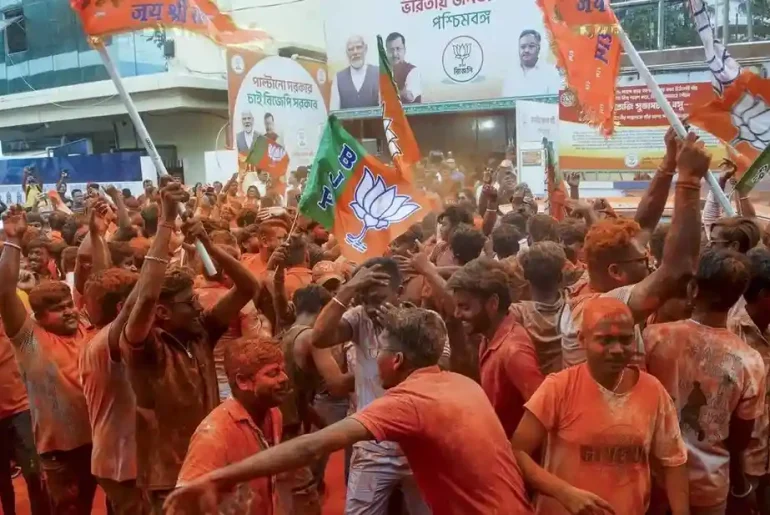
Tamil Nadu, West Bengal, Assam and Kerala in 2026 were no ordinary poll-bound states. These assembly elections jolted pollsters, unsettled analysts, and challenged some of the most entrenched assumptions of Indian politics. While several states broadly conformed to expectations, the outcomes in the West Bengal and Tamil Nadu election marked something closer to a tectonic shift. The meteoric rise of TVK in Tamil Nadu resembled a political “first-day, first-show” blockbuster, while what was projected as a close contest between TMC and BJP in West Bengal culminated instead in a decisively one-sided verdict. 

As Prannoy Roy once observed, elections in India are fought as much in the mind as on the ground. Any post-poll analysis, therefore, must grapple with multiple and often competing interpretations. Even so, certain patterns offer valuable insight into a rapidly evolving political landscape stretching from the North-East to the South. These, however, must be approached with caution: there is no singular “Indian voter,” and no single explanatory framework can fully capture the complexity of these outcomes. 

One of the clearest signals from this election is the quiet but decisive consolidation of the youth vote. In West Bengal, this was not visible in rallies or rhetoric, but in mood. As a voter from Asansol and student of Delhi University noted, “the shift from Durga Pujo to polling day was stark”—deserted TMC offices, guarded conversations, and a single refrain cutting across communities: “Poriborton toh chai chai.” 

The silence was strategic. Beneath it lay accumulated grievances—stalled government recruitment, corruption, concerns over women’s safety, and the political aftershocks of cases like RG Kar. When it finally spoke, the student vote did so not in fragments, but as a bloc.

Tamil Nadu reflected a very different, yet equally generational churn. The rise of TVK is less a conventional political story and more a cultural mobilisation. For a Gen-Z electorate raised on cinema and immediacy, TVK offered disruption without ideological baggage. It broke the fatigue of the DMK–AIADMK binary not through policy depth, but through identification and momentum. In the Kerala election, the shift was sharper in ideological terms—sections of young voters appear to have turned away from the Left, driven by a growing discomfort with centralised authority. As one student put it rather bluntly, “the authoritarian CM had to lose; his Left was not right.”

Alongside this generational shift is a quieter rejection of political inheritance. Across states, familiar surnames no longer guaranteed electoral comfort. The message is not the end of dynasties, but the erosion of their immunity. Voters are no longer willing to underwrite legacy without performance. The disruption in Tamil Nadu’s entrenched bipolarity only reinforces this trend—new entrants are no longer fringe experiments; they are viable vessels of aspiration.

For the Congress, the picture is deceptively flat. On paper, there is little immediate gain—Kerala’s victory comes in a space where the BJP is not a primary contender. But politics rarely moves in straight lines. The party’s position today resembles the early, incremental phases once seen in states like West Bengal—small footholds preceding larger relevance. With limited downside, Congress has room to manoeuvre: deepen its Kerala base, negotiate more assertively within a potential TVK alignment in Tamil Nadu, and cautiously expand in Bengal where the search for alternatives is clearly underway. The opportunity is narrow, but real.

What ties these strands together is not a uniform swing, but a pattern of voter impatience—with stagnation, with entitlement, and with unpredictability. Indian elections, as Yogendra Yadav reminds us, have a way of defying both political calculation and analytical certainty: “Indian voters are wiser than the politicians who seek to manipulate them—and often wiser than the analysts who try to predict them.”


Read Also: The oppressed as oppressor: notes on caste

Image Credits: Frontline


Madhav Choudhary 
[email protected]

When controversy surrounds the SIR and vote theft makes headlines, how can we trust the Election Commission? And if we cannot, what does this mean for the vulnerable voter? 

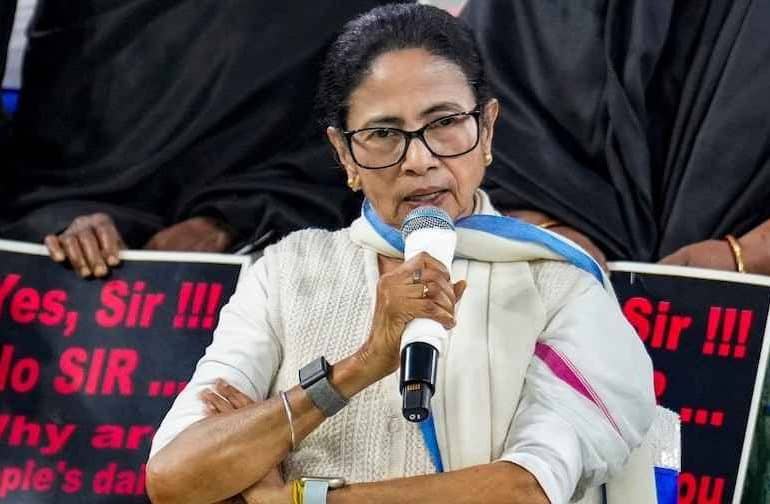
Last Wednesday, Mamata Banerjee made headlines as she appeared at the Supreme Court to win “justice for the people of West Bengal”. This statement comes in the wake of the recently conducted Special Intensive Revision (SIR) by the Election Commission in Bengal. The CM’s claims of the officials being “BJP Officers” were based on the alleged unjustified deletion of names from the voter roll. Banerjee cited cases of simple name changes flagged as “discrepancies” in the system, severely reducing voter turnout.

These concerns form part of a broader set of questions being raised about the functioning of the Election Commission itself; for instance, Rahul Gandhi’s recent call-out of duplicate EPIC entries, odd constituency-wise surges, and data that is not machine-readable.

Under Article 324, the Election Commission of India (ECI) holds a public trust: to ensure that elections are free, fair, and seen to be so. Article 324(2) states that the Election Commission shall consist of the Chief Election Commissioner and such number of other Election Commissioners as the President may determine, and that their appointments shall be made by the President, subject to any law enacted by Parliament. It is therefore unsurprising that in the seven decades since the Constitution’s adoption, Parliament failed to enact such a law, leaving appointments by default in the hands of the executive.

It was in this context that Anoop Baranwal v. Union of India came before the Supreme Court. For decades, the ECI’s structure rested on convention, with appointments effectively controlled by the government of the day. This meant that the referee of the electoral process was chosen by one of the teams playing the game—a system fundamentally at odds with the idea of free and fair elections that the Commission is meant to safeguard.

In Anoop Baranwal (2023), a Constitution Bench led by Justice K.M. Joseph held that, until Parliament legislates, appointments to the ECI must be made by a committee comprising the Prime Minister, the Leader of the Opposition, and the Chief Justice of India.

A swift response followed the judgment. The Chief Election Commissioner and Other Election Commissioners Act, 2023, replaced the Chief Justice with a Union Cabinet Minister nominated by the Prime Minister, diluting the entire purpose and reconstituting appointment power in the executive.

This brings us to Rahul Gandhi’s 7 August 2025 presentation, which raises critical questions, not about the factuality of the claims but instead about the response of the ECI to file for an affidavit as its first action. 

When such allegations are verifiable, the Commission’s constitutional instinct should be to open a suo motu inquiry, invite particulars, publish methods, and report back. By demanding an affidavit before engaging, the ECI inadvertently communicated that it polices critics more readily than it audits itself.

Another response by the ECI was the adoption of a 45-day retention policy for CCTV/webcast footage. The stated reasons, privacy, the risk of maliciously edited clips, and resource constraints may not be frivolous. But the constitutional effect is stark: the evidentiary trail for retrospective audit is shortened to the point of near uselessness.

In instances like Uttar Pradesh (May 2024), Faridabad (2019), and Manipur (April 2024), video materials and on-ground visuals were key triggers. What survives in the archive determines what survives in law, which is exactly why a 45-day deletion cycle is a constitutional misfit.

This worry is not about one election cycle, one constituency, or one political party. It is about patterns: appointments that appear executive-tilted, opaque data practices around electoral rolls, truncated retention of polling-day evidence, and a defensive institutional reflex when faced with falsifiable allegations.

Another of legitimacy’s visible dents is the SIR, an exercise in which every eligible voter is required to provide documentation in order to update voter rolls, carried out in Bihar prior to state elections. The process held within a span of two months reduced the number of eligible voters from 78.9 million to 72.4 million, raising serious questions as to the reliability of the data. The Commission told the Supreme Court it would not delete any eligible voter without notice, a hearing, and a reasoned order, and that appeals exist. But when petitioners asked for a public list of those proposed to be deleted (with stated reasons) to enable an independent audit, the Commission said the law does not require such publication.

In Bengal, concerns have been raised that the process may disproportionately affect migrant residents since their documentation is often fragmented or reliant on legacy linkage with older voter rolls, a reality that has led to questions being raised about the political implications of the ECI’s actions.

The SIR last conducted in 2002 did not face this backlash. What has changed is not simply the sharpness of opposition rhetoric, but the credibility with which the ECI has now responded to such allegations, which together give rise to the paradox of democracy that becomes evident when the state, which is a creation of the people, acquires the power to decide who truly belongs to ‘the people.’ 

Modern constitutional democracies operate on the principle that the people create the state, yet the state retains legal and administrative mechanisms to determine citizenship through statutes such as the Citizenship Act and rules governing registration and further deciding whether a name is retained or struck off the voter list.

This tension becomes sharper in contexts where citizenship is complex; India lacks a single conclusive citizenship document. Passports, voter IDs, and Aadhaar function as identity proofs but not proofs of nationality. This makes citizenship dependent on a chain of documents that may be fragile, lost, or difficult to verify.

This paradox is most pronounced with migrants, rural populations, or disaster-affected communities, where administrative absence or documentation gaps are often interpreted as individual failure, shifting the burden of proof entirely onto citizens, like Assam’s NRC process, where nearly 19 lakh residents were excluded in the draft NRC because legacy documents failed to meet stringent administrative standards. This then results in wrongful exclusion from electoral rolls and affects an individual’s political existence.

Moving forward, India requires a clear, citizen-friendly documentation framework and stronger grievance redressal mechanisms, ensuring that governance does not dilute the principle that the people constitute the state, and not the other way around.


Read Also: Who owns the land? A history of migration in India

Image Credits: Aaj Tak

Arshia
[email protected] 

Anjali P
[email protected]


The Jammu and Kashmir election results have set the stage for the NC-INC-led coalition to form the government after NC turned out to be the single largest party in the region. The different political actors that emerged in these elections could not break the vote share and fracture the mandate. With more powers being transferred to L-G, the autonomy with the elected government remains a question yet to be answered.

The results for the Jammu and Kashmir Assembly Elections were out on 8 October, and the National Conference (NC), led by party deputy, Omar Abdullah, is set to form a government with the Indian National Congress (INC) after winning 42 seats out of the 90 legislative seats.

The whole fiasco that presented itself before the polling started – gave away that the elections won’t be as predictable as one might think. The comeback of Engineer Rashid just days before the elections or the re-emergence of Jamaat-e-Islami into politics by fielding independent candidates – but, nothing could divide the votes and fracture the election results in the Valley. Engineer Rashid, who had won the Baramulla parliamentary seat in the 2024 Lok Sabha election against political colossus Omar Abdullah and the People’s Conference’s Sajad Lone while detained in Tihar Jail, as predicted, was set to break NC’s dominance in the assembly elections. However, the results said otherwise. Rashid failed to make a mark, and his party could only secure the Langate seat in North Kashmir with a narrow margin of 1,602 votes. Rashid’s downfall is symptomatic of a deep fear of the BJP’s entry in the Valley – rumours of his possible tie-up with Modi-Shah, his hesitancy to openly deny any future alliances with the centre and doubts about the reasons for his timely bail – all created an illusion that Delhi’s machinations were playing a role. 

“People have supported us more than our expectations. Now our efforts will be to prove that we are worth these votes,” said Omar Abdullah, in Srinagar.

Despite the presence of different political actors, NC emerged as the single largest party in the region. This outcome indicates the clear conscience of the people of the region. The People’s Democratic Party only secured three seats, a drastic fall from 28 seats it bagged in the 2014 election, and rightfully so. With the betrayal of a sudden coalition with the Bharatiya Janata Party (BJP) in the past and the anger of the abrogation still fresh in the minds, the PDP had lost its footing in the region. Also, Mufti’s flippant “toffee and milk” remark still remains fresh in the minds of voters – who cast the party as unreliable. Also, the departure of the senior leaders, with significant following and hollowing out of the party cadre in the last five years, did not do any good to the party.

So why did all the different regional-based parties fail to secure any votes in the Valley? The people of Kashmir suspected, as per the popular opinion, that the re-emergence of jailed candidates and banned political outfits is just a set-up to fracture the election mandate and help the BJP ally with the fractional votes. The presence of so many political factors felt too engineered to be natural. However, the votes in favour of the Omar Abdullah-led NC do not come from a place of love for the party but to keep away the presence of the BJP from the valley that stripped Kashmir of its special status.

“When you hate someone and still have to vote for them because there is no other choice. That’s the hell we live in.” commented a voter on social media 

 Jammu stayed constant with its love for the saffron. The BJP won 29 seats in the Jammu division, increasing its tally from 25 seats in the 2014 elections. It’s also believed that the NC-INC alliance could be accused of denying Jammu credible representation. And the promise made by Omar Abdullah to pass a resolution against the revocation of Article 370 can’t really be fulfilled with Congress as part of the coalition. However, people would expect him to pitch for the restoration of statehood.

After the revocation of Article 370, the Jammu and Kashmir Legislative Assembly’s law-making powers, once it is reconstituted, are notably limited. Under the rules, the Assembly can legislate on matters within the State List, except those related to police and public order. These two crucial areas fall under the jurisdiction of the central government and the Lieutenant Governor (L-G). The subjects that fall under the Concurrent list will be authorised by the Union Government along with the Assembly, thus further restricting the powers of the assembly.

Omar Abdullah, in a recent post on X, claimed that the powers of the Chief Minister were being curtailed and transferred to L-G to maintain a hold on the valley and further disempower the incoming elected government. On social media, jibes have been made regarding the NC victory, referring to the Assembly as a municipal corporation. 

“The BJP has clearly accepted defeat in J&K. Why else would the Chief Secretary be assigned the duty to change the transaction of business rules of the government to curtail the powers of the Chief minister / elected government and assign the same to the LG? This information has come to me from within the Secretariat. Officers would be well advised to resist any pressure to further disempower the incoming elected government.”

The Ministry of Home Affairs amended the Transaction of Business Rules on July 13, 2024. This amendment has strengthened the role of L-G even more, raising the serious question of how much autonomy an elected government will have if statehood is restored. 

While the holding of these elections seemed like a promising development, the truth is not so optimistic. The Indian administration may boast of a total voter turnout of 63 per cent; the reality is that most of Kashmir voted out of protest – AIP’s Sheikh Rashid fought the Lok Sabha election with the phrase – Tihar ka badla, vote se. The election presented an opportunity to express their disapproval of India’s policies. Opposed to the BJP, responsible for the elimination of Kashmir’s autonomy, by casting their votes for other parties and candidates, Kashmiris have demonstrated that they outright reject the BJP and the plan to disenfranchise them in their own homeland. 


Read Also: A decade later: J&K assembly elections


Image Credits: Hindustan Times


Reeba Khan


[email protected]

Maithry, DU’s Kerela’s student fraternity body, recently held elections for a new cabinet for the term 2022-23. Read more to find out the results.


Maithry, a Delhi University student fraternity body for Malayali students and students coming from Kerala, recently held elections on 19th April 2022 for forming the cabinet for the term 2022-23. The result for the elections came out on the same day with new members being elected to 12 different posts.


The mantle of being the president of Maithry at Delhi University was passed on from last year’s president, Darsana R, to the newly elected president, Najm Paleri. Other candidates who came to be elected were Emil Jose as the General Secretary, Salih as the Treasurer, Krishnendu as the General category Vice President, Stephy J Sam as the Vice President under Women, South Reserved category, Ribin Pary as the PRO, Sandra S as the Working Secretary (Women), Govind Unnikrishnan as the Working Secretary (South Reserved), Haris Pattalam as the Joint Secretary (General), Fathima Bathool as the Joint Secretary (Women), Asif Muhammed as the Joint Secretary (South), and Samra P C as the Joint Secretary (Women, South Reserved).

The new cabinet, sworn for the welfare and reassurance of students, will deepen structural reforms and focus on better academic and co-curricular activities this year,” said Stephy J Sam, The Vice president of Maithry, in conversation with DU Beat.

In the past year, the Maithry cabinet has focused on being able to bring the Malayali students under one student fraternity body, providing a feeling of comfort and a home away from home. The testimony to the working of last year’s cabinet lies in the role it played in the transition of students from online to offline mode, catering to their needs at a time when the sudden notification by the DU administration left the far away outstation students in a state of confusion and problem.


Read also: “Meenakshi Yadav’s Candidature: LSR’s Dramatic Student Elections


Manasvi Kadian

[email protected]

The declaration of Delhi University Students’ Union (DUSU) results on 13th September ended a month of hooliganism, ruckus, and violation of rules in the name of campaigning.

Every year, the months of August and September witness frenzy and chaos. The roads are littered with flyers and posters, a number of posters with misspelt names of the candidates are pasted on the walls in the Campus area, and rallies pave way for traffic jam. This year too, Akhil Bharatiya Vidyarthi Parishad (ABVP) won three seats out of four, establishing their majority in the
DUSU.

The voter turnout was recorded at 39.9 percent this year, over four notches down from the last year voter turnout. One of the key points highlighted in this year’s manifestoes of various student political organisations was less wastage of paper. However, candidates contesting DUSU elections clearly violated this rule. The shocking thing here is, that even though the University has a regulatory authority to check these violations, no one comes forward to point these; not even the administration. It is easy to notice all the enthusiasm of the  newly elected office bearers slowly fade away as we inch closer to the end of the year.

I remember, during an interview with Sunny Chillar, the National Students’ Union of India (NSUI) Presidential candidate for DUSU elections, 2018, the demand of a subsidised INR 10 thali (platter) was discussed. The students of the University were assured that no matter what the election results would be, the thali will be provided to them, since, over 70 percent of students are from the economically weaker sections of the society. A common agenda discussed by both the ABVP and the NSUI almost every year is concessional Metro and Delhi Transport Corporation bus passes for the students of the University of Delhi (DU). However, we, as students, are only able to see a few protest marches and letters written to different ministers and the Administration. On questioning about the same to our student leaders, they reply, “It will happen soon.” Will it be soon enough, for the next set of candidates, to put forward the same demand in next year’s manifesto?

In the race of winning the elections, what the student leaders forget is the reason they are running for the position. Is it for fame? Or, is it for representing and working for the student community? Attacks on opponents are not something new in the election season. The sad part here is, that most of the students of the University equate DUSU election season to violence in and around Campus. The manifestoes talk about the safety of students but, in reality, election season makes us, the student community, feel more unsafe than ever.

Did you know that the DUSU also has a constitution of its own? Yes, most of you do not. The official website of the University has a link to the Constitution. It is a 16-page document which roughly has eight chapters that broadly discuss the functioning, funding, and objectives of the Union. The Vice Chancellor of the University is the Patron, and takes all the necessary steps for the smooth  functioningof DUSU in accordance with the DUSU Constitution. The underlying fact is that, even though all this has been defined in the Constitution, our very own elected student leaders fail to abide by it. Or rather, they forget the ideals upon which the Constitution was established. It is sad to see them absent from the important student-related issues but they are present when a Bollywood celebrity visits a college.

Concluding in the words of Srivedant Kar, former Associate Editor of DU Beat, “It’s high time these elections stop referring to things that the Union cannot do and instead start becoming a fight about what the Union can, and should, do.”

Anoushka Sharma 

[email protected]

 In the second part of the ‘DU Mandate’ analysis series, DU Beat examines the opinions of the students regarding the opposition – strengths, weaknesses, leaders and more.

The opposition parties have tried coming together using various permutations and combinations. The Samajwadi Party (SP) and the Bahujan Samaj Party (BSP) have formed an alliance along with the Rashtriya Lok Dal (RLD) to contest the crucial UP polls. Other leaders like Mamata Banerjee, Chandrababu Naidu and H.D. Kumaraswamy, among others, have shared the political stage and given the call to “save democracy”. There seems to be an understanding within the opposition parties that defeating the Bharatiya Janata Party (BJP) won’t be easy without some form of an alliance.

The BJP has targeted the coming together of parties who have previously been hostile towards each other and has questioned the “mahamilawat” (great adulteration) for having no clear indication of a possible prime ministerial candidate.

A majority of respondents felt that lack of a clear prime ministerial candidate from the opposition would do it average to fairly high degree of harm.

The narrative of the BJP seems to be resonating with the people. On a scale of 1 to 5, corresponding to the degree of harm, 29.6 percent respondents were of the view that lack of a single prime ministerial candidate from the opposition will do average harm to them, while an almost equal percentage (29.3) said the harm would be of a “fairly high degree”.

Perhaps this idea of a single face being a crucial factor for winnability could have been tempered by a coherent agenda, which could have been seen as a major selling point. However, as per the survey, when asked to select three biggest strengths of the opposition, ‘visionary agenda and programme’ drew the second lowest percentage of votes (12.3 per cent) (This was before launch of the Congress’ manifesto). The biggest strength was considered to be ‘consolidation of non-NDA votes’ with 61.19 per cent votes. ‘Dissatisfaction with the current government’ was voted by 49.3 percent respondents as one of the three biggest strengths, while ‘strong voter bases of individual parties’ stood third. Hence, while the opposition may not have been able to offer a constructive alternate agenda, the government’s disappointing performance could make people turn to it, especially because of the popularity of the regional parties. However, with the recent release of the Congress manifesto, a largely welfare-based document, this shortcoming might be mitigated to an extent.

A similar sentiment was seen in the results for the biggest weaknesses of the opposition. ‘Incapable leaders/unclear leadership’ drew 54.7 percent votes while ‘lack of a strong agenda and programme’ and ‘possibility of forming an “unstable” government’ were selected among the three biggest weaknesses by 51 percent and 44.8 percent respondents.

Opinion was evenly split up on nature of the opposition alliances.

One issue perhaps lying at the root of these alliance complications was the nature of the coalitions. Since each party would try to cater to its own interest, it won’t be willing to ally with every party everywhere. Hence, a single nation-wide coalition hasn’t come about.

The survey result on this question illustrates this complexity. While 35.2 percent respondents believed multiple state-wise alliances would be better than a single national coalition (29.1 per cent), the supporters of the latter aren’t few either. More interestingly, the ‘can’t say’ option, in fact, drew the maximum vote share of 35.7 percent – indicating a general lack of consensus on the matter.

Rahul Gandhi was voted the leading face of the opposition.

When asked to select a maximum of three leading faces of the opposition, 78.1 percent selected Rahul Gandhi, while Mamata Banerjee pulled in 52.7 percent. Akhilesh Yadav stood third with 38.2 percent respondents selecting him as one of the three leading faces of the opposition. Some respondents even came up with some creative responses.

The opposition drew a majority of 3 or less rating points out of 5.

Another question asked the respondents to rate the opposition parties and leaders on a scale of 1 to 5, the latter being the highest. Like the rating for the government, the opposition too peaked at a rating of 3, with 30.5 percent votes. A 2-point rating was nearly neck to neck with 29.8 percent votes. However, the contrast between the ratings for the opposition and the government seemed to be on the extremes. While the government had been rated 1 and 5 by 14.3 and 13.3 percent voters respectively, the opposition drew a higher percentage (24.1) of votes at the lowest extreme; only 4.4 percent respondents gave it a 5-point rating.

In a nutshell, 84.4 percent voters gave the opposition a ‘very low’ to ‘average’ rating. In this same range, the government drew 62.1 percent votes. Conversely, 65 percent respondents had given the government a rating of 3 or more, that is, ‘average’ to ‘very good’; the opposition got 46 percent cumulative votes in the same categories.

Conclusion

The government with its largely mediocre performance, some major detrimental decisions and failures resulting in deteriorating conditions in various spheres, still seems to be slightly more popular than the opposition. The narrative about the opposition as comprising “corrupt” and “opportunist” parties that could form an “unstable” government if in power, as publicized by the BJP and its allies, seems to be resonating with the people. The loss of credibility that the opposition parties have suffered since before the 2014 elections and after, despite some state election victories, perhaps makes them a worse option in the eyes of people. So, even if voters are disappointed with the current government, some of them might still lean towards voting it back to power due to a perceived lack of alternatives.

Where the opposition can get its game right, is by forming strong regional alliances to challenge the BJP. Consolidating non-NDA votes can happen by tapping into the strong voter bases of individual parties. Breakthroughs in states where these parties are powerful can help sway the election results at the national level.

Image credits
(Feature image) HuffPost India
Graphs – ‘DU Mandate’ by DU Beat


Prateek Pankaj
[email protected]


 DU Beat looks at the results of its exclusive election survey, ‘DU Mandate: The 2019 General Elections’. The results are out and the first part explores the students’ views on the Prime Minister, his Cabinet and the Government performance. 

With a little over 85 per cent DU students hoping to vote for the first-time, this election holds greater significance for the students. While over 72 per cent said they would be voting, the remaining who didn’t plan to vote or weren’t certain about it, mostly explained that their voter ID cards belonged to a different state than Delhi; some others said that they hadn’t had theirs made.

Asked to select the three biggest achievements of the government, there seemed to be a considerable consensus that the government performed best in the field of ‘Foreign Affairs and Diplomacy’ with 69 per cent respondents choosing it as one of their three preferences. Accounting for the overlapping preferences, ‘Defence and National Security’ and ‘Welfare Policies’ followed with 52.7 and 51 per cent votes respectively.

Understandably so, the Government had been able to create its image of being a tough and determined one. The post-Uri and post-Balakot strikes, the Rafale deal despite its controversies, had turned the tide in the government’s favour in terms of defence and national security. The support that India received from the international community after the Pulwama attacks and in its bid to have the Jaish-e-Mohammed chief Masood Azhar designated as a global terrorist also served well. Making schemes like ‘Swachh Bharat’, ‘Ujjwala Yojana’ and ‘Jan Dhan Yojana’ some of its hallmark policies, the government seems to have drawn support for attempting to bring grassroot change.

Conversely, in the fields of ‘Economy’, ‘Delivering on Electoral Promises’ and ‘Ensuring Press Freedom’, the government performed worst with 52.7, 36.7 and 32.3 per cent people respectively naming these as one of the three biggest failures of the government. A close fourth was ‘ensuring civil liberties and rights of citizens’.

These failures can be understood in light of the demonetisation exercise along with a faulty GST, which adversely affected the economy, especially in the informal sector. A sharp fall in employment, which reports claimed has hit a 49-year low, was a far cry from the BJP’s promise of providing 2.5 crore jobs per year. Moreover, death threats to and killings of journalists by people considered to be close to the ruling party and its affiliates, the imposition of seditious charges and severe laws like the National Security Act (NSA) on students, activists and journalists and branding many as ‘anti-national’ had been widely criticised. The multiple lynchings severely damaged the status of fundamental rights.

The Prime Minister seems to have attracted diverse opinions on a personal level. Mr. Modi was described by 34 per cent respondents as being ‘strong, bold’, while another 30.5 per cent felt that ‘nation first’ was one of the three best descriptive terms for him. ‘Manipulative and shrewd’ emerged as the third best adjective for the Prime Minister.

Terms that describe Mr Modi the best.
Terms that describe Mr. Modi the best.

This falls in line with the achievements and failures of the government. A reasonable correlation can be drawn between the voted successes in national security and diplomacy and the description of Mr. Modi as being a strong leader who puts the nation first. On the other hand, a similar correlation perhaps exist between high percentage of being ‘communal, divisive’ and the failures in ensuring civil liberties in the light of lynchings, and so does between low pragmatism and failures in the economic sphere.

The Prime Minister’s performance rated on a scale of 1-5

When asked to select a maximum of three of the best performing ministers of the union government, a considerable majority of 65.6 per cent chose Sushma Swaraj, the Minister of External Affairs, as one among the three. Defence Minister Nirmala Sitharaman and the Minister of Road Transport and Highways, Nitin Gadkari, were each selected by 34.7 per cent of the voters. This again substantiates the consensus on defence and foreign affairs being two biggest achievements of the government, as per the survey. Mr. Gadkari had also been hailed as one of the best performing ministers of the government especially because of his work with road-building. He also came to the fore due to speculation that he might emerge as a possible prime ministerial candidate in case of a hung assembly.

The performance of the Council of Ministers.

While the rating for the Council of Ministers seems similar to that of the Prime Minister, with both being rated highest at 3 out of 5, the rating for the former tended to concentrate more around the Centre. However, the rating for the Prime Minister drew 13.5 and 16.3 per cent votes at the two extremes of 1 and 5 out of 5 respectively – indicating a much more polarised and divided opinion over Mr. Modi’s personal performance as compared to that of his Council of Ministers who drew less than 10 per cent votes at either extremes of the scale.

The ratings for the overall performance of the government from 1 to 5

Keeping in line with the performance rating of the Prime Minister and the Council of Ministers, the overall performance of the government also was largely considered average, with 27.1 per cent respondents voting it 3 out of 5. However, at a more general level, the ratings of the government tended to be nearer to those of the Prime Minister – for instance, both drew over 12 per cent votes at the extremes.

Conclusions

The general consensus seems to be that the government’s performance was largely mediocre. Marked by gains in spheres of defence, national security and foreign affairs along with fiascos in terms of employment, delivering on poll promises and ensuring press freedom and civil liberties, the government stands at an interesting position. If it managed its external affairs well, the same cannot be said for matters home.

These achievements and failures are being seen in the run-up to the elections as well. The BJP has raised its national security and Pakistan rhetoric to a fever pitch. “Modiji ki sena” (Modi’s army) has come to the fore at the expense of jobs and vikaas. The picture being painted of Mr. Modi isn’t one of a harbinger of change, but that of the only true patriot in a sea of sharks.

Image Credits-

(Feature image) – Hindustan Times

(Graph sources) ‘DU Mandate: The 2019 General Elections’ by DU Beat.

Prateek Pankaj

[email protected]


The student union elections were finally held in Daulat Ram College (DRC) after being delayed by a month due to protests and renovations. On 26th October, 2016, thousands of DRC students went on to cast their votes to elect the Student Union for the year 2016-17. Most posts saw close competition between the contenders, especially for the posts of general secretary and cultural secretary. The option of NOTA (none of the above) was also a popular choice, with a count of 103 for the post of treasurer.

The results were announced around three hours after the voting ended. The newly elected union celebrated their victory with music and dancing in the college premises. The Student Union for the year 2016-17 is:

President – Nishita Narwal

Vice President – Rajni Upadhyay

Treasurer – Tamanna Chaudhary

Proctor – Prachi Goswami

General Secretary – Surbhi Hooda

Cultural Secretary – Rakshanda Bhat

Joint Secretary – Sanchita Jain

Image Credits: Bhavesh Bellani

Vineeta Rana

[email protected]