Tag

DU Beat

Browsing

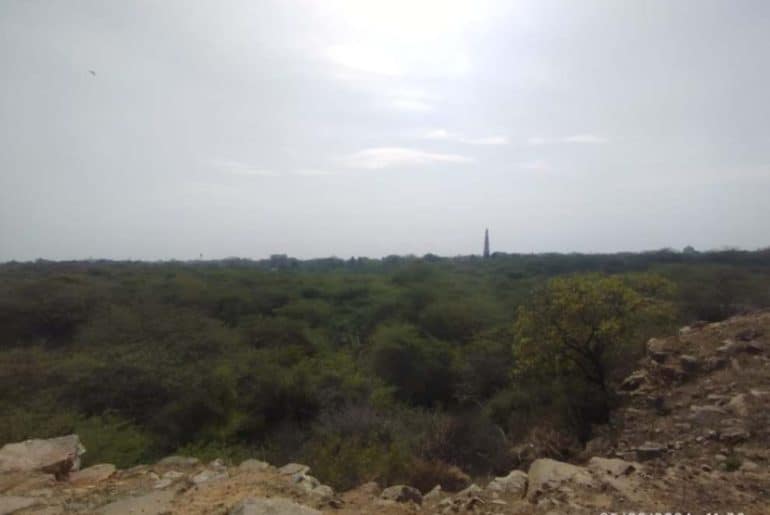
Delhi’s urban forest offers solace with lush greenery, wildlife, and historical ruins, a great escape for nature lovers struggling to be at peace in the urban jungle of the cityscape. Sanjay Van is your calling, dear all. 

It’s been over a year since I moved to Delhi to attend college. इस शहर को ये हुआ क्या, कहीं राख है तो कहीं धुआं धुआं (Is shara ko ye hua kya kahi rakh hai toe kahi dhua dhua), turned into my everyday reality. Whenever I get a system notification about the AQI levels in my area, all I think of is what is keeping me alive in this filthy air. Then, one fine day, while scrolling through places to visit in Delhi, I came across ‘Sanjay Van’. 

It is part of the Delhi Ridge, or The Ridge, which is the Northern Aravalli leopard wildlife corridor in the territory of Delhi. It covers an area of 780 acres. The tail end of the Aravalli Hills is 1500 million years old, comprising the flora and fauna native to this region. The Delhi Development Authority in the 1970s started developing this area, which has now turned out to be the ‘lungs of the city’. 

Now a city forest, Sanjay Van once was the hunting range of Firozshah Tughlaque. It is also the natural habitat for Blue Bulls, Golden Jackals, lizards like Monitor, several snacks, and birds like Grey and Purple Herons and Peacocks. This conserved area has recently transformed into a bird-watching spot. Several species of birds, like Indian peafowl, grey heron, Eurasian golden oriole, purple sunbird, Asian koel, Brahminy starling, Indian silver bill, white-breasted waterhen, etc., can be seen here with great ease. 

One fine day, I decided to visit this city forest, and since then, I have made it a ritual to go there every weekend for my well-being. Serenity and tranquilly, the luxuries in an urban cityscape, are the natural vibes there. It is easy to reach as the nearest metro stations are Malaviya Nagar (Yellow Line) and R K Puram (Magenta Line). As soon as you enter, several shades of green greet you. 

For archaeology lovers, you can spot the 12th-century ruins of a ‘Quila’, constructed during the reign of Prithviraj Chauhan. The trail begins, granting you a great sense of belonging. It is an ideal place for long walks, cycling, and yoga meditation. Away from the hassle of city life, it is a great spot to sit and reflect on our lives. The time here passes slowly, and every panorama ignites a new wave of fascination. Sanjay Van is a haunted forest. You can also spot a lady walking around, wearing a ‘white saree’. To keep yourself safe from her, make sure that you carry your garbage bags and do not litter on the forest ground. Once, an infamous and precarious site transformed into a great hangout place with your family and friends. The restored lake ‘Neela Hauz’ has turned into a drain because of the sewage water that has started to flow in there. Prefer to stay silent in there if you want to enjoy the sweet melodies of the birds and embrace the silence of the place. When you visit, make sure you are wearing comfortable clothes and shoes. 

The terrain of the forest allows you to have a pleasing hiking experience with its flat and low, hilly slopes. Recently, DDA has acquired about 5,000 sq m by removing illegal structures. 

The highest peak gives you a beautiful view of the city and Qutub Minar. So, if you are planning a day out, there are many attractive places in the neighbourhood that you will enjoy visiting, like Hauz Khas Village, Qutub Minar, and Chamapagali. 

‘Ye hai Delhi meri jaan’, and for the first time since moving here, I felt my ‘Jaan’ being revived under the canopy, secure in the lap of Mother Nature.


Read Also: Silent Nights in Sunder Nursery

Featured Image Credits: Divya Malhotra

Divya Malhotra

[email protected]

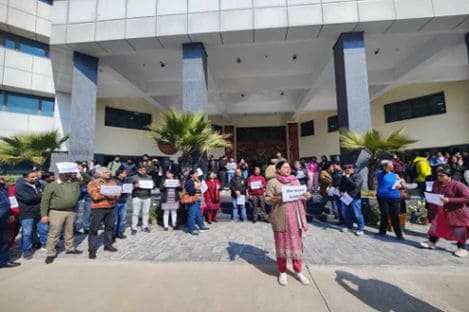
Teachers and non-teaching staff of SSCBS continue to protest, as they have still not received their salaries and it has disrupted their personal lives.

The last time I paid my home’s E.M.I. was in November because that’s the last time I was paid my salary,

– said Dr. Narander Kumar Nigam, who is a professor at Shaheed Sukhdev College of Business Studies (SSCBS).

Professors, along with the non-teaching staff, have not been paid their salaries for the past three months. Due to this, everyone, including the students, is facing issues at the college. SSCBS is one of the 12 Delhi University (DU) colleges that finds itself amidst the ongoing row between the Delhi government and DU.

Due to the non-payment of salaries, teachers are under massive financial stress. Dr. Nigam enumerated how it has become difficult to go about their everyday lives. Professors are unable to pay their children’s fees, loans, or medical bills. Dr. Nigam stated that he had to borrow money from his relatives, even though both he and his wife are employed.

When I am doing everything that I am expected to do, from taking classes to evaluating papers, then why am I not paid for that work?

– Dr. Narander Kumar Nigam, professor, SSCBS

Ayush, a student of SSCBS, also explained that it is very taxing for the professors to take classes under such circumstances. He further noted that this is not the first time such a thing has happened. Dr. Nigam, too, noted that this is a consistent thing that they have been experiencing since the pandemic.

People have to take loans just to meet their daily needs or clear medical bills.

– Ayush, a student of SSCBS

Further, as per Dr. Nigam, the faculty strength at the moment is 22, but the sanctioned strength is 44. Moreover, he explained that, as per University Grants Commission (UGC) guidelines, the strength should have been around 70. SSCBS has around 50 societies and 20 committees, and it is becoming difficult to manage all of them.

Sirf 22 faculty members ke saath, ek teacher kitna sambhal sakta hai? (There are only 22 faculty members; how much can one teacher handle?)

-Dr. Narander Kumar Nigam, professor, SSCBS

Professors at SSCBS have been protesting against the situation. However, they have collectively made sure that the students should not suffer, and till now no class has been suspended, though they claimed that the emotional stress of it all continues to be present among both the students and the teachers. Given the fact that the final semester students will be appearing for their final exams in less than three months, professors continue to take all the classes.

The students of SSCBS have shown their solidarity with the teachers. According to Ayush, on February 12, the student council of the college urged everyone to wear black as a “symbolic gesture” to show their solidarity.

Teachers have been protesting every day at the college. Dr. Nigam claimed that the teachers protest only during their free time so that students are not affected. As per the students, this may be one of the reasons that people outside the college are under the impression that the “protest” may not be serious.

Students of the college also feel that significant steps towards making the problem known have not been taken due to its location. Ujjwal, a student at SSCBS, has expressed that, though SSCBS is an off-campus college, it has charted good ranks for itself. But, due to its location, the ongoing situation at the college has not yet come to light.

If it were a college on North Campus, the situation would have garnered attention.

–  Ujjwal, student of SSCBS

Furthermore, as per a statement by the Delhi government in January, it will release the funds to the 12 DU colleges only when they are de-affiliated to become a part of Delhi’s state universities. However, the students at SSCBS feel very differently about this.

The mindset of the students at SSCBS is different. Apart from wanting to get the “DU degree,” we want the college to stay under DU because a college like SSCBS should be associated with a name that can justify its stature. All the students and the professors here have worked hard to build up the institution’s name. We cannot accept going under the Delhi government

-Expressed Vasu, a student of SSCBS.

Nevertheless, as per the students, the emotional turmoil that the professors are undergoing has led to irregularities in how and what is being taught in classes. Ujjwal expressed:

Though the teachers are doing their best, sometimes they come to class, share their experience, and leave.

Dr. Nigam further shared that when they take classes, it is very difficult for a teacher to keep their emotions or things that are going around in their minds outside the class. Though the principal of the college is sympathetic towards the issues and has allegedly asked the teachers to continue their classes, both the students and the teachers are under immense emotional duress. Students and teachers at SSCBS have a lot of concern for the reputation and the educational quality that their college commands. However, things look dull as teachers and non-teaching staff continue the protest for their salaries.

Read Also: DU’s Voice on Fest Advisory: Critical Concerns Raised

Featured Image Credits: Student Council of SSCBS

DUTA Demands Release of Salaries and Other Dues

Ankita Baidya

[email protected]

A light-hearted guide to ensure a ‘sukoon-bhari’ metro journey, my fellow DU commuters!

Do you also find yourself scratching your head, armed with a bag on your shoulder and eyes glued to your station’s name on the map as you travel? Then it’s time we address the pain in the “standing abs.”. Let’s figure out how we can bag a seat here (ah, the sacred quest for the coveted throne), and let’s not forget that bagging a seat in the Delhi Metro is more difficult than acing the exams that got you here.

You need to master the art of hovering skillfully around seated passengers. Learn to hover like a seagull, eyeing a discarded fly. Your stances should have a ‘kezual’ yet desperate style, embodying a blend of nonchalance and neediness. In other words, it’s all about lurking in the shadows and waiting for the opportune moment to strike.

While you are on it, make sure you keep an eye on your fellow travellers; a slight shift in their position will cost you an opportunity of a lifetime! In addition to noticing those who you’re strategically placed near, also beware of sudden movements from other commuters; it’s a fierce game of musical chairs, just without the music or fun, or maybe with the automated voices of “The doors will open on the left. Please mind the gap” as music.

Overhear conversations within a 5-metre radius. A casual “I’ll get down at Mandi House” deserves note-taking, or prepare to cling to the vertical pole until Kashmere Gate.

Yeh Khan Market jaayegi na?” means they are going to stand and donate their seat the moment “Agla station Khan Market hai” plays.

What else can come in handy is a ‘lean’. As the metro doors slide open, try adopting a nonchalant pose against the nearest vertical pole, one hand in your pocket, the other subtly gesturing towards an imaginary prize seat. It’s all about projecting an air of indifference while your eyes scream, “This seat is mine.”

To make things work even better in your favour, you need to lock eyes with your fellow commuters, assert dominance, and silently communicate, “I’ve claimed this territory; proceed with caution.” Such subtle power play amidst the ‘metro-seat diplomacy’, will put even the US hegemony to shame.

You can also play smart with your age, just like my dad does. He has decided not to colour his hair black and let the grey locks shine so that he gets to own the ‘senior citizen’ seat.

You can also take inspiration from the omnipresent brave warriors who have the incredible ability to fit into impossibly small spaces just to get themselves a place to sit. With the flexibility of a yoga trainer, they will squeeze themselves into the tiniest inch of space to have ever existed on the planet, all in the pursuit of a seat that may or may not exist.

Before we bid you ‘a happy seating’, remember, bagging a seat in the metro is not just a sport; it’s a survival skill, a rite of passage that will take you places (quite literally). So, navigate the sea of stations and standing commuters skillfully, and may the seats be ever in your favour!

Read Also: A Not-so-Humble Guide to Travelling in Delhi Metro

Featured Image Credits: X

Kavya Vashisht

[email protected]

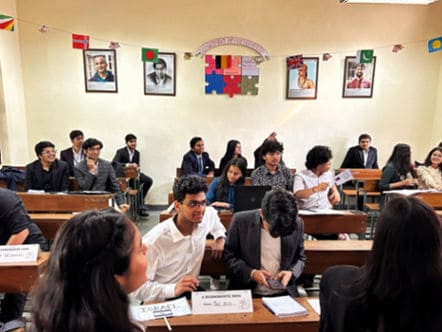
The Department of Economics at Hindu College, Delhi University, conducted its annual fest, L’Economiste, on February 23, 2024. The fest included a speaker session by Mr. Vinod Rai and three competitions, namely, Potentate, Ranjan Roy Memorial Debate, and Hindu Stock Exchange.

L’Economiste 2024, the annual fest of the Department of Economics at Hindu College, was held on February 23, 2024, where economic insights, ideas, and solutions interacted with each other. The inauguration ceremony began with a melodious performance by Alankar, the Indian Music Society of Hindu College. The fest included an engaging and insightful speaker session by Mr. Vinod Rai, the 11th Comptroller and Auditor General of India, at 10:30 a.m. His brilliant sense of humour and intellect shone through his thought-provoking discussions on social auditing, electoral bonds, the vast field of economics, and his personal experiences as he reminisced about his time at Hindu College as a student.

 What are certain things in a person’s life? One is that they say death; everybody is going to die. The other is, what? I refer to it as paying tax. That’s also going to happen to you. The third is the day you were born.

 –  Remarked Mr. Vinod Rai.

A variety of competitions with exciting cash prizes were organised as a part of L’Economiste 2024. The Ranjan Roy Memorial Debate Competition, with debates centred around economic motions and a legacy of 10 years, was a test of both oratory skills and social science knowledge. “Panel, try to understand!” from St. Stephen’s College bagged the first position, with team “Mavericks” from Atma Ram Sanatan Dharma College being the first runner-up.

‘Potenate’, structured around World Economy and Politics, the second competition in this event, was a perfect amalgamation of auctions, negotiations, crises, and policy formulation. With deeply engaging and highly energetic bidding rounds, this competition offered the participants a policy discourse simulation. Team “Aces” from Hansraj College bagged the first prize, with team “Syndicates” from Ram Lal Anand College and team “Chocolate Cake” from SRCC bagging the first runner-up and second runner-up positions, respectively.

Lastly, the Hindu Stock Exchange offered participants, or rather traders, an opportunity to transport back to the 1990s stock market and indulge in a battle to get themselves declared as the best portfolio managers, cruising through one of the toughest stock market simulations.

“Utkarshharc” from Hansraj College bagged the first position, followed by “CB-sites” from Shaheed Sukhdev College of Business Studies and Tamanna Goel and Ujjwal Mittal from Kirori Mal College, begging for the first runner-up and second runner-up positions, respectively.

Rounding up, the flagship event provided in-depth financial global insights for ‘econ-enthusiasts’ and otherwise!

Read Also: Commemorating the Golden Jubilee of the Zoology Department: A Health Check-up Camp at SVC

Featured Image Credits: Himanshu Kumar for DU Beat

Gauri Garg

[email protected]

Beyond the heteronormative confines, let’s celebrate love that is real, joyful, innocent, and proud!

A student from Delhi University shares their love story—something that started off as a childhood crush, a relationship ended on unfinished terms, and a friendship that’s mature and understanding.

“So, as a kid, our family moved around a lot, so I was always the new kid that could never really make good friends as I wasn’t a conventional “girl.” I used to cut out pictures of Deepika Padukone from magazines, but obviously I was straight! The first boyfriend I ever had also turned out to be queer, so that was great. When I was in the 8th grade, our family moved to Orissa, and we lived in a corporate township. There was this girl with curly hair who soon became my benchmate. Since we lived pretty close to each other, bicycle rides, study sessions, and long conversations soon became the norm and blossomed into friendship. I started penning poems for her in my diary: “Her hair glistened in the sun,”  reminding myself of the fact that “I’m definitely straight.”.

Soon I realised that “kuch toh hai.” I don’t want to be just friends with her. I started justifying my identity too. The pandemic sort of gave me a sense of stability as well. I assured myself that “being a lesbian is valid.” After the lockdown, we started hanging out again. I used to call her up at night, asking her “homework samjhado.” She knew I had done the homework, yet she explained everything. One day I just called her (it was the 14th of July), and a cyclone was about to hit, so I knew I wouldn’t be able to meet up with her for some time. We met up, and I told her, “Oh, I think I’m gay,” and she said, “I think I’m gay too,” and we just cycled back to our homes. We met up again on the day of our SST exam. She said, “I’m not into girls,” and again, we cycled away. A couple of days later, she tells me, “I like you,” and again, we just cycle together. There is just a lot of delusion going on. Time passed by, and she was about to move out to go for JEE coaching. I knew I couldn’t beat around the bush anymore. So I just told her, “I like their pronouns.” We just cycled together again. We were having a 6th standard type of love story in the 11th standard. She finally moved away.”

(Trigger warning: s**cide.)

 “We started flirting over Whatsapp. She came back from the hostel, and we held hands and walked around; she was stable. My mom thinks, “She’s a very good friend.” Yes, a friend, with whom I used to spend hours in my room studying (making out). Thanks to my sister for always being there for me. Letting me “hang out” with my “friend” in my bedroom. My sister has always been my biggest support system. She used to always ask the barber to cut my hair just a little more. She bought me binders and fought for me to have even the little bit of freedom I could in my house. When I came out to her, she said, “I knew since the time you were simping over Deepika Padukone.” ! The second standard made me extremely s**cidal. Our parents started to question our sexuality. Her parents thought I was a bad influence on her. We were constantly pitted against each other. Family and academic pressure were extremely high. We broke up without even speaking to each other. I didn’t want to see her anymore. And we left on unfinished terms.”

“During our CUET exams, she came back. I saw her on the day of my first slot. Our eyes just locked together across the exam centre. My mom asked me to go say hi to her. I was extremely shocked, and I just stared at her. And I ran away; it seems like we were just always running away. On the second day of CUET, we met again. This time, we hugged each other and just bawled our eyes out. Then, we left things on unfinished terms again. After our CUET results, we were both getting into the same college, but her parents didn’t want her to go near me. They didn’t allow her to come to DU. We then called each other up. I guess we were much more mature then. We spoke to each other for hours and decided to end our relationship. She said how I should have always known she liked me back in school. “You were giving me gay panic back when we were bench-mates, and you used to run your fingers through my hair’, she said. We are still extremely good friends. I did love her first, and I guess I’ll always love her, but this is not a love story. We left things on unfinished terms so many times that we didn’t realise when our relationship became toxic. I guess I was always the red flag. But I just want to say that I’m much more confident, mature, and just a better human being now. We just grew up. We still sometimes flirt with each other. By the way, she’s in a relationship with someone now, and she constantly reminds me to stop flirting with her, but I guess old habits die young. She sends me origami swans, and I like to bind books, and I always do it for her. I once gifted her a hand-bound copy of “The Blue Umbrella,”  her favourite book, and that’s just our love language. I still love her. I always will. We sometimes joke about how, when we’re 50 and neither of us have wives, we will just marry each other. But again, just to reiterate, this is not a love story. I think it’s a story of friendship and support. Her, my sister, my friends in college now, my people—they are all my love.”

A student from Hindu College shares their journey of self-love, self-acceptance, and being loved.

 “I went through a lot of internal strife before even considering sharing this. You’ll realise why when I tell you who I am—a gray-romantic bisexual AFAB (she/they) dating a straight cis man.

Throughout my life, when I was aware of things like my romantic and sexual orientation, I’ve always been at odds with my feelings. It took me so much effort to come to terms with who I am—the constant question of, Am I straight? Am I gay? Or am I just seeking attention? coupled with the feeling that something’s wrong because, as much as I find men and women and envy people hot, I did not cry desperately like my friends did for love. I had no clue why I had to be bi when I didn’t feel the need for love only?! I sought validation in queer media and online queer spaces, where again I could relate to the struggles of being bi, the biphobia, etc., but my other half of the struggle was left unseen.

Then I met a friend who suggested the term “aromantic.” She identified me as Aro-ace, and yet again, I was torn—it seemed like I was an anomaly. My two halves would never be reconciled. I dehumanized myself and saw myself as some heartless monster who could never enjoy the beauty within people. I had come to terms with the fact that I would just not be able to relate to love; everybody is hot, and it is okay. I would get myself a cat, and I would be the single crazy cat lady forever.

That was until I met my partner. I am that extroverted person who can talk people’s ears off and yet not open up a single thing about herself. I had trauma growing up, and it created giant walls around myself, and because of my nature, very few people notice it and try to get past the walls.

It is safe to say that the people I let in just created more trauma for me. They saw me, but I never felt seen. And here comes this shy but playful boy, who saw me at one of my worst times, holding my hand and telling me, “It’s okay. You’re not a monster. You’re just another human who was let down by people who should’ve never done that in the first place. I promise that I’ll try my best not to join them.” For the first time in my life, I felt seen. I had not known what it’s like to feel love, but for me, that was it—to  be seen. To be understood. To be supported.

Now I smile whenever his text pops up on my screen. I love him with all my heart; he’s been nothing short of wonderful, caring, and supportive. I am happy and content with everything I have in my life. Then what’s the strife? Again, I’m a gray-ro-bi AFAB dating a straight cis man. Every word of that sentence is a plot twist. There aren’t days when I don’t feel like maybe I’ve just been lying to myself and everyone all along—that maybe I’m just a straight woman who might not have “found the right guy yet.” I thought I had defeated my internalised aro-phobia and biphobia long ago, but now I realise it’s never as simple as that. Queerness is never a static thing; it flows and does so in beautiful ways. I might feel like I’m a walking and talking contradiction and that I’m not queer enough to be in queer spaces. But those are just that—just feelings. I’m still gray-romantic, still bi. Still queer, and a loved one at that too.”

Dear reader, let’s not let “love” be restricted to an idea, romance, or mainstream holiday. I believe it’s a celebration, something we experience every day, and there’s love in our joys, our sorrows, our laughter, and our tears. Your love story is valid; it’s real, and it’s yours. Let there be love, and let there be light!

 Read Also: https://dubeat.com/2024/02/11/feminism-a-belief-or-a-tagline/

Featured Image Credits: Sukriti for DU Beat

Gauri Garg

[email protected]

The Department of Zoology at Sri Venkateswara College celebrated its 50th anniversary on February 9th, 2024, with a special event aimed at promoting health and well-being. Organised by Evolvere, the Zoological Society, the event featured a free health check-up camp open to all.

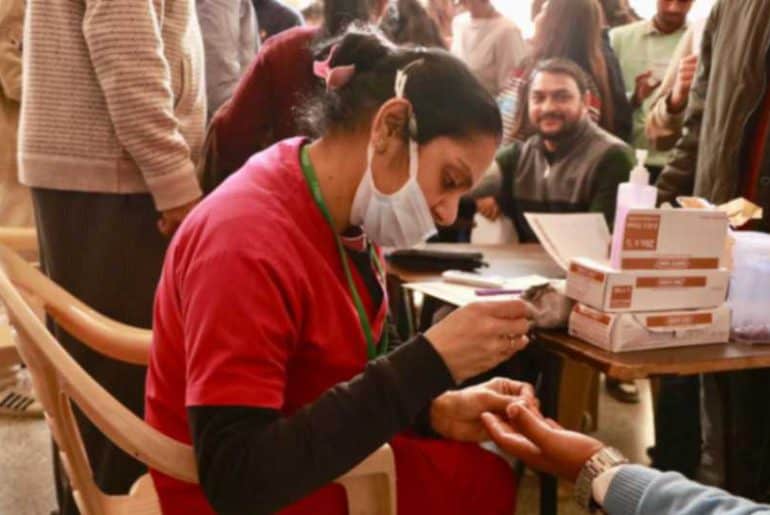
The medical camp commenced at 10 a.m. on February 9th, offering a range of health services, including pulmonary function tests, bone mass density tests, blood pressure checks, and blood sugar monitoring. Dr. Ananya Dubey, a general physician, was present to address any health-related queries, alongside a team of six nurses and two doctors. Additionally, Dr. Rashmi Baliyan, a gynaecologist, provided specialised consultations.

The collaboration with Primus Hospital, Chanakyapuri, ensured the availability of state-of-the-art equipment for the various tests conducted. The camp attracted a significant turnout, with approximately 800 individuals availing themselves of the complimentary services offered.

Under the expert guidance of professor Anita Verma, convener of the Evolvere Society, along with Dr. Perumal Jayraj, Dr. Richa Mishra, and teachers from the Zoology Department, the event was meticulously organised. 

The event, under the efficient leadership of Shivangi Gupta and Harshita Jha, the President and Vice President of Evolvere Society, respectively, was a huge success in promoting holistic well-being. 

Participants were required to register upon arrival, after which they received a prescription pad outlining the recommended tests. Dedicated stations were set up for vital checks, including weight, BMI calculation, blood sugar, and blood pressure monitoring. 

“There was an organised team where responsibilities were delegated. Society members were stationed at each camp to ensure smooth operations and prevent overcrowding.” shared Arth Ohlan, the Central Councillor of SVC. 

In addition to the health check-up camp, a seminar titled “Artificial Intelligence-driven Early Warning Systems for Clinical and Public Health” was held from noon onwards. Dr. Tavpritesh Sethi, an Associate Professor of Computational Biology at the Indraprastha Institute of Information Technology, Delhi, delivered an enlightening presentation on the topic. Dr. Sethi’s expertise in the field of systems medicine added a valuable dimension to the event, shedding light on innovative approaches to healthcare.

The event extended its scope to include two engaging competitions aimed at fostering creativity. It included a reel-making competition, where participants were tasked with creating reels around themes related to ‘Zoology’. In addition to this, a CD painting competition on ‘Environmental Consciousness’ saw a unique blend of creativity and students’ concerns regarding environmental sustainability.

Through collaborative efforts and expert guidance, the event succeeded in providing valuable health insights and fostering a culture of preventive healthcare awareness within the college community.


Read Also: delhi-universitys-sol-launches-center-for-innovative-skill-based-courses-cisbc/

Image credit: Nabeera Jamal for Dubeat 

Kavya Vashisht

[email protected]


Delhi University’s School of Open Learning (SOL) launches 30 short-term courses catering to various fields under the Open Learning Development Centre. 

The School of Open Learning has launched the registration process for its Centre for Innovative Skill-Based Courses (CISBC). This initiative offers thirty short-term skill-based certificate courses ranging from 25 to 30 hours with a maximum duration of 6 months. These courses are designed to accommodate learners’ diverse schedules and preferences, with options available in offline, online, and hybrid formats.

Registration for the courses officially began on February 15th and will remain open until March 15th, 2024. The courses are set to commence on April 2nd, 2024, providing ample time for interested individuals to enroll. These courses welcome registrations from all, including University of Delhi students, with admission being granted on a first-come, first-served basis, depending on seat availability. As per the official website, for courses with fees exceeding Rs. 1000/-, upon reaching a batch size of 40–50 students, 10% of the supernumerary seats will be reserved for Economically Weaker Section candidates at subsidised rates, subject to screening.

Among the thirty courses available under the CISBC are English Proficiency, GST Executive, Cyber Security, Tax Assessment, Motor Driving, Medical Transcription, Wealth Management Programme, Medical Transcription, Radio Jockeying, Bakery and Confectionery, A/C and Refrigerator Repair, and Beauty and Hair Makeup, among others. 

As per the reports from India Today, Professor Payal Mago, the Director of SOL, highlighted that these valuable skill-based certificate courses would offer students a chance to improve their opportunities for employment.

She emphasised that these courses are highly effective in preparing students for job opportunities by imparting practical skills aligned with current industry demands. The accessible programmes will provide a joint certification from Delhi University and esteemed national and international organisations, enhancing students’ credentials.

The portal was launched on January 31 under the chairmanship of the Vice-Chancellor of Delhi University, Professor Yogesh Singh. He saw this centre as a ‘life changer’, opening doors for students to access skill-based courses. A brochure detailing all the courses was also distributed on the same day. 

For any queries, applicants can email [email protected] or call 9318354363, 9318354636.

Read Also: Inquiry to be Launched Against 12 DU Colleges Funded by the Delhi Government

Featured Image Source- India Today

Dhairya Chhabra

[email protected]

A dissection of Animal, a movie that is Reddy’s toxic alpha ideology wrapped in daddy issues with an honorary bow of feminism.

If your highly stereotypical ‘Men will be Men’ ads were made into a movie, this would be it. Big gun toys (with a pinch of Aatmanirbhar Bharat), one man killing 500 other men while his friends (aka bhai) sing in the background, socially-approved infidelity that gets justified in the end, and crass humour that crosses all lines of decency in the name of being funny are just the tip of the iceberg with Sandeep Reddy Vanga’s Animal.

After the commentary and critique faced by Kabir Singh—for having too much unnecessary violence, for having a female lead that isn’t so much of a lead, and for that one slap—it seems like Vanga tried really hard to be accepted with his latest release. With its narrative of “a strong, independent woman” who is bold and actually questions the male lead, the movie tried to fulfil the “feminism quota” by adapting itself to the taste of its feminist critics but still (somehow) failed horribly. Maybe having the woman slap her husband rather than vice versa isn’t what feminism is about (aw, what a shock).

While the movie with its storyline had the potential to be impeccably emotional (cue a dysfunctional Sooraj Barjatya film), the mirch-masala of misogyny, subtle Nazi imagery (?), and alpha male toxicity only took away from the father-son dynamic the movie was trying to portray.

While Ranbir Kapoor’s character clearly had certain mental issues and a deep-seated desire for validation from his father (in common parlance, daddy issues), in a country plagued by a highly illiterate and influential population (read: padhe-likhe gawar), a movie like Animal became a spokesperson and an enabler, allowing not for an understanding of the character but rather a glorification of him, walking a precariously thin line as the audience fell in love with a son who just happens to be highly problematic. While the portrayal of such characters onscreen shouldn’t necessarily inspire its audience (watching Dahmer—the Monster didn’t make you want to be a serial killer, did it?), Ranbir Kapoor in Animal was advocated as the perfect green flag who does everything right (gaslighting 101), leaving little to be questioned about the “alpha” he was.

In the Vanga universe, the checklist for being the perfect male comes down to being pretty straightforward—raging anger issues? Check. Can it “turn on” with a snap of a finger? Check. Preaches about the superiority of being a man? Check. For a movie that wildly oscillated between a bloody rape scene and the (not so) boyish charm of snapping bra straps and pulling on one’s wife’s hair, it is as if Vanga had only one (albeit veiled) objective: wanting to present a picture-perfect image of all the problematic parts of the alpha male ideology.

As a woman, the movie felt like taking a walk in a shady area with no streetlights while a group of men catcalls you for three hours at regular intervals (as if the streets of Delhi weren’t enough). Under the guise of obsessive and possessive love, the movie tactically parceled and sold off misogyny and toxicity in bulk amounts. Every joke made, every blatant ignorance of the concept of consent, every misogynistic sprinkle of “love” and “strength” received ample validation from the snickers and the smirks of Ranvijay’s (Ranbir Kapoor’s character) friends, not so much different from the reaction of a majority of this animal-loving audience.

A dissection of the movie makes it clear that Animal are nothing if not driven by pure (poisoned) testosterone. The smartest feat of foreshadowing and direction in the movie? Opening with the definition of animal.

Read Also: Taali Review – An Exceptional Biopic Based on India’s Third Gender

Featured Image Credits: Onmanorama, filmfare

Manasvi Kadian

[email protected]

As the fest season unfolds, students offer a sharp assessment of Delhi University’s fest advisory, highlighting the associated concerns.

In light of recurring security and management lapses at Delhi University’s fests, the university has issued advisory/guidelines to be followed by all colleges and departments regarding the organisation of various programmes and events. The 18-point advisory, which has been updated three times between April 2023 and January 2024, focuses on the necessary rules of pre-registration of attendees, submission of their details to the police, and also a requirement of a NOC (No Objection Certificate) from the police, among the various other guidelines. A guideline among the 18 others mentioned: ‘Entry for events should be through pre-registration, like on Google Forms, with details of the event, i.e., date, venue, and the expected number of participants (to) be maintained and submitted to the police with a copy to other departments. The registration forms should include scanned copies of the college IDs of participants.’

Speaking to DU Beat, Rajnish Sah, a member of the Organising Committee of ‘Mecca’, Hindu College’s annual fest said:

It is almost impractical to keep an adequate track of all the records and documents on all the potential entrants and hand them over to the police. It might be feasible for small departmental events, but for events like annual fests, where people attend in thousands, it just proves to be an additional strain on the already burdened organising committee.

When asked about the tight cap on the number of attendees allowed to attend the festival, he added:

DU is known for its exposure and its exchange among the students, especially during the fest season, when students from various colleges connect. Tight attendance limits may hinder the fest’s true purpose.

The university-issued festival advisory guidelines also mention that ‘the concerned college or department is solely responsible for any untoward incident during any event organised by the concerned college or department.’

Considering the following statement, Rajnish added:

Putting all the responsibility of any incident with the college and authority would just put a constraint on the level of a fest. It is impractical to hold the college accountable for every incident that happens.

Anubhav, sponsorship head at Nexus, the annual fest of Sri Venkateswara College, supports this and adds:

The college can be held accountable only up to an extent. It is also necessary to ensure that the legal responsibilities are taken up well for the smooth conduct of a fest.

He also added that currently, there are no significant sponsorship issues arising from the attendance cap.

As per reports from The Hindu, a student claimed that there has been a problem in extracting sponsorships for the events:

Sponsors are brought on board based on the number of attendees. With a cap on this number, agreements are becoming increasingly difficult to secure.

–  said Harsh Dalal, President of the Student Union of Shri Ram College of Commerce (SRCC), which will host ‘Crossroads’ in the first week of April.

The report also mentions how some students believe that the advisory would ensure security and make things better for the organisers.

Pre-registrations and controlled entry will make things easier and improve the quality of the fest.

–  said Aman Choudhary, president of the student union at Sri Venkateswara College.

 In March 2023, a group of men allegedly entered Delhi University’s Indraprastha College for Women by scaling the boundary walls and harassing students when the college celebrated its annual festival. A similar incident had also occurred in 2022 during Miranda House’s Diwali Fest, where men were allegedly seen climbing the college walls and indulging in ‘cat-calling and sexist sloganeering’. The rising and repeated cases demanded an advisory to regulate the incidents. As per the fest-advisory guidelines, ‘Prior to any big event in the institution, there should be an assessment of the boundary wall of the college. If found low, concertina wires should be installed to prevent outsiders from scaling the walls.’

A representative from Maitreyi College’s Student Union (identity withheld for anonymity) says:

Where are the notices outlining the repercussions for intruders if another incident occurs again? You can raise the walls, but when will you actually hold the intruders responsible for disregarding the boundaries? How can one ensure that the registered attendees do not create any nuisance on the college campus?

The representative acknowledges that the college has implemented strict measures like applications, registrations, and identity checks for issuing passes to outsiders. However, they highlight that there is no restriction on the number of passes a student from the college can acquire due to the ‘monetization’ of the passes. They then continue and add on to the ‘budgeting issues’ with regards to maintaining security at DU fests:

Since the beginning, many DU colleges have continuously encountered difficulties in securing adequate funding. Things like the security arrangements and illumination of the dimly lit places as per the advisory need funding and resources.

Continuing her statement, she asserts that colleges cannot and should not be solely accountable for all incidents occurring within the campus, stating that the fest-advisory guideline serves merely as a means to deflect legal responsibilities.

Read Also: The Invasion of IPCW: A Student’s Account

Featured Image Source: The Indian Express

Dhairya Chhabra

[email protected]


The recent inauguration, ‘Pran Pratishtha’ ceremony of Ayodhya’s Ram Mandir on January 22, 2024, saw ‘tradition’ integrate with ‘technology’ as the latest advancements shielded security in the temple.

13,000 forces deployed, anti-terrorism squads, dog squads, and bulletproof vehicles; add to that the integration of artificial intelligence and machine learning. It sounds straight out of a science fiction novel, right? But this is the dystopian reality we’re living in.

The grand inauguration of Ram Mandir saw Ayodhya buzz with religious fervour and anticipation, but the inauguration also shone a spotlight on the ‘modern security measures’ implemented in the process, notably the use of biometric surveillance technology.

Such an integrated, cutting-edge technology was utilised to monitor and track individuals in real-time to bolster security efforts that aided the security operations and guarded the temple.

This surveillance technology enables easy identification of individuals through advanced algorithms that analyse unique physical characteristics such as facial features, fingerprints, or iris patterns, offering authorities an additional layer of security against potential threats.

While many may argue that such measures are necessary to ensure public safety, one can’t help but ponder the potential for abuse and the erosion of individual privacy rights here. Staqu Technologies and their JARVIS platform may claim to offer cutting-edge security solutions, but does it come at a cost to our civil liberties?

What begins as a purported safeguard against terrorism could quickly devolve into a tool of control and consequent oppression. The all-seeing eye of AI knows no bounds, and its unchecked power poses a grave threat to our individual freedom.

The Modi regime has overseen significant advancements, positioning India as a global leader in the digital sphere. However, this is not the first time that the government has taken initiatives in digital governance and technological innovation. While ‘Aapka Aadhar’ has been the front-man of the ruling party’s ‘list of achievements’, reports of Aadhaar data being leaked or misused have raised alarm bells among privacy advocates in the past too, highlighting the need for robust safeguards to protect citizens’ sensitive information.

Very similar to this, the National Digital Health Mission also raised serious concerns about privacy and data security.

Moreover, the approach to data protection has also come under scrutiny for its perceived lack of transparency and accountability. The way data is captured and stored raises serious questions about the government’s commitment to upholding privacy rights.

Against this backdrop, the deployment of biometric surveillance at the Ram Mandir inauguration takes on added significance.

Influential figures ranging from the Ambani family to Alia Bhatt had come to witness history unfold, but a web of surveillance technologies, apparently labelled as necessary measures to ensure safety and security, surrounded the star-studded affair.

In an era marked by evolving security threats, the adoption of such efficient and advanced surveillance tools helped monitor the movements of attendees, identify suspicious individuals, and coordinate response efforts effectively. The ever vigilant and tireless ‘unseen eyes’ of AI scanning the crowd pose inherent risks to individual privacy rights, which can potentially escalate and lead to mass surveillance.

While the government may justify these measures as a necessary evil in the face of modern security challenges, this “slippery slope of mass surveillance” is imperative to be discussed thoughtfully since the measures to ‘ensuring safety’ themselves can also gradually turn into a ‘threat to safety’ because abuse of unlimited power is indeed very likely in the absence of some necessary checks.

Ram Mandir’s majestic inauguration highlights two major observations about “New India”: while on the one hand, it shows an intersection of religion, politics, and governance, on the other hand, it also underscores the complex interplay between security, privacy, and technological innovation in contemporary India.

While it may also symbolise a new dawn for a certain segment of the population in India, it also serves as a stark reminder of the delicate balance between security and privacy. As we march forward into an uncertain future, let us not sacrifice our freedoms at the altar of technological progress. Our rights are not negotiable, and our voices must be heard.

In the absence of clear guidelines and oversight mechanisms, there is a real risk that biometric data collected for security purposes could be misused, whether by government agencies or private entities. For instance, the controversial Personal Data Protection Bill, which falls short of international privacy standards, can be exploited for other purposes. The lack of transparency surrounding data storage and access only serves to exacerbate these concerns, leaving citizens vulnerable to potential misuse of power over personal information.

As we grapple with the implications of biometric surveillance in the context of the Ram Mandir inauguration, it is imperative that we demand greater transparency, accountability, and safeguards to protect our privacy rights. The government must demonstrate a genuine commitment to upholding the principles of privacy and data protection, lest we sacrifice our fundamental rights on the altar of security.

Read Also: When Saffron Sparks Debates: Exploring the Aftermath of Ram Mandir Inauguration in Educational Spaces 

Featured Image Credits: securityworldmarket.com 

Kavya Vashisht 

[email protected]