
A resignation changes who holds office – but who answers for the damage already done? Exploring the gap between political resignation and genuine accountability, the limits of symbolic responsibility, and why democracies owe citizens transparency, justice, and institutional reform after a leader steps down.
News breaks of a devastating train crash. Hundreds have lost their lives. Television screens are filled with horrifying scenes from the accident, social media is boiling with anger against the system, and the opposition is demanding accountability.
“The minister must step down. The minister must resign.”
The calls begin echoing almost immediately. This is what we often hear after every major tragedy in the country. Whenever institutions fail, public attention turns to the person at the top. The minister, the official, the leader – the one responsible must leave the chair.
Yet beneath those familiar demands lies a more important question. Is resignation truly justice? Why do we instinctively believe that once someone vacates office, accountability has been served?
Justice, in public life, is more than replacing one person with another. It is about discovering what went wrong, assigning responsibility, repairing institutional failures wherever possible, and ensuring that similar tragedies do not happen again. Resignation may form part of justice, but it can never be justice in itself.
Resignation, in simple terms, is the act of leaving office. It signals political responsibility and accepts the scrutiny that follows public failure. Accountability, however, demands much more. It requires those in power to explain the decisions they made, cooperate with investigations, face legal consequences where laws have been broken, and implement reforms that prevent history from repeating itself. A resignation changes who occupies the chair; accountability demands answers for what happened while they occupied it.
Perhaps this is precisely why resignation often becomes the more favourable outcome for those under scrutiny. It is easier to leave office than to remain under continuous public, legal, and institutional scrutiny. Stepping down may satisfy the immediate political moment, but it rarely satisfies the larger public interest. Unfortunately, the debate often ends there.
Once a resignation is announced, public attention shifts elsewhere. Rarely do we continue to ask whether an independent inquiry was conducted, whether Parliament examined the failures, whether regulatory bodies were held responsible, whether administrative reforms followed, or whether anyone was prosecuted if laws were violated. A resignation answers only one question: who will no longer lead? It does not answer who will account for what went wrong, who allowed it to happen, or how it will be prevented from happening again.

The Grenfell Tower still burning at 04:43 on 14 June, four hours after it started.
Wikipedia.com
What genuine accountability looks like can be seen beyond our nation. Following the Grenfell Tower fire in London in 2017, which claimed 72 lives, public attention did not end with political fallout. A years-long public inquiry examined not only the actions of individuals but also the failures of government departments, local authorities, regulators, manufacturers, and private contractors. Its findings exposed systemic negligence, gave recommendations for sweeping reforms, and paved the way for further legal and regulatory action. The focus was not simply on who should leave office, but on understanding why the disaster occurred and how such a tragedy could never be repeated. That is the difference between symbolic responsibility and substantive accountability. One satisfies the immediate political moment; the other seeks truth, reform, and justice.
The distinction becomes even more significant because accountability is never the same for everyone.
A cashier’s mistake may affect one customer. A doctor’s error may transform the life of a patient and their family. A CEO’s failure can affect an entire company and hundreds of employees. But when a public institution fails, the consequences extend to millions. A minister shapes an entire sector. A head of government shapes an entire nation. The greater the office, the greater its power, and therefore, the greater its responsibility to answer for its failures.
Yet public life often works in reverse: as power increases, accountability appears to diminish.
The consequences of these failures are also fundamentally different because many of them cannot simply be reversed. Lives lost in disasters cannot be restored. Students continue to suffer because of systemic failures in education. Policy mistakes continue affecting citizens long after the governments that introduced them have changed. Financial scandals still drain public money that belongs to taxpayers.

Memorial and murals in memory of the victims (Grosby)
www.infobae.com
The survivors of the Bhopal Gas Tragedy continue to live with the consequences of the night of 2 and 3 December 1984. No resignation could erase those losses. No change in leadership could restore the lives that were taken or undo decades of suffering. The damage had already been done. What people sought – and continue to seek – was not merely symbolic responsibility, but justice through accountability.
Behind every major institutional failure lies a chain of negligence: bureaucrats who overlooked warning signs, regulatory bodies that failed to enforce guidelines, departments that ignored repeated complaints, officials who never acted when action was required, and political leaders who failed to intervene despite possessing the authority to do so.
Reducing such failures to the resignation of a single individual oversimplifies what are fundamentally systemic problems. One person may become the face of the crisis, but they are rarely its only cause.
None of this suggests that resignations are unimportant. They remain important in any healthy democracy. They preserve constitutional morality, acknowledge political responsibility, prevent conflicts of interest during investigations, and help restore a measure of public confidence. A public official who has lost the confidence of the people cannot simply continue as though nothing happened. But resignation cannot replace accountability; it must accompany it.
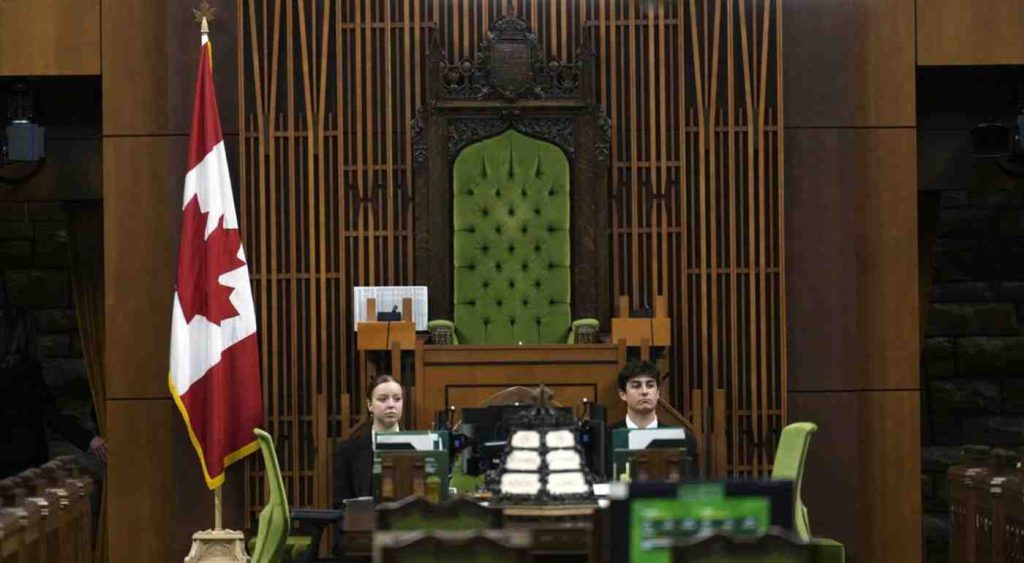 The Speaker’s chair is seen before the House of Commons session begins on Parliament Hill in Ottawa, Monday, Sept. 15, 2025. THE CANADIAN PRESS
Democracies cannot afford to mistake resignation for justice. A resignation may satisfy the politics of the moment, but accountability protects the future. Justice begins when those in power accept responsibility – but it is fulfilled only when institutions answer for their failures, reforms are implemented, and the public is assured that the same tragedy will not happen again.
Rahul Kumar
Image Credits: thearchitectsdiary.com
Read Also: The rise of à la carte travelling: A look into the travel practices of Gen Z.




Comments are closed.