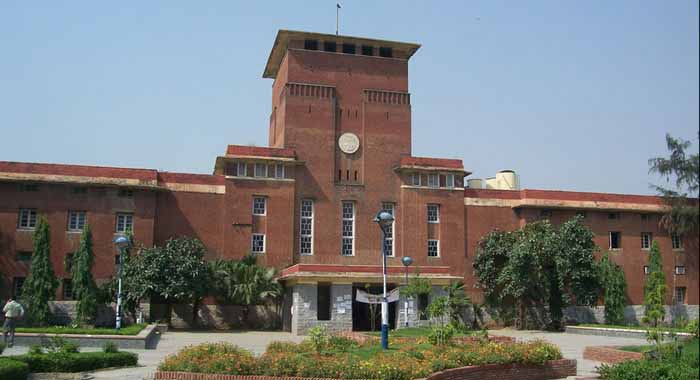
Delhi University released the official notification on suspension of classes and relevant events till 31st March, following Delhi Government’s notice on the COVID-19 pandemic.
In a press release dated 12th March, Delhi University notified the suspension of classes till 31st March, following the official announcement by Delhi State Government about the closing of schools, colleges and cinema halls to contain the spread of Coronavirus.
The teaching-learning process shall be continued in all Undergraduate and Postgraduate programs, with the study material being made available on a weekly basis on the website by the respective teachers of all Departments, Colleges and Centres. Teachers of the respective courses shall remain available as per the timetable through e-resources. The Internal Assessment / House Examination in all Undergraduate and Postgraduate programs stand postponed till 31st March. All functions; including seminars, conferences, symposia, workshops and group activities are cancelled. The aforementioned measures will be revisited after 31st March, keeping in mind the future environment.
An advisory for Universities and Colleges has been released by University Grants Commission (UGC) citing Coronavirus, with instructions for staff and students on how to avoid large gatherings on campus, and take necessary steps to disinfect the campus of possible infection.
Khush Vardhan Dembla, an outstation student from Hansraj College said, “I think it’s very important that classes are cancelled, we can’t afford to be lax in this regard at all. I just hope I manage to be productive during this time.”
Meanwhile, Delhi on Thursday recorded the sixth positive case in the national capital. The patient is the mother of a 46-year-old man, who tested positive for novel Coronavirus. The 69-year-old woman has also been detected with the virus, making her the sixth patient in the national capital, officials said on Thursday.
The Delhi University Students’ Union (DUSU) has established the University’s first official Foreign Cell to address the grievances and issues of international students.
The Delhi University Students’ Union (DUSU) has set up a Foreign Students’ Cell which is set to be first student body at the Delhi University to address foreign students’ grievances and sort out their problems.
The DUSU said that the Cell has been established to address the varied issues of the international students through developing mutual comprehension, cultural exchanges as well as moral diplomatic understanding.
The Delhi University Students’ Union convened an inauguration ceremony of the Foreign Cell on 6th March 2020, in which the honourable guest speakers were Dr. Vinay Sahasrabuddhe, President ICCR , MP RajyaSabha,ShriNiwas, The National Joint Organising Secretary of ABVP, Mr. SediqullahSahar, Ambassador , Embassy of Afghanistan, as well as Mr. Vishnu BahadurGurung, Nepal. Pradeep Tanwar, Vice President, DUSU, welcomed all the guests and felicitated them; followed by a vote of thanks by ShivangiKharwal, Joint Secretary, DUSU.
A total of 230 students from 19 countries registered for the Cell, students from Nepal and Afghanistan being the most in number.
Akshit Dahiya, President, DUSU said, “During my campaign, a few international students asked me why they should vote for me if I don’t do anything for them. I promised them that they will have better representation and a formal one. This foreign students’ cell will provide assistance during admissions, FRRO registration as well as in organising extra-curricular activities. The academic aspect has also been included through introducing an award for felicitating the international student with the highest grade point average. The cell is a step towards enhancement of communication between different cultures and also a great opportunity for the students to learn our culture as we learn theirs,”
“Till they find a proper office I have asked them to use mine. This will be an independent body but DUSU will always provide the necessary support they would need at any point of time,” he added.
Nouresha, a Journalism student from Kamala Nehru College said, “As a foreign student, this is a good initiative. Because when I came to India, I didn’t even know what the processes were. Thankfully, somehow I got in touch with some of the Mauritian seniors in DU and they were very helpful. But if they weren’t here, I would have been roaming aimlessly, not knowing what to do. For a foreign student everything seems alien. So if the Foreign Cell helps them from day one, it would be awesome.”
Two students, studying in the prestigious University of Delhi (DU), belonging to Ladakh were found dead in a flat in Jamia Nagar. Delhi Police suspect suicide and recover two suicide notes.
On 1st March 2020, the Delhi Police reported that the bodies of two 23-year-old students were found dead in a flat in South East Delhi’s Jamia Nagar. The Police report that both these students were from Ladakh and it was a man and a woman. The Delhi Police suspect suicide and two suicide notes have also been recovered. While the Police has not shared any details of the suicide notes, they have disclosed that a one-page suicide note was left behind by the man and a two-page suicide note was left behind by the woman.
Both the students had injuries to their necks and two knives were recovered from the flat, however the door had been bolted from the inside. R.P Meena, Deputy Commissioner of Police, South East District on speaking to the press discloses some information from initial enquiries. He says that the man stayed alone in a flat in Jamia Nagar’s Batla House area while the woman used to stay in North Campus and had come to meet the man at his flat on Saturday.
He said that the door of the flat had been bolted from the inside and was broken by a security guard, and his son Vinod, and they had found the bodies. He added that the place had been photographed and inspected. He further informs that the bodies had been moved to All India Institute of Medical Sciences (AIIMS) and the Forensic Science Laboratory will conduct further examination. The families of both the victims have reached Delhi.
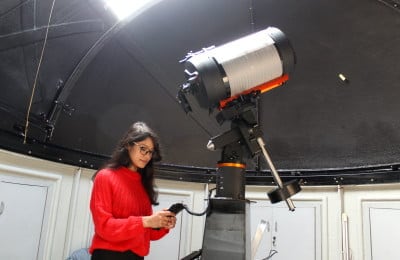
In conversation with Ms Susmita Das, Physics PhD student, University of Delhi (DU), to decode the struggles of pursuing science research in contemporary India. Her specific area of research is Astronomy and Astrophysics, with broader emphasis on variable stars that is, stars that change their brightness over detectable periods of time.
Image Credits: Manav Ahuja for DU Beat
Chhavi: Science for the longest time had been a predominately male field, so, from Class 11th, where you first made the decision to pursue it, were there any struggles you faced as woman? Either from family or people in your close proximity?
Susmita: No, in that sense I feel very fortunate. We are a family of three daughters and my parents have always pushed us towards education. My family has been very encouraging. From my friends and professors, I haven’t felt any gender discrimination throughout my academic career, whether it be during school, bachelor’s, master’s or even now during research. In fact, I’ve been extremely motivated by my high school Physics teachers, Mrs. Bratati Roy Choudhury and Mr. P. C. Sarkar, among many others to pursue a career in Physics.
Chhavi :That’s so great.
Chhavi: Even in fields of science, there has always been a stereotype where astrophysics is not considered a women centric field, like most people pursue medical as one. Does that stereotype still exist and have you faced that?
Susmita: I wouldn’t say it’s a predominantly male centric field because there have been a few pioneers in astronomy who are women. As an example in the field of my research, we have a very important period-luminosity relationship which has been named after Henrietta Leavitt. However, there are few women if you compare the numbers. Of course, the institutes all over the world try to bridge the number gap between men and women nowadays- so it’s a very good time for women to be in science! A very interesting fact here is that we have the Astronomical Society of India and the current president of ASI is Dr. G. C. Anupama, a woman from IIA. It’s a female president leading the Astronomical Society of India right now, which is inspiring in itself!
Chhavi: Astronomy consists of night observations, field trips and much more that might hamper your safety. Have there been any measures to make it a more female friendly field in general?
Susmita: So, the thing about night observations is that you’re usually provided in-campus accommodation, so if you have any observation scheduled for the night, you also have the accommodation close by. And it is the same for both males and females wherever we go. However, suppose we are doing general PhD work (not night observations), say right here in Delhi University, maybe carrying out analysis in our data. When it’s night, you know it’s time to go back to the hostel, even though you may be in the momentum of getting some good work done. But then again, this is more the issue of whether we have out of campus accommodation or an in-campus accommodation. In institutes with in-campus accommodation, we wouldn’t have the constraint of leaving at say, 9PM from the lab.
Chhavi: Often women are discouraged for science research as it involves extensive years of study, and by that age they are expected to get married, with taunts like “Shaadikabkaroge?” have you faced that?
Susmita: Yes, these questions are fairly common especially during family functions. More than my immediate family, it would be other people around generally asking this question. I’m very grateful to my parents- I’ve just turned 29 but they have never pushed me to get married. Of course, my mother enquires if I have a boyfriend, if it’s stable relationship-wise and so on; it helps to have a bestfriend in my mother in that aspect! I’m from Guwahati, Assam and I think it’s not just a special case for me- I’m sure my friends from back home would agree that the focus has always been primarily on education, irrespective of gender and there has never been a pressure to get married “early”.
Chhavi: How did you feel when people ask you this question; you did an observation and on the brink of something great and people just want to know when you’re getting married?
Sushmita: When people ask me, I usually smile politely and reply that I need to get my PhD done first because I don’t want my married life to be interfering with my studies. Of course, that’s my personal opinion- I wouldn’t necessarily say that getting married during PhD is a bad idea. I have many friends and seniors who had been married and also had children during the course of their PhD, while all the time managing their professional life really well. It all depends on the person in question and how comfortable she is in balancing the different aspects of her life.
Chhavi:How do you think young women should approach their parents, wanting a career where they spend their next 7-8 years in extensive research?
Susmita: I believe having a female role model who is relatable to your own life may help. She could be, in some way, the person who leads the path. It would also be much easier to share her story as an example to your parents to convince them that she has been so focused in her academics and she’s doing really well now on her own.
Chhavi: I agree, but don’t you think it’s time that parents encourage their daughters for science research?
Susmita: Yes, yes but I think this is also changing with time. Parents are becoming more accommodating with the age their daughter is expected to get married; they don’t push that hard. Also, it’s not the case of choosing either your personal or professional life, you can choose both and maintain both in balance. I think it’s very important to balance your life well, in general. Parents are very encouraging when it comes to academics but they also worry about the future stability of their daughter, which is quite expected. However, with the changing times, parents understand (and their daughters can convince them of this well) that a stable future does not necessarily come from marriage. It’s the education that has the power to provide their daughters a stable future. If young women were to focus more on their own education, it automatically paves to a path of a much secure future.
Chhavi: Talking about representation of women in Science. Which is the female role model that you look up to or you were inspired by in the field?
Sushmita:All through childhood, I’ve been inspired by Marie Curie. My father is the kind of person who motivated me through biographies of female scientists and it started from Marie Curie. However, every child knows about Marie Curie and Einstein. But as you study deeper, you have so many more role models coming in. Like Henrietta Leavitt who has given us the period-luminosity relation or Jocelyn Bell Burnell who discovered the first radio pulsars, it’s so impressive. My role model keeps changing with time.
Chhavi: Now that you are part of this field, have you ever faced any kind of sexism?
Susmita: Personally no. but I have heard about female students who are PhD scholars and might not be very comfortable with professors. I have heard stories but personally I have not faced them.
Chhavi: What’s your opinion on the notion of “being beautiful takes away from your intelligence”?
Susmita: Do you remember the hashtag about women scientists? #distractinglysexy in response to the surprisingly sexist comment by Tim Hunt, a Nobel Laureate. I believe the women in science came together wonderfully well in protest of his unfair opinion. I think it’s really unfair if you’re expected to choose one of the two options: that you can either dress well or work well. Over the last few years, I’ve met a few incredible women scientists who are also the most beautiful or well-dressed women I’ve ever met. I’m sure people with these stereopyed thoughts are more the exception, than the norm.
Chhavi: Adding to that, Have you ever faced that you won’t be taken serious, because you are beautiful?
Susmita: No, I don’t think so. I think that is also a very generalized notion. Sure, there may be cases where people assume but never confront. But again, I’m sure there would only be a handful of people who may not consider you smart only because you’ve dressed a certain way. Suppose you give a scientific talk in front of an audience from your research field, I’m sure they’d be more interested in the science aspect rather than how you’ve dressed. That way, I don’t think it’s ever been a case.
Chhavi: What is that one big factor that you would everybody consider when they are with science as a career, especially young women who want to be a part of this field? What is one thing they should keep in mind?
Susmita: Throughout my PhD life, all I’ve learnt is that you have acceptances and rejections from the multitude of applications and proposals you keep submitting. It’s always a ride of success and failure. Of course, when you have a successful application, you are really happy and then the rejection gets you down. So, the thing is through the ups and downs, you need to keep your calm because it all averages out. We may also have many more rejections than successful applications but we shouldn’t lose hope during those times. That’s what I keep telling myself, every time I get a rejection letter. I try to think about all the successful applications I’ve had so far to keep my motivation up.
11th February is recognised as International Day of Women and Girls in Science by UN Women and UNESCO. To celebrate the integral role of women in Science and Technology, DU Beat had the privilege to interview Mrs Richa Kundu, currently pursuing PhD from Department of Physics and Astrophysics, University of Delhi.
Image Credits: Surbhit Rastogi for DU Beat.
Avni: You’re doing PhD in Science and Research, what were your qualifications prior to this that got you here?
Richa: I did my Masters, MSc in Physics from Delhi University only. Then I cleared the NET JRF Exam, which is for the fellowship. Initially, I was a Junior Research Fellow and was funded by Council of Scientific and Industrial Research (CSIR), MHRD and two years later, I was promoted to Senior Research Fellow.
Avni: 11th February is known as International Day of Women and Girls in Science, do you feel giving this name to a particular date, benefits women out there and promotes this area?
Richa: All that can definitely help, but to promote such things, women should actually be encouraged, because when I was in MSc., 70% of my class was female students, but as I went through Masters, I felt that mostly men are there as women in India are actually not really encouraged to pursue further research, most of my female classmates from MSc are teachers right now. After a particular age, there’s society and family pressure and they are discouraged from pursuing further studies. That mindset should change and giving a day won’t change that. Making people aware and treating women equally are the kinds of things that will change things.
Avni: There definitely exists gender disparity in your field, how have you been able to cope-up with it or manage it so far?
Richa: Personally, I haven’t encountered any such thing but I get a lot of international exposure, so I don’t see these things on international platforms, but if we consider India only, we can say that this is true for India as there’s a taboo that women should get married and have children, so the main thing is to change the point of view of people. Personally, I haven’t encountered any such thing as I am also married. I got married last year during my PhD and my in-laws and family are very supportive of my studies. I have to go to Chile for the next 10 months and my family is perfectly fine with it.
Avni: What are you currently working on in your research?
Richa: I am working on the extra-tidal region of stellar clusters. Stellar clusters are made up of thousands of stars that seem like a single star in the night sky. All the stars in a cluster were formed at the same time typically 12-13 billion years ago.
Avni: What are your plans after you complete your PhD?
Richa: I don’t have a set goal, but I have two things in mind. After this, I will apply for teaching jobs, but if I don’t get one, given the situation of India right now, I will apply for postdoctoral somewhere out of India to gain experience.
University Grants Commission (UGC) has requested the current government to introduce on-demand examinations at the undergraduate level to reduce failures and malpractices that happen during scheduled exams. UGC also wants to ensure that the decision to appear for the exam comes from the students and not the institution.
The University Grants Commission (UGC) panel has suggested that on-demand examinations be introduced for students at the undergraduate level. UGC has proposed for a National Board to conduct examinations emphasising on “exams should be held when the learner is ready” and urged the current Modi government to introduce the initiative.
This proposal would be a reform by the UGC panel on evaluation. The proposal would reorganise and rearrange matters that relate to examinations which were set up in May 2018 in a committee that was chaired by Vice Chancellor, Bharati Vidyapeeth (Deemed to be University), Pune, M.M. Salunkhe.
According to the report submitted by UGC last week, the UGC panel stated, “Assessment can take place when the learners consider themselves ready to appear. Thus readiness depends on the learner and not institutions.” The panel also added that this initiative would lead to a reduction in failures and also malpractices that occur during scheduled examinations.
The plan suggested an extensive use of automation and technology, with question papers being drawn from a question bank. The Board suggested that the on-demand exams should first begin for distance mode programmes and then be implemented to all other eligible programmes without any age or eligibility restrictions.
UGC also recommended setting up of a National Board that would deal with the operation and execution of these on-demand examinations. “Uniform grading and credit transfer policies must be evolved for this to work”, said the report by the UGC panel.
This evaluation reform is based on the poor nature of University’s productivity. It also aims to change the dearth of employment that Indian graduates and postgraduates face.
Though many students welcome the idea, thinking it to be synonymous to the GMAT tests, others remain sceptical. Nidhi, second-year student, Daulat Ram College told DU Beat, “The idea is good and is definitely an attempt to show that universities and the educational committees are trying to be more student-friendly, and are finally catching up to international standards.”
She further added, “However, I don’t think universities- or least the government universities have enough resources to be able to implement these efficiently. This will ultimately lead to chaos and in the end, it will up to us students to bear the brunt of all the poor implementation.”
Teachers also echoed similar concerns about the inefficiency of the suggestion. As reported by The Print, Professor Amita Singh, Centre for the Study of Law and Governance, Jawaharlal Nehru University said, “A university is not a call centre that can work 24X7 to fulfil the demands of innumerable students. Academic preparation needs discipline, a conducive environment for students to think, discuss and debate while preparing for exams. There should also be the availability of libraries, books, coffee shops and hostels.”
However, keeping the debate of efficiency aside, it must be noted that while the UGC issued guidelines to all universities in 2015 to offer students a choice based credit system, the current reality is that there is little flexibility or choice for learners. It added that students should have the freedom to opt for courses beyond their core specialisations.
DU will receive INR 100 crore grant from the government for achieving IoE status and aims to raise the equivalent amount on its own.
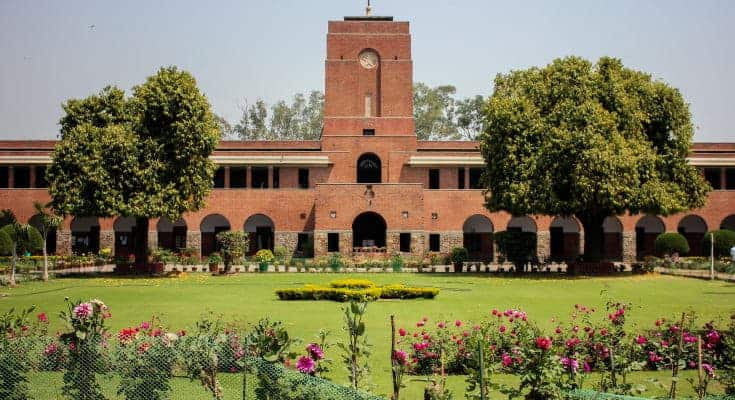
In September 2019, the University of Delhi was awarded the status of Institute of Eminence (IoE) by the Union Ministry of Human Resource Development (MHRD) on the recommendation of the University Grants Commission (UGC). In order to meet the requirements of the same, the university has launched the ‘Endowment Fund of the Delhi University’ which aims to raise INR 100 crore over a period of five years and has also encouraged alumni to invest in sectors of their choice, which may range from building to research funds.
This tag allows the University a grant of INR 100 crore from the government over five years and aims to raise the same amount on its own as well. The varsity states that the funds will be, “100% tax exemption and has no restriction on the amount of contribution. The donor can choose the area in which his/her contribution should be utilised. The information on the utilisation of funds will be displayed on the university website and 50 per cent of the funds earmarked for girl students. There also will be a compulsory audit of the endowment by the Controller and Auditor General (CAG) of India.”
According to a circular signed by the Vice-Chancellor, Yogesh Tyagi, the University is currently in the top 500 universities globally according to QS World University Ranking and is aiming to be in top 100 over the next 10 years. However, it lacks new institutions in the field. “To help our students and faculty attain academic excellence, the University would like to provide them with the necessary support, including the best and most modern research facilities and educational infrastructure”, further states the circular.
The letter also suggests, “It will provide opportunities and facilities to enhance the quality of teaching and research and to attract talent from outside the University and make them stakeholders in our growth story. This enterprise will ultimately lead to the University’s role and contribution to the nation-building and to scale greater heights in the global rankings.”
The University is yet to sign an agreement with the Ministry, under which it will lay out the plan to achieve the status of a world-class institution. Public institutions with IoE status are eligible for a government grant of INR 1000 crores. Upon getting the IoE status, DU will have complete academic, administrative and financial autonomy to spend the resources it raises and is allocated.
Recently Indian Institute of Technology, Delhi (IITD) also launched a global endowment fund of INR 250 crore in presence of President Ram Nath Kovind by 10 founder alumni members. The University states that the fund will be utilised for “each one teach one” providing a student aid of INR 10000 to each student to facilitate their education.
On December 16, 2019, Akshit Dahiya, President of the Delhi University’s Student Union (DUSU) was captured on a video escorting a student outside which later resulted in violence, the student along with All India Student Association(AISA) claims that the student was beaten up. However, Akshit Dahiya denies all claims.
At 9 pm, Kawalpreet Kaur, National President of the All India Student Association (AISA), posted a video allegedly claiming that a student was beaten up by the DUSU President for protesting peacefully at the Social Sciences Department in presence of the Delhi Police. The video even featured female students trying to save the beaten student from the President as well as the police.
Kawalpreet Kaur wrote, “Remove Akshit Dahiya From #DUSU President! Not our President! This is yesterday video of Delhi University. MA. Philosophy student can be seen beaten up clearly by ABVP led DUSU President Akshit Dahiya and Ankita Biswas, Sonal (these girls pulling his hair) Indejeet Dagar and Bharat Sharma. All of them members of ABVP can be clearly seen in the video. What was the fault of this common student? That he took part in his university protest against #CitizenshipAct. That he stood up with the constitutional values of this country.”
Attached below is the video discussed in the context:
On December 16, students from the Social Science Department organised a protest in terms of examination boycott to show solidarity to the students of Jamia Millia Islamia who had faced a brutal police attack from the police a day before.
The protest was put on halt after the students were allegedly lathi-charged by ABVP (Akhil Bharatiya Vidyarthi Parishad) goons called by the Delhi Police. However, the ABVP denied all of the claims stating that the students along with Leftist parties were trying to persuade and prevent other students from giving their examinations, and the students called the ABVP for help.
The above-mentioned video was shot on the same day and it was said by the victim as well as the AISA that the DUSU President used his power to beat up the students for peacefully protesting. The video features, Merin C. Rapheal, M.A. Philosophy, 1st year from the Department of Philosophy, being the victim of violence.
He said “I was physically assaulted and mentally harassed near the statue of Swami Vivekananda on the Arts Faculty campus as I was returning from the protest. I am extremely disappointed as I got to know later that you were present in the mob that attacked me. As my President in the student body, I expect in earnest and urge you in good faith to restore the decorum of an academic space and re-build the lost trust among the student community at large.”
In contrast, Akshit Dahiya, DUSU President, in conversation with DU Beat, presented his side and a different story, denying all violence claims.
He said, “How this video is being circulated is the false narrative. I was actually supporting the students, I even told them that I will stay with them on the ground as long as they are protesting even when some of the students were not from DU. In the video, I’m actually escorting this student outside who was provoking students to turn the peaceful protest violent. I’m one of the only DUSU president who has gone on ground zero to help them express their right to dissent.”
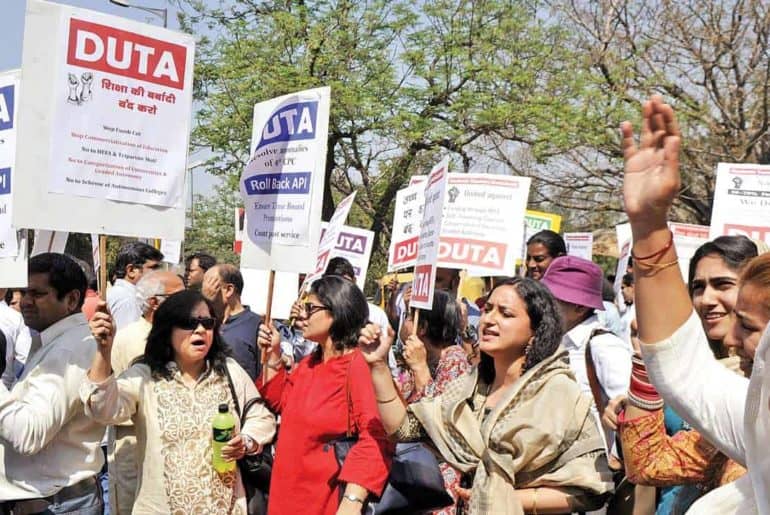
On December 9th, as a part of the indefinite strike against the Ad-Hoc Crisis, more than 3000 teachers of the DUTA marched to Parliament Street to demand absorption of all ad-hoc teachers.
The Delhi University Teachers’ Association (DUTA)’s movement for the absorption of ad-hoc and temporary teachers has intensified over the past week. More than three thousand teachers marched to Parliament Street on 9th of December, where many of them courted arrest with the DUTA leadership.
DUTA began protesting from 4th of December, the protest that initially began outside of VC office has seen some improvements. The protest continued day and night,. in many parts of the National Capital. It has seen many forms of protesting like Vice-Chancellor (VC) Office Gherao, candlelight marches, “We Are Our Families” and much more.
After much struggle, the Ministry of Health and Development (MHRD), agreed to some of the urgent demands of the DUTA, including the amendment to the 28th August DU Administration Circular and the counting of past services in all pending cases of promotions as per the 2018 Career Advancement Scheme. However, the demands for the absorption of ad-hoc teachers and the counting of total years of service for promotions have not been conceded to by the MHRD.
The ad-hoc teachers were let go all, overnight, by the decree of the 28th August Circular, the inhuman and exploitative conditions under which Adhoc teachers have been forced to work for many years, including the denial of minimum employee rights like maternity leave etc. can only be mitigated through absorption as believed by the DUTA.
In order to gain more momentum to the movement, The DUTA leadership has written a letter to the HRD Minister, urging the Ministry to initiate further dialogue on all the urgent and pending issues that have been ignored till now.
In a letter titled ‘Demand for a UGC Regulation for the One-Time Absorption of temporary and ad-hoc teachers and other crucial demands of teachers of Delhi University’, addressed to Sh. Ramesh Pokhriyal ‘Nishank’, Hon’ble Minister, Ministry of Human Resources Development, the DUTA has welcomed the timely intervention of the MHRD and UGC in meeting the teachers’ representatives to find solutions and the acceptance of some of their key demands through the Ministry’s communication dated 5th December 2019.
The letter also mentions other unaddressed demands of the Association such as that the Second Tranche positions of the much delayed Other Backward Classes (OBCs) Expansion and Economically Weaker Section (EWS) Expansion be immediately utilized and added to the teaching roster following the Department of Personnel and Training (DoPT) guidelines. In this context, the DUTA also demands that the Kale Committee report be adopted and implemented in Delhi University and that the University Grants Commission (UGC) sanctions posts for self-financing courses and absorbs teachers working on these positions.
The DUTA has also been demanding an end to the constant threat to the service conditions of the teachers of Physical Education in the University.
DUTA, has also, allegedly said, “…if the MHRD continues to ignore the DUTA’s pending demands, it will face the collective ire of the teaching community.”
In light of these recent developments in the teachers’ resistance movement in the University, Rajib Ray, President DUTA, in conversation with DU Beat, encouraged the student-teacher collective step-up their involvement in the movement for teachers’ welfare and an efficient education system.
Senior Academicians and Deans of some faculties of the University of Delhi held a meeting on December 8th, 2019, following which, a Press Release was put up on the University Website.
Responding to the ongoing boycott of duties as well as protests being held by the Delhi University Teachers’ Association (DUTA), the University of Delhi (DU) administration has released a statement on their official website.
The statement reads that in the meeting of Senior Academicians and Deans of some faculties of the University, the members were of the ‘view that the ongoing agitation by the DUTA is adversely affecting the students and damaging the reputation of the University.’
Thousands of teachers of Delhi University, who have been on an indefinite strike since last week, held a rally at North Campus on Tuesday, December 10th, 2019 demanding the absorption of ad-hoc teachers.
“The inhuman and exploitative conditions under which ad-hoc teachers have been forced to work for years, including the denial of minimum employee rights like maternity leave and others, can only be mitigated through absorption,” the DUTA said in a statement.
Although the teachers movement has resulted in some of their demands being met, and the Ministry of Human Resource Development (MHRD) was quick to accede to the union’s immediate demands to withdraw a controversial circular calling for the appointment of guest teachers, the demand for one-time appointment and others such as counting of total years of service for promotions were not addressed, the union said, calling for the initiation of further dialogue by authorities.
Further, the letter issued by the University administration urges the DUTA and its members to ‘comply with the Code of Professional Ethics of Teachers under the University Grants Commission (UGC) regulations on Minimum Qualifications for Appointment of Teachers and Other Academic Staff in Universities and Colleges 2018.”
Lastly, the Senior Academicians and Deans, unanimously and unequivocally, once again ‘urged the DUTA to call off its agitation immediately and work towards achieving academic excellence.”
With the examination season around, it becomes important to study well and prioritise one’s actions and acitivities. Here is a piece on how one can identify and circle down things that take away most of the time in unproductive sessions without making one realise it.
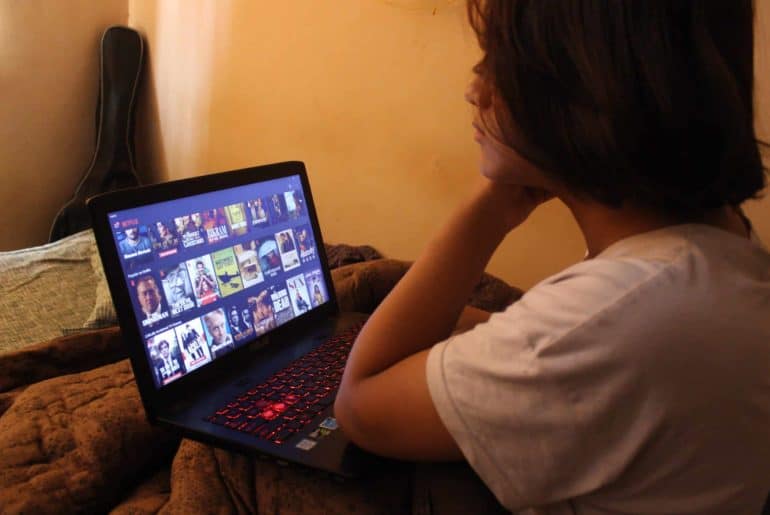
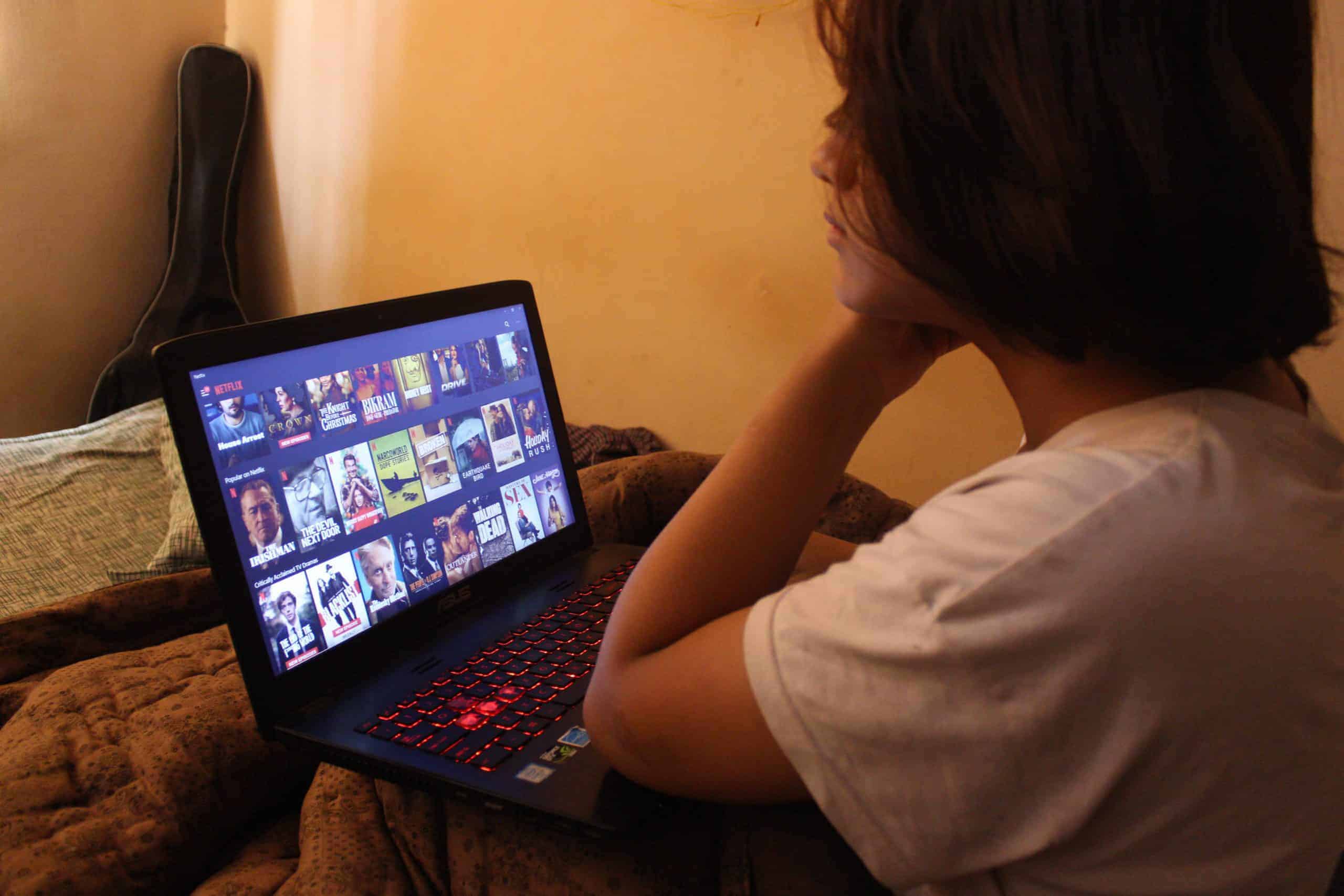
1. Netflix and Chill (?)
Just one episode more! This has led to getting caught in an endless cycle of shows and series. Utilise your time wisely this exam season and just hold on to the urge to watch the series a little later. It is an altogether different joy to experience when one watches shows without the pending loom of having to study for exams!
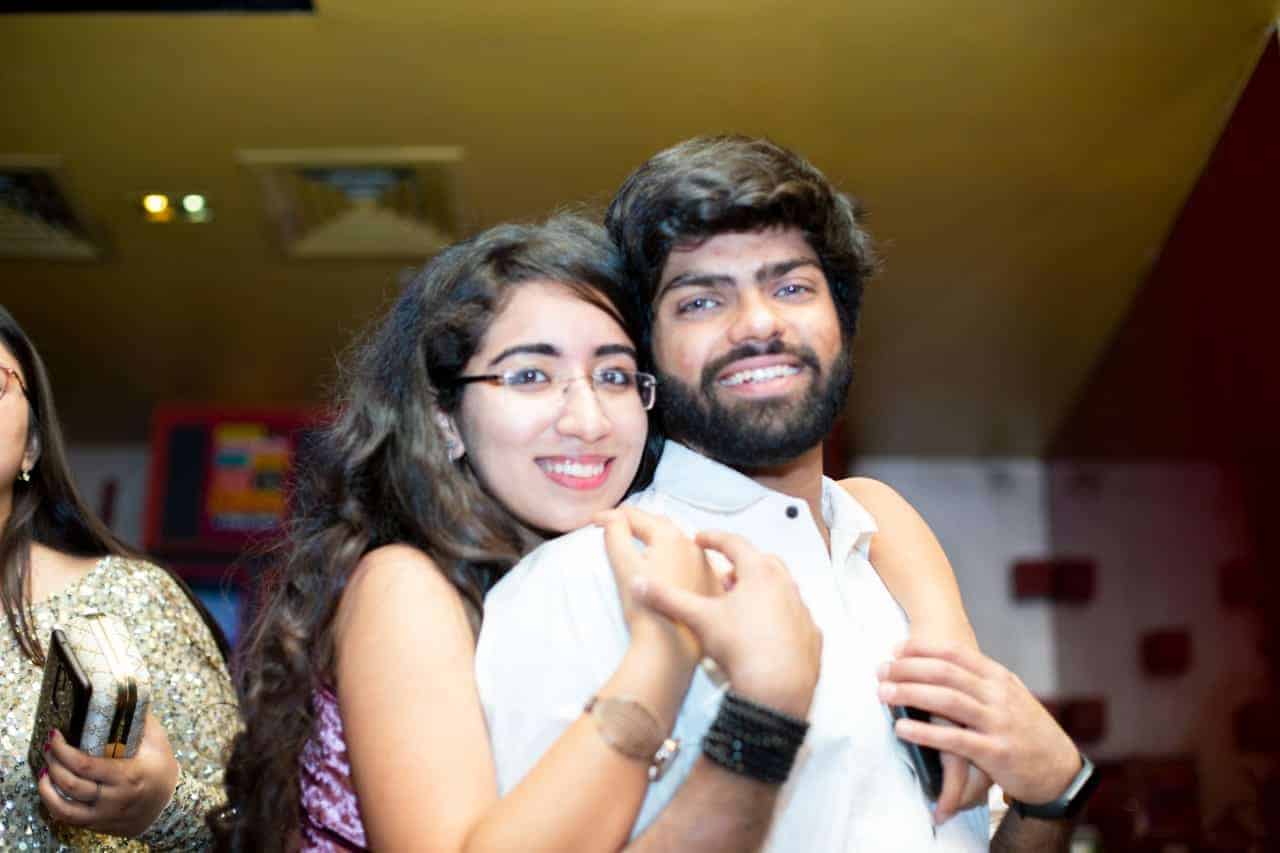
2. Partners
In the garb of productivity we end up wasting a lot of time by talking to our significant others over social media, in the garb of the ‘one WhatsApp message’ or over the video call with the context of studying together but that is a far call from reality. At the end of the day, one needs some ‘me’ time to for a productive study session. So it’s just a matter of little time. Keep that urge to message or call away just for a little while!
3. Parties
It’s time to reverse the motto of ‘Study Hard, Party Harder’. During the exam season at times, one may find the urge to attend parties after long and tiring sessions of studying. At times it may even feel justified but in the heart of hearts, the realisation does upon that this is not an ideal practice to fall into during the exams. This leads to an endless cycle of partying late, coming home even later and ending up causing a disruptive timetable during this crucial time.
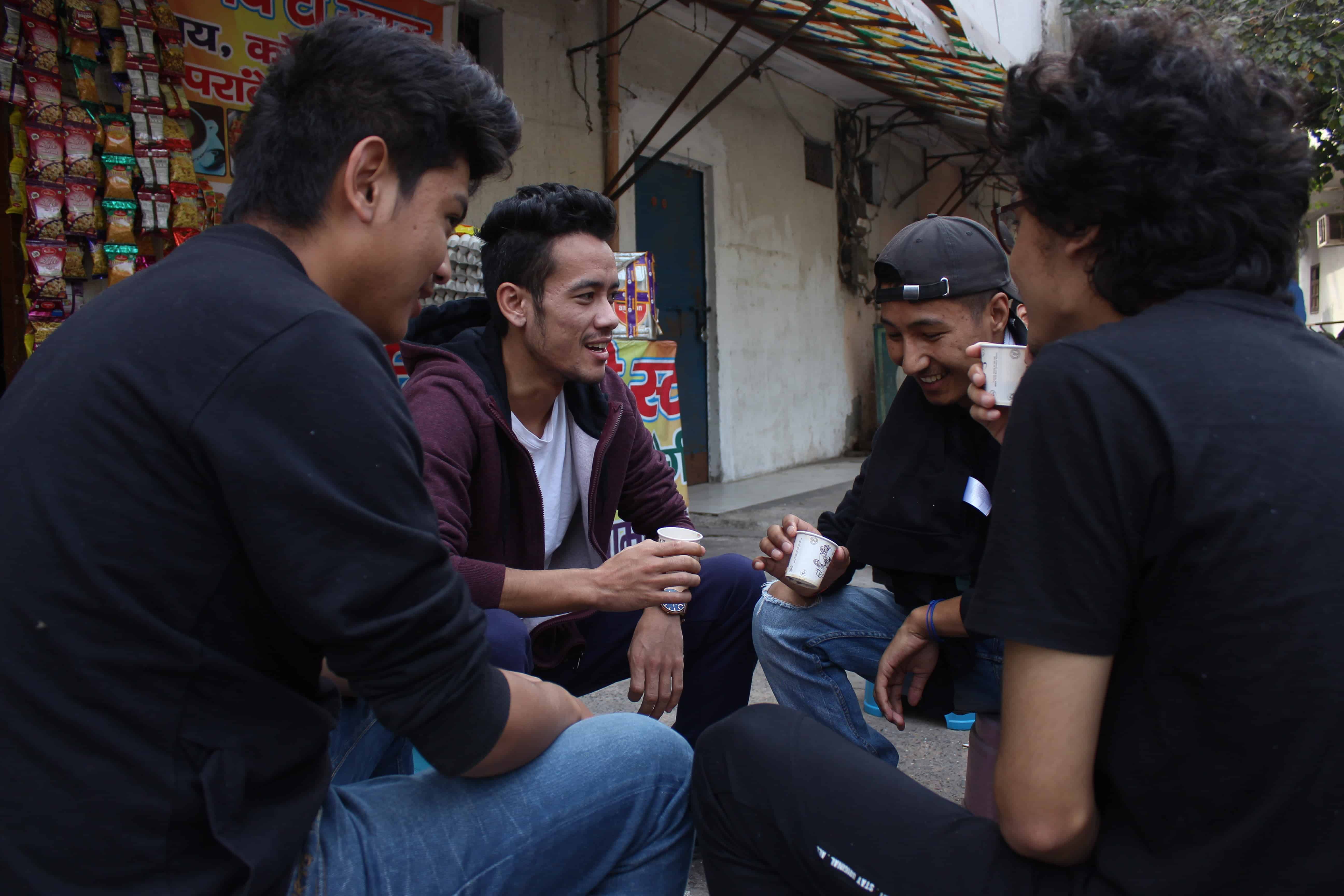
4. The ‘tapri-time’
It seems almost logical and justifiable to go out with our friends and chill over at the Tapri. With the cold winters, a warm cup of tea doesn’t seem a bad option either. However, that tapri trip can turn into a trap and lead to endless hours of unproductivity. It’s important to utilise time wisely and prioritise things during the exam session. The trip can wait, your exams cannot!
Thus, this exam season, let us imbibe ‘delayed gratification’ as the tool to ace the exam season! Feature Image Credits: Noihrit Gogoi for DU Beat Image Credits: Noihrit Gogoi and Vaibhav Tekchandani for DU Beat