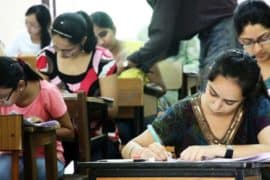
DU has formed a six-member committee to review seat availability in its one-year postgraduate programmes following ABVP’s protest over limited admissions for students completing the fourth year under FYUP.
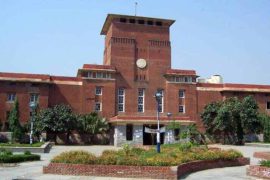
On Friday, July 17, students gathered outside the Arts Faculty, University of Delhi (DU), as the Akhil Bharatiya Vidyarthi Parishad (ABVP) protested the limited number of seats in the university’s one-year postgraduate programmes, arguing that many students completing the fourth year of the Four-Year Undergraduate Programme (FYUP) could be left without admission opportunities.
As students from colleges across the university joined the protest, ABVP submitted a memorandum to DU Registrar Prof. Vikas Gupta, urging the administration to increase the intake across all one-year postgraduate courses.
The issue has come into sharper focus this year as the first batch of students completing FYUP becomes eligible for admission to one-year master’s programmes. As thousands of students prepare to move to postgraduate studies, concerns over limited seats have intensified. ABVP argues that while the number of eligible students has increased significantly, postgraduate intake has remained largely unchanged, leaving many students uncertain about their admission prospects.
In response to the protest, the university formed a six-member committee to review the matter. The panel is expected to arrive at a decision within 10 days.
According to Millennium Post, the committee will be chaired by the Dean (Academic Affairs), with the Dean (Admissions), Dean (Social Work), Head of the Department of Chemistry, Joint Registrar (Legal), and Deputy Registrar (Recruitment and Promotion) serving as members.
Welcoming the university’s decision to form the committee, ABVP Delhi State Secretary Sarthak Sharma called it a positive step and urged the administration to resolve the issue at the earliest.
As reported by The Tribune, Sharma said, “The University of Delhi remains the first choice for lakhs of students across the country. However, the inadequate number of seats under the current admission system is doing grave injustice to students’ academic aspirations.”
“The university administration must immediately enhance the number of seats to ensure that no deserving student is denied access to higher education due to seat constraints”, he added.
The organisation said it hopes the committee will recommend an increase in seats. However, it added that it would intensify its protest if the university does not take a favourable decision after the committee submits its report.
Image Source: iStock
Read Also: Delhi University Announces Strict DUSU Election Rules Ahead of 2026 Polls
Mahi Mishra



Trending