
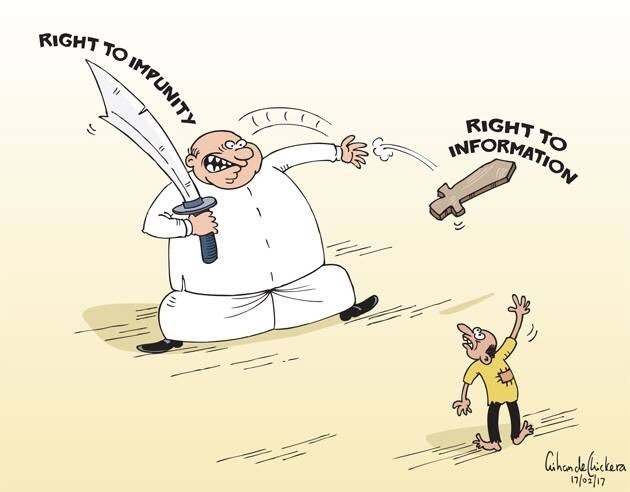
India loves to talk about transparency. Each month, ministers announce e-governance portals. Budget speeches invoke “citizen-centric” reform. And yet, when I actually tried to use the one law built to make the state answer to its own people, the government’s own contact number connected me to a confused housewife who had never heard of the Delhi Transport Corporation. That, in one phone call, is the state of the Right to Information (RTI) Act in 2026.
An Application, and a Wrong Number
On 14 December 2025, I filed an RTI application against the DTC. I had a few questions to ask. How many electric buses does DTC run? How much does it cost to run them? How many people use them? And how much revenue do they bring in? Nothing classified. Nothing that should embarrass anyone.
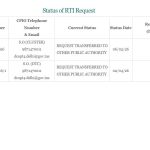
When the file stalled, I called the numbers listed on the official portal for the officers meant to handle exactly this. A housewife picked up. She knew nothing about buses, nothing about RTI, nothing about why a stranger was calling her. It was something out of the blue for her. Nobody sabotaged my application because, well, nobody had to. The machinery had simply been left to rot at the exact point where a citizen is supposed to reach it — and rot, done at scale, works just as well as sabotage.

A Law Built to Make Power Answer
RTI was never a gift from Parliament. It was extracted, in the 1990s, by daily-wage labourers in Rajasthan who wanted to see muster rolls because their wages were being stolen on paper. That movement forced a law that flipped a century of colonial habit: under the Official Secrets Act, silence was the default. Under RTI, it became the exception that the state had to justify. For a while, it worked. RTI is what cracked open the Vyapam scam, Adarsh Housing, and years of hidden wilful-defaulter lists at the RBI. The file stopped being the government’s private property.
After coming to power in 2014, Prime Minister Narendra Modi himself promised transparency and accountability, coining a “3T” formula: timely, transparent, and trouble-free. It is worth holding that promise up against a housewife in Delhi picking up a stranger’s phone call meant for a transport officer.
The Backlog is the Punishment
More than four hundred thousand RTI appeals and complaints are currently stuck before information commissions across the country, and in fourteen commissions, it now takes over a year just to get a hearing. A citizen who has to wait a year to find out whether they’re even allowed to see a document has already been denied it in every way that matters. This isn’t an accident of scale. Seven of the country’s twenty-nine Information Commissions were completely defunct for stretches of 2023–24, and no Chief Information Commissioner was appointed at the Centre between August and October 2014, in addition to multiple shorter periods between 2023 and 2025 where the Central Information Commission (CIC) remained headless. There reached a point where citizens had to drag the matter into court. Jharkhand’s commission has been dead for over five years. In 2023, the Supreme Court warned that RTI risks becoming a dead letter. Nobody had to say the quiet part out loud. Starving a commission of members achieves the same result as repealing it, without the paperwork.
The Institutions that Simply Opted Out
Then there are the fortresses. PM CARES has refused RTI applications for years, claiming it isn’t a “public authority”— even as the government has separately admitted, in another RTI reply, that the fund is owned, controlled, and established by the Government of India. The RTI Act defines a “public authority” by exactly that test. You cannot be outside that definition in one file and inside it in another. This year, the Delhi High Court went further, suggesting PM CARES might retain a “right to privacy” — a protection meant for people, now shielding an entity built to spend public money. The BCCI won the same exemption in May; political parties got theirs even earlier. None of these institutions had to win an argument. They just declared themselves outside the law’s reach, and the law abided.
What’s Left When the Line Goes Dead?
None of this is abstract for everyone. At least eighteen RTI activists have allegedly been murdered in Maharashtra alone since 2010. Satish Shetty, shot dead in Pune for exposing a land-grab racket, still has no conviction after sixteen years. I asked about bus fares; he asked a harder question, and it cost him his life.
None of this happened by accident, either. The 2019 amendment placed information commissioners’ salaries in the government’s hands. The DPDP Act lets “personal information” swallow whatever the government doesn’t want to be asked—backlogs, vacancies, exemptions, killings — different tools, same direction.
RTI was built to make silence cost the state something. Today, silence is free, and asking is the only costly act left. A democracy doesn’t announce the death of its transparency law. It just lets the phone ring out.
Who’s still on the other end of it?
Mayank Scripts
[email protected]
Read Also: CJP Protest Jantar Mantar Enters Fifth Day with Educators’ Addresses




Comments are closed.