Author

DU Beat

Browsing

By challenging traditional binary norms, gender-fluid fashion has become a powerful form of self-expression. From the rock style of the Rolling Stones to Harry Styles’ Vogue cover and the Met Gala’s “Camp” theme, the boundaries between menswear and womenswear continue to blur. Rooted in LGBTQ+ history, non-binary activism, and changing cultural attitudes, fashion is steadily redefining what self-expression can look like.

“Slightly peaked shoulder jacket, ruffled blouse, and stacked heel boots”

Can you recall which heroine rocked this look on stage? 

Chances are, you can’t, because it wasn’t a heroine at all! It was the famous American singer-songwriter Prince (Prince Rogers Nelson) in the iconic ‘Purple Rain’ video. Which leaves us wondering, does clothing really have to be gendered? Are beliefs such as “blue for the boys and pink for the girls” natural, or are they constructed carefully by society to help us pigeonhole ourselves, unconsciously pushing our creativity into a prison of “log kya kahenge?” 

Prince performs on stage wearing a sequinned outfit and playing an electric guitar.
Prince challenged gender norms through his bold fashion choices.

When we think about fashion, we often associate it with creativity and individuality. Yet, when it comes to gender expression, these ideals tend to disappear. For the queer community, fashion has long been a form of self-expression, resistance, and communication. By challenging the traditional male/female binary, genderqueer fashion pushes us to rethink why we assign gender to clothing in the first place.

“Genderqueer fashion represents the avant-garde of contemporary fashion,” says Bliss Foster, a millennial fashion critic. Unfortunately, it continues to face boundaries that dictate what men and women are “supposed” to wear. 

Stereotypes, especially gender stereotypes, box an individual’s choices into socially acceptable norms, discouraging them from experimenting. A common example is the normalisation of the colours blue and pink for boys and girls, which can often lead to discrimination among young children.

Clothing, as one of our primary forms of visual communication, is deeply rooted in this traditional gender binary. Cultural stereotypes associate masculinity with utility, power, and rationality, while femininity is associated with decoration and frivolity, creating rigid fashion norms that influence how people dress. True genderqueer fashion seeks to disrupt this by incorporating elements traditionally associated with femininity into masculine clothing, thereby challenging the stereotype.

The fashion industry and queer community have never been alien to each other. Fashion has long served as a tool for expressing queer identities, including those of non-binary individuals. Shaun Cole’s “Dandies: Fashion and Finesse in Art and Culture” and Elizabeth Wilson’s “Adorned in Dreams: Fashion and Modernity” have examined the intertwined history of queer aesthetics and fashion’s role in expressing and exploring sexuality and gender. 

Queer fashion has a much longer history than most people realise. The deconstruction of gender stereotypes regarding clothing started around the 1920s when pants for women began to be tolerated in sports and some limited activities such as cycling and horse riding. The rising wave of gender politics and the sexual revolution dates back to the 1960s, which was swiftly followed by the 1970s era where questions regarding gender stereotypes were seriously raised, dismantling those stereotypes gradually in the process. 

People in colourful 70s outfits pose together.
The Disco era helped bring gender-fluid fashion and bold self-expression into the mainstream.

As feminist and gay rights movements gained momentum, the fashion industry reacted to these movements. Alongside these movements, popular culture also played an important role. David Bowie helped introduce gender fluidity into mainstream fashion, while the Disco era familiarised these ideas amongst the masses. Prince is also considered an LGBTQ+ icon to this day for defying gender stereotypes and pushing the boundaries of sexuality. For his admirers at that time, his difference and willingness to transgress boundaries made him stand out. 

Similarly, and even slightly beforehand, The Rolling Stones used their own rock style to experiment with fashion and its boundaries, often choosing to wear colourful jumpsuits and ruffled shirts. Along with this, documented examples from the punk movement and the reintroduction of men’s skirts or divided skirts by the Japanese deconstructionist designers have also had their part in de-gendering fashion around the world. It was during this time when we saw the rise of trans and non-binary activists calling for gender-neutral fashion not only as a fashionable renaissance but also as an “anti-violence imperative”.

In recent years, we have witnessed a significant rise in acceptance of fashion that goes beyond the scope of gender binary. This progressive approach has allowed generations of people to express themselves and their identities more freely, most visibly through art, music, and, importantly, fashion.

From David Bowie to Harry Styles, the landscape of gender and how we perceive it in the world of fashion is changing drastically. Stereotypes are being gradually eradicated as consumers bother less about standard gender labels and adopt a more fluid approach to individual expression.

Harry Styles wears a light blue ruffled dress.
Harry Styles’ 2020 Vogue cover that sparked conversations about fashion and identity.
David Bowie performs on stage in a glitter striped jumpsuit.

In 2016, actor and musician Jaden Smith could be seen participating in a Louis Vuitton campaign showcasing their newest collection. In this campaign he can be seen wearing a skirt whilst posing with other female models in similar outfits. Not long after that, Harry Styles featured on the cover of Vogue in 2020 in a pale blue, lace-trimmed dress underneath a black tuxedo jacket, both by Gucci. However, there was significant backlash for both, raising controversies around gender-related concepts (especially masculinity) and whether events like these fell under the umbrella of men appropriating women’s clothing. 

While these examples were still perceived with scepticism among older millennials, what does Gen Z say about all this? Gen Z has introduced a unique set of consumer behaviours due to their digital inclination and favouring fast, seamless experiences. Moreover, keeping in mind their high levels of acceptance, these young consumers are ditching old labels and finding new ways to express themselves outside of typical gender norms. They are arguably the most diverse generation yet, as they are also far more comfortable with shifting views of identity than older generations have been. 

The year 2019 was particularly important for de-gendering fashion and the rise of acceptance for fashion that stands out of the box. Be it the 2019 Vogue’s annual Met Gala theme or the #DeGenderFashion that gained traction and eventually turned into a social movement, the year was revolutionary for fashion and gender identity, especially for Gen Z.

In 2019, the Met Gala theme was chosen to be ‘Camp: Notes on Fashion’, which not only went beyond the convention but also provided the attendees with extravagant creative freedom regarding their fashion choices. This particular year was a chance for celebrities to push the boundaries of the binary and try pieces they perhaps would normally shy away from. Looking specifically at the male attendees, many chose to incorporate sequins and glitter into their looks, embracing an exaggerated version of their typical outfit choices. 

Another notable moment was the “Clothes Have No Gender” talk delivered by the gender non-conforming activist, performer, and writer Alok Vaid-Menon at the Business of Fashion (#BoFVoices) stage. This later gave rise to #DeGenderFashion, which took the shape of a social movement. In that talk, they called for a complete de-gendering of the fashion and beauty industries, noting that “any article of clothing should be for anyone who wants to wear it, regardless of their gender.” 

Alok Vaid-Menon poses wearing makeup, jewellery, and gender-fluid fashion.
Alok Vaid-Menon champions the idea that clothes have no gender, advocating for a more inclusive fashion industry.

The idea of menswear and womenswear has been gradually eroding in recent years, giving much more room for individuality. People are no longer restricting themselves to the clothing limitations of their own gender but instead feeling free to express themselves however they choose. This has allowed the fashion industry to evolve, with many designers creating unisex and fluid collections with high-street brands following suit.

As this evolution continues, scholars such as Connell and Messerschmidt, argue that society has the capacity to deconstruct gender binaries and criticise hegemonic masculinity, encouraging brands to be more diverse and portray accurate representations of consumers. As emerging generations reject rigid gender standards, the fashion industry must adapt. It should strive to create a place where customers can take control of their bodies and accept their identities, regardless of appearance.

Ultimately, fashion has always been more than just clothing; it is a reflection of  identity, culture, and self-expression. Every generation grows up with its own set of norms regarding who should wear what, only to challenge them again. Perhaps the true legacy of gender-fluid fashion lies in reminding us that the gender binary was drawn by people in the first place. And if it was drawn, it can be redrawn.


Read Also: Riches, Fashion, and the Met Gala: Who and What gets to be Art?

Image Source: British GQ, Getty Images


Chandrani 

[email protected]


A delegation from the University of Delhi, led by Assistant Professor Abhishek of the Department of History, visited Jammu & Kashmir in collaboration with the J&K Peace Foundation to engage with tribal communities in South Kashmir and to discuss potential collaborations in education, humanitarian outreach, and social awareness initiatives targeting marginalised populations.

A delegation from the University of Delhi undertook an academic and social outreach visit to Jammu & Kashmir over the past week, travelling across South Kashmir in collaboration with the Jammu & Kashmir Peace Foundation (JKPF) to engage with tribal communities and explore avenues for sustained development in the region. The team was led by Assistant Professor Abhishek of the Department of History, South Campus, University of Delhi, and comprised a group of students, bringing together academic inquiry and ground-level realities. The delegation was received at the Foundation’s office in Anantnag by Office Coordinator Murataza Bashir and Office Secretary Asma Jain, both of whom accompanied the group throughout the visit.

During the Delhi University delegation’s visit to Jammu & Kashmir, the team travelled through tribal areas in South Kashmir where communities continue to face significant socio-economic challenges. Members of the visiting team interacted closely with residents, gaining firsthand insight into the difficulties shaping the communities’ everyday lives. The cohort subsequently met with senior figures from the Foundation, including M Ramzan Mir, General Secretary of the JKPF, and Bilal Deva, National Executive Member. Discussions were held on potential collaborations spanning educational outreach, humanitarian programmes, and social awareness initiatives for marginalised and tribal populations.

The Delhi University delegation’s visit to Jammu & Kashmir marked “a significant step towards fostering academic-community partnerships and nurturing a spirit of social responsibility among youth”, the Foundation said. This sentiment was echoed by the delegation.

Established in 1992 and inspired by the vision of former Prime Minister Shri Atal Bihari Vajpayee, the J&K Peace Foundation is a non-governmental, non-political organisation led by Chairperson Mr Fayaz Ahmad Bhat. Operating across education, healthcare, skill development, women’s empowerment, and emergency relief, the JKPF has earned national and international recognition for its commitment to communal harmony, social justice, and peacebuilding across Jammu & Kashmir and beyond.


Read Also: NEET UG Re-Exam Dress Code Enforcement Sparks Debate

Image Credits: J&K Peace Foundation on Facebook


Sheetal Mishra

[email protected]

Kamla Nehru College has been recognised as the first ‘Zero-Waste Institution’ under the Solid Waste Management Rules, 2026, marking an important step toward sustainable campus practices.

The college was conferred with the certificate on 30 April by Shashwat Saurabh, Deputy Commissioner of the Central Zone, Municipal Corporation of Delhi (MCD), under the Solid Waste Management Rules, 2026.

The college’s programme, titled Awareness on Zero-Waste Management Practices, began with the ceremonial lighting of the lamp, followed by an address from the Principal, Prof. Pavitra Bhardwaj. Addressing the gathering, she reflected on KNC’s journey since its establishment in 1964 and stated that the college remained committed to maintaining an eco-friendly campus. She also highlighted the role of the college’s Solid Liquid Resource Management (SLRM) Committee, which works in collaboration with the MCD to facilitate sustainable waste management practices.

The programme was also attended by Dr Rajiv Nayan, Assistant Commissioner, Central Zone, MCD, and Shammi Talwar, Brand Ambassador for the MCD’s Swachh Survekshan campaign. Talwar pointed to the growing problem of waste accumulation in the city and emphasised that waste segregation and proper disposal must begin at the source, including within individual households.

In his address, Chief Guest Shashwat Saurabh laid particular emphasis on collective action in tackling waste management, highlighting the importance of public participation in addressing the issue. He also commended the efforts of the MCD’s sanitation workers and urged students to fulfil their civic responsibilities.

Speaking to DU Beat, the President of KNC’s Student Council, Rajeshwari Shelke, said, 

I feel immensely proud that Kamala Nehru College has been recognised as a Zero-Waste Institution. This achievement reflects the dedication of our students and the unwavering commitment of the college towards sustainability. Together, we’ve created a campus where responsible choices inspire lasting change.”

The programme concluded with a skit performed by members of the college’s SLRM Committee, highlighting the importance of effective waste management. The Chief Guest then distributed participation certificates to the students before presenting the Principal with the ‘Zero-Waste Institution’ certificate.

Read also: NEET UG Re-Exam Dress Code Enforcement Sparks Debate.

Image Credits: Kamla Nehru College Official Instagram 

Kaustubh Dwivedi
[email protected]

UGC NET aspirants have alleged that the June 2026 English paper repeated questions from the December 2024 examination, prompting concerns over fairness and examination practices.

The UGC NET English examination held on 25 June 2026 has sparked discussion among aspirants after candidates alleged that multiple questions were repeated from the December 2024 UGC NET English examination.

Soon after the examination concluded, aspirants began sharing comparisons of the two papers on social media, claiming that several questions, along with their answer options, had been repeated without any changes. An Instagram reel highlighting the similarities has since gained traction among candidates.

An independent review of the two papers by DU Beat found that several questions appear to be identical in wording, answer options, and correct answers. However, the June 2026 paper is not identical to the December 2024 paper, as it also contains questions that did not appear in the earlier examination.

The concerns surrounding the UGC NET English paper also arise against the backdrop of heightened scrutiny of the integrity of national entrance examinations following the NEET-UG 2026 paper leak controversy. The similarities have led some aspirants to question whether the extent of repetition could affect the fairness of the examination, particularly if previous years’ papers were more accessible to some candidates than to others. Others, however, have argued that competitive examinations often reuse questions from previous years and that such repetition does not necessarily indicate malpractice. The National Testing Agency (NTA) has not issued any official statement addressing the alleged repetition of questions in the English paper.

Several inconsistencies have also been identified across social media posts. While one widely circulated reel claimed that the 25 June UGC NET English paper was largely identical to the December 2024 examination, another video alleged that it was instead a replica of the January 2025 paper, further claiming that 67 out of 100 questions had been repeated.

These conflicting claims make it difficult to independently verify the extent or source of the alleged repetition based on social media posts alone and underscore the need to rely on verified comparisons of the question papers.

At present, there is no evidence to suggest that the alleged repetition of questions in the UGC NET English paper resulted from a paper leak or any other form of examination malpractice. Nevertheless, the similarities have prompted candidates to question the integrity and fairness of the examination process and seek clarification from the NTA.


Read Also: NEET UG Re-Exam Dress Code Enforcement Sparks Debate

Image Source: india.com

Aarushi Chaubey

[email protected]


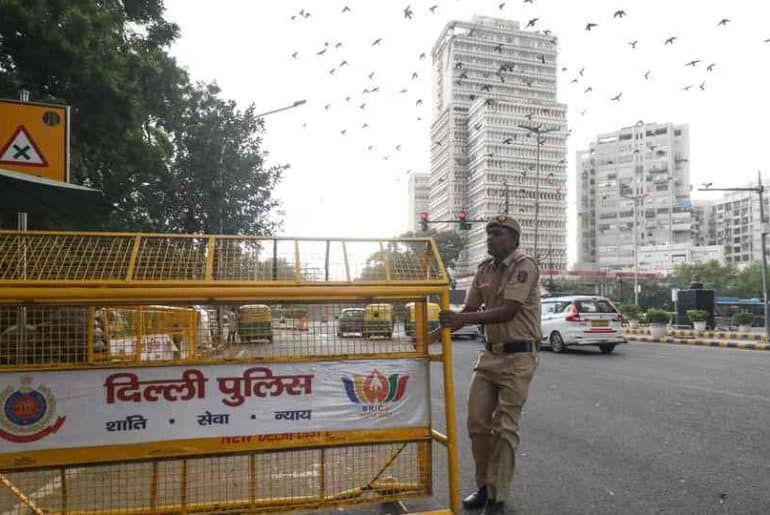
Strict dress code enforcement for the NEET UG  re-examination on June 21 triggered a national debate over dignity, religious freedom and exam integrity. 

For many candidates appearing in the NEET UG re-examination, the challenge began before they even entered the hall. Stringent dress code enforcement left students across the country questioning where security ends and dignity begins. 

The re-examination came in the wake of the cancellation of the May 3 exam following reports of paper leaks in several states. According to the official NTA notice, candidates were advised to wear light clothing, avoid shoes, metallic accessories, jewellery and electronic devices. 

In Delhi, Era, who appeared for the re-examination, described the entry process as “traumatising”. Despite arriving nearly an hour before the gates closed and adhering to the prescribed dress code, she was asked to remove her footwear, undo her braided hair, and surrender a religious thread she was wearing. While she acknowledged the intent behind the measures, she questioned their efficacy. “The safety measures are there, but are they working? That’s the question,” she told DU Beat. 

Srishti, another candidate from Delhi, described the security checks as “extensive”. She recalled being asked to leave behind her handkerchief and medication. “Luckily, in my case, the discomfort was just the lack of a handkerchief. But I feel, in many cases, it can go a bit extreme”, she said in conversation with DU Beat. 

Beyond Delhi, the examination was accompanied by a series of events that raised questions about the implementation of security checks, as reported by Times of India. In Gujarat, students were asked to remove sacred threads and kanthi necklaces, triggering protests outside examination centres. In Rajasthan, eighteen-year-old Kulsum Bano alleged she was stopped from entering her centre because she was wearing a burqa, even though the NTA’s advisory permitted religious dress subject to early reporting. In West Bengal’s Malda, a female candidate alleged she was subjected to an intrusive security check and was asked to lower her clothing to verify the presence of a sanitary pad during frisking. The incident prompted sharp condemnation by students and the Democratic Medical Association, on account of the violation of bodily autonomy. 

For many candidates, the issue was not the existence of security checks but the manner in which they were carried out. As the debate continues, the challenge remains: ensuring examination integrity without compromising the dignity of students. 


Image Source: The Hindu 

Read Also: DU Releases Second Round of CSAS-PG Seat Allocation List 


Rishika Jain 

[email protected]

Delhi University secured a global rank of 322 in the QS World University Rankings 2027, up from 328 last year, with significant improvements in research citations and sustainability.

The Delhi University has climbed six places in the QS World University Rankings 2027, securing a global rank of 322 compared to 328 in the previous edition. The university has also retained its position as India’s highest-ranked public university and remains seventh overall among all higher education institutions in the country.

The QS World University Rankings 2027 evaluated 8,808 institutions worldwide, with 1,504 universities from 106 countries and territories making the final list. Among the 52 Indian institutions featured, Delhi University has continued to strengthen its standing at both the national and international levels.

While the six-place rise in the overall rankings is noteworthy, the most significant improvement came in Citations per Faculty, where DU jumped 85 places globally, from 403rd to 318th. This reflects the growing quality, visibility, and impact of the university’s research output. As this metric typically changes gradually, such a substantial rise in a single edition is particularly significant.

The university also recorded notable progress in sustainability, climbing 57 places from 297th to 240th globally. Its Employer Reputation ranking improved by 15 positions, rising from 319th to 304th. DU’s overall score increased from 42.6 in the 2026 rankings to 43.8 in the 2027 edition.  Among Indian institutions, Delhi University ranked second in Employment Outcomes, fourth in Sustainability (up from sixth in 2026), fourth in International Research Network, and sixth in Academic Reputation, maintaining its position in the latter category from the previous year.

One indicator that remained unchanged was Academic Reputation, where Delhi University continues to rank sixth among Indian universities. This metric reflects how academics assess the quality of teaching and research at an institution. 

Vice-Chancellor Yogesh Singh attributed the improvement to a collective institutional effort. He stated:

The rise in our global standing, along with the university’s position among India’s leading institutions, demonstrates the strength of our academic ecosystem and our commitment to excellence in teaching, research, innovation, sustainability, and societal engagement.

Photo Source: Wikimedia Commons

Read Also: https://dubeat.com/2026/05/14/colleges-across-delhi-university-crack-down-on-low-attendance-confusion-persists/


Abhishek Goverdhan

[email protected]


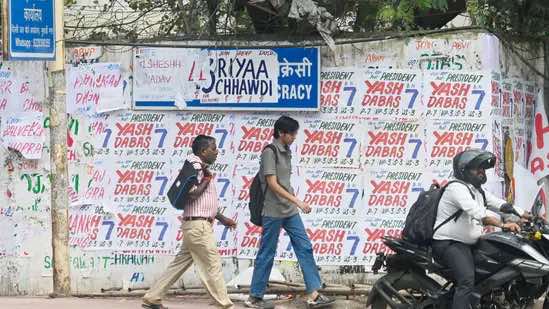
CJP protest’s fifth day at Jantar Mantar swapped slogans for lectures. Educators addressed demonstrators, while the demand for a National Student Commission was reiterated. 

The CJP protest at Jantar Mantar entered its fifth day on Wednesday, with educators Prof. Dr Vijender Chauhan, Delhi University; Vikramjeet Singh and Abhinay Sharma addressing demonstrators. Organisers reiterated their demand for the establishment of a National Student Commission, stating that the protest would continue until the government responds.

Dr Chauhan emphasised the need for diversity within the movement and the bureaucracy.  Speaking to DU Beat, Dr Chauhan said,

Real change won’t come from a crowd that all look the same. Without that diversity, the fight simply can’t be won.  “

Singh’s remarks focused on education funding and the credibility of national exams. He said the NEP 2020 and global benchmarks recommend public education spending of around 6% of GDP, against actual spending of 2.5%-4%. He linked the funding gap to poor school infrastructure, teacher shortages, faculty vacancies and a weak research ecosystem, which he said disproportionately affects rural and marginalised students. 

Sharma’s remarks ranged more broadly, touching on other national issues, including media coverage, the Andaman Islands and renewed calls for the Union Education Minister’s resignation. 

The protest, which began earlier this month, continues to demand the establishment of a National Student Commission of India. CJP says it won’t leave until the government agrees. At this time, the government has not publicly responded to the pressure group’s demand.

The CJP protest at Jantar Mantar continued into its fifth day with cultural performances alongside the day’s lectures, with performances by artists, musicians and poets at the site. During the rainfall on Wednesday evening, protesters were seen dancing together at Jantar Mantar. 

While talking to DU Beat, one protestor called it a “controlled blast”, alleging it has allowed people to express their anger without tangible outcomes. Although the CJP promised 50% women’s participation, the organisation has yet to announce an official woman spokesperson nineteen days after its first protest.


Image Credits: Mayank for DU Beat

Read Also: AADTA-led Teachers across DU Stage Protest for Regularisation of Ad Hoc Faculty


Mayank Kushwaha

[email protected]

Delhi University has announced the second round of PG seat allocations under CSAS-PG 2026. Candidates must accept the allotted seats by June 24, while fee payment remains open until June 27.

DU is conducting admissions to postgraduate programmes for the 2026-27 academic session on the basis of scores obtained in the Common University Entrance Test (Postgraduate), or CUET-PG. The university allocates seats based on candidates’ entrance examination scores, programme preferences, and seat availability through the Common Seat Allocation System for Post-graduate Programmes [CSAS-PG].

According to an official notice issued by the University of Delhi Admission Branch, the second round of seat allocation results for post-graduate admissions has been released. As per the admission schedule, applicants who accept their allotted seats will be able to pay the admission fee until June 27. The second round of allocations was announced on June 22, hence continuing the ongoing postgraduate admission process.

The university has made 2964 fresh allocations across various postgraduate programmes during the second round. Alongside the allocation list, DU has also released programme-wise minimum allocation scores for candidates. Candidates can log in using their credentials to view their allotment status and complete the required admission formalities within the given time. Admission data released by the university indicates significant participation in the first round of admissions, with over 8,000 candidates completing the process by paying the prescribed fees. Though several students have opted for upgradation in subsequent rounds, others have chosen to retain their allotted seats.

As the second round is underway, candidates are advised to check their allotment status carefully and complete all the required admission formalities within the stipulated time. Failure to meet the deadlines for seat acceptance or fee payment may result in the cancellation of the allotted seat 

Students should regularly monitor official university notifications through the admission portal and the CSAS-PG portal for updates regarding future allocation rounds, upgrades, and admission-related announcements. The postgraduate admission process is expected to continue through additional rounds of allocation based on seat availability and candidate preferences. 


Image Credits: Devesh for DU Beat

Read Also: Delhi University begins postgraduate admissions for 2026-27 academic session


Aarushi Chaubey

[email protected]

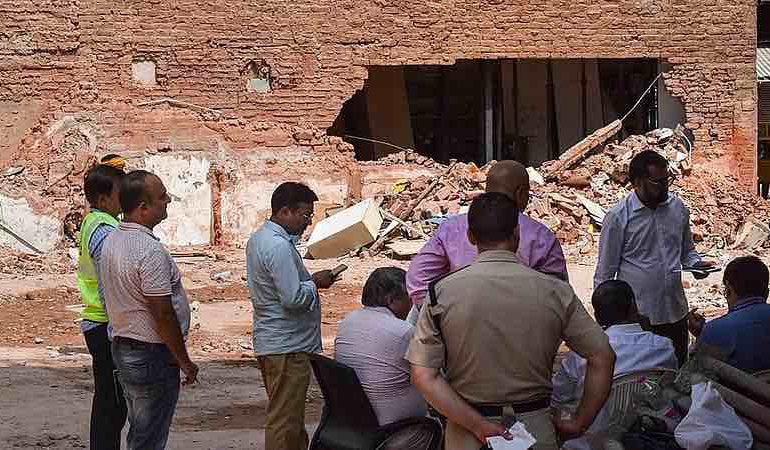
Mr Kapil, a non-teaching staff member at Hansraj College, University of Delhi, following a case of UFM (Unfair Means and Conduct) concerning a student, requested an iPhone 17 Pro as bribe for “settling the case” with the authorities.


An anonymous student source, in conversation with DU Beat, said that the accused student in question was caught with his phone during examinations and subsequently got charged with an offence, leading to an Unfair Means and Conduct (UFM) case from the college. Since the student was supposedly from a “privileged” family, Mr Kapil, a member of the non-teaching staff at Hansraj College, who assists students with exam-related issues, chose to use the case to his advantage and extort money from the student. 


Mr Kapil said that he would take care of the case and accompany the accused student during the hearing since he wouldn’t be able to handle it on his own. He clarified that his assistance would be in exchange for a new iPhone. The student raised a concern stating that it would not be possible for him to withdraw a large sum of money from his parents’ accounts unnoticed, but Mr Kapil kept insisting, asking if he could make use of UPI applications such as Paytm to transfer the money. 


The student eventually conceded, saying that it would take two months to arrange for all of the money needed to purchase a new phone since he would need to take the money out in small amounts so as not to raise suspicions. However, Mr Kapil refused, stating that the timeline is too long, leading the student to conceive an alternative plan. He said that being a content creator gave him access to several events and that he would secure a phone from one of them for Mr Kapil, insinuating motives for theft. 


Mr Kapil’s perpetual insists for a new phone led the student to state that he would give up his own iPhone 17 to Mr Kapil and arrange for another phone for himself. They settled with this agreement and met up near the Vishwavidhyala metro station. Following the meeting, Mr Kapil claimed that he spoke to the university official concerned and did what he could, and that he would also try to reach out through a friend. When the student asked how much money would be needed to bribe said friend, Mr Kapil demanded 30,000-35,000 rupees. The student, unable to meet the demand, proposed offering his personal iPhone 13.


Mr Kapil later quoted an additional amount as bribe, saying that the case would take a lot of work and that the final price would be around 70k to 80k, as stated by the university official. The student filed a case with CBI, stating extortion, bribery, and intimidation as the cause. He reported Mr Kapil’s act of corruption to the authorities, describing the case and stating the unlawful demand.


Image source: DU Speaks

Read Also: Hansraj College suspends over 30 students due to alleged indiscipline, violence, and defamation


Sammepya Karray

[email protected]

Delhi University has opened PG admissions for the 2026-27 academic session under NEP 2020. Read on to see eligibility, registration dates, application fees, and more.


The University of Delhi (DU) has officially announced the start of admissions for its postgraduate (PG) programmes for the academic session 2026-27. Under the National Education Policy (NEP) 2020, Delhi University will now offer two types of Master’s programmes:

  • Two-Year Master’s Degree Programme – The traditional route, open to students from any recognised university across India.
  • One-Year Master’s Degree Programme – A new, shorter route under NEP, available only to eligible Delhi University students. 


The university has also confirmed that registrations are now open for Two-Year Master’s Degree Programmes, while a separate portal and schedule for One-Year Master’s Degree Programmes will be announced by the university in due course. 


Students who are currently in the third year or fourth year of their undergraduate degree from any recognised university are eligible to apply for the Two-Year Master’s programme at Delhi University. 

However, they must meet a few important conditions: 

First, the candidate must have appeared in the CUET (PG) 2026 exam in the relevant subject papers. Second, the candidate must meet all programme-specific eligibility criteria as mentioned in the PG Bulletin of Information 2026. Finally, seat allocation will be done strictly through the Common Seat Allocation System (CSAS-PG) portal, based only on CUET (PG) 2026 scores. 


The registration window for Two-Year PG programmes is now open.

  • Registration Portal: pgadmission.uod.ac.in
  • Registration Start Date: Saturday, May 16, 2026
  • Registration Last Date: 11:59 PM, Sunday, June 7, 2026 


There is also a one-time, non-refundable CSAS (PG) 2026 application fee charged per programme:

  • SC/ST/PwBD candidates: Rs. 100 per programme 
  • UR/OBC-NCL/EWS candidates: Rs. 250 per programme 

Since the fee is per programme, students applying to multiple programmes will need to pay the fee for each one separately. 


This year, Delhi University has introduced a new auto-integration feature for applicants. Using the DigiLocker and API Setu platform, the university will automatically extract key details of the candidates, including the candidate’s name, date of birth, gender, category, parents’ names, and CUET PG 2026 scores.

Delhi University recognises the efforts made by the NTA (National Testing Agency) for integrating student data into a national registry and sharing it securely with universities. 

This step aims to improve data accuracy, reduce errors, strengthen data security, and support the broader Digital India vision of making government-to-citizen (G2C) services more accessible.


 Delhi University has clarified that the One-Year Master’s Programme will be open only to specific DU students. To be eligible, a student must have completed or be completing either a Four-Year Bachelor’s Honours Degree with Research or Entrepreneurship, or A Four-Year Bachelor’s Degree with a Major in the relevant subject. 

Along with these conditions, students must also meet any other eligibility requirements specified for their chosen programme. 


The University of Delhi has advised all candidates to regularly visit the official admissions website at admission.uod.ac.in for updates on admission status, important schedules, and new announcements. 


Given the two-portal system this year, one for the Two-Year Master’s Degree Programme, already live at pgadmission.uod.ac.in and one for the One-Year Master’s  Degree Programme (coming soon), students are advised to check the website frequently and ensure they are applying on the correct portal for their chosen programme. 


Image source: Telegraph India 

Read Also: Protest Leader Gopal Choudhary Gives DU Administration 21-Day Ultimatum Over Campus Safety Concerns


Arshia Sharma

[email protected]