Author

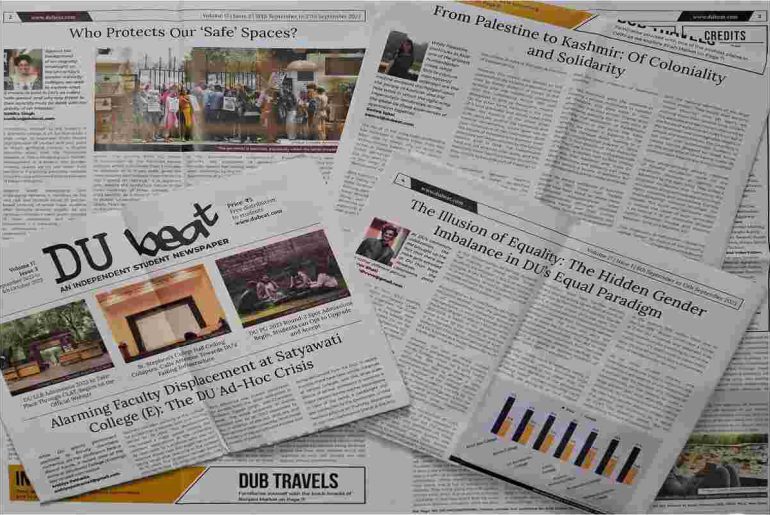
DU Beat

Browsing

Delhi University has opened applications for filling up vacancies for vacant posts for both Assistant and Full Professor Positions. 

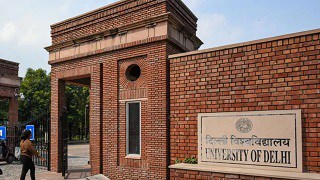
Amidst the ongoing ad-hoc crisis, a notification has been released by the University of Delhi (DU) for the appointment of various posts for the faculty vacancies, including both professors and assistant professors. The recruitment process will take place through the official website of Delhi University, and candidates eligible for the same can apply through the website du.ac.in

The recruitment process is estimated to fill up to 305 positions including both assistant and full professor posts. The educational qualifications have been specified for applications for both positions. A candidate applying for the post of assistant professor needs to hold a PhD degree and have a good record of related principles. The candidate should hold a masters’ degree and a minimum of 8 years’ experience in the field of teaching or research in an academic or research setting.  Any candidate applying for the post of professor should hold a PhD degree and have a minimum of 10 years’ experience in the field of teaching or  research. 

It is to be noted that during the selection process, a list will be drawn for all the candidates, indicating the research score scored by them in descending order according to the marks scored by each candidate. Interviews would be conducted for the screened candidates. 

The application fee for the same is 2000 rupees; however, no fees would be charged to SC/ST/OBC and women applicants. 

The general pay scale for associate professors has been assigned to Level 13A in the pay matrix, while Level 14 has been issued to professors in the pay matrix. 

Out of the 305 vacancies, 210 posts have been reserved for associate professors, and 95 posts are for full professors. The last date for applications has been fixed to 22 November, 2023.

This comes after the ad-hoc crisis, wherein many assistant professors were removed from their positions.

Read Also: Start of the Hindu Studies Centre in DU

Image Credits: Hindustan Times

Aanya Mehta

[email protected]


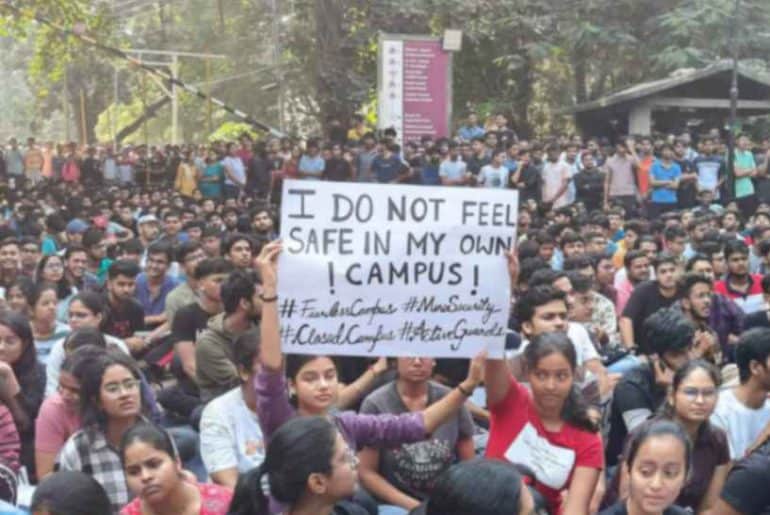
Concerns over student safety at prestigious universities are raised by the latest molestation incident at IIT-BHU. Students from different colleges question whether such institutions effectively prioritise security of its female students.

In recent times, an alarming surge in incidents compromising the safety of gender minority students has come to light in college campuses. Notably, such occurrences are increasingly prevalent in some of the country’s most popular universities. From instances of girls being recorded while they were changing at IIT Delhi during a competition to the distressing case at IIT-BHU, where a girl was undressed and molested; similar reports have emerged from Delhi University’s campuses, including Miranda House, Gargi College, and IPCW, where men forcibly entered gender-minority spaces. 

While the nature of these cases varies, they all raise a common concern: Are gender minorities genuinely safe in campus spaces? 

At IIT-BHU, an alarming incident occurred on November 1, where a student was molested by three unknown men late at night. This led to a widespread protest organised by students, not just for the victim’s justice but for broader concerns. 

“IIT-BHU shares its campus space with the main university. The open campus allows unrestricted entry even post-midnight, with inadequate checking and recordkeeping. The absence of a boundary wall and a lack of security pose a risk to safety. It’s because of these loopholes that the offenders in this case are still not caught,”

-A student from IIT BHU. 

However, the blame for the incident was wrongly placed on the victim herself, highlighting a double-standard whereby male students can roam freely at any hour while female students face restrictions and are held responsible for any mishap. It makes one wonder if the administration will ever accept their failure or not. These security concerns are not unique to IIT-BHU; they echo across various renowned universities. 

“Female students often find themselves confined to hostels during festivals like Holi and Diwali from potential threats created by men. However, there is a lack of measures to control and manage the actions of those who make common public spaces unsafe for female students. How will this situation change when the onus is always on the female and there is a lack of control and action on the people who create this nuance?”

-Shreya, a student from IPCW, argues. 

“While I feel safe at my college campus, the same cannot be said about the surrounding campus area, especially at odd hours. Cases of Eve-teasing, bag snatching, and stalking have repeatedly happened, and it is worrisome for students who have to be constantly vigilant while they live in such areas with narrow roads and less security.”

-Ananya, a student from Miranda House. 

While all-women spaces generally offer more comfort and protection, there remains a fear of outsiders violating these spaces. In co-ed colleges, where there is a persistent fear of the male gaze, posed by both outsiders and insiders. Students describe how they are constantly concerned about what they should wear, say, and do. 

“We can’t guarantee the behaviour of students at colleges because of the extremely diverse population. In many coed colleges, casual teasing and mocking are normal, and nobody takes any notice unless something really serious occurs.” 

-A student from Dyal Singh college. 

When examining the role of college administration and the police, students believe that basic safety measures such as security guards, CCTVs, and boundary walls are present on the majority of campuses. The lack of this has led to the recent fight of IIT-BHU students where they demand a secure campus with a suitable security method to track the entry of outsiders. Although, it is a crucial step forward, accounts from other supposedly “safe” campuses like IIT-Delhi, IPCW and Miranda House where these measures were breached, shed scepticism about how effective these measures really are. The fundamental question still stands: Are college campuses truly able to safeguard gender minorities, or are we normalising harassment in these seemingly “student friendly” places? 

It should be noted that resolving gender minority safety issues on college campuses necessitates a comprehensive approach that includes strict safety standards, heightened awareness, police patrolling, and a change in collective mindset. Regardless of the gender, it is imperative to establish a safe space for all students and ensure that the onus of safety does not unfairly fall on the victims.

Read Also: Women’s Safety in DU: How Safe Are We?

Featured Image Credits: Edexlive

Priya Agrawal 

[email protected]

The Hindu Studies Centre has been inaugurated at Delhi University with a ‘Havan-Yagya’. It has both major and minor options for students.

The Centre for Hindu Studies has been added as a recent addition to the University of Delhi. It comes with a flexible programme where students can select minors according to their own choice. If students wish to choose a minor along with their major Hindu Studies, they will be able to study subjects like Computer, Commerce and even Political Science. Among these subjects, subjects related to Gandhi, M N Rai, Pandit Deen Dayal Upadhyay, Kautilya, Manu Smriti will also be taught giving the students a holistic picture.

The Centre for Hindu Studies provides Master programmes with 60 seats on offer and nearly 500 students had applied for those limited seats. Students must have completed their Undergraduate Course to apply for admission in the Centre for Hindu Studies. Dr. Shriprakash Singh, Director of DU’s South Campus has confirmed that the programme also contains papers like Sanskrit, English and communication skills. He also confirms that the entire syllabus of UGC has been maintained only with certain additions. Dr. Prerna Malhotra, co-director for the Centre of Hindu Studies has confirmed that the admission process has officially ended. 

An orientation session will be conducted post which classes will be conducted a few days later. Dr. Shriprakash Singh also mentioned that the syllabus for Hindu Studies is quite vast in order to give students proper career opportunities. The syllabus of Hindu Studies is divided into Major papers and Minor papers. In the Minor syllabus, there is a paper on Ramayana, one on Mahabharata and one on Western Method. Compared to that, in Major, one paper is on Bhagwat Geeta and another is on Upanishad. The main focus is on the Major papers with Hindu texts with extensive lectures and detailed study material. Dr. Shriprakash Singh also added that Hindu religious texts are being taught in the major because that is the core of the study centre. University of Delhi has also released the academic calendar for the Centre and the wait is now only for the classes to start. 

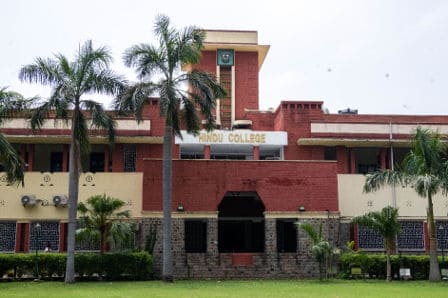
Read Also: Hindu College Develops Hybrid Air Disinfection Machine to Tackle Delhi’s Air Quality Crisis

Featured Image Credits: IAFN

Priyanka Mukherjee

[email protected]


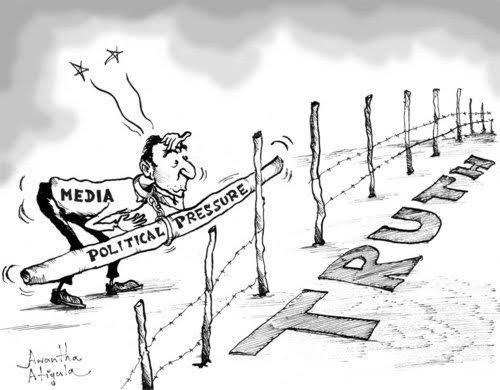
In today’s kitchen, we bring together the right ingredients to prepare the perfect media house with top-notch journalism that will mesmerise all Indian audiences.

Media channels are a staple in all Indian households. They are a delightful combination of all flavours, spicy and sweet. For this delectable recipe, we shall be requiring four primary ingredients: bias, fake news, censorship, and sentimentalism. The following are the steps to follow:

1. Prepare a Nice Base of Bias First

Heat your pan for two minutes and add two tablespoons of bias. Remember, this is the most important ingredient in our recipe. It gives the ultimate flavour to the stories that our Indian media house will churn out! After a minute, you will be able to smell party leanings, and your media concoction will never go against the ruling government henceforth.

2. Add Fake News

Now comes the time for real culinary genius. Add nearly 4 tablespoons of fake news because this is the ingredient that attracts everyone. It gives an instant, satisfactory flavour that tempts all across the nation, especially your parents and annoying relatives. From tomatoes causing COVID-19 to Sushant Singh Rajput’s last fake tweets, this magic ingredient is proven to take our dish to the top of TRP ratings! Also, it is advisable to add some banger music as well as ‘EXCLUSIVE’ flashing across, written in bold red, to make sure our favourite ingredient remains the most highlighted.

3. Bring out the Flavours with Home-Grown Censorship

Add two cups of censorship, popularly known as ‘gatekeeping’ in the market. Censorship ensures that our Indian media house provides the right mix of flavourful stories to the audience. Added to covering up farmer protests with celebrity gossip and communal disharmony, renaming the country will add five stars to our dish. While our dish is simmering, slice up some stories in favour of the ruling government. This will catch the hearts of all.

4. Finish off with Sensationalism

Put your flames on high, because our last ingredient is equally fiery! Add nearly 4 cups of sensationalism to the recipe. From running after celebrity cars to impersonating tornadoes, sensationalism is what creates the appetite for Indian media houses. Stir the entire mixture for around two minutes and let it simmer.

5. Garnish (Optional)

When all the ingredients have come together and it gives off a clear flavour of voicing only for the ruling government and not the ruled, it is ready to be served. Serve with a side of one-sided 9 p.m. shouting matches (debates), complete negligence of minority rights in the country, and ironic slogans of ‘Truth Matters.’

And here’s your recipe for the ideal Indian media house! Enjoy the sizzling disinformation and propaganda served right at your doorstep!

Read also: A Death in the Gunj: The Silencing of Journalism

Featured Image Credits: The Phonetic House by Medium

Priyanka Mukherjee
[email protected]

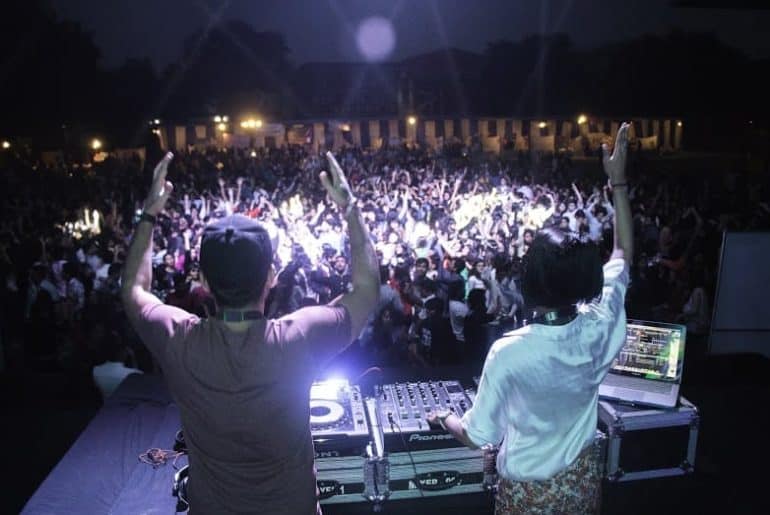
In anticipation of the upcoming college fest season, an advisory for the conduct of fests, events, and programmes was disseminated to all Delhi University (DU) colleges, with a particular focus on the security of women attendees.

Delhi University (DU) has issued a 17-point advisory, explicitly stating the dos and don’ts for holding events and fests across all colleges and departments. The advisory was issued by the University Proctor, Prof. Rajni Abbi earlier in April 2023. In light of numerous colleges in the varsity gearing up for their respective annual college fests, the University renotified the guidelines for the same.

The guidelines entail essential measures, including acquiring No Objection Certificates (NOC) from the local police stations, implementing pre-registration for outsiders with mandatory college identity card verification, installing low concertina wires to prevent unauthorised access, ensuring illumination of all surrounding areas near the venue, and conducting mandatory security drills, among other specifications.

The DU advisory also suggested that there should be multiple gates in the college, and all gates must have working CCTVs. The advisory mentioned,

All gates should have a PA (public announcement) system for any announcements. Keeping in mind the number of their students, teachers, and staff members present at the event, the number of outside registrations should be kept below the venue’s capacity.

The advisory was issued in response to the spate of incidents that have transpired in women’s colleges in recent years.

One such horrific incident was reported in March this year from DU’s oldest women’s college, the Indraprastha College for Women (IPCW), where unidentified individuals allegedly harassed students after entering the premises by scaling the walls during the annual college festival. Subsequently, a wave of extensive protests emerged among the student body, advocating for the resignation of the college principal in response to the aforementioned incident.

In October of the previous year, Miranda House experienced a similarly disturbing event during their Diwali Fest, where individuals reportedly scaled walls, vociferously shouted slogans, and subjected students to harassment, prompting heightened concerns for student safety.

In light of the same, the advisory was prepared after a host of meetings with several university and college officials and the Delhi Police. It thus read,

It is absolutely essential to give students the confidence that if any untoward they could, they should immediately approach their staff advisors, teachers, the Internal Complaints Committee, the Women’s Developmental Cell, the Proctorial Committee, and the Principal so that they can take speedy action.

Read also: The Invasion of IPCW – A Student’s Account

Featured Image Credits: DU Beat

Injeella Himani
[email protected]

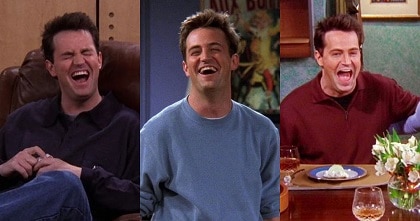
Recently, the death of our beloved Chandler Bing shook the world. One of the most popular characters in the beloved 90’s sitcom, Friends, millions of fans took the internet by storm, sending tribute messages and expressing their extreme grief at the unexpected demise of the actor.

Fans expressed that even though they didn’t know him personally, they felt a sense of great attachment almost as if it was the loss of a close family member. 

Sources conclude that Matthew Perry was dealing with addiction since he was fourteen years old and there is some  information about it that he shares in his memoir, ‘Friends, Lovers and The Big Terrible Thing.’ 

During an interview with podcast host Tom Power, last year, he said that he would prefer to be remembered for helping people rather than for his work on Friends as a beloved character – Chandler Bing. 

Following the conversation, the actor remarked, “The best thing about me, bar none, is that if somebody comes to me and says, ‘I can’t stop drinking, can you help me?’ I can say ‘yes’ and follow up and do it,” he said. “When I die, I don’t want Friends to be the first thing that’s mentioned. I want that to be the first thing that’s mentioned. And I’m gonna live the rest of my life proving that.”

However, it seems that fans, especially the international fans, have only taken cognizance of Matthew Perry’s addiction after his death. 

One of the fans remarked, “It has to be realized that just like one person can be a good friend to one person and a lousy friend to another, a good father but a bad husband, similarly, an artist can be their version of who they want to be and their art could have a completely different memory to those who experience them through that art.”

This statement stands true across multiple scenarios. This question of  who owns the legacy is applicable only if people actually knew him. Most people admire artists for embodying the art themselves and many times people perceive the artist and the art intertwined with each other. Famous artists like Leonardo Da Vinci would be remembered by his famous painting of Mona Lisa and not the Vitruvian Man in the first instance. That’s how the nature of memory and history takes form in our minds. 

As an individual, we want to be remembered for what we believe we are worthy of being remembered for. However, for any third person to remember an artist, the impact the artist left on them, is what comes to their mind first. 

While millions believe their beloved Chandler to have passed away, others may think about Perry’s  humbleness and generosity first. It depends upon perspectives. 

A fan commented on a related social media post, “This raises a question if we all want to be remembered in a way that we wish to be or be happy that we are remembered.”

On the other hand, there is a very serious conversation that was opened up about when Matthew Perry talked about how he wanted to be remembered. He has been one of the most loved people in the world yet his journey towards sobriety and overcoming his addiction problems in each season has been overlooked. As mentioned earlier, many fans didn’t know or knew little about his sobriety and the way he was struggling to overcome his addiction yet made such a lovable character with all the jokes and sarcasm for the people. Giving him what he asked for, the belief to remember him with the idea of him healing and helping others overcome addiction is the least his fans can do as a community.

Debates on this can go on, but an actor like Matthew Perry is to be remembered and cherished. He put happiness and joy in our hearts and left only words of appreciation for him in our mouths. Whether or not his way of being remembered worked, it is sure that he has left a hole in our hearts that can never be filled. Rest in Peace, Matthew Perry.

Aanya Mehta

[email protected]

Image credits: koimoi.com


As the world mourns actor Matthew Perry’s passing, let’s delve into why his most famous character has had a lasting impact on media and culture.

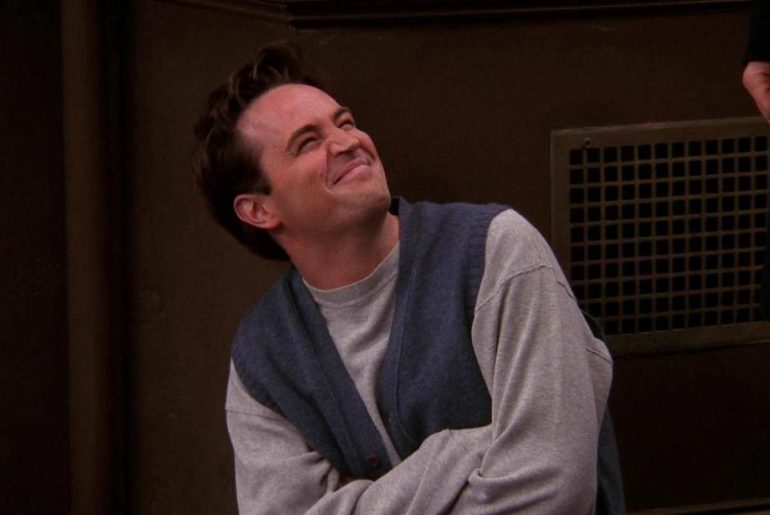
Few characters have left a lasting mark on the realm of humour quite like Chandler Bing. Matthew Perry’s character on ‘Friends’, as the resident funnyman of the ensemble cast, became a symbol of relatable comedy for an entire generation and continues to do so even in 2023, which unfortunately became the year of the actor’s sad demise. Reminiscing on his most beloved role, let’s break down why it has had such an enduring impact on popular culture decades after the show drew the curtains.

Defined by his distinctive wit, Chandler was a crucial ingredient in the success of ‘Friends’. His quick one-liners and mastery of sarcasm quickly became the exact kind of comedy he would go on to be known for. More specifically, the character’s way of finding humour in difficult situations, coupled with Perry’s deadpan delivery, is what made the audience see themselves in him and fundamentally changed the way people appreciate humour.

Sarcasm had long been a powerful force in storytelling, long before the character of Chandler came along. Classic examples include Rick Blaine in ‘Casablanca’, who displayed the strength of humour as a coping mechanism in the face of adversity, or Alex Keaton in the sitcom ‘Family Ties’, whose witty remarks in family settings made him emerge as the hilarious fan favourite.

However, what perhaps differentiated Chandler from similar pursuits of comedy in the past was an added layer of relatability. The use of self-deprecating humour struck a chord with fans as they watched him face insecurities when it comes to both his personal and professional endeavours, and that is something that is inevitably tied to the human experience. Getting through tough times eventually, but laughing at yourself on the way there, proves to be better than sulking throughout. This is what Chandler Bing essentially embodied, and Matthew Perry’s charming portrayal made it look easy.

Another important aspect of Chandler’s likeability was that he portrayed vulnerability and sensitivity in a time when the’macho’ persona was the norm for most male characters. His shy and awkward demeanour made a generation of young men feel like it was okay to not put on a tough exterior all the time.

The sitcom’s success further helped the character reach a wider audience as it continued to gain international fame. For many Indians, ‘Friends’ was their first exposure to Western media. Chandler Bing became a cultural icon, with his most famous dialogues being quoted and referenced often. His influence permeated other sitcoms and characters, and classic meme formats stemmed from his character. His comedic style became and stayed a prevalent element in contemporary media.

However, like anything else, and rightfully so, Chandler Bing was not free from criticism. Given the social atmosphere at the time the show was filmed, various jokes that were made reinforced harmful stereotypes. Newer audiences therefore have a harder time accepting some of the humour used in certain dialogues between the characters and the show in general. Nevertheless, the legacy of Matthew Perry’s beloved character has remained, and his influence is felt everywhere in media and culture.

So today, as you mourn Matthew Perry’s passing, maybe rewatch your favourite ‘Friends’ episodes and let Chandler Bing reiterate the fundamental lesson that laughter has the power to make any situation feel at least a little bit better.

Read also: 5 Best American Sitcoms of the 90s that Still Remain Classics

Featured Image Credits: Medium

Arshiya Pathania
[email protected] 

Concerns have been expressed regarding the decision to temporarily relocate DU’s health centre to the Umang Bhawan basement, as it is deemed unfit for the proper functioning of a medical facility.

The University of Delhi recently decided to renovate its health centre on its North Campus. While that process continues, the centre has been temporarily shifted to the basement of Umang Bhawan at the Law Faculty. This decision has raised multiple concerns among the teaching and non-teaching staff. 

Many have stated that the basement has no proper sunlight and ventilation and is therefore not fit to run a health centre in. Staff members at the World University Service (WUS) have urged DU to reconsider this choice. WUS is the Geneva-based non-governmental organisation that commissioned the health centre in 1955. The centre assists 600-800 patients every single day. Approximately 7,200 superannuated university employees, 18,500 permanent employees with their dependents, as well as various resident and non-resident students, avail themselves of the services of this health centre. 

In addition, all staff (teaching and non-teaching) are members of the centre and contribute to it as an insurance charge. It is therefore being said that the university needs to show more responsibility and concern for the health of all members instead of taking a decision that neglects it. 

The inadequacy of available provisions, such as limited toilet facilities and the low height of the building, has raised concerns about the potential spread of infections and diseases in such an environment.

Both students and teachers utilise the facility for regular and emergency purposes. With classes functioning on other floors, the environment won’t be right for unwell people,”

-Seema Das, a member of the Executive Council.

A worried teacher conveyed concern by saying that it’s not wise to make the health centre function from a basement, especially since the construction of the renovated one could take multiple years. A medical facility ought to follow some rules regarding hygiene and safety that are being ignored by the university.  

Read also: Hindu College Develops Hybrid Air Disinfection Machine to Tackle Delhi’s Air Quality Crisis 

Featured image source: Mint 

Arshiya Pathania

[email protected]

In response to the air pollution crisis in the National Capital Region, Hindu College has launched a high-efficiency technological solution to alleviate its impact.

The startup cell of Delhi University’s Hindu College has unveiled a hybrid air disinfection machine to combat the worsening air quality in Delhi. According to an official statement issued on Monday, November 6, this machine targets both air pollution and air pollutants, including other infectious agents. During testing at the Shriram Institute for Industrial Research in Delhi, the air purifying machine, created by physicist Lalit Kumar in partnership with a team of students, showed an impressive 99% effectiveness in killing indoor air viruses, bacteria, and fungi.

The machine has been created as a one-stop solution for air pollution and airborne pathogens. This indigenously developed machine is a true innovation under the self-reliant India campaign.

– Commented Anju Srivastava, Principal of Hindu College.

Ionuva Innovations LLP, a Hindu College startup, was reportedly selected as one of the Super-25 startups at a recent conclave organised by Udhmoya Doundation, the University of Delhi’s startup ecosystem, in collaboration with Samarth Bharat and the Career Development Centre (CDC), where they showcased their solution to the significant issue.

This indigenously developed machine is a true innovation under the ‘Atmanirbhar Bharat Abhiyaan’ or the ‘Self-reliant India’ campaign, which is the vision of the new India envisioned by the Prime Minister, Narendra Modi.

– Read a press released by the University.

In March 2022, Hindu College established its first start-up with the invention of a machine resembling a microwave and equipped with Ultraviolet-C (UVC) tubes capable of disinfecting a variety of objects.

This machine is capable of inactivating 99.9 percent of bacteria, viruses, yeast and mould within a minute of exposure. It works by destroying the RNA and DNA strands of virus and bacteria.

– claimed Dr. Kumar.

Under the Business Blasters’ initiative of the Delhi Government, two students from Delhi Government schools undertook the task of painting the disinfecting machine, available in the market for Rs. 13,000.

Read also: Natural Ways to Fight the Smog

Featured Image Credits: DU Beat Photo Archive

Manvi Goel
[email protected]

While the media is preoccupied with playing ‘Antakshari’ on television or investigating how much money the PM placed in ‘daan peti’, student journalists are questioning the regime and discussing subjects that the media overlooks. 

“The violence against journalists, the politically partisan media, and the concentration of media ownership all demonstrate that press freedom is in crisis in ‘the world’s largest democracy’, ruled since 2014 by Prime Minister Narendra Modi, the leader of the Bharatiya Janata Party (BJP) and the embodiment of the Hindu nationalist right,” reads the report by Reporters Without Borders, an international non-profit organisation that ranked India 161 out of 180 countries in the Press Freedom Index. The report focused on the decline and censorship of free media in India.

In recent years, there has been an increasing crackdown on independent media groups and journalists. While independent journalists pay a high price for what they do, others profit from propagating hatred and disinformation. Most national news channels in India are pro-government, who are busy spewing hatred against minorities and running prime-time shows about love stories while the north-eastern state of Manipur still continues to burn. All of this highlights the gruesome state of journalism in the country. However, a new ray of hope has emerged in recent years, attempting to resurrect Indian journalism from its ‘deathbed.’

Student journalism, which may be described as a new wave in modern journalism, acts as the lifeline of the country’s journalism industry. Student journalists are now the eyes and ears of the nation, using social media as a means to fight and discuss topics that the national media hides or ignores. This unrecognised group, which is frequently exposed to institutional controls, is doing far more than its capabilities to fulfil the country’s lack of free media. SPLC Executive Director, Hadar Harris, in conversation with The Jamia Review, said,

Student journalists play a key role in the civic life of their community. Not only do they report important issues of a school or school district, but as the number of professional journalists has dwindled, student journalists often also fill the gap in reporting on national, state, and regional issues.

These journalists rely heavily on digital media, with Instagram and Twitter being their primary means of connection with the public. However, many of these student media organisations have begun branching out into print media as well, publishing weekly or monthly issues with the support of sponsorships or donations.

At a time when national media is being bought and influenced by major political parties, we need a source of information that isn’t fabricated to cater to the majority. Independent and student media organisations work to guarantee that the voices of Dalits, Queers, Muslims, Tribals, and other marginalised communities are heard and discussed on a mainstream platform. Senior and established journalists and media outlets have greater freedom to report on such issues, but how effectively they use it is another matter. While the media is busy earning money by propagating hatred, these student journalists work on an unpaid basis due to a lack of sufficient funds or sources of income.

– Harshvardhan Bhaskar, Managing Editor, The Economic Transcript

While these student journalists are doing what a journalist does, they are often denied the democratic and legal rights associated with the press. Anshul Tewari, Founder, Youth Ki Awaaz, said,

There is a larger perception issue. We live in a culture that wants young people to be aware and educated, while simultaneously dismissing the expectations that arise as a result of that awareness. The main issue is that society undermines youth opinions and talent. This inevitably cultivates a viewpoint that does not recognise or consider the degree of journalism undertaken by the students, thereby disregarding the necessity for legal and democratic rights for such spaces.

However, this group is frequently exposed to harassment and legal abuse, not only from the government but also from their academic institutions. Recently, cases of students being suspended or harassed for writing critical of their college or regime are on the rise. In 2015, the principal of St. Stephens College banned an e-magazine and suspended its editor for failing to obtain permission for its content before its publication. This year, students from O.P. Jindal University were given suspensions for distributing a magazine that addressed problems affecting farmers and the working class.

Such harassment, along with the built-in risks associated with the field of journalism, makes it difficult for these groups to function and thrive. Public recognition is the essential foundation upon which these groups can grow and survive. Along with this, it is the responsibility of those in positions of power and established media organisations to assist in the sustainability of these spaces. Anonymous donations, organised business models and student media collaboration with independent media outlets can help them achieve recognition and resources to report freely and independently. 

Read also: National Press Day: A Closer Look at Student Journalism

Featured image credits: Dhruv Bhati for DU Beat

Dhruv Bhati
[email protected]