Author

DU Beat

Browsing

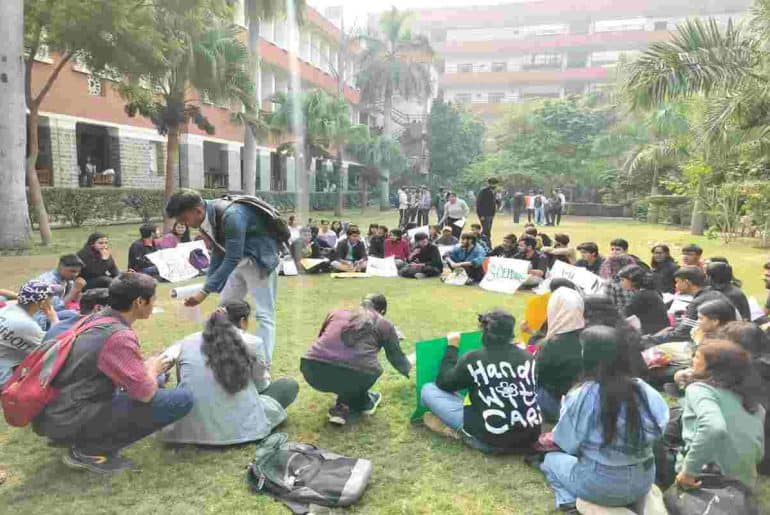
On 4 November 2023, Ramjas College students gathered to protest against the ad-hoc crisis in the college’s English department, expressing concern over the displacement of 8 out of 10 ad hoc professors. Their collective demand echoes a call for transparency, academic stability, and integrity within the educational framework.

In a resolute display of solidarity, students from Ramjas College’s English Department organised a gathering to protest against the displacement of 8/10 ad hoc professors of the department on Monday, 4 November, 2023. Gathering in the Eco Lawns of the college, the rally circled the campus, culminating in a demonstration at the Principal’s Office. The college administration responded by summoning police forces to contain the protest. The protest garnered support from students from various departments of Ramjas College and was endorsed by student organisations such as the Student Federation of India (SFI) and the All India Students Association (AISA).

In a post shared by the Instagram handle Ramjas Reading Room, the protest called upon immediate action to address the following:

  1. Halt Unjust Displacements
  2. Preserve Academic Integrity
  3. Prioritize Faculty Well-Being

Vociferous slogans and heartfelt messages were raised during the protest as student were overcome with anger and anguish amid the state of things.  A student from Ramjas’ English Department, who wishes to stay anonymous, shared,

The English Department has been one of the most active departments in Ramjas. For most of these professors, teaching, while being a passion, is also a source of sustenance. They are still processing the grief of what has happened.

The protest is being held against the backdrop of the displacement of ad hoc professors from departments across colleges at Delhi University. In Ramjas College, the first department affected by this issue was the Zoology Department last year. Many have alleged that the process of interviewing, retention, and displacement of ad hoc professors is opaque, leading to highly qualified and experienced professors losing their jobs.

Utilising platforms like WhatsApp and Instagram, students of Ramjas College effectively mobilised support by urging their peers and even past alumni who are working across the globe to join the cause. The protest featured images of these iconic figures, such as Tagore and Gandhi, and included books taught by the displaced teachers. The student political groups that had joined submitted a memorandum seeking transparency in the interview process and the retention of ad hoc professors.

According to our sources, the college has made no response to the students’ demands as of yet. Expressing their state of despair and hopelessness at the system, a final year student from the English Department, commented, 

We have lost that last sense of connection with the department. It has become a foreign space for us; the college is a necropolis. How will we ever go back to Room No. 12, the department room? The displaced professors have shared our paintings and poems on their Instagram posts and stories. But we only know what we have lost.

Read also: Faculty Displacement at IPCW: Impact on Students and Academic Integrity

Featured Image Credits:  Aaryan Marcha, student at Ramjas College

Injeella Himani
[email protected]
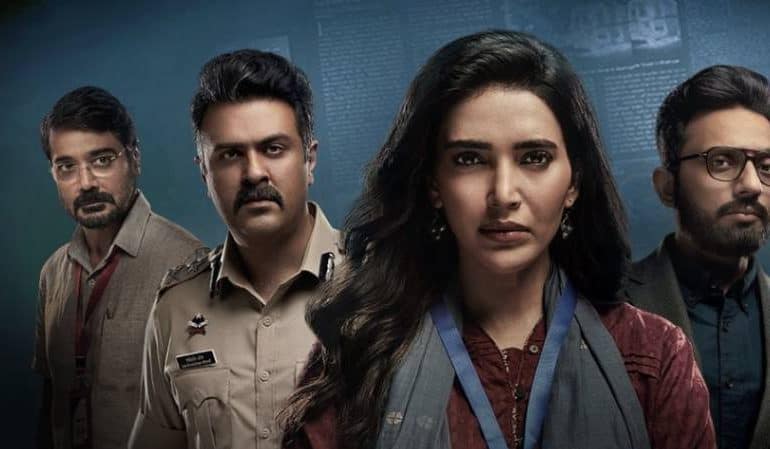
What unfolds when the fate of an ordinary reporter at the pinnacle of her career suddenly changes as she is forced to face the harsh reality of prison? “Scoop” offers all the answers.

“Scoop” is an engrossing crime drama series that follows the journey of a reporter chasing a case from a newsroom to spending days in prison as a suspected criminal. The six-episode series, directed by Hansal Mehta and Mrunmayee Lagoo Waikul, is available on Netflix for viewers.

The show is an adaptation of journalist Jigna Vora’s memoir, “Behind Bars in Byculla: My Days in Prison.” In the lead role of Jagruti Pathak, a character closely based on Jigna Vora, actress Karishma Tanna delivers a compelling performance. She breathes life into the character, infusing it with a sense of simplicity. Jagruti is portrayed as a woman from an ordinary Gujarati family. The show provides a captivating glimpse into her thrilling and passionate life as a crime reporter at Eastern Age, who is always on the hunt for the next big scoop. It’s her story of struggle and personal sacrifices as a single mother and the sole breadwinner for her family. The latter part of the series takes a tragic turn, focusing on her life events when she was accused of the murder of a fellow journalist and allegations of connections with an underworld gangster. The series boasts an exceptional supporting cast, including actors like Harman Baweja and Mohd. Zeeshan Ayyub, who deliver outstanding performances.

“Scoop” has emerged as one of this year’s most popular shows, owing to its exceptional cinematography and storytelling style. The creators have skillfully intertwined the harsh realities of the world of crime with the dynamic realm of journalism. The two contrasting but dark realities culminate in a tragedy where Jagruti Pathak finds herself as the prime suspect in a high-profile murder case. This results in the loss of her job, a tarnished reputation, and the withdrawal of support from her community. She then endures challenging months behind bars, anxiously awaiting the possibility of bail.

“Scoop” not only excels in compelling storytelling, it also has powerful dialogues. It provides the viewers with a glimpse into the complex world of journalism, where the line between ethics and exaggeration often blurs the truth. The show highlights the moral conundrum that journalists encounter when deciding whether to back Jagruti in her fight for justice or use her as a ‘scoop’ for their headlines. In the backdrop of a newsroom where jealousy and fierce competition for a spot on the front page prevail, the show challenges viewers to contemplate the fine balance between relentlessly chasing a story and the wisdom of knowing when to step back.

One particularly striking line in the show, delivered by Imraan (played by Mohd. Zeeshan Ayyub), the editor-in-chief of Eastern Age, summarizes the essence of true journalism: “If someone says it’s raining and someone says it’s dry, it is our job to look outside your window and decide which is true.” This thought-provoking line invites the audience to reflect on the quality of journalism they encounter in their daily lives. The dramatic twist of events in Jagruti’s life, from dominating the headlines as a respected crime reporter to becoming the headline herself as a crime suspect, is what makes “Scoop” an incredibly compelling and engaging watch.

“Scoop” stands as a top recommendation for anyone seeking to grasp the value and significance of quality, ethical journalism in a world often consumed by the thirst for power and wealth.

Read Also: DUB Review: Rocky Aur Rani Ki Prem Kahani

Image Credits – Google Images

Priya Agrawal

[email protected]

Addressing the shortcomings in the learning materials, Delhi University gears up to set up a committee overseeing the review and devising a framework for SOL’s learning material.

A four-member committee consisting of the South Campus director, Campus of Open Learning director, Dean of Academic Affairs, and the head of the English department will be notified by Monday or Tuesday, the official added.

As per the PTI reports, The committee will oversee the review of the School of Open Learning’s self-learning material and formulate guidelines for review of the preparation of study materials in the future,” says Delhi University’s South Campus Director, Shri Prakash Singh.

The decision is a response after the Academic Council presented a report of self-learning material for approval but rejected it after a council member’s attention to grammatical, factual, and plagiarism errors in the materials.

Jesus and Mary College Assistant Professor Maya John pointed out some of the errors persisting in the study materials even after the conduct of a review procedure by the School of Open Learning.

“Approximately three lakh students enrolled in the School of Open Learning use these study materials with gross factual errors. One shudders to think what these students would learn from these poor-quality study materials and what their futures would be,” John said.

The decision evokes a reminiscent reflection of the past when students led by the Krantikari Yuva protested outside the Arts Faculty of Delhi University (North Campus) in August against the University and School of Open Learning (SOL) for approving sub-standard study materials with many errors. The study materials were approved despite nine elected members of the council being against it. 

The factual errors in the Political Science and Indian Politics papers had several discrepancies in both the English and Hindi versions. It encompassed inaccurate information about India gaining independence in 1945 (instead of 1947), the Indian Constitution being “formed” in 1994, and Jawaharlal Nehru’s death in 1967 (instead of 1964), among others.

In a response to PTI’s query on the problem, Payal Mago, Director of the School of Open Learning, responded by mentioning that the study materials undergo a review at different levels, including a final review by senior Delhi University professors.

The errors highlighted will be corrected in due course, she added.

Read Also: Atishi Points to “Irregularities” in 12 DU Colleges in Letter to Centre

Featured Image Source- Hindustan Times

Dhairya Chhabra

[email protected]

The proposal for the dual degree programme gained approval at the academic council meeting held recently. Opposition to this decision became evident as some council members voiced their reservations.

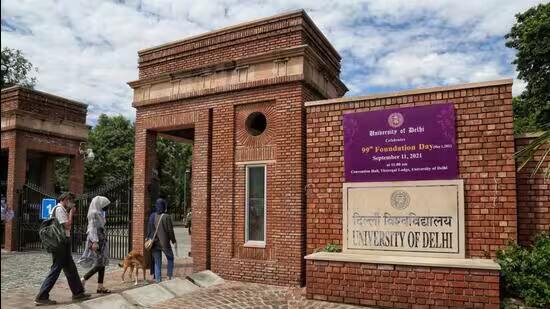
On November 30, 2023, the Academic Council of the University of Delhi held a meeting where the decision was taken to proceed with the implementation of a dual degree system starting from the next academic session. The program will involve a combination of traditional and remote classes, giving students a chance to accumulate additional academic experience within the standard time frame. Moreover, the possibility of providing twinning degrees was also taken into discussion. A program enabling Delhi University students to pursue a degree from select foreign institutions with which the university plans to establish partnerships However, the decision has currently been deferred.

In December 2022, the university put together a committee to discuss the potential idea of twinning, joint, and dual degrees, keeping in mind the guidelines issued by the National Education Policy 2020. 11 months later, while most council members gave the proposal a thumbs up, 15 of them raised some genuine concerns. It was argued that offering students dual degrees will dilute the value of their main subject, given the full-time nature of their academic programmes, and put more strain on students and teachers alike. Former Executive Council member Abha Dev Habib pointed out that the students will benefit more from “quality education and not a bag full of degrees.” Despite the apprehensions that came to light, the resolution was approved, and starting next session, both undergraduate and postgraduate students keen on pursuing a dual degree can communicate so to their respective colleges. The proper procedure will be laid down by the university, which will include both in-person and distance-learning models, as mentioned before.

The 1016th meeting of the Academic Council of the University of Delhi, under the chairmanship of Vice Chancellor Professor Yogesh Singh, also discussed the number of undergraduate, postgraduate, and PhD admissions that were made this academic year, the few modalities made in the syllabus for the current academic session, the new orphan quota, and the awarding of a total of 6115 promotions to professors of the university.

Read also: Delhi University’s Proposed Dual Degree Program: Blend of Distance Learning and In-Person Classes

Featured image credits: www.du.ac.in

Lakshita Arora

[email protected]


Delhi Education Minister, Atishi, has pointed out certain excesses undertaken in 12 DU colleges in a letter to the Union Education Minister.

 Delhi Education Minister, Atishi, on Friday, wrote to the Union Education Minister, Mr. Dharmendra Pradhan, underlining “irregularities” in the administration of 12 DU Colleges funded by the Delhi government.

She expanded upon these irregularities citing instances of procedural lapses in appointments, creation of unauthorised posts, and salaries in crores being paid to staff who were never appointed through established procedures.

Other such instances listed include the misappropriation of funds from the Grant-in-aid (GIA) which also involves the salary to the GIA-General. Atishi alleged that these oversights occurred despite crores of funds lying in the corpus of these colleges. Further instances of arbitrary and irregular payments towards sanitation and security services as well as allotment of Canteen and other contractual services were flagged.

She expressed that since these colleges are directly affiliated with DU, they are not answerable to the Delhi government for “judicious” utilisation of funds. She thus proposed two possible courses of action. The 12 colleges could either be merged under the purview of the Delhi government or the centre could assume full control and responsibility of these institutions in which case the Delhi government would no longer allocate funds to these institutions.

This comes in light of the release of Rs 100 crore by the Delhi government earlier in June this year out of the sanctioned Rs 400 crore allocated by the government in 2023-24 to these institutions.

The education minister thus took this opportunity to highlight the issue as being symptomatic of a larger pattern of financial malpractices and oversight.

There was no immediate reaction from the University.


Featured Image Credits : PTI


Deevya Deo

 [email protected]

For students who fail in a single paper and are unable to finish their degree, Delhi University (DU) will look into offering a special moderation of up to 10 marks. Students who demonstrate good explanations for their failure on the papers will be eligible for this relief.

Delhi University has proposed a unique arrangement that would allow students to finish their degrees even if they have exhausted all attempts but were unable to pass one paper. Students will be granted a final moderation of 10 marks irrespective of any grace marks already applied. This proposal will be presented before the DU’s Academic Council on Thursday.

The document further states that since the implementation of National Education Policy Undergraduate Curriculum Framework-2022, students have been able to get a diploma or a certificate for their respective course if they were unable to complete their degree within the specified period of seven years. Delhi University allows students a span period of 6 years, starting from the year of admission, to complete all the course requirements for the degree. The university has proposed to set up a committee to evaluate requests from students who have exceeded their span period. It states

“The situation becomes particularly challenging for students who have passed all course requirements except for a single paper due to the adverse circumstances faced by student/s preventing them from completing the degree,”

The document was prepared by Ajay Arora, the officer on special duty at the examination branch. He added,

“Earlier if someone couldn’t complete the honours programme, they could only be given a BA programme degree. As semester and other systems came in, there was a need for a system to give students another chance. This special relief may be extended even to students who have exhausted all their opportunities for special chance examinations as granted/ as may be granted by the university’’

The university has also decided to prepare a special proposal for students who elapsed their span period during the COVID 19 pandemic, taking into account the challenges posed to the students such as limited access to resources, and several health-related concerns causing significant stress to the students due to their academic situation.

“Providing them with this opportunity will contribute to their mental well-being and relieve their academic burden” the document stated.

This provision will be discussed by a committee of academic advisors, faculty and administrators to evaluate such requests. Students who wish to avail this have submit an application clearly stating valid reasons for span period extension, the proposal stated.

Image Credits: Hindustan Times


Read Also: https://dubeat.com/2023/04/26/du-students-must-now-take-additional-classes-to-clear-practical-exams/

Saanvi Manchanda

[email protected]

Under the guise of the Bharat Literature Festival (BLF), there is a discernible attempt to spread Hindutva ideology in academics and on campus. With declining academic freedom, BLF appears to be a facet of the regime’s wider effort to systematically alter academic discourse and the college environment.

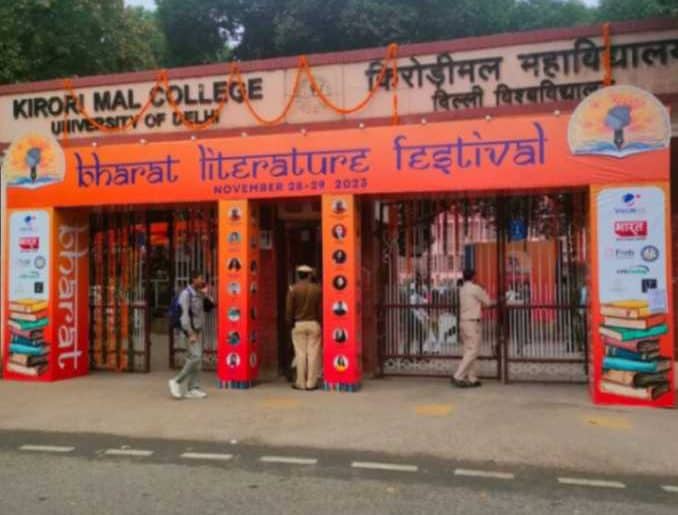
On November 28th and 29th, 2023, Kirori Mal College (KMC) hosted the Bharat Literature Festival (BLF), which drew severe criticism from college students. BLF, which “intends to connect the learnings of the complicated past with the hope & aspirations of a fascinating future,” organised its Litfest in partnership with KMC. Various renowned authors and journalists were invited for the discussions. However, the event drew more criticism as its itinerary was released, which included discussions regarding RSS and Hindutva. “Pranam Main Hindu Hun: Exploring Inner Hindutva in Popular Culture”, “Sanghe Shakti: Bharat @2047”, “Indian Continent in the Era of Prime Minister Narendra Modi”, etc. were among the topics discussed. Not only the topics, but several of the invited speakers openly support the regime and have called for the genocide of Muslims in the past. 

When viewed in the context of the government’s increasing influence on academic structures, courses, academic discourses, and crackdown on academicians critical of the government, such discussions and events in a central university college with the college as co-organisers highlight how BLF is not just a litfest but a part of a broader movement seeking to assert and disseminate Hindutva principles within the realms of academics.

The Academic Freedom Index (AFI) report, published by the Global Public Policy Institute, placed India in the bottom 30% of 179 countries in 2022, with a score of 0.38 out of 1. Down to Earth extracted the Academic Freedom Score of India and found out that, “The country’s freedom index score was high in the past, ranging from 0.60-0.70 between 1950 and 2012, except from 1974-1978, data showed.” The AFI report reads, “Around 2013, all aspects of academic freedom began to decline strongly, reinforced with Narendra Modi’s election as Prime Minister in 2014.”

TW// Mention of suicide

The suicide of Rohit Vermula, the arrest of Umar Khalid, Natasha Narwal, and many other students under UAPA for participating in anti-CAA protests, the increasing crackdown on Kashmiri students, and the recent controversy over a research paper by an Ashoka University professor titled ‘Democratic Backsliding in the World’s Largest Democracy’, which alleged voter suppression to favour Modi in the 2019 election, all highlight the country’s deteriorating academic freedom. 

All of this, when reviewed in the context of NEP and CUET implementation, points to a more concerning scenario. With the adoption of CUET, student population diversity has decreased, with the majority of students being affluent ‘apolitical’ CBSE students from the North Belt. This apolitical student group fails to understand and acknowledge the hidden politics behind these events, and they fall into the trap that gradually shapes their way of thinking in the direction the regime wants. 

On the condition of anonymity, a third-year KMC student stated, “A lot of my friends and classmates were there, posting stories about BLF.” They are the same folks that will go and discuss casteism, patriarchy, and Islamophobia in their events and discussions. This set of students only wants to talk about these topics in order to feel good about themselves and fall into the category of ‘Progressive Liberal DU Student,’ while failing to understand the real-life ramifications and implementations of the same.”  

In a message circulated in Whatsapp groups, the principal wrote, “During the event, I expect you to (i) Be very disciplined and well behaved, (ii) Be appropriately well dressed according to the theme of the festival…Please note that there is no change in the teaching schedule of the college.” In contrast, students reported disruptions and class cancellations as a result of classrooms being converted into visitor rest areas. A volunteer from the BFL organising committee spoke about the threats posed by the conveners of their college societies. A person said, “We had pressure from the administration, who threatened us. The context for that is hard to explain, but we are being heavily monitored.” 

Another thing to notice here is the indirect imposition of Hindi throughout the event. The majority of the discussion titles were in Hindi, and there was no representation of North-East and South Indian literature at the event. Not just the language, but even the titles, were linked to the regime’s policies and marketing strategies. “Mann ki Baat: Confluence of Policy and Communication in New India” and “Namami Gange” are a few examples.

While all of these are sufficient to understand that the BLF is more than simply a litfest, it also serves as a means of spreading Hindutva ideology and BJP politics. Events like these, as well as the government’s growing control over academics, limit academic freedom, further eroding it. The AFI report explains, “Pressure on institutional autonomy and campus integrity combined with constraints on academics’ freedom of expression is what distinguished India from other countries’ scores on the index. The attacks on academic freedom under Modi’s Hindu nationalist government were also possible due to the absence of a legal framework to protect academic freedom.” The report’s authors further called on higher education policymakers, university leaders, and research funders to promote academic freedom in their own academic institutions as well as abroad.” But until then, the only ways to tackle religious politics and prevent them from impacting colleges and universities are through critical study of such events, self-education, and civil disobedience.

Read Also: The Fear of Being Identified

Featured Image Credits: KMC Instagram Page(@kmcollegedelhi)

DU Beat


Delhi University is set to launch combined degree programs, catering to both undergraduate and postgraduate students. The initiative involves enabling students to pursue a degree through conventional in-person classes alongside another degree, through the distance learning mode.

Furthermore, the university is looking into partnerships with international educational institutions, offering students the opportunity to complete a semester abroad and gain credits applicable to their degree. Moreover, the university will explore the potential for collaborative PhD programs. Students keen on pursuing two degrees simultaneously can communicate their interest to the university through their department head or college principal. 

As per the National Education Policy 2020, Delhi University established a committee to expand upon the possibilities of offering a joint degree to both undergraduates and postgraduates. They have proposed  granting one degree through regular mode and another, through the distance education program. 

In the upcoming meeting scheduled on 30 November, a document will be put forward by the academic council stating that, 

“Students cannot pursue similar academic courses simultaneously, such as B.Com(H) and B.Com (P) even though one of them is intended to be pursued in ODL/online mode. Students so permitted to pursue two academic degree programs simultaneously shall fulfill all the academic degree programs simultaneously shall fulfill all the academic requirements such as attendance, internal assessment, continuous assessments, submissions of assignments, presentations, and examination of the two academic programmes independently,”.

Effectively, the willing students can enroll and obtain information for the proposed programs from the respective departments and the administration. 

Another major issue to be discussed in the meeting is regarding the, 

“Twinning degree program with Foreign Higher Education Institution (FHEI) is a degree program where students enrolled in any course in the University of Delhi or its colleges shall be allowed to pursue study for a university and earn credits from the host institution which shall be accounted to secure the requisite credits for grant of such degree to which he/she has been enrolled the parent university.” 

This runs parallel with the Indian initiative to garner further opportunities for students to have international exposure through which they get to spend one semester in a foreign university with a lower bracket of a minimum of 18 credits and a higher bracket of 26 credits. This opens the gates for the doctoral students to get joint PhD degrees if the consultation among the stakeholders reaches a binding conclusion. 

Divya Malhotra 

Featured Image Credits: Miscellaneous-Bharati College 

https://www.bharaticollege.du.ac.in/bc/du/miscellaneous

[email protected]

A ‘glitch’ on the Samarth portal caused chaos as 300 students faced hindrance when it came to submitting forms, leading to frustration among the student body which has often faced issues in accessing DU’s online portals with ease. 

Around 300 University students complained about a ‘glitch’ while navigating the Samarth portal, about the subject/course mapping feature, which acted as a disruption while filling out examination forms

Addressing the issue in a report by PTI, Ajay Arora, O.S.D. (Examination) stated that the issue was being faced due to the students incorrectly filling in the enrolment numbers. He further stated that the DUCC will look into the matter and would have to manually correct the enrolment number which might take a day or two to rectify, as the administration would have to cross-check the details of those students with their bank account details.

Students enrolled in postgraduate courses like M.A., M.Sc., and M.Com., including visually impaired students, encountered difficulties while selecting their courses or subjects on the portal.

The students continued to face such persistent obstacles despite a deadline for submission, previously set as 24 November by the Examination Branch.

India Today reported that Maya John, an assistant professor at Jesus Mary College, expressed deep concern over the difficulty faced by the students.

She brought attention to the fact that those students had been running from pillar to post since October, seeking the help of various offices in order to fill out their examination forms on the  portal. She also emphasised the lack of assistance and coordination among different department offices which caused distress among students.

Although the University has extended the examination form submission deadline to 5 December, John in her letter, emphasised the urgency to resolve the issue and urged Vice- Chancellor, Yogesh Singh to revise the deadline and address the lingering subject/course mapping issue on the portal. 

Expressing the need for immediate action, John stressed that the university ought to look into these complaints and the recurring issues with the Samarth portal, to ensure that students don’t face such problems in the future.

Read Also: https://dubeat.com/2023/11/24/delhi-university-issues-safety-advisory-ahead-of-fest-season/

Featured Image Credits: Devesh for DU Beat

Gauri Garg

[email protected]

Language is a medium that allows us to communicate, identify, and express ourselves. However, this kind of expression, along with other social identities, usually results in systemic prejudice against particular communities. Whether it’s the language’s fundamentals, which reflect and reinforce gender binary norms, or its intersection with an individual’s religion, nationality, or place of belonging.

Religion, gender, and language are often categorised as the building blocks of an individual’s identity. Each of these factors influences a person’s beliefs, values, and perceptions of themselves and others. Often, discrimination based on religion, gender, or linguistic choices is seen independently; nevertheless, the confluence of gender and religion, as well as linguistic preference, has a significant influence on individuals and communities. While religion influences a person’s moral and ethical ideals, gender incorporates social and cultural expectations, and language both reflects and reinforces gender binary norms in society.  

Religion & Language:

Language has always been a fundamental tool for portraying a religion. Whether it’s Arabic for Islam, Sanskrit for Hinduism, or Hebrew for Christianity, all of these affiliations stem from sacred texts written in these languages. Harold Schiffman in his book, “Linguistics, Culture and Language Policy’ explains that “One of the most basic issues where language and religion intersect is the existence, in many cultures, of sacred texts […]. For cultures where certain texts are so revered, there is often almost an identity of language and religion, such that the language of the texts also becomes sacred…”) 

However, with the need for a separate identity, this linkage of languages tied to certain religions mutated over time. The shift in language of South Asian Muslims to Urdu, Hindus to Hindi, and Christians to English is an important example of this. This language shift describes how linguistic choices change as the need for a separate identity grows. 

However, these linguistic freedoms quickly devolved into systemic discrimination against minority populations. Massive protests erupted at Banaras Hindu University (BHU) in 2020 over the appointment of a Muslim associate professor in the faculty of literature of Sanskrit Vidya Dharm Vigyan (SVDV). Protesters argued that a Muslim professor would be incapable of teaching Sanskrit, a Hindu language. NDTV writes, “The administration backed the professor. The panel that selected him, which includes Professor Radhavallabh Tripathi, one of India’s most eminent Sanskrit scholars, repeatedly said he(the appointed Muslim professor) was the most qualified candidate.”

Not only that, but hate campaigns and violence erupted in various parts of India in light of the use of Urdu in advertisements for ‘Hindu festivals.’ Nivedita Menon, a professor at the Centre for Political Studies at JNU, told Al Jazeera, The Hindutva project sees Urdu as a ‘Muslim’ language. And invisibilising Urdu is part of the larger project of marginalising the Muslim community, in fact, physically eliminating it.” Linguists and historians contend that Hindi and Urdu evolved from ‘Khadi Boli,’ a dialect of the Delhi region, and are profoundly influenced by Persian, Turkish, Arabic, and Sanskrit. This hatred of a language because its identity is associated with a minority religion, despite its origins in India, highlights how segregation and systematic hatred towards minority religions are carried out through the use of languages.

Gender & Language:

Languages reflect and reinforce gender norms and the gender binary. This has an intricate connection with the culture, religion, and history of the language. In recent years, queer activists and linguists all over the world have advocated for the necessity of gender-neutral terms. While some languages incarcerate gender in binaries, others prove gender’s presence outside of binaries by not gendering inanimate objects. While individuals assert that gender-neutral language is a Western concept, many Indian languages dispute this claim. Languages like Bangla, Assamese, Bhojpuri, Kannada, Angika, Maithili, and others do not limit gender into binaries, while Sanskrit uses masculine, feminine, and gender-neutral terms to refer to inanimate objects.

However, the most widely spoken languages, such as Hindi and French, do enforce binary. So, why are certain languages unable to use gender-neutral verb conjugation? While extra research is needed, basic efforts by native speakers of these languages may increase the possibilities of making these languages inclusive for everyone.

“On my first day of my bachelor’s degree, when I addressed myself as ‘hum’, my professor asked me how many people I am addressing with myself.”- Chandan Kumar, in an article by Youth ki Awaaz. This linguistic rigidity is a result of the Hindi belt’s class superiority. Hindi teachers must stop such rigorous pronoun implementation, and textbooks should be revised to include a discussion of gender outside of binaries. Another source of optimism is the use of second-person pronouns in Hindi. The usage of ‘aap’ while speaking to elders or as a sign of respect, regardless of gender, supports the idea that ‘aap is neutral and assuming someone’s gender is disrespectful.’ Aside from this, we can make our language more inclusive by not strictly categorising non-living things as masculine or feminine.

While language has the potential to bring people together, it can also be used to isolate and oppress them. While individuals argue that changing language to incorporate gender-neutral terminology is impossible since language represents history and culture, the development and shift to new languages by religious communities as the need for a separate identity emerged rejects this notion.

Read Also: Language and Patriarchy: The Case of Gendered Language

Featured Image Credits: Deccan Herald

Dhruv Bhati

[email protected]