Author

DU Beat

Browsing

With an overwhelming abundance of saffron flags and Jai Shree Ram chants across the North Campus of Delhi University, students have their opinions divided over the future of sanctity of educational spaces.

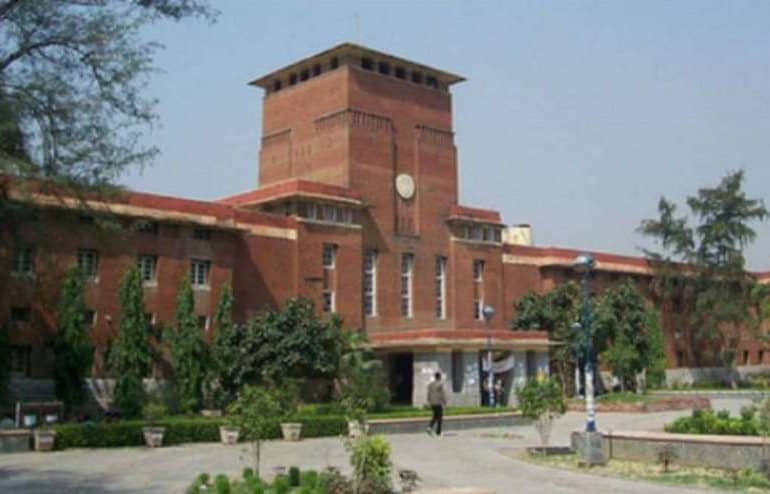
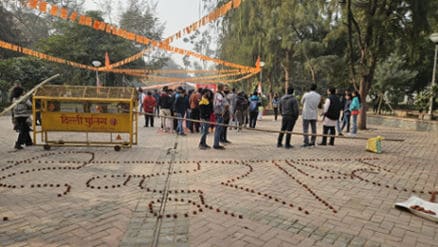
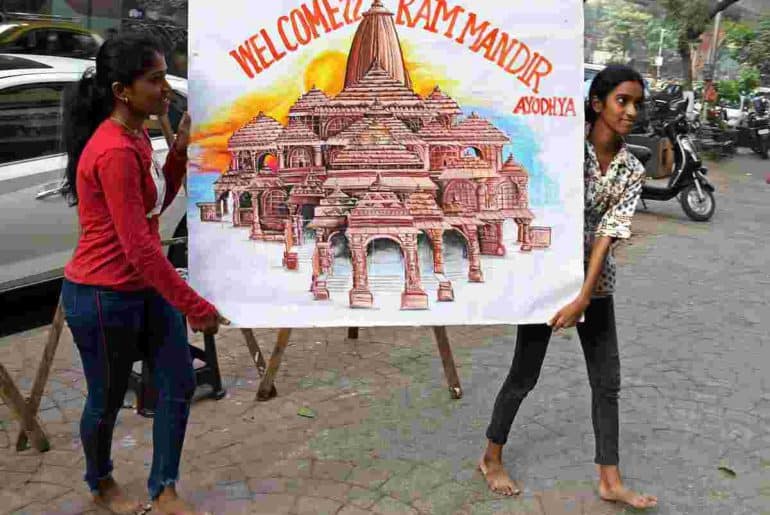
22nd of January, 2024 saw the North Campus of Delhi University wrapped in saffron. Saffron flags, streamers, sashes, ‘tilaks’ adorned every corner of the campus. Imprinted on them were the signs of ABVP, Akhil Bharatiya Vidyarthi Parishad, the student-wing of RSS, along with images of Lord Ram and slogans of ‘Jai Shree Ram’. Diyas spelled out as ‘Hindu Rashtra’ and a giant poster of ‘Jai Shree Ram’ marked the entrance to the Arts Faculty of Delhi University. Bhajan Mandali, LED-screens live screening the Ayodhya ceremony, community kitchens as well as a miniature structure of the Ram Mandir was established within the campus to emulate the celebrations at Ayodhya.

The Pran Pratistha Ceremony at Shri Ram Janmabhoomi Temple, Ayodhya was a truly historic moment, one that generations have waited for. We have been fortunate to witness it live with our eyes. The students of Delhi University, like the rest of the nation, were beyond themselves with joy on this occasion. The constant slogans of Jai Shree Ram during the screening held at North Campus, the hawans in various colleges, all tell us how emotional the student fraternity was about the event. Lakhs of diyas were lit across the North and South Campus, and the off-campus colleges, and the turnout for the same was completely spontaneous, especially that for more than 2.5 lakh diyas being lit at the North Campus, Chhatra Marg and the law faculty with students turning up in large numbers for them.

-Ashish Singh, State Executive Member of ABVP.

While the celebrations continued, the student community within Delhi University is divided on the connotations behind this saffron wave. Contrarily, the Faculty of Law saw the Tiranga wave on 23rd January.

“The students of the Faculty of Law conducted an event emphasising the ideas in our Preamble as well as the Indian Constitution. The event was in contrast to the politicisation of the Ram Mandir celebration by ABVP with communal slogans of ‘Kaashi Mathura Abhi Baaki Hai’ and writing ‘Hindu Rashtra’ with diyas. Like our nation, our campus is also a diverse space with students from different backgrounds enriching it and the Law Faculty event highlighted that the flag of no other ‘sangathan’ is above our Tiranga at the end of the day.”

-Hitesh Kumar, state executive member of SFI.

The three-day event conducted at the Faculty of Law since the 23rd of January saw preamble readings, marches, speeches by advocates emphasising the ideals engrained within the Preamble of the Constitution.

However, as ABVP flags overwhelmed both the campuses of Delhi University on the 22nd of January, the absence of alternate student parties’ inclusion in the celebration was alarming. Like the nation, the lack of opposition at a national event like the Ayodhya celebration led to a political showdown of saffron and ‘Jai Shree Ram’. In response to claims why the Faculty of Law event was not conducted on 22nd itself, a member of SFI says that:

We did not want to interrupt the ABVP event as the sentiments of general students would have been hurt. Anything beyond the Pran Pratistha event would have been marked as an act against a particular religion, which we are not. The Faculty of Law event was not a reactionary one. It’s the need of the time that we should remember and embrace the secular, democratic, socialist ideas enshrined in our constitution.

“We have all witnessed the saffronisation of buildings, universities and streets just before the 2024 Lok Sabha elections and we have taken up a nationwide campaign, ‘Modi Sarkar Ke Dus Saal’ to gauge the real issues concerning the nation like unemployment and we conducted preamble readings across DU campuses at a prime time when the constitution of India is under blatant attack and the campus is being communalized.”

-Anjali, AISA DU Secretary.

While several perspectives crop up with respect to the University embracing ‘religious symbols’ on the 22nd of January, several questions remain to be answered by the student fraternity. Should university grounds be open to embracing religious connotations? Has religion become a politicised tool in the campus and the country today? Where do we draw the line between religion and culture today?

Public-funded educational spaces must not have such blatant display of religious ceremonies. If you take a walk around Arts Faculty, Ram Mandir and bhagwa flags take over the Indian flag and this can occur only if the administration is involved along with DUSU, which is dominated by ABVP. We have requested the Dean of Arts Faculty to take down the saffron flags at our campus to let our campus be a secular space.

-Aditi, SFI DU Convenor.

With the introduction of the National Educational Policy, subtle saffronisation of public education had taken it’s roots with Hindu Studies being introduced as a major, removal of Islamic thinkers from undergraduate syllabus as well as introducing subjects like Fit India, Horoscope Reading as skill-enhancement courses. However, the Pran Pratistha Ceremony of 22nd of January, let loose the gradually boiling saffronisation and unveiled it in the open.

Cultural ceremonies pertaining to the feats of Lord Ram, Bhajan Mandalis concerning Lord Ram and slogans of ‘Ram Mandir se Ram Rajya Tak’ were heard across North Campus with hundreds of devotees gathered round. While streaks of saffron crawled through our education space previously, 22nd of January marked a saffron-tsunami for DU. And the most alarming part lay in the lack of alternative voices within the campus. This brings along another important question, is our campus still a safe-space to provide alternate views? Or will only the way of the saffron community exist from now on?

While the Hindutva debate rages on, right-wing parties often claim the salience of being a Hindu as a geographical identity, much beyond the boundaries of religion and culture. Hindutva is seen as a force of unity, a reason of national pride.

Opposing the claims of ‘communalism’ propagated by ‘Hindu Rashtra’ written using Diyas within North Campus, a state-executive member of ABVP notes that:

In our understanding, Hindu Rashtra is not a symbol of communalism, it is a geographical concept. Even if this particular word was written, there is nothing wrong in it. It is the origin of various names our country is known by like India and Hindustan.

Another perspective that must be noted in the Ram Mandir celebration was the mass number of students who turned up. Colleges across DU noticed tides of students turning up to embrace the celebration, in various ethnic attires and saffron sashes, which depicts where the sentiments of the student fraternity are mostly inclined today.

While debates rage on if the Ayodhya celebration was used as a mass-politicised tool, the association of Ram Janmabhoomi with saffron-right wing flags rather than national flags paints an all together different picture. Ram Mandir celebrations have been localized only for right-believers, as the ABVP symbol conjugated with ‘Jai Shree Ram’ flags suggests. To what extent must religion go hand in hand with politics? To what extent must religion be allowed to enter secular educational spaces?

While controversies and discussions run around in this heated political climate, we need to gauge some important answers, is the Ram Mandir celebration a symbol of United India or of Hindutva Dominance? While the national as well as campus community remains divided upon the answer, Naya Bharat aka Naya DU is rapidly reshaping itself as per majority sentiments!

Read Also: Saffronisation of Cultural Expression

Featured Image Credits: Ankita Baidya For DU Beat

Priyanka Mukherjee
[email protected]

The ‘Prana Pratishtha’ celebration of Lord Ram in Ayodhya on January 22 has evoked varied responses across India. Its impact is particularly noticeable in educational institutions, where some colleges experienced joyous events while others faced instances of violence and police intervention. Amidst resistance and celebration, the article aims to explore the question of religion within educational spaces by examining diverse perspectives.

On January 22, Ayodhya celebrated the grand opening of the Ram Mandir, which was celebrated like a national festival. A celebratory vibe permeated both outdoor and digital areas as the streets were decked out in saffron and echoed with “Jai Shri Ram” chants. Temples and streets flourished in the festive mood, signifying a unique happy occasion for believers. To underscore the importance of the occasion, several state governments went a step further and declared holidays for businesses and educational institutions.

As New Delhi was rife with saffron flags and bhakti music on January 22nd, the merriment was shared by educational institutions alike in the centre. The grandeur of the ‘Prana Pratishtha’ festival was evident by the active participation of educational institutions, with some expressing support and others voicing opposition. This dual participation highlighted the complexities of sentiments that many, particularly younger generations, had about the occasion.

The celebrations demonstrated a dichotomy in how individuals perceived the event—whether it was seen as solely religious and legitimate or as part of a greater political agenda. This interplay of ideologies was displayed with enthusiasm by diverse student groups across various universities.

Prestigious colleges like IITs and IISC, Bengaluru were out in force for celebrations. A student group at IIT Kharagpur took out a procession in support of the inauguration of the temple, while IIT Delhi organised the Akhand Ramayana path, followed by a bhandara and deepotsava

We’d been given a half-day, but then eventually the holiday extended up to being a full day. There were rallies from the main gate to another end of the campus, with many saffron flags.

-A Student from IIT-Delhi

In Ashoka University too, celebrations were observed through bhajan sandhya and pooja organised by students.

On Delhi University’s North Campus, festivities were observed at the Arts Faculty while candles were lit near the streets of Hanuman Mandir. The University of Delhi itself was shut for half a day until 2 p.m., according to the notification released by the authorities. Many such campuses across the country organised hawans, rallies, and even allowed the live telecast of ceremonies being held at Ayodhya.

In Shivaji College, University of Delhi, a student who was visiting the campus during the weekend for a debate tournament said,

Shivaji College had conducted an event with the campus being decorated with rangolis and diyas, as it set up a stage for live music performances and had visitors showing up.

This, however, is only one side of the story; many students expressed their disapproval and criticism, and not all student factions were in agreement with this kind of festive mood.

For instance, Fraternity Movement Jamia Millia Islamia organised a university-wide strike in remembrance of the Babri Masjid. “Boycott for Babri, Resistance is Remembrance,” said a post on X (previously Twitter)  by the Fraternity Movement, along with a video of students protesting with posters of the Babri masjid. As the videos of the protest went viral, police forces were deployed outside the premises as precautionary measures.

NIT Calicut’s students were forced to witness the cancellation of Thathva, their techno-management festival, which led to a stream of angry comments online. The festival was first postponed and then cancelled due to Central Security Agencies ordering the college after a student protested the Ram Mandir inaugural celebrations and was beaten up by the police, leaving no entity from the college with the power to intervene. Indignant NIT Calicut’s students’ comments read online, “Imagine all the work done by students to hear its cancellation due to a communal riot in the north.”

Tensions were also observed in Pune’s FTII (Film and Television Institute of India), where banners condemning the demolition of Babri masjid in 1992 were displayed with the statement ‘Remember Babri, Death of Constitution’. They took it a step further with the screening of the 1992 Anand Patwardhan documentary, “Ram Ke Naam.” The documentary delves into the communal violence that ensued after the Vishva Hindu Parishad campaigned to build a temple at the Babri Masjid site in Ayodhya. Additionally, they even invited Patwardhan on January 22nd for it.

However, according to a press statement released by the Students’ Association of the institute, chanting of the “Jai Shree Ram” slogan took place loudly outside the main gates, which the security was initially unresponsive to. Then, an agitated mob of 20–25 people entered the campus, and security was unable to contain them. Many students of FTII were brutally beaten up, and the banners were also damaged. 

While the side of Samast Hindu Bandhav Samajik Sanstha, who was involved in the clash, claims that the move of FTII students was offensive to the sentiments of Hindus, provocative statements against Lord Ram merely created more rift amongst two religious groups. However, the students at FTII clearly see this violence as an attack on their democratic rights. They also claim that no action was taken towards the offenders, and they were allowed to roam free.

A post on Instagram describes the events that led to the violence at the FTII Campus, which involved the vandalism of college property and harm to students. The press release statement reads,

We appeal to the police and all relevant authorities to take prompt action against those who perpetrated violence against the students and who entered with the intent to vandalise property on the campus of FTII, Pune.

The student fraternity of ILS stands in solidarity with the Students’ Association of FTII and has even released a joint statement with signed signatures. Additionally, multiple students of FTII have released their own statement with signatures, demanding a response from Bollywood actor and Chairman of the Institute, R. Madhavan.

Similarly, in another college, the Indian Institution of Science and Research (ISSER), Pune, witnessed a distinctive response from certain students. Allegedly, on January 22nd, some students celebrated the temple’s inauguration in the campus common room. The movie club coordinator then planned the screening of Ram Ke Naam, sending details to students with a description of the movie copied from its IMDB review page. Unfortunately, this led to an unexpected turn of events, with policemen arriving at the campus. They questioned the movie club coordinator and, without clear justification, took them into custody. The move has left students at ISSER feeling intimidated by law enforcement, especially since they perceive a lack of support from the college administration.

Similar cases of violence and protest were observed in places like Jadavpur University and Hyderabad University.

In Hyderabad University, NSUI, which is the student wing of the Indian National Congress, organised a protest against the inauguration by intending to screen Anand Patwardhan’s documentary ‘Ram ke Naam’. The screening was disrupted by ABVP students, leading to its cancellation. The screening was later conducted peacefully at the North Ladies Hostel in the evening. Students in opposition state that campus spaces belong to everyone; hence, it’s their democratic right to express their concerns, and the screening of ‘Ram ke naam’ was a symbol of their resistance and not a step to offend people.

We ensured that organisations conducting their events went peacefully despite threats and attempts to disrupt by ABVP. Campus spaces belong to everyone; all ideas exist here. However, the administration and ABVP don’t want dissenting voices to be heard. The student community strongly opposed the saffronization of campus spaces; they attended in large numbers for SFI’s ‘Ram Ke Naam’,

-Md. Atheeq Ahmed, HCU Union President (source: Maktoob Media).

The unfolding of two contrasting scenarios in various universities prompts reflection on the democratic principles by which the country aspires to abide. The celebration of religious victories and moments in educational institutions raises a fundamental question about the integration of religion within these spaces.

We observed different celebrations, including bhandaras and rallies, where students enthusiastically chanted ‘Jai Shree Ram’ and danced.

Since religion is a very personal subject for me, I  personally decided not to take part because I feel it is improper to hold large-scale religious festivities in colleges where you have such a diverse population. Students from minority groups experienced exclusion as well, and those who chose not to participate in the festivities were called anti-Hindus.

-A mass communication student from Madhya Pradesh described the events at her college. 

She went on to say, “The decision to celebrate such moments should be left to individuals, and nobody should be placed in situations where they feel alienated in their own colleges.”

If institutions are justified in endorsing such events, does it imply that religion is an inherent part of educational institutions? If so, the ramifications in multi-religious countries like India are complex, as institutions should then consider accommodating the religious sentiments of each community rather than catering to the majority alone.

Would this extend to allow students from diverse communities to practice their religion within educational institutions through their own expressions of uniform, festivities, and prayers? If such practices become widespread, it raises concerns about their impact on student identity. Will the subject of religion either further divide them in spaces where they seek empowerment and education or provide them with greater freedom to embrace their individual selves?

Students are free to choose sides and voice their emotions, whether it be joy or dissent. However, carrying out religious activities in an educational setting is inappropriate and goes against the goal of the organisation, which is to safeguard students’ rights, interests, safety, and development. In these situations, political factions’ fuel for violence and conflict goes against both religious and constitutional norms.

-A second-year Delhi University history honours student

Through this, one can note that if educational institutions strive to maintain a secular nature, any form of religious exhibition contradicts their fundamental goal of providing education free from religious influences. At the same time, they must safeguard students from feelings of alienation or offence.

Can dissent coexist alongside the celebration of the auspicious arrival of Lord Ram? If one student group is allowed to express their joy, should others be hindered when they protest against it?

Lastly, considering religion is a personal matter for individuals, how appropriate is it to introduce it into educational institutions? Can our colleges and universities become safe spaces for discussions, education, and growth, free from the spectre of violence over religious differences? Can the youth liberate themselves from the constraints of rigid political and religious ideologies?

As we grapple with these questions amid both joy and turmoil, the answers lack uncertainty. The quest for meaningful resolution necessitates a delicate balance between respecting individual beliefs and nurturing an inclusive educational environment that promotes intellectual growth for all.

Read Also – Saffronisation of Cultural Expression

Image Credits – Bloomberg.com 

DU Beat 

The School of Open Learning has arranged offline classes for its students through collaborations with several Delhi University colleges.

According to the official announcement on Thursday, The School of Open Learning (SOL) has formed a partnership with about 40-50 colleges affiliated with Delhi University to facilitate in-person classes for students enrolled in distance learning courses. A Memorandum of Understanding (MoU) has been signed to oversee the implementation of these classes.

The University’s department of distance and continuing education will be responsible for coordinating the Personal Contact Program (PCP) classes for the distance learning students. This initiative aligns with the guidelines set forth by the University Grants Commission (UGC), ensuring that the educational practices adhere to established standards. The official statement also mentions that SOL has a student enrollment of nearly four lakh for distance learning programs.

Based on the information released by PTI, the PCP classes are organized semester-wise. For the first, third and fifth semester of undergraduate courses and the second and fourth semester of postgraduate courses, the classes are scheduled to take place from 25th January till 25th February.

Students seeking additional information regarding their assigned centers or a more comprehensive schedule of the classes can access it through the official SOL website, as stated in the official release.

Read also: DU to Establish a Panel to Craft Guidelines for Review of SOL Study Material 


Featured image credits: shiksha.com

Lakshita Arora

[email protected]

Recently, two videos of prominent Hindu religious personalities have gone viral for their casteist purports. When the masses are quick to debunk the existence and gravity of caste in the present age, the videos provide a reality check on the deep-entrenchment of the caste question in the Indian society.

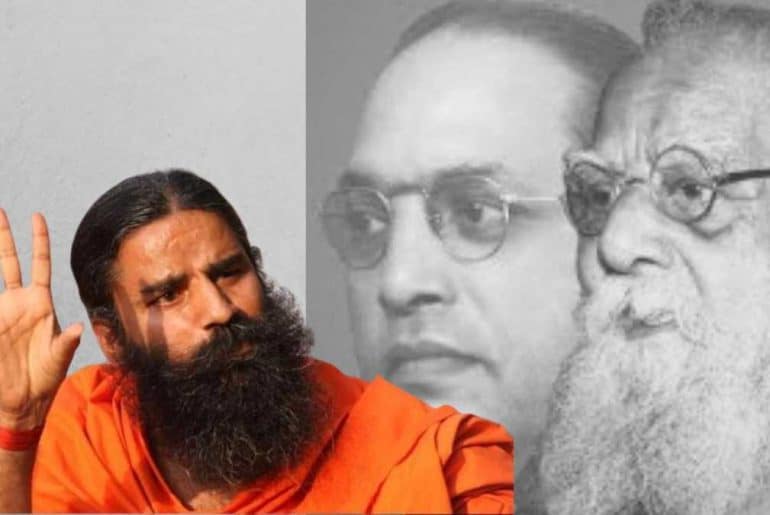
“I am an Agnihotri Brahmin. They said Baba ji, you are OBC. OBC aisi taisi karayein. I have read 4 vedas I am Chaturvedi Brahmin.” After this viral video, Yoga guru and Patanjali founder Baba Ramdev has been under fire for his casteist remarks against the OBC community. A Patanjali Boycott movement also trended following this incident. In a follow up video, a reporter sneakily tried to save his face by asking the question, “You said Owaisi ki aisi ki taisi… OBC ki aisi ki taisi,” to which Ramdev immediately jumped on the opportunity to reply Owaisi! (Asaduddin Owaisi) He’s not right in the head. He and his ancestors have been anti-national. I did not say anything about OBC people.”

Another video of Shankaracharya Swami Avnimukteshwaranand’s comments on the inauguration of the Ram Mandir has gone viral, where he says “After the purification of the Ram Mandir, if the construction workers (shudras, dalits) enter again, the temple will become polluted (ashuddh).” In a second video, Shankaracharya has reiterated his Brahmin caste repeatedly “Only a Brahmin can be a Sanyasi. If I am not Brahmin, then what is the point?  I will quit if my Brahmin Caste is not proven. The Hindu Samaj will bash me for lying.”

What do we infer from these comments of two prominent figures that have significant influence in the Hindu community? Perhaps, that the idea of Hindu unity against other forces that has been steadily gaining popularity is merely a façade. Despite attempts to unite the Hindus in a singular unified fabric by dodging the ‘caste’ bullet in all dialogues, these comments are quick to slip the mask and open our eyes to the reality. That caste is still relevant, perhaps more relevant than ever due to its clever manipulation in the political scenario is a hard pill to swallow by both people from the upper-castes and the oppressed castes who are being denied affirmative action, yet mobilised for their identity.

The need to reiterate your upper caste hierarchal social standing is a reminder that no matter how much dismissal there has been regarding the importance of caste in present times, caste is never going away. It may hide under the guise of positive strides and increased representation in the political sphere, but the oppressive character of the system shows up through the crevices. It takes the form of casual casteist remarks, dropping casteist slurs in conversations, targeting quota students, calling an end to the reservation system, and other forms of institutional casteism. The irony that the craftsmen of the extravagant Temple are being dismissed as ‘pollutants’, then subtly being denied access to their art through the comments of a revered upper-caste custodian of the Hindu religion, speaks volumes. While the unexpected remark directed at Owaisi may appear absurd, it is essential to delve into the implications of Baba Ramdev’s comments. Baba Ramdev, who is known for his extensive ties with right-wing political groups and enjoys substantial support within that sphere, made a concerted effort to distance himself from the OBC label. In doing so, he took a swipe at the community while emphasising his ‘Brahmin’ identity. This sequence of events speaks volumes about the larger meaning which he stands for.

Targeted crimes and discrimination against the oppressed castes is still prevalent and rampant.  Despite this, in current times there has been an erasure of the systematic oppression instigated by the caste system. While columnists like Tavleen Singh, an Upper Caste woman, cries for reservation to be scrapped and writes that reservation “Should not be available to those who belong to the OBC (Other Backward Caste) category. They do not need it. Anyone who knows rural India slightly knows that these ‘backward’ castes are not backward at all. In the Hindi heartland, they sit at the top. The Prime Minister himself admits proudly to being OBC,” what she fails to see is that reservation has never been a poverty alleviation programme, it has been about representation and equality of opportunities and must continue as long as subjugation on caste persists. Aditi Narayani Paswan’s article is an apt response to Tavleen and many more such privileged people who continue to minimise the forces of caste in present times, “We must realise how caste is embedded in our lives and how deeply entrenched it is in our consciousness. We must seek answers to why all the ragpickers and sanitation workers invariably belong to one caste and why the judiciary belongs to descendants of a few castes or families before we start to question reservation — the only line of defence for the marginalised sections of our society. It is because of reservation that we find Dalits, STs and OBCs’ names on the houses along Lutyens.”

Or as an extension to Aditi’s idea, how Baba Ramdev and Shankaracharya are both insistent on asserting their Brahminical identity, and let their casteism unveil in the celebration of a united Hindu identity.


Read also: Hamare Ghar mai toh yeh sab Nahi Hota

Featured Image Source: The Quint

Sarah Nautiyal

[email protected]

The proposal for the dual degree programme gained approval at the academic council meeting held recently. Opposition to this decision became evident as some council members voiced their reservations.

On 30th November 2023, the Academic Council of University of Delhi held a meeting where the decision was taken to proceed with the implementation of a dual degree system starting from the next academic session. The program will involve a combination of traditional and remote classes, giving students a chance to accumulate additional academic experience within the standard time frame. Moreover, the possibility of providing twinning degrees was also taken into discussion. A program enabling Delhi University students to pursue a degree from select foreign institutions with which the university plans to establish partnerships. However, the decision has currently been deferred.

In December, 2022 the university put together a committee to discuss the potential idea of twinning, joint and dual degrees, keeping in mind the guidelines issued by the National Education Policy 2020. 11 months later, while most council members gave the proposal a thumbs up, 15 of them raised some genuine concerns. It was argued that offering students dual degrees will dilute the value of their main subject, given the full-time nature of their academic programmes, and put more strain on students and teachers alike. Former Executive Council member Abha Dev Habib pointed out that the students will benefit more from “quality education and not a bag full of degrees.” Despite the apprehensions that came to light, the resolution was approved and starting next session, both undergraduate and postgraduate students keen on pursuing a dual degree can communicate so to their respective colleges. The proper procedure will be laid down by the university, which will include both in- person and distance-learning models as mentioned before.

The 1016th meeting of the Academic Council of University of Delhi under the chairmanship of Vice Chancellor Professor Yogesh Singh also discussed the number of undergraduate, postgraduate and PhD admissions that were made this academic year, the few modalities made in the syllabus for the current academic session, the new orphan quota and awarded a total of 6115 promotions to professors of the university.


Featured image credits: www.du.ac.in

Lakshita Arora        

[email protected]

12 DU colleges are to face an inquiry after alleged misuse of government-allocated funds and may face severe repercussions.

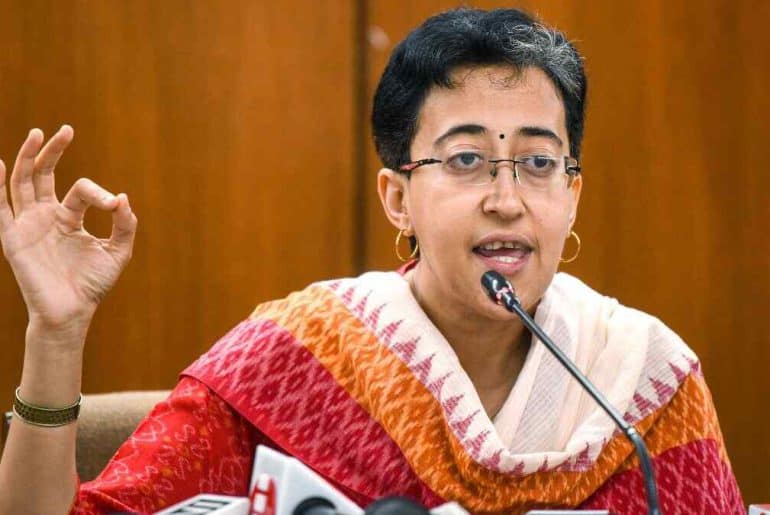
The Education Minister of the Delhi Government, Atishi, asked for an official inquiry into the alleged misuse of government funds in 12 colleges affiliated with Delhi University (DU) on January 20, 2024. This comes after the 1,897 appointments made by the colleges in teaching and non-teaching positions without prior approval of the Delhi Government in the past few years.

Earlier, a letter had been sent by Atishi to Shri Dharmendra Pradhan, the Education Minister of India, regarding the governance of these 12 DU colleges on December 1, 2023. The letter raised the issue of “several serious irregularities and procedural lapses” by the colleges involving hundreds of crores granted by the public exchequer to the colleges. The letter claimed that these colleges, fully funded by the Government of NCT Delhi (GNCTD), had illegitimately created posts employing teaching (939) and non-teaching (958) staff, accumulating salaries to be paid worth crores. Procedures required them to seek the approval of the Administrative Department and the Finance Department of the Government of NCT Delhi, which they failed to do. Severe actions could be taken against the principals and officials involved in the illegal appointments, including recovering the salaries of the illegally appointed staff since 2015.

Other problems regarding the utilisation of funds were pointed out too. She said,

Contracts worth crores for security and sanitation work were executed without adhering to General Financial and violated accounting norms and the approved “Pattern of Assistance” by the Delhi government.

Atishi addressed the lack of accountability of the colleges to the government as well as the University of Delhi. Due to this, proper oversight couldn’t be kept on these colleges by both the varsity and the Government of NCT Delhi (GNCTD). She proposed two solutions: either the colleges de-affiliate themselves with the University of Delhi and come under the complete control of GNCTD or, if they choose to stay affiliated with the University of Delhi, they must forgo all funding by the Delhi Government.

In response to this, Delhi University Vice Chancellor Yogesh Singh affirmed that the colleges will continue to be affiliated with the varsity. He requested that she withdraw the letter written by her to the Union Education Minister and continue the funding of the 12 colleges in the best interest of the students.

Read also: Atishi Points to “Irregularities” in 12 DU Colleges in Letter to Centre

Featured Image Credits: English Jagran

Shatadru Sen
[email protected]

Former Assistant Professor Dr. Ritu Singh has been at the forefront of the protest against the alleged display of casteism in her dismissal from the Psychology Department of Daulat Ram College (DRC) by Principal Dr. Savita Roy.

Protestors from organisations such as the Bhim Army Students Federation (BASF) and Mission Save Constitution have since the past 150 days joined Dr. Ritu Singh in claiming Gate No. 4 of the Arts Faculty of Delhi University (DU) to display their resistance against the structural casteism pervading the University.

The dismissal of the former professor had taken place midway through the COVID-19 pandemic without show-cause notice. Her allegations of casteist harassment against the DRC principal were initially dismissed by the Sessions Court, the High Court, and even the Delhi Police. Later, on 23 May, 2023, a complaint was registered by Delhi Police upon the intervention of the National Commission for Scheduled Castes. A list of the signatures of 35 students provided by Dr. Savita Roy as evidence backing up the termination of Dr. Singh’s services was also, as The Quint reports, falsified.

The Mooknayak presents a recurrent account of alleged police supression against the scenery of blue flags fluttering in the midst of small businesses selling books on Dalit literature at Gate No. 4, which was then reportedly vandalised, protest tents removed, and protestors detained. The incident took place in the early morning of 9 January, 2024. Questions were raised about the subsequent imposition of Section 144, and a complaint was said to have been filed against the looting of Dr. Singh’s personal belongings and the alleged unruly behaviour of the police.

Protestors have further claimed that the site was washed with Gangajal and Gaumutra for its apparent purification, along with the locking of the university gates and the dismantling of a poster of Babasaheb Ambedkar. The protestors took to social media to question the motives behind such actions. Supreme Court Advocate Mehmood Pracha questioned in a post on Dr. Singh’s X (previously Twitter) handle,

How will a space become impure if Dr. Ritu sits down?

On 19 January, 2024 Bhim Army Chief Chandrashekhar Azad joined the protest site to extend support and mark the death anniversary of Rohith Vemula. The Press Trust of India (PTI) reports that Azad, along with Dr. Singh, advocate Pracha, and around 80 other protestors, were detained and subsequently released.

In a conversation with DU Beat, BASF President Ashutosh Boddh confirmed the account of repression and claimed the structural complicity of the Vice Chancellor in the denial of justice and maltreatment of not just Dr. Singh but her fellow protestors. He cited the refusal to take action against the chargesheeted Dr. Savita Roy and DU registrar Vikas Gupta, the former of whom was in fact later appointed General Secretary of the Principals’ Association. He posed the question,

Why is it that we see locks on the University gates only when our demands are in question?

In a recent video uploaded to her YouTube channel, Dr. Singh sought an update on the five demands made before the Dean of Student Welfare. These demands include the immediate suspension of both Dr. Roy and Vikas Gupta, an investigation into the ‘NFS’ or Not Found Suitable option that the University allegedly resorts to when it comes to candidates of the reserved categories, as well as an inquiry into the other allegedly fraudulent appointments made to the University.

As of now, no requisite actions or response has been made on the aforementioned demands.

Read also : Protesters Demand Suspension of DRC Principal Dr. Savita Roy

Featured Image Credits: Bhumika Saraswati via Instagram

Deevya Deo
[email protected]

Homosociality involves non-romantic, non-sexual connections between individuals of the same sex, such as friendships, often used to understand male dominance. It affects beliefs, actions, and cultural standards, shaping ideas of masculinity and continuing patterns of misogyny, urging a more profound societal investigation.

Homosociality involves same-sex relationships that are not romantic or sexual in nature, such as friendship, mentoring, and others. The concept is primarily used by researchers to explain how men maintain their dominance in society. In addition to distinguishing it from homosexuality, the term is used to allude to a type of male bonding that is frequently accompanied by fear or hatred of homosexuality. Feminists frequently use this term to highlight aspects of male solidarity.

The concept can be set quite easily and can be analysed in our day-to-day lives, where the comfort of a social companion is implicitly developed through the impacts that our society leaves. These male homosocial groups take care of the desired homosocial interactions and impact the beliefs, attitudes, and behaviours of the men associated with the community. The groups that they form develop a wider understanding of the mass opinions on the issues that are considered appropriate or inappropriate, desirable or undesirable, for conversations among men, and what interests them is ambiguous within the group itself. Apart from talking about feelings and gossip about personal lives, these relationships are also places for them to discuss topics like sports, women, business, politics, and drinking.

The factors like gestures, facial expressions, and physical location of each group member also vary to a wider extent, and that results in indulgence with the subject matters that include the objectification of women, the emotional detachment they feel, and the competition and hierarchy among the group members themselves.

Since a young age, boys have shown interest in associating with children of the same age. This childhood play paves the platform over which they define masculinity for themselves. The sexual segregation that starts widening post-9 to severe levels in some developing and underdeveloped parts of the world turns into hegemonic social standards of rigidity that are imposed upon them.

The cultural impact, for example, where they are expected to not develop emotional relationships with anyone and the basics of the driving hegemonic masculinity never sustains the emotional interdependence and sympathetic outlook but upon the pressurised concretization of masculine standards. The norms practiced in these settings are nevertheless unrecognised but are the root of the practicing institutions that govern the world.

This passage is written with a motif to bring this existing field of matters to light, along with a motif to bring these studies to light to understand society and behaviours as social beings with a new lens infused with modern standards of reason.

If we need to tackle misogyny, then a better understanding could only be developed in the spaces where unrecognised grooming takes place, which needs to be cleaned out to its root so that even in personal conversations, the standards are not defined over the sacrificed self of the fairer sex.

Read Also: Sex Amma on Emotional (Un)availability

Featured Image Credits: Adam Smith Institute

Divya Malhotra 

[email protected]

“People are not used to generative technology. It’s not like it evolved gradually; it was like ‘boom’, and all of a sudden it’s here. So you don’t have the level of skepticism that you would need.” – Cynthia Rudin, AI computer scientist. 

With the use of Generative-AI, the world of true lies has just gotten murkier. India finds itself at the crossroads of a technological dilemma, with the resurgence of concerns surrounding artificial intelligence (AI) regulation. Triggered by a police complaint filed by Indian actress Rashmika Mandanna, over a viral deepfake video and with multiple actors getting tangled in the AI trickery, India’s problems with the escalating and targeted threats posed by the deepfake technology have resurfaced. 

What are deep fakes?

Deepfakes, the deceptive offspring of AI, have evolved unimaginably beyond the mere novelties of the digital age. They are digitally manipulated videos that alter someone’s appearance, blurring the lines between reality and fiction, often with harmful intent. It is a mere tool for deception. Unlike Photoshop, deepfakes leverage machine learning to create manipulative content. These sophisticated manipulations, capable of creating convincing videos and images, raise pressing questions about privacy, consent, and the ominous risk of misuse. You might claim ignorance, but the chances are slimmer than a pixel when it comes to avoiding these digital shape-shifters.

The dual face of deepfakes 

India ranks sixth in vulnerability to deepfakes, as per this year’s State of Deepfakes report (Source: India Today). Yet, despite the looming threats, deepfakes have etched their place in the creative realm, contributing to heartwarming moments like Shah Rukh Khan’s personalized Cadbury’s ad campaign and the completion of Fast and Furious 7 after the untimely demise of legendary actor Paul Walker. Museums and galleries embrace deepfakes to resurrect historical figures, and the technology even serves noble purposes such as anonymizing journalists in oppressive regimes. However, the precarious balance between positive and malicious applications remains ambiguous, stirring profound legal, ethical, and social concerns, notably in the absence of widespread regulations. A case in point is the October 2023, incident where a deepfake video of Elon Musk propagated false cryptocurrency claims, leading to financial losses for many. Furthermore, the escalating use of deepfakes in online gendered violence, particularly in the form of revenge pornography, is a growing worry. Ultimately, despite its occasional positive contributions, the technology tilts the scale towards harm, eroding our fundamental grasp of reality. 

A threat to India’s democratic election process

Owing to generative technology, election campaigning has moved beyond just extravagant posters to include AI-generated fake videos. With the upcoming Lok Sabha elections in India in 2024- anticipated to be the largest yet- the potential impact of deceptive deepfakes on the democratic process and their ability to sway voter sentiments cannot be ignored. Political parties could be both creators and victims of the spreading misinformation. A humorous deepfake about a public figure could swiftly transform from a joke to a harmful manipulation. For instance, a set of AI images went viral on Twitter depicting former president Donald Trump being arrested before his indictment, gathering nearly 5 million views within a couple days. India encountered its inaugural challenge of AI intervention in the 2020 Delhi Assembly polls, when users discovered videos featuring then-state BJP chief, Manoj Tiwari, criticizing CM Arvind Kejriwal’s policies in various languages. The Massachusetts Institute of Technology (MIT) confirmed that these videos were AI-generated. The absence of deepfake concerns during India’s 2019 general elections has transformed due to the surge in smartphone users exceeding 650 million and the growing accessibility of affordable high-speed internet in 2023. This scenario heightens the perils of misinformation, posing a serious threat to India’s young electoral base. So it won’t be incorrect to say that such content can now easily influence the elections by manipulating public opinion and eroding trust in political figures – one WhatsApp forward at a time. 

In a report by Outlook India, S.Y. Quraishi, the former Chief Election Commissioner of India, addressed a significant challenge confronting the Election Commission of India (ECI). He underscored the swift propagation of misinformation facilitated by deepfakes and advised the country’s election watchdog to maintain autonomy separate from the endeavors of the Information Technology (IT) ministry.

Some of the deepfakes can come from the ruling parties as well. So, although an alliance between the ECI and the IT Ministry sounds good on paper, there’s always a possibility of collusion, or people in power keeping their eyes closed. So, it’s the ECI’s credibility at stake.

– S.Y. Quraishi, former CEC India (as quoted by Outlook India)

AI: a double-edged sword?

The paradox of AI being crucial in addressing deepfake challenges becomes evident as AI-powered detection systems are currently under development. After all, in a world where your own eyes are on the verge of a trust crisis, who better to put your faith in than a machine? Because nothing says reliability like circuits and algorithms, right? The central problem lies in the fact that deepfakes are convincing enough to fool humans. As technology relentlessly reveals our daily inefficiencies, researchers worldwide are on a quest to create AI tools that can outsmart the AI responsible for cooking up these deceptive deepfakes. It’s like fighting fire with artificial fire, but in a tech-savvy way. AI algorithms can detect and flag deep false content by analyzing indicators such as a person’s heartbeat, enabling authorities to promptly intervene. However, given the potential for inaccuracies, particularly in flagging genuine content, it is important to develop robust algorithms capable of discerning between authentic and counterfeit material. The significant challenge, favoring wrongdoers, stems from the insufficient availability of vast datasets essential for training machine-learning models. So while the good guys find themselves craving an abundance of deepfakes for training purposes, the troublemakers only require a perfectly timed video at the right moment. Ironically, the very tools employed to enhance detectors today might just end up schooling the next batch of mischievous deepfakes. So, as much as individual awareness is crucial, the grand finale of this cat-and-mouse spectacle will likely hinge on the big tech players stepping up to the plate. 

India’s actionable plan

From surfacing in 2017 on Reddit to being ranked as the most serious AI crime threats, laws around deepfakes are still not solid. Yet, even though Indian laws do not explicitly mention deepfake technology or directly confront its complexities, the existence of certain legal provisions under The Indian Penal Code, The Information Technology Act, 2000, and The Copyright Act, 1957, addresses its misuse and holds the responsible accountable. Notably, India’s IT rules from 2021 mandate that intermediary platforms remove content produced through deepfake technology within 36 hours of reporting. Some experts argue that while government oversight can mitigate misuse and ethical concerns, excessive regulation may impede technological progress. This underscores the importance of investing in algorithms for deepfake detection, emphasizing proactive measures over reactive approaches.

Hence, a strategic partnership between the Indian government and stakeholders in the tech industry becomes crucial in establishing a robust defense against this emerging threat. Following a meeting with leading social media platforms and AI companies on November 23, Ashwini Vaishnaw, the Union Minister of Electronics and Information Technology, announced that the government will devise a “clear, actionable plan” within the next 10 days to counter the proliferation of deepfakes, referring to it as a “new threat to democracy.” The forthcoming strategic plan is anticipated to focus on four key pillars: deepfake and misinformation detection, prevention of their dissemination, reinforcement of reporting mechanisms, and heightened public awareness. Whether brought in through a new law or amendments to existing ones, these regulations are expected to undergo a public consultation, according to Vaishnaw.

The professors who were involved in the meeting clearly made the point that it is no longer a difficult task to detect deepfakes. All platforms agreed that it is possible to do (the detection) within the privacy framework we have all over the world.

– Union IT Minister, Ashwini Vaishnaw

Strongly advocating for a proactive stance from social media platforms in tackling deepfake content, Vaishnaw underscored that the ‘Safe Harbour’ provision, previously protecting these platforms, could be reconsidered if they don’t take sufficient measures against deepfakes. During the meeting, social media companies acknowledged the importance of labeling and watermarking for identifying and eliminating harmful deepfake visuals. With the upcoming December meeting, there is optimism for the implementation of more stringent rules to address the growing threat India faces from this deceptive phenomenon.

Read Also: Deocoding Deceptive-Deepfake 

Featured Image Credits: Mint

Manvi Goel

[email protected]

Present age has taken the definition of ‘trends’ to a whole new level. Now, trends come and go in the blink of an eye. But behind these fleeting trends, lie multiple implications that sound the alarm for something far-more concerning.

This hyper-fast generation is quick to tug you with them, oftentimes not even realising that you are now a participant in this hustle of life. One such area is the bustling world of fashion, which has become more fast-paced than ever. Basics don’t do it anymore, the need to stand out and receive compliments on your outfit is stronger than ever. OOTDs, try-on hauls, must-have items, outfit ‘inspo’, aspirants wish to pull a Komal Pandey and carve their name on the social media landscape. The world of micro-trends, fast fashion and ultra-fast fashion is aided by a hyper-presence of social media in our daily lives. Overconsumption has become normalised, but the planet and the marginalised workers, in particular, bear the brunt of this phenomena.

Fast fashion refers to the production of cheap clothes in accordance to the rapidly changing fashion trends, to profit from the newest trends at the height of their popularity. Consumers try to fit in and keep up with the micro-trends by overconsumption of these inexpensive fast-fashion apparels. But the rationale behind this overconsumption drive is that these clothes go out of style or simply wear out due to their cheap materials after a short while, and subsequently the garments are discarded after a few wears. Then, we behold another micro-trend that grips the masses, and the cycle resumes all over again. You might recall the Maddy outfit phenomena that stormed the internet when Euphoria peaked, or the recent Barbiecore with the release of Barbie, when people all around were rushing to add their contribution these trends. It is quite evident that social media plays a major role in creating the demand for fast fashion.

The Haul Culture created by social media is a prime example. It started with SHEIN, then moved to other popular websites and brands like Urbanic, Urban Outfitters, ZARA, FOREVER 21, H&M, FASHION NOVA, UNIQLO to name a few. The growing popularity of short-video content like Reels, TikToks and YouTube Shorts is indeed a driving force behind these trends. This is accompanied by the rise of influencers and micro-influencers which is also leveraged by brands. Brands have started mass-collaborating with hopefuls seeking to increase their social media presence. In turn, their audience gets inspired to follow their footsteps and starts buying from the same platforms. Brands have also partnered with social media platforms to collect extensive data from consumers, so any person expressing even the slightest interest on their platform gets bombarded with advertisements of the product or similar products. And so, these attractive advertisements successfully promote impulsive and unnecessary purchases.

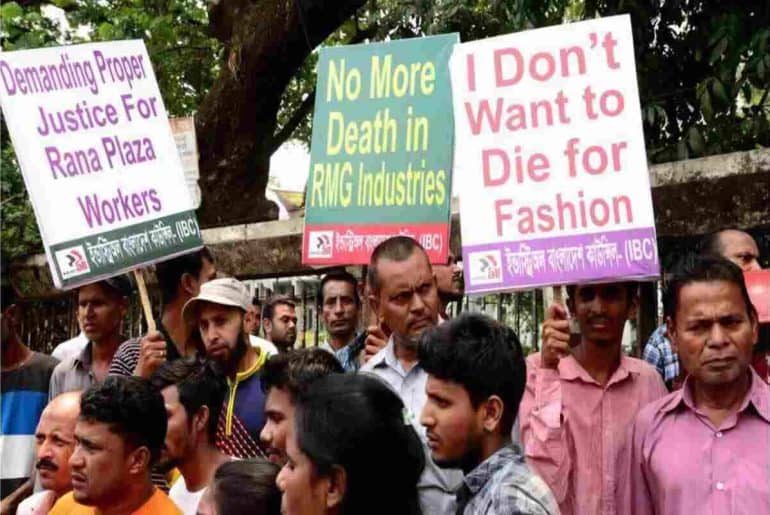
But the truth is, these attractive prices come at a cost of something far greater. This pocket friendly price comes to you after cutting the wages of overworked marginalised workers. The globalisation of supply chains in the fast-fashion production system has led to serious violations of human and labour rights. The labour force to make these newest trendy garments comes majorly from developing countries like Bangladesh, India, Cambodia and Myanmar, to name a few. The labour force is made up of primarily women and children, who work under terrible conditions and do not receive even minimum wage. The working hours are intense, and the deadlines very short owing to the ‘fast’ fashion. Many such big names like SHEIN, H&M and ZARA have been exposed for violating several labour laws and exploiting workers. According to Fashion Transparency Index 2023, only 1% of brands disclose the number of workers being paid a living wage. It won’t be far-fetched to equate this exploitation with modern slavery.

Additionally, the environment also pays the true cost of the cheap garments. Micro-plastics are some of the primary materials used in the cheap clothes, which end up piling on the landfills, polluting oceans and cause serious damage. The discarded clothes end up as overflowing heaps of waste. The industry also uses huge amounts of energy and water (an estimated 93 billion cubic metres a year) and generates up to ten percent of global CO2 emissions. Dyeing and finishing not only emit huge amounts of greenhouse gases, but also cause water pollution. Resources are depleting rapidly, to meet the false demands created by the fast-fashion sector.

The way forward for industries is to address the lack of transparency in the global supply chains, which has been the root cause of exploitation of workers. As consumers, the onus lies on us to ensure that we make informed choices about the brands that we consume from. The age-old saying “quality over quantity” can easily be applied in this scenario. So rather than investing on heaps of cheap, low-quality clothes that are both unsustainable and a fruition of exploitative practices, invest on good-quality clothes that you know would survive fleeting trends. Make the best out of your investment and wear the apparels for as long as possible. The 5 Rs of Fashion: Reduce, Rewear, Recycle, Repair, Resell all the way! Thrifting is very much in, since you care about trends.


Read also:The Beauty Facade : Instagram Trends

Featured Image Source: BBC


Sarah Nautiyal

[email protected]