Author

DU Beat

Browsing

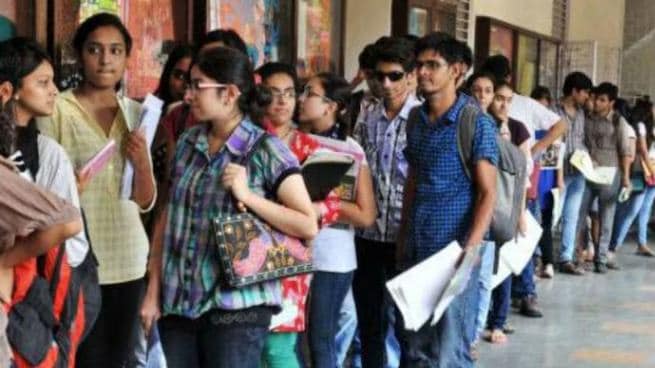
Delhi University’s School of Open Learning (SOL) launches 30 short-term courses catering to various fields under the Open Learning Development Centre. 

The School of Open Learning has launched the registration process for its Centre for Innovative Skill-Based Courses (CISBC). This initiative offers thirty short-term skill-based certificate courses ranging from 25 to 30 hours with a maximum duration of 6 months. These courses are designed to accommodate learners’ diverse schedules and preferences, with options available in offline, online, and hybrid formats.

Registration for the courses officially began on February 15th and will remain open until March 15th, 2024. The courses are set to commence on April 2nd, 2024, providing ample time for interested individuals to enroll. These courses welcome registrations from all, including University of Delhi students, with admission being granted on a first-come, first-served basis, depending on seat availability. As per the official website, for courses with fees exceeding Rs. 1000/-, upon reaching a batch size of 40–50 students, 10% of the supernumerary seats will be reserved for Economically Weaker Section candidates at subsidised rates, subject to screening.

Among the thirty courses available under the CISBC are English Proficiency, GST Executive, Cyber Security, Tax Assessment, Motor Driving, Medical Transcription, Wealth Management Programme, Medical Transcription, Radio Jockeying, Bakery and Confectionery, A/C and Refrigerator Repair, and Beauty and Hair Makeup, among others. 

As per the reports from India Today, Professor Payal Mago, the Director of SOL, highlighted that these valuable skill-based certificate courses would offer students a chance to improve their opportunities for employment.

She emphasised that these courses are highly effective in preparing students for job opportunities by imparting practical skills aligned with current industry demands. The accessible programmes will provide a joint certification from Delhi University and esteemed national and international organisations, enhancing students’ credentials.

The portal was launched on January 31 under the chairmanship of the Vice-Chancellor of Delhi University, Professor Yogesh Singh. He saw this centre as a ‘life changer’, opening doors for students to access skill-based courses. A brochure detailing all the courses was also distributed on the same day. 

For any queries, applicants can email [email protected] or call 9318354363, 9318354636.

Read Also: Inquiry to be Launched Against 12 DU Colleges Funded by the Delhi Government

Featured Image Source- India Today

Dhairya Chhabra

[email protected]

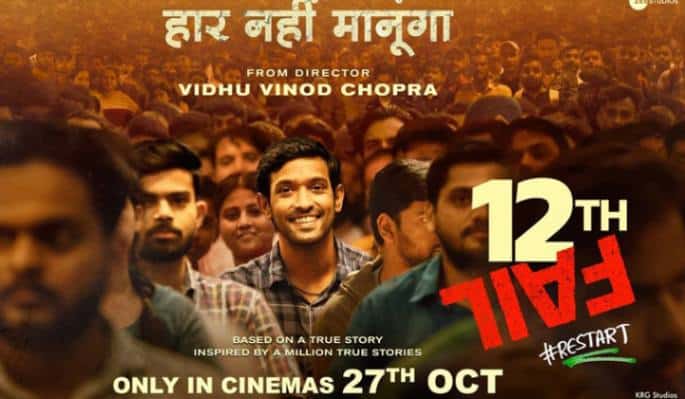
The interim FY25 budget shows decreased spending on higher education while school education allocation increases, reflecting governmental priorities amidst India’s class divisions. Highlighted by “12th Fail,” it underscores systemic challenges like corruption and caste barriers hindering equal access to quality education and exacerbating socioeconomic disparities.

“If the citizens were educated, it could be a real problem for the leaders.”

-(12th Fail)

In the interim budget proposed for FY25, the government has decreased spending on higher education. From 1.27% of its budget to FY24, the allocated amount is 1% for FY25. Contrary to this, the allocation for the School Education Department increased from 68,804.85 crore to 72,473.80 crore. What does this tell us about the priorities of the government emerging on the grounds of the existing class division prevalent in India?

12th Fail, built upon the sentimental-driven idea of success in India, showcases the perpetual state of the caste system, the prevalent corruption, and attaining success by meritocratic means amidst disparities. Manoj Kumar Sharma, the protagonist of the story hailing from the infamous region of Chambal, is the middle child from a poverty-stricken household whose only earning member lost his job because of the existing corruption. Portraying the reality of the lowest-income class, the family struggles to arrange two square meals to feed the children and elderly.

The layers of stifling segregation in our society make it impossible for people of the lowest strata, in comparison with the elite and the middle class, to acquire the highly competitive job positions in the country. This population pyramid outlines the division of resources, where the top 10% holds 77 percent of the total national wealth. According to the available data, it would take 941 years for a minimum-wage worker in rural India to earn what the top-paid executive at a leading Indian company makes in a year. It is necessary to provide equal access to education for all to tackle the existing inequality. Even after the Right to Education Act of 2009, the increasing enrollments in the school are inversely related to the decrease in the quality of education. In government schools, absenteeism of teachers, unfair means of conducting exams, lack of basic study materials like proper pen and paper, and the motivation among students and authorities to improve are some of the challenges. According to a report by UNESCO’s International Institute of Education Planning, high rates of absenteeism (at 25%) show evident corruption and its negative influence on the vulnerable years of a student. The aspirations of the lower-income students are wiped out under these circumstances, forming a mass majority of the students in these public schools who cannot recite correct answers to basic questions. Painted through the movie ‘12th Fail’, Manoj exhibits to the interviewers the meek reality of his background when he says, “Our teachers helped us to cheat.”.

When compared with other South Asian developing countries, India is performing exceptionally well in terms of collective economic growth, whereas the human welfare indicators are struggling to meet the average measure. Turning into a melting pot and dealing with problems on multiple fronts, the government juggles to prioritise the spending of the limited available resources. In this year’s budget, we saw a sharp decline in funding for the Ministry of Education, which conflicts with the New Education Policy 2020, which seeks to spend 6 percent of the GDP on education. The allocation to education for FY 24–25 is 7 percent lower than the revised estimates for the current fiscal year. The University Grants Commission has received a cut as the centre reduced its grant by 60 percent. The funding to the IITs and IIMs faced a reduction of Rs 60 crore and Rs 119 crore. These narrowed avenues at the top-tier colleges increase the cutthroat competition to secure a seat. The budget for school education has received an increased amount of Rs 73,008 crore from Revised Estimates (RE), which is almost Rs 3,250 crore more than last year’s allocation and is the highest of all time. The government aims to use them to deliver quality teaching in a developed holistic environment for nurturing a future generation for the country’s future.

Vidhu Vinod Chopra’s ‘12th Fail’, a biopic, very accurately showcases the ground reality of our education system. Manoj gives up on cheating, but the environment he belonged to remains the same, where the Mafia is protected by political patronage, not only putting the lives of the young students at stake for the sake of personal monetary gains and regional control but also breaking the spirit of the man residing in these regions, the rural areas that comprise 70 percent of the Indian population.

India ranks 93 in the corruption index: ‘Ye jo fine ke naam par tu maang raha hai na…yeh ghoos hai’. This ailment is so severe and ingrained in our society in the form of privately owned, corrupt education institutions making extraordinary money with their skyrocketing fee structures to help students crack highly competitive examinations like JEE, NEET, and our very own UPSC. Contributing to the misery as demonstrated in the movie “2 lakh Hindi medium vidhyarthiyo mein kewal 25-30 hi ban pate hain IAS IPS,”  highlights the prevailing discrimination on the grounds of linguistic chauvinism, where the sophisticated Anglican tongue spoken by the elite draws a line that the people belonging to lower ethnic groups find difficult to cross to get to the respectable jobs.

This embedded segregation and socioeconomic inequalities are only widening due to the failure and lack of incentive to take up the righteous implementation of the policies. The drastic difference in access to education is a mole on the flags bearing the’socialist’, ‘justice’, and ‘equal’ society whose ecosystem aims to provide uniform opportunities to all. At this crucial phase, when the government wants us to aim high, it is also creating these loopholes that are only going to leave the nation-building roots hollow. Our Manoj made it to the top ‘without oxygen’ support, celebrating the UPSC struggle of an aspirate. The dehumanising reality of our times and the plight remain shrouded under ‘Ye hum sab ki ladai hai, ek ka jeet hoga toh karodon bhed-bakriyon ka jeet hoga.’, developing an ‘Indian Dream’ of millions of people aspiring to climb the social ladder.

Read Also: Just Looking Like a “How?”: Questioning SC’s Stand on Regulating Coaching Institutes

Image Credits: The Week

Divya Malhotra

[email protected]

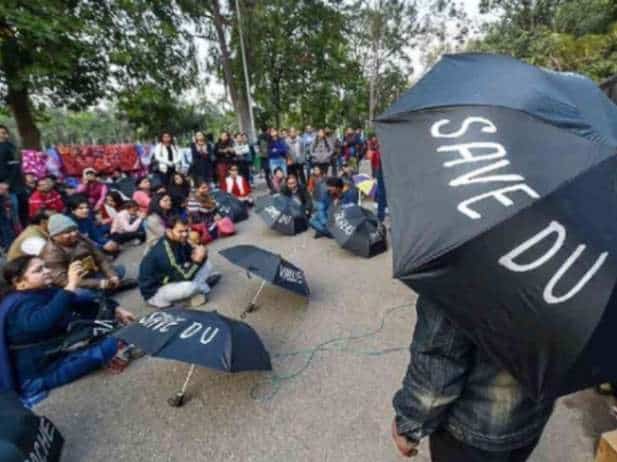
In a clarion call of distress and solidarity, DUTA on Friday gathered professors against the governmental lapses that they allege have been affecting the livelihood of many.

On the 16th of February, professors from all over Delhi University gathered at the Delhi Vidhan Sabha to protest against the administrative inconsistencies plaguing various colleges. Alongside a call to suspend classes, the Dharna was organised by the Delhi University Teachers’ Association. Their official demands include the release of salaries and other dues as well as the withdrawal of Delhi Higher Education Minister Atishi’s letters to the central government. 

Atishi had earlier in December written to the Union Education Minister, pointing out the discrepancies in 12 colleges that are funded by the Delhi Government. The aforementioned colleges have been operating since the 1990s; reportedly, however, the issues at play today started emerging as a result of the advent of two different governments at the central and state levels around 5 years ago. 

In a conversation with DuBeat, Dr. Abha Dev Habib underlines the structural origin and nature of the problem of the withholding of grants in a centre-state conflict. She alleges that this has been leading to interference in the traditional procedural approach of the governing bodies of these colleges, which was earlier adopted to reduce bureaucratic red-tapism. 

“To punish salaried individuals for institutional lapses and to starve close to 2000 people is criminal,” she says. Of note, in addition, is the Vice-Chancellor’s response to the Minister’s letters, which makes no mention of addressing the state of the employees.

Earlier in 2022, DUTA President Professor Bhagi reported to ANI that the problem had persisted for quite some time and pointed to the existence of a deficit of 85 to 90 crores in the 12 colleges funded by the Delhi government. While ANI had already identified the potential of this snowballing into a confrontation between the AAP in the state and the BJP at the centre, Dr. Habib maintains that the brunt of such conflict cannot be taken out on employees. 

The solution endorsed involves the University Grants Commission (UGC) completely taking over the 12 colleges. 

Read Also : Inquiry to be Launched Against 12 DU Colleges Funded by the Delhi Government

Featured Image Credits : PTI

Deevya Deo

[email protected]

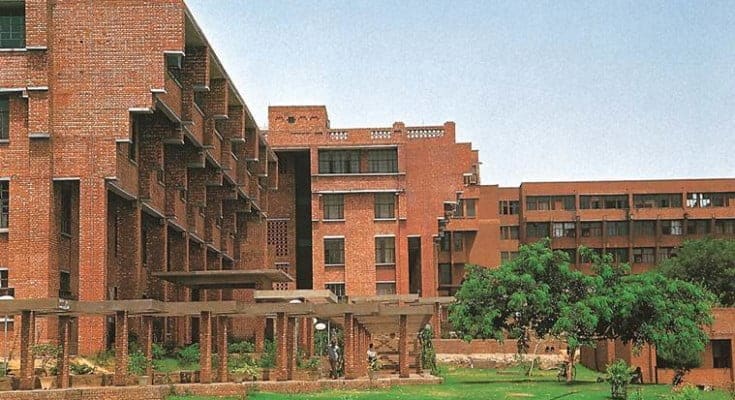
On Friday, February 9, 2024, ABVP members and left-wing student groups, including AISA, SFI, and DSF, got into a clash during the University General Body Meeting (UGBM). Videos of the clashes show both groups engaging in sloganeering and clashing at night. Both sides have claimed that their students have been injured and targeted by the other party. Videos of the incident show ABVP members obstructing the meeting by encroaching upon the dias and getting into a confrontation with the council members. The SFI has alleged that JNUSU President Aishe Ghosh has been attacked by ABVP members with water thrown at her. ABVP JNU has also alleged that Vikas Patel, the ABVP-JNU secretary, disabled student Divyaprakash, and other supporters of ABVP have been targeted by the United Left groups.

The JNUSU stated that they had earlier on the day established the necessary quorum, but the ABVP argues that the rule for quorum of one-tenth of the university strength was defied. ABVP alleged in a comment,

Disparaging casteist slurs were made against a worker handling a mic and speaker. We had agreed to initiate the UGBM even without the mic, but it wasn’t agreeable to the communists who silence others with loud noises of dafli.

They further claimed that:

The dafli, made from hard steel, was used by the anti-Democratic left to batter JNU students in order to stop UGBM.

The incident lies ahead of the JNUSU elections, which will take place after four years in the month of March. Currently, the office-bearers elected in 2019 are holding the office as agreed upon in an earlier UGBM held in September 2023. Anagha Pradeep, a JNU Councillor, has called out the administration and ABVP for together supporting the agenda that the JNUSU is illegal since, according to them, it is not a recognised body. The JNU administration had halted the elections in lieu of the pandemic and stated that they would follow the Lyngdoh Committee recommendations and must wait for PhD admissions to be completed. Representatives of all fronts had staged protests demanding a free and fair election for the Student Union at the earliest. The students had pointed out that if elections in other universities like DU have been running in parallel, then perhaps the administration is purposely dodging the election question. The JNUSU and the administration have been at loggerheads with each other since last year. Aishe Ghosh commented,

Recently, in interviews given to several media outlets, the JNU vice chancellor claimed that JNUSU elections cannot be held until the entire admission process, including that of Ph.D. admissions, has not been completed. These are patent lies and tactics at dilly-dallying, as the same vice chancellor and administration refused to hold elections in April 2023 even after the completion of the entire admission process.

She also added,

It is a deliberate strategy of the JNU Administration to curb the growth of the students’ social and political consciousness, which leads to the growth of the students as critical citizens capable of asking tough questions to those in power. The RSS-controlled administration, hell-bent on turning the campus into the breeding ground of the saffronization of education, is perennially afraid of students who are aware of and capable of seeing through their agenda.

On Febrary 10th, the ABVP staged a march owing to the incident and demanded “free and fair elections.” In response, the Left Front has also formed a human chain “of solidarity and resilience against the ABVP.” Aishe Ghosh has also raised the slogan, “Reject hooliganism!”

Read Also: “Allowed At Designated Places”- JNU Bans Protests Within 100m Of Any Academic Building; Violators May Face Rs. 20k Fine Or Expulsion

Featured Image Source: Shiksha

Sarah Nautiyal
[email protected]

While we celebrate love today, let us take a moment to recognise how it is vilified every day in this country. The violins, the doves, and the flowing chiffon that we devour on screen are subject to a milieu of conditions when it comes to the grassroots. Faith being the primary.

Between 10 and 16 January, 2024, the Allahabad High Court quashed petitions by eight Hindu-Muslim couples who were seeking protection for their lives. This was due to the fact that their marriages were not in compliance with the Uttar Pradesh Prohibition of Unlawful Conversion of Religion Act, known popularly as ‘the Anti-Conversion Law’.

NDTV reported in the year 2020 that in a matter of two months, half of the cases that the police were investigating had collapsed, revealing simply consensual relationships. The Uttar Pradesh Police has registered 433 cases so far since the inception of the law in 2020. As one of the most discussed legislations falling in the category of ‘anti-conversion laws’, it lends credence to the bogey of ‘Love-Jihad’. The arbitrary clumsiness of the legislation includes a “prohibition of conversion by marriage,” disregarding the reality that no religion upholds ‘automatic conversion’ of a person by way of inter-faith marriage.

There may exist, however, a natural correlation between conversions and interfaith marriages. The complexities that lie behind this correlation carry us to the dreaded elephant in the room: the Special Marriage Act 1954. This “umbrella statute” for securing inter-faith marriages in the country has left couples weathering the brunt of hatred in the spaces of its grey areas. Asking couples to give a notice 30 days prior to the solemnization, which is to be displayed publicly, violates their Right to Privacy and actively exposes them to the violence of society and vigilantism. There are many such “procedural compliances.” For instance, the requirement for couples to submit an undertaking that there are no FIRs lodged against them simply displays the uncongenial nature of the legislation. Another section, implying severance from the family upon marriage under this Act, further exposes the admonishing attitude towards interfaith relationships. These factors, combined with the disinheritance of future generations, probably propel couples to seek conversion as an effort to solemnise the relationship. These fallacies have been noted in the 2018 Law Commission report as well.

Only 2.2% of unions in India were interfaith, as per the “India Human Development Survey 2005 (IHDS)”. These ‘Citizens for Justice and Peace’ reports can be chalked down to the ‘survival’ of such relationships. Only the unions that sustain and weather the odds that the social apparatus rains down upon them will be up for survey. Despite the minuscule statistical presence of these relationships, the ruling governmental apparatus seems to have showered the phenomenon with ample attention, drafting in states with BJP-led governments several such ‘Anti-Love Jihad laws’ despite the presence of laws already prohibiting forceful conversion.

By inserting vague, loosely articulated phrases, the criminality of which cannot be traced, such as “convincing,” into conversion, it succeeds in passing ideological paranoia into the societal fabric and erodes the freedom to love and live implicitly omnipresent in Article 21, Right to Life.

The law further extends the term of imprisonment if the victim in question is a woman. The justification for this added “safeguard” is something that the state has not been able to provide. It just goes on to show the perspective through which women’s autonomy over their own private affairs is viewed and appears as a penalty for reproductive pollution. Further, the reverse burden of proof is put on the shoulders of the accused rather than the accuser.

The light in which cases of violence against women are discussed also points to the degree to which this conspiracy has penetrated the Indian psyche. The Shraddha Walker case, for instance, triggered the Maharashtra government to set up a panel to look into interfaith relationships concerning state residents, thus increasing the already strenuous surveillance and scrutiny that couples undergo.

Daniel Oesch points to the existence of economic anxiety in tandem with cultural anxiety of a ‘newer culture’ replacing an older one as the reason behind why the working-class electorate finds cultural questions of identity to be more important and rewards the political framework that upholds the status quo, vilifying the “other”. If a democracy, however, concedes to penalising the held decisions of consenting adults instead of the urgency on the contrary to protect and safeguard their constitutional rights, it reflects a democracy that not only shows wear but blindspots in its empathy for those who merely have chosen to follow their hearts.

Read also: What It Takes to Love in India

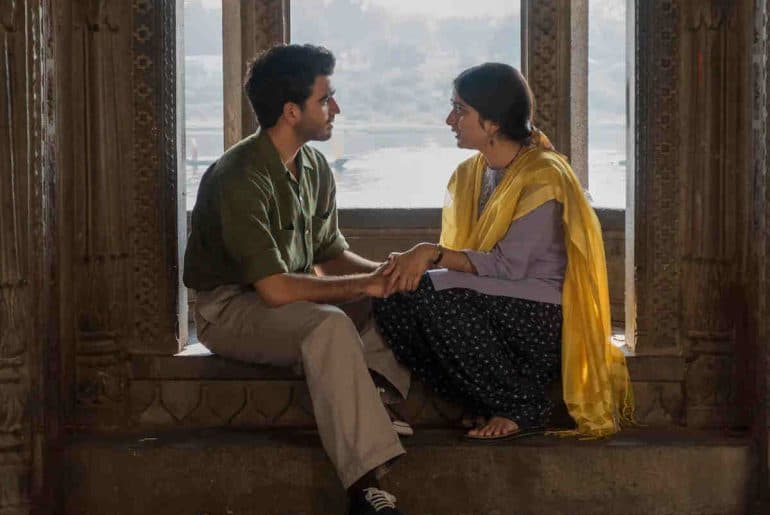
Featured Image Credits: A Suitable Boy on Netflix

Deevya Deo
[email protected]

The day of love and romance can feel a little sad when you recently broke it off with your significant other. However hurtful that might be, this piece will remind you how fun it is not to have to share your favorite box of chocolates with anybody. 

If you’re flying solo this Valentine’s Day, without a partner in crime to share those heart-shaped chocolates with, fear not. While Cupid may have missed the mark this year, there’s still plenty of love to go around and the most important kind has always been self-love.

First let’s talk about the breakup. Yes, it stings like a bee, but don’t forget that you’re free as a bird now! So, kicking off this Valentine’s Day right would involve some serious self-care vibes. Treat yourself to a spa day, binge-watch your favorite guilty pleasure TV show, or go wild with a pizza night. Because why should couples have all the fun, right?

Instead of drowning your sorrows in a tub of ice cream (although, let’s be real, that does sound tempting), why not turn Valentine’s Day into a celebration of all things fabulous? Start by pampering yourself with an amazing outfit – who says you can’t dress to impress, just for yourself? Throw on your favorite clothes, strut your stuff, and show the world that you don’t need a date to slay.

If you find yourself craving a change of scenery, consider treating yourself to a solo adventure or a weekend getaway. Take a road trip to a vacation spot you’ve never explored, or hop on a train to a busy city. Sometimes, a change of scenery is all you need to lift your spirits.

Channeling your inner artist and finding a creative outlet is also a part of the “best solo date ideas list”. Sign up for a painting class, try your hand at pottery, or dust off that old guitar and teach yourself some tunes. Getting lost in a creative pursuit can be incredibly therapeutic and empowering, allowing you to express yourself in new and unexpected ways. Plus, you’ll have a tangible reminder of your patience and resilience, long after Valentine’s Day has come and gone.

Feeling a little lonely? Valentine’s Day is the perfect excuse to spread love in unexpected ways. Send a cheesy Valentine’s Day card to your bestie, surprise your mom with a bouquet of flowers, or treat yourself to a fancy dinner for one. After all, who needs a significant other when you’ve got an army of loved ones cheering you on?

And let’s not forget the most important part of surviving Valentine’s Day as a brand new singleton: laughter. Embrace the absurdity of the holiday by throwing an anti-Valentine’s Day bash for all your single friends. Deck out your house in black and red, serve up heart-shaped pizzas, and crank up your favorite tunes. Who needs romance when you’ve got good food, good friends, and a killer playlist?

So, here it is, your ultimate guide to surviving Valentine’s Day like a pro. Whether you’re happily single, recently uncoupled, or just looking for an excuse to party, remember this: love comes in many forms, and it’s all worth celebrating. Celebrate yourself, your friendships and the infinite possibilities that lie ahead in life. 

Read Also: Valentine’s Day Special: Top 5 Romantic Movies to binge on

Featured image credits: freepik

Lakshita Arora
[email protected]

With Laut Aao Imran and Bollywood’s Green Flag making rounds on social media, let’s take a dive on this Valentine’s Day into Imran Khan’s genre of Bollywood romance and an era, millions crave to have back today!

The official poster-boy of Bollywood rom-coms, Imran Khan has been buzzing on social media recently. From fans cheering the star to make a comeback to the screens to Imran Khan himself making public appearances with his recent off-beat interview with Vogue India, have the stars finally aligned for Bollywood’s comeback era of soft-boy romance?

While Hindi cinema has witnessed its wave of actors impersonating the “chocolate-boy charm”- from Dino Morea, Fardeen Khan, Aftab Shivdasani, Vivek Oberoi, Zayed Khan, Neil Nitin Mukesh, who like Imran, soon disappeared from the screens, the fan-frenzy for Laut Aao Imran is incomparable!

In the 2000s, while Bollywood had made its paradigm shift from the Angry Young Man of the 1960s to the Ultimate Macho Saviour of the late 90s and early 2000s, Imran Khan’s debut of Jaane Tu…Ya Jaane Na brought in fresh perspectives of defining masculinity through cinema- male characters who were not subsumed by aggression but open to emotions and supportive of their female counterparts. Imran defined an era of Bollywood rom-coms where female protagonists received equal screen-time and centre-stage with their male counterparts during an era previously associated with women on cinema, being shunned to supportive roles- an entity without ambition, an entity to be ‘rescued’ by the male hero and an entity just there to fulfil the male-centred plotline of the film, examples being Salman Khan’s Biwi No. 1 or Big B’s Sholay. On the contrary, female protagonists in Imran Khan’s lives were not mere vehicles to propel the film but active drivers of the plotline, with Imran accompanying them with their roles on an equal footing. From Aditi in Jaane Tu…Ya Jaane Na to Aaliya in Break Ke Baad, female leads in Imran’s films have defined layered attributes of women characters- women introspecting their feelings through youth to women choosing career over love, multi-diverse traits that were only given to the male actor previously, while the woman flimsily floated in and out of the film, without much want of the audience’s attention or her role in the movie’s essential narrative.

While women characters made a headway through Imran’s romcoms, Imran himself portrayed masculine characters that were not intimidated by the aura of headstrong women but supported their endeavours. Unlike the preceding Bollywood era, women in Imran Khan’s movies got a happy-ending to their own personal stories rather than merely being muses through out the film, due to which Imran’s accompanying male counterpart is often labelled as the ‘guy that every girl wants.’ From Jai doing everything in his power and even orchestrating an entire song with the lines ‘Ye Aditi Jaane Tu Ya Jaane Na Phool Phir Khil Jate Hain’ to cheer up his female best friend recuperating from the loss of her pet cat to Kush from ‘Mere Brother Ki Dulhan’ being a fun-sidekick to Dimple’s wedding shopping, Imran Khan’s characters remind us of the simplicity and tenderness of romance and the hope that someday a guy like Abhay from Break Ke Baad will pack their bags to Australia to support your career dreams, without a moment’s hesitation.

Imran’s portrayal of men changed the narrative of a Macho-Bollywood Hero to a common, ordinary male navigating through the grooves of life, finding love and accentuating it with cute dance-themes. From being a supportive son to his single mother in Jaane Tu Ya Jaane Na, aiding in her everyday chores – “Baari apki hai but mood mera hai” – to the uptight Rahul Kapoor taking care to always provide sweet-company to his newfound friend Riana, distraught in her job and lonely in the States- exactly like him- Imran Khan could be credited for redefining gender roles in the Bollywood cinema paradigm. 

Gender roles, in essence, function under the notion of being observed, culturally-learned and adapted into the mainstream, and popular culture like Bollywood cinema especially play a big role in defining the evolving landscape of gender-stereotypes and liberation in the society that we live in. While mainstream Bollywood portrayed docile, submissive women figures (who must be saved, rescued or avenged by men) to young girls as role models, young boys were taught to be ‘rough and tough’. Films ended up normalizing maltreatment of women, inculcating into them that misbehaviour from a male partner is what can be considered ‘normal’ and ‘acceptable’. In an era when dialogues like ‘akeli ladki ek khuli tijori ki tarah hoti hai’ and ‘paise ke peeche bhagega toh ladki tere peeche bhaagegi’ rampaged the cinemas, Imran Khan’s ‘Aditi Has De Tu Zara’ trying to make his college best-friend smile while she was upset over her pet-cat provided a breath of fresh air amidst the claustrophobic hegemonic-masculinity within Hindi cinema.

“I believe Imran Khan was pretty eminent in shifting the Bollywood landscape from mainstream movies to a ‘young-adult world’ where everything was very new and fresh with people having fun jobs and simple, gullible dynamics with their partners. It makes one fantasise and long for such gentle times. More so, from a theatrical perspective Imran’s characters were very natural, comfortable and transparent, making the viewer outside the screen connect with the character inside which was quite refreshing!” – points out Rudrani Singh, who engaged with these movies in her late-teens.

While ‘mard ko dard nahi hota’ defined the hyper-macho era of Bollywood heroes, the current wave of toxic man-childs in Kabir Singh and Animal ring another alarm bell in the world of distorted representation of characters. While such alpha ideologies kick back into the industry sizzled with a side of pseudo-feminism and its consequent, glorification, one obviously longs for the cool, witty Abhay who will sit under a table and hug you while you try to make sense of the chaos or a Jay Dhingra to do ‘idhar udhar ki baatein vagera vagera’ with and comprehend the softness of life.

When Imran was not being the charming chocolate-boy, his acting range would take him to playing an amusing grey character like Tashi in one of Bollywood’s wittiest productions, Delhi Belly. Some may even point that Imran’s characters and movies provided a fresh, tender yet real grasp of the life around us, that really seeped the viewer into his films. While Imran set the tone for new types of heroes within Bollywood, the twenty-first century often labelled his characters as “simps” and his movies as “chick-flicks”for their wide popularity among women audience. However, the truth is quite far from that. Imran Khan set the stage for male-protagonists who were open to expressing emotions and being comfortable with their masculinity without being loud and violent (and what social media calls today, an ‘almost green flag’). This genre of character representation not only appeased women who were previously nourished by macho-saviours but also stood as an example of counter-hegemonic masculinity within the Indian diaspora. With films to woo the young audience, Imran’s movies stood out for showing young boys that in a world full of hunky, aggressive Sushants, you can always comfortably be a song-singing, airport-confessing Jai Singh Rathore, aka Rats.


Amidst a culture that lauds toxic masculinity through portrayals like Rahul from Kuch Kuch Hota Hai to Bunny from Yeh Jawani Hai Deewani, the innocence of Imran Khan’s characters provided a personification of ‘Sukoon’ (peace) – comfort movies that you could watch on your blue days along with an accompaniment of vanilla ice-cream!

While we journeyed through Imran’s portrayal of soft-masculinity and the warmth of his films, it still makes one wonder why fans crave his return despite the ‘Badshah of Bollywood’ and the ‘King of Romance’, Shahrukh Khan still reigning through the industry today. Much of this could be the shift in the Bollywood genre of films currently. Audiences previously conditioned by saccharine romance from Dilwale Dulhaniya Le Jayenge to Hum Aapke Hai Kaun, now has to make do with crime thriller, spy thrillers or action-adventures with romance taking a sideline. The once romance-churning mill of the subcontinent, Bollywood today has shifted its thematic landscape with even King Khan, once the ‘lover-boy of Bollywood’ now starring in mostly action movies like Jawan and Pathaan. One may say this does make the young audience crave even more for the era of toothy grins, witty banter and innocent love plot-lines of Imran Khan’s movies. 

While Jay Dhingra may ‘Hate Luv Storys’ and go on to say, “Stupid hote hai ye love stories aur stupid hote hai woh log jo inhe banate hai,” before falling head over heels in love with Sonam Kapoor’s character, Simran, fans today will vouch for anything to have Imran Khan’s light-hearted romance stories back in Bollywood, reminiscing in the nostalgia and hoping that their Jai will one day come running through the box-office singing ‘Tera mujhse hai pehle ka nata koi, yuhi nahi dil lubhata koi…’ and all will be sweet and sunny in Bollywood’s love-town  again!

Read Also: Jab DU Met Bollywood

Featured Image Credits: Where Was It Shot

Priyanka Mukherjee
[email protected]

Similar to what you must’ve studied about sound grade 8 physics; love too, doesn’t exist in a vacuum, especially not in India. It unfolds against a backdrop of societal expectations, parental pressures, and the relentless pursuit of individual dreams.

“Hai tujhe bhi ijaazat, kar le tu bhi mohabbat”, says the lyrics of a Hindi song from “Life in a… Metro”; this 2000s melody isn’t just an underrated gem but also a poetic attempt to encapsulate the silent yearning of hearts, entangled in the web of duty and desires.

Love in India is never a solitary endeavor but rather a communal affair, subject to the collective scrutiny and judgment of society at large. The interference in your love life can take various forms, ranging from subtle manipulation and coercion to overt control and restriction. With the Uttarakhand assembly passing the Uniform Civil Code Bill, it’s not very difficult to understand what we’re referring to. While on one hand, the Dhami government can now punish couples living together outside of marriage without official registration, it has also robbed couples of freedom and the choice to move in together as they explore their connection before marriage. 

Though such checks can be seen as a necessary evil by some, as revealed in one of our conversations; Shanmay Bokde, a student from IIT Delhi, appreciates the move and said, 

A well maintained record and data might help minimize crimes by reducing chances of deception. These regulations aren’t really restrictions, for they will help ‘legalize’ and subsequently destigmatize ‘live-in’ relationships in a society like ours where it is looked upon as a ‘prohibited practice’ of some sort.

A conversation with a final-year student from Ramjas College, offered another perspective as she contemplated over the implications that the law is likely to have. She remarked,

I think it is too early to say anything as of now. But I am sure personal freedom and privacy will go for a toss, considering how the state is interfering with individual autonomy by documenting everything.

From laws governing inter-faith marriages; that decide (or to say, give a well-framed guideline to explain) who can love whom and under what circumstances, to moral policing in public spaces on grounds of upholding traditional values and societal norms, the state wields considerable power in shaping the landscape of love in India. 

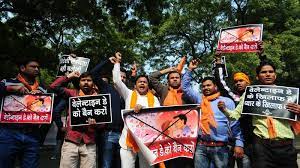
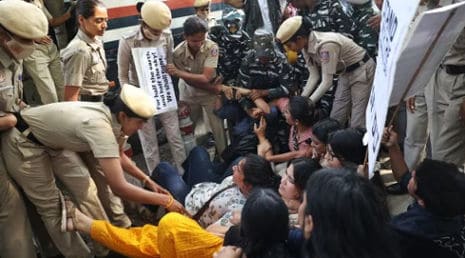
If this wasn’t enough, there’s also an annual spectacle of thrashing of couples on Valentine’s Day by Hindu right-wing groups. Under the guise of protecting cultural heritage and religious traditions, these groups seek to impose their worldview on others, resorting to violence and intimidation to enforce their vision of societal norms. While I am anxious about what this Valentine’s Day will make us witness, if you travel about 365 days back into the past, you will remember how in Uttar Pradesh’s Moradabad, the members of the Rashtriya Bajrang Dal made couples tie rakhi to each other on 14  February; their only offense being – sitting in a park with people from opposite genders; without being neither spouses nor siblings, so for obvious reasons the only way left with Bajrang Dal members was to ask the women to tie rakhi to her “brother”.

Couples being subjected to harassment, and violence at the hands of right-wing groups is not new. This intolerance and intimidation took the form of coercion and control, when in 2019, in Hyderabad, a couple was forcibly married off by such activists in a public park, perpetuating fear and insecurity among couples in the name of “protection of cultural values”.

Mr. Brijesh Mohan Sharma, a working professional, shared that while couples should maintain some dignity while engaging in public displays of affection, this doesn’t give these extremist ideologies groups a ticket to moral policing. 

In a country where even platonic relationships with the opposite gender are viewed with suspicion and moral judgment, making romantic relations acceptable will require a lot of unlearning.

Khushi Garg, a student from Daulat Ram College shared her brief interaction with a middle aged relative, who upon realising that she studies in an all-girls college happily remarked, “Are waah! Yeh toh bohot achhi baat hai gudiya” and frowned upon “aaj-kal ke bachhe” having close friendships with individuals of different sexes.

In this kind of a complex tapestry of Indian society, the perceived dichotomy between love and career also becomes a significant hurdle in relationships. 

Vidhi Kanojia, a sophomore from Lady Shri Ram College For Women, shared the importance of prioritizing one’s career over the pursuit of “true love”. 

There’s no point in having a successful relationship when you’re struggling financially. Especially as a woman, one must ensure they have a settled career before looking out for love, otherwise you won’t be able to enjoy love in its true essence. Kal kya khaana hain, how to sustain tomorrow, will be hovering over your brain today.

This challenge is multifaceted, influencing parental concerns and subsequently individuals’ expectations from one self, and the dynamics of modern relationships. The prospect of love is often overshadowed by the fear of disappointing their parents, leading many to suppress their desires and aspirations in the name of duty.

Bina Sah, a student from LSR, revealed,

 The age bracket between twenty to thirty is thought of as a delicate period where we children are in pursuit of our ambitions towards a successful career, coupled with the desire to have healthy relations, strong friendships and according to our parents indulging in anything other than ‘padhaai’ will lead to a compromise in a ‘secure future’.

Shedding light on the gendered perspective Bina shared, 

Especially for daughters, the pressure to uphold family honor and tradition weighs even heavy, because while the son being in a relationship might not be as big of a deal for the family but if the daughter engages in romantic pursuits, it is looked upon as a ‘crime’.

Amidst this chaos and conflict in values, desires and personal aspirations, it won’t be wrong to say that it is a privilege to love. 

Bina further shared, 

And to top this all, the age-old obsession of parents with religion and caste, and for all these reasons I have made my mind not to fall for someone to avoid trouble in my family.

Love in a country like ours, plagued by discord and division, is nothing less of a journey that requires courage, compassion, as the “samaj” tests your resilience, patience, and commitment.

So, while I don’t know what might have been the case with the protagonists of  the movie Shree 420 that made Manna Dey sing, “Pyaar Hua Iqraar Hua, pyaar se phir kyu darta hain dil”, but these surely are one amongst the key issues with which today’s youth is confronted by, making them fear love. 

Kavya Vashisht
[email protected]

As the fest season unfolds, students offer a sharp assessment of Delhi University’s fest advisory, highlighting the associated concerns.

In light of recurring security and management lapses at Delhi University’s fests, the university has issued advisory/guidelines to be followed by all colleges and departments regarding the organisation of various programmes and events. The 18-point advisory, which has been updated three times between April 2023 and January 2024, focuses on the necessary rules of pre-registration of attendees, submission of their details to the police, and also a requirement of a NOC (No Objection Certificate) from the police, among the various other guidelines. A guideline among the 18 others mentioned: ‘Entry for events should be through pre-registration, like on Google Forms, with details of the event, i.e., date, venue, and the expected number of participants (to) be maintained and submitted to the police with a copy to other departments. The registration forms should include scanned copies of the college IDs of participants.’

Speaking to DU Beat, Rajnish Sah, a member of the Organising Committee of ‘Mecca’, Hindu College’s annual fest said:

It is almost impractical to keep an adequate track of all the records and documents on all the potential entrants and hand them over to the police. It might be feasible for small departmental events, but for events like annual fests, where people attend in thousands, it just proves to be an additional strain on the already burdened organising committee.

When asked about the tight cap on the number of attendees allowed to attend the festival, he added:

DU is known for its exposure and its exchange among the students, especially during the fest season, when students from various colleges connect. Tight attendance limits may hinder the fest’s true purpose.

The university-issued festival advisory guidelines also mention that ‘the concerned college or department is solely responsible for any untoward incident during any event organised by the concerned college or department.’

Considering the following statement, Rajnish added:

Putting all the responsibility of any incident with the college and authority would just put a constraint on the level of a fest. It is impractical to hold the college accountable for every incident that happens.

Anubhav, sponsorship head at Nexus, the annual fest of Sri Venkateswara College, supports this and adds:

The college can be held accountable only up to an extent. It is also necessary to ensure that the legal responsibilities are taken up well for the smooth conduct of a fest.

He also added that currently, there are no significant sponsorship issues arising from the attendance cap.

As per reports from The Hindu, a student claimed that there has been a problem in extracting sponsorships for the events:

Sponsors are brought on board based on the number of attendees. With a cap on this number, agreements are becoming increasingly difficult to secure.

–  said Harsh Dalal, President of the Student Union of Shri Ram College of Commerce (SRCC), which will host ‘Crossroads’ in the first week of April.

The report also mentions how some students believe that the advisory would ensure security and make things better for the organisers.

Pre-registrations and controlled entry will make things easier and improve the quality of the fest.

–  said Aman Choudhary, president of the student union at Sri Venkateswara College.

 In March 2023, a group of men allegedly entered Delhi University’s Indraprastha College for Women by scaling the boundary walls and harassing students when the college celebrated its annual festival. A similar incident had also occurred in 2022 during Miranda House’s Diwali Fest, where men were allegedly seen climbing the college walls and indulging in ‘cat-calling and sexist sloganeering’. The rising and repeated cases demanded an advisory to regulate the incidents. As per the fest-advisory guidelines, ‘Prior to any big event in the institution, there should be an assessment of the boundary wall of the college. If found low, concertina wires should be installed to prevent outsiders from scaling the walls.’

A representative from Maitreyi College’s Student Union (identity withheld for anonymity) says:

Where are the notices outlining the repercussions for intruders if another incident occurs again? You can raise the walls, but when will you actually hold the intruders responsible for disregarding the boundaries? How can one ensure that the registered attendees do not create any nuisance on the college campus?

The representative acknowledges that the college has implemented strict measures like applications, registrations, and identity checks for issuing passes to outsiders. However, they highlight that there is no restriction on the number of passes a student from the college can acquire due to the ‘monetization’ of the passes. They then continue and add on to the ‘budgeting issues’ with regards to maintaining security at DU fests:

Since the beginning, many DU colleges have continuously encountered difficulties in securing adequate funding. Things like the security arrangements and illumination of the dimly lit places as per the advisory need funding and resources.

Continuing her statement, she asserts that colleges cannot and should not be solely accountable for all incidents occurring within the campus, stating that the fest-advisory guideline serves merely as a means to deflect legal responsibilities.

Read Also: The Invasion of IPCW: A Student’s Account

Featured Image Source: The Indian Express

Dhairya Chhabra

[email protected]


In today’s time, feminism has not remained a genuine commitment to gender equality. The idea of empowerment has become commodified through marketing campaigns, overshadowing the true essence of the concept. This piece explores the nuanced landscape of feminist advertising by dissecting empowering advertisements and exposing the questionable motives behind them.

This is a world still often designed to please men. Even though significant progress has been made, the existence of unconscious, underlying misogyny is undeniable and has been passed down through generations. And against the backdrop of this misogyny, the world of marketing often comes into focus. As a strong cultural force, the industry shows and strengthens stereotypes about women. When companies use feminist ideas to make money, it highlights a gap between their empowering words and what they actually do, making it an important area to talk about where unfair gender beliefs are concerned.

The battle cries of feminism, which were meant to break glass ceilings, now break sales records. At its core, feminism embodies an expansive belief in advocating for the dignity and empowerment of all genders. However, that belief gets lost when it’s used for profit. While feminists aim for freedom and equality in opportunities, sometimes this concept is exploited and used for personal gain, diluting the true essence of the movement. It’s important to see through these false claims used by the capitalist market and advocate for genuine progress.

When a company advertises its products as “women-friendly,” it may sound uplifting and true to the spirit of feminism. However, when the same company doesn’t align their policies and ideas with the ‘feminist’ image they try to exhibit to the world, that is plain exploitation. They will assure you that all colours are beautiful, but they will implicitly encourage you to buy their skin-lightening products to make you even more attractive. They will claim to reject racism, yet they will never cast anyone who is not ‘conventionally attractive’, aka ‘light skin and slim waists, to play the lead. They proclaim that women are more than just sex symbols but equate bigger breasts with more audience attention. And amidst all this hypocrisy, they’ll continue to emphasise their adoration for each individual, no matter the shape, size, or color.

AXE, a men’s fragrance brand, produced infuriating commercials about multiple “picture-perfect” women fawning over a single man for the purpose of endorsing their “masculine-smelling” deodorant. It clearly reinforced the idea that a woman is only good to enhance a man’s image and for nothing more meaningful. On the other hand, Dove sold shampoo bottles shaped like different body types to instill body positivity in women. Although this campaign appeared to have positive intentions, it was not perceived in the same way. Had it not been public knowledge that both these brands share the same parent company, Unilever, it would have worked out more favourably for the brands involved.

The intersectionality of feminism is often overlooked in these marketing strategies. Companies often exploit the idea of intersectionality to reinforce stereotypes and uphold traditional gender norms. They use factors like race, class, and gender to target specific groups with tailored ads, which can deepen existing inequalities and reinforce societal norms. This approach ultimately maintains the status quo and contributes to marginalisation and inequality.

While some argue that even surface-level activism raises awareness, the bar must be set higher. Big corporations that treat feminism as a brand or a tool for profit should be held accountable. It is not merely a question of contradiction in opinions or brand strategies; it is a matter of blatant hypocrisy, which, in turn, makes it exploitative. Intersectionality demands a more nuanced approach that acknowledges the diverse experiences of women across race, class, and other intersecting identities.

Trigger Warning: Instances of sexual harassment in the upcoming paragraph.

Take the case of ‘Thinx’, a company that set out to break the stigma surrounding menstruation by taking an innovative approach to period products. While they too seemed to be genuinely committed to feminist ideals, their workplace practices told the world otherwise. Miki Agarwal, the CEO of ‘Thinx’, faced severe criticism and legal action from her own employees, accusing her of engaging in unethical conduct, making inappropriate sexual advances, and unfairly dismissing staff members. According to a detailed complaint filed with the City of New York Commission on Human Rights, Miki Agarwal touched an employee’s breasts and asked her to expose them, talked about her own sexual exploits in business meetings, frequently changed clothes in front of her employees, and multiple other incidents that resulted in uncomfortable working conditions. These allegations shed light on a troubling reality within the company, revealing a stark contrast between its public image and internal practices. A poignant example of the pervasive hypocrisy that infiltrates the corporate world, especially in the industries claiming to champion feminist principles.

Even in companies that are supposedly termed modern or liberal, TV ads still cling to old-fashioned ideas. They often use only male voiceovers, which make men sound more important. And when they show women, it’s usually doing housework, like they’re stuck in the past. Even though some companies try to change this, many stick to the old ways because they think it works. So, ads on TV keep pushing these outdated ideas, making it harder to break free from old stereotypes.

In this world of marketing, men are applauded and celebrated when all we are given is a mirror. Distorted. We are forced to see ourselves through the eyes of society. The unspoken reality is that companies aim for male empowerment while perpetuating traditional gender norms for female consumers in order to sell, and what’s worse is that it seems to work just fine.

We’ve been given the short end of the stick since the dawn of humanity. It cannot be denied that we have come a long way, but the question remains: is our progress real or just a better disguise for the old biases against women?

As we deal with the complexities of feminism today, it’s important to acknowledge the steps forward while staying aware of the quieter forms of gender inequality. As long as this capitalism-driven world continues to prioritise profit over principles, the tagline of feminism remains at risk of becoming just that—a mere tagline.

Read also: How to Know Your Reporting is Good 101

Featured Image Credits: medium magazine.nl

Lakshita Arora

[email protected]