
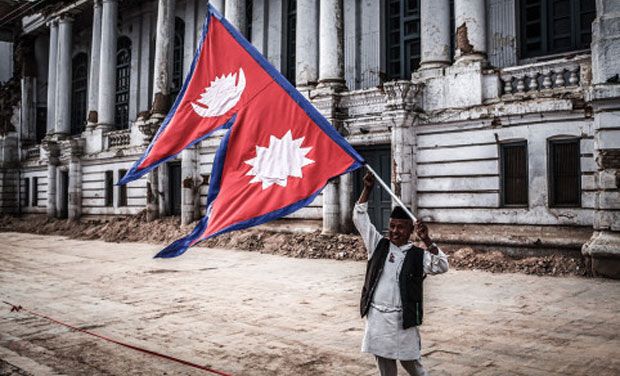
It is on observing the turmoil in Nepal that one thanks the architects of the Indian constitution for their foresight and meticulous thought. The transition from an absolute monarchy, to a nominal one, and eventually to a democracy has not been a smooth ride for Nepal, with blood being shed along the way. Nepal’s 7th constitution in 67 years was promulgated by President Ram Baran Yadav on 20th September amidst much dissent.
Cause for dissent
The constitution of a country lays down the principles on the basis of which the nation is governed, spells out the rights and duties of its people and the safeguards against them. In a country with vast and varied diversities amongst its people, the constitution must provide for the coexistence of all pluralities. Though the constitution of Nepal celebrates the country’s transition to a secular, democratic republic from a Hindu monarchy, certain sections of the society have been alienated. Madhesis (those living in the Terai region bordering India) and Janjatis (the indigenous, tribal people) are protesting against what they claim is the arbitrary demarcation of provinces within the new federal system that divides the country into seven provinces. The Madhesis and Janjatis have also predominantly acquired citizenship through naturalization, which disqualifies them from holding positions of the head of state, head of government and constitutional bodies. Only citizens by descent are permitted to hold such posts and this is considered to be discriminatory.
What is India’s take on the new Constitution?
India sees the new constitution as being unrepresentative of large sections of the population, that is, Madhesis and Janjatis. Besides, the violent protests of these groups have led to chaos along the open border that India shares with Nepal. This instability is a cause for concern on both sides of the border. However, Nepal’s retort is that their constitution is more considerate of minorities than India’s, since it guarantees 33 percent reservation for women.
Nepal must look inwards and make amendments suitable to that of a regionally diverse, nascent democracy that is arising in domestic and global circumstances. Ones that are drastically different from that of the rise of the Indian democracy. Nepal is a sovereign nation, but where India’s interests and stability are threatened, India must make a point.
The shelf life of a constitution that a large proportion of the population does not agree with can be questioned. A nation ceases to be a democracy if its people do not identify with its constitution. Imposing it by force destroys the very spirit of a democratic republic. Will Nepal see the creation of a third Constituent Assembly in 67 years?
Image credits: www.decchanchronicle.com
Abhinaya Harigovind


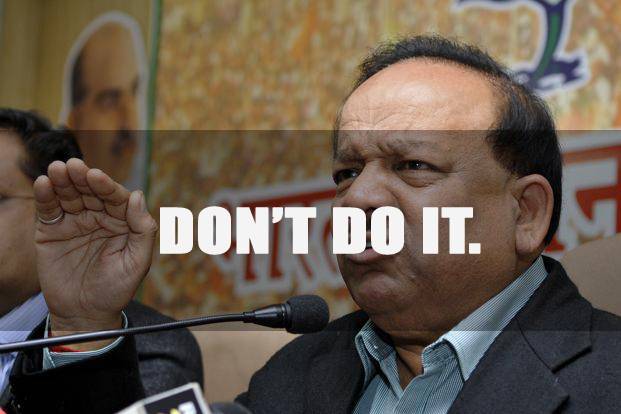



 Markandey Katju speaking at Kirori Mal College[/caption]
Katju was of the view that every nation makes a transition from feudal agricultural society to a modern industrial society, but in case of India, we are stuck somewhere in the middle of these two phases. He not only commented on the sad state of affairs of the parliament and bureaucracy by calling politicians ‘a bunch of rogues and rascals’, but he also presented the unfortunate state of the Indian media that is more interested in covering Sheena Bora Murder, Radhe Maa and Bollywood, rather than bringing forth the plight of farmers who are committing suicides.
Interestingly, he pointed out the pitiable condition of Police investigations in India, stating that the ‘Darogas’ must see and learn from Sherlock Holmes. For him, India would soon face a social revolution and things will become terrible and turbulent by 2020. However, our national aim should be to make India a modern, scientific and industrial state, for which a revolution is increasingly necessary.
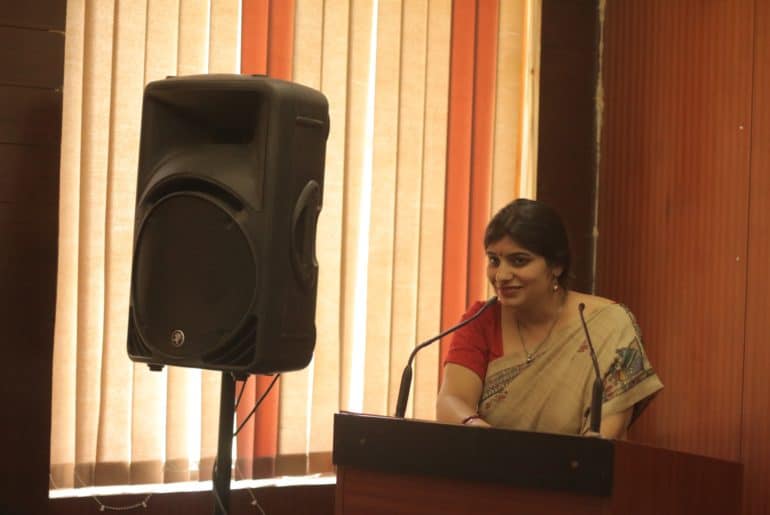
After Mr. Katju’s words of wisdom, academician- Dr. Indira Bhardwaj spoke about her vision of India. A faculty member at Delhi School of Business, she highlighted the ever pervasive problem of employability, explaining it as the art of doing routine things in a better way. She criticised how Indians lack innovation and how we make an imagined hierarchal difference between jobs by bifurcating them into either menial or sophisticated jobs. She stressed on learning and respecting ‘dignity of labour’, by treating all job platforms with equal respect.
After former Justice Katju and Dr. Indira, the final speaker that enthralled the audience was politician, Subramanian Swamy. According to the former Cabinet minister, a DNA study claims that, ‘all people of India are originally Hindus or their descendants had a Hindu identity.’ Taking his genetic research adventure forward, he stated how he got the DNA structure of Maharashtra Navnirman Sena (MNS) chief Raj Thackeray matched with a person from Uttar Pradesh, claiming that Thackeray, who mocks North Indians himself has ancestors from UP. By virtue of these anecdotes, he aimed to highlight that every person in India is an Indian first, a north or south Indian next.
[caption id="attachment_34918" align="aligncenter" width="269"]
Markandey Katju speaking at Kirori Mal College[/caption]
Katju was of the view that every nation makes a transition from feudal agricultural society to a modern industrial society, but in case of India, we are stuck somewhere in the middle of these two phases. He not only commented on the sad state of affairs of the parliament and bureaucracy by calling politicians ‘a bunch of rogues and rascals’, but he also presented the unfortunate state of the Indian media that is more interested in covering Sheena Bora Murder, Radhe Maa and Bollywood, rather than bringing forth the plight of farmers who are committing suicides.
Interestingly, he pointed out the pitiable condition of Police investigations in India, stating that the ‘Darogas’ must see and learn from Sherlock Holmes. For him, India would soon face a social revolution and things will become terrible and turbulent by 2020. However, our national aim should be to make India a modern, scientific and industrial state, for which a revolution is increasingly necessary.
After Mr. Katju’s words of wisdom, academician- Dr. Indira Bhardwaj spoke about her vision of India. A faculty member at Delhi School of Business, she highlighted the ever pervasive problem of employability, explaining it as the art of doing routine things in a better way. She criticised how Indians lack innovation and how we make an imagined hierarchal difference between jobs by bifurcating them into either menial or sophisticated jobs. She stressed on learning and respecting ‘dignity of labour’, by treating all job platforms with equal respect.
After former Justice Katju and Dr. Indira, the final speaker that enthralled the audience was politician, Subramanian Swamy. According to the former Cabinet minister, a DNA study claims that, ‘all people of India are originally Hindus or their descendants had a Hindu identity.’ Taking his genetic research adventure forward, he stated how he got the DNA structure of Maharashtra Navnirman Sena (MNS) chief Raj Thackeray matched with a person from Uttar Pradesh, claiming that Thackeray, who mocks North Indians himself has ancestors from UP. By virtue of these anecdotes, he aimed to highlight that every person in India is an Indian first, a north or south Indian next.
[caption id="attachment_34918" align="aligncenter" width="269"]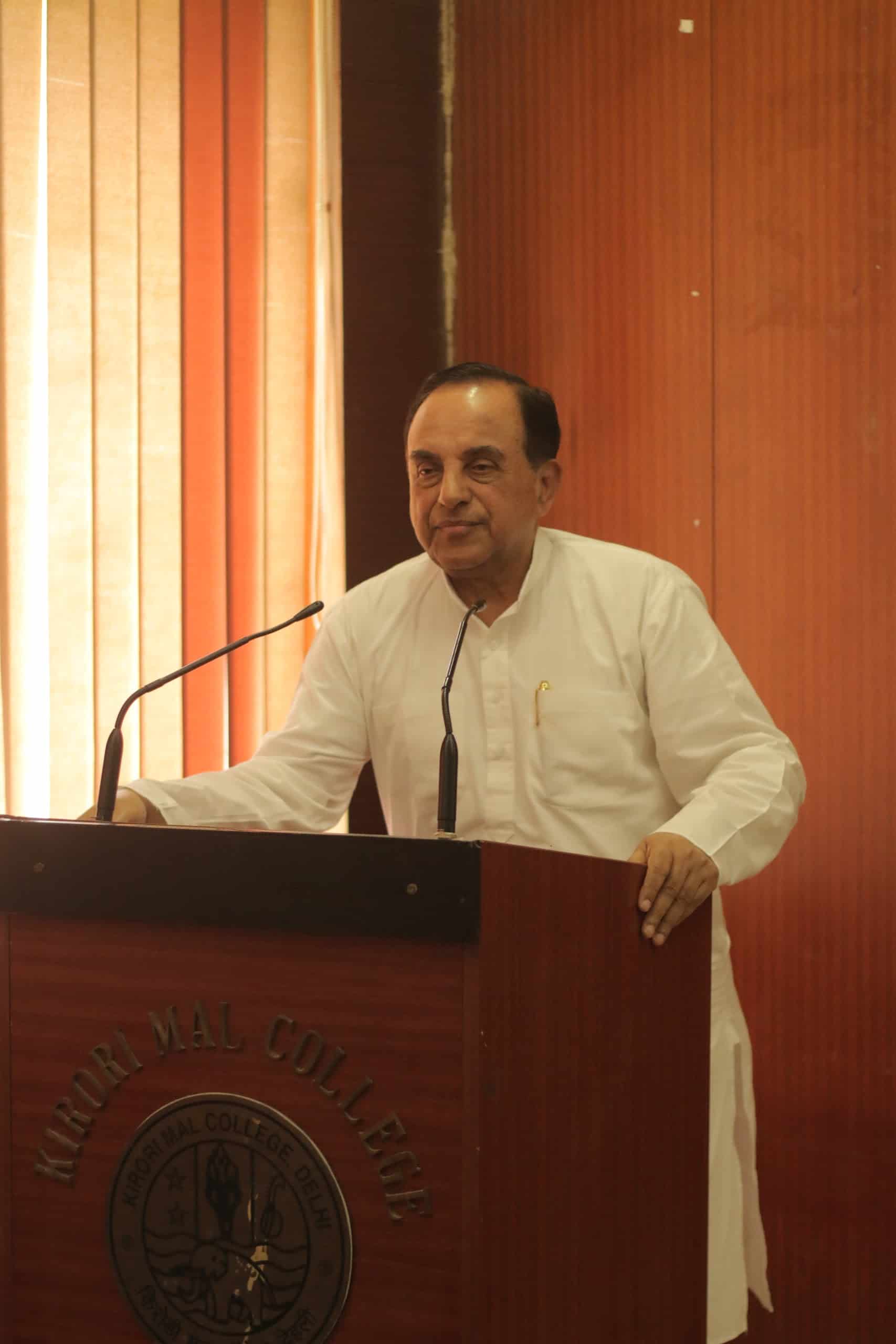
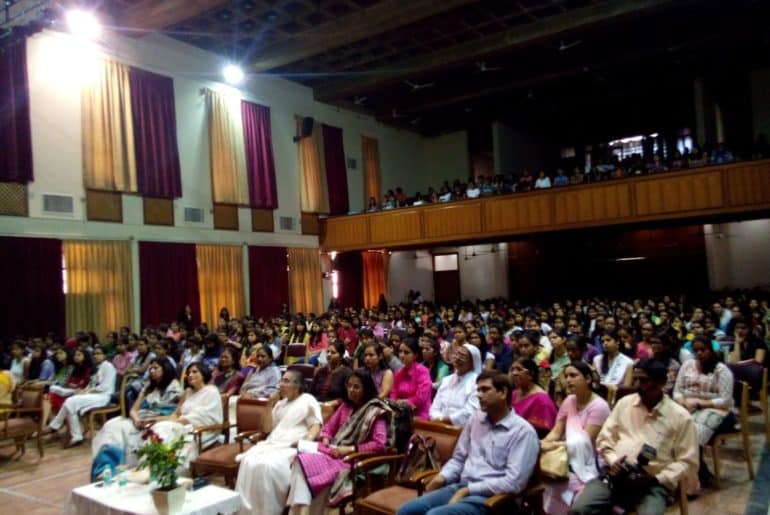
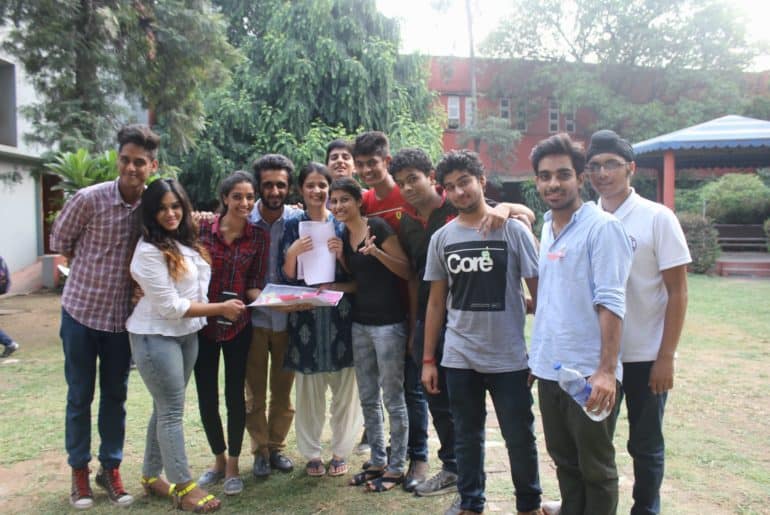
 A talk on Resume Building followed, where students were given information about having an impressive resume, developing confidence and facing interviews. Then, an interactive Campus to Corporate session by the alumni took place.
Lastly, an innovative presentation on ‘Real time application of mathematics’ was displayed to the students. The event will continue tomorrow, with math oriented events like Sudoku, Red letter Quiz, Faking the research, Mathematical tambola, Mathematical pictionary and Decoding the map.
Image Credits- Uzma Rehman for DU Beat
Lovleen Kaur
A talk on Resume Building followed, where students were given information about having an impressive resume, developing confidence and facing interviews. Then, an interactive Campus to Corporate session by the alumni took place.
Lastly, an innovative presentation on ‘Real time application of mathematics’ was displayed to the students. The event will continue tomorrow, with math oriented events like Sudoku, Red letter Quiz, Faking the research, Mathematical tambola, Mathematical pictionary and Decoding the map.
Image Credits- Uzma Rehman for DU Beat
Lovleen Kaur