Author

DU Beat

Browsing

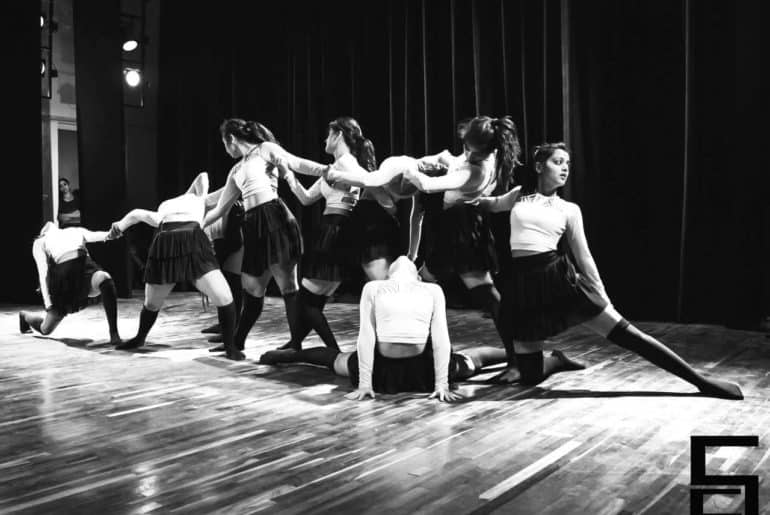
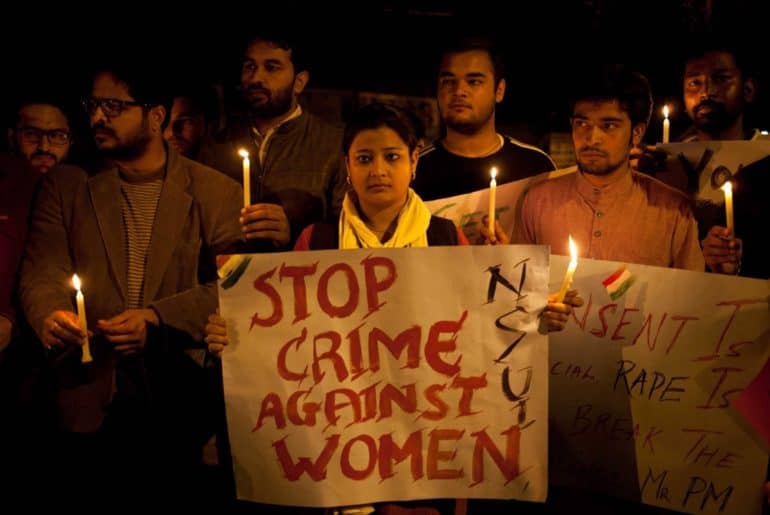
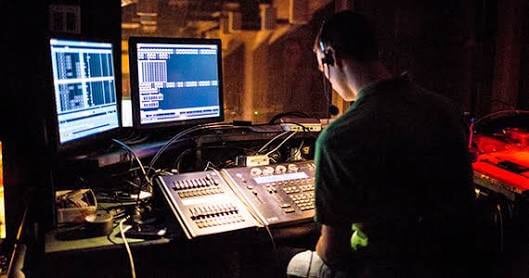
Having been a part of the production crew in a theatre society from the past year and a half, many have raised eyebrows and questioned my role in the society. Considering similar plight of the production crew in associated performing societies, it is crucial to laud their hard-work and diligence once in a while.

The notion that production members are replaceable in a performing society is highly questionable and outright false. The success of any performing society is directly proportional to the talent and hard work it constitutes. Any normal person would categorise that success to the ones directly under the limelight, and tend to overlook the scores of people that are involved behind the curtains to make the act a success.

Many performing societies have a team of individuals working dedicatedly without acknowledgement. In a fashion society, the success of the models on ramp is heavily dependent on the designers and makeup artists who work as back-team to put up a successful show. Music tracks are selected and played by them, the choreography decided, and they also oversee sponsorship to ensure continuity of funds.

Similarly, theatre is performed collectively. The actors hog the limelight and the production members not always given equal importance, simply because they don’t appear on-stage. From managing prop and set designing, tweaking each line of the script to fit perfectly with the rest, arranging for props and setting up the stage under a time crunch, to ensuring perfect timing of sounds and impeccable lighting in each scene- these are just a few obvious tasks a production member in a theatre society performs. In a street-play society, there are percussionists and scriptwriters, working tirelessly as well to put up a thrilling production. Oftentimes, the same people are engaged in costume designing and makeup of the actors going on stage, and it’s an understatement to say the very least that they are pivotal to the play’s success alongside the actors’ talent.

In a music society too, apart from professionals hired from outside, there are individuals working on the sidelines, if not completely backstage. These people coordinate with the college staff to ensure the perfect reverb or bass in mikes and also play instruments. There is also the conductor, who manages the ensemble and directs them towards showcasing a mesmerising performance.

Production work is not meant to be seen, but it can certainly be acknowledged by the audience enjoying the act. The next time you see a perfect set with impeccable lighting and a literal spotlight on the actor’s face, don’t forget to acknowledge the efforts of the crew whose time and work went into ensuring the scene is perfectly done.


Feature Image Credits: Drexel University

Vijeata Balani
[email protected]

The beauty of some moments lies in the fact at how short lived they are.

These fleeting moments are interspersed by complex emotions making it really difficult to put it into words. However Priyanka Sharma Kaintura deals with these emotions with a lot of subtlety leaving the readers wanting for more.
An amalgamation of bite sized stories and poems; this book is divided into seven different parts. Each part explores the different moods of the author. The first part titled ‘Orations’ has diverse range of really short stories or experiences ranging from mythology to partition of India. One such article titled ‘What Makes Shiva So Desirable’ really stood out for me where the author in around three hundred words tries to understand what exactly it is about Shiva that attracts everyone to him. In this manner the author takes stories and ideas from around us that are hugely popular and connects it to our day to day life and experiences.

The second part of the book titled ‘Eclogues’ is a compilation of poems. These poems seem to convey experiences and emotions that are close to the author’s heart. They string together a beautiful tale of author’s dreams, aspirations, desires and her unspoken thoughts. The next part of the book titled ‘Monologues and Dialogues’ explores short conversations on diverse topics that give the readers a food for thought. The fourth part of the book contains some really short stories. The fifth and the sixth part of the book are divided according to the moods of the author and are titled ‘Pathos’ and ‘Satire and Sarcasm’. While the last part of the book ‘Life Aphorisms and Epigrams’ deals with complexities of life in around four or five line poems.

This compilation of stories, poems, ideas and opinions are a kind of personal reflections by the author on a diverse range of issues. This book closely reminded me of Paulo Coelho’s ‘Like the Flowing River’ which also followed a similar format. Though in some stories Priyanka Sharma Kaintura fails to engross the readers, she manages to tighten the grip on her audience in other parts of the book. These recollections by the author will put you in her shoes and help you to understand life through her eyes. This book leaves one contemplating about the mundane things that should be appreciated but usually go unnoticed in the hustle bustle of life. Although few stories fail to resonate, it is not difficult to find a lot of other stories and poems that are sure to strike a chord. The author at various occasions articulately conveys a nexus of emotions leaving the readers much to think about. I would recommend this book to anyone who wants to unravel some mysteries of human life.

Image Credits: YouTube


Anukriti Mishra
[email protected]

It is very rare that one gets an opportunity to show appreciation for a city that has rewarded one in multiple ways. Here’s an epistle brimming with gratification, admiration, and affection for the sheer beauty the capital harbours!

Dearest Delhi,

It has been more than two years since I stepped foot in your cultural lap. I remember how the prospect of living alone for the very first time seemed daunting to me. Nevertheless, I was very excited to begin a new chapter of my life. Here I am today, a million experiences old and inextinguishably in love with this city!

It took a lot of time for me to adjust to the maze that this city is. Every time that I got lost, both figuratively and metaphorically, you only taught me how to find my way back home. You have told me how important it is to pick up the pieces lying on the floor after people and things shattered my confidence to the foundation. You have taught me to believe in myself no matter what the circumstances are. However, I am most grateful to you for giving me the opportunity to meet people from all walks of life and engage in life-changing experiences with them.

The friends that you have been the stage for have become my family, who will stick with me through thick and thin. At every nook and corner of this city, I find someone who inspires me to achieve a little more. More than anything, you have taught me to appreciate the little things in life and be content with them. You have a big heart, ever ready to forgive a person, but are ruthless when injustice is rendered to your loved ones. Whenever I have faced hardships, I found people around me to help and guide me so as to rid me of those pangs of loneliness.

How can I ever thank you for helping me to embark on this journey of self-discovery? In ways, more than one, you helped me find my individualistic corner and for this, I can never stop loving you. Your age-old stories give me perseverance and strength to stand on my own feet. In a very short span, you have provided me with warmth and love of home so much so that I do not like spending time anywhere else.  I know for a fact that if I ever leave you, I will never stop missing sipping chai in the morning while watching the sunrise. It is in your sunrise that I have found my dreams, the courage to pursue them and search for solace in life. I raise my glass to you and hope for many such inspiring and rejuvenating mornings. I hope that those new to this city fall madly in love with you as I did. As Prasoon Joshi flourishes out the magnificence of Delhi in this iconic song,

“Ye Dilli Hai Mere Yaar

Bas Ishq, Mohabbat, Pyaar”

Yours lovingly,

One of the many you inspire to rise and shine every day


Feature Image Credits: Culture Trip


Anukriti Mishra

[email protected]


Ankur, the theatre society of SGTB Khalsa College wraps up its 5th annual production ‘Raag Darbari’. The show ran successfully with the play being heartily applauded by the audience. The theatre ran houseful all three days. The play was appreciated for its interesting sounds, incisive lights, and a grand set design. The star of the show was its characters which were highly detailed, well-layered and quite relatable. All the theatre artists did justice to their part. Ankur is grateful to all the individuals and communities for their love and support.

dsc_0252

Image Credits: Ankur, SGTB Khalsa College

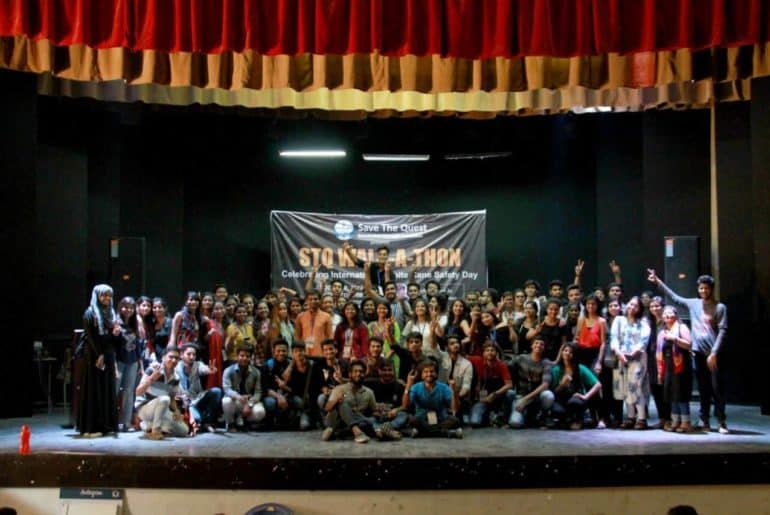
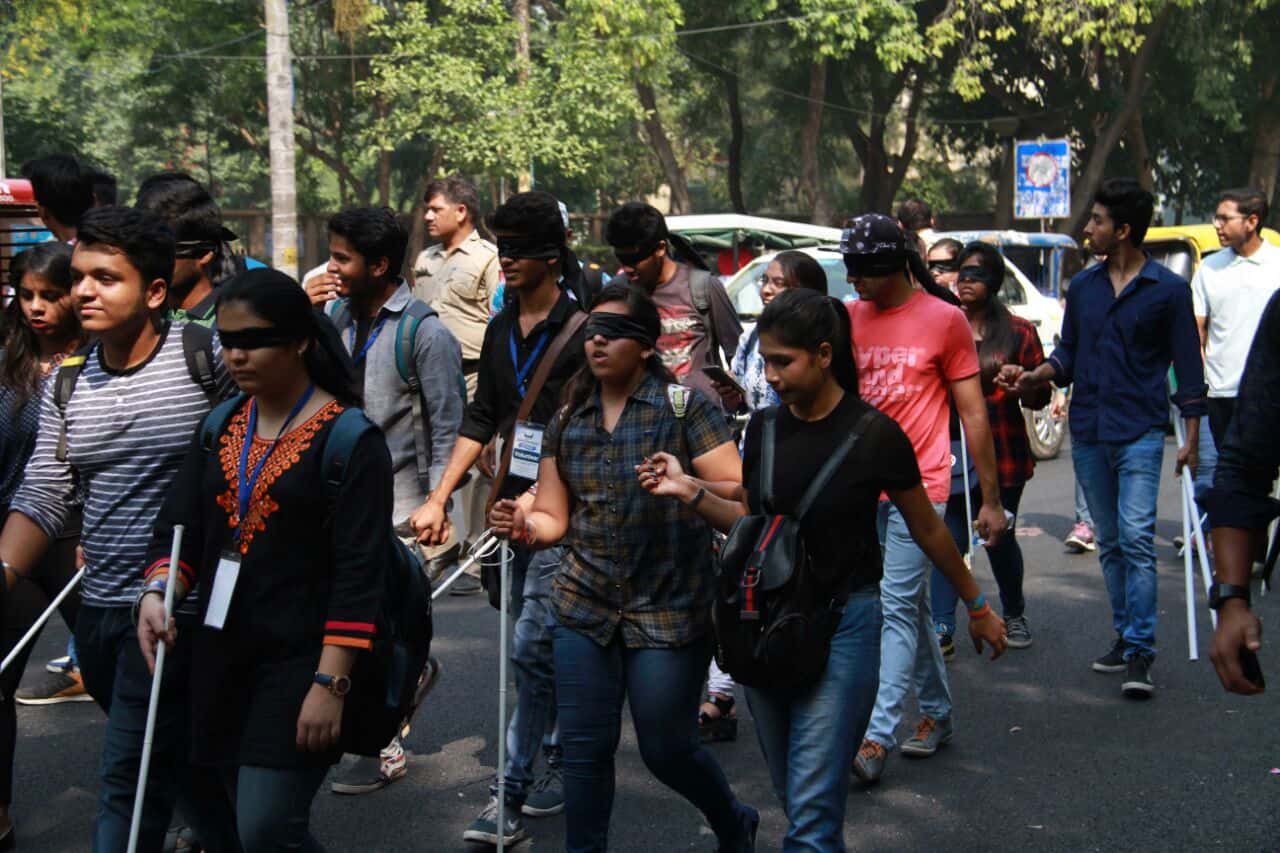
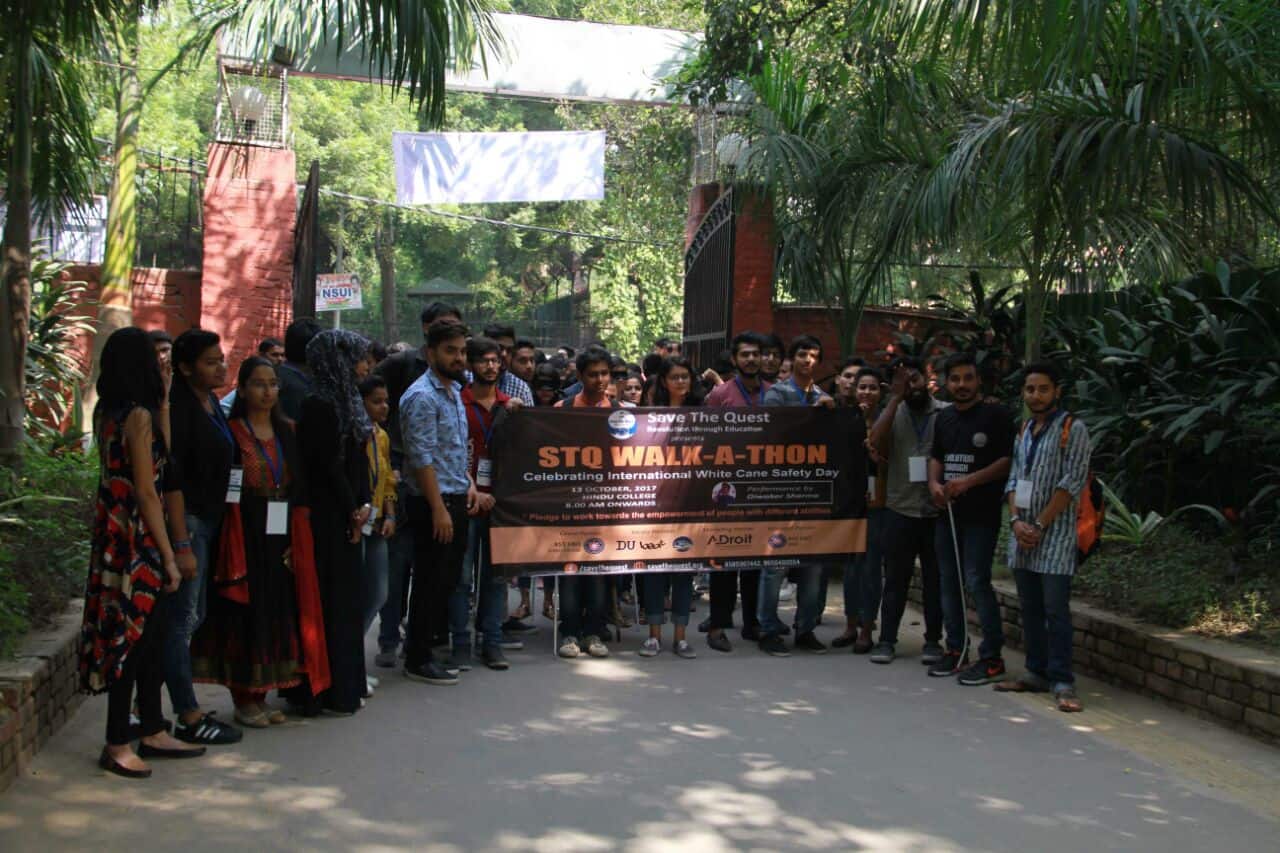
On the eve of White Cane Safety Walk, Save The Quest organised a blindfolded walk throughout the North Campus, University of Delhi. The purpose of the walk was to sensitise people about the difficulties faced by the visually impaired people and how we can help them with a little effort.
The event started off with registrations at 8:30 in the morning. Orientation programme took place in the auditorium where we were welcomed by the teacher-in-charge of NSS Hindu College and the founder of STQ, Mr. Saif Ahmed Khan. At 10:30 we were asked to hold a white cane, put a blindfold and join the crowd with a partner each. One was blindfolded and other remained sighted, which got reversed half-way through the walk. It was not just an emotion of selflessness, it was a feeling: to salute our fellow visually impaired friends who manage to carry out their daily chores. We were accompanied by a chain of volunteers and policemen who controlled the traffic. A 2 km blindfolded walk and we faced so many difficulties in getting through despite having someone to guide us and the visually impaired ones- they do not always have people around them to be their eyes. The world seemed black and the way we were walking on, vast and scary. We came back to our starting point, shared our views on how we felt and what we feel towards our friends. Then, we had a performance by Save the Quest VIS band.
Mr. Saif Ahmad Khan distributed white canes and Braille Signature tool to all the visually impaired students present there and later a vote of thanks to NSS Hindu, Adroit, advertising society DCAC, NSS DCAC: all for their selfless hard work.
img-20171015-wa0007 img-20171015-wa0008 img-20171015-wa0009

The recent fest of IIT Delhi, Rendezvous, was held from October 13 to 16, 2017. October 13 and 14 constituted the prelims of the various societies from across University of Delhi and IIT, Delhi.

Amidst the spirit of festivities and competition, Lady Shri Ram College’s Dance Society was disqualified despite making it to the finals owing to their ‘misbehaviour’. When the college’s dance society members demanded water bottles before their performance in the prelims, they were denied and told to go on stage without water. Putting up with this non-compliance of a simple request, LSR gave their best and got selected to appear for the final round by the judges.

Wing water is provided to all performing societies by the host college as the performances suck up all their energy and are exhausting. Unavailability of water can lead to dehydration of the team members which can ruin their performances.

After the prelims of the Western Dance Societies of DU colleges and IIT Delhi, the societies that reached the finals actually were – Misba of SGGSCC, Verve of Sri Venkateshwara College, Footloose of Shivaji College, LSR’s Dance Society, Zeal of Maitreyi College, and V-Defyn Dance Academy of IIT Delhi. After the tally of marks, this list was given to IIT Delhi’s BRCA, the organizing team to be uploaded and spread to the finalist teams.

The actual list uploaded by IIT Delhi fest organizers had the following finalist teams – Misba of SGGSCC, Zeal of Maitreyi College, Crunk of Sri Aurobindo College, Enliven of Gargi College, Verve of Sri Venkateshwara, and V-Defyn Dance Academy of IIT Delhi. Lady Shri Ram College’s Dance Society was removed without any prior information.

The original list of the finalist teams was requested by LSR to the judges who were courteous enough to provide it.

When the changed list was uploaded and LSR’s Dance Society wasn’t on the list, they contacted the PoC (person-in-charge) and were informed in a curt reply that their ‘misbehavior’ of asking for water had led to their disqualification.

The Society has posted on their Facebook page and questioned the authenticity of such fests if the lists can be changed on the whims and fancies of some students. Even the judges weren’t informed of this.

Meanwhile, the Dance Society of IIT Delhi has posted a clarification on their facebook page in which it accepts that there was a problem of availability of water in the spot due to some mismanagement from the hospitality team of RDV. The same conditions were also applicable to all other teams as well who managed to get water from the cooler. The disqualification of LSR was a decision of the organising team because their action delayed the event by sometime which prevented other participants from getting their promised time slot.

While the Dance Society, BRCA were not available, the dance society of LSR refused to speak to us.


Feature Image Credits: Dance Society, Lady Shri Ram College’s Facebook 


Prachi Mehra

[email protected]

Thanks to an impressive array of Bollywood movies and pop culture’s depiction of the University of Delhi many people are under an illusion that life of a college student is all fun and play. But now, with each assignment and test, the illusion of glamour is getting over alongside the semester itself. The credit for this goes to Internal Assessments.

Internal Assessment (IA) refers to a quota of 25% marks that is reserved for continuous flow of assignments, attendance, and tests that take place throughout the semester.
The breakup and weightage of IA is:
• Attendance- 5%
• Written assignments- 10%
• Class test(s)/ Quiz(s)- 10%
While 25% of the maximum marks in each paper is assigned for Internal Assessment the remaining 75% marks are for the final end of the semester examination.

With Delhi University’s exhaustive syllabus, regular work in form of tests and assignments keeps us in touch with the academics which ultimately reduces the burden for final preparation. The long readings are often neglected by the students, and when they finally come across the study material two days before the exam, they freak out. With internals one becomes familiar with the text, and instead of last-minute cramming students actually pause and learn. Also, since marks are awarded for attendance, this provision encourages more and more students to turn up.

Another benefit of Internal Assessment is that, if a student is failing by one or two marks, the teacher can sympathetically increase the internal assessment score.
However on the flip side, many students believe that Internal Assessment is nothing, but incessant nagging of work. Even though assignments are supposed to span across the semester, what ends up happening is teachers concentrate all work in last few weeks. When three-term papers with 3000-word limit are assigned just a few days back, students have no other choice but to shamelessly indulge in plagiarism. Therefore, most people those who turn up the assignments do it for the sake of it. Many students also question the need for tests in the middle of the semester when they ultimately have to write final exams.

This time, first week of October was declared as the Internal Assessments week in many Delhi University colleges. It is impossible not to question the logic behind this system. Mugging up facts to spill out on empty sheets over a course of one week is as good as not appearing for tests in the first place, except the marks are an easy catch. Most students would rather opt the easy way out and complete the required assignment, pulling all-nighters, regardless of the knowledge gained in the process. According to Nivvedhitha Shankar, a second year student of Commerce from Jesus and Mary College, a prerogative of case studies for internals can help both the parties involved. Students can learn in the process, and teachers can devise new and innovative ways to ensure students score well. Putting equal impetus on assignments and case studies can go hand-in-hand, and can give students the outlet to apply theoretical concepts in real life.
Similarly, the 5 marks alloted for attendance mark a controversial grey-zone in the ambiguous clout. The intention was to recognise regularity and discipline in students, but it more or less fails at that. In many DU colleges, professors care little about attendance marks and mark very leniently. Some professors can be equally uptight regarding attendance matters. There can be a major difference in scores because of these 5 marks. A meritorious student who is keen on participating in competitions and attending conferences may feel helpless. Despite his/ her ability to finish the syllabus quickly, there is always an added pressure of losing marks on the pretext of attendance.

However much we praise or neglect internals, they are here to stay. Our best shot is to question regressive methods of teaching and hopefully not get penalised for the same.

Feature Image Credits: India Unimagined


Niharika Dabral
[email protected]

Vijeata Balani
[email protected]
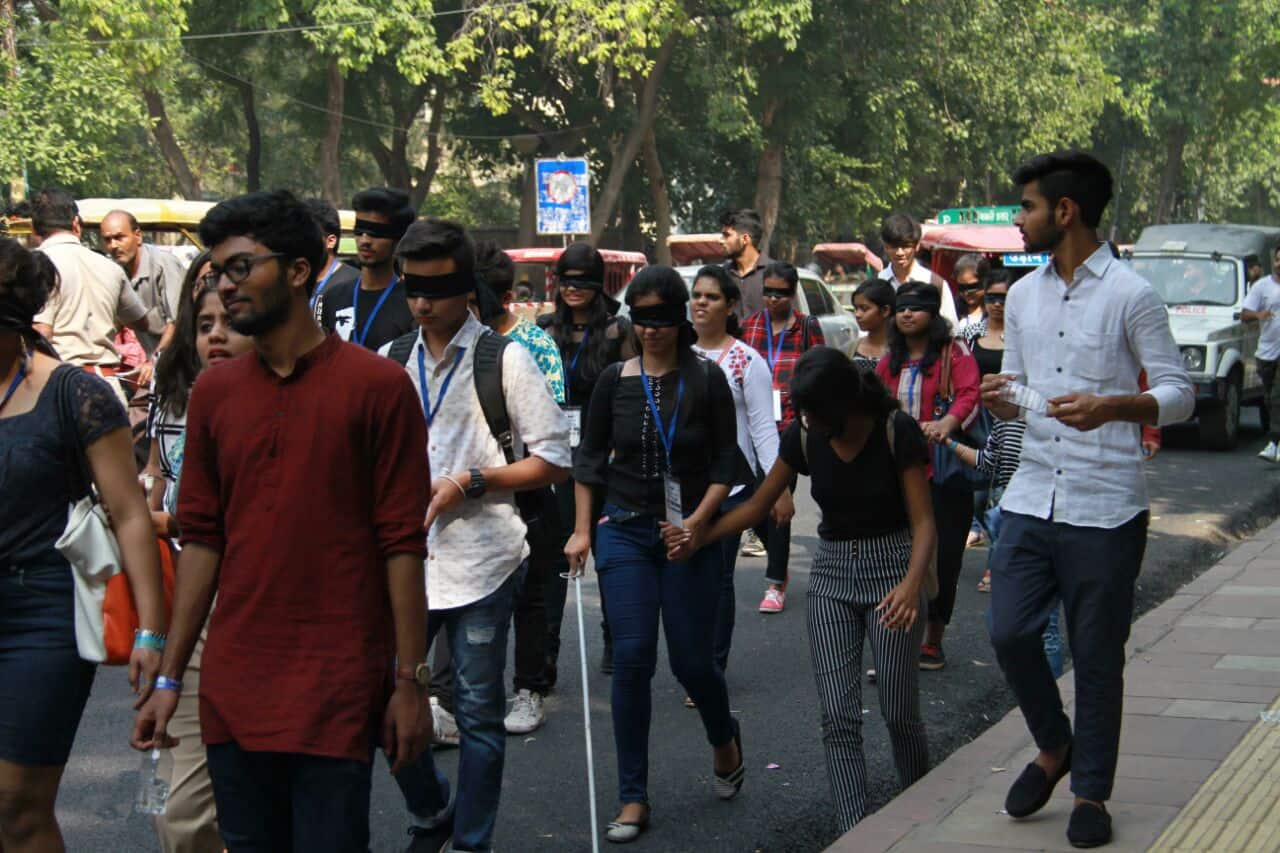
The Delhi gang-rape shook the entire country urging people to question themselves on women safety and women empowerment in India. So let’s see how far have we really come along since then.

The horror of Nirbhaya rape case is still fresh in the minds of Indians. Shame, embarrassment and disgust is all one is reminded of when one thinks of the incident. This urged people to come out on the streets in anger and remorse protesting against sexual harassment. It highlighted the degree of danger women need to deal with and more importantly, the need to make the country a safer place for women.

It did have some immediate impacts:  the 2013 Criminal Law Amendment Act, also known as Nirbhaya Law introduced a minimum 20-year-sentence for gang-rape culprits and those who are found guilty could now be given a death penalty. This was a big step taken by the Indian government to ensure adequate punishment to such offenders. The government defined acid attack as a crime with a minimum sentence of 10 years that could be extended to life in the 2013 Amendment Act. Also, the government made acid attack a non-bailable offense with a provision to pay Rs. 3,50,000 to the victims within 15 days.

Taking a stance on sexual harassment, the 2013 Women at the Workplace Act has given protection against sexual harassment to all women in the workplace, including those informal industries and domestic workers. Also, stalking or voyeurism crimes are non-bailable which earlier were bailable. The introduction of new laws focusing on women safety and maximum punishment for offenders. These laws try to cover as many ways as possible to minimize the various possible risks and crimes towards women. However, these laws and the rigidity towards the issue seem to have made little impact. Statistical data show that rape cases in India moved up from 24,923 in 2012 to 34,651 in 2015. According to NCRB, conviction rates in Delhi went down from 49.25% in 2012 to 29.37% in 2015. However, Delhi Police released a stat showing that the conviction rate has increased 5.4% from 2012 to 2015.
The Modi government launched the ‘I Feel Safe’ app, a personal safety app which is accessible even without data connection. The app was launched in 2016. The app places automatic call to 100 and tracks the location of the person in distress within 30 seconds. As per a report by Quint, published in 2016, sexual assault cases in Delhi have tripled since 2012.

Even after so many years of debate, discussion, the ‘apparent’ progress, stats reveal that we are nowhere near achieving the goal of women safety. In fact, we are worse off. Highlighting the matter does not mean that the matter is being solved. It can never be solved until it is confined to change of laws and introduction of apps. There will be a difference only when there is a change in our mentality. Yes, such things take time but we need to first move in the right direction. After all, the journey of a thousand miles begins with a single step.

Feature Image Credits: The Time Magazine


Karan Singhania
[email protected]

If you are planning not to go back home this Diwali, you should definitely try the following so that your holiday doesn’t go to waste.

The festival of lights is already here, having enlightened people to make their plans for this Diwali. The sight of the earthen ‘diyas’ brings smile to the faces that look forward to light them. The entire idea of bursting crackers makes up for the most memorable moments of everyone’s childhood. The variety in the scent of the mouth-watering dishes that overpowers the breeze- become the harbinger of the guiltless cheat.

However, if you are planning on staying or are staying away from home this Diwali; you will be in need of the some suggestions. This is because despite consoling oneself of one’s capability to spend through the festive days. It becomes tough: the thoughts of the past have this tendency of haunting you, making you miss your friends and family, thereby, filling you with a sense of regret of the decision of staying alone.

1) Join your relatives:
This should top your list if you are lucky enough to have relatives in the same city as you are living in. This is equal to spending time with your family. Moreover, cousins make up for the best match to spend a festival with; you might recall your childhood memories, play card games and most importantly, have home-made food, something that most people are unfortunate to miss out on.

2) Spend some me-time:
This will definitely work for you if you are a loner kind of a person. The best part of staying away from home is the luxury of being able to give yourself time and perch upon the thoughts that otherwise you would have been unable to do with all those doting relatives surrounding you. You can either watch a movie and order good food or just sleep the entire day and do nothing. This is definitely not less than nirvana!

3) Volunteer at charitable homes:
This might be a good way to spend the Diwali if you are missing the company of your loved ones. You might foster some new and exciting bond with people who will have really interesting stories to tell. Moreover you will contribute and help bring light to the life of people living in the margins. These neglected people living in reduced circumstances are not able to spend this festive time as they rightfully deserve to. The smile that you will bring on their faces might bring you a lot of joy and happiness. As everyone says a little good deed goes a long distance.

4) Getaways on a limited budget: There are a lot of good places to visit near Delhi. These trips can be covered in a day or two on a very limited budget. There won’t be a better time to take a trip that you have long been planning to but are unable to because of the busy schedule. You can visit Lansdowne, McLeod Ganj, Kasauli, Surajkund or any other place. This getaway will help you rejuvenate yourself especially as semester exams are not far off and you will need to start preparing as soon as Diwali ends.

5) Explore the city:
If you don’t want to take a trip there are many other options that you can try. Delhi itself has a lot of beautiful places and monuments that you can go out and explore. You can take your camera and capture these beautiful places. Being alone has an advantage that you are not dependant on someone else to make a plan. Other than that you can indulge yourself in some shopping. Who does not like spending money on clothes and food?

So we hope that you seize the day and enjoy this Diwali at its fullest.

Image Credits: Fsquare Fashion


Shrija Ganguly
[email protected]

Anukriti Mishra
[email protected]


On the occasion of World Mental Health Day, Mental Health Foundation (India) in association with the Department of Psychiatry, AIIMS organised India’s first Mental Health Festival. With the tagline, “Art has the power to liberate your soul”, the daylong event saw an array of creative activities and art forms revolving around stress, emotional well being, trauma, and mental disorders.

The festival started with lighting of the lamp ceremony by Prof. R Guleria, Director of The All India Institutes of Medical Sciences. Then Dr. Nand Kumar, Organising Chairperson, and Shri Anil Aggarwal, Chairman of Ramjas College, addressed the audience and congratulated the organizers for the noble initiative.

The first event of the day was a vibrant dance performance by Four Steps India, a psycho-educational and therapeutic center. Dancing to the tunes of “Taare Zameen Par”, the special kids enthralled the audience and spread the message of ‘Disability is not an Inability’.

This was followed by a thought-provoking act performed by Zaahir, the dramatics society of Mental Health Foundation (India). The play spread a strong message of following your passion despite the societal expectations by charting the journey of a girl Saumya, who grew out of self-harm and achieved self-acceptance.

Later, an informative debate moderate by Dr. Saurabh Singh discussed the pros and cons of Mental Healthcare Act, 2017. Doctors from All India Institute of Medical Sciences talked about the Act from a patient as well as policy perspective. They also discussed the decriminalization of suicide and how over 50 million Indians who live with some form of mental illness suffer due to lack of awareness among the masses.

After the debate, the much-awaited dance completion took place. After clearing the preliminary rounds, two teams contested for the win. Advaita – the dance society of Keshav Mahavidyalaya tapped to the beats of peppy Bollywood hits, while the second team consisting of two dancers Ayushi and Vani gave a beautiful Bharatnatyam performance. The competition was judged by Mr. Prashant Sisodia, Entertainment Editor at NDTV.

At noon, the iconic Bharatnatyam dancer and Padam Shri awardee, Ms. Geeta Chandran graced the Mental Health Festival in the capacity of a Chief Guest. She spoke about how Indian classical dance reinforced positivity in her life. Natya Vriksha, a dance company founded by Ms. Geeta herself also gave a captivating dance performance which received a hearty applause.

The last event before the break was a symposium, moderated by Mr. Sanjeev Upadhyaya, which brought out varied viewpoints on the topic- Mental Health in the Workplace.  One of the panelists, Mr. Rajeev Chandran, Global Head of Accenture’s Leadership programme asserted that corporates must treat mental fatigue as a legitimate medical cause. Mr. Kaunain Sheriff, a senior correspondent of Indian Express, spoke about the stress that journalists are facing after the advent of social media in newsrooms. Overall, it was a very insightful discussion.

After the break concluded, the event continued with the same zeal with the Poetry Slam Competition, ‘Words Will Set You Free’. Participants from various colleges performed their moving pieces of the spoken word, that was followed by a special performance by slam maestro and jury memeber, Diksha Bijlani.

This was followed by public lecture and panel discussion, again, on the topic, ‘Mental Health at Workplace’ which was presented by AIIMS. The lecture was aided by an informative slide show and the focus of the discussion was on how mental illness should be recognised in the workplace, just like physical illness is. This event was followed by a short tea break in the foyer.

Right after, the fest resumed with the exciting Music Competition, ‘Creating Symphonies on the Go’ which had three excellent performances lined up by artists from different genres. The competition was judged by Ms Kamakshi Khanna and Ms Mandakini and was enjoyed thourougly by the audience.

The last event of the night was the closing performance by Manzil Mystics, choir group who performs traditional and folk Indian music. The group enthralled the audience and brought India’s first Mental Health Festival to an end.


Feature Image Credits: Shivam Sharma

Niharika Dabral
[email protected]

Anagha Rakta
[email protected]