Author

DU Beat

Browsing

The even semester is supposed to be a period of intense activity with its various fests, competitions, and events. Here’s all that you can expect from them in the upcoming months in University of Delhi.

Depending on various things, your expectations from the even semester will be different. For example, based on what year you’re in, you can be excited about attending fests for the first time, be somewhat excited remembering the fun events you attended the previous year, or be seriously dreading facing your last few months in college. Whether these expectations from this semester will be underscored by feelings of “This is the semester where I get my life together” or “We’re all gonna die in the end so how does one semester matter”, will depend on your standing on the optimistic/pessimist-Nihlist scale. Therefore, this is where a person who’s in the middle of both of those scales can help provide something resembling a sense of objectivity.

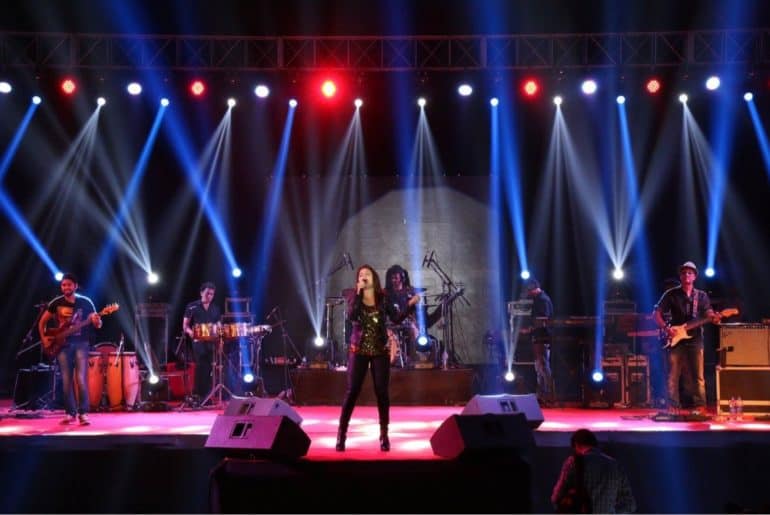
Firstly, fests are okay. There’s the usual range of food and things you can buy somewhere else for a slightly cheaper price. There’s the DJ Nights and the Star Nights, which are really something of a luck thing, and by luck I mean how much money your college manages to raise through sponsorships and alumni. If you get a good performer and a good atmosphere (which means as less overcrowding as possible and a crowd that isn’t breaking through the stage barricading), then you’re in for an enjoyable time. But as is with all college activities, the quality of company is essential. I’d suggest you go with friends who don’t like to document every single moment with photos and stories, and don’t whine too much about delays and general tardiness in organising.

Competitions and society fests are quite enjoyable, too. Unless you’re in the organising society/participating, in which case you have responsibilities, no time to watch the performances, and basically get only a few glimpses of the actual event. However, it is a great time to see other performances when you can, and bond with your fellow members.

So, as you go into the remainder of the year, remember to have reasonable expectations. Try to attend things, to see what works for other people, and it just might work for you!


Feature Image Credits: DU Beat
Rishika Singh
[email protected]
The Mahabharata may have been written centuries ago but it has relevance even in today’s world. Let’s have a look beyond the story. 

The Mahabharata was written between 400 BC to 400 CE but what the text teaches us is relevant even today. The story is an epic because of its complex and long structure but it talks about issues present in the present as well as the past and future. Critics don’t call the Kurukshetra war a fight of good and evil for nothing, it is believed that the Pandavas were incarnations of their fathers who were all Gods and the Kauravas were incarnations of Asuras or demons. Draupadi, wife of the five Pandavas was born an adult woman from the fire of the Earth itself.

The Pandavas are considered to be the five elements of nature which nourish the land or the Earth, Draupadi. She was meant to marry the five elements and not Karna who is an incarnation of the Sun God. The land needs nourishment from all the five elements and cannot stay close to the Sun.
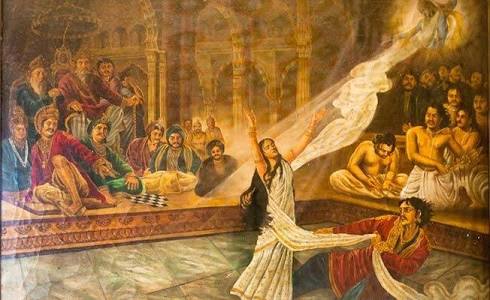
The disrobing of Draupadi is one of the longest episodes in the 18 chapters of the Mahabharata and has a meaning on the ecological plane. Draupadi’s disrobing is symbolic of mankind exploiting the land’s resources excessively. Duryodhana is a representative of humanity and all mankind. His greed and jealously leads to humanity’s fight against nature.

When after losing at the game of dice, the Pandavas and Draupadi are exiled for 12-13 years, it is symbolic of a calamity like drought or famine because the elements of nature are distanced from mankind.
Yudhishtra is the symbol of death, Bhim of wind and Arjun of water. The grotesque war of Kurukshetra is the result of excessive exploitation of nature by humanity for which they pay with their deaths. Only a handful of humans survive to repopulate the Earth.

Dharma and Karma are concepts entwined in a symbiotic relationship in the Mahabharata epic. Death comes to all because what takes birth has to die but your deeds decide your death.
Many critics believe the Mahabharata is only a story and they have evidences to prove their statement. It is a story which has anything and everything that happens in the current world. Devastation and death come to those who take nature for granted. All of us are heading to the very same doom because of our actions. Earth has started rebelling and indicating that we have exploited it to the brim. It is time we realize that our actions will have dire consequences. The latest one was the Delhi smog.


Feature Image Credits: MensXP

Prachi Mehra
[email protected]

Television and digital media have always been the medium of spreading awareness, knowledge, and opinions. In recent times, advertisements have proven to be the ground-breaking realities of the time. From fighting gender stereotypes to supporting LGBT rights, promoting election voting awareness to what not, advertisements have played a leading role in influencing minds and actions.

Let’s put our eyes on some of the stimulating and inspiration-evoking advertisements of Indian television.

Biba – The change begins from home

Change the Convention,  from Biba’s  Change series that targets the prevalence of  arranged marriage in India, is a fresh spin on the ‘boy’s family coming to see the girl’ scenario. The twist sees the girl’s father questioning the boy’s cooking skills. Making the arranged marriage setup fair to both genders doesn’t take much, does it?

Anouk – The Move

Part of their Bold is Beautiful campaign, the ad reflects what young urban couples face in India. When faced with decisions about relocation, the husband tacitly refuses citing reasons of job elevation. Their conversation reveals that the wife has made a similar move in the past for her husband, but this time since it’s her career on the line, he doesn’t think it’s important enough to leave his work life. Ultimately, she decides to move on in order to pursue her career. It’s time we spoke about a marriage of equals.

Havell – Hawa Badlegi

Breaking the stereotypes of changing surnames after marriages, this advertisement takes a new beginning by encouraging even husbands to dare to change surnames.

Titan Raga – #HerLifeHerChoices

They showed us a strong and independent woman who is capable of making her own life choices. She has aspirations and is not afraid to take control of her life in her hands.

Airtel – Boss

This ad features a modern-day couple. The woman is a multi-tasker who handles her office and juniors at work and then comes back home to prepare food for her husband, who is still at his workplace on his boss’ (in reality, wife’s) orders. 

Whisper – Ab Waqt Hai Badalne Ka

Menstruation has always been a taboo with a load of superstitions attached to it. Banking on the age-old Indian norm that pickles are off limits to a woman who is menstruating, Whisper outright defies this with ‘Touch the Pickle Jar’. It tries to break off from all the norms that restrain women from going about their daily routines when they are on their period. This ad has triggered a huge response from its viewers. According to AdAge, 2.9 million women pledged to go against the odds and “touch the pickle jar”. It also emboldened the dialogue around taboos surrounding menstruation.


Feature Image Credits: YouTube 


Naimisha

[email protected]


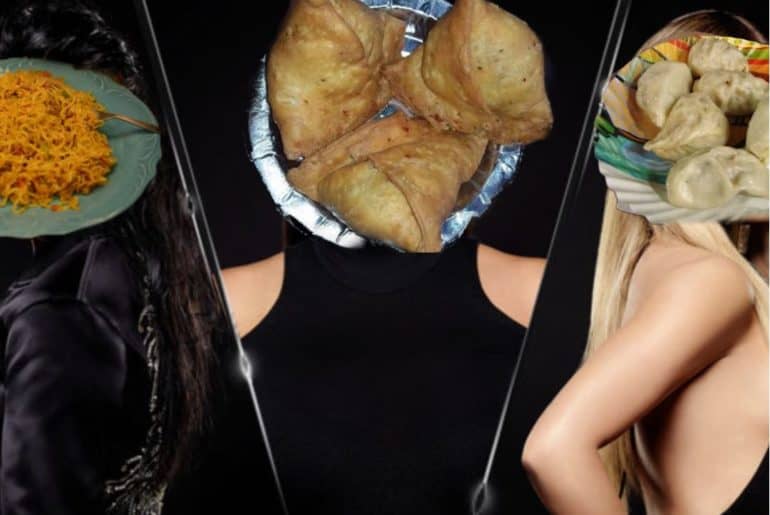
Truthfully, I am one of those people who would actually go back home when the gym trainer says, “Go hard or go home.” So, any sort of advice from me regarding being healthy almost seems comedic. Yet, my first three months in college have made me realise, if anything, the essence of proper diet and exercise, thanks to the hours I have spent on gobbling masala maggi and honey-chilly potatoes. Through my horrible experience of food poisoning, I have realized the need to take control of my health through the following ways.

 “Fruits are a collegiate’s best friend” ~ Marilyn Monroe

Just kidding. Marilyn Monroe didn’t actually say that. You caught me there, but fruits are definitely going to be your well-wishers throughout college life if not others. You can carry bananas, apples, oranges, and guavas to college easily, and if you have the time, you can create for yourself a fruit chaat. Moreover, you can locate the nearest fruit vendor to your college and grab your daily dose of vitamins and minerals. It might not seem exciting at first, but it really helps. Also, have you ever tried guavas with chili powder and chaat masala?

Running away from aerated drinks

I am sure your mom has told you how Coke and Pepsi are good pesticides and you have laughed it out. Well, it turns out our moms are right. These aerated drinks have so much sugar that we might just as well welcome diabetes with open arms. One can really save themselves by finding healthy substitutes. In this case, locate the nearest juice corner to your college and make it your regular hangout spot. You’ll not just get rid of sodas from your diet, but fresh fruit juice is healthy and on top of that, you get a good hangout spot to discuss the recent episode of Bigg Boss.

Healthy fast food? Is that possible?

While it is true, you’ll have to let go of Maggi, honey-chilli potatoes, and momos if you wish to remain healthy, but you can still savor your taste buds by scouting for potentially healthy fast foods. While 100% healthy is not guaranteed, you can minimise the intake of flour and bloating-inducing spices. Subway is a great option as it allows you to create your own subs. Moreover, rather than eating at fast food chains or eateries, you can opt for cafes and restaurants. Idlis at any South Indian restaurant or steamed rice at a Chinese restaurant are healthy, wholesome, and tasty options.

Emergency eating

While you’re trying to eat healthily, your friends will still meet at Maggi point and eat burgers at McDonalds. How do you help yourself? Well, if at certain times when you’re really craving the greasy fast food, you should opt for the healthier variant. Opt for a McVeggie instead of a McAloo Tikki. Opt for a vegetable Maggi instead of the masala one. It might not be dramatically healthy but it avoids the guilt to a certain extent.

CHIPS!

No, chips are not my next how-to-eat-healthy advice.

Chips are a regular snack for a collegiate and honestly, there is no one on this planet who would refuse them, if offered. But, obviously, they are your biggest enemy if you call them your staple diet. So, if you really love potatoes and wish to eat healthy, you must make french fries yourself. Not only are healthier than packaged chips but, they’ll also remind you of your mom back home. Also, try to develop a taste for banana chips, they can be a delicious snack.

Dry Fruits

No, sire, they are not just meant to be given as Diwali gifts. Dried Fruits are loaded with micronutrients, fiber, and antioxidants. They are highly nutritious and salted ones are no less than your favourite Haldiram’s namkeen. If you haven’t heard about them already, you should try salted ‘makhane’. They are just like popcorn.

Other than the above-mentioned directions, it is equally important to exercise. A 30-minute workout can do wonders for your body and your mental health too. Also, water! Drink lots of water. It’ll help eliminate all the toxins and wastes from your body. This list is not meant to be exhaustive and it is your creativity to create healthy meals and snacks for yourself, but the general guideline is to avoid packaged items and fast food to make your college life free from regular visits to the washroom between lectures.


Feature Image Credits: iTunes, Connect Colony, YouTube, Remote Traveller 

Graphic by Varoon Tuteja for DU Beat


Varoon Tuteja

[email protected]


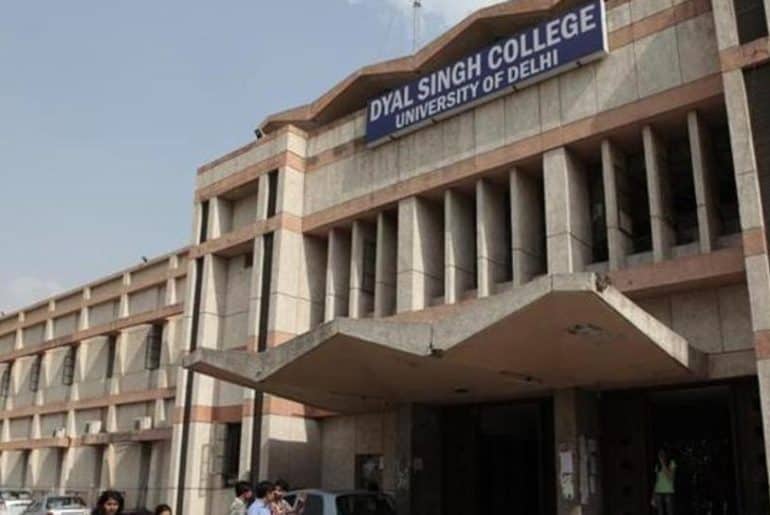
In a meeting held on Friday, the Governing Body of Dyal Singh College decided to rename the evening college to Vande Mataram Mahavidyalaya once it is converted to a full-time morning college. On September 21, Principal Pawan K Sharma, Dyal Singh Evening College received a notification from the Executive Council stating the approval for the evening college to become a morning college.

The college has been named after Sardar Dyal Singh Manjithia, the first freedom fighter of Punjab, founder of The Tribune and Punjab National Bank.

At first, the name Madan Mohan Malviya College was suggested but commenting on the finalised name, Amitabh Sinha, Chairman of the GB said, “Woh (Malviya) kiske bachche the? Hum unhi ko pranaam kar rahe hain. Maa ka darza sabse upar hota hai aur unhe pranaam karna hai. (Whose child was Malviya? We are paying respect to her. The stature of the mother is above all else). Vande Mataram means to pay obeisance to the mother. There is no politics in the name.”

Mr. Sinha said the decision was unanimously taken by the 16 members of the GB and added, “Whether it’s your own mother or Bharat Mata, mother is mother. Those who have a problem with paying obeisance to the mother, there is a question mark on whether they are human beings or not.”

In the Press Release by the National Students’ Union of India (NSUI), it has been stated that they are against changing the name of the college at this point when the college is struggling to accommodate the students in the given infrastructure. Neeraj Mishra, the media coordinator of NSUI, comments, “The College has more than 5000 students and during exams with more than 95% attendance, the students have to sit in the canteen and mats or tents are laid out for them to take their exams. First, all infrastructural facilities must be provided and names can be changed to anything later.”

Kunal Sehrawat, the DUSU Vice President, was not available for a comment.


Feature Image Credits: Hindustan Times

Prachi Mehra

[email protected]


When we spend hours on social media, looking at the filtered and edited versions of our loved ones, we become prone to compare our worst self to their carefully thought out versions of themselves and consequentially our self-esteem takes a hit. Read to find out how to recognise and avoid such behaviour.

Social media is a carefully constructed façade where every aspect of people’s lives is edited, filtered, and tweaked to perfection. We have a tendency to compare our current state- not having showered for the second day in a row, eating potato chips on the bed- to this carefully crafted version of others and consequentially our self-loathing is strengthened. What we do not take into account is that this version of our friends and acquaintances that we see on social media is not their most authentic self; a lot of time, effort, and good photography skills went into its creation. People’s representation of their lives is highly selective: the happy moments and achievements are milked to the fullest, failures and heartbreaks are not even talked about.  It becomes easy to then feel inadequate and let our self-esteem take a hit.

With the rise of Instagram, an entire market catering to beauty and aesthetics has been born.  The word “instagrammable”, which means something being beautiful enough to go on Instagram, is now used casually in everyday conversations. Everything ranging from cafés and food, to clothing and holiday locations are now clubbed on the basis of how “instagrammable” they are. Our lives are controlled by how it would look on social media. With the advent of stories, and with their exclusivity being lost to Snapchat, the intrusiveness of social media in our everyday lives has increased even more. Social media today is more engaging than it ever was and consequentially the amount of time we dedicate to it has also increased. As we spend more and more time admiring and envying others for how seemingly perfect their lives appear to be, we stray from the reality of our own lives and any sense of pride that we had for it, also slowly dying out. Our worth is not defined by who we are anymore; it is in fact viewed in relative terms now. “How do I stack up against X?” or “Am I having as much fun as Y does?” are seemingly legitimate thoughts that enter our minds. We are slowly choking our individuality and allowing conformity to seep more and more into our lives. We forget that people do not just post on social media to document their lives, they do so to cement a certain image of their in the minds of others. As much as they want to document the beautiful times they had on a trip, they also want to look like they are having fun. The amount of effort that people put into social media needs to be accounted for every time we look down on ourselves for our internal self not matching the perfected the version of someone else. This inadequacy is not limited to appearance anymore. Academic success, the kind of internships secured, choice of college for post-graduation and for adults the success and well-being of their children also give people bragging rights on social media. Envy has always been a part of human interaction and relationships and the idea of “keeping up with the Joneses” so to speak is not relatively new.  But with the rise of social media, the desire to lead an enviable life has become more prominent than before. Everyone we know and care about (and don’t care about) is connected with us on social media. “Stalking”, or rummaging through someone’s account to look for specific information, is also a relatively common activity amongst millennials now. The pressure to look interesting, good-looking, intelligent, successful, and fun is therefore omnipresent.

While research has linked excessive social media usage to low self-esteem, this research is also relatively new, with its long-term effects not completely known as of yet. But this cultural shift that the past decade has witnessed is going to be significant for mankind. And for all the boons that come with social media, none of them are worth losing our sense of individuality, happiness, and pride over it. Not only should we constantly remember the artificiality of social media, we should also aim to be more authentic and true to ourselves on these platforms. It is easy to pity ourselves after stalking the most interesting and good-looking person we know for half an hour. But our pride and self-esteem are integral and foundational blocks of our idea of self and we must preserve them at all costs. We need to actively seek positivity on social media and never forget to stay true to ourselves; this is the only way to preserve our sanity and happiness amongst the filtered lies we are bombarded with every day.

Kinjal Pandey

[email protected]

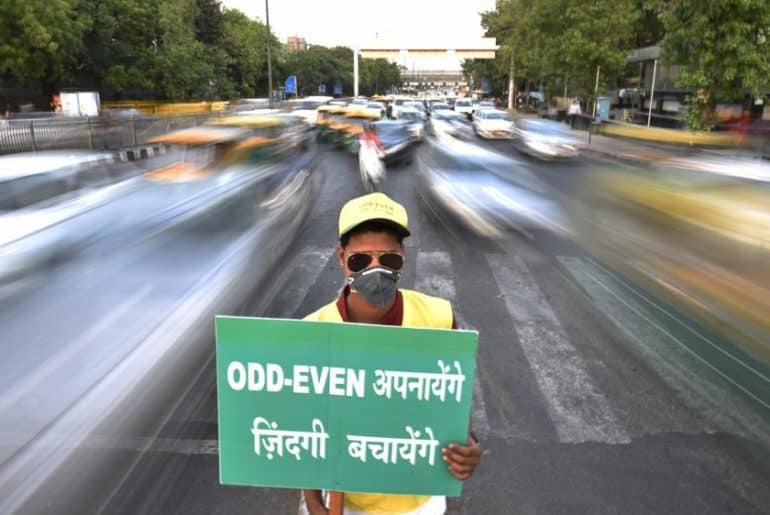
The Delhi Government, on Saturday, has sanctioned to desist the ‘odd-even’ car rationing scheme in light of the NGT poser regarding the rationale behind the decision. The policy was earlier announced for November 13 to 17 with the intent of depurating the smog-filled air in the city. A crisis situation emerged when the levels of particulate matter (PM) 2.5 and PM 10 entered the severe category. The government declared that schools must be shut down and the people were suggested to wear N95 masks as protection against toxic Delhi smog.

While stubble burning in neighbouring states and fire-crackers have been traced as the primary contributor to the dangerous levels of air pollution in the city, yet they are not the only contributor to the distress of Delhiites. Despite several warnings of worsening air quality before winter, the municipalities turned a blind eye to pollution caused by open burning of waste, and improper disposal of construction and demolition waste. This year, the East Delhi Municipal Corporation (EDMC) and the South Delhi Municipal Corporation (SDMC) did not issue a single fine for open burning of waste. The North Delhi Municipal Corporation, meanwhile, fined only 10 people.

The National Green Tribunal (NGT) pulled up the Delhi government for failing to act for the entire year until the air quality deteriorated to the extreme levels. “You tell us what is the purpose of implementing Odd-Even again? It seems you just want to reduce vehicles from roads” the court said noting the long list of exceptions. The Central Pollution Control Board has told the Green Court that two-wheelers cause more pollution compared to four-wheelers. Questioning the end result of banning cars when millions of two-wheelers are left unregulated. The court said, “If you are removing 500 cars from roads and allowing 1,000 two-wheelers, what purpose will it serve?” The court further remarked that the exemption from the Odd-Even scheme will be granted only to the CNG vehicle and emergency services such as ambulance and fire service while, earlier, this exemption pertained to women, two-wheelers and VVIPs.
Responsively, the Delhi Transport Minister Kailash Gahlot stated that ‘the Delhi Government could not compromise on the safety of women.’ He also accepted the fact that Delhi Government did not have enough public transport alternatives to accommodate over 60 lakh two-wheeler riders.’ Though the scheme has been called off, for now, the government may appeal for a review in the Green Court on Monday, to allow the car rationing policy with the previously practised exemptions.

Recently, the Delhi government’s had also decided to allow free travel for commuters in all DTC and cluster buses between November 13 and November 17, when the odd-even scheme was proposed to be implemented. This was done in order to encourage the use of public transport. It is unclear, now, whether such a decision will be implemented even after the suspension of the odd-even policy.

Experts, however, said there was a need for a long-term plan to reduce emissions. The Environment Pollution (Prevention & Control) Authority (EPCA) has issued a ‘Comprehensive Action Plan for Air Pollution Control in Delhi & NCR’ that enlists a combination of short, medium and long-term action for each source of pollution and indicates agencies responsible for implementation. A member of the EPCA and the director-general of the Centre for Science and Environment, Sunita Narain, said if the long-term measures already identified and suggested by the EPCA are not implemented, “air quality cannot improve”.

Image Credits: Hindustan Times

Varoon Tuteja

[email protected]

Heartbreaking and touching, A Woman Alone by Shilpi Marwaha is a bold description of marital rape and female subjugation.

If you are a feminist who enjoys impactful theatre, then Sukhmanch Theatre Group’s production A Woman Alone is the performance for you. An adaptation of an Italian play by the same name, the act is written by political activists and theatre-makers Dario Fo and Franca Rame.

The play starts with a woman dancing freely and lasciviously to peppy Bollywood songs. Initially, it looks like the protagonist is a happy, confident woman, but soon things become dark. The plot has no sequence of events as such; the story is basically a narration of the oppressed domestic life of a woman. Stuck between a toddler, an abusive husband, a perverted brother-in-law, a stalker, and a blackmailing boyfriend, Sharon (played by Shilpi Marwaha) is in the simplest of terms an oppressed woman. She describes the various facets of her trauma in the form of gossip, storytelling, and comedy.

There are many scenes that vividly document the ugly reality of issues like marital rape and domestic abuse. While these scenes can be triggering and heart wrenching, there are a few reassuring moments where Sharon displays admirable grit and strength.

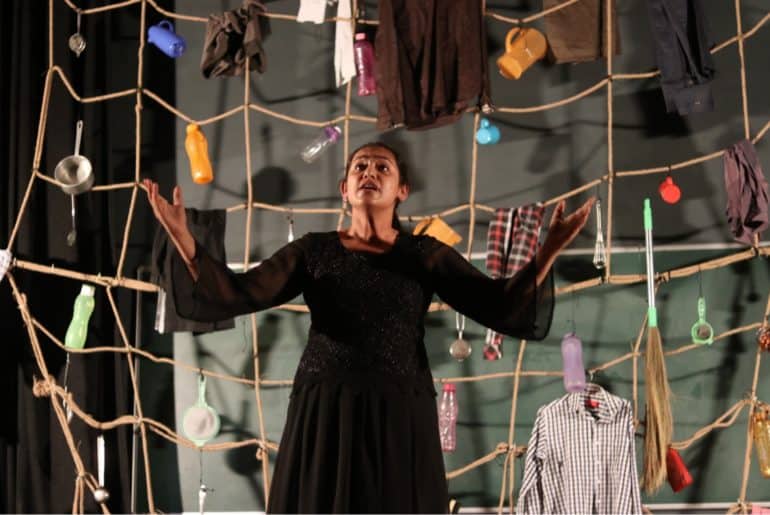
Watching A Woman Alone is a rollercoaster ride that is both emotionally draining and exhilarating because of the range of emotions it incites within the viewer. The audience is left more clueless, confused, and shocked than they were at the beginning. A Woman Alone is not a play that will provide you with answers; there will be no happy ending, there will be no closure. Sharon’s struggles of being groped, humiliated, harassed, hurt, of having her agency and free will ripped away from her, of blackmail and pain will make you question the kind of world that you live in where women continue to be viewed as properties, conquests, and pieces of flesh. Shilpi Marwaha at the climax of the play is trapped between ropes laden with household objects – bottles, shirts, brooms, clothhes hangers, jugs, and containers. It is a representation of how women today are trapped in what is assumed to be their responsibility towards their households and families.

It is the tale of a woman who was crushed and defeated by society’s hatred for women, hatred of their choices, their sexuality, their desire to grow, their desire to be recognised as people and not as someone’s partner, mother, and daughter.

Shilpi Marwaha has outdone herself in this piece of art that is nothing short of a masterpiece. Her voice, her persona, and her fearless personality all make the play an iconic tale of a woman crushed by the things and people she thought loved her.

Talking to DU Beat after her performance, Marwaha said, “It is a 90-page-long script and for one hour and 10 minutes I have to continuously speak, which is very taxing, not just physically but also mentally.” However, it is evident that this hard work pays off.
Follow Sukhmanch Theatre Group on Facebook for the details of more of their stunning upcoming performances.


Image Credits: DU Beat

Kinjal Pandey
[email protected]

Niharika Dabral
[email protected]

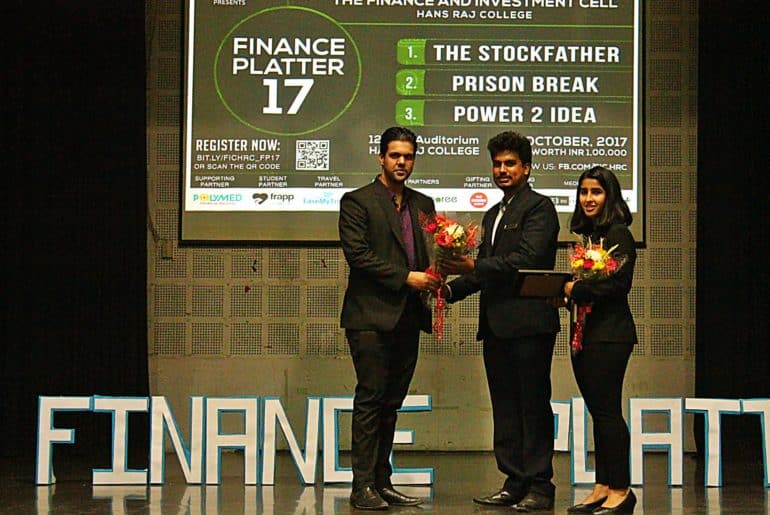
The DU-famed Finance and Investment Cell of Hansraj College organised its flagship event ‘Finance Platter’ in association with Innolabz on October 27, 2017. The triad of scintillating events conducted this year was appreciated by everyone alike.

The event began with the lighting of the lamp ceremony conducted by Mr.Saurabh Chaturvedi, founder and CEO of Innolabz along with the society’s core team members. This was followed by the mock stock competition- ‘The Stockfather’, the prelims of which witnessed a crowd of over 300 participants speculating on various securities as per the news and rumours. The outcry round was a frenzy filled trading in the American, Chinese and Indian stocks. The auditorium resonated with sounds of deals and negotiations, some that closed and some that failed.

‘Prisonbreak-Narcos on Death Row’ was another event set in the sinister world of crime, drugs, and money-making. The selected teams were required to strategise their way to escape custody. One member of the team donned the role of a bureaucrat while the other became a terrorist, and the two together had to manage resources amongst their groups to terrorise various locations of the national capital.

The B-plan competition, ‘Power2Idea- Think. Plan. Execute’ had an illustrious judging panel which constituted Mr. Saurabh Chaturvedi, founder and CEO of Innolabz, and Mr. Rajesh Parekh, a Chartered Accountant having an experience of over 25 years in the finance industry. The most innovative 18 abstracts were shortlisted and those who made it to the final round then delivered a presentation of 7 minutes each, explaining their concept in detail. The judges were impressed with the quality and level of participation they witnessed in the event.” We were amazed and astonished by ideas presented before us. Thinking that bricks can be created out of cigarette butts or incense sticks that don’t emit smoke are any day out of the box. These ideas are worth incubating”, said Mr. Saurabh after the conclusion of the event.

When asked about the reason behind the successful turnout, Shubham Suri, President of the society said,” We have always tried to beat our own standards and innovate new events. This keeps the team focused on its objectives. We hope to witness the same level of enthusiasm and appreciation in our next fest as well.”

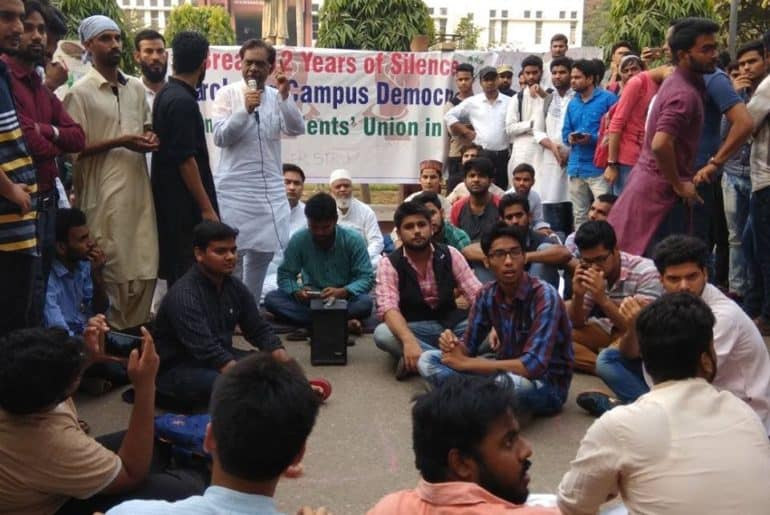
Around 10 students have been on this strike since October 25, in a bid to demand student union elections in the varsity.
The protesting students say that the university was founded as part of the ‘fight for democracy’ against the British, which demanded that Indians be allowed to choose their own representatives to govern them. Protesting students told The Quint that they will celebrate Founder’s Day only after they are granted the rights their predecessors enjoyed.
Students quoted Jamia Vice-Chancellor, Talat Ahmed, as saying that the elections could not be held because the matter is sub-judice and thus any move made by the University will be seen as ‘contempt of court’ on their part.
But the real story looks a little different.
The last student union in place in the university was dissolved in the year 2006 claiming that the student body was hindering the academic progress of the institution. In fact, JMI is the only prominent central university in Delhi which doesn’t have a students’ union. The other prominent ones – JNU and DU – have a robust union and elections. The struggle to resurrect the body has been on for the past 11 years with the students claiming that the administration has left no stones unturned to thwart all their efforts.
Students have alleged the university has taken no steps withdraw its position from the court, a move that could re-open talks about the elections between the students and the administration.
Polls were banned in 2006 over allegations by Jamia that student representatives had started interfering in administrative work. In 2011, three former students moved the Delhi HC demanding a students’ union, reported The Indian Express.
It is indeed quite shocking and absurd that a central university, which is associated with the anti-imperialist movement, is apolitical.
Protesters also have a list of other student-centric demands which they claim can only be fulfilled once a democratically elected union is set up. Some of these demands are: setting up of a 24-hour library, a working anti-sexual harassment cell, and so on.
“The Jamia administration treats the university as their personal jaeger (fiefdom). They are completely anti-students and routinely issue diktats without even consulting anyone. Constant fee hikes, delay in declaration of results, regular paper leaks – you name it, the bureaucracy here is completely inefficient and corrupt. We want to ensure these things don’t happen,” says Ihtesam, a student of BA programme to ScoopWhoop.
In 2012, a group led by then-student Hamidur Rahman, filed a writ (Petition No 917/2012 titled ‘Hamidur Rahman vs JMI’), stating that they didn’t want Jamia authorities to hold direct elections for a student council.
In an official release, the university said: “ A group of nine students have intervened in the Writ Petition and filed an application dated February 2012 praying to present their case in the larger academic interest of Jamia. In paragraph 9 of the said application, these students have opposed any direction system of elections in the Jamia Millia Islamia. This application was admitted on record by the High Court of Delhi”.
“The writ for the case that the VC keeps mentioning, was filed in 2012. The student who had filed the case is currently not a student at this University anymore. More importantly, there were nine students who were forced by the administration to go to the court and file a case that they didn’t want any direct system of elections” said Amber Fatmi, President of AISA (Delhi Unit) told The Quint.
For now, the students have the blazing passion of not discontinuing the strike as long as the authorities give in to their demands and allow them to hold elections for a representative student body.

Image Credits: Scoopwhoop

Ankita Dhar Karmakar
[email protected]