
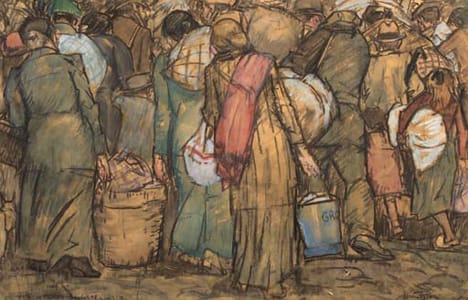
In a country shaped by movement, the idea of “original inhabitants” has always been more myth than history.
Who, then, is the “original” Indian? The question surfaces repeatedly in public debates, political rhetoric, and everyday conversations, often charged with emotion and certainty. Yet history, when examined closely, offers a far more unsettling and fascinating answer. India is not a civilisation built by a single people who arrived, settled, and stayed. It is a land shaped by movement. Everyone, quite literally, came from somewhere else—some earlier, some later, but all through migration.
The peopling of India is neither linear nor simple. Long before borders, nations, or even written records, early hunter-gatherers moved across landscapes that would later be called the subcontinent. They were followed, over millennia, by pastoralists, agricultural communities, traders, conquerors, refugees, and pilgrims. The story includes debated Dravidian movements, Indo-Aryan migrations, Indo-Greeks, Central Asian groups, Arabs, Persians, Turks, and Afghans, as well as Europeans under colonial rule. Alongside these were smaller yet enduring communities—Jews, Zoroastrians, and Armenians who arrived seeking refuge and made India their home.
This layered history complicates modern obsessions with ancestry and first claims. If India is a land of migrations, then belonging cannot rest on who came first but on how diverse peoples learned to live together over time. To understand India is to trace these waves of movement, each leaving an imprint on its languages, cultures, beliefs, and identities.
The earliest migration into India predates history itself. Anatomically modern humans reached the subcontinent from Africa around 60,000–70,000 years ago. Archaeology and genetics suggest a slow dispersal of hunter-gatherer groups across the region, forming the deepest and most widespread layer of Indian ancestry. These early populations were not culturally uniform, nor were they stationary; movement and adaptation were defining features of life in the prehistoric subcontinent.
The idea of a distinct Dravidian migration is far more contested. Earlier colonial scholarship proposed a “Dravidian race”, but historians today reject such racial frameworks. As Romila Thapar has argued, “Dravidian” is best understood as a linguistic and cultural category rather than a biological one. Whether Dravidian languages spread through migration or internal cultural diffusion remains debated, and the absence of clear archaeological breaks cautions against simplistic migration models.
The Indo-Aryan migrations, by contrast, are more securely traced through linguistic and textual evidence, though they were neither peaceful nor uniform. Beginning around the second millennium BCE, Indo-Aryan-speaking pastoral groups entered northwestern India, encountering established agrarian societies. The Rig Veda itself records conflicts over land, cattle, and resources, suggesting friction as well as interaction. Yet it is precisely through these tensions, conflicts, accommodations, and syntheses that early social hierarchies, ritual traditions, and political formations emerged. The Vedas were not the product of a single migrating people but of prolonged encounters that laid the foundations of what would later be recognised as early Indian civilisation.
From the early centuries BCE, India emerged as a crossroads of transcontinental movement, where armies, traders, and entire ruling elites entered the subcontinent and stayed. The Indo-Greeks were among the earliest of these new arrivals. Following Alexander’s campaigns, Greek-speaking rulers established kingdoms in northwestern India, minting bilingual coins in Greek and Kharosthi and patronising local religious traditions. Menander I (Milinda), for instance, is remembered in Buddhist texts such as the Milinda Panha as a ruler deeply engaged with Indian philosophical thought. Their presence did not displace Indian culture; instead, it produced striking hybrids in language, governance, and art.
This pattern continued with successive Central Asian groups such as the Scythians (Shakas), Kushans, and later the Huns. The Kushan Empire, stretching from Central Asia deep into northern India, exemplified cultural synthesis at its height. Kushan rulers adopted unmistakably Indian royal titles such as Maharaja and Devaputra (Son of God), while their coins depicted a remarkable pantheon—Greek, Iranian, Buddhist, and Hindu deities side by side. Images of Shiva (often labelled Oesho), along with Buddha and Mithra, appeared on Kushan coinage, signalling an accommodation rather than rejection of local beliefs. It was under Kushan patronage that Gandhara art flourished, producing the earliest anthropomorphic images of the Buddha, shaped by Greco-Roman artistic conventions.
As historian Upinder Singh notes, India’s political history reveals a recurring pattern: outsiders became insiders. Migration, in this context, was not a rupture but a historical process, one that transformed both newcomers and the societies they ruled, forging a syncretic culture that became a defining feature of the subcontinent.
The arrival of the Mughals in the sixteenth century complicates any simple understanding of migration and colonisation in India. Though of Central Asian origin, the Mughal rulers did not remain an external ruling elite. Within a few generations, they governed from Indian capitals, relied on Indian agrarian revenues, and embedded their authority within local political structures. Persian functioned as the language of the court, but administration operated through established Indian systems and regional intermediaries. Emperors such as Akbar forged durable alliances with Rajput elites through marriage and service, while later Mughal princes were born and raised entirely in India. Imperial culture reflected this rootedness: Mughal architecture fused Timurid forms with indigenous traditions, court ateliers blended Persian and Indian aesthetics, and Sanskrit texts were translated into Persian to circulate Indian knowledge within the empire. Migration here evolved into settlement and identification with the land.
British colonial rule marked a decisive break from this pattern. European officials, soldiers, and traders arrived not to integrate but to govern from a distance. Authority rested on bureaucratic control rather than cultural accommodation. Through censuses, legal codification, railways, and centralised administration, the colonial state reordered Indian society, fixing identities that had earlier been more fluid and embedding the subcontinent within a global imperial economy. Migration under colonialism thus reshaped India structurally rather than socially.
The most violent migration accompanied independence itself. The Partition in 1947 triggered one of the largest forced movements of people in modern history, displacing millions and inflicting lasting trauma. Unlike earlier migrations that unfolded over centuries, this rupture hardened borders and identities almost overnight, marking a painful culmination of India’s long history of movement.
Read Also: The Reformed Identity of Bengal: Tracing the History of an Exodus
Image Credits: “Belgians fleeing” by Leo Gestel
Madhav Choudhary
[email protected]

Comments are closed.