
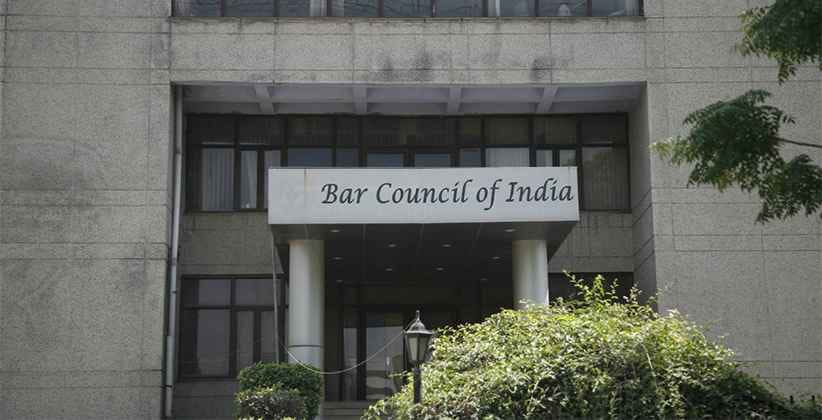
The Bar Council of India directs DU and other law universities to enrol law graduates covered by the SC order despite attendance shortfall.
The Bar Council of India (BCI) has instructed the University of Delhi (DU) to process the enrolment applications of law graduates protected under a recent Supreme Court order, stating that applications should not be rejected or terminated solely on the ground of attendance deficiencies. The BCI has circulated the order to all State Bar Councils, recognised universities, and approved Centres of Legal Education for implementation during the 2026–27 academic session.
The order was issued by Justice Rajendra Menon, Co-Chairperson of the BCI’s Legal Education Committee. The Committee noted that the Supreme Court’s order of 21 July 2025 granted one-time protection to students whose academic sessions were in progress when the Delhi High Court delivered its judgment.
The decision comes against the backdrop of the CAP Round I option form deadline having been extended until 11 August. The BCI stated that an “immediate and exceptional arrangement” was necessary to ensure that eligible law colleges and students were not excluded by the time required to complete the statutory approval process.
Institutions must upload all required documents, furnish the prescribed information, and pay all applicable fees. The order states that failure to complete the process could result in the withholding, modification, suspension, or withdrawal of approval, along with further action in accordance with the law. The BCI has clarified that the current conditional approval neither waives nor regularises any pending approvals or financial liabilities relating to previous academic years.
The Supreme Court directed that students covered by its order should not be denied the opportunity to sit their final examinations solely because of attendance shortfalls. It also permitted those who were unable to appear, either wholly or partly, in their final examinations to sit supplementary examinations for the relevant academic session.
The BCI has further clarified that attendance shortages arising after enrolment with the Bar Council are not covered by the relief. The benefit is strictly confined to the students and academic sessions specified in the Supreme Court’s order of 21 July 2025 and does not extend to future admissions.
To qualify under the scheme, a candidate must have been admitted to a recognised LL.B. programme and permitted to sit the relevant final or supplementary examination. The candidate must also have successfully completed the LL.B. course and fulfilled all other statutory requirements for enrolment.
Rajarshi Ghosh
Image Credits – Lawstreet.com
Read Also – Ramjas College’s Students Win PETA India Award for Vegan Leather Innovation

Comments are closed.