
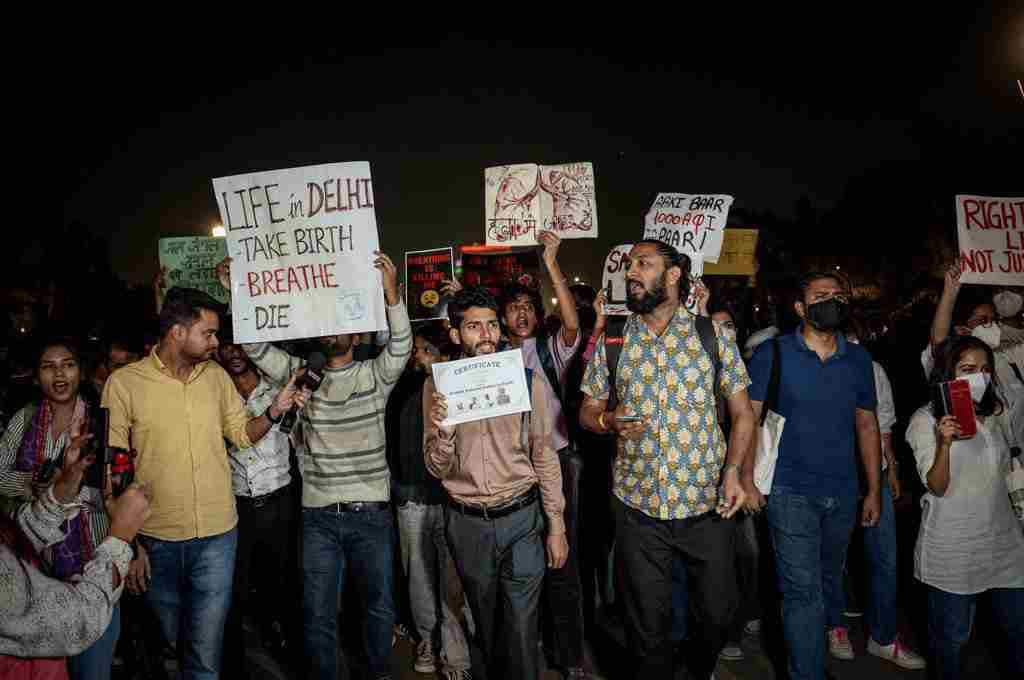
Citizens and students protesting Delhi’s hazardous air quality were detained at Kartavya Path after police blocked a march at India Gate, raising concerns over civil liberties.
On 9 November, around 5 p.m., students, citizens, and environmental activists gathered at Kartavya Path to protest the worsening air quality in Delhi. The demonstration, announced as an open call by individual organisers, drew support from groups such as the All India Students’ Association (AISA), Himakhand, and several other collectives.
The protest came amid a sharp spike in air pollution across Delhi, with AQI levels crossing 400 in several areas, categorised as severe by SAFAR. This rise has been accompanied by a surge in respiratory illnesses, particularly among children and the elderly. Protesters demanded greater accountability from the Delhi government and urgent measures to address the public health crisis.
Organisers said police prevented the demonstration from being held at India Gate, citing the absence of official permission. Protesters then moved to Kartavya Path. According to a report by Scroll, one organiser alleged that they had been warned days earlier that an FIR might be filed against them if they proceeded without a permit.
Police detained several people, including women, minors, and media personnel. Protesters reported being “thrashed around and dragged”, and many were injured. While female constables were present at the site, protesters claimed they were not present in the buses during detention—even when women were being transported.
Those detained described being driven around in buses before being taken to a police station, where they were allegedly kept in an open area resembling a “baseball court”. They said they were repeatedly asked for identification, which they refused to provide, and were threatened with legal consequences. Detainees were released around 11:30 p.m. after police recorded their names.
Even after the initial detentions, protesters regrouped for a second demonstration demanding the release of those held. These protesters were also detained, and, according to one account, later released near the Delhi border. Some participants noted that another protest, for stray dogs, was taking place at the same time and location, yet saw no comparable police action.
Meanwhile, ANI quoted DCP Devesh Kumar Mahla as saying that Jantar Mantar is the designated site for protests, not India Gate. Protesters contested this, arguing that the designated site is heavily barricaded, inaccessible to the public, and that permission to protest there is routinely denied.
The events of 9 November underscore growing public anger over Delhi’s hazardous air, malfunctioning pollution monitors, and the perceived inaction of authorities. With respiratory illnesses rising and protective measures out of reach for many, the city’s toxic air continues to raise serious concerns about public health and quality of life.
Read More: NEP’s Three-Language Formula for Schools
Photo credits: Muhammad Shahamath, Maktoob
Reva Rawat


Comments are closed.