
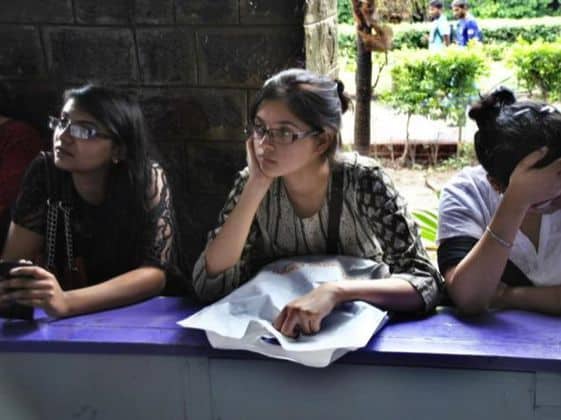
The classroom has turned into an assembly line of submissions, and teachers, overwhelmed by grading requirements, have little time left for meaningful mentorship or feedback.
Education has long been regarded as a process of intellectual discovery—of thinking deeply, questioning boldly, and learning meaningfully. Yet, this ideal is steadily eroding. Across universities and schools, students now live within an unending cycle of evaluation—internal assessments, projects, presentations, assignments, and the list goes on. The logic behind this system seems sound: frequent evaluation is meant to encourage consistent learning, reduce exam stress, and provide teachers with an ongoing understanding of student progress. However, beneath the promise of fairness and engagement lies a troubling paradox—when everything is assessed, very little is actually learned deeply.
The shift towards continuous assessment has been one of the most significant changes in modern education policy. From the National Education Policy (NEP) 2020 in India, the trend is clear: move away from high-stakes final exams and towards a “holistic” evaluation system that values participation, projects, and internal assessment. On paper, it sounds progressive—a model that rewards effort and creativity rather than last-minute memorisation. But in practice, this model has created a culture of constant performance, where students are perpetually producing rather than reflecting.
One of the major drawbacks of this system is the disappearance of depth. Instead of allowing students to spend weeks exploring a concept or topic, reading beyond the syllabus, or revising and refining their understanding, the system demands quick, measurable outputs. Every week brings a new deadline, a new rubric or stylesheet, and a new mark. Students, caught in this cycle, quickly learn the art of strategic compliance—doing just enough to meet the criteria without engaging deeply with the material. The intellectual curiosity that education is meant to nurture is replaced by a survival instinct: What’s the word limit? How many marks is this worth?
This is not laziness; it is adaptation. When evaluation becomes omnipresent, students prioritise what is measurable over what is meaningful. In such an environment, thinking deeply—the hallmark of genuine learning—becomes a luxury few can afford.
The continuous assessment model has also reshaped the teacher’s role. Instead of acting as facilitators of thought, teachers often become administrators of evaluation. With dozens or even hundreds of students to assess weekly, providing detailed, personalised feedback becomes almost impossible. The lack of time for thoughtful evaluation has profound consequences. Feedback, when rushed or generic, loses its value. It neither guides improvement nor encourages reflection. What should have been a dialogue between learner and teacher turns into a transaction. This mechanisation of feedback erodes the relationship between teacher and student as co-thinkers.
The push for continuous assessment is not merely educational. It reflects a managerial mindset prioritising accountability, data, and efficiency over critical inquiry. Pressured to show measurable outcomes, institutions reduce education to quantifiable deliverables. Learning becomes performance, not understanding; students turn into data points, teachers into evaluators. This technocratic approach, appealing for its promise of transparency and productivity, flattens intellectual depth, replacing curiosity with compliance. By reducing growth to checklists and metrics, efficiency begins to matter more than thought, and deep, reflective learning becomes a luxury modern education can no longer afford.
At the heart of this crisis lies a more basic issue—the disappearance of time. Both students and teachers are caught in a perpetual rush. There is no pause between one assessment and the next, no breathing space for reading beyond the syllabus, developing skills, pursuing their hobbies, interests, etc.
Deep learning, however, requires slowness. It requires the patience to wrestle with difficult ideas, to make mistakes, to reflect and return. The constant churn of assessments denies this possibility. Students move from one topic to another without the chance to consolidate their understanding. What remains is surface learning—fragmented knowledge held together by deadlines rather than comprehension. This commodification of learning undermines intrinsic motivation. The joy of discovering something new, of following a thought simply because it is interesting, is replaced by a transactional mindset. Over time, students internalise a dangerous belief: that knowledge is not something to live with, but something to complete and move past.
None of this is to argue for a return to the anxiety-inducing system of one-shot final exams. Continuous evaluation can, in theory, support learning if implemented thoughtfully—with fewer assessments, better feedback, and more emphasis on reflection rather than output. To reclaim depth in education, institutions must reimagine assessment as a process of dialogue, not surveillance. Teachers need time and trust to mentor rather than manage. Students need space to think, fail, and revise without the constant fear of being graded. Education must once again become a space for intellectual risk-taking, where questions matter more than answers and where thinking slowly is valued as a form of courage, not inefficiency.
Read Also: NEP’s Three-Language Formula for Schools
Image Credits – Hindustan Times
Richa Choudhary




Comments are closed.