
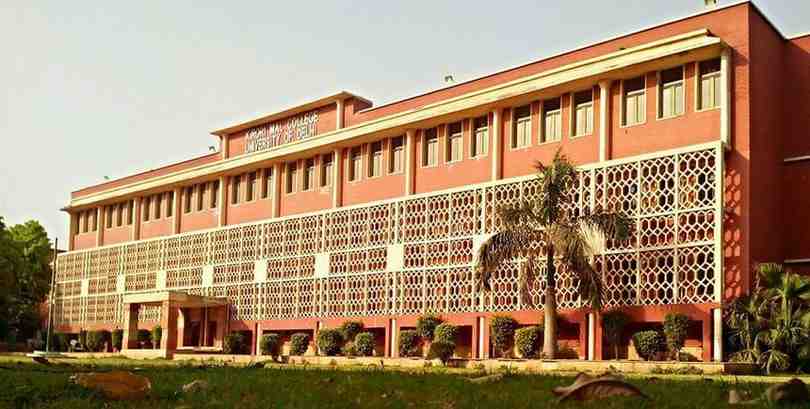
Kirori Mal College (KMC) launches Project Samaavesh, a pioneering initiative supporting visually impaired students with training, resources, and awareness programs to build an inclusive and empowering campus environment.
A quiet revolution is underway at Kirori Mal College (KMC), as a new initiative titled ‘Project Samaavesh – Towards Inclusion and Empowerment’ is actively reshaping campus life for its visually impaired students. More than just a support system, the project is a lifeline, offering tailored guidance, skills training, and, crucially, a sense of belonging to a community often grappling with isolation and limited resources.
“Inclusion is not a favour; it is a right,” states KMC Principal Dinesh Khattar. “There may be limits on sight, but there are no limits on vision.” This powerful sentiment underpins Project Samaavesh, a joint effort by the Centre for Disability Research and Training (CDRT) at KMC and the Score Foundation. The initiative’s core mission is to promote true inclusion through a dedicated on-campus help desk, where visually impaired students can receive support tailored to their individual needs and aspirations.
The project begins with a comprehensive assessment of each student, followed by the development of a customised support plan. This personalised approach directly addresses the systemic gaps prevalent in many academic institutions, where “enabling units lie dormant,” as described by Ankita Verma, a student from Miranda House. Verma highlights a critical issue, stating, “Technology is important, but our basic needs are still unmet,” a reality that Samaavesh seeks to change. The project provides training in essential skills like computer literacy, STEM, AI, and the use of assistive tools, equipping students with the tools they need to thrive in a competitive world.
Beyond resources, Project Samaavesh is fundamentally about changing perspectives. Someshwar Sati, CDRT coordinator, challenges the very definition of disability, asking, “If I give the audience a book in Braille and they can’t read it, are they disabled? Why can’t we embrace different ways of being as part of human diversity?” This philosophical approach is translated into action through sensitisation programmes and awareness campaigns aimed at students, faculty, and staff, fostering empathy and dismantling unconscious biases.
The transformative impact of the project is already evident in the lives of its participants. Sachin Kumar, a KMC political science graduate now pursuing his master’s at JNU, credits the initiative for his personal and academic growth. “When I joined CDRT, we focused on creating initiatives for inclusion,” he says. “We worked to spread awareness and make an impact. Society still doesn’t recognise the full potential of the disabled community. These programmes help bridge that gap.”
For Narendra Kumar Kashyap, a third-year Sanskrit student from Amethi, the project has eased a personal struggle. “Reading content is the biggest challenge. Interacting with peers is also difficult,” he shares. Since joining the program, however, his sense of isolation has diminished. “The gap is bridging,” he says, with a renewed sense of hope for his dream of becoming a teacher. As Sati poignantly puts it, “Nazariya badal denge toh nazar bhi badal jaayegi“—if we change the lens, our view will change too. At KMC, that change is already taking hold, creating a more inclusive and equitable campus for all.
Read Also – 32 Students Move Delhi HC Against DU’s LL.M. Practice Prohibition
Image Source – careers360
Richa Choudhary

Comments are closed.