Tag

social media

Browsing

Millennials have started to believe that they do not have enough time for any leisure activity, and they that they need to succumb into the monotony of life. This piece aims to break that myth.

As children, the majority of our time was spent playing some sport, painting, and simply discovering our hobbies. This practice, however, saw a major transition as we grew up, even our diversions changed. Contrary to popular belief, hobbies are supposed to be activities that we make time for, despite our busy schedules and indefinite piles of tasks.

According to many surveys, most people prefer staying at home and watching television rather than stepping outside to discover themselves. Moreover, there is a difference between a past-time and a hobby. In the most generic sense, a hobby is mostly recreational.

Millennials fail to realize the importance of hobbies and continue living their vanilla lives. Every industry is characterized by its dynamic environment, and to soar higher in such conditions, everyone should indulge in creative thinking to stand out.

Hobbies are formed after several rounds of introspection, they are extremely important for self-actualization, and true happiness. Those people who make their passion their professions, have it comparatively easier than those who are still on the path of self-discovery.

Researchers have also discovered, that some time away from work, to indulge in some leisure activity has been linked with increased performances at work and creative activities, leading to higher confidence levels.

With extremely high-stress levels and constant pressure, millennials need an outlet for the same, which seems impossible due to their pre-occupation with technology, and the inability to make time for themselves.

Ishita, a student of Lady Shri Ram College said, “I used to paint every week as a child, but the last time I picked up a paintbrush was over five months ago just to post a story on Instagram.”

The idea that Instagram, Twitter, and other products of modern technology are replacements of hobbies is bizarre. Our fixation on social media is proving to be way more harmful than it was first predicted. Even if someone is actively pursuing their hobbies, they feel the need to post stories on their social media while they paint, bake, or read, which is strange because this trend has recently surfaced, and millennials tend to focus more on posting stories rather than enjoying their hobbies.

Feature image credits- Vaibhav Tekchandani for DU Beat

Suhani Malhotra

[email protected]

With forthcoming breakthroughs of technology, lingers a threat of out doing human synapse of comprehension and consumption of information.

Limitless possibilities afloat of what one can dismiss as impossible only to find out that technology can prove otherwise. 2017 saw a manifestation of ‘deepfakes’ in the West which is an artificial intelligence software which works by mechanising synthetic algorithms to superimpose the voice or face or both of someone else over the subject and make it appear that they said it in real-time. In 2018 comedian Jordan Peele released quite a believable video of former President of the States, Barack Obama saying things as a PSA which was doctored by the comedian himself. The purpose was to mediate the message of the extent to which Deepfake can be deceiving and the ease of creating and sharing them.

Deepfake video of Barack Obama taken from YouTube channel of Good morning America!

This software was initially used in the porn business to generate revenue. Graphics of celebrities and well-known faces were easily accessible from the net thereby making them easy targets for the subject of their content. Lately, this technology is doing rounds in harbouring fake news as it has been seeping into politics.

A day ahead of Delhi elections, Bharatiya Janata Party (BJP) MP, Manoj Tiwari’s video of criticizing the Kejriwal led government surfaced in multiple languages on WhatsApp and other social media platforms, aimed at targeting prospective voters. The singer/actor turned politician can be seen speaking in fluent English and Haryanvi making appeals to the Janata to vote for his party when in reality the actual video was him speaking on the affirmation of passing of Citizenship Amendment Bill (now Act) in the house of parliament.

Video of Manoj Tiwari speaking in English and Haryanvi taken from The Vice

The negative repercussions of Deepfake are directly proportional to the ease with which it can be accessed feasibly. Politicians tailor their needs of reaching more target voters than their opponents in more authentic ways possible. People who consumed Manoj Tiwari’s hoaxed video felt more attached to him when he spoke in their language. A major threat with the upcoming of such videos is that denial would become a lot easier for people who can be easily caught in their wrongdoings via citizen journalism. They can immediately call out the video for being falsified. Even worse, anyone can be made to say things which they didn’t and share that video extensively.

In a country like India which is vulnerable to riots, such videos will serve as a very good bait to disturb peace and harmony.

Actual video of Manoj Tiwari taken from The Vice

Prateek Sinha of Alt news- a fact-checking website, in an interview with Vice said,” At this point in time it’s impossible to fact check or verify something that you don’t recognise is doctored.”

It has become a whole lot easier to deceive people especially the ones who are in the oblivion of the technological jargon.

A critical approach in understanding these videos would be an ideal case scenario but in reality, we are a nation which believes in United Nation giveaways of honorifics to Indian festivals and national anthem. How can we decipher the face2face algorithms and others incorporated in making such lies? A New York-based software company is working on detecting Deepfake videos. It would be a relief to say that ills of technology are countered by technology itself, however, it’s imperative that we exercise extreme caution before believing any content. Fact check it while we can and run it through multiple sources before sharing them because separating the act of consuming and sharing of information has the ability to impede the pace of harm that this new technology bores as it’s potential.

Suggestive fact checking websites: altnews.in, indiaspend.com, boomlive.com, www.hoaxslayer.net, mediavigil.com

Feature Image Credits: m.phys

Feature Image Caption: AI enabled technology superimposed actor Nicolas Cage’s face on Tesla’s CEO Elon Musk.

Umaima Khanam

[email protected] 


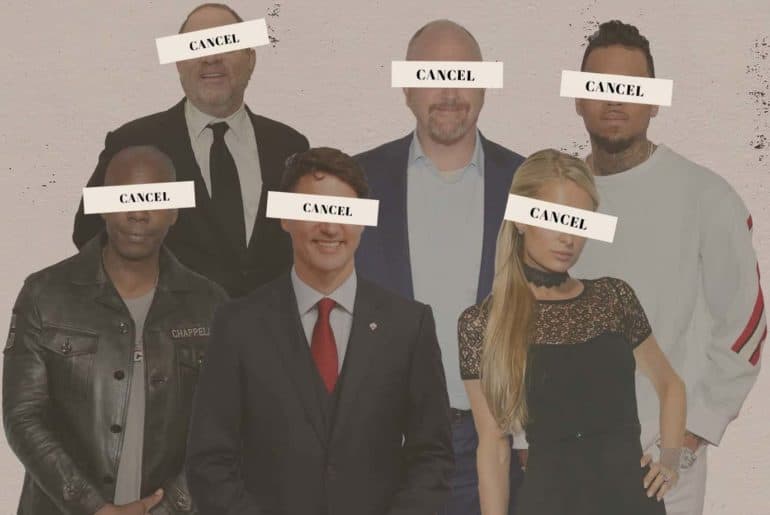
“The practice of no longer supporting people, especially celebrities, or products that are regarded as unacceptable or problematic,” the repercussions of Cancel Culture in India.

Macquarie Dictionary Named ‘Cancel Culture’ as the Word of the Year 2019. “A term that captures an important aspect of the past year’s Zeitgeist…an attitude which is so pervasive that it now has a name, society’s cancel culture has become, for better or worse, a powerful force,” wrote the Macquarie Dictionary committee in a blog post.

What is ‘cancel culture’ and what does ‘getting cancelled’ really mean? It’s a form of social boycott of someone, most often a celebrity, who would have shared a questionable opinion or has had problematic behaviour that is called out on social media. The idea is to deprive a celebrity of attention or in extreme cases, your money. There’s a hierarchy to transgressions that could get one cancelled. At the bottom of the totem pole is saying something that offends a section of the society to more serious wrongdoings like sexual assault. This, in turn, seems to determine the degrees of being cancelled. However, more often than not, though this fevered dream of cancellation is just that — a dream. In the real world, it rarely has any tangible or long-term effects on the lives of the cancelled.

“They said they would boycott her film. They said they would cut off her head. They said she couldn’t act. Deepika Padukone has spent her career putting ‘them’ in their place”, Raja Sen, a critic and author wrote. Padukone was a victim of name-calling and vile attacks after she visited the campus of Jawaharlal Nehru University to express her solidarity with students who had been grievously injured in violent attacks. Hashtag Boycott Chhapaak trended, and there was social media outrage to boycott the products she endorses. This is a reflection of the erstwhile not talked about side of Cancel Culture, a phenomenon which is not only the copyright of liberal, progressive ‘woke’ people; but a weapon which is wielded by right-wing, fascist trolls alike.

In a post-MeToo India, it’s becoming increasingly challenging as survivors to see predators flourishing in various industries. The term cancel culture is a mere question mark in the face of industries like Bollywood, built on the foundation of predatory behaviour where sexual harassers are more likely to find work than survivors. Such is the case of Utsav Chakraborty, who came back a year after he was cancelled to nullify the accusations targeted at him and proceeded to dox various women under the garb of ‘uncancelling’ himself.

However, all hope is not lost. Female filmmakers such as Zoya Akhtar, Meghna Gulzar, Konkona Sen Sharma and Gauri Shinde, among others, have expressed their solidarity with the movement. In a combined statement shared by Gulzar on Instagram, the filmmakers announced their decision to not work with people guilty of sexual harassment and misconduct. The statement read: “We are here to spread awareness to help create a safe and equal atmosphere for all in the workplace. We have also taken a stand to not work with proven offenders. We urge all our peers in the industry to do the same.”

Personally, Cancel Culture will continue to not work, giving a platform to problematic people if we, as a public that consumes art don’t hold ourselves accountable. It should be a conscious choice of each one of us, to not invest in the art of a person who has previously done something harmful to a particular person or group and has shown no signs of repentance and growth. Because, in the words of comedian Hannah Gadsby, “Pushing for a culture of respect is not the same as cancelling culture.”

Featured Image Credits: Well and Good

Paridhi Puri

[email protected]


At a time when people are becoming more and more dependent on the Internet as a source of information, there is a need to look into from where we’re getting that information, and if it’s something we should be relying on.

Over the past decade, anyone who has had the slightest interaction with the internet and social media platforms has come across memes- a concept that has completely taken over our perception of information, humour and interactions online. Merriam Webster defines memes as an amusing or interesting item (such as a captioned picture or video) or genre of items that is spread widely online especially through social media.

Memes have gone from minor sources of temporary entertainment to a way of humorous expression of facts and opinions. While that may seem like an effective way of relaying information, it more than often is not.

Mike Godwin, in 1990, said that “As an online discussion grows longer, the probability of a comparison involving Nazis or Hitler approaches 1”, a statement that is popularly known as Godwin’s Law today. The intention of this ‘law’ was to counter the comparisons with Nazi Germany, something that he felt was disrespectful to those who’d suffered due to the Holocaust. This example, however, throws light on how memes impact the way we think and how they normalise events and thought processes that maybe shouldn’t be normalised.

Now the question is, how is meme culture problematic when related to serious issues? Firstly, Memes rely on simplification- and at times, an oversimplification. In a situation like that, it becomes hard for the target audience of a meme to understand the true essence of a particular situation or issue that a meme is trying to represent. Issues like conscription, the refugee crisis, etc. cannot be properly portrayed in stills and references from Call of Duty (the video game) or videos of crabs dancing, and that lack of proper understanding rarely leads to large scale political awareness or discourse.

Secondly, there is no responsibility and accountability on the part of the meme creator to provide factually correct information. It is also harder to trace misinformation back to the creator in case of memes than it would be in other cases, such as news reports. In a world where what we see and read on the internet instantly becomes the basis on what we form our opinion, that lack of responsibility is a dangerous issue, because people can be made to think in certain ways without being entirely aware of all the facts. An example of this could be the 2016 US Presidential Election, where a number of people came out and claimed how they ‘memed’ Donald Trump into the office in 2016, with a similar trend being observed with far-right groups in France. This ability to twist public opinion trivialises processes such as elections.

Thirdly, memes often end up being about pulling opponents down and trolling them, rather than talking about issues. An example would be the recent meme war between the Aam Aadmi Party (AAP), Congress and Bharatiya Janata Party (BJP) in the run-up to the Delhi State Elections. All sides have tried to use memes to reach out to a younger audience, but have focussed only on how the other sides failed to deliver. In that case, problems they should be highlighting have taken a backseat and thus become trivialized.

These issues were seen very recently when the USA killed Qasem Soleimani, an Iranian general, which led to a war-like situation in the middle east for several days. However, the reactions we saw on the internet were not those that promoted dialogue and a proper understanding of the issue, instead, we saw insensitive memes that ignored reality, such as one which explained how to fake mental illnesses to avoid getting drafted in the army. This war would definitely not take place within the boundaries of the United States, and at a time when people’s lives in the Middle East were at stake, making jokes on it is a move that lacks empathy. This instance proves how meme culture makes light of severe issues that could potentially have negative impacts on a very large scale.

Clearly, there’s a need for a more sensitive and empathetic world in order for us to counter and move forward from the problems that we are facing. In order for that to happen, it’s important to change the way we utilise and look at memes.

Feature Image Caption: “The intentional pairing of a man pointing a gun at the viewer with the concept of refugees, combined with the intentionally shocking font and color is nothing less than fear-mongering and manipulation that would have made Joseph Goebbels proud.”

Feature Image Credits: The Daily Utah Chronicles

Khush Vardhan Dembla

[email protected]


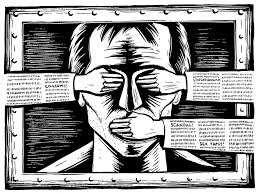
Both, Censorship and the Freedom of Speech require a delicate balance and immense intuitiveness. Many have argued on both sides, This piece aims to highlight what ideas stand out in this debate? 

Censorship refers to moderating the information and ideas that are disseminated in the society. After entering the web of the censorship debate, there is no escape. This fascinating, unsolvable mystery has questions that lead to more questions, gently treading the path between morality and legality. Everyone’s subjective notions of what is moral, acceptable, decent, and inoffensive are at interplay.

Now a question that would make Mr Pahlaj Nihalanijump onto his toes: Is censorship a good thing?

An infamous opinion piece, in the New York Times, ‘Free Speech Is Killing Us’, addressed the issue of noxious speech. Rebutting the idea of the Internet as a beacon of progress, it reminded the readers of the social media driven campaigns of Trumpand Duterte, the murder of Heather Heyer, the massacres in Pittsburg and Christchurch. “But what about speech that’s designed to drive a woman out of her workplace or to bully a teenage into suicide or to drive a democracy towards totalitarianism?” writer, Andrew Marantz, probed his readers.

Moving away from this, on another end of this spectrum there are moral policing and unnecessary restrictions being imposed. Banning of films representing the LGBTQ community, deletion of Twitters posts talking about casteism, unnecessary edits on several films by the former Chief of Sankar Board and being tagged as ‘anti-national’ for expressing dissent.

What such pieces necessitate are a need to draw lines around some content on the internet. But how easy is this task? Youtube’s ban on violent content resulted in reportage of the Syrian war being take down, Twitter’s rules about sexual content led to information on sexual health also being removed. Regulations can, therefore, close doors on several avenues to spread awareness.

A move criticised for its timing right before the General Elections, stricter social media regulations were put in place. The authorities claimed this was done to curb misinformation. This would require content deemed as “unlawful” by government will have to be erased from Facebook, Google, TikTokand other platforms. WhatsAppwill be required to decrypt encrypted data, to trace it to its original sender. Netflix, Hotstarand seven other platforms have begun self-regulation in attempts to avoid censorship. This played in favour of, our favourite mota bhai, Mr Mukesh Ambani, for obvious reasons.

Stringent censorship can be found in countries like China, Saudi Arabia and Russia. With more than 150 days of internet shutdown in Kashmir, how long before we enter the list?

Journalism, as an independent and impartial body, is not meant to serve the establishment. Its duty is to question, educate and be the voice of people. It was not birthed to be controlled. A democracy seizes to exist when its journalists, activists and reporters begin to live in fear. The ABP row and stepping down of two leading journalists demonstrated the heights of control over the press. The gruesome violence at the satirical weekly Charlie Hebdo was also a dark day in the history of the press.

Free speech is an inextricable part and the cornerstone of a democracy. Dissent cannot be suppressed under the garb of censorship, because with changing times, the youth refuses to settle and rather demands what’s better. The New York Times piece warns against absolutism and how it cannot be used as an opt out from harassment. It is a right to be exercised with full responsibility. Use of force cannot be a medium to extinguish protests and silence voices of people.

Going back to the dilemma we started with, one’s morality emerges from their upbringing, culture, values, and education. The same rules cannot hold true for all, which makes censorship an endless debate. While morality is where we use our discretion, the higher authorities have the onus of the legalities of it.

Feature Image Credits: Debate.Org

Shivani Dadhwal

[email protected]

These are powerful times. These are politically volatile times. These are disappointing times. These are resisting times. Most important of all, these are questioning and questionable times.

With the Citizenship Amendment Act (CAA) and the National Register of Citizens (NRC) being protested against vehemently in the North-East and across the rest of the country, including the popular hubs of politics and entertainment – Delhi and Mumbai – respectively, the citizens of the country are awakening to the anti-people policies of the current administration, including (but not limited to) the controversial abrogation of Article 370 in Kashmir, the policies to privatize education, the Trans Person’s Bill, and the continual curbing of dissent by arresting protesting activists. As I write this, the Farmers’ Leader, Akhil Gogoi, is being charged under the Unlawful Activities (Prevention) Amendment Act – a move that has invited widespread criticism for its arbitrary and oppressive nature.

In a backdrop such as this, it is impossible to go about one’s life – especially as students who study Foucault, Orwell, Ambedkar, and Marx in the classrooms of one of the premier universities of the country – without being the least bit affected with the socio-political climate of the country. The slogan, “Personal is political” manifests itself  powerfully before us, now more than ever, since the majority of us who are on any social networking platforms like Instagram, Facebook, or Twitter, among many others, cannot possibly scroll through the feeds nonchalantly, without coming across stories, posts, or articles on the current climate. What, then, becomes of social media activism?

I confess that I myself, in the past, have sneered at ‘social media influencers’ and the like, believing that the social and cultural capital enjoyed by them, by virtue of their popularity, was taking up unfair space in the powerful discourse of ground-level activism. However, the past few months have altered this perspective drastically, because social media has now seemingly emerged as the preferred space of discourse for many, includingsystematically disenfranchised communities like trans-people, women, and people from conservative households. When paramilitary troops and police forces are employed in the ratio of three is to one, at organised protests in India Gate, Jantar Mantar, and brutalise the students of Jamia (JMI), Jawaharlal Nehru University (JNU), and Aligarh Muslim University (AMU), among other locations, then being on-ground becomes a life and death battle for many from the aforementioned communities.

Social media, then, serves as the forum to express dissent, become informed, and share awareness. This is not to say that the women at Shaheen Bagh, sitting in the chilling winter of Delhi for about a month now, are not palpable to a violent crackdown, or that the resistance that has engulfed Kashmir for multiple decades is on equal footing with sharing a tweet, but it is to acknowledge the newfound power that is threatening the authorities in control. Bharatiya Janata Party’s (BJP’s) IT cell has been notoriously in the news for circulating numbers, advertising that calling said numbers would get the people “free subscription to Netflix” or rendezvous with porn-stars. Doctored photos of students holding placards like Hinduo ki kabrkhudegiinstead of the original “Hindutva ki kabra khudegi,” were instantly circulated in social media pages, attempting to polarize communal sentiments against students at JMI and AMU. In no time after actress Deepika Padukone stood behind JNU Students’ Union President, Aishe Ghosh, and activist Kanahiya Kumar, that the hashtag “BoycottChhapak” was trending on social media and sexually profanity being hurled at her. Internet lockdown in Kashmir has continued for over 150 days now, while internet services in numerous states like Uttar Pradesh, Karnataka, Assam, and Gujarat were blocked. Instances like this are testimony to the fact that any platform of public dissent, especially a technologically savvy one like social media that people from older generations in the administration are largely unable to grasp or master, acts to counter the narrative of normalcy our Prime Minister has been propagating with his famous line – Sab changa si!” A single tweet on the everyday violence in the country is indeed momentous enough to throttle this false narrative.

While the criticism against social media has always been the legitimacy of the sources and the accountability of any debates/discussions over it, private citizens like Mitali Bhasin, Sukhnidh Kaur, Pravan Sawhney, Divya Kandukuri, are some of the few names who have set precedent for researching their own resources for news and compiling information for public use in these tumultuous times. Pages like With Kashmir, and media houses like The Wire, The Print, Quint have proven to be reliable sources of information and discourses, publicized and accessible through social media platforms.

The language barrier parting English, Hindi, and other regional languages in India has always been a drawback for left liberal discourse in India, and the dearth of similar resources / activism in languages apart from English, including in Hindi, remains a blind-spot that needs correction in an era where the voting public, from Savarna households, including in our family WhatsApp groups is unaware of the manipulation and propaganda being targeted towards them, because of language or technological gaps that disengage their participation in social media activism. However, as millennials and post-millennials, it is our prerogative to engage in sharing the information that reaches us, creating the much-needed space for dissent amid the hoardings of propaganda.

Most important of all, it is time that to take heed of all the tools at our disposal in fighting violence sponsored by the State. It is time to change those display pictures to red, to make highlights on Instagram with curated information, to tweet and flood the judiciary, the Police, and the ministries, because when we fight fascism in Orwellian times like these, it becomes poignant to break free, in any and all ways possible, from what 1984 labelled the Thought Police.

Anushree Joshi

[email protected]

What makes our generation more insecure than the others? What screams “insecurity”? Read further to know more…

Our generation, the Gen-Z, turns out to be the most narcissistic generation. We are so engrossed with our identities on social media and in real life that we fail to realise the juncture where our self-obsession reshapes into insecurity. We may portray heightened versions of ourselves on reel, but in reality we may not walk around feeling all that much satisfied. With so much around to juxtapose our own traits with, our inner-critics compare, evaluate and judge our own selves with great scrutiny.

One of the most essential causes of insecurity happens to be rejection and failure. Just how Shane tells us his “heart can’t take rejection, because he’s insecure, baby,” prior experiences of exclusion or criticism may have a severe impact on one’s self esteem. Incidences like the ending of a relationship, poor performance in academics or negative health events attribute equally to an already lowered confidence.

However, what surpasses this rejection by society is rejection of our own self. This is prominent in the case of perfectionism. We create an image of an ideal self in our minds. This image is often unrealistic and irrational, and its digression from the real self often causes anxiety and triggers our insecurity. “The reason we struggle with insecurity is because we compare our behind-the-scenes with everyone else’s highlight reel,” said Steve Furtick, enlightening us all of a harsh reality we fail to see.

Insecurity can be observed in the not-so-subtle remarks made by individuals on a daily basis. For instance, complimenting oneself in between conversations screams insecurity from across the land. After a point, it’s as if the person is trying to convince him/herself of their own traits. In contrast to this, even downgrading oneself is a classic show of insecurity. In such cases, one either fishes for compliments or is a perfectionist, expecting too much out of him/herself.

An insecure person may find it difficult to maintain eye contact or even talk about them for long due to the previously mentioned fear of rejection. The persisting self doubt in the person surfaces, making them want to wrap up conversations about self as soon as possible. Again, in the celebrated words of Shane, “losing grasp of the time, trying not to say what I want,” – an apparent illustration of insecurity.

Now that we’ve been over the causes and symptoms of insecurity, let us ponder over certain measures to tackle this. First off, you need to identify what you’re really insecure about and why you’re insecure to begin with. The deeper you dig, the closer you’ll find yourself to the roots of your problems. Once identified, you need to challenge your insecurities by adopting a more rational and objective perspective towards them. This will allow you to question the validity of your experiences and open up doors to new possibilities.

Moreover, you need to acknowledge and reward your successes and accomplishments in order to remind yourself of your abilities to work things out even in difficult situations. At the same time, allow yourself to learn and benefit from your mistakes. Don’t let them bring your morale down. Most importantly, learn to reject the opinions of others about yourself. “We are defined by what we choose to reject. And if we reject nothing we essentially have no identity at all,” quoted Mark Manson in his highly acclaimed novel, The Subtle Art of Not Giving a Fuck.

Nobody is perfect. Everybody makes mistakes and everybody has those days. We’ve all learned this from our, dear old Hannah Montana, and it is high time we advocate this too. It is essential for us to accept ourselves the way we are. We need to embrace our flaws and welcome them as a part of our personalities, because that is what distinguishes us from the rest. Be grateful for who you are and cut yourself some slack. Remember Bob Marley when he tells you, “Get up, stand up: don’t give up the fight!”


Featued Image Credits: Elegant Themes

Aditi Gutgutia 

[email protected]


People at this moment are running against themselves in a pursuit of perfection. Does perfection even exists? How is this pursuit affecting you? Read on to know more.

We all aspire to be a better version of ourselves every day. Growth is an indispensable part of our lives and we must strive to enhance ourselves and keep adding new feathers in our wings. But for some, things don’t end just at personal growth for betterment. They are on a different race altogether, an endless pursuit- the pursuit of perfection. And, there exists a stark difference between the two.

When one is striving to grow to be better, they are fueled by motivation and inspiration but when one is driven to achieve the unattainable state of perfection, they are fueled by a state of discontentment, low self esteem and unrealistic expectation.

There are no two ways about the fact that perfection is a myth. It is a state of mind and cannot be achieved through any outer validation or achievement. It is imagined to be the state of flawlessness and completeness where nothing can possibly go wrong. This very imagination is enough to reaffirm the fact that this state is unachievable. If you are one amongst the people who are constantly hustling to achieve ‘perfection’, then sorry to burst the bubble but you aren’t getting there. You’re getting to a life of depression and discontentment from yourself, despite of all the efforts and hard work you put in.

The downsides of this pursuit of perfection doesn’t just end at it being a futile chase; it can have far worse implications. Studies define perfectionism as “a combination of excessively high personal standards and overly critical self-evaluations.” The very motivation to embark upon this pursuit is driven by a lack of self-esteem and unhappiness with one’s own self.

When one strives to become ‘perfect’, they become over critical of theirselves and indulge in the unhealthy practice of self-sabotaging. Even their most stellar achievements appear to be too less as compared to what more can be achieved.

We are constantly seeking more. This is a constant look out for something more amazing, more validating or more fulfilling.

And this cycle results in a persistent state of unhappiness where nothing or no one in life makes us joyous. As a result, in its worst consequences, it directly impacts our mental health. When one’s pursuit bears no fruit, they can get engulfed into anxiety or depression. This is alarming!

Advertisements feed upon this very insecurity and make us feel that something is missing in our lives. Social media is a worldview of perfection. It instigates within a person the idea that everyone around them is living a perfect life and makes them loathe their very existence. But it is important to remember that nobody lets their flawed self surface on the feed of Instagram without filtering it. It must be remembered at all times that actions such as posting vacation or party pictures or pictures of one’s expensive car or phone are no proof of them living a perfect life.

To liberate oneself from this futile pursuit of perfection, it is extremely essential to learn the art of acceptance. Acceptance of who you are, however flawed and far from being perfect. Also, it is pertinent to understand that this pursuit is robbing one of happiness and pushing them into an endless dungeon of self-loathe.


Shreya Agrawal

[email protected]

Feature Image Credits- Scopio

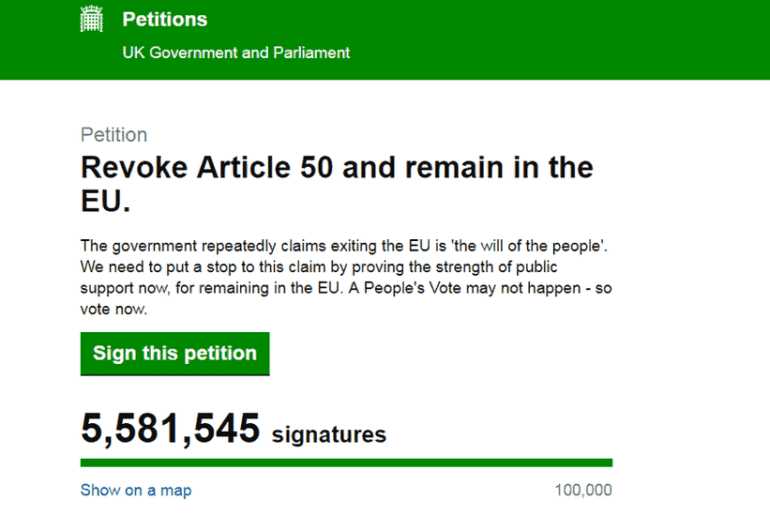
Online Petitions are all-pervasive. From Climate Change to opposing bills and amendments, nowadays, every movement begins on social media. Every day thousands of people sign hundreds of petitions to stand for varied causes. But, do these petitions ever accomplish anything?

The world today is undergoing various catastrophes daily which affect millions of people across the globe. Mostly, citizens watch the authorities remaining silent and wait for them to act on such disasters, expecting them to retaliate. In these cases, online petitions have become a simple solution which provides a platform that allows the people to contribute towards the betterment of the society, rather than just sitting around and waiting. Online Petitions give a wider meaning to the concept of Democracy. It is an appropriate way that gets the point across many, to reach the authority, and gain support from people all over the world. Many even believe that it has become an internet version of street rallies minus the commitment and efforts.

It is a matter of concern that in the 21st Century, people have to rely on this strategy to have their voices heard, and make the administration recognize the needs of the people which are quite obvious. The fact that the number of online petitions is rising at a rapid rate is an accurate representation of how authorities, elected by us, don’t listen to our needs, leaving us helpless to the extent that we feel the need to engage in this rebellious method of harmless protest. Our constituency leaders are hardly put up for questions, they are closest to our concerns, and they hardly care.

But the question remains, do these petitions contribute to change? I would say- Rarely.

It depends on the majority of people who sign these petitions. When we take steps to bring about a change, there are only a few people who genuinely care about the cause, while the majority of people participate for the sake of participation and not emancipation. People sign these “petitions” to reduce their guilt of actions. They aim at achieving a slight sense of contribution, by investing barely two minutes of their time and consider it making a change. On the other hand, one might argue that such movements are instrumental in raising awareness. But, these petitions, arguably, also allow people to feel as though they have taken action when, in reality, they haven’t, and potentially have prevented individuals from pursuing more hands-on activism.

The answer, regardless, isn’t to stop yourself from supporting and signing the next viral campaign that you come across. One has absolutely nothing to lose from signing something they agree with, and nobody knows which appeal might defeat the odds, and provoke a real change. Instead, the answer is to rebel vigorously, as well as ensure that our effortless contribution online meets subsequent real development offline.

Feature Image Credits: BBC

Avni Dhawan
[email protected]

Social media is a modern-world tool available in the hands of today’s youth, and they find solace in the sea of information found in it.

To connect or to disconnect from social media has been an intensely debated topic, especially among today’s parents and the youth. While a majority of the parents think that using social media is a waste of time and a major distraction, most youth believe that it is a useful tool since it provides a virtual medium for people to get connected with each other, engage in discussions, share information, etc. As a socially active youngster, I am of the opinion that one of the best advantages of social media is that it connects people at the click of a button, with the right source required by them at that particular point of time. This click makes life very easy and comfortable, especially for the teenagers who enter into a new phase of their lives, i.e. university life. These confused teens find solace in the sea of information found on social media.

To learn and unlearn by one’s own experience is a thing of the past, as with the improved network of social media, experiences of successes, as well as experiences of failures are available for guidance. To select a course or a college away from home takes tremendous courage, and that courage comes from the information and knowledge-base provided by social media. “Before taking admission in any college, I went through videos a million times. I saw all the fest coverages and everything. It helped me a lot in knowing what will come my way,” says Bhumi, a first-year student, pursuing B.A. (Honours) Philosophy at Daulat Ram College.

Apart from empowering the students with knowledge, social media also plays an important role in connecting people; more so in making an outstation student feel at home. With the virtual connect, social media enables them to speak and stay in touch with their loved ones back home, and at the same time helps them in making new friends. “Social media helped me to connect with my friends, and most importantly to bridge the distance between me and my family. Also, as a byproduct of its well-connected nature, it helped me to settle in a city with a sense of ease in the sense that I wasn’t only able to establish, but also maintain new contacts in the city,” opines Aditya Nath, an outstation first-year student from Jharkhand, pursuing B.A. Programme at St. Stephen’s College.

Getting the right type of accommodation is a very crucial thing for outstation students who do not manage to get into hostels, and with the advent of social media, students are easily able to find paying guest accomodations(PG) and flats to live in, with the ratings and experiences of seniors recorded on various networking sites. In the words of Avilokita, an outstation first-year student from Chattisgarh, pursuing B.A. Programme at St. Stephen’s College, “Social media, especially Facebook really helped me a lot to find a good PG with a good environment to live in, because being new to the city, it is very difficult to find a safe and secure place where a student can easily adjust.” Social media has also played an important role in increasing the availability of opportunities for students, since all information regarding clubs, orientations, fests, competitions, etc. are circulated on applications like Instagram and WhatsApp. At the same time, it is a saviour for students who take part in sports or extracurricular activities, since they can catch up on all that is taught in the classes they miss by getting notes and questions from their friends through networking apps.

Thus, to conclude in the words of the famous Greek physician Hippocrates, “Everything in excess is opposed to nature.” Truly, nothing in excess is good. Therefore, it is important that each one of us manages the time spent on social media efficiently and usefully, so as to harness the maximum benefits from this gainful resource.

Feature Image Credits: DU Beat Archives

Abhinandan Krishn Kaul

[email protected]